


Twitter is Bringing Back the Reverse Chronological Timeline as an Option for Users
Twitter recently confirmed that it is bringing back the classic reverse chronological timeline as an option for its users.
In a series of Tweets sent by @TwitterSupport, the company explained that while it tries to balance showing you the “best” Tweets with the most recent Tweets, it “doesn’t always get this balance right” (via TechCrunch).
Following user frustration with this curated selection of Tweets — which is sometimes mixed in with ads, Tweets your friends like, and more — the company says it will soon provide an easily accessible way to switch between a timeline of Tweets that are most relevant for you and a timeline of the latest Tweets. The reverse chronological timeline option will come in the form of a test for some users “in the coming weeks.”
4/ So, we’re working on providing you with an easily accessible way to switch between a timeline of Tweets that are most relevant for you and a timeline of the latest Tweets. You’ll see us test this in the coming weeks.
— Twitter Support (@TwitterSupport) September 17, 2018
Twitter will introduce a stopgap solution before the full reverse chronological setting has launched. To do this, Twitter updated the “Show the best Tweets first” setting so that when you toggle it off, you’ll only see Tweets from people you follow in reverse chronological order. Before when this was turned off, you’d also see “In case you missed it” Tweets and recommended Tweets from people you don’t follow — now all of this won’t show up.
The company didn’t divulge when the full and “easier-to-access” reverse chronological timeline setting will launch, but says it will announce further details via @TwitterSupport.
Twitter first rolled out its algorithm-focused timeline in early 2016, curating Tweets for each user based on their activity and ditching the simple reverse chronological flow of Tweets. The company tried to allow some form of customization with buttons that trained the algorithm for Tweets you might not like, but many users still opted for third-party apps like Tweetbot, which stick to a reverse chronological format and don’t include ads, “In case you missed it,” recommended Tweets, etc.
Tag: Twitter
Discuss this article in our forums
iPhone XS and XS Max Unboxing Videos Begin Appearing Online
Now that we’re just three days away from the launch of the iPhone XS and iPhone XS Max, Apple has given the green light for publications and YouTubers to publish full reviews and unboxing videos of its latest smartphones. In this post, we’ve rounded up a few unboxing videos that were shared early this morning, most of which focus on the all-new gold color of the iPhone XS and XS Max.
If you’ve ever owned an iPhone, it appears that the contents of the box for the iPhone XS and XS Max won’t be too surprising. The box art showcases the edge-to-edge OLED display of each device and simply says “iPhone” on the sides. If you buy the gold color, the iPhone and Apple logos are also subtly tinted with gold coloring.
Inside the box for both the iPhone XS and XS Max you’ll find paperwork, Apple stickers, the iPhone itself, the EarPods (with no Lightning-to-3.5mm dongle), an AC adapter, and a Lightning cable.
YouTuber Jonathan Morrison notes that one difference is that in the box for the iPhone XS the AC adapter sits above the EarPods, but for the iPhone XS Max Apple has swapped this positioning. Morrison also gave a quick impression of the faster Face ID in iPhone XS, stating that while it won’t make an iPhone X feel slow in comparison it is noticeably zippy and worked perfectly even in low light.
Marques Brownlee unboxed the 512GB iPhone XS Max and iPhone XS in Gold, sharing a quick glimpse at three live wallpapers that are exclusive to the new iPhones. The wallpapers are all a play on the planetoid imagery seen since the first iPhone XS leak, with different colors including a green and purple planet, all subtly hiding the iPhone XS’ notch.
iJustine compared the various gold colors that Apple has introduced over the years, showcasing the noticable difference between the yellow tones of the gold on the iPhone 6s and the darker gold on the iPhone XS. The iPhone 8’s gold is closer to that of the iPhone XS, but appears to be slightly lighter. iJustine also showed off a few of Apple’s leather cases, including Saddle Brown and Cape Cod Blue.
For full impressions on the iPhone XS and iPhone XS Max, you can check out a few reviews which we’ve rounded up right here. The overall consensus appears to be that the iPhone XS is a worthy upgrade for users on older model iPhones, but numerous publications mention that waiting for the cheaper iPhone XR to launch in October might make more sense for many customers.
Related Roundup: iPhone XS
Discuss this article in our forums
iPhone XS and XS Max Reviews: Not Dramatically Better Than iPhone X, Consider Waiting for iPhone XR
iPhone XS and iPhone XS Max reviews have hit the web, three days before the smartphones are released in stores.
2018 is what is known as a “S” year—hence the XS branding—in which Apple retains the same physical design of the iPhone, for the most part, and instead focuses on internal improvements to the display, camera, performance, and so forth. Previous examples include the iPhone 4s, iPhone 5s, and iPhone 6s series.
Not only that, but Apple said last year’s iPhone X set the standard for the next decade of the smartphone, with its premium design and nearly edge-to-edge display, leaving the iPhone XS and iPhone XS Max with big shoes to fill.
All that considered, let’s dive in and see how they stack up.
After nearly six days of trying out the devices, many media outlets agree that the iPhone XS and iPhone XS Max are “evolutionary, not revolutionary,” as Wired’s Lauren Goode put it. TechCrunch’s Matthew Panzarino went as far as labeling the smaller-sized iPhone XS as “one of Apple’s most ‘S’ models ever.”
That’s not necessarily a bad thing. As in many “S” years, if you already own the previous-year’s device—in this case the iPhone X—Panzarino said there are only “about a half-dozen definitive improvements” in the iPhone XS. But, for customers upgrading from an older iPhone, he said they’ll be in for “a huge win.”
As an upgrade over an iPhone X, I’d say you’re going to have to love what they’ve done with the camera to want to make the jump. As a move from any other device, it’s a huge win and you’re going head-first into sculpted OLED screens, face recognition and super durable gesture-first interfaces and a bunch of other genre-defining moves that Apple made in 2017, thinking about 2030, while you were sitting back there in 2016.
In terms of specific features, The Verge’s Nilay Patel has good impressions about Face ID, the rear camera, performance, battery life, and more. As he reminds readers, the only differences with the iPhone XS Max versus the smaller iPhone XS are its larger 6.5-inch display and longer battery life.
Patel on Face ID:
Other than the minor speed increase and secondary appearance support, Face ID is still Face ID: it doesn’t work in landscape or upside down or anything like that. If you wear glasses like me, you’ll still have to enter your passcode every morning when you wake up because you’re holding the phone too close to your face for it to work. And sunglasses that block IR light will still prevent it from working — Apple says it’s working with sunglass makers to ship new kinds of sunglasses that support Face ID.
On the rear camera:
The camera upgrades on the XS over the X are significant — the XS makes the X camera look terrible most of the time. But we’ve been saying the best smartphone camera on the market is Google’s Pixel 2 for a year now, so that’s the standard to beat. And… I think the Pixel 2 still has a better camera than the iPhone XS. Don’t get me wrong — most people are going to like the photos they get out of the iPhone XS. It has a solid camera, and I prefer it to the Galaxy S9. But compared to the Pixel 2, the XS doesn’t really do it for me.
Performance:
Last year’s iPhone X had an A11 Bionic chip, and this year’s iPhone XS has an A12 Bionic. In terms of CPU performance, the A12 really isn’t that much faster: Apple only quotes a 15 percent performance improvement, and I didn’t really see a noticeable speedup over my iPhone X.
Battery life:
I mostly tested the XS Max, and it did great — better than even Apple’s claim of 90 minutes more than the X. In fact, I got a full 12 hours of battery life out of the XS Max without low power mode, and that’s even under my heavy daily use of constant Slack and email usage, video watching, photo taking, and browsing. The smaller XS is rated to get 30 minutes more than the X, which has run for about 8 hours for me this past year. It’s solid.
If you are a diehard Apple fan who can’t wait to get your hands on the latest and greatest iPhone, you’re probably going to choose the iPhone XS, or specifically the iPhone XS Max, regardless. For others, it may be best to wait until Friday, October 19, when the lower-priced iPhone XR becomes available to order.
iPhone XR is often described as the iPhone X for the rest of us. While reviews of the device are not out today, we know it has a nearly edge-to-edge display, Face ID, glass casing, wireless charging, and many other advantages of the iPhone XS, including new camera features such as Depth Control and Smart HDR.
CNET’s Scott Stein:
Both the iPhone XS and XS Max are great phones, fantastic refinements and incredibly promising hubs for your super-connected universe. As you’d expect, they’re the best iPhones at the moment. But here’s the twist: That third new iPhone, the iPhone XR, may be the best pick for anyone upgrading from any iPhone other than the 2017 iPhone X.
It has many of the same features as the XS, but with a larger yet lower-resolution 6.1-inch LCD screen compared to the XS, and — according to Apple — better battery life. And it’s $250 cheaper to start — only $50 more than the iPhone 8’s starting price this time last year.
The Wall Street Journal’s Joanna Stern:
The new iPhone XS and XS Max are great phones but the XR, due out in October, sounds more like a great deal…
Imagine Goldilocks only tested the cold and hot porridges and never found the one that was “just right.” Her life might have been entirely different. That’s how I feel about testing the iPhone XS and XS Max—without the iPhone XR—for the past week…
Many other publications have shared iPhone XS and iPhone XS Max reviews that are worth a read. We’ve rounded up links below.
- The New York Times
- Mashable
- USA Today
- CNBC
- TechRadar
- Tom’s Guide
- The Telegraph
- iNews
- Pocket-lint
iPhone and iPhone XS will go on sale, and begin arriving to customers, this Friday. For those who decide to wait for the iPhone XR, reviews of that device will likely hit the web a few days before its October 26 release date.
Related Roundup: iPhone XSTag: reviews
Discuss this article in our forums
Withings reclaims its brand with the new Steel HR Sport hybrid watch
Kelly Hodgkins/Digital Trends
Withings is back! After a brief hiatus under the leadership of Nokia, Withing co-founder Eric Carreel repurchased the company from the networking and cellular giant. The first big move under the newly liberated Withings brand is the release of the Steel HR Sport hybrid smartwatch.
The Withings Steel HR Sport may look familiar to fitness enthusiasts. It is a continuation of the Steel series of hybrid sport watches that was produced by Withings before and after Nokia bought the brand. The hybrid watch features a classic analog watch face with a fitness tracker hidden underneath the surface. At the top of the watch face is a small LCD that shows the time, heart rate, notifications, and more. It’s real easy to press the side button and cycle through these metrics to track your progress throughout the day. At the bottom of the face is a dial that keeps track of your steps. A sporty silicone wristband rounds out the simple and sleek package.
The water-resistant Steel HR Sport offers all the features you would expect in a fitness tracker. It has 24/7 heart rate monitoring, multi-sport tracking including swimming, detailed sleep analysis and smartphone notifications that alert you of incoming emails, text messages, phone calls and more. Because it uses a low-power analog watch for time, the Steel HR Sport has an impressive 25-day battery life. We’ve been using the Steel HR for a week and barely noticed a drop in the battery.
Kelly Hodgkins/Digital Trends
The new Steel HR Sport is more than just a clone of the earlier Steel HR watches produced under Nokia. There’s now connected GPS so you can track your run, walk or ride. Connected GPS uses the GPS on your smartphone for positioning information. All you have to do is open the Healthmate app on your phone and connect it to your watch when you start your activity. When you finish your workout, the Healthmate app will contain a detailed GPS track with mileage, pace and elevation data. We’ve compared the Steel HR Sport’s track to fitness watches with integrated GPS and the final tracks are very similar.
Thanks to the integrated heart rate monitor and GPS tracking, Withings was able to add VO2 max to the suite of health metrics the watch can track. VO2 max is a measurement of your aerobic capacity and is used to assess your overall cardiovascular fitness. The watch also now has a smart wake-up feature that monitors your sleep pattern and will trigger an alarm at the optimal time so you will wake up refreshed and not sleepy.
The Withings Steel HR Sport is the perfect timepiece for those who want a watch that will go from the conference room to the race course without missing a beat. The watch retails for $200 and will be available starting September 18 on the Withings website, Amazon, and other online retailers. It is available with your choice of either a black or white face and a matching grey silicone band. Additional bands can be purchased at Withings.com.
We’ll be testing the Steel HR Sport over the next week, so stay tuned for our full review.
Editors’ Recommendations
- Fossil’s sexy smartwatches let you watch your heart skip a beat
- Garmin Fenix 5X Plus review
- 2018 Toyota C-HR review
- Stay fit and save cash with our top 10 affordable Fitbit alternatives
- The new Garmin Vivosmart 4 can keep tabs on your blood oxygen level
Withings Brand Returns With ‘Steel HR Sport’ Hybrid Smartwatch
Withings has returned with a new hybrid smartwatch offering, after one of the company’s co-founders bought the brand back from Nokia earlier this year.
Back in 2016, Nokia acquired health startup Withings in a deal estimated at $192 million, hoping to re-establish its presence in the consumer electronics market. It did so by rebranding Withings’ line of iOS compatible products under its own name.
But by May 2018, the acquisition was considered a failure, and Nokia announced its intention to sell the division back to Withings co-founder, Eric Carreel. Carreel promised a “relaunch” of its products by the end of 2018, and today’s arrival of the Steel HR Sport smartwatch is apparently just the start.
The Steel HR Sport shares many of the features as the Steel HR smartwatch which Nokia released in 2016, such as the heart-rate monitor, sleep tracking, smartphone notifications, and 25-day battery life. But it also packs some additional new features, like the ability to track 30 different activities (yoga, rowing, boxing, skiing, and so on).
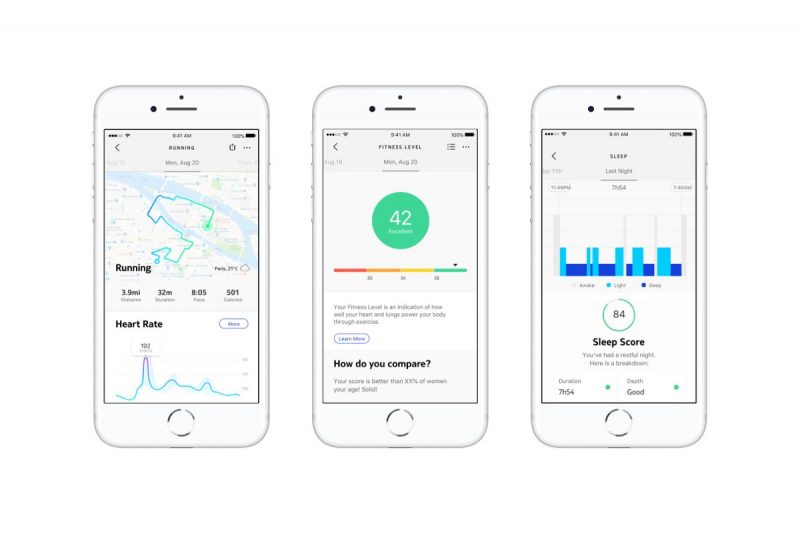
Water resistance is now up to 50 meters, while new oxygen intake sensors allow the watch to measure variables like VO2 max, which is supposed to be a good indicator of overall health. Connected to a smartphone, the Steel HR Sport is also able to GPS-track walking, running, and cycling workouts with distance, elevation, and pace metrics recorded in the accompanying iOS Health Mate app.
In addition, the digital readout on the analogue watch face has been tweaked to show notifications from over 100 apps, as well as regular alerts for calls, text messages, and calendar events.
The Steel HR Sport comes in a single 40mm size, costs $200, and is available to order online today from the Withings website or from Amazon.
Tags: Withings, Nokia
Discuss this article in our forums
Suunto 9 review
Research Center:
Suunto 9 Smartwatch
There aren’t too many GPS watch manufacturers that cater specifically to the endurance crowd, but Suunto is one of them. Suunto’s watches are made with bomb-proof materials, with an array of features that can handle almost anything. The Suunto 9 is the latest from the company — it’s a rugged GPS sportwatch that pushes the envelope on battery life, with unrivaled GPS performance. It’s a groundbreaking watch for ultrarunners, ironman triathletes, and other endurance athletes. Why? Dive in to find out.
Rugged but comfortable design
Like most multisport GPS watches, the Suunto 9 is as big and burly as they come. It measures 50mm wide and weighs 81 grams, making it just a tad smaller than the Garmin Fenix 5X Plus. It may be large-sized, but it does not feel like a big watch when you are wearing it. Suunto carefully designed the replaceable strap and the polyamide casing so it hugs your wrist and doesn’t dig into it. With a soft, flexible silicone band, the Suunto 9 is extremely comfortable to wear.
Kelly Hodgkins/Digital Trends
The company tested the watch in the most extreme conditions and it shows. The stainless steel bezel resists chips and scratches, while the silicone band is thick enough that it won’t break easily. The best part of the design is the high-resolution 320 x 300 sapphire crystal display, which is bright and easy to read. It’s high resolution, which looks great and packs a wealth of information into each screen.
It’s also a touchscreen, so you can swipe between screens and tap to make selections instead of using the buttons. The touchscreen is a mixed blessing — menu navigation is simplified, but now you constantly have to wipe finger smudges off the display.
Sports tracking
The Suunto 9 is no slouch when it comes to sports tracking. The watch supports up to 80 different activities, including yoga, sailing and everything in between. The menu is neatly organized into a shortlist of up to 20 of your favorite activities that you can add using Suunto Movescount software. You can customize these activities by adjusting what exercise data is shown on the screen, changing how the data is recorded during the exercises, and toggling features to either gather as much data as possible or dial it down to optimize battery life.
After multiple tests and trails, we found the FusedTrack works remarkably well.
To start an activity, select one from the exercise menu and wait for GPS lock which is fast and takes less than a minute to complete. Once you begin exercising, Suunto turns off the touchscreen so you must use the buttons to navigate between data screens. Similar to most multisport watches, the Suunto 9 displays distances, elevation, heart rate data, and more.
When you are done exercising, you are asked how you feel and can answer using a “smile” scale from excellent to poor. You can choose to skip this question or turn this “feeling” feature off completely. The data from your exercise is stored in a logbook on your phone so you can review it on your watch or sync it to your phone.
FusedTrack: GPS tracking without GPS
We compared the Suunto GPS tracking to a Garmin handheld GPS unit, our iPhone, and other fitness watches, and the Suunto 9 was spot on.
Our swim route tracked by the Suunto 9
We tested it in the tree-lined paths of the Appalachian trail, the open ridges of the White Mountains, and the wooded mountain bike trails of Maine. Similar to the Fenix 5X Plus, the only time we encountered any issues was when we were swimming in open water.
In the example above, we swam a loop with the same start and end point, which is not reflected in the recorded track. The problem is the water. When the watch goes underwater, the GPS signal is attenuated and tracking points are not as accurate as they should be. Suunto doesn’t correct for this poor signal, so tracking is not very accurate.
The Suunto 9 expands beyond hard-core workout data and embraces the softer side of fitness tracking.
But the most exciting exercise technology in the Suunto 9 is FusedTrack, a tracking system that combines GPS with data from the compass, gyro and accelerometer. FusedTrack plays a major role in the endurance or ultra battery life profile, the latter of which provides up to 120 hours of continuous tracking. In these power-saving battery modes, GPS is dialed down so it only records a point once every minute in endurance mode, and once every two minutes in ultra mode.
To fill in these GPS gaps, Suunto uses motion sensor data to extrapolate the GPS track. It’s like getting a full GPS track without actually using GPS.
We tested the FusedTrack feature multiple times on both flat and mountainous trail runs and found that it worked surprisingly well. In a run up a local mountain trail, the track with the FusedTrack data almost mirrors the one point per second GPS track.
Our hiking route tracked by the Suunto 9
The distance in the FusedTrack run was off slightly (3.9 miles as compared to 4.05 miles) and the elevation profile was not as smooth, but these are minor differences. To be able to record such a good quality GPS track without using full-on GPS is a feature that is unique to the Suunto 9, and a game-changer for long distance athletes.
The Suunto 9 also ships with navigation that allows you to follow a route, locate a point of interest, and find your way back to your starting point. The watch uses a simple breadcrumb map, showing only a directional arrow pinpointing your location, a solid line for the route you are following, and a dotted line for where you already have been.
Suunto 9 Smartwatch Compared To
Apple Watch Series 4
Garmin Fenix 5X Plus
Casio Pro Trek WSD-F30
Alpina AlpinerX
Fossil Q Venture
Garmin Vivoactive 3
Emporio Armani Connected touchscreen…
Apple Watch Series 3
Diesel On Full Guard Smartwatch
Huawei Fit
Garmin Vivoactive HR
Apple Watch Series 2
Asus ZenWatch 2
Asus ZenWatch
Garmin fenix 2
There are no topographic maps like its competitor the Garmin Fenix 5 Plus series. This breadcrumb style of navigating works well in most circumstances, but there are times when you need a more detailed map to find your way back to the trail, or figure out which way to go at a confusing trail junction.
Basic fitness and sleep tracking, smartwatch notifications
The Suunto 9 expands beyond hard-core workout data and embraces the softer side of fitness tracking. The onboard optical heart rate monitor and built-in accelerometer track your step count, calories burned, resting heart rate, and your sleep. This data is synced to the Suunto mobile app, where you can view trends over the past day, week, month and year.
Unfortunately, this data is recorded and presented in a simplified manner. The sleep section, for example, shows your resting heart rate and total amount of sleep time, but it doesn’t break down your sleep into sleep cycles or even track your movement while sleeping.
No GPS watch would be complete without smartwatch features that let you interact with your phone without removing it from your pocket. The Suunto 9 connects to your phone via Bluetooth and receives all your phone notifications including text messages, emails and incoming phone calls. When a notification arrives, it pops up on the watch face. You can scroll to view a portion of the message and then swipe back to return to the watch face.
There is no way to delete a notification or respond to it, though. You need to remove it from your phone before it will disappear from your watch. An incoming phone call is handled the same way as other notifications. You can see the caller and the number, but you cannot choose to decline or answer the call, which is disappointing. This is a small feature but a helpful one that is found on competing devices like the Fenix 5X Plus. We hope Suunto bundles it into their software in a future update.
Intelligent battery modes, charging reminders
Battery life is the winning feature for the Suunto 9. The company takes a novel approach that creates three distinct intelligent battery modes — performance, endurance, and ultra — that you can set regardless of the sport mode you are using.
Kelly Hodgkins/Digital Trends
The modes change a variety of settings to conserve power, including dimming the display, turning off Bluetooth, and reducing the GPS tracking frequency from once a second to once every 120 seconds. You can select a mode when you start an activity and then change it on the fly when you need that extra juice. Suunto calls it “intelligent” because the watch tracks the power level and your activity and then predicts how much time you have left on the battery.
The watch will prompt you to change battery modes when it senses the battery won’t make it through the activity. If you ignore these warnings and completely drain your battery, it will go into a chrono mode that only provides a basic timer.
The software side of the Suunto 9 is the area that needs the most improvement.
In our testing, we found the performance mode to deliver around one full day of continuous tracking; the endurance mode offers about two full days of tracking; and the ultra mode indeed extended the battery to an incredible 4.5 days of non-stop tracking. Under normal use with Bluetooth notifications, 24/7 heart-rate monitoring, and occasional trail runs, we could go almost a full week without charging.
Besides the intelligent battery modes, Suunto also added preemptive reminders that pop up on the watch when your battery is close to dropping below the critical level. These reminders are not randomly generated. The watch software keeps track of when you run and how far you run. The watch uses this information to calculate how much battery life you need for your normal run cycle. If your battery is dwindling, the watch will prompt you to charge ahead of time. We really appreciated these “Are you training tomorrow?” alerts to remind us to charge the watch. More than once this feature saved us from showing up to a training session with only a sliver of battery life.
Confusing software options
The software side of the Suunto 9 is the area that needs the most improvement. Previous Suunto watches synced to an mobile app and web-based platform called Movescount. Movescount is great for analyzing your performance, customizing the watch, and sharing data with third-party services. It doesn’t handle the lifestyle metrics like sleep, step count and all-day heart rate. Because of this limitation, Suunto decided to abandon the Movescount platform and it’s moving over to the new Suunto mobile app.
The Suunto app takes some of the performance analysis of Movescount and adds in lifestyle tracking to provide a full picture of your overall health and fitness. The Suunto app has a beautiful interface, but it is missing key features. The app syncs to Sports Tracker, an online performance analysis tool that is being developed with Suunto’s input, but there is no Strava or Training Peaks syncing. This is a huge omission that Suunto is working hard to fix, but it is not there yet as of the writing of this post. There also is no way to customize your watch using the Suunto app. That feature is only available in Movescount.
The Suunto 9 is for endurance athletes who want a watch that’ll outlast them.
The transition away from Movescount and towards the Suunto app is confusing for the user. You cannot stop using Movescount as you need that platform to customize the watch or sync to third-party services like Strava. Likewise, you cannot ignore the Suunto app if you want to track step counting, sleep tracking and other health metrics. Using the two apps together at the same time is inconvenient and, in the case of creating a route, will actually break that feature.
Suunto recommends uninstalling the Movescount app on your phone and use only the mobile Suunto app to sync to your phone. You then can sync to Movescount by connecting your watch to your computer using the USB cable and the desktop Suunto link app. We’ve been using Suunto’s recommendation, and while it’s a hassle to sync twice, it does work.
Price, availability, and warranty information
The Suunto 9 costs $600 and it’s available now from Suunto’s website, as well as both online and in-store retailers such as Amazon, REI and Backcountry.
Suunto offers a limited warranty that covers defects in materials or workmanship on the device for two years from the date of purchase and one year for accessories.
Our Take
Unlike other companies that eek out more battery life by shutting off essential features like GPS, Suunto manages to provide staying power without sacrificing tracking, a critical component when analyzing performance. If you want a watch that’ll go the distance, has a ton of performance options, and feels good on the wrist, then the Suunto 9 should be your top choice.
Is there a better alternative?
Fitness fanatics who want ultimate control over their performance data and don’t need the extra battery life of the Suunto 9 should consider one of the Garmin Fenix 5 Plus watches, which offer a winning combination of customization, a robust feature set, and third-party app support. We recently reviewed the flagship Fenix 5X Plus and consider it to be at the top of the class in performance and features.
If you are just starting to take your fitness seriously, you should consider starting with a less expensive watch like the Garmin Vivoactive 3 Music, which has an optical heart rate monitor, onboard music, GPS and multi-sport tracking. We reviewed the non-music Vivoactive 3 and found it to be an excellent device for those who want more than a fitness band, but don’t need all the extra features and more expensive price tag of the Fenix and Suunto watches.
How long will it last?
Like its predecessors, the Suunto 9 has a rugged design that’ll provide a solid 4 to 5 years of fitness tracking. You likely will upgrade your watch by then because you want something more flashy and not because the watch has broken. Suunto also tends to support its legacy devices, regularly rolling out updates that add new features and improve existing ones.
Should you buy it?
The Suunto 9 is for endurance athletes who want a watch that’ll outlast them. The battery life and tracking alone make it worth its weight in gold for folks who enjoy running or cycling for hours on end.
A lot less clutter! Twitter relaunches purely chronological timeline
If you’re a Twitter user that continues to lament the loss of your reverse-chronological timeline, then we’ve some good news for you.
The social media company on Monday said that in response to feedback, it’s one again allowing you to see your most recent tweets first — without the “best tweets first,” “in case you missed it” posts, and recommended tweets from people you don’t follow cluttering up the timeline and playing havoc with the order. In other words, you can now properly reject Twitter’s algorithmic timeline that it introduced in 2016.
When Twitter rejigged its timeline two years ago, it introduced a button in Settings that let you turn off “show the best tweets first,” but even when this was set to off, timelines were still peppered with “in case you missed it” posts and recommended tweets that were likely posted many hours before, a feature some users found confusing.
From today, if the button is switched to off, Twitter says you’ll only see tweets from people you follow, with the most recent posts at the top — and no other clutter. You can find the button by going to Settings and then Content preferences.
5/ Meanwhile, today we updated the “Show the best Tweets first” setting. When off, you’ll only see Tweets from people you follow in reverse chronological order. Previously when turned off, you’d also see “In case you missed it” and recommended Tweets from people you don’t follow.
— Twitter Support (@TwitterSupport) September 17, 2018
More control over the timeline
The San Francisco-based company announced the move in a series of tweets posted on Tuesday in which it said it wanted to give users more control over their timeline.
“We’ve learned that when showing the best tweets first, people find Twitter more relevant and useful. However, we’ve heard feedback from people who at times prefer to see the most recent tweets.” That’s right, folks, two whole years after Twitter messed about with the timelines, people are still calling for a return to the good ol’ days of a pure, untouched timeline. Save for ads, of course.
Twitter said its aim with the timeline has always been to find a balance between showing the most recent tweets with the best tweets that “you’re likely to care about,” adding that it knows it doesn’t always get the balance right.
It says it’s currently working on providing “an easily accessible way to switch between a timeline of tweets that are most relevant for you and a timeline of the latest tweets” so that you can, if you wish, jump between both timelines in a simple tap or two.
While many people on Twitter may be perfectly happy with its algorithmic timeline and the way it surfaces extras such as recommended tweets, viral posts, or others that landed on the social media site while you were busy doing other things, it seems there are enough users out there who would still like the option to revert to the recent-tweets timeline.
Take note, though. If the move adversely affects engagement on the site, or hits revenue generated through ads, the company may well ditch the option and look for other ways to create a timeline that’s popular for users while at the same time lucrative for its business. We’ll keep you posted.
Editors’ Recommendations
- Instagram’s test of Recommended Posts is designed to not interrupt your feed
- Twitter makes it easier to find and watch live broadcasts
- How to Use Facebook: The unofficial user manual
- Google responds to Trump’s tweet-rage: We didn’t rig search against you!
- How to change your Twitter username and display name
SpaceX to send Japanese billionaire on moon trip, but he won’t be going alone
SpaceX has named Japanese billionaire entrepreneur Yusaku Maezawa as the first paying passenger for the company’s ambitious 2023 moon mission.
SpaceX CEO Elon Musk, himself a billionaire entrepreneur, named Maezawa at a special event on Monday night.
While the five-day round trip will involve a fly-by of the moon rather than a landing, it’ll nevertheless be the first lunar trip since 1972, when the last U.S. Apollo mission took place. If all goes to plan, Maezawa will become only the 25th person to make the journey.
The 42-year-old businessman (below), who made his fortune after launching an online fashion mall that became the largest in Japan, will make the journey aboard SpaceX’s Big Falcon Rocket (BFR), which is scheduled for testing next year.
“For me, this project is very meaningful,” Maezawa told the gathered crowd shortly after Musk introduced him.
He continued: “Ever since I was a kid, I have loved the moon … just staring at the moon filled my imagination … it’s continued to inspire humanity, and that’s why I could not pass up this opportunity to see the moon up close.”
In an unexpected twist to the proceedings, Maezawa said that he didn’t want to have “such a fantastic experience” all by himself. “That would be a little lonely… so I want to share this experience with as many people as possible.”
Maezawa said that he’s bought all the seats on the BFR — cost unknown — so that he can take up to eight artists with him on the one-off mission. That’s right — he plans to take top musicians, fashion designers, painters, and other artists along for the ride. He hasn’t revealed who he’s going to invite, but it’ll be fascinating to see who he has in mind, and even more interesting to find out who does or doesn’t take him up on the offer of a free trip to the moon.
The Japanese billionaire said he would expect the artists to use the experience as inspiration to create a new piece of art, adding that their masterpieces “will inspire the dreamer within all of us.”
Maezawa is reportedly worth almost $3 billion and is listed by Forbes as the 18th richest person in Japan. The entrepreneur started out selling CDs and records of his favorite bands by mail from his home before launching online fashion mall Zozotown in 2004. Modern art is one of his passions, too, and in 2016 he spent around $80 million on paintings by Jean-Michel Basquiat and Pablo Picasso.
Whether the bold mission takes place now depends on SpaceX successfully testing the rockets and other equipment in the coming years.
We’ve been here before
It’s worth noting that this isn’t the first time SpaceX has announced a plan to send paying passengers to the moon. In 2017, the private space company revealed that two moneyed individuals had paid a “significant” deposit for the same moon trip.
Elon Musk never offered any detailed information about the identity of the pair, saying only that they were not Hollywood stars. The trip was set to take place toward the end of this year, but was scrapped when SpaceX decided to switch the plan from its Falcon Heavy rocket to the more powerful BFR.
Musk said of that original mission that the two astronaut wannabes were “entering this with their eyes open, knowing that there is some risk … They’re certainly not naive, and we’ll do everything we can to minimize that risk, but it’s not zero.”
Maezawa and his crew of artists will have to be happy with that risk, too.
Editors’ Recommendations
- Who will be the first private passenger to the moon? SpaceX will tell us today
- SpaceX Falcon Heavy rocket: Here’s everything you need to know
- SpaceX just landed another of its reusable Block 5 rockets
- Elon Musk fires back at British diver who was critical of his submarine
- Get your Sagan on with 60 awe-inspiring photos of the final frontier
Apple CEO Tim Cook Will be on Good Morning America Tomorrow
Apple CEO Tim Cook will appear on Good Morning America tomorrow morning, where he will be interviewed by Robin Roberts live in Times Square in New York City.
Good Morning America announced Cook’s appearance on the show on Twitter this afternoon and asked its Twitter followers to reply to the tweet if they have questions for Cook.
TOMORROW ON @GMA: Apple’s @tim_cook one-on-one with @RobinRoberts LIVE in Times Square!
Have questions for Tim? TWEET US by replying to this tweet! pic.twitter.com/s1umyOBWJM
— Good Morning America (@GMA) September 17, 2018
Cook is likely to discuss the newly announced iPhone XS, iPhone XS Max, iPhone XR, and Apple Watch Series 4, and other topics like tariffs and new iOS 12 features could potentially come up.
Cook last appeared on Good Morning America in 2016, where he spoke about the launch of the AirPods, the iPhone 7, and the iPhone 7 Plus.
Ahead of his Good Morning America interview, Cook spent today in New York City, where he visited Apple employees at the Apple SoHo store.
Thanks Apple Soho and to our team around the world for the hard work you’re doing this week and all year round! Can’t wait for Friday. pic.twitter.com/E7Eisyyu1j
— Tim Cook (@tim_cook) September 17, 2018
Good Morning America’s interview with Tim Cook will air on Wednesday, September 18, from 7:00 a.m. to 9:00 a.m. Eastern Time.
Tag: Tim Cook
Discuss this article in our forums
First iPhone XS, iPhone XS Max and Apple Watch Series 4 Orders Begin Shipping Out to Customers
Apple started preparing the first iPhone XS, iPhone XS Max, and Apple Watch Series 4 orders for shipment over the weekend, and now those orders have started shipping out to customers.
Apple has not yet updated order statuses from “Preparing to Ship” and likely will not do so until later this week when packages begin hitting their destination locations, but customers who pre-ordered a new device in the United States may be able to track their order using UPS tracking features.
iPhone XS, iPhone XS Max, and Apple Watch Series 4 orders that are shipping via UPS in the United States are in transit and can be tracked using a UPS My Choice account or a reference number on the UPS website.
Customers with UPS My Choice accounts can visit the scheduled deliveries section of the website to see a list of Apple orders that are set to be delivered on Friday, which can be clicked to reveal full tracking details.

Tracking by reference requires a phone number and a zip code, or an order number minus the last two digits of the number. Many customers are already seeing their orders on the UPS website, but not every order has been transitioned to UPS as of yet.

Most orders right now are still in various parts of China, but should be departing for the United States and other countries in the near future.
Apple began accepting pre-orders for the iPhone XS, iPhone XS Max, and Apple Watch Series 4 on Friday, September 14 at 12:01 a.m. Pacific Time. By the time a half hour had passed, many iPhone XS Max models had sold out and were no longer available for launch day delivery.
iPhone XS, iPhone XS Max, and Apple Watch Series 4 orders placed today will not ship out until October, but some models are still available for in-store pickup on September 21 in select stores. Retail stores are also expected to have supplies available for walk-in purchases on launch day.
Apple Stores, carrier locations like Verizon, T-Mobile, Sprint, and AT&T, and big box retailers like Best Buy and Target are likely to have the new products available for purchase on launch day in the United States.
Related Roundups: Apple Watch, watchOS 5, iPhone XSBuyer’s Guide: Apple Watch (Buy Now)
Discuss this article in our forums
 AIVAnet