


Happy birthday to Android!

Here’s to ten years of chaos, coolness, and customization — and here’s to ten more.
Ten years ago today, the world of smartphones changed. The T-Mobile G1 made its debut with little fanfare, a small phone trying to claw its way out of the shadows of BlackBerry and the still-AT&T-exclusive iPhone, which was entering its second generation.
Our original G1 review said “despite some complaints about UI hassles, the G1 is an achievement. It’s a full-featured smartphone that’s a bit rough around the edges and is missing a few features here and there that might be deal-breakers for some. Those features shouldn’t be long in coming, though.”
And indeed, they were not.
Some of us knew this little gem would be a game-changer; there were few Android-centric websites back then, but the little bits of news we all got from Google about the Android project let us know they had big plans. An open-source platform for manufacturers to build apps and access the web was a lofty goal — a goal we’re glad the folks in Mountain View had.
A previous birthday anecdote from our resident Android guru Jerry Hildenbrand

“The G1 was the phone that got me hooked. It wasn’t quite good enough to replace my BlackBerry, but the nerdy side of me was excited and looked forward to the day when the Android platform was robust enough to be my daily driver. Now that those days are here, I’m happy.
I still have one of my original G1 phones, and every now and then I throw the SIM card in it and use it. It’s no barn-burner, and pales when compared to today’s monster-spec’d phones, but it’s one I’ll be keeping forever.”

Today, the world of Android is beyond anything we could have imagined. Android passed 2 billion monthly active users last year, and they’re firmly focused on how to better reach and serve the Next Billion Users. Android phones have gotten more powerful than ever with flagships like the Samsung Galaxy Note 9. Perhaps even more importantly, affordable phones are reaching new standards of performance and stability, as projects like Android One seek to keep Android phones current and secure whether they’re big or small, pricy or budget-minded, fashion-forward or fastidiously functional.
And from the wildfire of innovation the G1 and Android OS sparked came Chromebooks, and Chromecasts, and Wear OS smart watches, and the Google Home line, and so much more. So whether you still have a G1 kicking around in a drawer somewhere or you came to the party more recently, raise a glass — or a glass-backed phone — to the original Android and all that it’s made possible today.

August smart locks, 500GB SSDs, and more are discounted today
Whether you’re looking for new tech gear or household items, we’ve got you covered.
We found plenty of great deals today that include big discounts on the August Smart Lock Pro, the WD Blue 500GB SSD, the 400GB microSD, and more!
View the rest of the deals
If you want to know about the deals as soon as they are happening, you’ll want to follow Thrifter on Twitter, and sign up for the newsletter, because missing out on a great deal stinks!
Amazon’s Fire TV Stick is $30 right now
Streaming made affordable.

Right now, you can pick up an Amazon Fire TV Stick for for $29.99, which is $10 less than it normally sells for. This deal is $5 more than one we posted recently, but it presents you with a nice opportunity to hop on a discount if you missed the last one.
The Fire TV Stick is Amazon’s most affordable streaming hardware that provides quick and easy access to popular services like Amazon Prime Video, Hulu, Netflix, and more. It has an Alexa-enabled voice remote, which means that you can speak to it and get your favorite shows played without having to search for them manually.
You can also save on the Fire TV 4K and the Fire TV Game Controller for a limited time.
See at Amazon
3 affordable alternatives to the Samsung Wireless Charger Duo

Samsung’s new Wireless Charger Duo is an elegant solution to an inelegant problem: having to charge multiple phones (or a phone and a watch) at the same time overnight. Rather than using two different chargers, you can buy this one big pad that has an angled stand on the left and a flat segment on the right. The problem is you pay for that simplicity: the Wireless Charger Duo is $115, which is more expensive than buying two separate chargers! You’d think you’d get a discount. Thankfully, there are alternatives out there.
Fast dual wireless charging
ZENS Dual Qi Pad 2X 15 Watt

You can charge up two Qi-compatible devices at once with this sleek pad from ZENS. There’s 15W output for both coils, which will charge phones incredibly quickly, and it’s even sleeker than Samsung’s version because it’s completely flat. It’s also much cheaper.
$80 at Amazon
Dual-wireless charging for even less
IBIS Wireless Dual Fast Charging Station

This dual wireless charger from IBIS doesn’t look particularly nice, but it will get the job done wirelessly charging two devices at once. It also has a USB-A port for wired charging of a third device. And best of all, it’s about one-third the price of Samsung’s dual charger.
$40 at Amazon
Or get two of these
AUKEY Qi-Enabled, Ultra Slim Wireless Charging Pad

The cheapest solution to this problem is to just buy two separate slim and small wireless chargers, like this one from Aukey. It’ll take some configuration (and maybe double-sided tape) to get them set just right, but the result is wirelessly charging two devices for just $26.
$13 each at Amazon
We don’t blame you for not wanting to pay big money for Samsung’s Wireless Charger Duo, so you can save by going with one of our picks instead. The ZENS dual wireless charger will give you the best and most Samsung-like experience for about $35 less, which is great savings. However, you can save even more by getting a less expensive dual charger, or just run your own by getting two small and inexpensive wireless chargers.
Echo, Echo, Dot, Dot, you just got a… [#acpodcast]

Daniel Bader takes a break from dirty diapers and sleepless nights to join Andrew Martonik and Jerry Hildenbrand for an in-depth look at the staggering number of devices Amazon unveiled at a recent event in Seattle. This is a serious shot across the bow of every smart home company. Amazon excels at automation — now they’re looking to Echo all the things into just about every facet of life imaginable.
What are your favorite voice assistant and smart home devices? Let us know in the comments!
Listen now
- Subscribe in iTunes: Audio
- Subscribe in RSS: Audio
- Download directly: Audio
Show Notes and Links:
- Here’s everything Amazon announced at its 2018 hardware event
- Amazon just asked Alexa to declare war on every smart home company
- Amazon Alexa does a whole bunch of new stuff
- Amazon announces upgraded Echo Dot with vastly improved sound quality
- The Amazon Echo Sub is a subwoofer for your Echo speakers
- Amazon’s new Echo Show has slimmer bezels and dual side-firing speakers
- Amazon Will Consider Opening Up to 3,000 Cashierless Stores by 2021
- Fire TV Recast sends local TV to your Echo Shows and Fire TVs
- Amazon offers its latest Echo devices in discounted bundles, so pre-order now
Sponsors:
- Lenovo Smart Display
- Techmeme Ride Home Podcast —New episodes every weekday covering all the top stories from techmeme.com! Just search your podcast app for “Ride Home” and subscribe today!
Nokia 5.1 Plus preview: Robust hardware backed by excellent software
Nokia brings its latest design language to a much more attractive price point.
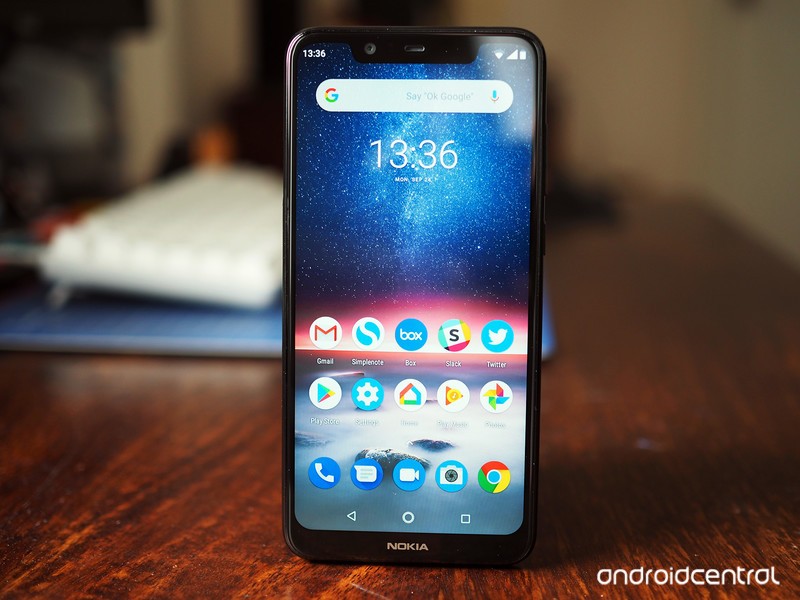
HMD Global is starting to gain momentum in India following the launch of the Nokia 6.1 Plus. The phone introduced a notched design and improvements on the hardware front, but more than that it signaled HMD’s intent to become more aggressive in the Indian market. Retailing for just ₹15,999 ($220, the Nokia 6.1 Plus goes up against of the likes of the Redmi Note 5 Pro and the ZenFone Max Pro M1 in the country.
With the Nokia 5.1 Plus, HMD is continuing the same strategy. The phone shares most of the same design elements as the Nokia 6.1 Plus but is available at a lower ₹10,999 ($150) price point. To accommodate the price tag, HMD had to make a few changes on the hardware side of things, but that doesn’t take away from the fact that the Nokia 5.1 Plus is a fantastic budget phone.
Nokia rolled out its first device with a notch with the 6.1 Plus, and the company is fully embracing the cutout with all the Plus models. The Nokia 5.1 Plus has an even wider cutout at the top of the display, and it looks like the upcoming Nokia 7.1 Plus will follow suit.
At 5.86 inches, the Nokia 5.1 Plus is marginally taller than the 5.8-inch Nokia 6.1 Plus, but the screen resolution has been lowered to HD+ (1520×720). The overall design aesthetic is near-identical to that of the Nokia 6.1 Plus, with the only major change being the lack of chrome accents around the power and volume buttons and the camera sensor.
The power and volume buttons have a decent amount of tactile feedback, and it’s great to see HMD make the switch to USB-C charging. There’s also a 3.5mm jack located up top, and the hybrid SIM card tray lets you fit in a MicroSD card in the second SIM card slot.
Android manufacturers have done little to justify the presence of the notch, and the Nokia 5.1 Plus doesn’t fare any better. There’s a sizeable chin at the bottom of the display that includes the Nokia logo, and while Nokia is trying to free up some real estate by offering the cutout, in this particular instance it would have made more sense to go with a traditional 18:9 setup. It’s not even fully clear why the Nokia 5.1 Plus has a wide cutout, as it doesn’t look like the entire space is being utilized.
| Screen | 5.86-inch HD+ (1520×720) IPS LCD |
| Chipset | MediaTek Helio P60 |
| RAM | 3GB |
| Storage | 32GB |
| Software | Android 8.1 Oreo |
| Rear Camera 1 | 13MP, ƒ/2.0 |
| Rear Camera 2 | 5MP |
| Front Camera | 8MP, ƒ/2.2 |
| Security | Rear fingerprint |
| Battery | 3060mAh |
| Connectivity | Wi-Fi 802.11 ac, BT4.2 |
| Colors | Gloss Black and Gloss Midnight Blue |
| Dimensions | 149.5 x 71.9 x 8.0mm |
| Weight | 160g |
| Price | ₹10,999 ($150) |
Both the front and glass feature 2.5D glass panels with a polycarbonate chassis sandwiched in between, and just like the Nokia 6.1 Plus the 5.1 Plus has excellent in-hand feel. While it isn’t as conducive to one-handed use, it is better than most other devices in this category.
When it comes to the hardware side of things, the Nokia 5.1 Plus has all the bells and whistles. There’s 3GB of RAM along with 32GB of storage, a MicroSD slot, 3.5mm jack, Wi-Fi ac, Bluetooth 4.2, dual 13MP + 5MP cameras at the back, 8MP front shooter, and a 3060mAh battery. Interestingly, HMD has decided to go with MediaTek’s Helio P60 in lieu of Qualcomm hardware, and we’ll have to wait and see if that decision ends up hurting the phone when it comes to software updates.
HMD is pushing the Nokia 5.1 Plus as a gaming phone, and the Helio P60 is just as capable as the Snapdragon 636 in this area. The Helio P60 has two 2.0GHz Cortex A73 cores paired with two 2.0GHz Cortex A53 cores and a Mali-G72 MP3 GPU, so the device isn’t exactly lacking when it comes to power.
That’s evident in day-to-day usage — the Nokia 5.1 Plus doesn’t really slow down or lag during everyday tasks, and the 3060mAh battery is more than adequate to last an entire day with room to spare.
There is a 409MB day-one software update available for the device that offers a host of bug fixes and stability improvements, and the software experience is largely unchanged from what you get on other Android One phones. There’s zero bloat to be found, and while the phone comes with Android 8.1 Oreo out of the box, HMD says the device is ready for Pie, with an update planned in the coming months.
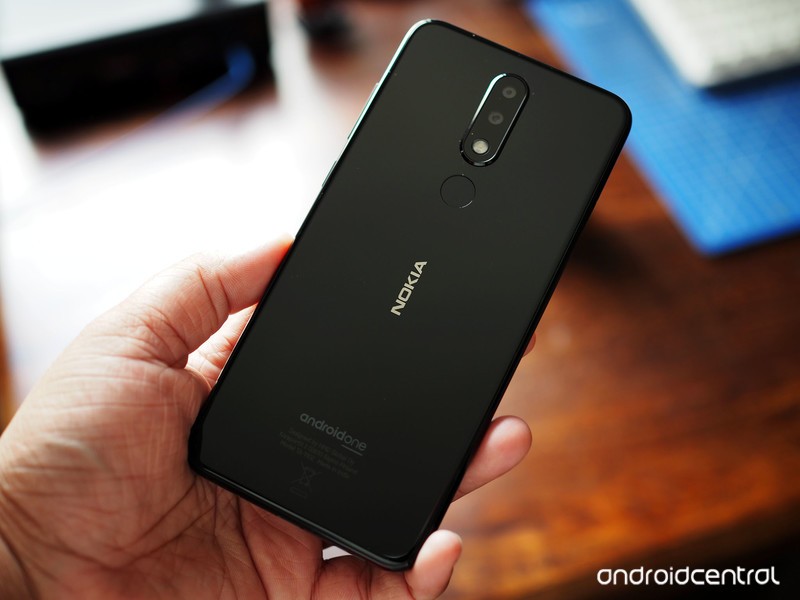
The Nokia 5.1 Plus will be available in India starting October 1, and you’ll be able to pick up the phone from Nokia’s website as well as Flipkart. The phone will be sold in a single 3GB/32GB option that will retail for ₹10,999 ($150), with Gloss Black and Gloss Midnight Blue color options available. For the price, the Nokia 5.1 Plus definitely looks like a great phone, and the design combined with HMD’s track record with updates should give it a leg up in this category.
The only unknown is the Helio P60 and if HMD will be able to deliver timely updates. If it manages to do so, the Nokia 5.1 Plus will have no issues taking market share away from Xiaomi and others in this space. I’ll have much more to share about the Nokia 5.1 Plus in the coming weeks, but what do you think of the device? Share your thoughts in the comments below.
See at Flipkart
Jaybird X4 vs. Bose SoundSport Wireless: Which should you buy?
We’re a virtual company made up of tech experts from across the globe. An Android phone is only as good as the earbuds you have to accompany it, so let us help you find the best way to jam out to your favorite tunes.
Jaybird X4
Battery champ

$129 at Amazon
Pros
- Eight hours of battery.
- Fully waterproof.
- More compact.
Cons
- Proprietary charging clip.
The Jaybird X4s are the best wireless sports earbuds for most people. They’ve got excellent battery life, are fully waterproof, and offer really great sound for $20 less than the SoundSport Wireless.
Bose SoundSport Wireless
Superior sound

$149 at Amazon
Pros
- Top of the line sound.
- Bluetooth and NFC pairing.
Cons
- Expensive.
Although the battery life and water resistance rating isn’t as good as what’s offered with the X4, the Bose SoundSport Wireless are the best sports earbuds you can buy if sound quality is your top concern.
For most people, the Jaybird X4 earbuds offer the best overall experience while giving you a good value for your money. However, if you want the very best sound quality around, the SoundSport Wireless are tough to beat.
Which earbuds should I buy?

If you’ve narrowed your search for wireless sports earbuds down to the Jaybird X4 and Bose SoundSport Wireless, you’re in a great position. We’ve got a feeling you’ll be happy no matter which one you choose, but even so, the X4s will likely be the best fit for most people.
For starters, the Jaybird X4s offer fantastic battery life. Jaybird rates them for eight hours of use on a single charge, and in our testing, we saw closer to 10 hours. Whether you’re running a marathon or hitting up the treadmill at your gym, this kind of endurance is great to have. Bose’s SoundSport Wireless last an admirable six hours per charge, and while that’s good, you definitely get more juice in between top-ups with the X4s.
Another area where Jaybird takes the lead is with the X4s durability. The IPX7 rating means the X4 are fully waterproof and can be submerged in water up to one meter for 30 minutes. Comparatively, the IPX4 rating for the SoundSport Wireless only offers guaranteed protection against water sprays and splashes — not actual submersion.
Both earbuds come with a carrying pouch and customizable ear tips, but once again, Jaybird gets the upper-hand with a more compact design.
| Sweat + water resistance | IPX7 | IPX4 |
| Battery | Up to 8 hours | Up to 6 hours |
| Connectivity | Bluetooth | Bluetooth NFC |
| Companion app | Jaybird MySound | Bose Connect |
| Customizable ear tips | Yes | Yes |
All of that may make the SoundSport Wireless sound like a pretty inferior product, but there’s one area where these puppies really shine — sound quality.
The Jaybird X4s sound really, really good, but like we’ve come to expect over the years, Bose is still one of the undisputed kings in these regards. The sound that comes out of the SoundSport Wireless is downright fantastic, and you’d be hard-pressed to not get a huge grin on your face when listening to them.
Jaybird X4
Battery champ
$129 at Amazon
The best choice for most people.
Jaybird’s X4 earbuds offer the best all-around package when it comes to wireless sports earbuds. With excellent battery, full waterproofing, solid sound quality, and a comfy design, it’s hard to go wrong.
Bose SoundSport Wireless
Superior sound
Awesome sound at the expense of other features.
$149 at Amazon
The Bose SoundSport Wireless aren’t quite as complete of a product as the Jaybird X4, but if you’re okay with worse battery and a lower IP rating for top-notch sound, these are for you.
Samsung Galaxy Watch vs. Apple Watch Series 4: Which should you buy?
We’re a virtual company made up of tech experts from across the globe. Fitness tracking is our passion, and we base our recommendations for choosing the best accessory on hundreds of hours of research.
Samsung Galaxy Watch (46mm)
Everything you need

$349 at Amazon
Pros
- Multiple days of battery life
- Always-on display
- Hundreds of watch faces to choose from
- Unique bezel navigation system
Cons
- Kind of big for what it is
- App selection is pretty basic
Samsung made a big watch that does a little bit of anything and runs on just about everything. Its most important feature is the battery, which can get 4+ days of us when set up correctly.
Apple Watch Series 4 (44mm)
Polished excellence

$429 at Apple
Pros
- Sleek, thin design
- Fitness tracking is excellent
- Impressive haptics
- Polished UI
Cons
- Battery is just okay
- No third party watch faces
- No always-on mode
- iOS Only
Apple’s latest wearable is polished, comfortable to wear, and can get you a little more than a day’s use if you’re not too active. Its biggest strength is the wealth of fitness apps at your disposal.
The price of longevity, the cost of elegance
Smartwatches strike an often clumsy balance between trying to look like a watch and act like a gadget. A lot of this is because there’s not one thing every person wants or needs from these watches. Some want a nice watch-shaped gadget which tells time and occasionally delivers information from your phone. Others want a standalone fitness accessory which allows you to leave your phone at home when you work out. And in this divide, Samsung and Apple exist at mostly cross purposes.
Samsung’s Galaxy Watch looks and feels like a watch at all times, with an always-on display and plenty of watch faces for total personalization. Apple’s Watch looks and feels like an iPhone accessory, with a massive array of first and third-party fitness apps and health accessories but little opportunity to control individual features. The fitness features on Samsung’s Galaxy Watch can track quite a bit, but there’s very little outside of these Samsung-made options available to users.
The truth is these are both excellent watches, but the experience you’re going to get out of each will be very different. Ultimately, it’s going to come down to how you use your watch every day.
| Display | 1.3-inch AMOLED | 1.78-inch AMOLED |
| Resolution | 360×360 @278ppi | 448×368 @326ppi |
| Battery | 4 Days | 18 Hours |
| Weight | 63g | 48g |
| Voice Calls | ✔️ | ✔️ |
| Heart-rate Monitor | ✔️ | ✔️ |
| Wireless Charging | ✔️ | ✔️ |
| Third-party apps | 🤔 | 🎉 |
| Third-party watch faces | 🎉 | ❌ |
| iOS Support | ✔️ | ✔️ |
| Android Support | ✔️ | 😂 |
There’s a lot to like about both of these watches, both of which quite honestly stand as the best you can buy today. Samsung’s Galaxy Watch does a great job lasting multiple days, offering substantial health and fitness tracking features, and it actually looks like a watch on your wrist. But it’s also thicker and heavier than the Apple Watch by quite a bit, so much so that this watch doesn’t always fit comfortably under a nice shirt when you’d want it to.
Meanwhile, the Apple Watch looks and feels like an elegant piece of machinery on your wrist. It’s not round, but it’s highly functional. And whether you’re trying to get a couple of extra eggs hatched in Pokemon Go or you’re training for a Century ride, there are highly focused apps on the watch for you to use to reach those goals. But those fitness features and slender design cost quite a bit in battery life, making it so you have to charge it every night if you want a full day of use tomorrow.
You can force the Apple Watch to last two days if you really try, and you can force your behaviors around the Samsung-only apps for tracking health and fitness, but it’s clear these experiences are for very specific kinds of users. Once you know which one you are, the choice between these two watches becomes quite clear.

Preparing for the future
While these two watches offer particularly similar feature footprints right now, it’s important to note Apple’s plans for the Series 4 Watch in the future plan to increase that feature set dramatically. While technically available right now, a new Walkie Talkie feature on the Apple Watch is extremely limited. In the future, Apple envisions users being able to quickly chat with friends over brief audio messages. This is a quality evolution over sending voice messages via iMessage, especially since it can be quickly started and used exclusively through the Watch. It requires everyone you know to have an Apple Watch, obviously, but that could easily become worth it if this feature gains in popularity.
The Apple Watch is a great smartwatch and an even better fitness tracker, but the Galaxy Watch has a nicer design and more intuitive controls.
Something that is not speculative is the soon to be active ECG feature on every Apple Watch Series 4. This feature allows users to create a basic ECG readout from your body, giving you a simple idea of how your heart is performing. This feature isn’t expected to replace actual ECGs in an actual doctor’s office, but like the heart-rate monitor can offer early detection of potentially serious medical issues. Apple’s efforts in capturing a total picture of your health and encouraging you to see a professional when your readings appear unusual is commendable, and as long as these features are treated as accessories to actual medical professionals these are quality features which benefit everyone who wears an Apple Watch.
Samsung’s Galaxy Watch is very much an as-is product. Aside from software and security updates, Samsung is unlikely to add any features which radically alter how you use the Watch over time. It’s not impossible, but not particularly likely given Samsung’s history and the current state of the Tizen OS running on the Watch.
Samsung Galaxy Watch
Everything you need
$349 at Amazon
A stylish watch with days of battery life and tons of clever features.
Samsung made a Watch it thinks offers a little something for everyone. And as long as you don’t mind large watches, that is true.
Apple Watch
Polished Excellence
The most health-focused Apple Watch ever designed.
$429 at Apple
Apple’s polished wearable has taken a firm turn toward health features and usability, and as long as you own an iPhone the experience is great. As long as you’re ok with a single day of battery, this is a great experience.
Save up to 35% on Anker’s popular Bluetooth headphones and speakers today
Hear the savings?!

As part of its daily deals, Amazon has some of Anker’s popular Bluetooth headphones and speakers on sale for up to 35% off. Today’s price drops bring them down to the lowest prices they’ve sold for. First up is Anker’s Soundcore Spirit in-ear sports earbuds which are down to $29.99, which is a $10 savings. They are fully sweat-proof, have a cable slip to keep the extra wiring off your neck while using them, and offer 8 hours of battery life per charge.
Next up is Anker’s Soundcore Vortex wireless on-ear headphones with 40mm drivers, up to 20 hours of battery per charge, and more. They are down to $44.99 and have sold for as much as $70 in the past. They fold up and can be easily transported in the included carrying case to prevent damages while on-the-go.
Finally, Anker’s Soundcore Flare Bluetooth speaker is down to $44.98 from its everyday price of $70. It has 360-degree sound, bass up technology to bring out the lows in your music, a beat-driven LED on the bottom that has various themes, and much more. It is waterproof, and if you buy two of them you can connect them as a stereo pair.
All of these prices are good for today only, so don’t miss out.
See at Amazon
UK Deal: Kick start your smart home with a £67 Philips Hue Starter Kit
Two different bulb fittings available.

Amazon UK has reduced the price of Philips Hue Mini Starter Kits to just £67.49 — a new all-time low. Just a couple of months ago, the going rate for these kits was £134.99 so this marks a significant reduction in price. Even in recent weeks, they have been average about £100.
Each starter kit includes 2 White and Colour Ambience bulbs as well as the Philips Hue Bridge. The Bridge itself usually sells for around £50, so getting two bulbs thrown in for less than £20 is a great deal, especially when you consider that each bulb is usually around £50, too!
Mini Starter Kits available:
- Philips Hue White and Colour Ambiance Mini Starter Kit, E27, 10 W
- Philips Hue White and Colour Ambiance Mini Starter Kit, B22, 10 W
If the bulbs on offer do not fit your current set up, you could always invest in some light fitting adapters to make it work for your home.
For more UK deals coverage, be sure to keep an eye on Thrifter UK, sign up for the UK newsletter and follow the team on Twitter.
See at Amazon UK
 AIVAnet