


Review: Logitech’s $70 ‘POWERED’ 7.5W Wireless Charging Stand Offers a Hassle-Free Upright Design
Logitech often works with Apple to introduce new accessories for Apple devices, and in early August, Logitech announced its latest product designed in collaboration with Apple, the new POWERED wireless charging stand for iPhone 8, iPhone 8 Plus, and iPhone X.
POWERED is an upright charging stand able to charge a compatible iPhone in either horizontal or landscape orientation. Made from a thick, heavy plastic material with a rubber coating to add grip, the POWERED has a horizontal rectangular back supported by a sturdy, angled base that offers just the right amount of stability.
There are four feet on the base, and the same grippy material coats the bottom, so it stays secure on a desk when in use. The base is similar in size to your standard flat wireless charger, and because it’s more of a square shape, it doesn’t take up as much room on a desk or nightstand as a typical round wireless charger.
A small circular LED at the top of the POWERED lights up to let you know when an iPhone is in the correct position to charge, but a benefit to an upright charger is that it’s almost impossible to put the iPhone in the wrong spot. With flat chargers, you sometimes need to shift the iPhone around to get the wireless coil in the charger lined up with the charging mechanism in the iPhone, but vertical stands like the POWERED eliminate that problem.

While the upright back of the charger looks like it might be adjustable due to the design, it’s not. It holds the iPhone at a single angle that’s tilted back slightly, which seems to be an ideal angle for glancing over at the time or watching a video. Because the sides of the base come up around the iPhone in a “U” shape, it always feels secure in the charger when it’s in a vertical position.

The POWERED can also be used for charging in landscape orientation if you want to watch videos, which is handy, but it does feel less secure and prone to toppling over if bumped.
I used the POWERED with an iPhone X, but it’s sized to work with the iPhone 8 and iPhone 8 Plus too. With the iPhone X and iPhone 8, there’s about a fourth of an inch of space at the sides, while the iPhone 8 Plus is a tighter fit.

Rumors suggest all three of Apple’s upcoming 2018 iPhones will feature wireless charging, and this charging stand will work with them. The largest of the three devices (the 6.5-inch OLED) is similar in size to an iPhone 8 Plus, which means it will fit in the POWERED.

Design wise, the POWERED from Logitech is similar to Belkin’s Boost Up Wireless Charging Stand, but it has a somewhat smaller bottom base and a rectangular back rather than a circular back. Both hold the iPhone securely and at an ideal angle for video watching, so choosing one over another is just a matter of picking your favorite design.

There is a built-in 1.5-meter cord installed in the POWERED, and Logitech includes a power adapter similar in size to an iPad power adapter. Designed specifically for Apple devices, POWERED offers the faster 7.5W charging available to Apple iPhones.

Depending on external factors like temperature, 7.5W charging isn’t always much faster than 5W charging, but there’s usually enough of a difference that it’s worth choosing a 7.5W charger over a 5W charger.

To test the POWERED, I drained the battery of my iPhone X to 1 percent and then left it on the charger for an hour in airplane mode. In that time, it charged up to 36 percent, which is the same general charging level that I’ve seen with other 7.5W chargers using the same test. During the winter, I’ve seen charging speeds up to about 46 percent with 7.5W chargers, but in summertime temperatures in my office (74 to 75 degrees), ~35 to 40 percent is the norm.
Logitech calls the POWERED the first wireless charger “truly worthy of iPhone” presumably because of the hassle-free U-shaped vertical design, but as far as charging speed goes, it’s equivalent to other 7.5W charging options.
Bottom Line
I have zero complaints about the POWERED from Logitech, aside from the price tag. It’s a nice charger that has all of the features I could ask for: drop and go functionality that prevents me from having to hunt for the coil, portrait and landscape orientation so my iPhone can sit upright, 7.5W charging speeds, and a sturdy base.
Unfortunately, it’s priced at $70, which is expensive and can be hard to justify when there are so many wireless charging options on Amazon that are in the $20 to $40 range.
The POWERED and the similar Belkin Boost Wireless Charging Stand are the best wireless charging accessories that I’ve used, though, and I do think it can be worth shelling out extra money to get a higher quality stand.
With many of the flat wireless charging pads, I have to shift my iPhone around to get it in just the right spot for charging. I’ve run into instances where I think the iPhone is charging and it’s not, or it starts charging and then gets bumped and knocked out of the proper position, something that’s impossible with the POWERED because the U-shaped cradle guides iPhone placement.
If you have similar issues with flat wireless chargers, the POWERED may be worth checking out because it solves a lot of the pain points that come with wireless charging.
How to Buy
Logitech’s POWERED wireless charging stand can be purchased from the Logitech website or from Apple.com for $69.99.
Note: Logitech provided MacRumors with a POWERED wireless charging stand for the purpose of this review. No other compensation was received. MacRumors is an affiliate partner with Logitech. When you click a Logitech link and make a purchase, we may receive a small payment, which helps us keep the site running.
Tag: Logitech
Discuss this article in our forums
Netflix Tests Video Promos Between TV Show Episodes
Netflix is testing a new feature that adds video promos in between episodes of TV shows, Netflix confirmed to TechCrunch this afternoon.
The promos Netflix is showing to some users include full-screen personalized videos with content recommendations similar to Netflix recommendations available elsewhere on Netflix.
According to TechCrunch, the promotional videos displace preview information for the next episode of a TV show, with title, description, and thumbnail no longer visible.
Many Netflix users on Reddit and Twitter who have the new video promos have been complaining about them, with multiple threats to cancel the service if Netflix does indeed introduce promotional videos.
TechCrunch says that this is not a feature that is rolling out to subscribers at this time, but is instead a test that Netflix is running to determine how to better promote content.
Still, a small percentage of Netflix’s global audience is impacted by the test, which is ongoing.
At Netflix, we conduct hundreds of tests every year so we can better understand what helps members more easily find something great to watch. A couple of years ago, we introduced video previews to the TV experience, because we saw that it significantly cut the time members spend browsing and helped them find something they would enjoy watching even faster. Since then, we have been experimenting even more with video based on personalized recommendations for shows and movies on the service or coming shortly, and continue to learn from our members.
In this particular case, we are testing whether surfacing recommendations between episodes helps members discover stories they will enjoy faster. It is important to note that a member is able to skip a video preview at anytime if they are not interested.
While some users have said the ads are not skippable, it does appear that customers are able to continue on with an episode at any time, bypassing the promotional video, a feature that has been confirmed by Netflix.
Tag: Netflix
Discuss this article in our forums
Apple’s Upcoming Drama Based on Child Journalist Hilde Lysiak Gains Lead Actress
Child actress Brooklynn Prince has been cast in the lead role of Apple’s upcoming drama series that’s based on the life of young journalist Hilde Lysiak, reports Deadline.
Eight-year-old actress Prince is known for playing Moonee in “The Florida Project,” and she is currently working with Angelina Jolie and Sam Rockwell on “The One and Only Ivan.”
The upcoming TV show, which will be Prince’s first, follows a young girl who moves from New York to the small lakeside town her father is from, where she unearths a murder case everyone else in the town had attempted to bury.
The show is based on real-life child journalist Hilde Lysiak’s efforts to report on a murder in Selinsgrove, which led to her being the first on the scene to report it. Lysiak’s paper, the Orange Street News, has since earned her national and international media attention.
Apple has ordered 10 episodes of the series, created and executive produced by Dana Fox and Dara Resnik. Fox is known for her work on “Ben and Kate,” “How to Be Single,” and “Couples Retreat,” while Resnik has worked on “Castle,” “Shooter,” and Mistresses.”
Apple has more than a dozen television shows in the works, with a full list available in the original content section of our Apple TV roundup.
Several other shows are currently in the casting stages, including an unnamed space drama developed by Ronald D. Moore, a futuristic epic world-building drama called “See,” and “Are You Sleeping,” a drama based on a murder case reopened by a podcast.
Related Roundups: Apple TV, tvOS 12Tag: Apple’s Hollywood ambitionsBuyer’s Guide: Apple TV (Neutral)
Discuss this article in our forums
Motorola’s New P30 Smartphone Blatantly Copies iPhone X
Motorola’s latest P30 smartphone is making headlines this week, but not for an impressive feature set or a unique design. As it turns out, Motorola has opted to copy the design of the iPhone X, resulting in an Android smartphone that’s nearly identical to Apple’s flagship device.
The P30, which features a 6.2-inch display, is by far the most iPhone X-like Android smartphone that we’ve seen yet, with a frontal design that includes rounded corners, a notch that’s similar to the iPhone X notch in size and shape, and an edge-to-edge design. There’s a small bezel at the bottom, which is the only feature that distinguishes the P30 from the iPhone X.
At the back, the P30 features a dual-lens camera setup in a vertical orientation much like the iPhone X, and it replaces the Apple logo with a Motorola logo that doubles as a fingerprint sensor. The colorful metallic body of the device is reminiscent of the Huawei P20, making the rear of the smartphone look like a P20/iPhone X hybrid.

Black and white versions look a little more like the iPhone X, and Motorola has even been marketing the device with iPhone-style wallpapers.

Motorola’s P30 is available in China and isn’t being distributed in the United States just yet, and while it has an iPhone X-style design, it is positioned as a mid-range device that’s more affordable, perhaps attempting to lure customers who want the iPhone X look but aren’t able to shell out $1,000.

Inside the Motorola P30, there’s a Qualcomm Snapdragon 636 chip, 6GB RAM, 128GB of storage, and a 3,000mAh battery. The two rear cameras feature 5 and 16-megapixel sensors while there’s a 12-megapixel front-facing camera. Despite the notch, there’s no front-facing facial recognition system.

As The Verge humorously pointed out, the P30 looks so similar to the iPhone X that when doing a Google image search based on the P30, Google guesses that it’s an iPhone X.

Since the iPhone X launched last November, many Android smartphone makers have adopted the notched design to allow for maximum screen space to compete with the iPhone lineup. Smartphones from manufacturers that include LG, Leagoo, Huawei, OnePlus, Asus, Vivo, Oppo, and others have adopted the notch design. Even Google is set to copy the iPhone X’s notch with the upcoming Google Pixel 3 XL, based on leaked images.
Apple is planning to unveil three additional smartphones that use the notch design introduced with the iPhone X, and we’re just a few weeks away from their debut. Based on rumors, we can count on a second-generation 5.8-inch iPhone X with an OLED display, a larger-screened 6.5-inch OLED iPhone that can be thought of as an “iPhone X Plus,” and a 6.1-inch device with an LCD display and a lower price tag.
Subscribe to the MacRumors YouTube channel for more videos.
All three will feature an edge-to-edge display with a notch that houses a TrueDepth camera system, doing away with the Home button in the iPhone lineup. Apple is expected to introduce the new 2018 iPhone lineup right around the second week of September, perhaps on September 11 or September 12.
Tags: Motorola, Lenovo
Discuss this article in our forums
Walmart Back to College sale: Save big on computers, TVs, tablets, and more
It’s almost time to head back to class, and while many students would be happy if summer never ended, a fresh school year means a year of new opportunities. It also means it’s time for those annual back-to-school sales – something you can take advantage of even if you’re not going to be lugging around a backpack full of books any time soon.
These sales events naturally include a lot of things like school supplies and dorm room essentials, and while Walmart’s Back to College sale is no exception, it’s also your chance to score some great discounts on all sorts of electronics. So whether you’re getting ahead of the new school year or just doing some end-of-summer shopping, we’ve already picked out the best tech deals from Walmart’s big sale.
The best computer deals
For study, work, or entertainment, pretty much everybody today needs a good, reliable computer. These things can get expensive quickly, though, so when it’s time for a new laptop or desktop PC, you’re better off waiting for a sale – and Walmart’s Back to College sale is just what the tech doctor ordered. If these computer deals don’t tickle your fancy, then be sure to check out more laptop deals here.
Our picks:
- Acer CB3-532-C47C 15.6-inch Chromebook — $50 off
- Dell Inspiron 11 3000 2-in-1 11.6-inch touchscreen laptop — $80 off
- Refurbished Apple 11.6-inch MacBook Air — $200 off
- Dell G3 Nvidia GTX 1050TI 15.6-inch gaming laptop — $100 off
- Alienware Nvidia GTX 1060TI 15.6-inch gaming laptop — $310 off
- HP Slim 270-p033w desktop PC: $70 off
- iBuypower WA583RX Radeon RX 560 desktop gaming PC — $100 off
The best TV deals
Parents understandably don’t want their kids lounging around watching TV when they should be studying, but everybody needs a bit of downtime to enjoy some Netflix and gaming after a long day of note-taking, reading, and testing. Of course, you need a good television to do it, and whether you’re furnishing your new dorm room, looking for a new streaming device, or just upgrading to a new HDTV for your home, Walmart’s sale has you covered.
Our picks:
- JVC 55-inch 4K TV — $220 off
- RCA 55-inch Roku smart 4K TV — $470 off
- Samsung 58-inch smart 4K TV — $300 off
- Sceptre 65-inch curved 4K TV — $267 off
- Roku Ultra 4K streaming box — $10 off
The best tablet deals
Daven Mathies/Digital Trends
It’s not hard to see why a tablet would be a perfect tool (or gift) for a student, especially one who likes to take a lot of notes. A good tablet computer with a stylus pen lets you ditch the pencil and paper, while also giving you one handy place to keep all of your important files, projects, and more. Pair it with a folding keyboard case and you’ve got a light, portable, and versatile all-in-one workstation.
Our picks:
- RCA Cambio 10.1-inch tablet with keyboard: $83 off
- Samsung Galaxy Tab E 7-inch tablet: $52 off
- Samsung Galaxy Tab A 8-inch tablet: $80 off
- Apple iPad Mini 7.9-inch table: $100 off
- Apple iPad 9.7-inch tablet: $80 off
The best headphone deals
Another study and entertainment essential is a pair of comfortable, high-quality headphones. Whether your prefer in-ear, on-ear, or over-ear, Walmart’s Back to College sale has it all. Here are some of the best headphone deals that can save you as much as $150 off retail prices.
Our picks:
- Logitech G430 surround sound gaming headset: $12 off
- Apple AirPods wireless in-ear headphones: $14 off
- Beats Solo3 wireless on-ear headphones – $103 off
- Beats X wireless in-ear headphones: $50 off
- Bose SoundSport Free wireless in-ear headphones: $50 off
- Beats Studio3 wireless over-ear headphones: $50 off
The best smartwatch deals
Running late for class? A good smartwatch can help (some can even wake you up by sending gentle alarms right to your wrist from your smartphone). Walmart’s sale even includes a small selection of smartwatches, including some great Fitbit activity trackers that can help you ward off the dreaded “freshman 15.”
Our picks:
- Apple Watch Series 1: $100 off
- Fitbit Charge 2 HR: $30 off
- Fitbit Alta HR: $30 off
- Fitbit Charge 2 Special Edition: $30 off
Looking for more great stuff? Find tech deals and much more on our curated deals page, and be sure to follow us on Twitter for regular updates.
We strive to help our readers find the best deals on quality products and services, and choose what we cover carefully and independently. If you find a better price for a product listed here, or want to suggest one of your own, email us at dealsteam@digitaltrends.com.Digital Trends may earn commission on products purchased through our links, which supports the work we do for our readers.
Editors’ Recommendations
- Walmart slashes Google Home prices for Prime Day
- Upgrade your home theater with a deeply discounted Vizio soundbar system
- The Beats Solo3 wireless headphones are on sale from Walmart for $150 off
- Beat the heat this summer with an affordable air conditioner
- Buy a professionally refurbished iPhone 6 and save $100
Qualcomm’s Snapdragon 850 chip appears in benchmarks with improved performance
Mark Coppock/Digital Trends
WinFuture discovered a benchmark for Qualcomm’s new Snapdragon 850 processor that shows a less-than-stellar increase in multi-core performance over the previous 835 chip. Introduced in June as an alternative to Intel-based processors for Windows 10 PCs, the Snapdragon 850 promises up to 30 percent better “system-wide” performance than the previous generation, yet the benchmark shows that leap only applies to single-core numbers.
Qualcomm’s new Snapdragon 850 chip currently appears in a “Lenovo 81JL” device listed on Geekbench. To gauge the changes in performance, the Asus NovaGo TP370QL 2-in-1 PC sporting the Snapdragon 835 is used for comparison. Geekbench shows that the 850 chip scored 2,263 points in the single-core test while the 835 scored 1,802 points in the same test. That is a single-core increase of around 23 percent.
The performance increase isn’t quite so dramatic in multi-core tests, hence the typical use of the “up to” phrases when companies describe processor performance. When comparing the same two devices again, the 850 chip scored 6,947 points in the multi-core test while the 835 scored a slightly lower 6,475 points. That’s a mere 7.3 percent increase.
Designed for Windows 10 PCs, the Snapdragon 850 is an eight-core chip based on 10nm process technology boasting speeds of up to 2.96GHz. It’s an all-in-one chip sporting LTE connectivity supporting 1.2Gbps download speeds, Wireless AD and Bluetooth 5.0 connectivity, and more. Qualcomm says the chip’s low power draw enables up to 25 hours of continuous use on a Windows 10 PC.
“New and improved features on the Snapdragon 850 Mobile Compute Platform can support on-device experiences for A.I., and users can expect camera, voice and battery life enhancements,” the company boasts. On the A.I. front, Qualcomm claims the chip provides three times better performance than the previous-generation chip.
The Snapdragon 835 is an eight-core chip as well based on 10nm process technology. With speeds of up to a lower 2.45GHz, it includes an LTE modem supporting 1Gbps download speeds, built-in Wireless AC and Bluetooth 5.0 connectivity, and so on. It appeared in the first wave of “always connected” PCs introduced by Qualcomm and Microsoft at the end of 2017.
But keep in mind that the Lenovo 81JL is the only device with Qualcomm’s Snapdragon 850 chip currently listed on Geekbench, thus you won’t find other comparable benchmarks for now. Given the device has yet to hit the market, Qualcomm, Lenovo, and Microsoft may still have work to do in terms of optimizations.
But as WinFuture points out, given the device isn’t listed with an internal name — which is used when devices are still in development and undergoing testing — the Lenovo 81JL may be close to a market launch. Still, the single-core performance increase should be noticeable for customers upgrading to the Snapdragon 850 platform given that apps generally only use a single processor core anyway.
Qualcomm said in June that Windows 10 PCs based on the Snapdragon 850 will arrive “later this year.” Current models that fall under the “always connected” umbrella include the HP Envy x2, the Asus NovaGo, and the Lenovo Miix 630.
Editors’ Recommendations
- Qualcomm Snapdragon 850 is made for Windows PCs with ‘innovative form factors’
- Samsung may be developing a Snapdragon 850-powered Windows 2-in-1
- High-end Always Connected Windows 10 PCs may pack Snapdragon 1000 in 2018
- Leaked Snapdragon 1000 details suggest it could go head-to-head with Intel
- Asus NovaGo review
Samsung Galaxy Note 9 review: Welcome to the one comma club
Samsung is building to lead the state of the market, not the state of the art — and it’s working.

Samsung’s smartphone philosophy follows one clear path: give customers everything they want, and apply all of the best processes, components and engineering you have in order to do it, no matter the cost. There’s no better expression of this philosophy than the Galaxy Note line of phones, which has regularly pushed the envelope of what’s “normal” for a smartphone since the original launched in 2011. After a couple generations that didn’t set the world alight, Samsung is back at it again with an “everything but the kitchen sink” approach in the Galaxy Note 9.

Given its relatively predictable and methodical step-by-step refresh cycle between the Galaxy S and Galaxy Note phones each year, it’s easy to fall into thinking that the Galaxy Note 9 is “just another boring Samsung phone.” But to look at Samsung’s previous phones doesn’t give the Note 9 enough credit for all that it does in a single package — albeit an extremely expensive one. On top of being based on the up-to-this-point best phone Samsung has ever made, the Note 9 added a larger and better display, a bigger battery, a bump up in storage and new S Pen features that continue to be a true differentiator. Here’s how it all comes together to make such an excellent phone.
Samsung Galaxy Note 9

Price: $999+
Bottom line: The Galaxy Note 9 represents the biggest and best that Samsung has ever made. The hardware, specs, display and features are all top-of-class, and the camera is one of the best available. Battery life finally suits the size of the phone, and the S Pen is more useful than ever before. The software continues to be a weak point, but is worth tinkering with to get all of the benefits of this amazing all-in-one power user phone.
See at Samsung
Pros:
- Best screen available today
- Strong battery life
- Beautiful hardware
- Top-notch camera
- Base 128GB storage is great
- Headphone jack
Cons:
- Quick Charge 2.0 isn’t fast enough
- That price tag
- Speakers should be better considering size
- Bixby is primarily a punchline
About this review
I’ve been using a U.S. unlocked Galaxy Note 9 for 8 days, with time split between New York City and Seattle on the Verizon network. The software was version M1AJQ.N960U1UEU1ARG6, with the July 1 security patch, and was not updated during the course of the review. The phone was provided to Android Central by Samsung for review.

The look and feel
Samsung Galaxy Note 9 Hardware, specs and battery life
At its core, the Galaxy Note 9 is a Galaxy S9+. In terms of basic specs, features, connectivity, capabilities, buttons and ports, the phones are indistinguishable. The Note 9 has the same Snapdragon 845 processor, 6GB of RAM and supporting radios for LTE, Wi-Fi and Bluetooth. It has the same stereo speakers, headphone jack, microSD card slot, USB-C port, buttons and fingerprint sensor. The cameras are entirely identical in terms of hardware. It charges at the same max speed, both wired and wireless. It’s water and dust resistant to the same IP68 specification.
This isn’t particularly surprising or even upsetting; the Galaxy S9+ is a wonderful phone with all of the features and power you’d need — and a phone I’ve been happily using for months — so building the Note 9 from that foundation is great. But it can’t be entirely identical, right? Correct, there are some improvements — and they’re in areas that will make Note fans swoon.
| Operating system | Android 8.1 OreoSamsung Experience 9.5 |
| Display | 6.4-inch Super AMOLED, 2960×1440 (18.5:9) |
| Processor | Qualcomm Snapdragon 845 |
| Storage | 128/512GB |
| Expandable | MicroSD up to 2TB |
| RAM | 6/8GB |
| Primary rear camera | 12MP Super Speed Dual Pixel, OIS, f/1.5 or f/2.4 |
| Secondary rear camera | 12MP, OIS, f/2.4, telephoto lens |
| Front camera | 8MP, f/1.7, auto focus |
| Connectivity | Wi-Fi 802.11ac MIMO, 1.2Gbps (Cat-18) LTE, Bluetooth 5.0 LEANT+, NFC, GPS, Glonass |
| Audio | Stereo speakersDolby Atmos3.5mm headphone |
| Battery | 4000mAhNon-removable |
| Charging | Quick Charge 2.0USB-C PDFast Wireless Charging (15W) |
| Water resistance | IP68 |
| Security | One-touch fingerprint sensorIris scannerSamsung KNOX |
| Dimensions | 161.9 x 76.4 x 8.8 mm201g |
| Colors | Ocean Blue, Lavender Purple (U.S.)Midnight Black, Metallic Copper (intl) |
Samsung has finally given the Note a much-needed battery bump — all the way up to 4000mAh, 14% larger than the Galaxy S9+ and 21% larger than the Galaxy Note 8. It always felt a bit odd that the power user-focused Notes have had relatively small batteries, and Samsung has addressed it.
The extra battery capacity has translated directly to battery life that’s above-average for the flagship segment and enough for a complete worry-free day of use. Unlike the Note 8, I’ve been able to end an average day with the Note 9 with roughly 20-25% battery remaining. During my week-long review period I didn’t kill its battery before bedtime once, which I certainly couldn’t say about the Note 8 or even the Galaxy S9+. That extra 15-20% buffer does wonders for confidence, and it enabled me to use the Note 9 longer in heavier use-case scenarios without worrying that I’d be hitting Power Saving Mode in the early evening.
Samsung isn’t making any claim of faster charging speeds, either wireless or wired, despite the increase in battery capacity. It still ships the same Quick Charge 2.0-capable “Adaptive Fast Charging” USB-A wall plug we’ve seen since the Galaxy S6. But there’s more to this story. Thankfully, in my testing the Note 9 pulls a bit more power from this plug than either the Note 8 or Galaxy S9+ — the Note 9 draws about 14.5W from the charger, whereas the Note 8 fluctuates around 13.5-14.5W and the GS9+ fluctuates around 13-14W. The Note 9 also doesn’t drop charging wattage when the screen is on, which is something easily observable on the other two phones — perhaps a benefit of its increased heat dissipation technology.
The Note 9’s larger battery charges in the same amount of time as the Galaxy S9+.
The result isn’t big, but it’s notable: the Note 9 charges its larger battery 0-100% in roughly the same amount time (1 hr 40 min) as the Galaxy S9+, give or take a handful of minutes to compensate for heat and phone usage. It’s also worth noting that the Note 9 charging at effectively the same rate (0-100%, 1 hr 40 min) from any 15W+ USB-C Power Delivery charger, such as the Google Pixel 2’s. Both data points are a relief after being told not to expect a charging speed increase.
I’m still not going to give Samsung a pass for shipping a 4000mAh battery with the maximum capability of Quick Charge 2.0, though. A battery this large in a phone designed for the heaviest users deserves more. Not necessarily in 0-100% charging performance, but in particular with Quick Charge 3.0 and 4.0’s ability to rapidly get a battery from 0-30%, which is the most critical charging time for most people.
Love storage? The Note 9 has you covered. The base storage for the phone has been doubled to 128GB, which is impressive and a welcomed addition — even for someone like me who rarely pushes the limits of a 64GB phone. With over 100 apps installed, multiple accounts syncing and Pocket Casts downloading several gigabytes of audio, I have 97.5GB free on my 128GB Note 9 without using an SD card — that’s plenty.
Most people will be more than happy with 128GB — think twice about that $249 upgrade.
But of course Samsung didn’t stop there — you can pay $250 more for a whopping 512GB. And this isn’t just some special edition model for certain markets — it’s available globally, including from U.S. carriers (except for Sprint, sorry). The 512GB model also makes a bump to 8GB of RAM, which is of dubious value right now (just as it is in the OnePlus 6) but gives you some future-proofing potential, on top of bragging rights. The microSD card slot supports cards of that size (and larger), so with currently available tech you can throw an extra 512GB in the phone for over 1TB of total storage. Even if you want to keep things reasonable (and under $100) and get a 256GB microSD card, that’s 768GB of storage … in your phone. I find it hard to believe anyone needs more than that right now.
The hardware isn’t unique, but it’s near-perfect in materials and execution.
Samsung doesn’t have much of a story to tell in terms of materials or design this time around. It’s no secret that things haven’t changed demonstrably since the Galaxy S7, and the Note 9 only makes incredibly subtle changes from the Note 8 and Galaxy S9+. The metal frame has gone back to being a bit more … metal feeling, with a lightly textured finish and a nicely chamfered edge that makes it stand out and grip a bit easier. But it’s still sculpted to flow gently into the curved glass on both sides of the phone. It’s big and feels amazing, but it doesn’t provide anything new or exciting on the hardware front. That is, unless you count moving the fingerprint sensor to a usable position on the back as “exciting” — I’m glad it moved, but I still can’t believe it was anywhere else on the Note 8.
The Note 9 has the best smartphone display ever made.
When you set a Note 9 next to a Note 8 face-up, you can’t tell them apart. The Note 9 is imperceptibly wider and thicker, which is a necessity due to the also imperceptibly larger display — now up to 6.4-inches from 6.3, and it’s the same 2960×1440 (18.5:9) resolution. The panel itself has received ample improvement across a variety of metrics, though, even though the Note 8 already had the best screen available up to this point. DisplayMate’s testing of the Note 9 yielded record-setting scores in several categories and an overall “A+” rating, with absolutely fantastic marks for color accuracy, peak brigthness, color gamut, contrast ratio, screen reflectance, viewing angles and color variation.
The numbers will get the nerds excited, but the Note 9’s display really passes the eye test. This screen is fantastic in every situation, and I absolutely love looking at it. DisplayMate used the phrase “visually indistinguishable from perfect” and I can’t disagree. Samsung not only bested its own high water mark, but simply furthered its lead ahead of the rest of the industry in display technology.

An unfortunate accident
As Happy Gilmore once said, “I didn’t break it, I was just testing its durability.”
I did have the extremely unfortunate circumstances to test the durability of this metal-and-glass build during my review period. Yes, I dropped my Galaxy Note 9. It slipped out of my hand from about four feet, grazing a concrete wall before landing back-down on the rough concrete floor of my parking garage. Expletives flew as I reached down to pick it up … and to my surprise, things weren’t anywhere near as bad as I expected given the constant commentary about how fragile these glass-backed Samsung phones are.
I feared the worst, but the Note 9 held up to a drop far better than I ever expected.
Two portions of the metal frame have small scuffs where the annodization has worn off — no big deal. Both the top-left and bottom-right corners of the glass have two one-inch cracks. But here’s the interesting part: you can’t actually feel the cracks with a finger or even the pressure of a fingernail, as they’re cracks only on the underside of the glass, not all the way through. They spider out from clear impact points where the glass was pressed to the metal frame, but spread back toward the edges rather than through the middle of the glass. This has undoubtedly compromised the glass to the point where the next major impact will crack the rest of the pane, but I was shocked to see the phone hold up this well to an incredibly gruesome drop onto concrete. Not only did the glass not shatter, you can’t even feel the cracks that did form — and the display and all other functions of the phone are in perfect working order.
Best Samsung Galaxy Note 9 Cases
That’s not to say that the Note 9 is rugged or robust on the same level as an all-metal device that can take more of a beating — but if you’re bold enough to run this thing without a case, it should be able to handle more abuse than you’d think to administer to it. I would never abuse a phone like this on purpose, but given the state of the phones I see around in the wild, many people have done the same as I did this week — I hope their Note 9 survives like mine did.

How it works
Samsung Galaxy Note 9 Software, camera and S Pen
The Note 9’s settings show a bump up to Android 8.1 Oreo and Samsung Experience 9.5, though you wouldn’t know any changes had been made unless you really got into the nitty gritty details with its predecessor beside it. Interface-wise, this is typical Samsung: familiar and powerful to all Samsung owners, and initially frustrating for everyone else. You can argue with Samsung’s focus on quantity over quality when it comes to the software, but you can’t find fault in the fact that so many people love it and give Samsung little reason to change.
The story is the same on the performance front. It feels odd to praise a $1000 phone for having fluid, consistent performance when that is 100% expected from this level of device, but here we are. The Note 9 is incredibly quick to do everything I ask of it, just like the Galaxy S9+ has continued to over six months of use. I couldn’t find anything to make the Note 9 skip a beat, and everything was exactly as fast as I would hope to see from a top-end phone.

An improved S Pen
This is the extra-capable S Pen the Note line deserves, offering far more than just writing and drawing.
The S Pen is the same size and shape as the Note 8’s. But it now has a small supercapacitor (effectively a high capacity, low voltage battery) to provide power for a short period so it can connect to the phone over Bluetooth. It provides 30 minutes of connectivity, and up to 250 clicks before it needs to be recharged. But that’s nothing to worry about, as it goes from 0 to 100% in just 40 seconds while in the phone — and it remains at 100% so long as it’s inside. Even if the S Pen’s battery dies, it still works as a writing implement on the screen exactly as it does on previous Notes — with the fantastic pressure sensitivity and tracking so many people love.
I’m a noted S Pen skeptic, coming from the point of view that I simply don’t prefer to write instead of type and I’m not at all artistically inclined when it comes to drawing. The Note 9’s new Bluetooth-enabled S Pen aims to make this writing implement useful for more than just those areas. And for the limited set of new features it aims to execute, it succeeds.
The depth of the interaction is that you can use the S Pen’s button to perform specific button-related actions on the phone. A long-press on the button can launch any app, and then depending on the app you can perform additional actions using single- and double-clicks of the button. Samsung has configured several of its built-in apps to work with the S Pen — including PowerPoint, Gallery, Camera, Voice Recorder, media playback and more — and each one offers configurability of 1-4 different actions for both single- and double-click actions. For example in the camera, by default a single click captures a photo while a double-click switches between the front and rear cameras — but you can choose instead to have a single click to capture a photo and a double click to start a video.
I’ve used the Note 9’s S Pen more than any previous Note.
What may end up being its most-used feature is as a media controller. The S Pen’s button functions just like a play/pause button does on a pair of Bluetooth headphones, meaning you can easily use it to play, pause and skip tracks in any audio app.
I find it most useful as a camera shutter button when taking either low-light photos (eliminating camera shake by using a tripod or propping up the phone) or selfies (avoiding the “gorilla arm” looking angle). And yes, when I have media playing on my phone while I’m using the S Pen, I like to be able to quickly just hit the button and play/pause the media regardless of what else I’m doing. Then there’s the random times here and there when I want to annotate a photo or sign a document — and knowing the S Pen is there for those features is great, saving me from opening a computer.
The S Pen still remains something that you’re immediately drawn to, or will never pick up.
But I have to be honest, I’m not doing many PowerPoint presentations nowadays. Nor am I hooking up my phone to a monitor to run photo slideshows. So when you take out just two or three of the available features, you realize this wireless S Pen function didn’t add a ton. When you combine a handful of niche use-cases, you don’t get a game-changing feature addition … you get a slightly larger niche.
With this new wireless connection, I used the S Pen more on my Note 9 than I had used on any previous Note just by virtue of having more I could do than just write or draw. That’s huge for the Note line’s ability to appeal to a wider audience — but this remains something you are either immediately drawn to before buying the Note 9, or you don’t get and will never pick up no matter how long you have the phone.

The same (great) cameras
Samsung is talking a big game about the Note 9’s cameras, but let’s cut through the marketing from the start: they’re identical to the Galaxy S9+. The sensors, lenses and hardware support are all the same. Just like the specs discussion above, this isn’t a bad thing, but it’s worth noting that Samsung hasn’t made any hardware upgrades. The only thing that’s changed is the software: there are merely two new “AI” camera features called “scene optimizer” and “flaw detection.”
Let’s cut through the marketing message: the cameras are identical to the Galaxy S9+.
Scene optimizer is a great way for Samsung to put a brand on something it’s already doing, cramming in mentions of “artificial intelligence” and “neural networks” for good measure. It runs algorithms that detect features and objects in scenes, and automatically changes camera settings to get you the best possible photo of that scene. It can detect 20 scenes in total, including all of the usual suspects like snow, street scenes, night time, animals, indoors, beach, text, landscape, people, mixed lighting, food, plants, flowers and animals. Scene optimizer is turned on by default and works in the standard auto mode of the camera, and the only indication it’s working is a small icon in the interface showing when it recognizes something.
It’s difficult to discern the differences between a photo taken with and without scene optimizer.
It’s difficult to discern the differences between a photo taken with and without scene optimizer, as Samsung’s Auto mode is already fantastic at detecting scenes and choosing the right settings to get the best possible photo. This feature purports to go even further in that customization based on the actual elements of the scene, but I couldn’t tell a difference between photos taken with and without it on — nor did I see any difference in quality between the Galaxy S9+ and Note 9 for that matter. This is the type of “smart” camera tech we see in every high end smartphone, and is so often happening behind the scenes anyway — and giving it a brand feels just as forced here as it does on the LG G7 and Huawei P20 Pro.
Flaw detection is legitimately useful with no strings attached. The camera software is trained to detect when it thinks there are major flaws in a photo you just took, including someone blinking, a blurry shot, a smudge on the lens, or poor backlighting. Immediately after taking the photo, you’ll get a tooltip telling you that the photo is likely flawed and you should fix the problem and shoot again. This is useful for those quick shots where things aren’t thought through perfectly … and could save you from frustration later when you go to review the messy photo.


Putting aside the questionable scene optimization, because it doesn’t particularly add to the experience, there’s tons of praise to be heaped upon the Note 9’s cameras. Samsung’s biggest strength in photography is that the quality floor is very high — i.e. every photo you take is pretty good no matter the condition or skill level of the photographer. At the same time, it also has a very high ceiling — so if you spend time to compose, tap to focus, or even use Pro mode, you can get amazing photos.
Questionable ‘AI’ aside, the Note 9’s camera is legitimately great for novices and avid photographers.
Samsung has dialed in its colors and dynamic range to the point where you don’t really think about whether you need to use HDR, mess with exposure or play with the coloring in post-processing. The shots just look great right out of the camera in Auto mode. And the fine details have been refined to such an amazing extent that you don’t see jagged edges or softness even with zooming in for some pixel-peeping.
The low light performance you get out of this primary camera when it switches to f/1.5 aperture is phenomenal, with the same great propensity to have good colors and crisp details even in dim scenes. I do acknowledge that some people don’t like the almost over-sharpened look of the photos, and prefer something a bit more “natural” looking with some texture to it, but I don’t fault Samsung for taking the approach that offers nighttime photos that look similar to its daylight shots. The secondary camera continues to be useless in low-light shots, where the software chooses to use a 2X digital zoom on the main sensor instead — something you actually see in daylight sometimes as well — but with photos this good from the main camera, even when cropped, it’s hard to complain.

The bottom line
Samsung Galaxy Note 9 Review
Galaxy Notes have always represented the pinnacle of Samsung’s smartphone capabilities, but up until this point have for some reason been saddled with a couple shortcomings that didn’t make them automatic recommendations over the latest Galaxy S. With the Note 9, that has changed — it now has the largest battery of the set, plus more storage across the board and the option for more memory as well. All while packing an even larger, and higher quality, display — and being built on the same spec and feature platform throughout the rest of the phone.
This is the complete package — you just have to swallow that $1000+ price tag.
The Galaxy Note 9 truly does everything better than the Galaxy S9+ does — except, of course, the point of affordability. There’s no question that if you want the best phone Samsung makes, you get a Galaxy Note 9 without any hesitation. The only real consideration is whether you see the relatively marginal improvements over the Galaxy S9+ as worth the extra money. The extra battery is a truly useful addition; the extra storage, memory and screen real estate may not be such game-changers for your uses. The S Pen could push you over the top, as it remains unique in the entire smartphone space.
That I’m discussing whether you should by a Galaxy Note 9 or Galaxy S9+ should show you how highly I rate the Note 9 on its core principles to start with. The hardware is gorgeous and surprisingly robust. The spec sheet is bursting at the seams with everything you could ask for. The fundamental Galaxy features throughout the hardware and software are as appealing as they’ve always been. This is the complete package.
4.5
out of 5
It feels odd to unequivocally say a phone that costs at a minimum $1000 is “worth it” when there are so many other phones out there for a fraction of that. But if any Android phone is worth this one-comma price tag, it’s the Galaxy Note 9.
See at Samsung
Samsung Galaxy Note 9
- Samsung Galaxy Note 9 review
- Galaxy Note 9 vs. Note 8
- Where to buy the Galaxy Note 9
- Galaxy Note 9 specifications
- Is the Note 8 still a good buy?
- Join our Galaxy Note 9 forums
AT&T
Verizon
T-Mobile
Samsung
The OnePlus 6T will launch on T-Mobile for $550 this fall
This will mark OnePlus’s first-ever carrier deal in the United States.
Ever since the OnePlus One from 2014, OnePlus phones have been the go-to Android handsets for people that want a flagship experience without the flagship price. However, the lack of carrier availability (at least in the U.S.) is still a barrier for some potential customers that keep them from pulling the trigger.

According to a new report from CNET, that will be changing this year as the OnePlus 6T is expected to be sold both unlocked through OnePlus’s website and by T-Mobile in the United States.
The phone should cost around $550 (a slight step up from the OnePlus 6’s $530 price) and the T-Mobile version will be “optimized for T-Mobile’s network” — specifically the company’s 600Mhz band. While all of this comes by way of a source from CNET, Android Central can confirm the details of the story.
OnePlus CEO Pete Lau said that it was beginning talks with U.S. carriers back at CES this past January, so while we’ve been expecting an announcement like this for some time, it’s exciting to finally know that T-Mobile will be the company’s launch partner in the U.S.
You’ll still be able to purchase an unlocked variant of the OnePlus 6T that’ll work on AT&T and T-Mobile networks, but being sold directly by T-Mobile both online and in-stores will make OnePlus far more visible to U.S. consumers than it’s ever been before.
Are you excited about this news?
OnePlus 6 review: The matter is settled
OnePlus 6
- OnePlus 6 review
- OnePlus 6 vs. OnePlus 5T: How much changes in six months?
- OnePlus 6 vs. OnePlus 5: Should you upgrade?
- These are the official OnePlus 6 cases
- The OnePlus 6 doesn’t work on Verizon or Sprint
- Join the discussion in the forums

Adding a different DNS to your PS4 is easy when you know where to look
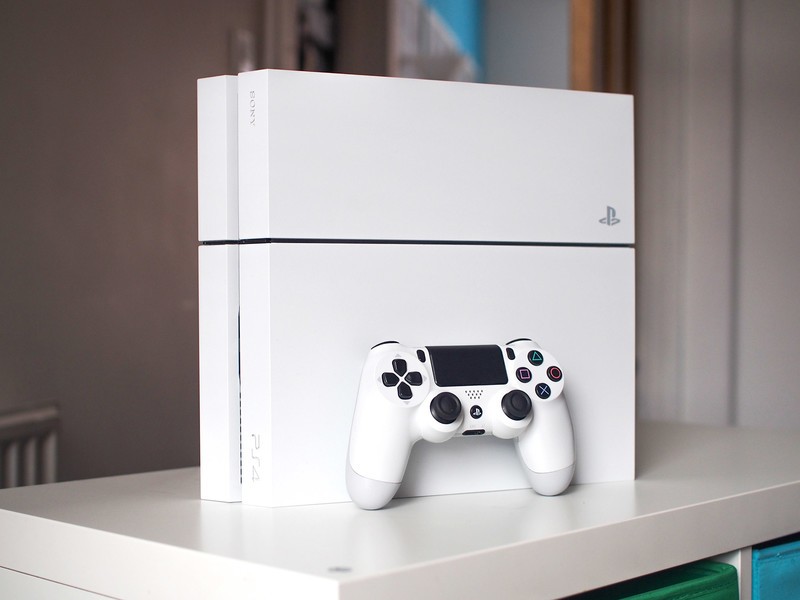
Adding a different DNS to your PS4 is easy when you know where to look.
DNS made the headlines recently when Cloudflare announced it’s new 1.1.1.1 service promising speed and security. Google is another high-profile company that offers a free DNS, and in both cases, or with any others you could use, it’ll likely be better than the one your ISP provides.
In the case of the PlayStation 4 you can apply a custom DNS directly to the console. It’s not particularly obvious how to do it, but once you know where to look, it’s pretty easy.
Here’s what you need to know.
Go to the settings menu on your console.
Select network.
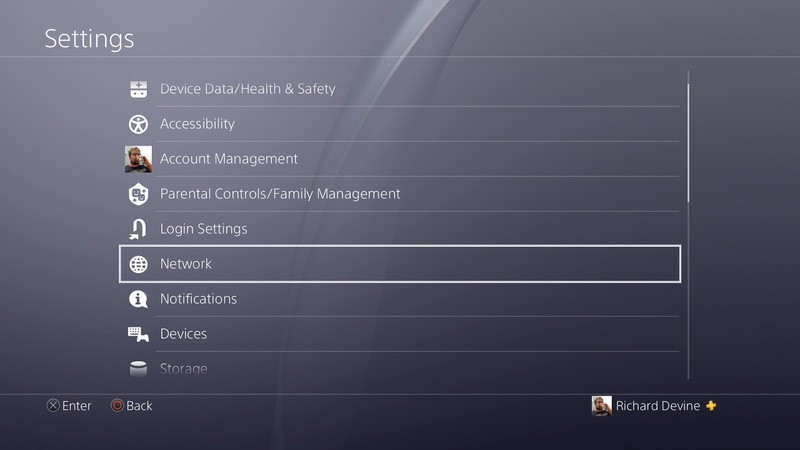
Next, select the set up internet connection option, regardless of whether you already have one set up on your console.
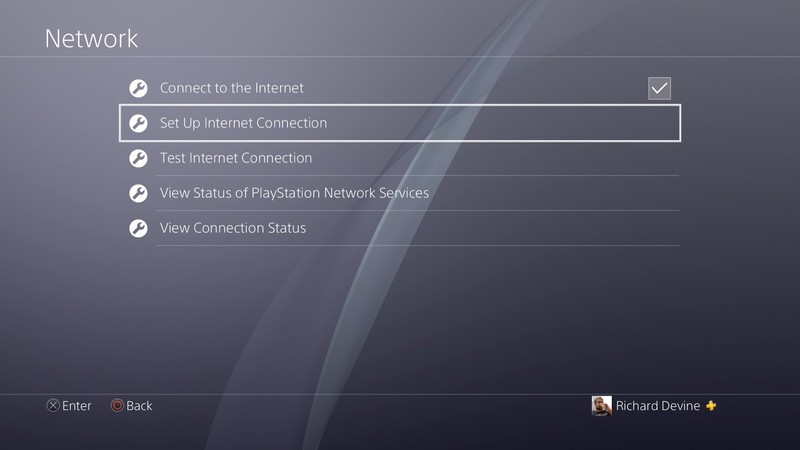
Choose Wi-Fi or LAN depending on your preference.
Select the custom set up option.
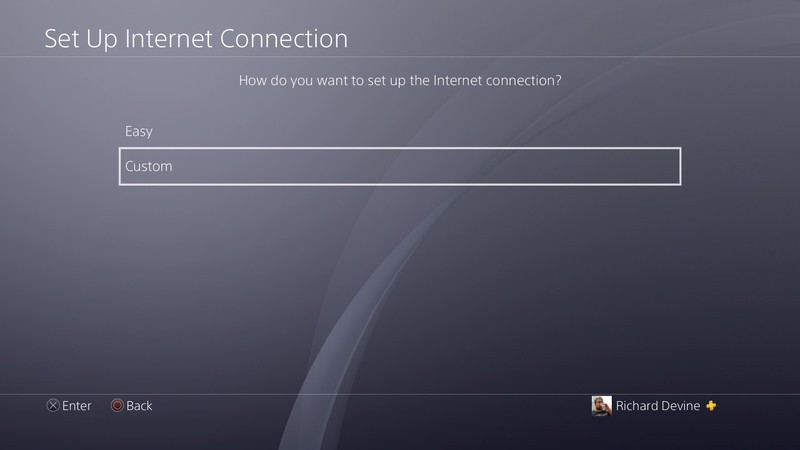
The next steps will refer to IP address and DHCP settings, if you have no preference choose the default for both.
When DNS settings appears, choose manual.
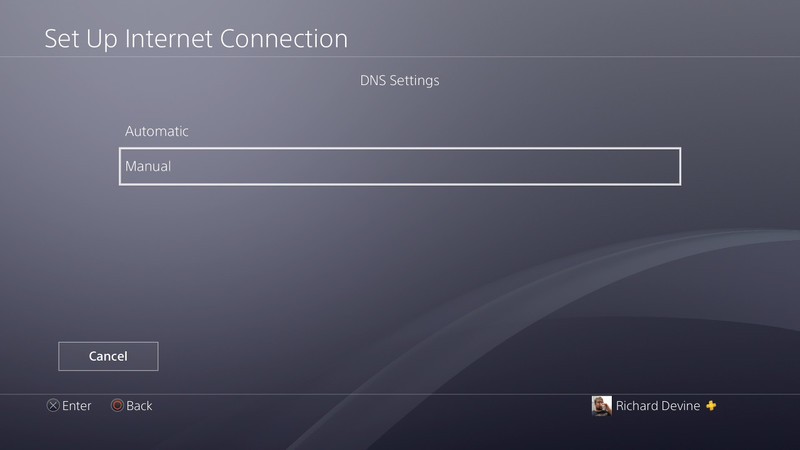
Enter the values for the primary and secondary DNS.
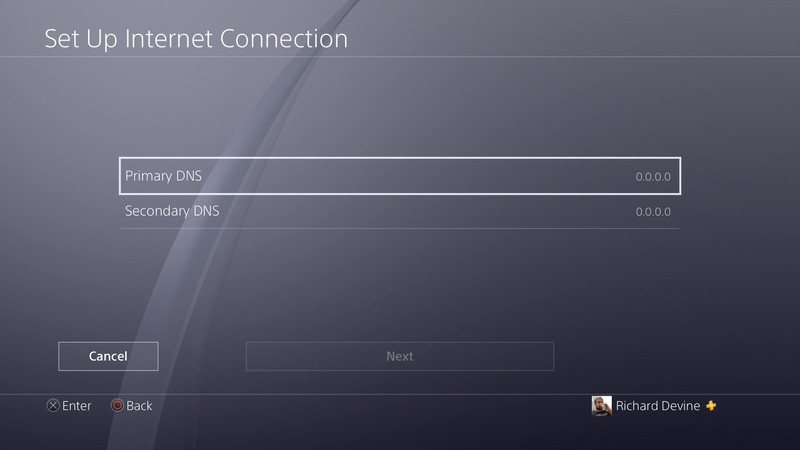
Now, once you complete the setup process, your console will be using the DNS you chose rather than an automatic one. It’s important to remember that you need to follow these steps to apply the change to the console, you can’t simply amend the DNS settings on your existing internet connection.
PlayStation 4
- PS4 vs. PS4 Slim vs. PS4 Pro: Which should you buy?
- PlayStation VR Review
- Playing PS4 games through your phone is awesome
Amazon
The RAVPower FileHub Plus wireless travel router is less than $30 today
Go as wireless as possible.
The RAVPower FileHub Plus multi-function wireless travel router is down to $29.59 with code 43G2U2FD on Amazon. The FileHub Plus is $45 without the code and more regularly sells for around $40. The price drop below $30 is one of the best we’ve ever seen.

Consolidate all your storage space with this device. It can help you transfer data between SD cards, USB drives, hard drives, and mobile devices like your phone or laptop to free up space where you need it. You can use it to convert a wired Internet connection to a wireless one so you can bridge multiple devices to the Wi-Fi and share security between them. You’ll be able to seamlessly share your favorite videos, photos, and music with anyone. It can wirelessly recognize your flash drives, SD cards, and more. It also has a 6000mAh external power bank built-in so you can keep your devices charged. Users give it 4.1 stars based on 1,248 reviews.
See on Amazon
 AIVAnet