


Google Fit Updates With Apple Watch-Like Rings That Track ‘Move Minutes’ and ‘Heart Points’
Google today updated its Wear OS iPhone app [Direct Link] and Google Fit Android app with a new redesign that emphasizes closing a set of rings, similar to Apple’s Activity app. Every day, Google Fit will task users to close one ring based on “move minutes” and another ring based on “heart points” (via The Verge).
“Move minutes” is a metric that is intended to be better than measuring daily steps because it can capture multiple activities, and walking “might not be a great option” for some users, Google Fit senior product manager Margaret Hollendoner explains. “Heart points” differs from “move minutes” by requiring users to engage in activities that will get their heart rate up but not require heavy physical activity (although it will reward more points for intense workouts).
Hollendoner says that it can be “as simple as picking up the pace when you’re walking.” Both of these metrics are measured when wearing one of Google’s Wear OS watches, but there are other options available as well. You can import health data from other devices compatible with Google Fit, although the company points out that the metrics might not be as accurate.
Similar to the Apple Watch, once personal data is input in Wear OS and Google Fit, the apps can offer up goals that it believes are appropriate for each individual user. The apps can also suggest that you might need another 20 minutes of exercise to hit a weekly goal, even if you slacked off earlier in the week.
Google collaborated with the American Heart Association and the World Health Organization to build the new rings and activity tracking. In the apps, users will be able to read more details about heart points, which AHA senior vice president Patrick Wayte sees as an “opportunity to get people oriented around the science,” and eventually “align them to the guidelines” the AHA recommends for daily physical activity.
As a comparison, Apple Watch’s Activity rings measure Move, Exercise, and Stand metrics, related to calories burned, high-intensity workout time, and time spent standing throughout a single day. For Google Fit, the company notes that it will still measure all of the basic stats as well, including daily steps and miles completed, and calories burned.
Tag: Google
Discuss this article in our forums
Netflix Tests Disabling In-App Subscriptions on iOS in Some Countries
Netflix is already one of the highest grossing apps on the App Store, as many iPhone and iPad users pay for their subscriptions via iTunes/Apple ID billing, but the streaming video platform wants an even bigger piece of the pie.
TechCrunch today reported that, until September 30, new or lapsed subscribers in some 33 countries will be unable to pay using iTunes.
The countries: Argentina, Australia, Austria, Belgium, Brazil, Canada, Colombia, Croatia, Czech Republic, Denmark, Ecuador, Finland, France, Germany, Hungary, India, Italy, Indonesia, Japan, Korea, Malaysia, Mexico, Norway, Peru, Philippines, Poland, Slovakia, South Africa, Spain, Sweden, Taiwan, Thailand, and the UK.
A customer service representative for Netflix confirmed the test with TechCrunch:
During this time, customers in these countries may experience any of the following when launching the Netflix app on an iOS (mobile or tablet) device:
1. Ability to sign up in app with only iTunes Mode Of Payment.
2. Ability to log into Netflix but not sign up (sign up only via mobile browser).We are constantly innovating and testing new signup approaches on different platforms to better understand what our members like. Based on what we learn, we work to improve the Netflix experience for members everywhere.
This means that some iPhone and iPad users who open the Netflix app will only be able to sign into an existing, active account, with no option to create a new account. By the sound of it, Netflix is hoping that these users will close the app, and sign up through its mobile website or elsewhere with a credit card.
Apple collects a 30 percent commission—15 percent after the first year—from users who subscribe via its in-app purchase mechanism, so it’s pretty clear that Netflix is trying to avoid padding the pockets of one of its biggest competitors, which just so happens to be working on a Netflix-like service itself.
Of note, Apple’s App Store Review Guidelines state that developers are not permitted to “directly or indirectly target iOS users to use a purchasing method other than in-app purchase,” but it appears that Netflix has worked around this rule by simply not offering new users the option to sign up in-app whatsoever.
We’ve reached out to Apple for comment.
Tag: Netflix
Discuss this article in our forums
Fortnite Code Suggests Popular Game Could Launch on Apple TV in the Future
Fortnite could launch on Apple TV at one point in the future, according to a new discovery by the @StormLeaks Twitter account late yesterday. As reported by esports and gaming website Dexerto, @StormLeaks found a single line within Fortnite’s code that references “tvOS,” suggesting that Epic Games may be planning to launch the popular game on Apple’s fourth- and fifth-generation set-top boxes down the line.
Still, this is just a single mention of tvOS in Fortnite’s code and shouldn’t be taken as a guarantee that the game will be available to play on Apple TV soon. If it does, the game would likely require a compatible wireless gaming controller, two of which Apple sells for $49.95 on its website.
#fortnite Fortnite is coming to Apple tvs. tvOS a Apple tv operating system has been found in the files. pic.twitter.com/QBBojQI0SX
— Storm – Fortnite Leaks (@StormLeaks) August 21, 2018
As it stands, Fortnite is currently available on iOS, macOS, Android, PC, Xbox One, PS4, and Nintendo Switch. Fortnite initially launched as a beta on iOS in March and then expanded wide in April. The smartphone apps are focused entirely on Fortnite’s PvP Battle Royale mode, but the console and desktop versions of the game also include a PvE mode called Save the World.
Fortnite Battle Royale on iOS is free-to-play (like it is on all platforms), but due to in-game content purchases the app in June reached $100 million in revenue 90 days after launch. Fortnite initially launched wide in summer 2017 on consoles, macOS, and PC, focusing only on the Save the World mode, with Battle Royale releasing a few months later in September 2017.
We’ve reached out to Epic Games for a comment and will update this post if we hear back.
Related Roundups: Apple TV, tvOS 12Tag: FortniteBuyer’s Guide: Apple TV (Neutral)
Discuss this article in our forums
Apple’s Revamped India Strategy Includes 5-6 ‘Flagship Premium Reseller’ Outlets in Major Cities
In an ongoing effort to boost sales in India, Apple is reportedly planning to upgrade its authorized reseller locations in five to six
“extremely prominent locations” in India’s metropolitan cities. The stores are being referred to as “Flagship Apple Premium Reseller” outlets.
While not official Apple stores, the locations will each be “at least three times larger” than the current reseller stores, which average about 1,000-1,500 square feet (via The Economic Times).
According to three senior industry executives, Apple may go up to as much as 5,000 square feet for the improved reseller locations in an effort to build them as “anchor shops” in malls and high-traffic outdoor shopping areas.
Apple will reportedly start construction on the flagship outlets first in New Delhi, Mumbai, Bangalore, and Chennai. Sometime after those locations, the company will then open outlets in Hyderabad and Pune. A specific grand opening window for these outlets was not given.
“With company-owned Apple Stores yet to take shape in the country, Apple wants some of the franchisee run outlets to up the experience game through this new format. This is part of Apple’s new India strategy to focus on selling on experience rather than discount,” he said.
Apple is even open to the idea of a couple of these flagship stores being as large as 5,000 square feet if a suitable location is available. “The key is getting the right location, which is not easy. A team from the company is identifying locations,” an executive said.
The outlets are part of Apple’s revamped India strategy, which includes overhauling its relationship with independent retailers, long-lasting retail deals, and opening official Apple retail stores in the country. These official stores are said to open beginning in 2019 and eventually include locations in New Delhi, Bangalore, and Mumbai.
Apple’s new strategy began when Michel Coulomb was hired to oversee the company’s India growth at the end of 2017. Apple routinely struggles in the Indian market due to the higher prices of its smartphones in comparison to other manufacturers like Xiaomi, and other factors.
The other major aspect of the revamped strategy is Apple’s services, which will be “aimed more closely at Indians” thanks to certain apps that will get major updates in the country, like a new Apple Maps coming by 2020. Earlier this year, Indian iPhone users discussed Apple’s poor performance in this area and one user specifically called Apple Maps “a joke” in India.
While some services like Apple Music were favorably received, others like Siri were identified as low points for Indian customers, as the assistant “often struggles” with local accents and does not understand “many words of Indian origination” — all pain points that Apple is hoping to address.
Tag: India
Discuss this article in our forums
End of the Voyage: Amazon stops selling its $200 Kindle
Amazon has ended the Voyage.
We’re talking about the Kindle ebook reader that it launched in 2014. Multiple reports in recent days have noted how the online shopping giant has quietly removed the device from its online store, as well as from the comparison table that showed it alongside the other Kindles.
That means consumers looking for an Amazon-made ebook reader now have a slightly narrower choice, with the offerings including the basic Kindle starting at $80, the Kindle Paperwhite starting at $120, and the top-of-the-range Kindle Oasis starting at $250. The Kindle Voyage retailed for $200.
When it launched four years ago, the Voyage offered several extras over the basic Kindle and Paperwhite, including a slimmer, lighter build, and improved screen resolution.
In its 2014 review, Digital Trends described the Voyage as Amazon’s “finest ebook reader yet,” if not “the best devoted e-reader you can buy.”
Anyone looking for a high-end reader among Amazon’s range of devices will now look to the Oasis, launched by the Seattle-based company in 2016. Last year Amazon revamped the Oasis, making it the first waterproof Kindle in the line-up.
The new Oasis is also slimmer than its predecessor and comes with an improved battery life of up to six weeks. If it’s too pricey, the original Kindle is still out there and offers a solid setup for ebook fans. You might also be able to pick up a refurbished Voyage from Amazon’s online store — at the time of writing, there’s one listed for $140.
And, of course, there are a number of decent alternative designs from Amazon’s competitors.
These include the Kobo Aura One. The $230 device features an impressive 7.8-inch E Ink high-definition touchscreen with a night setting to eliminate blue light for bedtime readers. It also supports a wider range of ebook formats than its rivals.
At the other end of the price scale is the Kobo Clara HD, which comes with a $130 price tag. This comes with a front-lit display, a clear 300 PPI display, and, like the Aura One, support for multiple formats. And its 8GB of storage means you’ll have enough space for more than 5,000 books, which, let’s be honest, is more than enough for your next vacation. Or indeed, all of your vacations put together.
Editors’ Recommendations
- Kobo Clara HD review
- The new Kobo Clara HD is a worthy (and affordable) Kindle competitor
- The Amazon Father’s Day Sale discounts Echo, Fire, Kindle, and Cloud products
- How to convert a Kindle book to PDF
- Amazon slashes prices on Echo, Fire TV, and Kindle for Prime Day
The world’s biggest plane now has some rockets to launch
Stratolaunch
Commercial space company Stratolaunch turned a lot of heads last year when it pulled the wraps off the world’s largest airplane, which it says will one day help to launch satellites into space.
Competing with the likes of Elon Musk’s SpaceX and United Launch Alliance (a Boeing and Lockheed Martin partnership), Stratolaunch is aiming to become the go-to mobile launch platform for private firms wanting to put satellites into orbit.
In a major step toward achieving its goal, the Seattle, Washington-based company, which was founded by billionaire Microsoft co-founder Paul Allen seven years ago, this week unveiled a family of rocket-powered launch vehicles that it wants to put into service from 2020.
They include the Medium Launch Vehicle (MLV) for payloads of up to 3,400 kg. The MLV is now in development, with testing slated for 2022.
There’s also the MLV Heavy, a three-core MLV variant capable of delivering payloads of up to 6,000 kg into orbit. This one is described as being in the early stages of development.
Completing the trio of MLVs is the MLV Reusable, described by Stratolaunch as a “fully reusable space plane that enables advanced in-orbit capabilities and cargo return.” Currently in the design stage, the initial version will focus on cargo launches, with a later version modified for transporting crew.
Finally, there’s the diminutive Pegasus, which has already achieved more than 30 successful launches with another carrier and can deliver payloads of up to a modest 370 kg. Stratolaunch wants to put Pegasus into service using its own system in 2020.
World’s largest airplane
Similar in some ways to Virgin Galactic’s launch system that uses an aircraft to get its secondary rocket-powered vehicle to a higher altitude rather than launching it from the ground, Stratolaunch’s gargantuan plane — with its 385-foot wingspan — will fly the launch vehicles to the stratosphere before releasing them to complete their satellite-deployment mission.
Commenting on Monday’s unveiling, Stratolaunch CEO Jean Floyd said, “We are excited to share for the first time some details about the development of our own, proprietary Stratolaunch launch vehicles … which will offer a flexible launch capability unlike any other.”
Floyd added: “Whatever the payload, whatever the orbit, getting your satellite into space will soon be as easy as booking an airline flight.”
The launch services market is expected to grow rapidly in the coming years, so Stratolaunch will be keen to stay on track with its 2022 target to have any chance of securing a meaningful chunk of the market. Besides building the MLVs, it also needs to fully test its enormous carrier plane, which is yet to take its maiden flight.
Stratolaunch says that using its huge airplane and collection of launch vehicles will make space “accessible, affordable, and routine.”
Editors’ Recommendations
- SpaceX wins confidence-boosting Falcon Heavy contract with U.S. Air Force
- Virgin Galactic ‘neck and neck’ with Blue Origin in space tourism race
- Get your Sagan on with 60 awe-inspiring photos of the final frontier
- These astronauts will whiz around Earth 34 times before reaching space station
- Virgin Galactic wants to launch space tourism flights from an Italian spaceport
How to Chromecast footage from your Lenovo Mirage Solo

A Chromecast is on of the best accessories for your Mirage Solo.
Gaming in virtual reality has a giant draw: total isolation. With the headset covering your eyes and some big headphones cutting off any outside noise, you can be completely immersed in your game. This also means that no one else can watch you play your game, since you’re not going to squeeze another person into the headset while you’re wearing it. Fortunately, it’s really easy to share your game footage.
Here’s how to Chromecast footage from your Lenovo Mirage Solo!
- Choosing the right Chromecast
- Casting your footage
Choosing the right Chromecast

Not all Chromecasts are created equal, with the main difference being that the more expensive model has the internal guts to handle 4K HDR movies. That requires more processing power than 1080p footage, which is why two different models exist in the first place. What does this have to do with your Mirage Solo? Well, the Chromecast Ultra’s extra power also comes in handy when transmitting footage from your headset to the TV. If you’re going to frequently have friends over for VR game parties, the extra money for the Chromecast Ultra will be well worth it.
More: Chromecast Ultra delivers the best casting experience with Daydream
Casting your footage

Once you have your Chromecast set up, getting your VR world onto the big screen is pretty easy.
Power on your Mirage Solo and place it on your head.
Press the indented button on the remote to wake the remote up.
Press the indented button on the remote again to go to the home screen.
Press the indented button on the remote one more time to bring up the menu.
Select the Google Cast icon at the top of the screen.
Select Cast audio to TV.
Select your Chromecast.
That’s it! Now your footage is on the big screen for all to see!
What are your thoughts?
How often do you share your VR world? Let us know down below!
Google Daydream

- Daydream View review
- The ultimate guide to Daydream
- These phones support Daydream VR
- Every Daydream app you can download
- Catch up with Daydream in the forums!
Apple Adds Two Chinese Manufacturers to MacBook Chassis Supply Chain
Apple has added two China-based manufacturers to its list of MacBook chassis suppliers in an effort to push down prices quoted by Taiwan-based makers, according to a new report today by DigiTimes.
China-based Shenzhen Everwin Precision Technology and AAC Technologies are said to have obtained Apple certification in 2017, and this year they began small-volume shipments of the metal-alloy chassis for Apple’s notebook line-up.
Previous years saw Taiwan-based Catcher Technology, Foxconn Technology and Casetek Holdings dominate the supply of MacBook chassis, and Apple reportedly intends to continue relying on them because of their excellent manufacturing capabilities, but not before it has capitalized on the Chinese makers’ lower production costs.
DigiTimes’ sources indicate that for Taiwan makers, competition from China rivals will have more impact on their gross margins than on order volumes. To offset the impact, Taiwan companies have increasingly sought orders from Chinese brand vendors of high-end devices like laptops. Responding to the rumored potential of Chinese competition for Apple’s business, for example, Catcher said its outlook for 2018 remained unchanged.
Apple is expected to release a new low-cost MacBook Air later this year that will be similar in design to the current MacBook Air, but with slimmer bezels around the display. Based on the latest rumor, the new machine will be a straight MacBook Air upgrade aimed at students and schools, with a lower price tag than MacBooks in the MacBook family.
It remains unclear how a new 13-inch Retina MacBook Air fits in with Apple’s existing 12-inch Retina MacBook lineup, so the company’s plans for its upcoming notebook range could still throw up a surprise or two.
Related Roundups: MacBook Air, MacBook ProTag: digitimes.comBuyer’s Guide: MacBook Air (Don’t Buy), MacBook Pro (Buy Now)
Discuss this article in our forums
Nokia 6.1 Plus first impressions: HMD Global’s next bet in the mid-range segment
HMD Global has announced the launch of its new mid-range smartphone, the Nokia 6.1 Plus, in India. As was rumored, the Nokia 6.1 Plus is essentially the Nokia X6 that was launched in China in May this year with a change of name.
The Nokia 6.1 Plus is the third iteration in the series. The original Nokia 6 was launched in 2017 and was followed up with Nokia 6 (2018) – popularly dubbed as Nokia 6.1 – early this year with incremental hardware updates. And here we are with the Nokia 6.1 with souped-up specifications and a completely different looking chassis.
Here are my initial impressions of the Nokia 6.1 Plus that aims to take on very popular mid-range smartphones from Xiaomi and Honor.
Refreshing design, with a notch
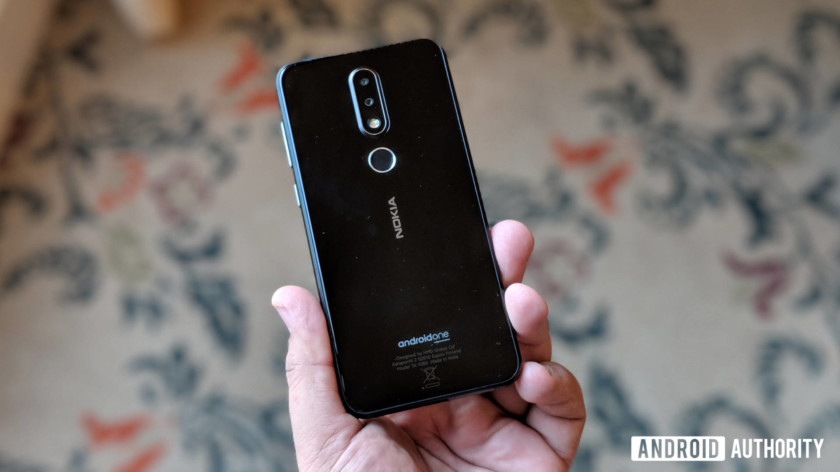
The Nokia 6.1 Plus sports an aluminum alloy body with glass on top. It boasts of a 5.8-inch Full HD+ display with a 19:9 screen ratio. There’s an 81.5% screen-to-body ratio and although the phone has thin black bezels all around and a chin at the bottom with Nokia branding, there’s a notch on the top, a first for a Nokia smartphone.
With just 8mm of thickness and 151 grams in weight, the Nokia 6.1 Plus feels great in the hand. Even with the relatively large screen, it’s a pretty compact phone and quite ergonomic. The glass design makes it a smudge magnet, but one swipe on the jeans, and it looks rad.
Pure, secure, and up-to-date Android

Like other phones in HMD Global’s current portfolio, the Nokia 6.1 Plus too is an Android One smartphone. Out of the box, it ships with Android 8.1 Oreo and offers clean, stock Android experience.
Android One certification implies that the smartphone will receive 2 years of guaranteed Android ‘letter’ upgrades and 3 years of monthly security updates.
Mid-range specifications sheet
The Nokia 6.1 Plus is powered by one of the newer and powerful mid-range processors by Qualcomm, the Snapdragon 636 and packs in 4GB of RAM with 64GB of internal storage.
Specifications
| Display | 5.8-inch Full HD+ (2280 x 1080) IPS LCD 19:9 aspect ratio 2.5 D curved glass Corning Gorilla Glass 3 |
| SoC | Qualcomm Snapdragon 636 |
| GPU | Adreno 509 |
| RAM | 4GB LPPDDR4x |
| Storage | 64GB Expandable up to 400GB with MicroSD card |
| Front Camera | 16MP f/2.0 aperture 1.0um pixel size |
| Rear Camera | 16MP AF primary camera f/2.0 aperture 1.0um pixel size 5MP secondary camera Dual-LED dual-tone flash |
| Battery | 3060mAh Fast charging support; bundled 5V/2A charger |
| Sensors | Ambient light sensor, Proximity sensor, Accelerometer (G-sensor), E-compass, Gyroscope, Fingerprint Sensor |
| Connectivity | 802.11 a/b/g/n/ac Bluetooth 5.0 GPS/AGPS+GLONASS |
| Software | Android 8.1 Oreo Android One |
| Dimensions and weight | 147.2 x 70.98 x 7.99mm, 151g |
| Colors | Midnight Blue, Gloss Black, Gloss White |
Camera
The camera experience on the Nokia 6 and Nokia 6 (2018) was a hit and a miss. HMD Global wants to put that inconsistent performance behind and the AI-enhanced dual camera on Nokia 6.1 Plus comes with depth-based imaging for sharp and bright photos. We’ll reserve our judgment of the same until the review once we’ve taken the phone for a whirl for a longer time.
The 16MP front camera too is quite impressive on paper. The camera is clearly one of the highlights of the Nokia 6.1 Plus.
Pricing and Availability

Priced at 15,999 rupees ($230) in India, the Nokia 6.1 Plus is available in three color variants – Midnight Blue, Gloss Black, and Gloss White – and will be available exclusively on Flipkart starting August 30 (the pre-orders start today).
The Nokia 6.1 Plus is a well-rounded package that boasts of a competitive specifications sheet and a good-looking and functional design that should appeal to a broad set of users. We’re taking a deep dive into the Nokia 6.1 Plus and would soon publish the full review of the device. Watch this space.
Meanwhile, let us know your thoughts on HMD Global’s latest mid-range smartphone and its pricing, and would you like to pick up a Nokia 6.1 Plus?
Parallels Desktop 14 for Mac Offers Speed and Storage Gains, macOS Mojave Support
Parallels today announced version 14 of its desktop virtualization software for Mac, offering macOS Mojave support out of the box and significantly improved application launch speeds over the previous version.
This update puts a heavy focus on enhanced storage optimization, with Parallels Desktop being around 20-30 percent smaller than earlier releases. The company says virtual machines can also save as much as 20GB of additional disk space depending on how they’re configured.
Elsewhere, the developers have optimized the compression of memory states saved with the Snapshots tool, which takes on average 15 percent less storage space, while a new disk space wizard provides users with suggestions on how to economize storage, with advice on managing multiple virtual machines and VM snapshots.
In addition, Parallels 14 introduces several Windows features for use in macOS. For example, Microsoft Ink is now available for editing Office documents, and stylus support has been added to CorelDRAW, Fresh Paint, PowerPoint, Adobe Illustrator and Photoshop.
Parallels Desktop also now includes Touch Bar features on compatible MacBook Pros for OneNote, AutoCAD, SketchUp, Microsoft Visio, and other apps, while a Touch Bar wizard offers users the ability to customize Windows app shortcuts from Apple’s OLED function strip.
Lastly, Parallels Toolbox has received some additional Mac features including new options to screenshot entire web pages, resize images and perform memory consolidation functions.
Parallels Desktop 14 for Mac is available from August 23. Existing Parallels 12 and 13 users can upgrade to the new version for $50. New users can sign up for an $80 a year subscription or make a one-time purchase of Parallels 14 for $100. Parallels Desktop 14 Pro Edition and Business Edition both cost $100 per year. Note that a Windows license is not included in the software and must be bought separately.
Tag: Parallels 14
Discuss this article in our forums
 AIVAnet