


Apple Seeds Tenth Beta of iOS 12 to Developers, 8th Beta to Public Beta Testers
Apple today seeded the tenth beta of an upcoming iOS 12 update to developers for testing purposes, three days after seeding the ninth beta and more than two months after introducing the new software at the Worldwide Developers Conference. Apple has also seeded an 8th beta to public beta testers.
Registered developers can download the new iOS 12 beta from Apple’s Developer Center or over-the-air after installing the proper certificate, while public beta testers can download the beta over-the-air.
Subscribe to the MacRumors YouTube channel for more videos.
iOS 12 brings several major new features, with Apple revamping the operating system from top to bottom to make iPhones and iPads, especially the older models, faster and more responsive.
On the iPhone X, there are new Animoji characters along with “Memoji,” which are customizable, personalized, humanoid Animoji that can be used both in Messages and in FaceTime, and there are new camera effects in both of those apps.
Apple originally planned to introduce Group FaceTime support in iOS 12, but the feature was removed in iOS 12 beta 7 and will not be reintroduced until later this fall in a future update to iOS 12.
Siri is smarter in iOS 12 with a new Shortcuts feature that lets you create multi-step customized automations using first and third-party apps that can be activated with Siri voice commands. Shortcuts can be created through the Shortcuts app, available as a beta from Apple’s Developer Center.
Apple built comprehensive time management and monitoring tools into iOS 12 with Screen Time, allowing you to keep track of how much time you’re spending in apps on your iPhone and iPad. App limits can help you cut back on iOS device usage, and robust parental controls are included for families.

Updated Do Not Disturb options make activating Do Not Disturb more intuitive and simple, and a new Do Not Disturb at Bedtime feature cuts down on nighttime distractions and sleep interruptions.

Grouped Notifications make incoming notifications easier to view and manage, while a new Instant Tuning feature lets you tweak your notification settings right on the Lock screen on a notification-by-notification basis.
Apple News has a new Browse feature, the Stocks app has been redesigned and brought to the iPad, iBooks has been overhauled with a new look and a new name — Apple Books — and Voice Memos has been revamped with iCloud support and an iPad app.
ARKit 2.0 introduces new capabilities like shared experiences that let two people see the same AR environment on separate devices, and persistence, which allows AR experiences to be saved across multiple sessions. There’s also a new Apple-built Measure app for measuring objects using AR capabilities.
iOS 12 includes a revamped and rebuilt Maps app that uses a new Apple-designed Maps engine that will display foliage, pools, buildings, pedestrian pathways, and other map elements more accurately. The new Maps also includes significant improvements to traffic, real-time road conditions, construction, and more, plus it will enable Apple to push out changes and fixes more quickly.

The updated Maps app is available in the Northern California area during beta testing. After iOS 12 launches, Apple will continue rolling out the new maps to additional U.S. locations
New betas of upcoming operating system updates always introduce tweaked features and new functionality, and we’ll be outlining what’s new in the seventh beta below. We also rounded up all of the changes that were introduced in the previous betas: beta 2 and beta 3, beta 4, beta 5, beta 6, and beta 7.
Later betas have had fewer changes because we’re approaching the end of the beta testing period, with a public launch for iOS 12 planned for September alongside new iPhones.
Related Roundup: iOS 12
Discuss this article in our forums
DJI’s new Mavic drones are here, and they’re even better than we expected
Previous
Next
1 of 7


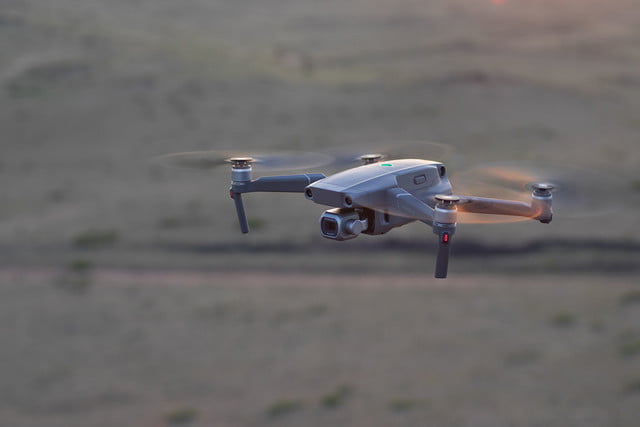


Following months of rumors and leaked photos, Chinese drone manufacturer DJI finally pulled the curtain back on its new Mavic 2 series on Thursday, August 23, unveiling two new camera drones: The Mavic 2 Pro and Mavic 2 Zoom.
Billed as “the most advanced DJI camera drone[s] ever built,” the new Mavic 2 quads are an evolution of DJI’s hugely popular Mavic line. As such, both drones are equipped with many of the same bells and whistles as the first generation Mavic, but with a few notable upgrades. Here’s what’s new:
Upgrades Galore
First of all, it’s important to note that aside from the cameras they carry, both Mavic 2 drones are exactly the same in terms of specs. They both boast a 31-minute maximum flight time, 4K video capture abilities, a top speed of 44 mph, and a range of intelligent flight modes. DJI has also equipped them with new-and-improved versions of its core flight software, including:
- ActiveTrack 2.0, which now not only tracks moving subjects automatically but also helps the drone avoid obstacles. Version 2.0 comes with trajectory algorithms that can predict where your subject will be three seconds in the future, and help the drone stay on target even when the subject moves behind an obstacle.
- OcuSync 2.0, which provides a more stable connection between the drone and your controller. In addition to stronger interference resistance, version 2.0 reportedly enables 1080p video transmission feeds at a distance of up to 5 miles (8km), allowing you to “instantly edit and upload Full HD footage directly from the video cache in the DJI app.”
- DJI’s new FlightAutonomy system, which enables more accurate obstacle sensing and safer flight. To make this possible, Both the Mavic 2 Pro and Mavic 2 Zoom are outfitted with 10 sensors that give them full 360-degree environmental awareness.
All things considered, the Mavic 2 line is a significant improvement over the first generation, despite the fact that the new drones don’t look much different from the old ones.
Sharp Shooters
The only real differentiator between the Mavic 2 Pro and the Mavic 2 Zoom is their respective camera setups (and also the shooting modes that are afforded by those setups).
The Mavic 2 Pro is arguably the more powerful of the two, thanks largely to the fact that it’s the first and only drone on the market that carries an integrated Hasselblad camera. “Housing a 1-inch CMOS sensor with a 10-bit Dlog-M color profile, the camera captures four times as many levels of color per channel compared to Mavic Pro to provide maximum flexibility for photo and video editing;” DJI explains in a press release. “The Mavic 2 Pro can capture 20-megapixel aerial shots with utmost color accuracy using Hasselblad’s unique Hasselblad Natural Color Solution (HNCS) technology, while an adjustable aperture from f/2.8-f/11 provides more control across a wide variety of lighting conditions. With 4K 10-bit HDR support, the Mavic 2 Pro can be plugged into a 4K TV with HLG and will play back footage with the right color tones.”
Unfortunately, the Mavic 2 Zoom doesn’t come with a Hasselblad camera — but what it lacks in color accuracy and sensor size, it makes up for with its unique zooming abilities. Much like Parrot’s new Anafi drone, the Mavic Zoom boasts a lossless digital zoom function — a feature that is relatively rare for consumer drones.
“Powered by a 1/2.3-inch CMOS sensor, the Mavic 2 Zoom is DJI’s first foldable consumer drone with zoom, providing a dynamic perspective that ushers in a new era of creative storytelling.” DJI explains. “With the Mavic 2 Zoom, you can get closer to your subject at a moment’s notice by combining two-times optical zoom (24-48mm) with two-times digital zoom to simulate a 96mm telephoto lens that captures lossless video in full HD resolution. Hybrid auto-focus on the Mavic 2 Zoom combines phase and contrast detection for higher focus accuracy with an increased focus speed of up to 40 percent faster than before.”
This new zoom function also enables an awesome shooting trick that, until now, was rather difficult to achieve with a flying camera: The dolly zoom (also known as the vertigo zoom or Hitchcock zoom). You’ve probably seen this before in movies. It’s the shot where the central subject remains the same size while the background zooms in and out, creating a vertigo-inducing visual effect. DJI’s setup automates the process so you can take dolly zoom shots at the press of a button.
Best of all, both Mavic 2 drones are now available for purchase. The Mavic 2 Pro retails for $1,449, whereas the Zoom can be had for $1,249 — a full $200 less. Stay tuned for our full review in the coming weeks!
Editors’ Recommendations
- Parrot’s new HDR camera drone is a shot across DJI’s bow
- Here’s everything we know about the 2019 iPhone
- From ‘Anthem’ to ‘Smash Bros. on Switch,’ here are the games coming to E3 2018
- Sony Xperia XZ3: Here’s everything we know
- ‘Red Dead Redemption 2’: Everything we know
Sony’s new Aibo First Litter Edition is absolutely adorable (but it costs $2,899)
Previous
Next
1 of 5


Love pets but hate pet hair and poop? Meet Sony’s sixth-generation Aibo robot dog, an adorable, A.I.-powered robo-beast that will learn who you and your friends are and come to love you – just like a real dog.
Sony on Thursday unveiled the limited First Litter Edition Aibo, which goes on sale in a few weeks (just in time for the holidays) for a mere $2,900 – a price certain to have some shoppers barking. The puppy is a technology tour de force, which partly explains the price. It has 22 axes of movement, thanks to new ultra-compact actuators. Its eyes are OLED screens, which are bright and expressive. It’s got a camera in its nose – to recognize who you are — and one just before its tail, which allows it to act as a sort of security device as it roams your house at night. And it comes for the first time with a cloud-connected A.I. system to help the companion robot learn who you are and grow and adapt.
A.I. is on the tip of every tech company’s tongue lately. LG told us earlier this month about its massive investment in A.I., which solves the conundrum that lies at the heart of modern technology, threading its way from your phone to your dishwasher to your air conditioner: “Currently, you need to be smart to use a smartphone,” I.P. Park, president and chief technical officer of LG Electronics, told Digital Trends.
To solve that problem, LG is going all-in on A.I., announcing a major investment in research and development: The company just cut the ribbon on the new LG Electronics A.I. Research Lab in Canada, a five-year research partnership with the University of Toronto and an extension of the newly expanded LG Silicon Valley A.I. Lab in Santa Clara, California, which opened in 2013. LG also has research labs working on A.I. around the globe, including in Russia, Japan, China, Korea, Finland, and India, in addition to the North American spaces.
Samsung announced a similar A.I. push during its recent Unpacked event, where the company announced it was packing A.I. and the Bixby voice assistant not just into smartphones but smartwatches, and ultimately everything the company sells.
Previous
Next
1 of 5

ERS-110 (1999) Digital Trends / Jeremy Kaplan

ERS-210 (2000) Digital Trends / Jeremy Kaplan

ERS-220 (2001) Digital Trends / Jeremy Kaplan

ERS-311 (2001) Digital Trends / Jeremy Kaplan

ERS-7 (2003) Digital Trends / Jeremy Kaplan
For Sony, A.I. is not just a way to smarten gadgets but a way to build companions, products that can connect with owners. Aibo will recognize up to 100 different people, and can recall the various interaction it has had with each one of them.
“This is truly a one-of-a-kind product designed to connect with its owners on an emotional level,” said Mike Fasulo, president and chief operating officer of Sony’s North American arm. “Aibo’s charming personality, dog-like behaviors, and ability to intelligently interact with family members help to create a personal bond. Bringing Aibo back to the U.S. reflects Sony’s broader commitment to provide consumers with products that not only entertain them but also enrich their lives.”
The robo-pups are on display in Sony’s headquarters in New York City, and I spent an hour or so playing with the little guys. Forget the price tag for the time being – Aibo is unquestionably adorable. It learns tricks, and seeing Aibo roll over, wag its tail, or raise a paw to shake with you had me and an entire audience of journalists gushing. Because Aibo grows as it goes, the puppies we looked at were just that: babies, and they have personalities to match. That means they don’t always respond to your commands, just like real puppies. They also expressed very real curiosity: They wanted to play with me as much as I wanted to play with them.
Still, sticker shock may be a factor as Sony aims for the U.S. market. The company has sold 20,000 Aibos in Japan since bringing the beast back in January, Sony announced today, but consider the cost: The Japanese units sold for around $1,800. This model is over $1,000 more expensive.
Editors’ Recommendations
- Why learn to use gadgets when they can just learn to help us? Exactly, says LG
- Nvidia hands out $3,000 Titan V graphics cards for free to A.I. researchers
- YaDoggie Fresh is human-grade dog food you cook in your Instant Pot
- By studying patient data, A.I. can limit toxicity in cancer treatment
- Win a Furbo treat-tossing dog camera for your good boy or girl
Qualcomm Snapdragon reportedly Microsoft’s first choice for Surface Go CPU
Rich Shibley/Digital Trends
Microsoft watcher Paul Thurrott claims that the company originally intended to use Qualcomm’s ARM-based Snapdragon processor in its new Surface Go. But Intel supposedly caught wind of the move and offered “deep discounts” on its Pentium Gold processor that Microsoft simply could not refuse.
Microsoft introduced the Surface Go in July targeting Apple’s iPad. It has a starting price of $400 packing Intel’s seventh-generation Pentium Gold 4415Y two-core processor released in the first half of 2017. The chip has a base speed of 1.6GHz and only draws six watts of power on average. Had Microsoft gone with a Snapdragon 835, the Surface Go would have an eight-core chip with speeds of up to 2.45GHz. Snapdragon chips typically eat up to five watts of power.
As revealed in our tests, the Pentium-based Surface Go lasted just over eight hours in continuous video playback and around five hours in our web browsing loop. The Surface Go relies on a 27WHr battery, so it really can’t be compared against the larger “always connected” Snapdragon-based Windows 10 PCs with larger batteries.
Qualcomm’s Snapdragon chips promise high performance, crazy-long battery life and a constant internet connection. The company teamed up with Microsoft to provide “always connected” PCs in late 2017. The three models currently available include the Asus NovaGo, the HP Envy x2, and the Lenovo Miix 630. The first two claim a battery life of up to 22 hours while the Lenovo model maxes out at 20 hours.
Using Qualcomm’s Snapdragon chip in the Surface Go makes sense given its high portability. But that means the device would need to run Windows on ARM, a modified version of Windows 10 fine-tuned to run on ARM-based processors. ARM licenses out a different CPU design than what’s used with processors by Intel and AMD, requiring a different “language.”
That was Microsoft’s whole problem with the original Surface. Based on the now-defunct Windows RT, the first Surface had a limited app library. Customers were already annoyed with the tile-based Windows 8 interface, but they also couldn’t run their favorite desktop software designed for Intel- and AMD-based PCs. Microsoft is now better prepared with Windows 10 and the Universal Windows Platform.
If you’re not familiar with the Surface Go, it’s a 10-inch Surface-branded tablet with an 1,800 x 1,200 resolution. It runs Windows 10 in S Mode out of the box, meaning there are restrictions in place such as locking software installs to the Microsoft Store. The device includes 4GB or 8GB of system memory and 64GB or 128GB of storage, depending on your budget.
Although the Surface Go doesn’t provide LTE connectivity, you’ll find Bluetooth 4.1 and Wireless AC wire-free networking. The port complement includes one USB-C, a headphone jack, a MicroSD card reader, a Surface Type Cover port, and a Surface Connect port. Given the device relies on a 27WHr battery, taking the Snapdragon road may have extended the video playback time beyond the current nine-hour threshold.
Editors’ Recommendations
- Dell is reportedly working on its dual-screen version of the Surface Phone
- Microsoft’s Surface Tablet clears final hurdle before launch
- AMD’s next batch of Ryzen desktop CPUs may focus on better power efficiency
- Qualcomm’s Snapdragon 850 chip appears in benchmarks with improved performance
- Microsoft’s ‘Andromeda’ device may be a phone after all
Qualcomm Snapdragon reportedly Microsoft’s first choice for Surface Go CPU
Rich Shibley/Digital Trends
Microsoft watcher Paul Thurrott claims that the company originally intended to use Qualcomm’s ARM-based Snapdragon processor in its new Surface Go. But Intel supposedly caught wind of the move and offered “deep discounts” on its Pentium Gold processor that Microsoft simply could not refuse.
Microsoft introduced the Surface Go in July targeting Apple’s iPad. It has a starting price of $400 packing Intel’s seventh-generation Pentium Gold 4415Y two-core processor released in the first half of 2017. The chip has a base speed of 1.6GHz and only draws six watts of power on average. Had Microsoft gone with a Snapdragon 835, the Surface Go would have an eight-core chip with speeds of up to 2.45GHz. Snapdragon chips typically eat up to five watts of power.
As revealed in our tests, the Pentium-based Surface Go lasted just over eight hours in continuous video playback and around five hours in our web browsing loop. The Surface Go relies on a 27WHr battery, so it really can’t be compared against the larger “always connected” Snapdragon-based Windows 10 PCs with larger batteries.
Qualcomm’s Snapdragon chips promise high performance, crazy-long battery life and a constant internet connection. The company teamed up with Microsoft to provide “always connected” PCs in late 2017. The three models currently available include the Asus NovaGo, the HP Envy x2, and the Lenovo Miix 630. The first two claim a battery life of up to 22 hours while the Lenovo model maxes out at 20 hours.
Using Qualcomm’s Snapdragon chip in the Surface Go makes sense given its high portability. But that means the device would need to run Windows on ARM, a modified version of Windows 10 fine-tuned to run on ARM-based processors. ARM licenses out a different CPU design than what’s used with processors by Intel and AMD, requiring a different “language.”
That was Microsoft’s whole problem with the original Surface. Based on the now-defunct Windows RT, the first Surface had a limited app library. Customers were already annoyed with the tile-based Windows 8 interface, but they also couldn’t run their favorite desktop software designed for Intel- and AMD-based PCs. Microsoft is now better prepared with Windows 10 and the Universal Windows Platform.
If you’re not familiar with the Surface Go, it’s a 10-inch Surface-branded tablet with an 1,800 x 1,200 resolution. It runs Windows 10 in S Mode out of the box, meaning there are restrictions in place such as locking software installs to the Microsoft Store. The device includes 4GB or 8GB of system memory and 64GB or 128GB of storage, depending on your budget.
Although the Surface Go doesn’t provide LTE connectivity, you’ll find Bluetooth 4.1 and Wireless AC wire-free networking. The port complement includes one USB-C, a headphone jack, a MicroSD card reader, a Surface Type Cover port, and a Surface Connect port. Given the device relies on a 27WHr battery, taking the Snapdragon road may have extended the video playback time beyond the current nine-hour threshold.
Editors’ Recommendations
- Dell is reportedly working on its dual-screen version of the Surface Phone
- Microsoft’s Surface Tablet clears final hurdle before launch
- AMD’s next batch of Ryzen desktop CPUs may focus on better power efficiency
- Qualcomm’s Snapdragon 850 chip appears in benchmarks with improved performance
- Microsoft’s ‘Andromeda’ device may be a phone after all
What are the differences between Android One and Android Go?

Both are designed for budget phones, but they each use a very different strategy. Here’s what you need to know.
Android is a complicated beast. It’s one of those things that’s essentially the same across tens of thousands of different device configurations, but completely different on the surface. It needs to be this way because that’s how Google and its partners are able to offer a choice of many different phones at every price point yet have them all still be able to run the same apps downloaded from the same place. The fact that it gets shipped out the door is a complete marvel and mystery.
It can get even more confusing when you add “special” versions of Android designed for a specific class of hardware into the mix, like Android One and Android Go. It can be difficult to understand the differences between all the versions, let alone trying to compare Android Go to Android One, which are both advertised as a version of Android designed for budget hardware. Android on ultra-slim hardware is both a business strategy — Google wants the Next Billion — as well as a way to help developing countries build out infrastructure and offer services to places that don’t yet have them available.
Software engineers and application developers know the differences and nuances of the Android platform, but it’s really not too tough for us regular folks to understand once it’s broken down.
What is Android One?

You could think of Android One as a way to build cheap Pixel phones and you wouldn’t be too far off the mark.
When a “regular” Android phone is in production, the company making it decides what hardware to use, then uses the Android source code to create its own operating system. There is a lot of leeway given to a company like Samsung that lets it create great Android phones and then build out the software and operating system to support the extras included in them. If the company building these phones would like to include Google’s services and branding — that would be Google Play, Gmail, Google Photos, Chrome, and the other Google apps we find preloaded on most phones we buy — the device has to pass a set of tests.
Android One is Android for “cheap” phones that comes from Google.
These tests really only do one thing: make sure the device will be able to run every standard app that’s in Google Play. Google has to do this to offer its own app marketplace; imagine how bad things would be if you had no idea which apps from the Play Store would work on your phone. By making every phone pass these tests, Google can then standardize how apps are written for the Play Store and everything works everywhere.
With an Android One device, the company building it loses some of that independence when it comes to the hardware and software. When an Android One phone is in production, Google makes the final decision about the hardware used, so it can be sure that the end product is a “high-quality but low-cost” Android smartphone. It then oversees the software production and maintains the responsibility to keep the device updated and running well throughout its lifetime. Android One was primarily designed for the Indian market but has expanded to include phones for everyone no matter where they live.
More: These are all the Android One phones available today
What is Android Go?

Android Go isn’t a special version of Android like Android One or “regular” Android that is on a Google Pixel phone. It’s the very same Android (Android Oreo or higher) designed and optimized for low-end hardware with 1GB of RAM or less.
When a company that makes phones takes the Android source code and builds out their version of the operating system, it sets up a device configuration. This configuration is designed to best support the hardware inside the phone and it’s a shortcut that can be used whenever Android needs rebuilt (like when a security path needs to be added) for that particular device. Going through source files is tedious and many of the edits will never change, and this is how all those edits are kept track of.
Android Go is Android for “cheap” phones designed by Google but build by the companies who make the phones.
Android Go is a configuration that’s been designed by Google with platform-level tweaks for optimization of lower-end hardware, more tools for data management, and a special “light” version of Google’s mobile services. Companies that make phones are able to use this configuration as the base for building Android, and once specifics for hardware support are added no further optimization should be necessary.
While Android Go includes special versions of Google’s apps that have been designed for devices with 1GB of RAM or less, Android Go phones are able to download and install any app from Google Play just like Android One and “regular” Android phones are. the difference is that there is a specific area in the Play Store for apps optimized for Android Go phones.
Android Go debuted in early 2018 with phones from Nokia, ZTE, Alcatel, ASUS, Lava, Micromax, and General Mobile. In July 2018 Motorola used Android Go to power their incredibly successful E series with the E5 Play for the European Market.
More: These are all the Android Go phones available today
A name is a name
In the end, this really doesn’t have to matter unless you’re a developer — and that’s by design.
Android, Android One, and Android Go are all ways to offer Android-powered phones that runs well on the hardware inside of them and can use any of the one million plus apps found in Google’s Play Store. It may provide more work for developers and be a bit confusing for enthusiasts that want to know about the various versions and differences, but in the end it’s all “just Android.”
How’s Android Pie running on your Pixel 2?
Looks like everything’s been smooth sailing.
Earlier this month, Android 9 Pie started making its way to the Pixel 2 and 2 XL. This latest version of Android brings new gestures, a refreshed UI, battery-saving tools, and plenty more.

All of these new goodies are certainly exciting, but in day-to-day use, how well does the upgraded OS actually perform?
Here’s what some of our AC forum users have to say!
MarkMN
08-22-2018 02:14 PM“
I haven’t had any issues with mine after Pie. Mainly just getting used to things being slightly different. My battery life is good, maybe better.
Reply
DMP89145
08-22-2018 02:18 PM“
Tough to answer, since use cases are so wildly different … Personally, I’m 98% free of any issues. My only enigma has been trying to understand the battery regulation … It’s amazing for me during daytime with actual use, but my overnight idle has been more draining then on Oreo. Puzzling …
Reply
weepatc
08-22-2018 02:23 PM“
No problems here so far. Did a factory reset before applying the update. Had a few hiccups with Android auto initially but all good now.
Reply
cbreze
08-22-2018 03:57 PM“
No issues. Had beta previously. Battery is excellent. Over all is very smooth and flat out awesome. Use various launchers and great battery either one. A couple launchers aren’t quite ready for pie yet so waiting on those to be updated but most are very slickly fine. Oem pixel launcher unsurprisingly is very good with pie. 4 to 5 sot which is more than enough for me.
Reply
What about you? How’s your Pixel 2 running with the Android Pie update?
Join the conversation in the forums!
Android 9 Pie
- Android 9 Pie review: Greater than the sum of its slices
- Everything you need to know about Android 9 Pie!
- Will my phone get Android Pie?
- How to get Android 9 Pie on your Pixel right now
- Join the Discussion
Pixel 3 XL leak shows new camera app, details included earbuds
Everything we know about what’ll likely be one of the year’s best phones.
Google first introduced its Pixel series in 2016, and since then, has been hard at work to establish itself as a serious player in the smartphone market. Google may be one of the most powerful and iconic companies in the world, but when it comes to hardware, is still very much a newcomer.
We saw vast improvements with the Pixel 2 compared to the original Pixel line, and we’re expecting to get that again with the Pixel 3. Google’s quickly learning what it takes to compete with the likes of Samsung and Apple, and seeing as how the Pixel 2 was one of 2017’s best phones, there’s a lot riding on this year’s entry.
Ladies and gentlemen, here’s everything we know so far about the Google Pixel 3.
The latest Pixel 3 news
August 23, 2018 — Another Pixel 3 XL leak highlights an updated camera app, included earbuds, and more
Kicking things off with a bang this morning, Russian website Mobile-Review recently published a “first look” at the Pixel 3 XL using a prototype model that was sent to it by “an anonymous well-wisher.” This hands-on is very similar to other ones we’ve seen already, but there are a couple new tidbits worth mentioning — specifically with the Pixel 3 XL’s camera app.
The UI shown here is a bit different from what we currently have on the Pixel 2. Rather than swiping open a hamburger menu to change shooting modes, the app now has them listed above the shutter button. Users can cycle through Panorama, Portrait, Camera, and Video. Tapping the More icon gives options for Google Lens, Slow Motion video, and Photo Sphere.


Portrait mode now allows you to choose between Natural and Soft face-retouching in addition to toggling it off altogether, a new “Google Lens suggestions” mode is featured, and the rear camera is confirmed to be 12.2MP while the front-facing camera is 8MP. For whatever reason, only one front-facing camera is mentioned in the app despite the Pixel 3 XL clearly having two.
As for the included earbuds, the instruction manual that comes with them indicates you’ll be able to use the in-line controls for controlling music, answering calls, and prompting the Google Assistant.
August 22, 2018 — Stolen Pixel 3 XL handsets are apparently being sold on the Ukranian black market
It’s not an uncommon practice for smartphones to be leaked ahead of their official release, but with the Pixel 3 XL, the quantity and quality of leaks we’ve been getting lately has been somewhat staggering. The first hands-on photos of the Pixel 3 XL were shared all the way back in June, and since then, it’s been a nonstop flood of leak after leak.
According to a new report from 9to5Google, a large portion of the leaks have been appearing thanks to a black market dealer over in Ukraine.
Essentially, this dealer somehow acquired multiple models of the phone and is shipping them from London at a price of $2,000 USD per phone. They’re said to be pre-release versions of the Pixel 3 XL, with it noted that “everything looks and works exactly the same” compared to the final versions that’ll be released in October.
We aren’t sure how many units this seller has or how they obtained them in the first place, but it’s further reported that people are still buying the phones and that more leaks are coming soon.
August 22, 2018 — Pixel 3 XL poses for more hands-on photos, Active Edge appears to be making a return

The Pixel 3 XL has reared its head in a number of hands-on photos at this point, but for the most part, they’ve been pretty low-quality and not the prettiest to look at. Thanks to user @wylsacom on Twitter and Rozetked, that’s no longer the case.
These photos don’t reveal a whole lot that we haven’t seen before, but they show off the Pixel 3 XL in a much more professional manner and, more importantly, a higher resolution.
The notch is as big as ever, the back is definitely all glass, and thanks to a shot of the settings page, it appears that Active Edge is returning so you can squeeze the sides to prompt Google Assistant.
August 22, 2018 — Leaked video confirms wireless charging on Pixel 3 XL; Camera samples shared on Instagram
Thanks to various hands-on photos, we’ve known for a while that the Pixel 3 and 3 XL will come with all-glass backs. However, up until now, it’s been a mystery as to whether or not wireless charging will make its way to the phones.
At least for the larger Pixel 3 XL, a video that was shared by user @khoroshev on Twitter confirms that this feature is, in fact, present.
pic.twitter.com/XtAtAeWreH
— Максим Хорошев (@khoroshev) August 22, 2018
The video above shows the Pixel 3 XL being placed onto a wireless charging pad, and when it makes a contact, a small animation appears on the screen to show the current battery percentage and to indicate that charging has begun. Google’s obviously yet to confirm the legitimacy of this video, but it sure does seem like wireless charging is a go for the Pixel 3 lineup.
Along with the video, that same person also took to Instagram to share a heap of photos that he supposedly captured with the Pixel 3 XL. Just like the Pixel 2 before it, the pictures showcase great dynamic range, excellent colors, and more. We don’t have access to the full-resolution files seeing as how these were uploaded to Instagram, but even so, it’s a great early look at what’s to come.
You can check out all of the photos here and here.
August 17, 2018 — Pixel 3 XL and its unforgiving notch pop up in Toronto

Surprise, surprise — another Pixel 3 XL leak!
A reader of the Canadian tech site MobileSyrup recently snapped the above photo while riding a streetcar in Toronto. As you can see, the phone shown in the picture appears to be none other than the Google Pixel 3 XL.
While Google’s yet to formally unveil the phone, the device lines up with everything else we’ve seen so far. It’s running Android P, has a chin below the display, and its large notch is impossible to miss.
This photo doesn’t reveal anything we didn’t already know about the phone, but the fact that Google’s got people using these out in the wild confirms that we’re not too far off from an official launch.
August 10, 2018 — Another hands-on video shows the Pixel 3 XL in use while also confirming some specs
The same person that shared those Pixel 3 XL photos and unboxing video from a couple days ago has returned with yet another video that reveals even more about the phone.
In this video, we can see the Pixel 3 XL actually being used. It’s running Android 9 Pie (no surprise there) and appears to have the same UI of the Pixel and Pixel 2 running the new software.
A couple benchmarks results are also shown during the video, and as such, a handful of specs have been confirmed. They include:
- 1440 x 2960 screen resolution
- Qualcomm Snapdragon 845 processor w/ Adreno 630 GPU
- 3,430 mAh battery
- 12.2MP rear camera
- 8.1MP front-facing camera (x3)
The most interesting of those specs are the front-facing cameras. Antutu lists three 8.1MP sensors up front, although in the video we can only see two. This could be nothing more than a glitch in the app, or Google could have implemented some sort of mystery camera up there. We really aren’t sure about that one.
August 8, 2018 — Pixel 3 XL appears in more hands-on photos and unboxing video


Previous renders and real-world pictures have already given us a clear look at the Pixel 3 XL’s design, and to help make that image as clear as humanly possible, SlashLeaks recently shared three additional hands-on photos and an unboxing video of the phone.
One of the photos shows the back of the white Pixel 3 XL while the other two showcase the front. We once again see that Google will be sticking with just one rear camera and a rear-mounted fingerprint sensor, and unfortunately, that notch hasn’t shrunk at all since the last time we saw it.
Moving over to the unboxing video, it’s apparent that Google’s using very similar packaging compared to the Pixel 2 and 2 XL. The box does contain a pair of wired USB-C earbuds in addition to the Pixel 3 XL, but seeing as how Google experimented with this idea for last year’s release, we aren’t entirely sure if the free buds will stick around for the final retail packaging.
August 6, 2018 — October 4 launch date leaked for the Pixel 3
While we’ve seen plenty of leaked renders and specs for the Pixel 3, talk about its release date has been fairly quiet. That is, up until now. As spotted by Brandon Lee from the YouTube channel This is Tech Today, the Pixel 3 is shown to be released on October 4 according to the website Famebit.
Famebit is a website that allows companies to connect with content creators and work out deals to create sponsored content for YouTube videos, Instagram posts, etc. An ad on the site was recently created by Google and asks for Canadian creators to switch to the Pixel 3 and then making a video talking about their experience.
In this listing, it’s stated that “The Pixel 3 phone is launching October 4, 2018.”
While there’s no way to confirm if this ad really was created by Google, that October 4 date is what we were previously expecting anyways. That’s the same day Google used to announce the Pixel and Pixel 2 before, so it makes sense that it’d keep the trend going this year.
July 30, 2018 — Clearly White Google Pixel 3 XL shows up in new leak

We just got our best look at the Google Pixel 3 XL courtesy of XDA. The images in question show off the Clearly White color option, and the live photos confirm a cutout at the front and a single rear camera. We can also make out a single speaker located below the display.
The XDA leak once again reaffirms the presence of a glass back on the Pixel 3 XL, with the finish alternating between glossy and matte. A glass back opens up the possibility for wireless charging, but for now there’s no further information as to whether the feature will make its way to the device.
July 28, 2018 — ‘Pixel Stand’ could be a wireless charger for the upcoming Pixels
A teardown of the Google app by the folks at XDA has served up interesting information. The code references something called a Pixel Stand, leading to suggestions that it will be a wireless charging dock for the upcoming Pixels.
According to XDA, the Pixel Stand will feature Assistant integration, and will be able to offer personalized suggestions and answer queries when the phone is docked.
June 27, 2018 — Pixel 3 and 3 XL renders show the phones from every possible angle

As if previous leaks of the Pixel 3 and 3 XL haven’t been revealing enough, MySmartPrice teamed up with OnLeaks to share a boatload of both photo and video renders of the two phones.
These renders confirm a lot of what we’ve previously seen, including things like an all-glass back for both phones, single rear cameras, and a notch on the larger Pixel 3 XL.


However, while earlier rumors suggested that only the 3 XL would have two front-facing cameras, these renders show that the regular Pixel 3 will have them, too.
The Pixel 3’s display is said to measure in at 5.4-inches with an 18:9 aspect ratio, whereas the Pixel 3 XL will have a 6.2-inch screen and 19:9 setup. As for the dimensions, we’re looking at 145.6 x 68.2 x 7.9mm for the Pixel 3 and 158 x 76.6 x 7.9mm for the 3 XL.
June 18, 2018 — Case render confirms Pixel 3 XL design

Ice Universe on Twitter has built up a reputation for being pretty accurate about leaks/rumors in the mobile space, and on June 18, they shared a case render that further confirms the Pixel 3 XL’s design.
Like we saw with the hands-on photos on June 7 and 8, the Pixel 3 XL will have a notch in its screen, dual front-facing cameras, stereo speakers, rear-mounted fingerprint sensor, and a single rear camera.
It’s peculiar that Google’s choosing to use two cameras on the front while keeping just one on the back, but based on how excellent the Pixel 2’s single rear camera is, I don’t expect this will be a downside at all.
June 8, 2018 — Pixel 3 XL shown off in six more hands-on pictures
Less than a day after those first two hands-on photos of the Pixel 3 XL surfaced, six more have appeared.


These additional photos showcase the Pixel 3 XL from every possible angle, and when XDA Developers reached out to their forum member that shared them, they were able to confirm that the phone has a full glass back. In other words, it’s possible this year’s Pixel line may finally adopt wireless charging.


The front and back photos are pretty similar compared to what we saw yesterday, but the other images showcase a reflective glass frame around the phone, volume rocker and power/lock button on the right side, and a USB-C port and SIM slot on the bottom.
Also, as 9to5Google pointed out, that mysterious logo on the back of the Pixel 3 XL was used previously with old Pixel 2 prototypes.
June 7, 2018 — Hands-on photos apparently showcase a Pixel 3 XL prototype


Out of the blue, XDA Senior Member meraz9000 shared two photos on the XDA Forums showing what’s supposed to be a prototype of the Pixel 3 XL. There’s obviously no way we can confirm whether or not this is the real deal, but it sure does line up with the display panels that were leaked last month.
The photos show the Pixel 3 XL from both the front and back, with the front reiterating the point that the 3 XL will more than likely have a notch in its screen. For what it’s worth, it does look like we’ll be getting two front-facing cameras and a chin at the bottom to retain stereo front-facing speakers.
Around back, this Pixel 3 XL prototype looks nearly identical to that of the Pixel 2 XL. The glass panel seems to be ever-so-slightly smaller, but that could just be the way the photo was taken.
In any case, what do you think about how the Pixel 3 XL is shaping up?
June 4, 2018 — Google’s apparently working on a mid-range Pixel phone
According to one tipster, Google’s in the process of developing a mid-range Pixel phone that’s codenamed “Bonito” and is powered by the Snapdragon 710 processor.
Rumors of a mid-range Pixel first popped up in April, but the old claim of it launching this July has since been replaced with a release scheduled for the first half of 2019.
That would suggest that Google may launch this new Pixel phone during I/O next year, but with so much discrepancy surrounding the release date, it’s entirely possible it’ll be announced alongside the Pixel 3 in October.
May 30, 2018 (part 2) — Verizon is said to be the exclusive carrier for the Pixel 3, again 😕
A report from Bloomberg recently surfaced confirming a few details about Google’s upcoming phones per a source that’s familiar with their production. According to the report:
- The Pixel 3 series will once again be exclusive to Verizon Wireless in the U.S.
- A notch will be present on the larger Pixel 3 XL
- Google will announce/launch the phones in October
- Foxconn will manufacture the Pixel 3/3 XL
- Stereo speakers will be present on both phones
- The Pixel 3 XL will have dual front-facing cameras
- “Both models will include upgraded, single-lens cameras on the back”
May 30, 2018 — LG will reportedly manufacture the Pixel 3 XL’s OLED display

Just a couple days after the Pixel 3 XL’s notched panel leaked, a report’s come out of Korea claiming that Google will once again use LG to manufacture and supply an OLED screen for the phone.
Furthermore, an official from LG Display that remains anonymous said, “We have maintained close ties with Google and the volume will not be much different from the previous one (the Pixel 2 XL).”
If this turns out to be true, one can only hope that LG’s improved the quality of its mobile panels since last year. The LG-made Pixel 2 XL display was the center of a lot of controversy for the phone’s first few weeks out in the wild, and Google really can’t afford to go through that again with gen-three.
What do you think about LG making the Pixel 3 XL’s display?
May 28, 2018 — The Pixel 3 goes 2:1 and the Pixel 3 XL gets a notch

Here’s an interesting leak that, while not necessarily all-telling, gives us an indication of where Google is taking the series in 2018. Specifically, the larger Pixel 3 XL looks to have a notch while the smaller Pixel 3, though moving to a 2:1 aspect ratio, will lack one. At the same time, we see some sensors that may indicate Google is adding either a second front camera to the phones or, more likely, some sort of dedicated biometric sensor for faster/more reliable face unlock.
The leak comes from Weibo (by way of Slashleaks) and reportedly shows two front glass panels for the new phones. Given that we’re almost in June, this would be the time for accessory makers to begin testing products for the final phone design. It’s also good to see Google maintaining dual front-facing speakers for the lineup.
What do you think of this latest leak?
May 10, 2018 — The Pixel 3 could be joined by second-gen Pixel Buds and a Pixel Watch
Google’s hardware events surround the Pixel phones with a heap of other product announcements, and this year, it’s reported that we’ll see a second-gen version of Pixel Buds and Google’s first Pixel-branded smartwatch.
Specifics on these gadgets are still up in the air, and as excited as I am to see how Google improves its wireless earbud game, I’m beyond ecstatic to see how the company’s first smartwatch turns out.
Wear OS is in an awkward stage right now, but a proper Pixel Watch and new silicon from Qualcomm could bring it back into the limelight. Assuming Google handles this right, the Apple Watch may soon be faced with some of its stiffest competition yet.
When will the Pixel 3 be released?
In 2016 and 2017, Google held its hardware event on October 4. We don’t have a concrete date for this year’s event quite yet, but there’s no reason to believe Google will deter from this pattern.
Another October 4 event isn’t out of the question seeing as how that falls on a Thursday this year, but at the very least, we should be looking at some point in early October.
Pre-orders for the Pixel 3 will likely open shortly after it’s announced that same day with shipments going out at least a couple of weeks later.
How much will the Pixel 3 cost?
Over the past couple years, pricing for Google’s Pixel phones has remained mostly the same. The MSRP for the Pixel and Pixel 2 series is as follows:
- Pixel w/ 32GB — $649
- Pixel w/ 128GB — $749
- Pixel 2 w/ 64GB — $649
- Pixel 2 w/ 128GB — $749
- Pixel XL w/ 32GB — $769
- Pixel XL w/ 128GB — $869
- Pixel 2 XL w/ 64GB —$849
- Pixel 2 XL w/ 128GB — $949
I imagine we’ll see similar numbers with the Pixel 3, but don’t be too surprised if we get a Pixel 3 XL variant that crosses the $1000 threshold.
Google Pixel 2 and Pixel 2 XL
- Pixel 2 FAQ: Everything you need to know!
- Google Pixel 2 and 2 XL review: The new standard
- Google Pixel 2 specs
- Google Pixel 2 vs. Pixel 2 XL: What’s the difference?
- Join our Pixel 2 forums
Best Buy
Verizon
Google Store
Project Fi
How does Google Play Music still have a device limit?
No, YouTube Music isn’t an excuse for it.

There are plenty of ways to stream music these days — I’ve been an avid Spotify user since the service first rolled out in the U.S., and new services are cropping up all the time, including the new YouTube Music. But Google Play Music has always been different — it isn’t just for streaming music from Google’s selection, it lets you stream from your own, with the ability to upload your personal catalog to its servers.
That’s a great feature for listeners with a wide collection of music that isn’t available on streaming services. Maybe you listen to a lot of local bands who haven’t distributed their music yet, or maybe your taste in music is just that underground. Whatever the case, it’s a great feature that separates Google Play Music from the likes of even the best alternatives.
I have quite a bit of music uploaded to my personal GPM library — mostly demo tracks, local artists, and my own recordings — but while it’s nice to have the files stored in the cloud for safety’s sake, it doesn’t do me much good when it comes to streaming because I’m far beyond my device limit.

In case you didn’t know, Google Play Music has long imposed a 10-device limit for playback. Once you try to sign in on an eleventh device, you have to deauthorize one of the others before you’re allowed to stream anything. That’s fine, just deauthorize an older device and move on, right? Sure, except Google only lets you deauthorize up to four devices a year. There’s really no winning here.
There’s virtually no alternatives to Google Play Music when it comes to streaming your personal library.
Of course, most people aren’t going through ten phones a year (unless you’re a tech blogger), but it’s easier to reach that 10-device limit than you might think. Every device you connect with, be it your laptop, desktop, a work computer, or a tablet, counts against the limit. Add to that the inevitable phone upgrade and any replacements from incidences like insurance or warranty claims, and that limit can quickly rear its ugly head and leave you without your music.
It’s easy to dismiss this problem and say that the newer YouTube Music service (which is more or less replacing Google Play Music) doesn’t have such strict device limits, but there are two major problems with that: the free version of YouTube Music is dramatically worse than the free version of GPM (ads between songs, no offline downloads, etc.), and YouTube Music doesn’t allow you to upload your own tracks.
So Google, why not just drop this ridiculous device limit already? Google Play Music clearly isn’t a priority these days, especially as the company continues to push users toward YouTube Music instead, but that’s simply not a viable alternative for the people that have their own libraries to keep track of.
See Google Play Music
Lenovo announces a slew of budget Android tablets starting at just $69
Get acquainted with Lenovo’s new tablet family.
Android tablets are on a lifeline that refuses to go out, and most recently, Lenovo is the latest company keeping this form factor alive with five new tablets that are coming out just in time for the holiday shopping season — including the Lenovo Tab E7, Tab E8, Tab E10, Tab M10, and Tap P10.

Tab E7
With the Tab E7, E8, and E10, Lenovo’s specifically targeting families that want affordable tablets to keep their kids entertained without breaking the bank. The E7 is running Android Oreo (Go Edition) and has a 7.3-inch display with a battery that’s rated for 5 hours of video watching. If you upgrade to the E8, you get an 8-inch HD display, 10 hours of local video playback, and a front-facing speaker with Dolby Atmos support.
Tab E8 (left) and Tab E10 (right)
Lastly, the Tab E10 gives you a 10.1-inch HD display, Dolby Atmos, and a Qualcomm Snapdragon 210 processor.
In regards to pricing, the E series goes as follows:
- The Tab E7 should be available this October for $69.99 exclusively through walmart.com
- The Tab E8 is available in Walmart stores now for $99.99
- The Tab E10 starts at $129.99 and will be available from Walmart and other “select retailers” this October

Tab M10
Next up, we’ve got Lenovo’s more premium tablet offerings — the Tab M10 and P10.
While the M10 has a 10.1-inch screen just like the E10, the resolution is bumped up from HD to Full HD. A Snapdragon 1.8GHz octa-core CPU is found under the hood, and an optional “Kids Pack” gives you a special bumper case and kid-focused software features.

Tab P10
Moving over to the P10, this ditches the plastic design of all the other tablets in favor of a glass and metal one. There are four speakers paired with Dolby Atmos, an 8MP autofocus rear camera, and a 5MP fixed-focus front-facing camera.
On the pricing and availability side of things, both the M10 and P10 will be available for pre-order from Amazon this winter.
What do you think about these tablets? Do you plan on picking any of them up? Let us know in the comments below!
I, for one, am totally OK with Chromebooks replacing Android tablets
 AIVAnet