


Samsung Galaxy Tab S4 hands-on: Dex gets to work
It’s 2018 and the tablet-laptop hybrid craze is still going strong. We recently saw Microsoft unveil the Surface Go, a tablet hybrid bringing premium Windows to the masses, and even Apple launched a more affordable version of the iPad. Now, Samsung wants to get in the mix with the introduction of the Galaxy Tab S4.

Dex makes Android a usable PC
The Tab S4 is an Android tablet, but you probably won’t use the standard Android interface much. The biggest party trick of Samsung’s new contender is its ability to switch into Dex mode, an Android-based interface from Samsung mirroring a traditional PC experience.
Don’t miss
Samsung DeX review – can your smartphone replace a PC?
Alongside its new Galaxy S8 and Galaxy S8 Plus smartphones, Samsung also unwrapped a new docking accessory designed to harness the power of the Galaxy S8. Called Samsung DeX, it’s meant to allow you to use …
Dex is more than a new interface for Android. It allows for floating windows for apps, pinned files on the desktop, and the ability to use Bluetooth accessories like mice. The experience feels pretty full-proof, but we’ll have to test this more before we can recommend it as a dedicated replacement for your laptop.
If you want to use an external monitor, you can use a USB Type-C adapter to interact with Dex on a bigger display. Unfortunately, you won’t be able to use it as an extended monitor. Connecting the tablet forces the Tab S4 into the Android interface while the external monitor maintains the Dex desktop style. Samsung told us that this was to use classic Android apps like YouTube on the tablet while you’re working, but this doesn’t seem very productivity focused. We’re hoping it enables an extended desktop mode in the future.

Made for content consumption and creation
Samsung is known for its panels, and it brought a great one to the Tab S4. The tablet rocks a 10.5-inch 2,560 x 1,600 Super AMOLED display and it looks pretty great. The contrast ratios seemed good during our short span of time with the device, and it’s clear that content consumption was given just as much consideration as productivity.
The bezels on the device have also been significantly reduced from the Tab S3, making it seem much more premium than the last generation. This resulted in the removal of the home button and fingerprint reader, but I prefer the sleekness of the new design. Smaller bezels are less distracting for both work and play, though the loss of biometric authentication is a bit of a drag. You’ll have to type your password for things like banking apps, but you could always use a password manager instead.
More: Samsung Galaxy Tab S3 review

Surrounding those bezels are quad stereo speakers tuned by AKG. The tablet also has Dolby Atmos support, meaning it should sound pretty stellar for the size, especially since the sound emits from all sides.
Fortunately, the Tab S4 packs a big 7,300mAh battery to run this display and speaker system. Samsung says you can expect up to 16 hours of video playback from this device, but video playback is not a good representation of actual battery life, so we’ll have to run our own tests separately.
The new tablet also includes a new S-Pen, which has a much more traditional look and feel than the one in the Galaxy Note line. It supports 4,096 levels of pressure for digital painting, but it feels a little cheap. The housing is made of a light glossy plastic, and it feels like you could accidentally crack this thing if you pressed too hard. The inclusion of the S-Pen is still nice, because other options require a separate purchase.

Phone-level specs on a bigger display
The Samsung Tab S4 is powered by a Qualcomm Snapdragon 835 and 4GB of RAM, which is probably completely fine for light productivity. You won’t be able to run full applications like Adobe Premiere Pro or Photoshop, but the Android versions of some of these apps are optimized for less powerful hardware as it is. You could absolutely edit photos on apps like Adobe Lightroom CC, but don’t expect a whole lot more out of this thing.
Dex mode would also give you a pretty big advantage during mobile gaming sessions. Android accepts Bluetooth mice and such standard, but the bigger screen and more native compatibility could give you an edge in games like Vainglory. I’ll be testing how useful this actually is in my full review, but for now this seems like a pretty nice option.
All this compatibility is perhaps stunted by the 64GB of storage that comes standard in this device. If you’re going to be using this as a desktop replacement 64GB is probably not enough, but you can upgrade the storage up to 400GB via the microSD expansion slot. There is also a 256GB storage variant, but Samsung hasn’t yet disclosed how much this model will cost.
Samsung Galaxy Tab S4 specs
| Display | 10.5-inch Super AMOLED 2,560 x 1,600 resolution 287ppi |
| Processor | Snapdragon 835 quad-core |
| RAM | 4GB |
| Storage | 64 or 256GB |
| MicroSD | Yes, up to 400GB |
| Camera | Rear: 13MP AF with f/1.9 aperture Front: 8MP with f/1.9 aperture |
| Battery | 7,300mAh Non-removable |
| Connectivity | Wi-Fi 802.11 a/b/g/n/ac Wi-Fi Direct Bluetooth 5.0 USB 3.1 USB Type-C |
| Software | Android 8.0 Oreo |
| Dimensions and weight | 249.3 x 164.3 x 7.1mm Wi-Fi: 429g LTE: 434g |
The mediocre keyboard should have been included

Probably the most polarizing part of this device for me is the keyboard case. I’m a tactile junkie at heart, and the keys on the keyboard case felt cramped and mushy. They don’t have the nice tactile bounce of Microsoft’s Surface Keyboard accessory. Unfortunately the keyboard is one of the primary reasons to get this device.
There are POGO pins right above the keyboard section of the case to dock the tablet for a secure connection. The magnets are great and feel really secure, yet easy to remove if you need to close the device quickly. You can change some settings to automatically switch to Dex mode when the keyboard is attached which is really cool, but you’ll have to switch back to the primary Android mode manually.
$150 is a lot to pay for such an essential accessory.
The worst part about the keyboard is the fact that it’s available separately, for $150. The Surface Go also pushes the keyboard as a separate accessory, but the Tab S4 starts at $650. To experience the device as intended, you’ll have to pay a hefty $800, as much as a decent Windows laptop. The focus here is obviously portability though, so you’ll have to decide if the cost is worth it for a Snapdragon-based desktop experience.
If you purchase the Tab S4 before September 8 you can receive 50 percent off the keyboard accessory, bringing the total cost down to $725. This is a nice bonus if you’re really hot on the idea of an Android / Dex combo device, but is still pretty pricey if you’re looking for something to replace your laptop. Still, we need some more time with this thing to really determine if it’s worth your time and money.

The full review is coming soon
The Samsung Tab S4 launches Aug. 10, just one day after the company’s Galaxy Note 9 event. If you’re really antsy, you can reserve your tablet through Samsung.com, but we’ll be putting together our final thoughts before then.
What are your thoughts on the Samsung Tab S4? Let us know in the comments section below.
See it at Samsung
Next: Samsung Galaxy Note 9: All the rumors in one place
Apple’s iOS ‘Health Records’ Feature Now Works With 75+ Providers
Apple’s Health Records feature, introduced in iOS 11.3, now allows iOS users to access their medical records from more than 75 different hospitals and medical providers in the United States.
Apple maintains a list of all of the healthcare institutions that support Health Records on the iPhone, which as VentureBeat points out, was updated in August ahead of a talk from Apple’s Clinical and Health Informatics lead Ricky Bloomfield, M.D. given at the ONC 2nd Interoperability Forum (via EHR Intelligence).
When the Health Records feature first launched earlier this year, it worked with just 12 healthcare providers, a number that Apple has been working to improve. Recent additions include Kaiser in Oregon and Washington, Baptist Health, Buffalo Health, Greater Hudson Valley Health System, UC San Diego Health, UCLA Health, and others.
Health record data is available in the Health app, and allows patients who have multiple healthcare providers to access all of their information in one convenient place.
According to Bloomfield, Apple’s Health app leverages Fast Healthcare Interoperability Resources (FHIR) that were developed to facilitate better data sharing standards. FHIR is in a draft stage and won’t be finalized until the end of the year, but Apple’s adoption may drive widespread adoption of FHIR in the medical community.
Apple is using an “Argonaut” implementation of the Fast Healthcare Interoperability Resources standard, in fact, because it’s simple and will encourage medical providers to adopt it.
The Health Records feature in the Health app is designed to connect with partner systems using FHIR to collect data and display it right on a user’s device.
“It makes it very easy for you to manage your health information,” Bloomfield told attendees of the ONC 2nd Interoperability Forum on August 8. “You as a user have complete control over who has access to the data. If you don’t want to share it, it won’t be shared. It stays private on your device until you decide to share it.”
As Bloomfield explains, Health Records can be accessed in the Health app under the “Health Data” section. After choosing and authenticating with a provider, all relevant medical data is available through the Health app and is updated automatically following doctor visits.
“That significantly reduces the friction typically associated with accessing your health information where you need to remember your credentials, log in, and then get the information,” he continued. “And when you have new information, you may get an email that there’s new information, but you still need to log in to access the information.”
Health Records is designed to display information that includes allergies, vital signs, conditions, immunizations, medications, labs, and procedures.
As with all Apple features, privacy is a key with Health Records. As Bloomfield says, patients have control over who is able to access their data.
Discuss this article in our forums
DTS:X will blow up your living room. Here’s how it works
Ryan Waniata/Digital Trends
When you think about your home theater, chances are good that the picture provided by your TV (or possibly your projector) is the first thing that comes to mind. Many people tend to underestimate the other, equally important component of a great home theater setup, sound. But just like video developments like 4K and HDR, sound — specifically surround sound — has been progressing by leaps and bounds in recent years, thanks in large part to the introduction of object-based surround sound formats like Dolby Atmos and its DTS equivalent, DTS:X.
Object-based or 3D surround sound adds height information to a traditional surround setup, providing a third dimension from above to create a more immersive experience. This may not sound life-changing, but once you have experienced it first-hand, it’s hard to go back to plain old surround sound. It’s no surprise that the two dominant names in cinematic sound, Dolby and DTS, are the leaders in object-based surround sound. But how they go about delivering them — both to you and to movie studios and theaters — have some striking differences. We’ve already covered Dolby Atmos in great detail, so now it’s time to take good, long look at DTS:X.
DTS:X in the theater
While Dolby Atmos is by far the leader when it comes to adoption, DTS:X is more flexible than its rival in theaters. Unlike Atmos, which sets the limit of individual audio feeds at 64 speakers, DTS:X presents no such limitations, meaning theater operators are essentially limited only by the cost of adding extra speakers and amplification. Since DTS:X is more flexible, theater owners can also add DTS:X support to a theater that has already been outfitted for Dolby Atmos relatively easily and affordably. And unlike Dolby products, DTS:X costs theater owners nothing to license.
As for where you can find DTS:X in theaters, that is a bigger question. DTS says movies are being shown with DTS:X sound at “an ever-growing number of theaters” in the U.S., China, and Europe. The low price and relative ease of installation for DTS:X theoretically should mean it continues to gain traction, but the technology is still playing catch-up with Dolby Atmos, which debuted in 2012 (a full three years before DTS:X) and is available in a relatively large selection of theaters worldwide.
DTS:X at home
As with theaters, DTS:X is also more flexible in the home than Dolby Atmos, supporting up to 32 different speaker locations/configurations. This is great if you have a living room where you just can’t move all your furniture around to manage the “perfect” surround sound setup. Instead, DTS:X can adjust to accommodate your speakers. DTS:X is also more flexible when it comes to the number of objects in a scene, supporting virtually unlimited objects while Atmos limits the objects in a scene to 128. Whether or not this will ever actually make a difference in the films you watch is up to professional sound mixers (and remains to be seen).
DTS:X is playing the same game of catch-up at home as it is in theaters. Currently, the format is far behind Dolby Atmos, which seems to be making headway as the preferred format. That’s not to say you won’t find Blu-ray releases supporting DTS:X, but they are far fewer in number than Atmos releases at present and, unlike Atmos, DTS:X is not currently supported by any major streaming service.
A/V receivers
Riley Young/Digital Trends
Hardware is one area where DTS caught up to Dolby very quickly. It is incredibly easy to find a receiver with DTS:X these days, with most major brands offering support for both formats. There are far too many individual models to list, but brands including Denon, Marantz, Onkyo, Integra, Pioneer, Yamaha, and others, offering a wide variety of models with DTS:X support. If you’re looking for a place to start, our list of the best A/V receivers offers plenty of good choices with DTS:X support.
Speaker configurations
You might be used to hearing speaker layouts referred to as 2.1 or 5.1, but when DTS:X was released, DTS chief marketing officer Kevin Doohan referred to the system as “whatever.1” due to the technology’s sheer flexibility. That is true if you’re building a system from scratch, or if you’re adding ceiling-mounted or upward-firing speakers to an existing system, but if you’re using a layout that can also be used with Dolby Atmos, chances are you will find yourself using one of a few different speaker configurations.
DTS:X supports up to 11 speakers along with two subwoofers. This allows for a number of different layouts, from 7.2.4 — seven surround speakers, two subwoofers, and four speakers for height information — to 9.2.2, which would add two height speakers to a standard 9.2-channel surround sound system. There aren’t speakers specific to DTS:X, so virtually any ceiling-mounted or upward firing speakers will work.
Other DTS:X-enabled hardware
If you’re looking for object-based surround sound in a simpler setup, there are soundbars available that feature the technology. These won’t be as immersive as a multi-speaker setup, but they are still a much better option than relying on your TV alone. Some models as of publication include the Pioneer Elite FS-EB70, Sony’s HT-Z9F and HT-X9000F, and Yamaha’s YSP-5600, all of which support both DTS:X and Dolby Atmos decoding.
If you’re wondering whether or not you’ll need a new Blu-ray player to use DTS:X, the answer is probably no. You will need a player that supports DTS-HD Master Audio with bitstream output, and if you have a relatively new Blu-ray player or Ultra HD Blu-ray player, you should be good to go.
Watching movies in DTS:X
As mentioned, Blu-ray and UHD Blu-ray support for DTS:X is lagging behind Dolby Atmos. Lionsgate was an early supporter of DTS:X, and Paramount announced it would release movies with DTS:X in 2016. You will find movies from the Jason Bourne and Fast and Furious franchises in DTS:X, as well as the Harry Potter franchise and a small collection of other titles. Currently, though, Dolby Atmos is supported by a much wider selection of studios, including multiple releases from Disney (and its many properties), Sony, Paramount, Lionsgate, Universal, and Warner Bros., among others.
Unfortunately, one thing you won’t often find is Dolby Atmos and DTS:X on the same disc. While there is nothing technically stopping it from happening, these audio streams take quite a bit of space, and most companies producing Blu-ray and Ultra HD Blu-ray discs would rather stick to one format instead of trying to fit both on a single disc.
DTS Virtual:X
Object-based audio is awesome, but not everyone wants to upgrade their entire home theater in order to experience it. DTS Virtual:X was designed for those people. DTS Virtual:X uses psychoacoustic processing in an attempt to trick your brain into thinking you’re hearing sound coming from surround and height speakers, without the speakers actually being there.
Whereas DTS:X and Atmos benefit immensely from native mixes with object-based height information, DTS says that Virtual:X is designed to work with any content, letting you bask in the immersion without all the extra work. In our experience, virtual surround sound can be hit-or-miss, based on the speakers or soundbars, as well as the environment in which they’re placed, but DTS Virtual:X is a major step forward.
DTS Virtual:X is still relatively new, so while you may not hear about it now, it’s quickly on the rise. Expect to hear much more about it moving forward.
Is DTS:X worth it?
If you take your home theater seriously and you’re looking at buying a new A/V receiver, object-based surround sound — including both Dolby Atmos and DTS:X — is absolutely worthy of investment. When it comes to utilization in your home, you can make use of many of the speakers you have already, so it’s not like you need to overhaul your entire system, and the benefits of object-based audio will become apparent as soon as you hear it in action.
Luckily, while Dolby Atmos is much more prevalent on the content side, you don’t need to settle for one over the other. Any high-end A/V receiver you buy — and many entry-level ones — will include both Atmos and DTS:X.
If you have decided to go all-in on object-based surround sound, be sure to take a look at our A/V receiver buying guide for an idea of what other features you might want to look for.
Editors’ Recommendations
- The ultimate surround sound guide: Different formats explained
- The best A/V receivers
- How do you re-create the air-ripping launch of 11,000-hp dragsters? Dolby Atmos
- Yamaha’s new Aventage RX-A 80 Series A/V receivers are its smartest yet
- Samsung HW-K950 Dolby Atmos review
Don’t bug out: Spider-like microbots will get under your skin … in a good way
It might sound like the beginning of a nightmare, but researchers are developing a line of small, insect-inspired robots that could one day crawl into your body and help fix broken bits. They’re suspicious in their squishiness. Soft, flexible, and shaped like spiders. But their creators think future versions could be designed to perform tasks that are out of reach of humans.
In a paper published recently in the journal Advanced Materials, a team of roboticists from Harvard University’s Wyss Institute for Biologically Inspired Engineering, Harvard John A. Paulson School of Engineering and Applied Sciences (SEAS), and Boston University report that they’ve created these multifunctional microbots thanks to a new fabrication process that lets them build millimeter-scale machines with micrometer-scale features. Similarly sized robots have been created before, but not ones as dynamic as this. To demonstrate their breakthrough, they created a transparent spider bot modeled off of the brilliant Australian peacock spider.
Wyss Institute at Harvard University
“The idea of designing and fabricating a soft robot inspired by the peacock spider comes from the fact that this small insect embodies a large number of unsolved challenges in soft robotics,” Tommaso Ranzani, an assistant professor at Boston University and first author of the study, told Digital Trends. “Indeed it is less than a centimeter wide, has features down to the micron scale, a well defined three-dimensional structure, and a large number of independently controllable degrees of freedom in only a couple of centimeters width. In addition, it is characterized by beautiful color patterns. We saw here an opportunity to advance the manufacturing capabilities in small-scale soft robotics and to demonstrate the capabilities of our process.”
Ranzani and his colleagues developed a fabrication approach they’ve called Morph (or, Microfluidic Origami for Reconfigurable Pneumatic/Hydraulic). To create the robot, they stacked 12 layers of an elastic silicone to form its legs, torso, and abdomen, and used processes like laser-micro-machining to get measurements precise.
The spiderbot isn’t just for show — it’s multifunctional, capable of flexing it’s joint, moving its legs, and even raising its abdomen to mimic its wildlife counterpart. This is done by injecting microfluids into a network of hollow channels running from the spider’s abdomen to its legs.
The researchers think someday their manufacturing process could lead to soft and dynamic microbots that can perform delicate medical tasks inside the body or search and rescue missions in areas too difficult or dangerous for people to access.
Let’s just hope they come up with a less nightmarish design.
Editors’ Recommendations
- ‘Command & Conquer: Rivals’ hands-on preview
- The best smart luggage
- Will Samsung’s massive MicroLED TVs make their way into homes next year?
- Stand up or sit down? Many don’t take advantage of VR’s room-scale experience
- DT Daily: Microsoft plans budget Surface tablet to compete with iPad
Anki’s new home robot is like Alexa with wheels, eyes, and a personality
Sure, home robots such as the Roomba vacuum cleaner are pretty useful, but it’s still a long way from the characterful, interactive droids we were promised by a misspent youth watching Star Wars and Short Circuit. Fortunately, those dark, lonely days without the company of a droid buddy are about to be over — and we’ve got the Kickstarter campaign to prove it.
Called Vector, it’s a diminutive always-on, fully autonomous, cloud-connected home robot bursting with personality. Capable of performing around 1,000 different animations, Vector can react to his environment in a way that’s disarmingly lifelike. That includes recognizing individual people courtesy of an in-built HD camera or responding to their touch via a capacitive touch sensor in his back. Oh, and did we mention that you can use Vector as a moving Google Home, Amazon Echo or Apple HomePod-style smart speaker by asking him questions with the prefix, “Hey Vector”?
Previous
Next
1 of 5
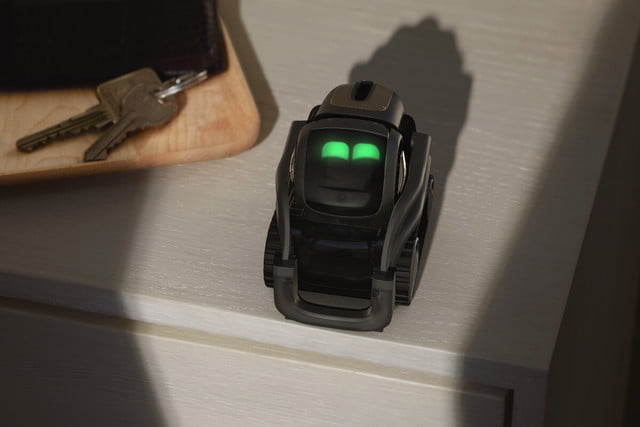


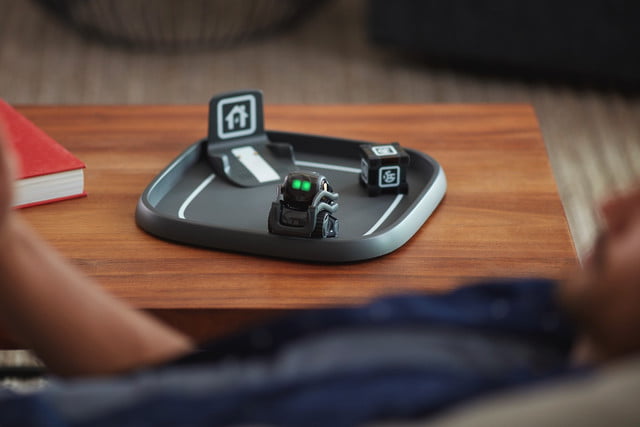
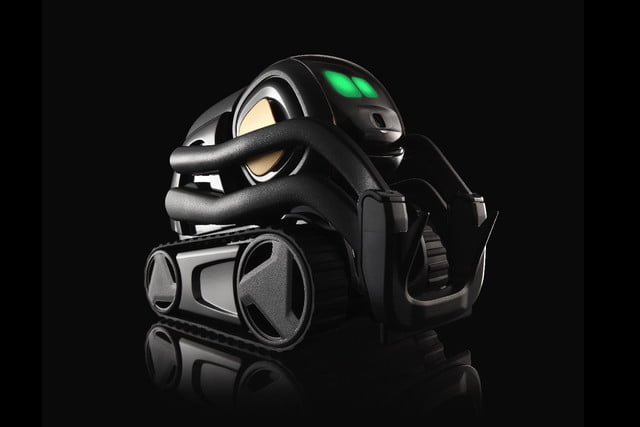
“For over five years, [manufacturer] Anki has brought together a team of experts across various fields to create the world’s first affordable, character-rich robot capable of surprising and delighting humans,” Boris Sofman, CEO and co-founder at Anki, said in a statement. “Vector is the culmination of everything we’ve learned in this journey so far, and a bold next step in our vision for entertaining and purposeful robots in every home, everywhere. Today marks the starting point in an overall expansion for our robotics platform and how we combine the latest technologies in robotics and artificial intelligence with our novel approach to character and interface.”
As ever, we offer our usual warnings about the potential perils of crowdfunding campaigns. However, if you’re aware of these and still want to go ahead and jump on the Vector bandwagon, you can do by heading to Anki’s Kickstarter campaign page.
A Vector robot will set you back $250 and ships with one base charger and early access to the Vector software development kit (SDK) alpha. Shipping is set to take place in October, just a few months away. That way your new robot BFF will have a few weeks to settle in before meeting the friends and family on Thanksgiving!
Moto Z3 vs Samsung Galaxy S9: Which flagship is more worthy?
Motorola has officially announced its flagship for 2018 — the Moto Z3. As the latest addition to Motorola’s Z-series, the Moto Z3 doesn’t bring many changes from the Moto Z3 Play — other than a few new specs and features. Its biggest change is the ability to support Verizon’s 5G network. But how does it stack up against one of the biggest flagships currently on the market? Below, we pit the Moto Z3 vs the Samsung Galaxy S9 to find out which one comes out on top.
Specs
Moto Z3
Samsung Galaxy S9
Size
156.5 x 76.5 x 6.75 mm (6.16 x 3.01 x 0.27 in)
147.6 x 68.7 x 8.4 mm (5.81 x 2.70 x 0.33 in)
Weight
156 grams (5.5 ounces)
163 grams (5.75 ounces)
Screen size
6-inch Super AMOLED display
5.8-inch Super AMOLED display
Screen resolution
2,160 x 1,080 pixels (402 pixels per inch)
2,960 x 1,440 pixels (568 pixels per inch)
Operating system
Android 8.1 Oreo
Android 8.0 Oreo
Storage space
64GB
64GB, 128GB, 256GB
MicroSD card slot
Yes, up to 2TB
Yes
Tap-to-pay services
Google Pay
Google Pay, Samsung Pay
Processor
Qualcomm Snapdragon 835
Qualcomm Snapdragon 845
RAM
4GB
4GB
Camera
Dual 12MP and 12MP rear, 8MP front
12MP (with OIS) rear, variable aperture, 8MP front
Video
Up to 4K at 30 frames per second, 1080p at 60 fps, 720p at 120 fps
Up to 4K at 60 frames per second, 1080p at 240 fps, 720p at 960 fps
Bluetooth version
Bluetooth 5.0
Bluetooth 5.0
Ports
USB-C
3.5mm headphone jack, USB-C
Fingerprint sensor
Yes
Yes (rear)
Water resistance
Splash-resistant coating
IP68
Battery
3,000mAh
TurboPower charging
3,000mAh
Quick Charge 2.0
Qi wireless charging
App marketplace
Google Play Store
Google Play Store
Network support
Verizon
T-Mobile, AT&T, Verizon, Sprint
Colors
Black
Midnight Black, Coral Blue, Lilac Purple
Price
$480
$720
Buy from
Motorola, Verizon
Samsung, Amazon
Review score
Hands-on
4 out of 5 stars
Performance, battery life, and charging
Julian Chokkattu/Digital Trends
If you’re investing in a flagship in 2018, you should expect to find a Snapdragon 845 under the hood — which is what the Samsung Galaxy S9 brings. While the Moto Z3 offers a Snapdragon 835 — which will provide a smooth experience — the Galaxy S9 offers top-notch performance. Both phones come with 4GB of RAM. You can expect the S9 to be faster and more powerful, since it’s running on the latest chipset.
For storage, both the Moto Z3 and Galaxy S9 have 64GB of storage along with a MicroSD card slot to expand on it. You can also get 128GB and 256GB versions of the S9 if you need more internal storage.
While both devices come with the same 3,000mAh battery, you can use a battery mod for the Moto Z3 which adds another 2,000mAh for two-day battery life. It also charges incredibly quickly thanks to Motorola’s TurboPower technology. After testing out the Moto Z3 Play (which has the same size battery), our phone went from 33 percent to 100 percent within 50 minutes. As for the Galaxy S9, we found that it lasted a day long with heavy usage. It does however, support fast wireless and wired charging.
With a more powerful processor and fast wireless charging capabilities, the Samsung Galaxy S9 takes this category.
Winner: Samsung Galaxy S9
Design and durability
Julian Chokkattu/Digital Trends
The Samsung Galaxy S9 and the Moto Z3 aren’t drastically different from their predecessors. Both devices look sleek with slim bezels surrounding the display. But the S9 does a better job at keeping everything more compact — which also makes for a more comfortable hold.
The Moto Z3 includes an unattractive and thick camera bump that makes the smartphone rock back and forth when it’s placed down on a flat surface. It also has the signature Motorola-style design, which we’ve seen time and time again, and the connector on the back for the mods. These issues can be fixed to an extent with Moto Mods, provided you’re willing to shell out a bit more money, but we’d still like the device to look better.
Meanwhile, the Galaxy S9 looks impressive out of the box, even though it’s hard to tell apart from last year’s S8. The infinity display and curved edges make it look far more futuristic than the Moto Z3. On both devices, the power button and fingerprint sensors are easily accessible — but the S9 does include a headphone jack whereas the Z3 doesn’t. You’ll have to use the 3.5mm headphone jack to USB-C dongle in the box to plug older headphones into your Z3.
In terms of durability, both these phones are liable to get damaged easily if dropped, but the S9 offers superior IP68 water resistance, while the Z3 makes do with a water resistant coating.
Winner: Samsung Galaxy S9
Display
Julian Chokkattu/Digital Trends
The Motorola Z3 packs a 6-inch, 2,160 x 1,080-pixel resolution, Super AMOLED display, while the Samsung Galaxy S9’s 5.8-inch Super AMOLED display boasts a superior 2,960 x 1,440 pixel resolution. The display on the Z3 is slightly larger than the S9 and won’t disappoint when it comes to color and brightness, but it doesn’t compare to the S9’s sharper, more vibrant screen. The infinity display also allows the screen to blend in with its edges, which makes for a more immersive viewing experience. For this one, we’re going to have to give it to the Samsung Galaxy S9.
Winner: Samsung Galaxy S9
Camera
Julian Chokkattu/Digital Trends
The Samsung Galaxy S9 and Moto Z3 both offer 12-megapixel rear cameras, though the Z3 features two of them. While we haven’t had a chance to test out the Moto Z3, it has similar specs to the Moto Z3 Play — which we found takes decent low-light photos with good color accuracy The details would sometimes look a bit too over sharpened and overexposed, but overall it took good photos. One difference however, is that the Moto Z3 offers a black and white camera mode that’s exclusive to the device. The Z3 Play made do with a 5-megapixel depth sensing lens as opposed to the 12-megapixel lens you’ll find in the Z3, so we may see a significant improvement in image quality.
While the addition of an extra lens can make for a better camera, that’s not always the case and the S9 has a few tricks of its own. The variable aperture allows the camera to switch between f/1.5 and f/2.4 apertures. It takes noticeably bright and sharp photos in broad daylight without you having to do anything other than open the camera app and tap on the shutter icon. With its multi-frame noise-reduction image processing, photos captured at night don’t look as grainy as they can with other smartphones on the market.
We do need to test the Z3 camera a bit more, but we’re not really expecting it to match the S9.
Winner: Samsung Galaxy S9
Special Features
The Samsung Galaxy S9 is packed with features geared towards entertainment — there’s support for the Gear VR along with the Bixby personal assistant. For productivity, there’s also the Dex Pad and Dex Station which turn your phone into a full-blown Android desktop computer.
Meanwhile, the Moto Z3 makes things a bit more interesting. What could be classified as one of the most important features of the device is its ability to support 5G — complete with a built-in Snapdragon X50 modem. With the addition of a 5G Moto Mod that will ship in early 2019, you’ll be able to connect to 5G networks, but only on Verizon and in places with 5G networks up and running. You’ll also find support for Amazon Alexa for those who don’t want to use Google Assistant, and there are a host of other Moto Mods that add different extras.
Even though the Samsung Galaxy S9 does offer features that make the device extremely versatile, the introduction of 5G on the Moto Z3 is extremely impressive. While we’re unsure how well it will work or what it will cost, the Moto Z3 will be one of the first smartphones with 5G network support, albeit through an add-on.
Winner: Moto Z3
Software and Updates
On both devices, you’ll find Android Oreo. The Z3 runs Android 8.1 Oreo and it’s mostly stock Android — with a few additions from Motorola. Since the device is exclusive to Verizon, bloatware is included. Motorola has confirmed that the Z3 Play will receive both Android 9.0 Pie and Android Q, so we can only assume the same applies to its latest Moto Z3 — especially since it’s launching around the same time we might see Google’s latest operating system launch.
The Galaxy S9, runs Android 8.0 Oreo with Samsung’s Experience skin on top and it works well, offering some handy extras alongside some clutter. We expect the S9 will also receive the next couple of major Android updates, but it may take a while for them to roll out.
Based on speed, we’re going to give this one to the Samsung Galaxy S9 which will most likely receive the update before Motorola. In comparison to Samsung, Motorola still has a long list of devices waiting to receive Android 8.0 Oreo, let alone Android 9.0 Pie.
Winner: Samsung Galaxy S9
Price
The Moto Z3 will cost you $480 and will launch exclusively with Verizon on August 16. On the carrier’s finance plan, you’ll pay $20 per month. Those in the U.S. will receive a $300 trade-in credit towards the device if they switch to Verizon. The Samsung Galaxy S9 is available for $720 from Samsung, or you can purchase it on a monthly payment plan. It’s also available through a variety of carriers.
Overall winner: Samsung Galaxy S9
Snagging almost every category, it’s clear the Samsung Galaxy S9 is the winner. While the Motorola Z3 is a great contender, it’s no match for the S9, which takes on the qualities every flagship should — a sleek design, top-notch processor, and a stunning display. If you’re stuck between the two, the Samsung Galaxy S9 will provide you with the latest, high-end specifications and a more enjoyable user experience, though it will also cost you a fair bit more.
Editors’ Recommendations
- Everything you need to know about the Motorola Moto Z3
- Moto Z3 Play vs. Honor View 10: Which midrange phone should be in your pocket?
- Moto Z3 Play vs. OnePlus 6: Can Motorola’s latest beat our midrange pick?
- Moto Z3 hands-on review
- Moto Z3 Play: Everything you need to know about Motorola’s modular phone
Microsoft finishes turning File Explorer dark in latest Windows update
If you typically work in low ambient lighting conditions, Microsoft’s latest Windows Insider Preview build will help ease eye strain. The most notable feature of Windows Insider Preview Build 17733 is a new dark mode for the Windows File Explorer, which replaces the typical white background of the File Explorer window for a black one.
“With Build 17666 we started our journey bringing dark theme to File Explorer,” Microsoft said in a blog post detailing the new features of the software release. “Today’s build marks the turning point where we’ve finished what we set out to do for this release.”
Image: Microsoft
The dark theme for File Explorer was initially introduced in May, and it appears that Microsoft has completed its work on this feature. General users of Windows 10 who are not part of Microsoft’s Windows Insider program will get to experience this feature this fall when Microsoft releases its Windows 10 Redstone 5 update.
The latest Insider Preview build is available for testers in the Windows Insider program in the Fast ring. In addition to the dark mode, the build also delivers a number of bug fixes and some general improvements for Narrator. This release doesn’t include much in the way of new features.
As with the prior release, Microsoft also outlined a number of known bugs in this release. If you’re running Windows 10 in S Mode, the version of Microsoft Office downloaded from the Windows Store may not run properly, and Microsoft recommends that you can work around this glitch by uninstalling and reinstalling that software package. Like the previous Windows Insider Preview, users of Windows Mixed Reality headsets may need to repair their controllers.
Microsoft isn’t the only one to focus on launching a dark mode. At its developer conference earlier this year, rival Apple introduced a system-wide dark mode that will be part of the new Mojave operating system for Macs. Both Mojave and Microsoft’s Redstone 5 update for Windows 10 will be available for consumers to download this fall. Be sure to check out our guide on how to apply a dark theme for File Explorer and Windows 10 if you’re part of the Windows Insider program today.
Editors’ Recommendations
- MacOS Mojave brings Dark Mode, stacking, and a redesigned App Store to Macs
- Mac owners can now test MacOS Mojave with Apple’s new public beta
- How to enable dark mode in MacOS Mojave
- Windows 10 Mail will let you handwrite your email with a stylus
- Microsoft pulls its ‘Sets’ feature in the latest Windows Insider build
Caltech trains drones to autonomously ‘herd’ flocks of birds. Here’s why
Birds can cause a surprising amount of headaches for airplanes. Perhaps the most famous recent example of this was the 2009 “Miracle on the Hudson” incident, when pilots were forced to land on the Hudson River after U.S. Airways flight 1549 was struck by a flock of geese after takeoff. Engineers at the California Institute of Technology recently turned to science to find a solution to this problem. Their approach involves a new control algorithm that allows a single drone to herd a flock of birds away from an airport’s airspace. The results could potentially save lives.
“The existing bird-scaring techniques employed to avoid bird strikes on airfields include lasers, distress calls, gas cannons, flares, inflatable scarecrows, dogs, radio-controlled planes, shotguns, and live birds of prey,” Soon-Jo Chung, associate professor of Aerospace and Jet Propulsion Laboratory Research Scientist at Caltech, told Digital Trends. “According to surveys by the International Bird Strike Committee, none of those systems work adequately. Simply put, birds are too intelligent!”
Knowing the limitations of solutions like training falcons or having a ground-based pilot control an RC airplane, Chung’s team set out to create an autonomous technology which could help. Their drone-based system works by figuring out the best paths around a flock of birds to effectively herd the flock in a desired direction. To create the algorithm, the researchers modeled flocking behaviors, and then reverse engineered these to establish the ideal flight path for a drone to move the flock away from protected airspace — crucially, without dispersing it in the process.
The drone-based system was recently tested and was shown to be successful. The only current weakness comes when dealing with multiple, or larger, flocks. To that end, the researchers hope to find ways to scale the project to use multiple drones for situations in which there are multiple flocks of birds.
“Bird and other wildlife strikes on aircraft cause well over $400 million in damage annually to U.S. civil and military aviation, and $1.2 billion worldwide,” Chung said. “I also hear [about] wineries battling crows that are eating fruit before the harvest. Imagine a drone taking off autonomously, and herding these live animals away from your protected zone. That’s the future [vision] we are working on.”
A paper describing the work was recently published in the journal IEEE Transactions on Robotics.
Editors’ Recommendations
- Here’s what art looks like in 2018: Spheres that react to your presence
- This bird-inspired morphing drone can slim down to fit through tight spaces
- Bird electric scooters ruffle city officials’ feathers with surprise launch
- Startup Bird is looking to roll up the emerging escooter-sharing space
- Half taxidermy, half robot: Why UC Davis built this crazy realistic robo-bird
Magic Leap One AR headset now available for $2295
Don’t let your wallet read this article.
At the tail-end of last year, Magic Leap finally unveiled its first augmented reality headset that would actually be available for people to buy. After three years of hard work, the Magic Leap One Creator Edition was announced with a 2018 release date and no price.

Today, Magic Leap confirmed that its headset will set buyers back a staggering $2295.
While that is a lot of money, it’s important to remember that Magic Leap isn’t marketing this as a consumer-ready device quite yet. As the name implies, the Magic Leap One Creator Edition is being targeted at developers and early adopters. Similar to Microsoft’s $3000 HoloLens or Google Glass that sold for $1500, Magic Leap’s charging an expected premium for people that want to hit the ground running with its tech before it’s ready for the main spotlight.
Magic Leap says that the Magic Leap One is currently being sold “in cities across the contiguous U.S.” and that “the list is growing daily.”
See at Magic Leap
The best Google Pixel 2 cases
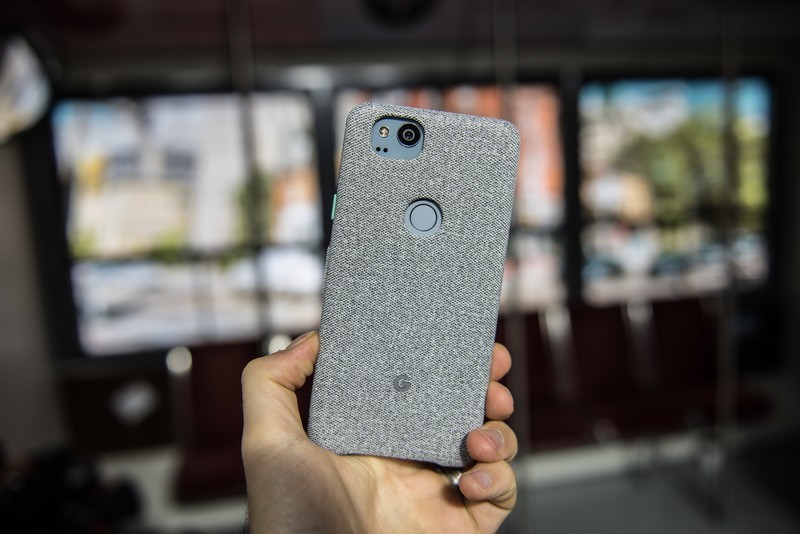
Enhance the funky look of your Google Pixel 2 with the right case!
Whether you love the Google Pixel 2 design and want to enhance it, or you’re simply looking for drop protection for your new phone, there’s a case that’s perfect for you. Google partners with a number of accessory makers for its ‘Made for Google” certification program featured in the Google Store, but you can also find a ton of quality third-party cases to fit your needs. Here are the absolute best cases you can get your Google Pixel 2 — from Google and from Amazon.
- Spigen Neo Hybrid Case
- Google Live Cases
- Google Fabric Cases
- Bellroy Leather Case
- Ringke Fusion Case
- Totallee Case
- Spigen Rugged Armor
- Maxboost Folio Style Wallet Case
- Carved wooden Cases
- RhinoShield SolidSuit Case
Spigen Neo Hybrid Case
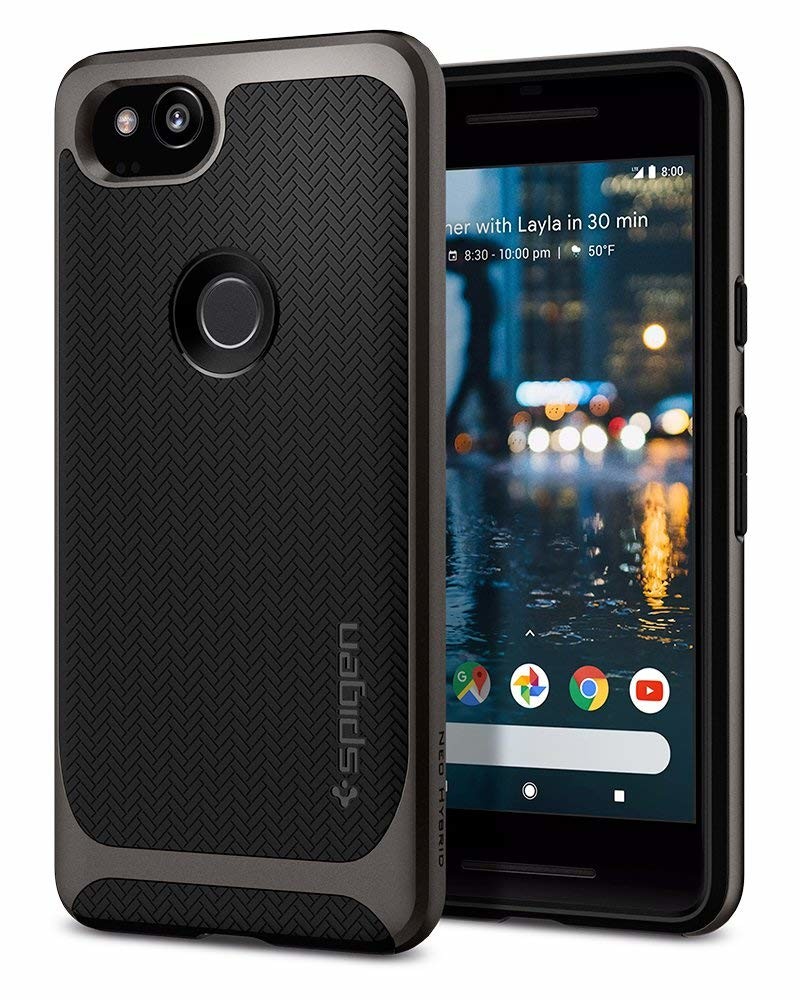
Our favorite case for the Google Pixel 2 doesn’t have the “Made for Google” certification, but the Spigen Neo Hybrid is just about the perfect case line on the market today. We love this case so much, we gave it two Android Central Choice awards — one for the Pixel 2 and one for the Samsung Galaxy S9+.
The Spigen Neo Hybrid’s Herringbone-textured back is smooth but grippy in the hand, and the sculpted curves of the polycarbonate hardshell look stylish and sturdy in equal measure. The port cutouts keep well clear of boxy USB-C cables and OTG adapters, and while it is easy to get the phone in and out of the case, trust me, you won’t want to take it off ever again.
The Spigen Neo Hybrid is $15 at Amazon and comes in two colors: black/charcoal Gunmetal and powder blue/silver Kinda Blue.
See at Amazon
Google Live Cases
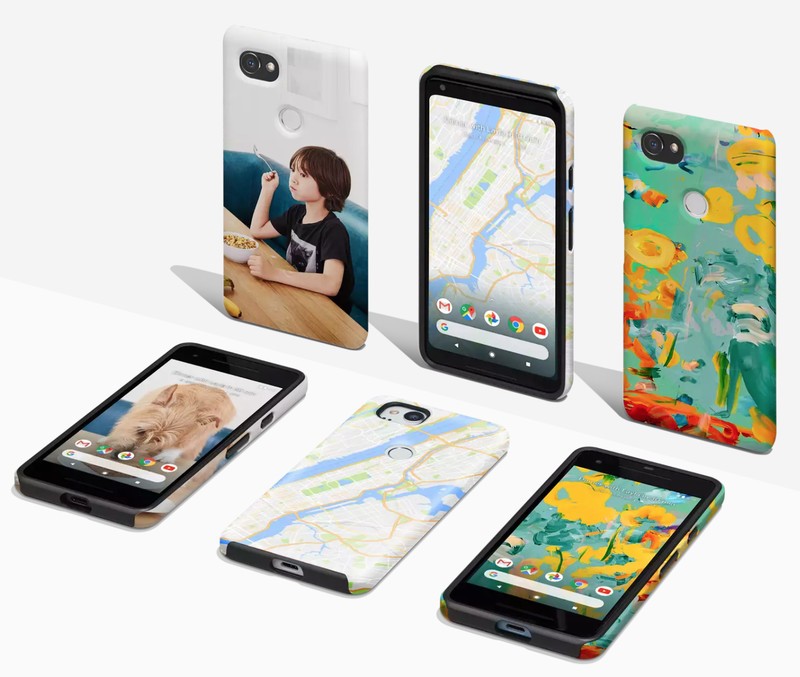
Google Live Cases give you the option of customizing the back of your Pixel 2 with a personal photo or a wide range of styles curated by Google — or using your own photo from Google Photos. Choose a gorgeous satellite photo from Google Earth, and the case will pair it with a matching live wallpaper for a seamless look. Artworks Live Case can add some flair to your Pixel with soul-searching ink blots and bold pops of color.
Prices range from $40 to $50 depending on the styling and your choice of a svelte shell or rugged dual-layer case. Create and customize your own case via the Google Store.
See at Google Store
Google Fabric Cases
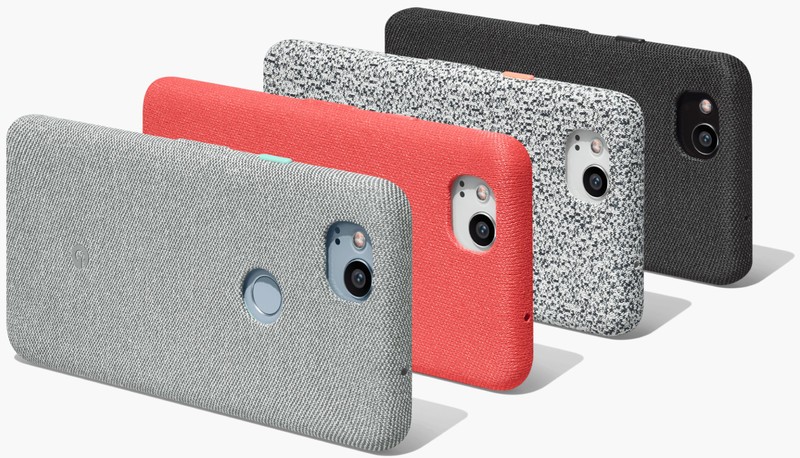
If you like a little texture on your phone case, you’ll love the Google Fabric Case. Similar to Samsung’s Alcantara cases, these crafty cases look — and most importantly feel — like the luxurious fabric on the Google Home Mini or Daydream View.
Designed in-house by Google, you can be sure of the build quality and fit. These cases offer a premium microfiber liner to ensure your device stays scuff-free and your choice of four color combinations for $40.
See at Google Store
Bellroy Leather Case
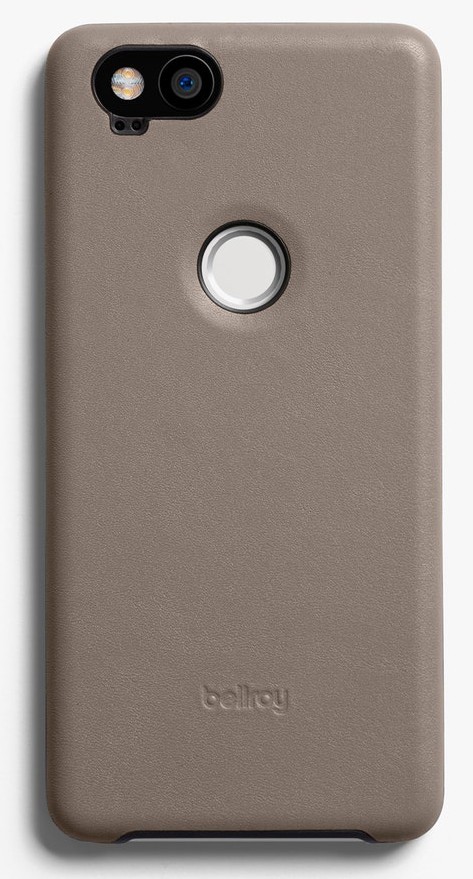
Looking to add a touch of class to your Pixel 2? How about an elegant leather case from Bellroy? Made using premium leather and a soft microfiber lining, this is a lightweight case that will keep your phone well protected and age beautifully over time. It’s also backed by a 3-year warranty from Bellroy, meaning that this case should still be standing when the Pixel 2 reaches end-of-life in October 2020.
You can learn more about the case and materials used at Bellroy.com, then get yours in one of four rich colors — including a gorgeous navy blue — from the Google Store for $45 with free shipping.
See at Google Store
Totallee Case
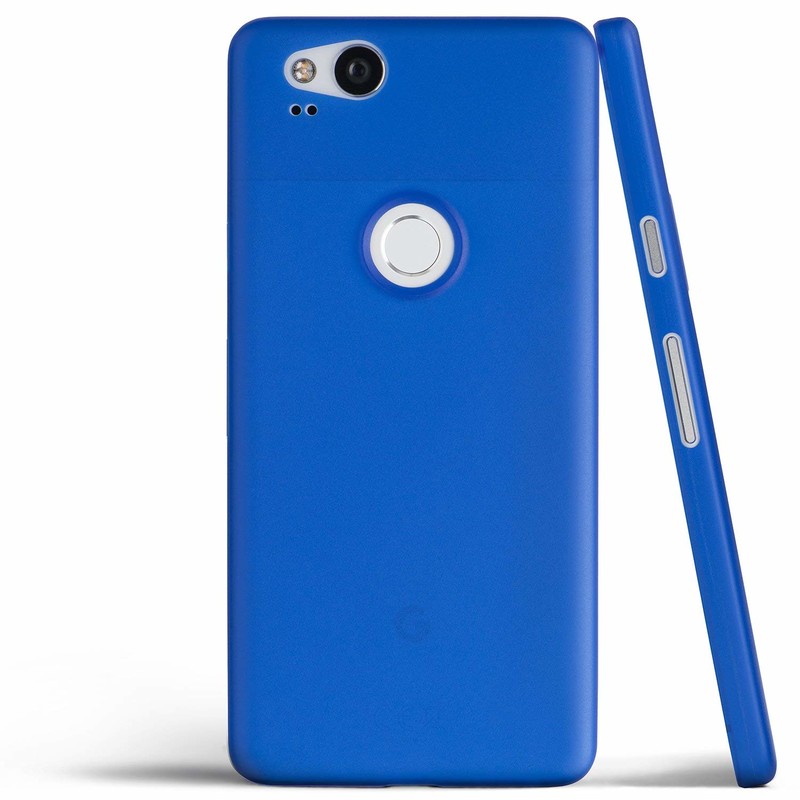
Most people hate cases. Why buy such a slim, beautiful phone if you’re going to have to immediately bulk it back up with an ugly case? Well, Totallee has heard our prayers and designed a case that offers basic protection from small drops and bumps without adding any sort of bulk found with 99% of other “slim fit” cases.
While it looks too thin to do much of anything, you really can rest easy with the Totallee case. You don’t have to worry about smudges, scuffs, scrapes, or chipping the coating Google adds to the Pixel 2. Totallee made this case so you can get a basic safeguard against regular wear-and-tear while also giving your phone a new splash of color.
Totallee case for the Google Pixel 2 comes in 4 colors — including a bold cobalt blue — on Amazon, where you can pick one up for $18.
See at Amazon
Ringke Fusion Case
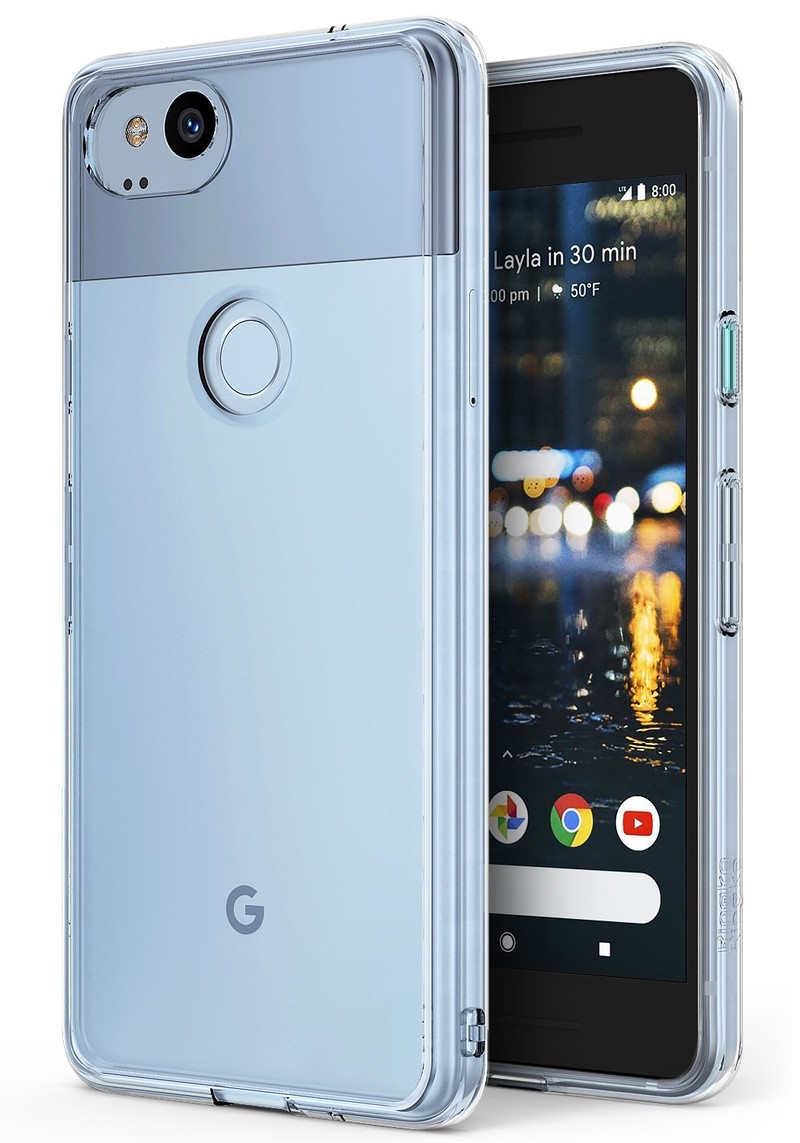
Looking to save some money on your case? Debating whether to cover the design of your Pixel 2 in plastic or gamble by using it without a case? Ringke’s got you covered with an affordable clear case.
Made with a rugged panel of polycarbonate on the back panel and an easy-grip TPU bumper, Ringke’s crystal clear Fusion case will keep your new device protected while also letting the Pixel 2’s design shine through. You’ll also get lifted bezels around the camera and screen to protect those important pieces of glass, along with precise cutouts for the charging port and fingerprint scanner. You can get this reliable case from Amazon for just $11.
See at Amazon
Spigen Rugged Armor
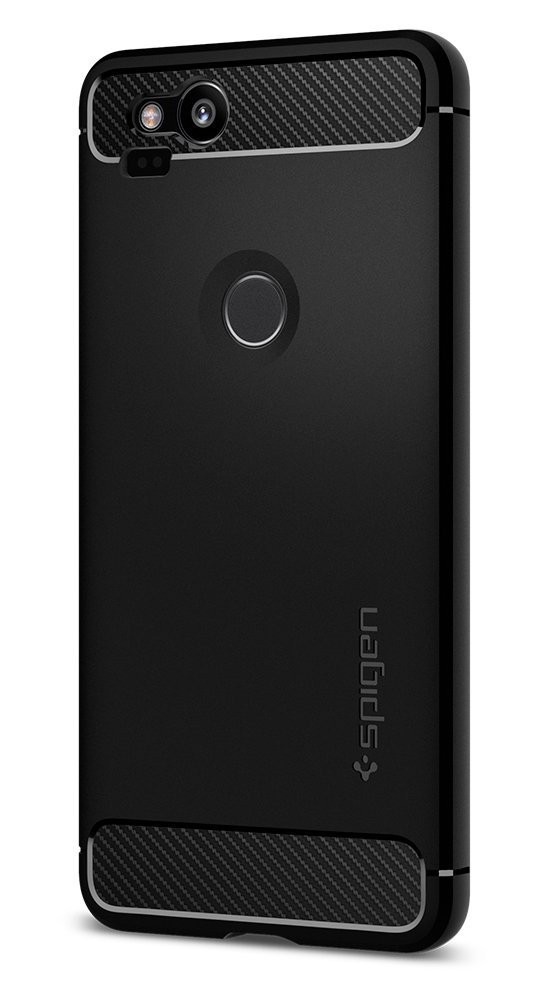
Spigen has a full line of cases available for the Pixel 2 at affordable prices, including the slim-yet-rugged Rugged Armor. This lightweight case features carbon fiber detailing along the top and bottom, and raised edges around the screen and camera protect against scratches and scuffs.
I’ve been using the Rugged Armor case on my Pixel 2 XL and it’s held up against all of my klutziness, which is on full display in our review. If you want great protection for your new phone without the bulk — or high price — of other case options, get Spigen’s Rugged Armor case for just $13 on Amazon.
See at Amazon
Maxboost Folio Style Wallet Case

Maxboost’s wallet case sports a stylish look and all the functionality that you’d expect. We’re talking three card slots on the inside flap, a hidden side pocket for some cash, and a magnetic strap that holds down this lithe wallet and keeps everything secure. Fold the strap and folio behind the phone to use as a kickstand when you’re watching your YouTube videos on that cross-country flight.
Clean cutouts around the camera, fingerprint sensor, and charging port ensure that this case doesn’t interfere with using the phone, and cutouts around the earpiece let you talk on the phone without leaving your wallet open for all to see.
Available for just $13, this four-star case is a great option for your Pixel 2!
See at Amazon
Carved wooden cases
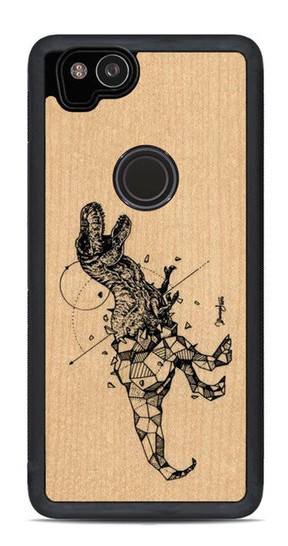
Carved has a bunch of great case options available for phones like the Pixel 2, including 52 stylish pre-made option featuring a mix of cool prints and fancy cut wood designs with prices ranging from $29 to $55, along with a selection of classic wood grain cases for just $24.
Carved also allows you to create your own custom case using an online case designer. They also offer the option to get a section of a map engraved or printed onto the case. With the right eye for design, you could design a case that uses the fingerprint scanner as part of your case’s decoration.
See at Carved
RhinoShield SolidSuit Case
Best Protection
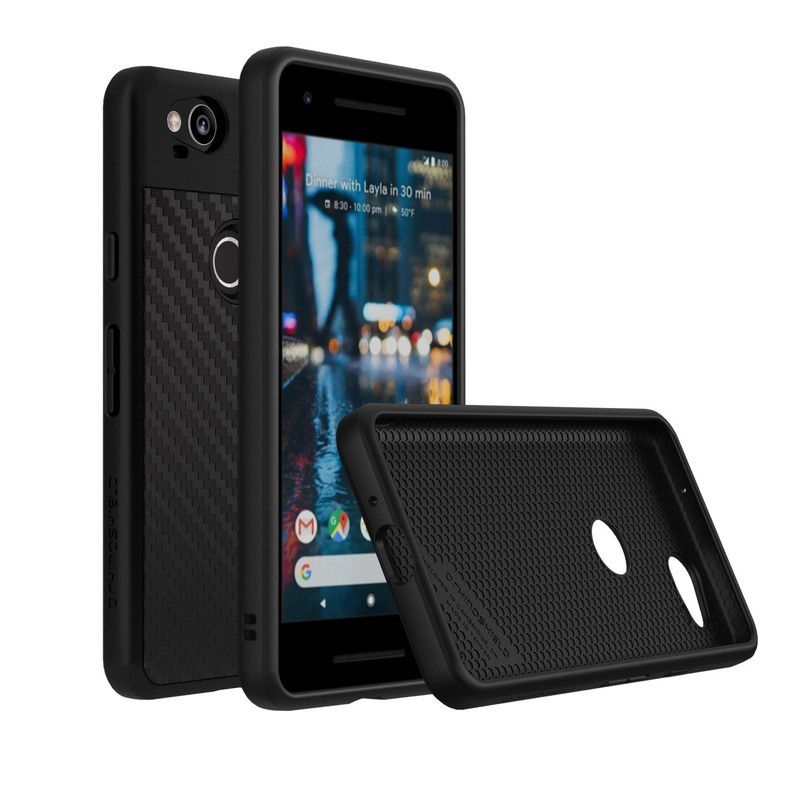
RhinoShield makes some fantastic phone accessories that always seem to go a step beyond. With the SolidSuit case, you get a rugged case that’s designed to both protect your phone and also give you the option of using add-on lens attachments that will enhance the experience of using the superb camera on the Pixel 2. First, you’ll need the $5 lens adapter and then you can start investing in the superb lens kits that Rhinoshield also offers.
The Pixel 2 is a great phone that really shines with the right accessories like this. Don’t miss out on getting this RhinoShield case for just $35 on Amazon.
See at Amazon
Is the Pixel 2 too good looking for a case?
What do you think of the Google Pixel 2’s design? Too cool to cover with a case? Which cases are you interested in? Let us know in the comments!
Updated August 2018: We’ve removed four cases from this list to make room for our new favorite Pixel 2 case, the Spigen Neo Hybrid, and Totallee’s thin delight of a case.
Google Pixel 2 and Pixel 2 XL
- Pixel 2 FAQ: Everything you need to know!
- Google Pixel 2 and 2 XL review: The new standard
- Google Pixel 2 specs
- Google Pixel 2 vs. Pixel 2 XL: What’s the difference?
- Join our Pixel 2 forums
Best Buy
Verizon
Google Store
Project Fi
 AIVAnet