


The amazing $300 Pocophone F1 is so fast, it uses water inside to keep cool
Choosing a partner in whatever you do is important, and although you may not recognize the Pocophone name, the new company has worked very closely with Xiaomi, a name known to many more people, to produce its first phone — the Pocophone F1. How close? This is an ongoing partnership, right down to the branding on the back of the device, which proudly states, “Pocophone by Xiaomi.”
That’s what you need to know about the name, so what about the F1? It has the latest, and fastest Qualcomm Snapdragon 845 processor inside with 6GB or 8GB of RAM, a 6.18-inch screen with a 2,246 x 1080 pixel resolution (and a notch), a 4,000mAh battery, a dual-lens camera with artificial intelligence, and even water-cooling.
We know what you’re thinking. This is a flagship to rival those from OnePlus, Honor, and even Samsung and LG. The on-paper tech specs are as high-end as phones get, yet the Pocophone F1’s price is just $300, converted over from its international price. That’s cheaper than the OnePlus 6, the LG G7, the Galaxy Note 9, and every other Snapdragon 845 phone out there.
A closer look
Let’s look a little deeper. The Snapdragon 845 is paired with 6GB of RAM and either 64GB or 128GB of internal memory, plus an 8GB/256GB model will also be available in certain markets. It uses water-cooling, just like the Galaxy Note 9 and several Nokia phones, to keep the phone running at an optimum temperature. The dual-lens camera has a main, 12 megapixel lens with dual-pixel autofocus, a 1.4nm pixel size, and an f/1.9 aperture. The secondary lens has 5 megapixels, while the selfie camera inside the notch on the front has 20 megapixels and clever pixel boosting technology to reduce noise and improve low-light selfie performance.
The cameras both provide a bokeh mode, along with artificial intelligence for scene recognition, portrait mode, and a beauty mode. On the back of the phone is a fingerprint sensor, and in the near future an infrared sensor above the screen will be activated in a software update to provide secure face-unlock too. The feature list continues with Quick Charge 3.0 for the 4,000mAh battery, Bluetooth 5.0, dual-SIM support, a MicroSD card holder, and Xiaomi’s MIUI user interface over Android 8.1.
Where’s the catch?
By now, you’re wondering what the catch is. How is this phone offered for so little? This is partly where Xiaomi’s partnership is so helpful, as it already has the manufacturing expertise and market power needed to create a phone like this, and supplies not only the software but the camera system, too — all ready to go, and all tested on other devices. Additionally, unlike the iPhone X, Note 9, and other expensive phones, the Pocophone F1 is not made of a premium material like glass. It’s made of polycarbonate, and is 8.8mm thick. This gives the company wiggle room inside the device for components, and reduces the cost of parts and manufacturing. Making curvy glass phones is expensive.
This isn’t to say the Pocophone is ugly. It’s not. There has been plenty of thought put into making the phone feel slim in the hand, and the 180-gram weight is perfectly acceptable today. It comes in blue, red, or black; but we love the Armoured Edition, which has a genuine Kevlar rear panel complete with exposed fiber weave. It looks great. The 8GB/256GB Armoured Edition is the most expensive F1 phone at about $430, or 30,000 Indian rupees, while the cheapest 6GB/64GB in red, black, or blue is about $300, or 21,000 Indian rupees.
Currently ready for release in India, where it’s known as the Poco F1, Pocophone intends to sell the F1 everywhere Xiaomi phones are available, which will include parts of Europe where the brand has recently made a considerable splash. It has announced Hong Kong, Indonesia, and France are next. While the U.K. and the U.S. are not officially on the list yet, there is a chance this may change in the future. Given the Pocophone’s specs and incredibly tempting price, we hope the change happens sooner rather than later.
Editors’ Recommendations
- Samsung Galaxy Note 9 vs. OnePlus 6: Does more expensive mean better?
- The hottest phones of 2018 are still to come. Here’s what’s around the corner
- Xiaomi Mi A2/Mi A2 Lite: Everything you need to know
- LG V35 ThinQ vs. OnePlus 6: Can LG’s latest flagship beat an Android favorite?
- Moto Z3 Play vs. OnePlus 6: Can Motorola’s latest beat our midrange pick?
The hottest phones of 2018 are still to come. Here’s what’s around the corner
Every year we get a fresh wave of tempting smartphones. The highlights so far in 2018 include Samsung’s Galaxy S9 Plus and Note 9, Huawei’s P20 Pro, the OnePlus 6, the Nokia 6.1, and the BlackBerry Key2, but there’s still plenty of promise on the horizon. There are several big releases expected before the end of the year, so if you’ve held off on upgrading your phone so far, here’s what to look out for. These are our most hotly anticipated smartphones.
Apple’s iPhones
The rumor mill always goes into overdrive when it comes to a new iPhone release, but the only thing we can be confident about is that new iPhone devices will be unveiled at Apple’s annual September event. There will likely be at least two new models, though we’re expecting three like last year, and they all are rumored to be based on the iPhone X design with Face ID replacing Touch ID across the board.
An updated iPhone X with a new processor and some other upgrades is likely, possibly flanked by an iPhone X Plus with a larger display, and a more budget-friendly version with a cheaper LCD replacing the OLED screen to keep costs down. The updated X and X Plus, which will likely sport new names, are sure to be two of the best phones of the year. We’ve wrapped up new iPhone rumors in one handy place if you want to read more.
Google’s Pixel 3 and 3 XL
Julian Chokkattu/Digital Trends
We are expecting two new Pixel smartphones in October, hot on the heels of the new iPhones. The Pixel 2 XL was our favorite Android smartphone last year, and we were blown away by the camera performance, particularly as it sports a single lens in the face of dual- and even triple-lens competition. Google’s mastery of software enables it to squeeze more out of devices than you might expect from a glance at the spec sheet, and we expect this to be the case with the Pixel 3 and 3 XL.
It seems both are likely to feature larger displays than their predecessors, with slimmer bezels, and possibly a notch on the XL. The pair will probably pack Qualcomm’s Snapdragon 845 processor, and rumors suggest they will support wireless charging. There’s a slim chance we’ll see a third model that’s a bit cheaper with mid-range specs. There have been a lot of leaks around the new Google phones and you can read up on all the Pixel 3 rumors in our roundup.
LG V40 ThinQ
Julian Chokkattu/Digital Trends
It has been a tumultuous period for LG, so we’re hoping the LG V40 might see a return to form after the underwhelming LG V35 ThinQ and LG G7 ThinQ. We expect the V40 to carry the same ThinQ moniker, marking out the addition of LG’s artificial intelligence platform which connects all its devices together. Last year’s V30 landed at IFA in August, but we think the V40 might come later, perhaps in October.
The V stands for video, so we’d expect something special in the camera department, possibly even a triple-lens array on the back and a dual-lens front-facing camera. We’re not sure if the V40 will go with slim bezels and OLED tech in the screen or adopt the notch design of the G7, but a Snapdragon 845 processor inside seems a certainty. You can check out our LG V40 rumor roundup for more.
Huawei Mate 20 and Mate 20 Pro
Gizmochina
If you were impressed by the P20 Pro, then the Mate 20 Pro may prove irresistible. We may even see three new smartphones from Huawei: A Mate 20 Pro, Mate 20, and Mate 20 Lite. The flagship Pro could sport a truly massive screen – rumors are suggesting a 6.9-inch OLED. For a screen that size to be manageable, Huawei will have to find a good way to minimize the bezels, and an in-display fingerprint sensor is a possibility. It’s sure to have plenty of power with Huawei’s proprietary Kirin chip inside and it will probably boast the same triple lens camera as the P20 Pro, but with a few tweaks.
The Mate 20 and Mate 20 Lite will likely be smaller and less powerful, but also less expensive. The OLED may be switched for LCD and they’ll have less impressive camera setups. An announcement in October is our best guess, and what’s more exciting is the Mate series is usually sold through retailers in the U.S. — keep an eye on our Huawei Mate 20 Pro rumor roundup for all the latest news.
Nokia 9
We’ve been really impressed with Nokia’s line-up this year under HMD Global, but there’s a chance that one more device will be unveiled before the year is out: The flagship Nokia 9. Budget and mid-range releases like the Nokia 6.1 and Nokia 7 Plus have impressed, and the current curved display flagship — the Nokia 8 Sirocco — has plenty to recommend, but the Nokia 9 should be HMD’s most ambitious release yet.
A luxurious design with a 6-inch OLED screen, cutting edge specs, and a dual-lens camera that pairs a 41-megapixel wide-angle lens with a 20-megapixel secondary lens have all been floated as possibilities. No bezels, an in-screen fingerprint sensor, stock Android 9.0 Pie, and a big battery could also be onboard, but we’re uncertain if there’s any truth to the rumors. As for an unveiling date, we think September at the earliest, but there’s a chance it’s closer to Christmas. Keep an eye on our Nokia 9 news for the latest rumors.
Sony Xperia XZ3 and XZ3 Compact
Julian Chokkattu/Digital Trends
It hasn’t been very long since the XZ2, XZ2 Premium, and XZ2 Compact hit stores, but there’s an outside chance Sony is prepping to reveal the XZ3 range at IFA later this month. We’re probably more excited about the XZ3 Compact because so few companies are turning out small phones nowadays and the XZ2 Compact is one of the best on the market. We expect an incremental update over the phones Sony released earlier this year with the same Snapdragon 845 processor, but upgrades for the battery and camera.
Don’t expect a major departure in the design department, but hopefully Sony will slim those bezels down and squeeze a bit more screen into the handset. It would also be great to see some improvements in the software, which we found to be a real weak spot in the XZ2. Sony has been refreshing its flagship every six months for a while, so an imminent release is possible. Our Sony Xperia XZ3 news will keep you informed on the latest.
Motorola One Power or P30
91 Mobiles
Since Lenovo acquired Motorola it has been churning out phones at an incredibly fast rate, but the deluge of budget and mid-range devices may not be over yet. We have heard some whispers about a Motorola One Power (quite possibly the just announced, China-only Motorola P30) that looks an awful lot like the iPhone X. There’s a 6.2-inch display with a notch at the top and a dual-lens camera at the top left on the back.
The rumored specs and pricing place it firmly in the mid-range category, but a leak out of China suggests there will be a P30 Note, and a P30 Play. There are already far too many Motorola phones on the market, so perhaps these are just for China. We may hear more at IFA, but keep an eye on the news posts linked above for all the latest rumors.
Asus ROG
If you’re sold on the idea of a specialized gaming phone then you may be interested in the forthcoming Asus ROG (Republic of Gamers) phone, which is set to drop before the end of the year. It will offer lightning-fast performance with an overclocked Snapdragon 845, 8GB of RAM, and plenty of internal storage (128GB or 512GB). We’re also expecting a 6-inch OLED with a 90Hz refresh rate, a dual lens camera, and a big, 4,000mAh battery.
Check out our Asus ROG roundup for more, but we don’t think you’ll have to long wait for this device and an imminent release looks likely. If you are after a gaming phone, then there’s also an outside chance that we’ll see a Razer Phone 2 before the year ends.
Red Hydrogen One
Christian de Looper/Digital Trends
We saved the weirdest for last and it’s the Red Hydrogen One, which is set to launch in November. You’d expect something special in the camera department, since that’s what Red does, but the highlight seems to be a 3D-effect holographic display that doesn’t require glasses. It will also have a modular design that allows you to add a “cinema-grade” camera and extended battery, but it will be very expensive and have last year’s Qualcomm Snapdragon 835 processor inside.
According to the latest news it will be landing in AT&T and Verizon stores starting on November 2. Read our Red Hydrogen One hands-on to learn more and stay up to date with our rumor roundup.
There are undoubtedly going to be more phones unveiled than the ones we’ve listed here, and we’ll be covering them all, but the ones in this list are the smartphones we’re most excited about.
Editors’ Recommendations
- LG V35 ThinQ vs. OnePlus 6: Can LG’s latest flagship beat an Android favorite?
- Bigger isn’t always better: 5 of the smallest smartphones worth buying
- Here’s our comparison of the most bezel-less designs among smartphones
- Everything we know about the upcoming LG G8 ThinQ smartphone
- LG V35 ThinQ: Here’s everything you need to know about LG’s newest flagship
DirecTV Now adds NFL Sunday Ticket access — but only in a few markets

Are you ready for more football?

One of the biggest gripes not just about streaming TV but the whole damn system in the first place is that you still can’t watch anything everywhere. And while that’s really not changing anytime soon, the fact that you can now tie an NFL Sunday Ticket account — that’s the one that lets you watch any game any week — into a DirecTV Now account is a step in the right direction.
(Never mind that NFL Sunday Ticket is a legacy DirecTV satellite thing, and DirecTV Now is obviously an offshoot of that, and so this sort of thing seemed to be inevitable and really doesn’t matter unless you have DirectTV Now in the first place. But we digress.)
There are a couple of caveats here. First is that you’ll have to at least have DirecTV Now’s $55-a-month “Live a Little” plan.
See complete DirecTV Now plans and pricing
The other is that you’ll have to reside in an eligible ZIP Code in the following locations:
- Greater Los Angeles
- Phoenix
- Boston
- Philadelphia
- San Antonio
- Hartford, Conn.
- Louisville, Ky.
There are a lot of people in those locations, for sure. But it’s not all the people in all the locations. At least not yet.
But with just a few short weeks to go until the regular season starts, it’s definitely a welcome addition.
Do it: Watch NFL Sunday Ticket on DirecTV NowMore: How to watch the NFL if you’ve cut the cord
Introducing CordCutters.com
- The hardware you need
- All about streaming services
- What channels are on which service
- FREE over-the-air TV
- How to watch sports
- Join the discussion
- Listen to the podcast
Get the latest deals
How to limit child purchases on Fortnite for Android
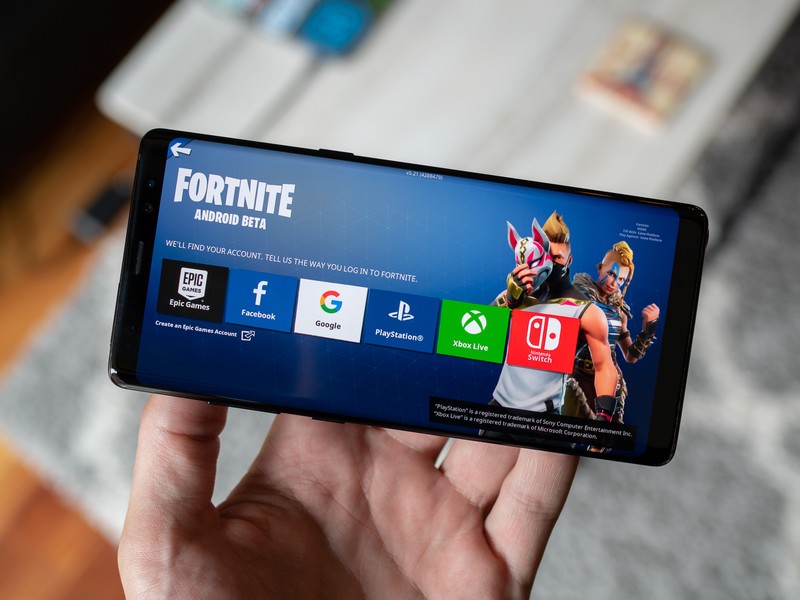
With Fortnite on Android avoiding Google Play, here’s how to limit child purchases on the platform.
Fortnite is skipping Google Play on Android and the beta is already in full-swing. If you have a child eager to play Fortnite on their Android device, its imminent full release is great news. But as a parent, you’ll be missing out on the parental controls that come with Google Play.
Children might be inclined to make unauthorized purchases in Fortnite, and on Android, it can be difficult to stop them. Here is how you can curb unwanted child purchases on Fortnite for Android:
There are no parental controls

Unlike on other systems, such as the PS4 or Nintendo Switch, there are no parental controls to be found on Fortnite for Android. This is because these systems have parental controls built in to stop unwanted spending across all games, but because Fortnite doesn’t go through the Google Play store on Android, it relies only on what Epic Games provides. Which unfortunately does not include parental spending controls.
Purchases can be made on Fortnite for Android with either a credit card or PayPal. If your child is playing Fortnite on his or her own device and does not have access to card information or PayPal information, you’re in the clear. However, if the child is playing on an adult’s device, has access to any of that information, or if you have at some point used that information to make a one-time purchase on the Epic Games account attached to the game on Android, you’ll need to be very, very careful.
Check the Epic Games account

If you have already used a card or PayPal account and attached it to the Epic Games account the child is playing on, you’ll want to remove that information. To do so, go to your account page on the Epic Games website and click on Payments on the left side of the screen. You’ll see all your saved payment methods. Click the trash can icon to the right of any and all you want to remove, then press Confirm. The payment method will be removed from your account.
You can also do this at any time in the future if you accidentally add a card or account that you want removed. Keep in mind that Epic Games tracks payment information across multiple systems, so if you’re using the same account on two platforms and paying for items on one, you’ll want to remove it so that information cannot be used on Android.
Make one-time purchases by card only

Sometimes, you may want to purchase something in-game for your child, but want to avoid having your information saved for future unsupervised transactions. If you do this, you must pay by card. On the payment selection screen on Android, after putting in your credit card information, there is a check box that says “Save card for future use.” Make sure that box is unchecked when you make the purchase. Doing this will force it to ask you for your card again the next time you make a purchase, so a child cannot use your saved card to buy things unsupervised.
PayPal accounts do not have this option and will be linked to your account if you pay through them until you manually go to the Epic Games site and remove them. It’s best not to link a PayPal account if you have a child playing Fortnite on Android.
Remove card information from Google’s saved cards or Samsung In-App Payments
Another thing to watch out for is Google Pay. If you have card information saved in Google payments, Fortnite for Android will pull it automatically to fill in card information when making a purchase in Fortnite. To keep Google from doing this, you’ll want to go to the Google Pay website. Click on Payment Methods, and click “Remove” under any cards you want gone. You’ll have to press “Remove” again when the dialogue box pops up to confirm.
For users with Samsung phones, the game will be downloaded through the Samsung Game Launcher and purchases will go through Samsung In-App Purchases. Similarly, you’ll need to go to Samsung’s payment hub and remove any saved cards from there if it’s pulling card information from their system.
Check, check, and recheck

If you’re worried at all that you may have saved card information a child could use to purchase something in Fortnite without your supervision, the best way to check is to try to purchase something yourself. Open the Shop in Fortnite and attempt to make a purchase with either card or PayPal. If it prompts you to enter information and does not autofill it for you, then your child is good to go and cannot make a purchase unless they get access to your credit card or PayPal information. If it has saved the information and automatically fills it in for you, then you’ll need to either remove your card from Epic Games or Google Pay or unlink your PayPal account.
Get a refund
If all else fails and a child makes a purchase they are not supposed to, you can request a refund if you’re using a Samsung device. Refunds for Samsung devices will go through Samsung and will require contacting its customer support. Currently, there is no way to request a refund on other devices.
Any questions?
Need any further help keeping your child from making unsupervised purchases in Fortnite for Android? Let me know in the comments!
Best Phone for Fortnite in 2018
Qualcomm’s now sending out samples of its next-gen mobile processor
The Snapdragon 845’s successor is coming soon.
Qualcomm’s Snapdragon 845 processor is at the heart of most flagship smartphones that have been released this year, and thanks to ultra-fast performance, improved image processing, and much more, is one of the best mobile chips we’ve ever seen from the company. Now, Qualcomm says OEMs have already begun sampling the 845’s successor.

In a press released that was published this morning, Qualcomm said:
The 7nm SoC can be paired with the Qualcomm® Snapdragon™ X50 5G modem, creating the first 5G-capable mobile platform for premium tier smartphones and other mobile devices. Qualcomm Technologies has begun sampling of its upcoming flagship mobile platform to multiple OEMs developing next-generation consumer devices.
Aside from the fact that the new chipset is just 7nm and is capable of 5G network speeds, nothing else is known about it quite yet.
In regards to availability, Qualcomm goes on to note that:
The upcoming platform will transform industries, encourage new business models and improve the consumer experience as operators come online with 5G services later in 2018 and through 2019.
Furthermore, Qualcomm also says that the next-gen platform will be formally announced during Q4 of this year.
It’s OK not to be hyped about 5G
Score big discounts on Logitech’s popular PC accessories today only
These prices won’t stick around for long!
As part of its daily deals, Amazon has a wide variety of Logitech PC accessories on sale, including mice, keyboards, gaming headsets and more. Many of these accessories are back down to previous all-time low prices or have hit new historic lows, so you won’t want to miss out.
Some of our favorite deals include:
- MX Master Wireless Mouse – $44.99 (Was $70)
- G300s Ambidextrious Gaming Mouse – $14.99 (Was $20)
- K480 Multi-Device Bluetooth Keyboard – $19.99 (Was $30)
- MK320 Wireless Keyboard & Mouse Combo – $18.99 (Was $25)
- K750 Wireless Solar Keyboard for Mac – $37.50 (Was $56)
- G231 Gaming Headset – $34.99 (Was $70)
- C270 HD Webcam – $15.29 (Was $22)
Be sure to check out the whole sale and grab what you want now before the sale ends tonight.
See at Amazon
Day One 3.0 Update Adds Audio Recording, Dark Mode, and New Editor Interface
Popular journaling app Day One reached version 3 today and introduced a number of new features for both free and premium users.
Headlining version 3 of the app is an all-new editor interface that the developers say has been built from the ground up. The action of editing an entry has been simplified so that now it’s just a matter of tapping wherever in the entry text that you want to place the cursor.
Tapping the “Aa” icon now brings up a new Editor menu with entry formatting options including Headers, Bold, Italic, Lists, Quote Block, Code Block, Rule Line, and indents. Meanwhile, Markdown support continues to include auto-conversion of Headers, Lists, Bold, and Italic into rich text.
In addition, Advanced Markdown like tables and HTML are also now supported by means of a Code Block option that auto-detects existing content wrapped in a code block and remembers your viewing preference (code/HTML rendered).
Elsewhere in the new UI, there’s a new entry content menu for for adding Photos, Camera, Audio, and Tags, a dynamic photo group collection grid, and entry checklists.
For Premium subscribers, Day One 3 brings a new Dark Mode that can be set to change with the local sunset/sunrise times. There’s also a new Audio Recording feature that supports transcription using Apple’s Speech dictation service and allows users to record 30 minutes of audio.
Day One 3 is a free download for iPhone and iPad from the App Store. [Direct Link] The Day One Premium subscription costs $34.99/year and is available via in-app purchase, while paid-app users of 2.0 get a lifetime discount for $24.99/year, also available via in-app purchase.
Tag: Day One
Discuss this article in our forums
Walmart continues push against Amazon with Walmart eBooks store
It looks like Walmart is ramping up its efforts to take on Amazon. In partnership with Kobo, the company has announced a new ebook store called Walmart eBooks by Rakuten Kobo. The new service brings ebooks to Walmart customers both in-store and online, but perhaps more importantly it represents Walmart’s continued push against the likes of Amazon, which continues to bite chunks out of Walmart’s bottom line.
Thanks to the partnership with Kobo, Walmart eBooks will boast Kobo’s 6-million-title-strong library, as well as access to a $9.99-per-month audiobook subscription (which only gets users one audiobook per month), and more. Of course, customers will also be able to buy Kobo’s e-readers in Walmart stores or on Walmart.com, as well as purchase so-called digital book cards in any of 3,500 Walmart stores. Forty titles will be available at launch.
Thankfully, if you want to take advantage of the new service, you don’t have to buy a Kobo ebook reader — customers can also access ebooks through a Walmart eBooks and Kobo co-branded app, which will be available through both iOS and Android.
New customers will get a few perks, too. Those who sign up online will get $10 off their first ebook or audiobook through the service, and those interested in the audiobook subscription will also get a 30-day free trial.
It makes sense that Walmart would launch its ebook effort in conjunction with Kobo, rather than on its own. Kobo already has an established customer base, as well as its own series of e-readers. We’ve reviewed the Kobo Clara HD, one of the company’s flagship ebook readers, and scored it an impressive 4.5 stars out of 5. We also featured the Kobo Aura One as our top ebook reader to buy, thanks largely to its EPUB support and waterproof design. Walmart specifically will be selling the Kobo Aura, a lower-cost version of the Aura One.
In general, we’re likely to see more efforts like this from Walmart — though that doesn’t mean that it’ll help in the company’s push against online retailers. As Walmart mentions in its press release, the company has been building out its offerings through Walmart.com in general, including the launch of new categories like the ebook store.
Editors’ Recommendations
- Walmart’s new grocery robots aim to speed up your shopping experience
- Walmart slashes Google Home prices for Prime Day
- Autonomous cars: Waymo and Walmart partner on a grocery pickup service
- Walmart’s planned Netflix competitor will reportedly be part of Vudu
- Waymo expands its partnerships in Phoenix, teams up with Walmart and Avis
POCO F1 review: Incredible performance at an unbeatable price
The POCO F1 is the most affordable Snapdragon 845 phone, and that isn’t likely to change ever.

Xiaomi has done a magnificent job carving out a name for itself in the smartphone segment. The manufacturer continues to be the largest handset maker in India, no mean feat considering the Indian market is one of the most competitive in the world.
A large part of Xiaomi’s success in India has to do with impressive numbers in the budget segment, where Xiaomi dominates. The Redmi and Redmi Note series make up a huge chunk of sales for the brand, and an unfortunate side effect of that budget-focused push is that Xiaomi is now perceived as a budget brand. Even a device like the Mi A2 — which retails for ₹16,999 ($250) in India — is a hard sell when a majority of Xiaomi’s phones sell for ₹10,000 ($150) or less.
That’s one of the main reasons why Xiaomi doesn’t launch its flagships in the country. The Mi Mix 2 was the exception to the rule, but the phone did little to sway customers looking to pick up a OnePlus 5T.
Xiaomi is once again making its foray into the mid-range segment, but this time it’s taking a different route. Instead of bringing the Mi 8 or the Mi Mix 2S to India, the Chinese manufacturer has created a sub-brand called POCO, which gives it the ability to start afresh in this category.
The POCO sub-brand is helmed by Xiaomi’s Lead Product Manager Jai Mani, who has been integral to Xiaomi’s growth in India over the years. Xiaomi is trying to attract a younger audience with POCO, and it’s clear from the marketing spiel that the focus will be on speed. Furthermore, the POCO brand will primarily cater to a global audience, and to that effect, the POCO F1 won’t be launching in China. The device — and subsequent phones that follow — will be unveiled in India and other global markets.
The brand isn’t trying to hide the fact that it’s a part of Xiaomi — the branding at the bottom of the phone says “POCO by Xiaomi”, and POCO will leverage Xiaomi’s existing after-sales network. Now that we have a better idea of what POCO is about, it’s time to take a look at the device itself.
POCO F1

Price: ₹20,999 ($300)
Bottom line: The POCO F1 is the ideal upgrade for those using the Redmi Note 4 or Redmi Note 5. The performance on offer is right up there with the likes of the OnePlus 6, and the F1 is in a class of its own when it comes to battery life. But where it excels most is at delivering value — for ₹20,999 ($300), there really isn’t anything that comes close to the Poco F1.
See at Flipkart
Pros:
- Unmatched value
- Rugged design
- Top-notch performance
- Outstanding battery life
Cons:
- Average camera
- No water resistance
About this review
I (Harish Jonnalagadda) am writing this review after using the POCO F1 in New Delhi and Hyderabad, India for seven days. The phone was running MIUI 9.6 (9.6.11.0) based on Android 8.1 Oreo and hasn’t received any updates over the course of the review. The unit was provided to Android Central for review by Xiaomi.

POCO F1 Hardware
While the POCO F1 is using an identical panel as the Mi 8 series, it doesn’t share any design similarities at the back as the phone comes with a polycarbonate chassis instead of a glass finish. However, the F1 shares one key attribute that made Xiaomi phones stand out over the years: value for money. The POCO F1 will be sold in three variants, and all three options — including the one with 8GB of RAM and 256GB of storage — will be available for under ₹30,000.
The model with 6GB of RAM and 64GB of storage will retail for ₹20,999 ($300), the variant with 6GB of RAM and 128GB of storage will be available for ₹23,999 ($345), and the high-end option with 8GB of RAM and 256GB of storage will go on sale in the market for ₹28,999 ($415). Then there’s an Armored Edition with a kevlar back and 8GB/256GB for ₹29,999 ($430). Xiaomi is offering LPDDR4X RAM and UFS 2.1 flash memory as standard on all three variants.
POCO is taking aggressive pricing to a whole new level.
So if you’re looking to get your hands on the Snapdragon 845 on a budget, the POCO F1 is virtually unchallenged. ASUS’ ZenFone 5Z also offers similar hardware, but even that particular device costs ₹29,999 ($430). To put things into context, the OnePlus 6 starts off at ₹34,999 ($500), making it seem expensive by comparison.
Simply put, the POCO F1 is the most affordable phone to feature the Snapdragon 845, and that isn’t likely to change anytime soon.
Coming to the design side of things, the POCO F1 deviates from the mold with a polycarbonate back. We haven’t seen many polycarbonate designs in recent years — the budget segment has moved to metal, and the mid-range category is full of glass-backed phones. The POCO F1 doesn’t look premium by any stretch of the imagination, but what it lacks in looks it makes up for in durability.
POCO says a glass back increases manufacturing costs and reduces durability, so it went with a polycarbonate chassis that’s much more rugged in day-to-day usage. POCO also mentioned that a majority of customers using glass-backed phones opted to put a case on their devices anyway, and that a polycarbonate back negates that purchase. And should you need one, Poco bundles a clear case in the box.
Personally, I’ve had zero issues with POCO’s choice of materials. Sure, the device isn’t nearly as premium as the ZenFone 5Z or the OnePlus 6, but it should hold up to daily wear and tear much better. The phone will be available in four options — black, blue, red, and kevlar. The blue and red color options look interesting enough that it makes the F1 stand out, and the Armored Edition with kevlar is in a league of its own.
The kevlar option will be exclusive to the 8GB/256GB model, and the pattern will be immediately familiar if you’ve used OnePlus’ Carbon Fiber case. POCO is using DuPont’s Kevlar aramid fiber, and the material is wonderfully grippy and doesn’t attract smudges. The kevlar edition in particular feels great to hold and use daily, and although the back looks like a removable shell, it isn’t. There’s no way to switch out back covers, and the battery is non-removable as well.
As you’d imagine for a phone in this segment, the F1’s fit and finish are top-notch, and Poco hasn’t missed out on any essential features. The F1 comes with a 3.5mm jack that’s located at the top, a hybrid SIM card tray with the secondary SIM slot doubling up as a MicroSD slot, and USB-C charging. The power and volume buttons are located on the right, and they offer decent tactile feedback.
The POCO F1 has a sizeable notch at the top of the display, and the cutout holds the earpiece and an IR module that facilitates facial recognition. The speaker is one of the best you’ll find at this price point, and the F1 gets loud — playing games and watching videos is a delight on this phone. A major reason for that has to do with the fact that the phone has Dirac HD Sound — a mainstay on Xiaomi phones in the past. The earpiece also doubles up as a secondary speaker.
The POCO F1 features a 6.18-inch FHD+ 19:9 display with a resolution of 2248 x 1080. It also has a layer of Gorilla Glass 3 for protection against tumbles. Xiaomi has been making decent IPS LCD panels in this category for some time now, and the screen on the F1 is identical to that of the Mi 8SE. Colors seem muted out of the box, but you get the option to adjust the contrast levels. Switching to the increased contrast mode made colors much more vibrant, and I had zero issues with reading the contents on the screen under harsh sunlight.
Face unlock on the POCO F1 is incredibly fast.
Another noteworthy feature on the F1 is facial recognition. The phone has a dedicated IR sensor at the front that enables face unlock, and POCO is quoting a time of just 0.1ms. The feature itself is identical to the Mi 8, and with that phone unlikely to debut in global markets, it’s great that POCO is bringing the same facial recognition tech to its phone.
POCO said it considered getting rid of the fingerprint sensor because face unlock was so reliable, and this statement holds up in real-world use. The POCO F1’s face unlock feature is one of the fastest I’ve used to date, and it could just take the fight to the OnePlus 6 — and win — in this area. One particular area where it does better is low-light scenarios — the F1 fared much better at recognizing my facial features in the dark.
| Screen | 6.18-inch FHD+ (2248×1080) IPS LCD |
| Chipset | Snapdragon 845 |
| RAM | 6GB/8GB |
| Storage | 64GB/128GB/256GB |
| Software | Android 8.1 Oreo, MIUI 9.6 |
| Rear Camera 1 | 12MP, ƒ/1.8 |
| Rear Camera 2 | 5MP |
| Front Camera | 20MP, ƒ/2.0 |
| Security | Rear fingerprint, face unlock |
| Battery | 4000mAh |
| Connectivity | Wi-Fi 802.11 ac, BT5.0 |
| Colors | Black, Red, Blue, Kevlar |
| Dimensions | 156 x 75.5 x 9mm |
| Weight | 185g |
| Price | ₹20,999 ($300) |
POCO’s main focus is on speed, so it’s no surprise that the F1 features the latest hardware available today. The phone is powered by the 10nm Snapdragon 845, and POCO is using the 2.80GHz bin. That’s the same chipset we’ve seen on the OnePlus 6 and ZenFone 5Z, and it delivers blistering performance day in, day out. MIIUI is well-optimized for the platform, and doesn’t feel bloated anymore.
The phone also has 6GB of RAM as standard, and comes with an 8GB option as well. To further differentiate the F1, POCO is incorporating liquid cooling in the device, which is designed to boost sustained peak performance times. There’s a vapor chamber next to the chipset that siphons heat and dissipates it over a wider area, preventing the phone from overheating during prolonged gaming sessions.
POCO is touting a decrease of up to five degrees Celsius because of liquid cooling, and playing PUBG on the device for over two hours didn’t produce an excessive amount of heat. I played a few rounds on the OnePlus 6 as well, and the back heated up considerably more. In that context, the F1 manages its thermals much better.
As for calls, the F1 had zero issues on Airtel and Jio’s 4G networks. POCO also worked with Qualcomm on enabling 4G+ on the device, allowing for faster throughput. Dual VoLTE is enabled out of the box as well.
Liquid cooling ensures the F1 doesn’t overheat during extended gaming sessions.
With the F1 primarily targeted to gamers, POCO slotted in a 4000mAh battery in the device. As we’ve seen on the Redmi Note 5 series, a 4000mAh battery and MIUI makes for outstanding battery life, and the F1 outmatches even the Redmi Note 5 in this category.
The Redmi Note 5 and Note 5 Pro are powered by 14nm Snapdragon chipsets, whereas the POCO F1 is running the 10nm Snapdragon 845. The node shift combined with the huge battery means you’ll easily get two days’ worth of use out of the F1. You’ll see anywhere between eight and nine hours of screen-on-time spread out over the course of two weeks, and even after heavy usage on a particularly hot day, I wasn’t able to get the battery to go below 30%.
The F1 supports Quick Charge 3.0, and Poco is bundling an 18W charger in the box. It takes just under two hours to charge the device fully, and you’ll be able to go from flat to a 50% charge in just under 30 minutes. Honestly, there isn’t a single flagship that comes close to the F1 in terms of battery life.

POCO F1 Software
On the software side of things, the POCO F1 is running MIUI 9.6 with a few extra additions. The notable one — and a feature that has been oft-requested by the Mi community — is the app drawer. The F1 comes with an app drawer that’s similar to what you’ll find on the Pixel 2, and POCO added a few customizations as well. You can access the full list of apps with a swipe up gesture, and there’s a shortcut to search apps along with a new sort feature that works surprisingly well.
The feature automatically sorts apps into various categories — Communication, Entertainment, Games, Tools, Lifestyle, and the like — and you have the ability to move the personalize the categories based on your usage. A swipe left gesture lets you go through the selected categories, and the feature comes in handy if you have a ton of apps installed. You’re essentially getting a similar functionality as folders, but the process is automatic.
That said, there’s no way to add an app to a particular category manually, and that poses its own set of problems. On my unit, games like PUBG and PinOut automatically showed up in the Games folder, but Alto’s Odyssey did not. Similarly, Slack showed up in the Finance & Business section and not the Communication category, so it’s clear that there’s still some work to be done in optimizing the sort function.
The POCO F1 runs MIUI, but you get a launcher and other extras.
There’s a secondary sort feature that lets you organize apps by color. You’ll see a list of colors at the bottom of the app drawer, and selecting one lists all the apps that prominently feature that hue. When I sorted using the green color, it pulled up the likes of Spotify, WhatsApp, Maps, Starbucks, Uber Eats, and so on. It’s definitely an interesting way to sort apps on the phone, but I didn’t get much usage out of it in the week I’ve used the phone.
Another nifty addition is the ability to install third-party icon packs directly from the launcher. There’s an option in the settings to do so, and this is also another feature that I was particularly looking for in MIUI for some time.
Aside from that, it’s the same MIUI experience as on any other Xiaomi phone. There’s enough customization on offer to satiate even the most die-hard fan, and the interface itself doesn’t feel bloated anymore. Far from it. If anything, the phone feels as fluid as the OnePlus 6 in the week I’ve used it.
On the downside, it comes with a ton of bloatware: you get everything from the usual UC Browser, Amazon, and Facebook, to Microsoft apps like Word and Excel, and plenty more. The good news is that all of these apps can be uninstalled.
Oreo for now, but Android 9.0 Pie is coming in under three months.
And because the MIUI experience is never entirely complete without some sort of issue with notifications, the POCO F1 has its share of bugs. This time around, the issue primarily revolved around Newton Mail and Slack — notifications for either app just didn’t show up, and I had to manually toggle Autostart for both to receive notifications. I had the same issue in MIUI 9 with Gmail, and to its credit Xiaomi has fixed that particular problem in a subsequent update. That’ll likely be the case here as well.
The current MIUI 9.6 stable build (9.6.11.0) is based on Android 8.1 Oreo and has the June 01, 2018 security patch. POCO has mentioned that it will roll out the Android 9.0 Pie update in under three months, with a beta build ready for enterprising users shortly.
The Pie-based build will feature MIUI 10, which has a new notification pane that offers similar functionality to that of the Pixels. The pane in the current MIUI 9.6 build also has a similar white-and-blue aesthetic, and POCO says it will refine the feature-set in the coming months.
And as is the case with all phones running Android 8.1 Oreo out of the box, the POCO F1 offers Treble, and POCO says it will honor the warranty for those users that tinker with custom ROMs. Kernel files for the F1 will be released before the end of the month, and POCO is actively encouraging the modding community to build custom ROMs for the phone.

POCO F1 Camera
It should be clear by now that POCO shares a lot of the internal hardware with the likes of the Mi Mix 2S and the Mi 8 series. That continues with the camera as well, with the device featuring a 12MP IMX363 sensor from the Mi Mix 2S and a 5MP secondary shooter. There’s EIS to stabilize videos, and a front 20MP f/2.0 camera with portrait mode and pixel binning.


POCO is leveraging Xiaomi’s AI scene detection feature, with the AI able to detect over 25 scenes and 1000 scenarios and automatically adjust the shooting mode. The feature isn’t as aggressive as that on Huawei/Honor devices, but it does make a difference in a few scenarios.
The camera itself is decent for what the phone costs. Most photos taken in daylight come out with plenty of detail and high dynamic range, but there are a few instances where the images look oversaturated. And while the phone takes decent shots in low-light conditions, it misses out on a lot of details in the background.

Should you buy it? Absolutely
With the F1, POCO isn’t going after the likes of OnePlus 6 or even the ASUS ZenFone 5Z. The price point is more in line with that of the Nokia 7 Plus, and the company is targeting current Redmi Note 5 Pro or Redmi Note 4 users looking for an upgrade.
Considering both devices have sold millions of units over the last two years, there’s no shortage of potential customers. POCO is in a win-win situation here: it’s starting off with a clean slate that’s free from any connotations around brand perception, and at the same time it is able to tap into Xiaomi’s supply chain.
The phone itself is superb, offering unmatched value for money in this category. The design won’t win any awards, but it is great to use on a day-to-day basis. Battery life is outstanding, as is the performance. MIUI feels much more polished than before, and the introduction of a launcher has eliminated a major point point for customers.
It comes down to how the camera holds up against the likes of the OnePlus 6 and other devices in this segment, but ultimately, you’re getting more than your money’s worth with the POCO F1.
As for when you’ll actually be able to get your hands on one, POCO is set to kick off sales from August 29. The phone will be available in weekly flash sales, but POCO says it will ramp up manufacturing to meet initial demand as the weeks go by.
As for other markets, POCO says it will bring the F1 to over 50 markets in the coming weeks and months.
4.5
out of 5
The POCO F1 once again demonstrates just how cognizant Xiaomi is of the Indian market. By launching a Snapdragon 845-powered device at this price point, Xiaomi is able to effectively shift the conversation away from whether the Poco F1 can hold up to the OnePlus 6 and the ZenFone 5Z.
It’s another matter entirely that it manages to do so, but the fact that it costs just ₹20,999 ($300) makes it one of the best options in the market if performance is what you’re after.
Watch DOTA 2 pros fight for millions at The International 8
Watch live video from dota2ti_newcomer on http://www.twitch.tv
Oh, how games have changed. In 1989, a film called The Wizard depicted kids competing in a video game tournament for a $50,000 grand prize. The film was panned at the time for being ludicrous, essentially an extended commercial for Nintendo games. This August 20-25, competitors from around the world will take the stage at Rogers Arena in Vancouver to compete in an actual video game tournament with stakes far grander than any ’80s film could have ever predicted. The winners will leave the arena as millionaires, if they weren’t already.
The game is Dota 2, and the tournament is known as The International, a name that conveys the sort of respectability to which esports aspire. This year will mark the eighth International. Hosted by Dota 2’s developer, Valve, The International has grown in stature at a remarkable rate since its inception. The first International was held in a hall at Gamescom with a grand prize of $1 million, but this year, the eighth installment of the spectacle will fill Vancouver’s Rogers Arena — instead of the usual venue of KeyArena in Seattle — as teams fight for a prize pool totaling almost $25 million.
Tournament Schedule
Wednesday, Aug. 15, through Saturday, Aug. 18: Group stage, starts at 9 a.m. PST
This year’s tournament changed format from previous Internationals, with teams qualifying for the main event through the Dota Pro Circuit tournaments played during the last year. The top eight teams qualified automatically for the International. Ten more teams received enough qualifying points to make it to the tournament as well.
At the start of the International, all 18 teams compete in round robin play to decide bracket seeding. The teams are split into two groups, with each team playing every other team in its group twice. The top four teams in each group advance to the upper bracket, while the fifth through ninth teams in each proceed to the lower bracket. The bottom team from each group is eliminated.
Monday, Aug. 20, through Saturday, August 25: The main event, starts 10 a.m. PST
The International proper is a double elimination tournament (teams that lose in the upper bracket are knocked down to the lower bracket, in which another loss means elimination.) Nearly all series will be best-of-three, with the only exceptions being the first lower bracket matches (best-of-one) and the grand finals (best-of-five).
Where to watch The International 8 live
Eager to ensnare the widest audience possible, Valve is providing many ways to watch the tournament (most of which are free!) There will be a number of streams available in different languages, each featuring different broadcasters commenting on the game. New players may find it helpful to watch the “Newcomer Stream,” a stream focused on walking viewers through the basics of the game and what is occurring during each match.
Watch in-game
Dota 2 is free-to-play, and that includes all the gameplay features available, including the ability to spectate games and watch replays. Dota’s spectator mode is also robust, probably one of the nicest of any video game. One can watch the game from the perspective of any broadcaster or players, or simply control the camera themselves. Spectator mode also provides real-time graphs and stats, allowing viewers to analyze the game as it progresses.
YouTube or Twitch
Maybe you don’t want to install the game to watch it — perhaps you simply want to watch it on your smart TV. Regardless of why you might be unable or unwilling to watch in-game, Valve has you covered. All the games will be streaming for free on their official Youtube and Twitch channels.
Replays
If you miss a game and want to see how it played out, Valve will provide replays both in-game and on the company’s official website. The replays also allow you to pause and rewind.
Go to a pubstomp
Like classic sports, esports are just a bit more fun to watch with a pint in hand, surrounded by cheering friends. Thanks to some enterprising bar owners, you can get that experience while watching TI5. The International’s website has a list of pubs that will be showing the tournament, making it easy to search for locations in your area.
Notable Teams
Team Liquid
A long-running esports organization that competes in a number of games, Team Liquid managed to fight its way through 2017’s The International despite things looking dire at the start of the tournament. After its first main stage bout, Team Liquid found itself knocked down to the single elimination lower bracket. It clawed its way back with five straight wins, fighting through the lower bracket to emerge into the finals against a long-running rival: Chinese team Newbee. Despite a dominant run in the tournament, Newbee couldn’t handle its resurgent opponents, and Team Liquid became the champion of last year’s TI7. This year, Team Liquid is the defending champion, which paints a massive target on its back — especially because Newbee is back this year, as well.
Newbee
Newbee took the championship spot in 2014, but struggled after some bad breaks and a tough TI5. Things were tough for a few years, until Newbee adjusted its roster and came back with a vengeance in the 2017 tournament win. “Vengeance” is a defining theme for Newbee this year, as well. The team was a powerful force in the TI7 tournament, blasting its way through the upper bracket, until it came up against Team Liquid in the finals. Newbee had struggled against Team Liquid for a while — it hasn’t beaten its rival since 2016 — and Team Liquid proved to be too much in The International as well. Newbee took second in 2017, but maintained its full team from last year and is out for revenge in in TI8.
Virtus.pro
Virtus.pro struggled in its early years of Dota 2 play, even dropping out of the game on two different occasions, but formed a new five-player team in 2016 to become something more. The Russian team has been incredibly dominant in the run-up to TI8, winning much more than any other team in the Dota Pro Circuit tournaments throughout the year. In fact, Virtus.pro has been such a force in the DCP that it garnered more than twice the qualifying points of the next best team, Team Liquid (last year’s winner of The International), and has taken home nearly $1 million more in winnings, as well. The team has been on a roll since adding RodjER, who competed in TI7 for Team Empire, in February, winning the ESL One Kowtice in February, the Bucharest Major in March, and ESL One Birmingham in May. Notably, they placed second in the China Dota2 Supermajor in June — a loss to Team Liquid, creating an interesting dynamic for a rematch at TI8.
Further reading
Dota is a complex and sometimes confusing game, particularly for new viewers. If you want to familiarize yourself with the game a bit before watching the tournament, there are many resources available.
Dota2.com
The Dota 2 website has a breakdown of all the characters in the game, their roles, and their abilities. Readers can also find information on other aspects of the game such as items, updates, and top plays.
Liquipedia
Team Liquid is one of the most prolific organizations in esports, and a large part of that is its community engagement. At the forefront of this is its Liquipedia network is a series of wikis covering different esports and their professional scenes. LiquidDota is a great resource for learning about professional teams and players, as well as the game itself.
The Dota 2 subreddit has been one of the major community hubs since the game was first announced. It provides links to numerous guides, streams, and informative discussions. The only downside is that you might have to wade through a dank bog of memes.
Editors’ Recommendations
- PUBG’s first global tournament was a success – until one grenade blew it apart
- Munich and Shanghai are getting their own Nvidia esports boot camps
- The best free movies on YouTube
- This website lets you earn cryptocurrency by picking World Cup winners
- OpenAI bots bring the pain to professional ‘Dota 2’ players
 AIVAnet