


End of the Voyage: Amazon stops selling its $200 Kindle
Amazon has ended the Voyage.
We’re talking about the Kindle ebook reader that it launched in 2014. Multiple reports in recent days have noted how the online shopping giant has quietly removed the device from its online store, as well as from the comparison table that showed it alongside the other Kindles.
That means consumers looking for an Amazon-made ebook reader now have a slightly narrower choice, with the offerings including the basic Kindle starting at $80, the Kindle Paperwhite starting at $120, and the top-of-the-range Kindle Oasis starting at $250. The Kindle Voyage retailed for $200.
When it launched four years ago, the Voyage offered several extras over the basic Kindle and Paperwhite, including a slimmer, lighter build, and improved screen resolution.
In its 2014 review, Digital Trends described the Voyage as Amazon’s “finest ebook reader yet,” if not “the best devoted e-reader you can buy.”
Anyone looking for a high-end reader among Amazon’s range of devices will now look to the Oasis, launched by the Seattle-based company in 2016. Last year Amazon revamped the Oasis, making it the first waterproof Kindle in the line-up.
The new Oasis is also slimmer than its predecessor and comes with an improved battery life of up to six weeks. If it’s too pricey, the original Kindle is still out there and offers a solid setup for ebook fans. You might also be able to pick up a refurbished Voyage from Amazon’s online store — at the time of writing, there’s one listed for $140.
And, of course, there are a number of decent alternative designs from Amazon’s competitors.
These include the Kobo Aura One. The $230 device features an impressive 7.8-inch E Ink high-definition touchscreen with a night setting to eliminate blue light for bedtime readers. It also supports a wider range of ebook formats than its rivals.
At the other end of the price scale is the Kobo Clara HD, which comes with a $130 price tag. This comes with a front-lit display, a clear 300 PPI display, and, like the Aura One, support for multiple formats. And its 8GB of storage means you’ll have enough space for more than 5,000 books, which, let’s be honest, is more than enough for your next vacation. Or indeed, all of your vacations put together.
Editors’ Recommendations
- Kobo Clara HD review
- The new Kobo Clara HD is a worthy (and affordable) Kindle competitor
- The Amazon Father’s Day Sale discounts Echo, Fire, Kindle, and Cloud products
- How to convert a Kindle book to PDF
- Amazon slashes prices on Echo, Fire TV, and Kindle for Prime Day
The world’s biggest plane now has some rockets to launch
Stratolaunch
Commercial space company Stratolaunch turned a lot of heads last year when it pulled the wraps off the world’s largest airplane, which it says will one day help to launch satellites into space.
Competing with the likes of Elon Musk’s SpaceX and United Launch Alliance (a Boeing and Lockheed Martin partnership), Stratolaunch is aiming to become the go-to mobile launch platform for private firms wanting to put satellites into orbit.
In a major step toward achieving its goal, the Seattle, Washington-based company, which was founded by billionaire Microsoft co-founder Paul Allen seven years ago, this week unveiled a family of rocket-powered launch vehicles that it wants to put into service from 2020.
They include the Medium Launch Vehicle (MLV) for payloads of up to 3,400 kg. The MLV is now in development, with testing slated for 2022.
There’s also the MLV Heavy, a three-core MLV variant capable of delivering payloads of up to 6,000 kg into orbit. This one is described as being in the early stages of development.
Completing the trio of MLVs is the MLV Reusable, described by Stratolaunch as a “fully reusable space plane that enables advanced in-orbit capabilities and cargo return.” Currently in the design stage, the initial version will focus on cargo launches, with a later version modified for transporting crew.
Finally, there’s the diminutive Pegasus, which has already achieved more than 30 successful launches with another carrier and can deliver payloads of up to a modest 370 kg. Stratolaunch wants to put Pegasus into service using its own system in 2020.
World’s largest airplane
Similar in some ways to Virgin Galactic’s launch system that uses an aircraft to get its secondary rocket-powered vehicle to a higher altitude rather than launching it from the ground, Stratolaunch’s gargantuan plane — with its 385-foot wingspan — will fly the launch vehicles to the stratosphere before releasing them to complete their satellite-deployment mission.
Commenting on Monday’s unveiling, Stratolaunch CEO Jean Floyd said, “We are excited to share for the first time some details about the development of our own, proprietary Stratolaunch launch vehicles … which will offer a flexible launch capability unlike any other.”
Floyd added: “Whatever the payload, whatever the orbit, getting your satellite into space will soon be as easy as booking an airline flight.”
The launch services market is expected to grow rapidly in the coming years, so Stratolaunch will be keen to stay on track with its 2022 target to have any chance of securing a meaningful chunk of the market. Besides building the MLVs, it also needs to fully test its enormous carrier plane, which is yet to take its maiden flight.
Stratolaunch says that using its huge airplane and collection of launch vehicles will make space “accessible, affordable, and routine.”
Editors’ Recommendations
- SpaceX wins confidence-boosting Falcon Heavy contract with U.S. Air Force
- Virgin Galactic ‘neck and neck’ with Blue Origin in space tourism race
- Get your Sagan on with 60 awe-inspiring photos of the final frontier
- These astronauts will whiz around Earth 34 times before reaching space station
- Virgin Galactic wants to launch space tourism flights from an Italian spaceport
How to Chromecast footage from your Lenovo Mirage Solo

A Chromecast is on of the best accessories for your Mirage Solo.
Gaming in virtual reality has a giant draw: total isolation. With the headset covering your eyes and some big headphones cutting off any outside noise, you can be completely immersed in your game. This also means that no one else can watch you play your game, since you’re not going to squeeze another person into the headset while you’re wearing it. Fortunately, it’s really easy to share your game footage.
Here’s how to Chromecast footage from your Lenovo Mirage Solo!
- Choosing the right Chromecast
- Casting your footage
Choosing the right Chromecast

Not all Chromecasts are created equal, with the main difference being that the more expensive model has the internal guts to handle 4K HDR movies. That requires more processing power than 1080p footage, which is why two different models exist in the first place. What does this have to do with your Mirage Solo? Well, the Chromecast Ultra’s extra power also comes in handy when transmitting footage from your headset to the TV. If you’re going to frequently have friends over for VR game parties, the extra money for the Chromecast Ultra will be well worth it.
More: Chromecast Ultra delivers the best casting experience with Daydream
Casting your footage

Once you have your Chromecast set up, getting your VR world onto the big screen is pretty easy.
Power on your Mirage Solo and place it on your head.
Press the indented button on the remote to wake the remote up.
Press the indented button on the remote again to go to the home screen.
Press the indented button on the remote one more time to bring up the menu.
Select the Google Cast icon at the top of the screen.
Select Cast audio to TV.
Select your Chromecast.
That’s it! Now your footage is on the big screen for all to see!
What are your thoughts?
How often do you share your VR world? Let us know down below!
Google Daydream

- Daydream View review
- The ultimate guide to Daydream
- These phones support Daydream VR
- Every Daydream app you can download
- Catch up with Daydream in the forums!
Apple Adds Two Chinese Manufacturers to MacBook Chassis Supply Chain
Apple has added two China-based manufacturers to its list of MacBook chassis suppliers in an effort to push down prices quoted by Taiwan-based makers, according to a new report today by DigiTimes.
China-based Shenzhen Everwin Precision Technology and AAC Technologies are said to have obtained Apple certification in 2017, and this year they began small-volume shipments of the metal-alloy chassis for Apple’s notebook line-up.
Previous years saw Taiwan-based Catcher Technology, Foxconn Technology and Casetek Holdings dominate the supply of MacBook chassis, and Apple reportedly intends to continue relying on them because of their excellent manufacturing capabilities, but not before it has capitalized on the Chinese makers’ lower production costs.
DigiTimes’ sources indicate that for Taiwan makers, competition from China rivals will have more impact on their gross margins than on order volumes. To offset the impact, Taiwan companies have increasingly sought orders from Chinese brand vendors of high-end devices like laptops. Responding to the rumored potential of Chinese competition for Apple’s business, for example, Catcher said its outlook for 2018 remained unchanged.
Apple is expected to release a new low-cost MacBook Air later this year that will be similar in design to the current MacBook Air, but with slimmer bezels around the display. Based on the latest rumor, the new machine will be a straight MacBook Air upgrade aimed at students and schools, with a lower price tag than MacBooks in the MacBook family.
It remains unclear how a new 13-inch Retina MacBook Air fits in with Apple’s existing 12-inch Retina MacBook lineup, so the company’s plans for its upcoming notebook range could still throw up a surprise or two.
Related Roundups: MacBook Air, MacBook ProTag: digitimes.comBuyer’s Guide: MacBook Air (Don’t Buy), MacBook Pro (Buy Now)
Discuss this article in our forums
Nokia 6.1 Plus first impressions: HMD Global’s next bet in the mid-range segment
HMD Global has announced the launch of its new mid-range smartphone, the Nokia 6.1 Plus, in India. As was rumored, the Nokia 6.1 Plus is essentially the Nokia X6 that was launched in China in May this year with a change of name.
The Nokia 6.1 Plus is the third iteration in the series. The original Nokia 6 was launched in 2017 and was followed up with Nokia 6 (2018) – popularly dubbed as Nokia 6.1 – early this year with incremental hardware updates. And here we are with the Nokia 6.1 with souped-up specifications and a completely different looking chassis.
Here are my initial impressions of the Nokia 6.1 Plus that aims to take on very popular mid-range smartphones from Xiaomi and Honor.
Refreshing design, with a notch
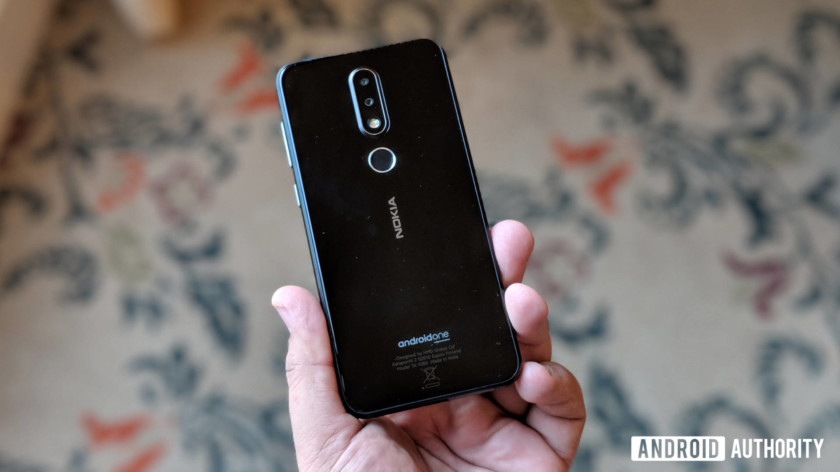
The Nokia 6.1 Plus sports an aluminum alloy body with glass on top. It boasts of a 5.8-inch Full HD+ display with a 19:9 screen ratio. There’s an 81.5% screen-to-body ratio and although the phone has thin black bezels all around and a chin at the bottom with Nokia branding, there’s a notch on the top, a first for a Nokia smartphone.
With just 8mm of thickness and 151 grams in weight, the Nokia 6.1 Plus feels great in the hand. Even with the relatively large screen, it’s a pretty compact phone and quite ergonomic. The glass design makes it a smudge magnet, but one swipe on the jeans, and it looks rad.
Pure, secure, and up-to-date Android

Like other phones in HMD Global’s current portfolio, the Nokia 6.1 Plus too is an Android One smartphone. Out of the box, it ships with Android 8.1 Oreo and offers clean, stock Android experience.
Android One certification implies that the smartphone will receive 2 years of guaranteed Android ‘letter’ upgrades and 3 years of monthly security updates.
Mid-range specifications sheet
The Nokia 6.1 Plus is powered by one of the newer and powerful mid-range processors by Qualcomm, the Snapdragon 636 and packs in 4GB of RAM with 64GB of internal storage.
Specifications
| Display | 5.8-inch Full HD+ (2280 x 1080) IPS LCD 19:9 aspect ratio 2.5 D curved glass Corning Gorilla Glass 3 |
| SoC | Qualcomm Snapdragon 636 |
| GPU | Adreno 509 |
| RAM | 4GB LPPDDR4x |
| Storage | 64GB Expandable up to 400GB with MicroSD card |
| Front Camera | 16MP f/2.0 aperture 1.0um pixel size |
| Rear Camera | 16MP AF primary camera f/2.0 aperture 1.0um pixel size 5MP secondary camera Dual-LED dual-tone flash |
| Battery | 3060mAh Fast charging support; bundled 5V/2A charger |
| Sensors | Ambient light sensor, Proximity sensor, Accelerometer (G-sensor), E-compass, Gyroscope, Fingerprint Sensor |
| Connectivity | 802.11 a/b/g/n/ac Bluetooth 5.0 GPS/AGPS+GLONASS |
| Software | Android 8.1 Oreo Android One |
| Dimensions and weight | 147.2 x 70.98 x 7.99mm, 151g |
| Colors | Midnight Blue, Gloss Black, Gloss White |
Camera
The camera experience on the Nokia 6 and Nokia 6 (2018) was a hit and a miss. HMD Global wants to put that inconsistent performance behind and the AI-enhanced dual camera on Nokia 6.1 Plus comes with depth-based imaging for sharp and bright photos. We’ll reserve our judgment of the same until the review once we’ve taken the phone for a whirl for a longer time.
The 16MP front camera too is quite impressive on paper. The camera is clearly one of the highlights of the Nokia 6.1 Plus.
Pricing and Availability

Priced at 15,999 rupees ($230) in India, the Nokia 6.1 Plus is available in three color variants – Midnight Blue, Gloss Black, and Gloss White – and will be available exclusively on Flipkart starting August 30 (the pre-orders start today).
The Nokia 6.1 Plus is a well-rounded package that boasts of a competitive specifications sheet and a good-looking and functional design that should appeal to a broad set of users. We’re taking a deep dive into the Nokia 6.1 Plus and would soon publish the full review of the device. Watch this space.
Meanwhile, let us know your thoughts on HMD Global’s latest mid-range smartphone and its pricing, and would you like to pick up a Nokia 6.1 Plus?
Parallels Desktop 14 for Mac Offers Speed and Storage Gains, macOS Mojave Support
Parallels today announced version 14 of its desktop virtualization software for Mac, offering macOS Mojave support out of the box and significantly improved application launch speeds over the previous version.
This update puts a heavy focus on enhanced storage optimization, with Parallels Desktop being around 20-30 percent smaller than earlier releases. The company says virtual machines can also save as much as 20GB of additional disk space depending on how they’re configured.
Elsewhere, the developers have optimized the compression of memory states saved with the Snapshots tool, which takes on average 15 percent less storage space, while a new disk space wizard provides users with suggestions on how to economize storage, with advice on managing multiple virtual machines and VM snapshots.
In addition, Parallels 14 introduces several Windows features for use in macOS. For example, Microsoft Ink is now available for editing Office documents, and stylus support has been added to CorelDRAW, Fresh Paint, PowerPoint, Adobe Illustrator and Photoshop.
Parallels Desktop also now includes Touch Bar features on compatible MacBook Pros for OneNote, AutoCAD, SketchUp, Microsoft Visio, and other apps, while a Touch Bar wizard offers users the ability to customize Windows app shortcuts from Apple’s OLED function strip.
Lastly, Parallels Toolbox has received some additional Mac features including new options to screenshot entire web pages, resize images and perform memory consolidation functions.
Parallels Desktop 14 for Mac is available from August 23. Existing Parallels 12 and 13 users can upgrade to the new version for $50. New users can sign up for an $80 a year subscription or make a one-time purchase of Parallels 14 for $100. Parallels Desktop 14 Pro Edition and Business Edition both cost $100 per year. Note that a Windows license is not included in the software and must be bought separately.
Tag: Parallels 14
Discuss this article in our forums
Asus gets ‘tough’ on gamers using two TUF Gaming FX laptops built for abuse
Asus TUF Gaming FX705
If you’re looking for a “tough” gaming laptop that won’t set your wallet on fire, Asus introduced two new solutions under its TUF Gaming FX banner. The FX505 dons a 15.6-inch screen while the FX705 sports a 17.3-inch screen, both of which support a 1,920 x 1,080 (aka Full HD) resolution with up to a 144Hz refresh rate.
“As with all TUF Gaming products, FX505 and FX705 are built to withstand everyday abuse,” the company says. “They are put through rigorous quality and durability tests that exceed industry standards, and they have also passed the demanding military-grade MIL-STD-810G test for sudden jolts. The reinforced chassis and hexagonal design on the bottom add structural rigidity to make them even sturdier.”
Both models are based on two of Intel’s latest eighth-generation processors for laptops: The Core i5-8300H four-core chip and the Core i7-8750H six-core chip. For graphics, you will see up to a GeForce GTX 1060 discrete graphics chip from Nvidia with presumably 6GB of dedicated video memory. The laptops also support up to 32GB of system memory (DDR4) clocked at 2,666MHz.
For storage, these laptops appear to include two drives: Up to a 512GB PCI Express-based M.2 SSD as the primary drive and up to a 1TB Seagate FireCuda hybrid drive as secondary storage. Meanwhile, the port complement includes two USB-A ports (5Gbps), another slower USB-A port (480Mbps), an HDMI 2.0 port, an Ethernet port, and a headphone/microphone combo jack supporting DTS Headphone:X audio.
Asus TUF Gaming FX505
For wireless connectivity, the laptops provide Bluetooth 5.0 along with support for up to 1.73Gbps through a Wireless AC Wave 2 component (2×2) capable of accessing the 160MHz channels on compatible routers. Other general features rounding out these laptops consist of an HD webcam and a backlit keyboard with customizable RGB lighting. Asus says the keys have a travel distance of 1.8mm and a duration of 20 million presses.
Keeping these laptops cool is the company’s HyperCool system featuring separate fans and heatsinks for the CPU and GPU. These fans are located directly under the keyboard to prevent your fingers from playing hot potato while you’re in the heat of the on-screen action. Adding to this design is a patented trapezoid-cut lid to enable the laptop to eject more hot air from the rear. Asus says this design enables up to a 25 percent better cooling performance than the competition.
“Cooling performance can degrade over time, with dust and particle buildup impeding airflow through thermal fins,” the company adds. “Patented Asus dust tunnels help to guide dust and particles off to a separate chamber to be ejected from the system, keeping the thermal fins clear for stable long-term cooling performance.”
Both laptops will be on display during the Gamescom convention in Germany. Retail availability won’t be until sometime in September for a currently unknown “affordable” starting price.
Editors’ Recommendations
- Asus claims ‘world’s thinnest’ title with its new Zephyrus S gaming laptop
- Samsung Galaxy Note 9 review
- Microsoft’s foldable Andromeda PC could transform into five distinct modes
- Alienware 17 R5 review
- LG 38UC99 38-inch ultrawide monitor review
Nokia 7 Plus will receive Android 9.0 Pie stable update in September
The Nokia 7 Plus will be the first Snapdragon 660 phone to receive the Android 9.0 Pie update.

The Nokia 7 Plus was one of seven devices in the third-party Android beta program, and the phone picked up the Beta 4 build earlier in the month. HMD Global has mentioned that it is in the final stages of the beta program, with a stable build slated for the device in the coming weeks.
At a media event in New Delhi, HMD’s Chief Product Officer Juho Sarvikas confirmed that the Nokia 7 Plus would be receiving the stable Android 9.0 Pie update in September, becoming the first Snapdragon 660 device to do so.
The rest of the devices in HMD’s portfolio will receive the Pie update in the coming months, and based on the brand’s track record, we should see the likes of the Nokia 8 Sirocco and Nokia 6.1 pick up the Android 9.0 Pie stable build before the end of the year.
Nokia 7 Plus review: Come for the value, stay for the excitement
Nokia 6.1 Plus preview: The start of something great
HMD finally made a budget phone that can take on Xiaomi and Honor.

The Nokia 6 series holds special value for HMD Global. The Nokia 6 was the first Android device to feature Nokia branding, and it was one of the manufacturer’s best-selling devices last year. The phone wasn’t without its faults, however, as the Snapdragon 430 was underwhelming in day-to-day usage.
Nokia did a magnificent job optimizing the software to run on underpowered hardware during its Windows Phone days, which is why budget Lumia phones weren’t laggy. That system doesn’t work on Android though, and to its credit, HMD fixed a lot of the performance issues with the 2018 refresh of the Nokia 6, the Nokia 6.1 2018. The Nokia 6.1 2018 retained a similar design aesthetic but offered much more powerful hardware in the form of a Snapdragon 630.
HMD is now rolling out a third model in the Nokia 6 series, the Nokia 6.1 Plus. The phone made its debut a few months ago in China as the Nokia X6, and is the first from HMD to sport a notched display. It isn’t just a larger verison of the Nokia 6.1 with a notch; the Nokia 6.1 Plus comes with an all-new glass design that makes it stand out in this segment, and the internal hardware has also received a boost. The phone is powered by a Snapdragon 636, and comes with 4GB of RAM and 64GB of storage as standard.
In short, the Nokia 6.1 Plus is HMD’s most ambitious effort yet in the budget category.

The Plus moniker in the Nokia 6.1 Plus’ name is in reference to the larger 5.8-inch display. HMD went with a notched panel to maximize the screen real estate, and the 19:9 FHD+ screen is one of the best in this category. Colors are vibrant, viewing angles are excellent, and the phone doesn’t have any issues with sunlight legibility. There’s also a layer of Gorilla Glass 3 at the front and back to protect from tumbles, and the 2.5D curved front makes it easier to use the phone.
Even though the Nokia 6.1 Plus has a screen that’s 0.3 inches larger than the Nokia 6.1, it is more compact than the standard model. Coming in at 147.2 x 71 x 8mm, the Nokia 6.1 Plus is shorter, narrower, and thinner than the Nokia 6.1 (148.8 x 75.8 x 8.2mm), a fact that’s immediately noticeable once you start using the device. It is almost as compact as the Pixel 2, making it the perfect device for one-handed usage.
The glass back doesn’t have a reflective pattern like the Honor 10 or the Huawei P20 Lite, and what the device is missing in design flourish it makes up in durability. There’s an aluminum frame sandwiching the glass front and back, and although the Nokia 6.1 Plus isn’t as durable as the standard model, it can still weather a few tumbles.
It’s a good thing too, because the Nokia 6.1 Plus is one of the most slippery phones available today, and it managed to slide off flat surfaces no less than five times in just under a week. There wasn’t any damage aside from a minor dent on the frame, but if there’s ever a device that needs to be used with a case, it’s this one.
The Nokia 6.1 Plus is perfect for one-handed use.
Rounding out the design, there’s a dual camera system arrayed vertically at the back, and a fingerprint sensor located underneath. The sensor isn’t located quite where your finger rests at the back, but the minor indent makes it easy to locate the module and unlock the phone. The Nokia 6.1 Plus has a single speaker located next to the USB-C port at the bottom, and a 3.5mm jack up top. The volume and power buttons are located on the right.
Like most phones in this segment, the Nokia 6.1 Plus comes with a hybrid SIM card tray that sees the secondary SIM slot doubling up as a MicroSD slot. The Nokia 6.1 Plus has Wi-Fi ac, Bluetooth 5.0, and FM radio, but it is missing out on NFC.

| Screen | 5.8-inch 19:9 FHD+ (2280×1080) IPS LCD |
| Chipset | Snapdragon 636 |
| RAM | 4GB |
| Storage | 64GB |
| Software | Android 8.1 Oreo |
| Rear Camera 1 | 16MP, ƒ/2.0 |
| Rear Camera 2 | 5MP, ƒ/2.4 |
| Front Camera | 16MP, ƒ/2.0 |
| Security | Rear fingerprint |
| Battery | 3060mAh |
| Connectivity | Wi-Fi 802.11 ac, BT5.0, FM radio |
| Colors | Gloss Midnight Blue, Gloss Black, Gloss White |
| Dimensions | 147.2 x 71 x 8mm |
| Weight | 151g |
| Price | $250 |
Powered by a Snapdragon 636, the Nokia 6.1 Plus is the most powerful budget phone HMD has launched to date. I didn’t notice any lag in the week I used the phone, and the robust chipset coupled with 4GB of RAM is the sweet spot in this category.
The 3060mAh battery also managed to deliver a day’s worth of use consistently. The phone offers Quick Charge 3.0, but the charger included in the case goes up to just 5V/2A. I averaged over five hours of screen-on-time over the course of a day, and while the phone doesn’t hold up to the likes of the Redmi Note 5 Pro in this area, it is more than enough to last an entire day.
It’s business as usual on the software side of things. Like the rest of HMD’s portfolio, the Nokia 6.1 Plus runs Android One out of the box and comes with two years of platform updates and three years’ worth of security updates. The phone is currently on Android 8.1 Oreo, and HMD says it will deliver the Android 9.0 Pie update before the end of the year.
The Finnish brand has done a magnificent job in terms of rolling out timely updates across its entire portfolio, and there isn’t a brand that comes close to HMD in this regard. If you care about updates, picking up a HMD phone is a no-brainer.


The 12MP + 5MP rear cameras on the Nokia 6.1 Plus do a great job in daylight conditions, with images offering plenty of detail and decent dynamic range. HMD is also rolling out its Bothie feature — which lets you take a photo with both the front and back cameras simultaneously — to the device.


The phone isn’t nearly as proficient when it comes to low-light scenarios, with the sensors struggling to capture detail. There was also noticeable shutter lag in a few cases, but this should hopefully be fixed in a future software update.

It took HMD three attempts, but it has finally delivered a budget phone that can take on the likes of Xiaomi and Honor. The Nokia 6.1 Plus is one of the best phones at this price point, and the design coupled with HMD’s track record at rolling out updates makes this a great option if you’re in the market for a new device.
Nokia phones aren’t necessarily known for aggressive pricing, but HMD is changing its strategy with the Nokia 6.1 Plus, particularly in India. The phone is making its debut in the country for just ₹15,999 ($230), making it an enticing alternative to the Xiaomi Mi A2. The Mi A2 has beefier hardware in the form of a Snapdragon 660 — and better cameras — but the Nokia 6.1 Plus is ideal if you’re looking for a compact phone with a gorgeous design.
Nokia 6.1 Plus with 19:9 display debuts in India for just ₹15,999 ($230)
HMD Global’s latest budget phone delivers in the areas that matter.

HMD Global unveiled the Nokia X6 earlier this year in China, and the device is now making its way to global markets as the Nokia 6.1 Plus. The phone is now official in India, and will be available up for sale starting August 30 from Nokia’s website and Flipkart.
The Nokia 6.1 Plus features a 5.8-inch all-screen front with a notched 19:9 panel, and is powered by the Snapdragon 636. It also comes with 4GB of RAM and 64GB of storage as standard, and has 12MP + 5MP cameras at the back and a 16MP shooter up front. Other specs include Wi-Fi ac, FM radio, Bluetooth 5.0, and a 3060mAh battery with Quick Charge 3.0.
HMD is doubling down on production capacity in India, and is projecting a 2x increase in revenue from the country as a result. The Finnish manufacturer is also starting to aggressively price its devices in the country, with the Nokia 6.1 Plus set to go on sale from August 30 for just ₹15,999 ($230). The pricing will definitely make the Nokia 6.1 Plus an attractive option for buyers in this segment.
We’ll have much more to talk about the Nokia 6.1 Plus in the coming weeks, but for now, be sure to take a look at our detailed preview:
Nokia 6.1 Plus preview: The start of something great
 AIVAnet