


Moto G6 and G6 Play are launching in India on June 4
No news yet on the Moto G6 Plus, but the Moto G6 and G6 Play are heading to India next week.

Motorola India teased the launch of the Moto G6 series earlier this month, and we now have official confirmation. The Moto G6 and Moto G6 Play will make their debut in India on June 4, with the former exclusive to Amazon and the latter set to go on sale exclusively at Flipkart. Right now, there’s no information on when the Moto G6 Plus will launch in the country.
Motorola unveiled the Moto G6 series last month in Brazil, and there are several changes from last year’s offerings. First up, all three models feature an 18:9 form factor, and they also come with a glass back design that’s reminiscent of the Moto X4. The Moto G6 features a 5.7-inch FHD+ display, and is powered by the Snapdragon 450. It’ll be available with 3GB or 4GB of RAM, and 32GB or 64GB of storage, but it’s likely we’ll see the 4GB/64GB option as the standard model for India.
There’s a microSD card slot, a dual 12MP + 5MP camera at the back, 8MP front shooter, Wi-Fi 802.11 a/b/g/n, Bluetooth 4.2, USB-C, and a 3000mAh battery.
The Moto G6 Play, meanwhile, comes with a 5.7-inch 720p panel (1440 x 720), Snapdragon 427, 2GB/3GB of RAM, 16GB/32GB of storage, microSD slot, 13MP rear camera, 8MP front camera, and a massive 4000mAh battery. The large battery allows the Moto G6 Play to stand out, but the rest of the hardware isn’t all that enticing when you consider the likes of Xiaomi offer beefier hardware at the same price point.
Moto G6, G6 Play, and G6 Plus: Everything you need to know
Both phones come with a nano-coating that makes them resistant to the occasional splash of water, and they’re also running Android 8.0 Oreo out of the box.
We’ll have to wait until next week to know how much either model will cost in the country, but Motorola has stiff competition in this category. The Nokia 6.1 costs about the same as the Moto G6, and offers better hardware in the form of a Snapdragon 630, and HMD has done a fantastic job when it comes to updates.
It’ll be interesting to see how much the Moto G6 will end up retailing for in India, as that will ultimately decide if the device will sell in any meaningful quantities.
As sale rumors swirl, Essential claims it’s focusing on ‘game-changing’ products
Julian Chokkattu/Digital Trends
After its first product launch saw dismal sales and immediate price cuts, Essential, the company created by Android co-founder Andy Rubin, is considering selling itself, according to sources speaking to Bloomberg. That is a quick turnaround, considering the Essential Phone (PH-1) launched late in 2017.
Essential was the first to introduce the “notch” design — a cutout at the top of the phone housing the camera — that beat the iPhone X to the punch. It also distinguished itself with its titanium and ceramic design, and also by running a stock version of Android with zero bloatware, offering swift Android updates when Google rolled them out. Sadly, it wasn’t enough. Reviews, including ours, dinged the phone for its poor camera, though Essential has spent the past few months improving it through software updates.
When Essential launched its first smartphone, the company announced — perhaps prematurely — its road map for the coming year. The plan was to create modular components for its flagship phone every quarter, and then launch a smart home product called Essential Home, running a proprietary operating system called Ambient OS. To date, the company has only launched one module — a 360-degree camera — and a few different color variants of the original Essential Phone. The device’s price also dropped fairly quickly from $700 to below $500.
Now, the Bloomberg report states the company is considering selling its patent portfolio, the original Essential Phone as well as the 360-degree camera, its engineers, and its smart home product. Oh, and it has ceased development of an upcoming phone, presumably the Essential Phone (PH-2). A final decision hasn’t been made yet.
“We always have multiple products in development at the same time and we embrace canceling some in favor of the ones we think will be bigger hits,’ an Essential spokesperson told Digital Trends. “We are putting all of our efforts toward our future, game-changing products, which include mobile and home products.”
Rubin also tweeted out the same exact response.
We always have multiple products in development at the same time and we embrace canceling some in favor of the ones we think will be bigger hits. We are putting all of our efforts towards our future, game-changing products, which include mobile and home products.
— Andy Rubin (@Arubin) May 24, 2018
It sounds as though development of the Essential Phone 2 has been canceled. Only 150,000 Essential Phones have been sold to date, which is why the company may be gearing up to exit the smartphone business. Bloomberg states there is a chance it could re-enter the market, as Essential has explored using a different manufacturer other than Foxconn.
The Essential Home is reportedly still in the works and it’s expected to launch next year, according to Bloomberg’s sources.
Editors’ Recommendations
- Everything you need to know about the Essential PH-1 phone
- Apple’s iOS 11.3 is now available for download on the iPhone and iPad
- ‘Destiny 2’ Legendary Shards guide: What they are and how to get them
- Google’s new ‘tablet mode’ further blurs the line between Chrome OS and Android
- Trying to understand Facebook’s Community Standards? Here’s the gist
It sounds crazy, but jet thrusters on a motorbike may actually make it safer
When you hear the words “motorbike” and “jet thruster” together, your next thought probably isn’t, “Wow, that sure sounds like a recipe for safety.” In this case, however, you may well be wrong. Researchers at the German engineering and electronics company Bosch have developed jet thrusters for motorbikes which actually make the experience of riding a bike safer.
The technology is an effort to reduce what are referred to as “low-side” crashes. That is the type of crash which occurs when a bike is leaning to one side while cornering, with the result being either the front or rear wheel sliding out from under the driver. This can be the result of too much braking on the part of the driver, too much acceleration, or slippery road conditions, such as when you’re driving on wet roads or gravel surfaces. Whatever the cause, though, the results are rarely good.
It is these type of crashes Bosch wants to reduce. Their technology works out when wheel slip is happening and, where necessary, uses thrusters to right the bike before its impending doom.
Bosch
“It’s like a magic hand that keeps the motorcycle on track and considerably reduces the risk of a fall,” Fevzi Yildirim, regional business unit leader for Bosch Two-Wheeler and Powersports, told Digital Trends. “A sensor detects sideways wheel slip. If a certain value is exceeded, gas is released from a gas accumulator of the type used in passenger-car airbags. The gas flows into the tank adapter and is vented in a certain direction through a nozzle. This reverse thrust keeps the motorcycle on track.”
The technology isn’t on the market yet, but it could help improve safety for motorcyclists who, compared with car drivers, are far more exposed and unprotected on the road, and therefore face greater risks. Hopefully, we’ll see technology such as this incorporated into future motorbikes, although Yildirim notes that it is still a research and development initiative.
“Sliding mitigation is an advanced research project aimed at overcoming differences in surface friction,” Yildirim said. “There are still a few open technical challenges to be solved. Nonetheless, it shows all our efforts to realize our vision of accident-free riding in the future. We have proved that such a system can work.”
Editors’ Recommendations
- Awesome Tech You Can’t Buy Yet: Wine preservers, pocket typewriters, and more
- Polaris eyes desert dominance with the 2018 Polaris RZR XP Turbo S
- Ford recalls more than 1.3 million cars because the steering wheel can come off
- Testing a Ducati motorcycle with a Velomacchi gear pack
- Ridy smart camera will alert drivers when they’re drowsy or distracted
The sound of silent snoring: QuietOn Sleep earbuds aim to cancel out the noise
Do you have a spouse or significant other who snores? If you’re not willing to call it quits on your relationship in the name of a good night’s sleep, you may want to consider shelling out for a pair of futuristic earbuds, developed by a team of ex-Nokia engineers. Like supercharged ear plugs, the QuietOn Sleep earbuds use cutting-edge noise-canceling technology to block out low-frequency sounds.
The earbuds trace back to the early 2010s, when company founder Janne Kyllöne became interested in noise-canceling technology after enduring countless business flights. In 2015, Kyllöne and fellow Nokia engineer Matti Nisula manufactured the first prototypes and had them tested and validated. This lead to a 2016 Indiegogo campaign, which raised $1.3 million. The first-generation earbuds were successfully delivered to backers and, by last year, more than 15,000 units had been shipped to 120 countries around the world. Now the team is back with a follow-up, improving on the original earbuds in a few key ways.
“After one year being on the market, we’ve learned from the market and realized how big the demand is,” Kyllöne told Digital Trends. “People crave a device that can help them improve their wellbeing, whether for their snoring spouses, or sleeping in hotels while traveling for business, or dealing with noisy neighbors.”
The new earbuds are 40 percent smaller and 50 percent lighter than their predecessors and boast improved snore-blocking technology. They are designed to fit snugly in your ears and from there, they then emit a special phase-shifted sound that is designed to block out any low-frequency noise below 500 Hz. Carrying 20 hours of battery life, they are mainly advertised as being useful for blocking out snoring, although they should do equally well at masking sounds like the hum of a subway train or airplane cabin.
The Indiegogo campaign to fund the new earbuds has finished now, but you can still pledge money to hopefully secure a pair for yourself. As ever, we recommend that would-be customers familiarize themselves with the risks of crowdfunding campaigns. However, if you’re nonetheless happy to go ahead, a pair of QuietOn Sleep earbuds will set you back $159. Shipping is set to take place in October.
Editors’ Recommendations
- The best sleeping pads
- Nectar’s adjustable bed frame comes with a NASA-inspired Zero Gravity setting
- A review of Roofnest’s new rooftop tents
- There’s finally a pillow designed specifically with side-sleepers in mind
- The best rooftop tents
Memorial Day discounts have begun and here are our favorite laptop picks
If you’re shopping for a new notebook, now is the time to invest. Manufacturers are slashing prices for Memorial Day including big blowouts by Dell, HP, Microsoft, and Lenovo. We pulled out our five favorite notebook discounts so you aren’t digging through all the hardware.
Lenovo ThinkPad X1 Carbon ($380 off)
Bill Roberson/Digital Trends
While a discounted price of $1,139 isn’t exactly dirt cheap, knocking $380 off the original bill makes this laptop a bit more affordable. It’s based on an eighth-generation Core i5-8250U processor powering a 14-inch IPS screen with a 1,920 x 1,080 resolution. Don’t let the listing’s “6th Gen” listing fool you: Lenovo is referring to the model, not the actual processor.
Of course, that price tag is your starting point. Sold in black or silver finishes, the base configuration includes 8GB of system memory (LPDDR3 at 2,133MHz), 256GB of storage on an M.2 SSD, integrated graphics, Wireless AC and Bluetooth 4.1 connectivity, and a 57 watt-hour battery. It includes a fingerprint reader and a 720p camera with a built-in cover too.
See it
Microsoft Surface Laptop ($200 off)
Adam Balkin/Digital Trends
This deal only applies to select models with the Core i5 processor, so essentially the cheapest Core i5 configuration costs $799 after the discount featuring 4GB of system memory, 128GB of storage, and a locked Platinum exterior. Increase the memory to 8GB and the storage to 256GB, and the price jumps up to a palatable $1,099 no matter what color you choose.
Outside of the CPU/memory/storage aspects, the Surface Laptop sports a 13.5-inch screen with a 2,256 x 1,504 resolution, integrated graphics, a 720p webcam and Windows Hello sign-in camera, Wireless AC and Bluetooth 4.0 LE connectivity, and more.
See it
HP Spectre x360 13t ($200 off)
With a $200 holiday discount, this convertible laptop will set you back for a starting price of $989. The base configuration relies on an eighth-generation Core i5-8250U processor, 8GB of system memory (LPDDR3 at 2,133MHz), and 360GB of storage on an M.2 SSD. You can upgrade these components for an added cost.
Of course, if you find the natural silver finish rather boring, HP serves up two other choices for an added $10 each: Dark ash silver and pale rose gold. The IPS screen measures 13.3 inches and supports touch-based input, but you will have two resolution options: The default 1,920 x 1,080 or the more expensive 3,840 x 2,160 screen. Powering this laptop is a 60 watt-hour battery.
See it
Dell XPS 15 2-in-1 ($150 off)
Bill Roberson/Digital Trends
This laptop isn’t configurable: Dell’s Memorial Day deal ships “as is” for a discounted price of $2,049. That is not exactly cheap, but it’s one of the first laptops to sport the new processor “module” cooked up by Intel and AMD. This module, aka the Core i7-8705G, plays host to three separate components: four Intel “Coffee Lake” CPU cores and integrated graphics, AMD’s discrete Radeon RX Vega M GL graphics cores, and 4GB of HBM2 memory dedicated to graphics.
Outside the new module, Dell’s 2-in-1 features a 15.6-inch screen with touch support and a 3,840 x 2,160 resolution, 16GB of system memory (DDR4 at 2,400MHz), 256GB of storage on an M.2 SSD, Killer Wireless AC and Bluetooth connectivity, and a 75 watt-hour battery. Two one-watt speakers and a Widescreen 720p camera round out the package.
See it
HP Omen 15t Gaming Laptop ($170 off)
Bill Roberson/Digital Trends
Although Dell’s notebook could be used for gaming, here is our only notebook on the list actually dedicated to gamers. The discounted $799 price is your starting point consisting of a seventh-generation Core i7-7700HQ processor, 8GB of system memory (DDR4 at 2,400MHz), a 1TB hard drive, and a discrete GeForce GTX 1050 graphics chip.
HP’s gaming laptop sports a 15.6-inch IPS screen with a 1,920 x 1,080 resolution. Other ingredients include an HP Wide Vision HD webcam, Wireless AC and Bluetooth 4.2 connectivity, a backlit keyboard, and a 63.3 watt-hour battery. The graphics chip, system memory, and storage can be configured with better components and capacities for an added cost.
See it
We strive to help our readers find the best deals on quality products and services, and choose what we cover carefully and independently. If you find a better price for a product listed here, or want to suggest one of your own, email us at dealsteam@digitaltrends.com.Digital Trends may earn commission on products purchased through our links, which supports the work we do for our readers.
Editors’ Recommendations
- Lenovo ThinkPad X1 Carbon vs. Apple MacBook Pro 13
- The best HP laptops
- Best Lenovo laptops
- Dell XPS 13 vs. HP Spectre 13
- The best stealth gaming laptops
Apple wins $539 million in damages from Samsung in design patent infringement retrial

This could be the end … well, no, probably not.
In what feels like a never-ending technology patent spat, Apple has just been awarded a hefty amount of damages from Samsung related to design patent infringement. In a retrial of the ongoing lawsuit from Apple that alleged Samsung took its patented designs for its own products several generations of phones ago, the court awarded Apple just shy of $539 million in damages. Bloomberg’s Mark Gurman is listing the damages as a $533.3 million award, plus some additional concessions for another $5.3 million.
Apple’s statement is clear and doesn’t sugarcoat things:
Apple statement on Samsung trial verdict: “it is a fact that Samsung blatantly copied our design” … “We’re grateful to the jury for their service and pleased they agree that Samsung should pay for copying our products.”
— Mark Gurman (@markgurman) May 24, 2018
This particular case over design patents has been dragging on since 2011. Some may forget that it was actually already determined by the courts that Samsung infringed on Apple’s patents, but the two companies have since been continuously battling over how much Samsung would pay in damages. Apple initially asserted that it was owed as much as $1 billion from Samsung, but several counter-lawsuits, appeals, retrials and arguments ensued to reduce that award. It was previously set that Samsung owed roughly $400 million for infringing some specific patents, and now Apple can set the $539 million number in stone.
Apple was eventually awarded $120 million in damages from Samsung in a separate lawsuit back in November 2017 related to Samsung’s use of slide-to-unlock on its phones — that trial also took several rounds of back-and-forth with appeals before it finally concluded. There’s no way this is the last we’ll hear of the Apple-Samsung patent lawsuits, be it over old products or new ones. So long as these are the leaders in the smartphone business with an incredible amount of money available to tie things up in the courts, we’ll see patent battles.
Samsung Galaxy S9 and S9+
- Galaxy S9 and S9+: Everything you need to know!
- Galaxy S9 review: A great phone for the masses
- Complete Galaxy S9 and S9+ specs
- Galaxy S9 vs. Galaxy S8: Should you upgrade?
- Join our Galaxy S9 forums
Verizon
AT&T
T-Mobile
Sprint
Essential Phone 2 reportedly canceled, Andy Rubin considering selling the company [Update]
More than $100 million was used to develop Essential’s first products.
Updated 6:51 PM — Following Bloomberg’s report, Andy Rubin has since taken to Twitter with the following message: “We always have multiple products in development at the same time and we embrace canceling some in favor of the ones we think will be bigger hits. We are putting all of our efforts towards our future, game-changing products, which include mobile and home products.”
According to a new report from Bloomberg, Andry Rubin is considering selling his startup Essential and has canceled the launch of the 2nd-gen Essential Phone.

Per Bloomberg’s report —
The startup has hired Credit Suisse Group AG to advise on a potential sale and has received interest from at least one suitor, the people said. Essential is now actively shopping itself to potential suitors, one of the people said.
Playground Global, Rubin’s incubator that was used to launch Essential, is said to have raised around $300 million from the likes of Amazon, Tencent Holdings Inc., and Redpoint Ventures. Of that $300 million, one-third of it ($100 million) was used just for developing Essential’s first round of products. Considering we never saw more than renders of the Essential Home, it’s safe to say that the majority of that $100 million was focused on the first Essential Phone and its 360-degree camera attachment.
As Bloomberg continues —
Current discussions are focused on a sale of the entire company, including its patent portfolio, hardware products like the original smartphone, an upcoming smart home device and a camera attachment for the phone, said the people, who asked not to be identified because the talks are private. Essential’s engineering talent, which includes those hired from Apple Inc. and Alphabet Inc.’s Google, would likely be part of a deal. The company hasn’t yet made a final decision on a sale, the people said.
Essential has yet to comment on this report, and while a new buyer could come in and pick the company up out of this rut, there’s no way of painting this as good news. It’s unclear if Essential will continue to support the existing Essential Phone, but we’ll be sure to let you know as these details come to light.
Only 88,000 units of the Essential Phone were supposedly sold in 2017
Listen closer with Symphonized’s $12 Wooden XTC Noise-Isolating Headphones
Grab a pair at a discount.
For a limited time, you can pick up a pair of Symphonized XTC Premium Noise-isolating Headphones at Amazon for only $11.99. This deal is available in three different colors (black, red, and white) and saves you $13 off the regular price of these headphones.
We previously shared a deal on the very similar Symphonized NRG Headphones which are currently available for $16. The big difference there is that those feature a built-in remote control and come in six different colors.

The XTC in-ear headphones are handcrafted from real wood which helps deliver powerful acoustics. There’s a built-in microphone allowing you to answer calls hands-free and activate voice control, while the noise-isolating properties help drown out ambient noises around you. Three sizes of silicone ear tips are included as well so you can find the right fit for you, along with an eco-friendly carrying pouch to store them safely while not in use.
Symphonized includes a one-year warranty with purchase of these earphones. Close to 750 Amazon customers reviewed them with 4.1 out of 5 stars collectively.
See at Amazon
Samsung Ordered to Pay Apple $539 Million in iPhone Design Patent Retrial
The latest Samsung v. Apple trial wrapped up this afternoon after the jury decided that Samsung must pay Apple a total of $539 million for violating Apple’s design patents with five android devices sold between 2010 and 2011, reports CNET.
A total of $533,316,606 was awarded to Apple for Samsung’s violation of three design patents, while the remaining $5,325,050 million was for Samsung’s infringement on two of Apple’s utility patents.
Samsung and Apple were back in court to redetermined damages after Samsung appealed to the Supreme Court and said that the original damages award, which was set at $399 million after several appeals, was a “disproportionate” sum for the design violation.
The Supreme Court ordered the U.S. Court of Appeals to redetermine the damages amount, leading to today’s victory for Apple.
The core issue of the retrial was whether the damages should be based on the total value of the iPhone or if Samsung’s fee should be based on just the elements of the iPhone that it copied.
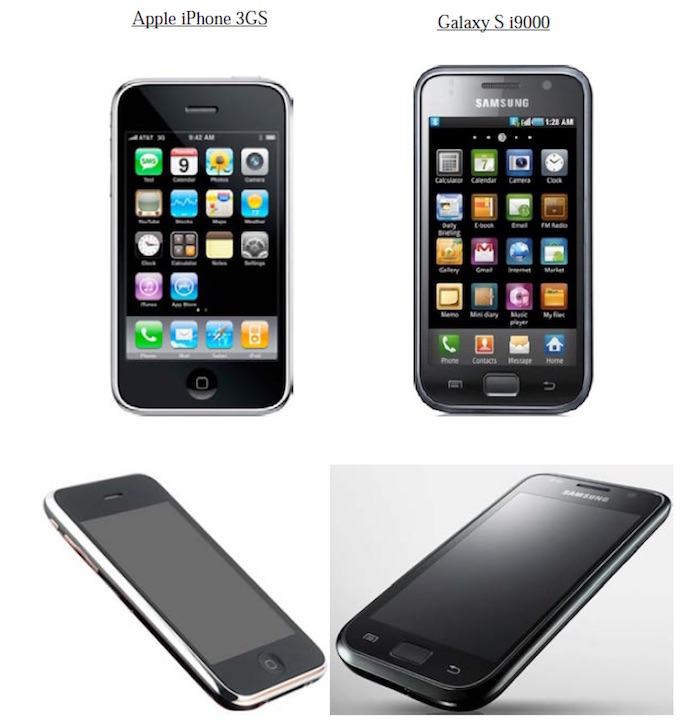
Apple argued that its payment should be based on the full value of the iPhone, while Samsung argued that it should pay a lesser amount. They’re seeking profits on the entire phone,” argued Samsung lawyer John Quinn. “Apple’s design patents do not cover the entire phone. They are entitled to profits only on [infringing] components, not the entire phone.”
Apple asked the jury to award $1 billion in damages, while Samsung asked jurors to limit the damages to $28 million. Unfortunately for Samsung, the jury sided with Apple, and the new award is more than Samsung would have had to pay had the retrial not happened.
In a statement, Apple had this to say: “It is a fact that Samsung blatantly copied our design. We’re grateful to the jury for their service and pleased they agree that Samsung should pay for copying our products.
Update: Samsung also gave a statement on the verdict: “Today’s decision flies in the face of a unanimous Supreme Court ruling in favor of Samsung on the scope of design patent damages. We will consider all options to obtain an outcome that does not hinder creativity.”
Tags: Samsung, lawsuit, patent trials
Discuss this article in our forums
Apple Rejects Valve’s Steam Link App Due to ‘Business Conflicts’
It looks like Valve’s planned Steam Link app for iOS devices isn’t coming after all, because Apple has rejected the app due to “business conflicts.”
In a statement, Valve said that Apple initially approved Steam Link for release on May 7, but ultimately decided to reject the app because of conflicts that had not been recognized by the original review team.
On Monday, May 7th, Apple approved the Steam Link app for release. On Weds, May 9th, Valve released news of the app. The following morning, Apple revoked its approval citing business conflicts with app guidelines that had allegedly not been realized by the original review team.
Valve appealed, explaining the Steam Link app simply functions as a LAN-based remote desktop similar to numerous remote desktop applications already available on the App Store. Ultimately, that appeal was denied leaving the Steam Link app for iOS blocked from release. The team here spent many hours on this project and the approval process, so we’re clearly disappointed. But we hope Apple will reconsider in the future.
Valve’s appeals have not been successful at the current point in time, and the company is now hoping that media attention may spur Apple to change its mind.
The Steam Link app for iOS, which was announced on May 9, is designed to allow Steam users to play their Steam games on an iPhone, iPad, or Apple TV using either a 5GHz WiFi network or a wired Ethernet connection to a host PC or Mac.
Valve was planning to launch the Steam Link app this week, and Valve had worked to add Steam Link support for the Steam Controller and Made for iPhone controllers ahead of the app’s debut.

Earlier this week, our sister site TouchArcade was able to go hands-on with the Steam Link app and said that it works so well that “it feels like there’s some kind of actual wizardry powering it all.” In what might have been a bit prescient, TouchArcade editor-in-chief Eli Hodapp said he was “dumbfounded” Apple was allowing it given how good the gaming experience was.
If you’re the kind of person who is always hungry for “real” PC-like game experiences on your Apple device, but have been dismayed by the amount of junk on the App Store, you can basically delete everything else but the Steam Link app. I’m still dumbfounded by Apple apparently allowing this on their platform, as I could see a very real situation where many people just straight up stop buying things from the App Store and exclusively purchase Steam games through Valve instead.
As Valve says, there are many other remote access-style apps available in the App Store, so the reasoning behind Apple’s decision is unclear. It is not known if Apple will ultimately end up reversing its position on the Steam Link app given the media attention, which has happened in the past, but we’ve reached out to the company for a comment.
Tags: App Store, Valve, Steam
Discuss this article in our forums
 AIVAnet