


Huawei P20 + P20 Pro: Everything you need to know!
Huawei just released the P20 and P20 Pro; here’s what you need to know!
Huawei, like many other big names in mobile, has a predictable cadence to its flagship smartphone launches. The new technology gets showcased first in the Mate series in the fall, usually paired with an updated version of EMUI, running the very latest Android build. That technological base is then further refined for the P series the following spring.

That trend continues in 2018, with the P20: the same guts as the Mate 10, but with a refined design. This is everything you need to know about the Huawei P20 and P20 Pro!
Check out our review!
Before reading anything else, give our full review a read. We’ve had the phones since their announcement, so we have a good feel of how they perform in day to day usage. We also have plenty of camera samples, and some thoughts on the top-notch display.
More: Huawei P20 and P20 Pro hands-on review: Camera kings
The specs

A phone is not just a pretty design; we need components inside to take all of our lovely photos, make calls and display dog photos on Twitter. Fortunately, both the P20 and P20 Pro come packed to the gills with Huawei’s latest processors, and plenty of RAM and storage.
| Operating System | Android 8.1, EMUI 8.1 | Android 8.1, EMUI 8.1 |
| Processor | Huawei Kirin 970 | Huawei Kirin 970 |
| RAM | 4GB | 6GB |
| Storage | 128GB | 128GB |
| microSD | No | No |
| Battery | 3,400mAh non-removableHuawei SuperCharge | 4,000mAh non-removableHuawei SuperCharge |
| Display | 5.8-inch 2240×1080 RGBW LCD 18:9 aspect ratio | 6.1-inch 2240×1080 OLED 18:9 aspect ratio |
| Front camera | 24-megapixel f/2.0 | 24-megapixel f/2.0 |
| Rear cameras | 20MP (mono) f/1.6 + 12MP (RGB) f/1.8 1.55-micron pixels | 40MP RGB (1/1.7-inch sensor) + 20MP mono 8MP f/2.4 OIS 3X telephoto |
| Headphone jack | No | No |
| Wireless charging | No | No |
| Fingerprint scanner | Front | Front |
| Face recognition | Yes | Yes |
| Water resistance | IP53 (splash resistant) | IP67 (water + dust-resistant) |
| Colors | Twilight, Black, Midnight Blue, Pink Gold | Twilight, Black, Midnight Blue, Pink Gold |
| Weight | 165g | 180g |
| Dimensions | 149.1 mm x 70.8 mm x 7.65 mm | 155.0 mm x 73.9 mm x 7.8 mm |
Yes, there are three rear cameras

Dual cameras are common place these days, but the P20 Pro takes it one step (lens?) further. Huawei has included a 40-megapixel main sensor, 20-megapixel monochrome sensor for unparalleled black-and-white shots, and an 8-megapixel, optically stabilized telephoto lens for getting zoomed-in photos that don’t look like a grainy mess. There is also laser, phase-detection, depth and contrast autofocus. In terms of shear hardware, the P20 Pro’s camera is completely unmatched in the smartphone world.
But the lenses and autofocus hardware aren’t the only pieces of a great camera experience. Fortunately, the P20 also includes Huawei’s Neural Processing Unit (NPU) to help focus even more and substitute for optical or electronic image stabilization. The camera can capture a continuous exposure up to four seconds, then the NPU stitches that together for a single, clear image. Huawei is also including a slow-mo capture mode, allowing for 960fps videos — though this is limited to 720P resolution. We’ll dig more into the P20 and P20 Pro’s cameras when it comes time for our full review, so stay tuned!
More: Android Phone With The Best Camera of 2018
There’s also a notch

Love it or hate it, it seems 2018 will be the year of the year of the notch. Both P20’s have a notch at the top, containing the earpiece and front facing camera. There are arguments to be made for and against the notch, so whether or not it’s a deal breaker will come down to your personal preferences.
More: From the Editor’s Desk: Display notches are fine, but companies are doing a horrible job justifying them
Which should you buy?
The P20 and P20 are both excellent options, but if you want to get the most from your money, it’s worth considering just which one to get. Both phones use the same processor, though the P20 Pro has more RAM and a larger battery. The standard P20 uses an LCD panel while the P20 Pro opts for an OLED one, but both displays look excellent and have great outdoor visibility. The P20 Pro also has its unique three-camera setup, meaning you can get some stunning shots that just wouldn’t be possible on the regular P20.
At the end of the day, both phones will be great choices. But if you can stretch your buying power a bit further, the P20 Pro would be the better option.
You can get the Porsche Design again
Huawei and Porsche Design usually team up for a ridiculously priced smartphone, and the P20 is no exception. The Porsche Design Mate RS features a striking red or black design, an in-display fingerprint sensor (as well as a second fingerprint sensor on the back, because why not), 256GB or 512GB of internal storage and wireless charging. Despite the changes to the external design, the camera setup and internals (except for the increased storage) remain the same. Like the previous special editions, this year’s Porsche Design is only for those with a good deal of cash burning a hole in their pockets — it can be yours for a cool €1550/$2000.
More: The Porsche Design Mate RS is a Huawei P20 Pro with an in-display fingerprint sensor and a $2000 price tag
You can still get it in the U.S, but…

Despite the kerfuffle between Huawei and the U.S. government, U.S. consumers can still get their hands on the P20 and P20 Pro, but after jumping through some hoops. Amazon has the standard P20 — albeit without an official warranty — while some eBay members are selling the P20 Pro. Approach both of these sources with a heavy dose of caution.
See Huawei P20 at Amazon
More: Here are the best places to buy the Huawei P20 Pro in the U.S.
More to come!
We’re just getting started with the Huawei P20 and P20 Pro! We have our full review coming up, as well as comparisons with the hottest phones of early 2018. Stay tuned for more!
How to use a Samsung Galaxy S9 with two Bluetooth devices at a time
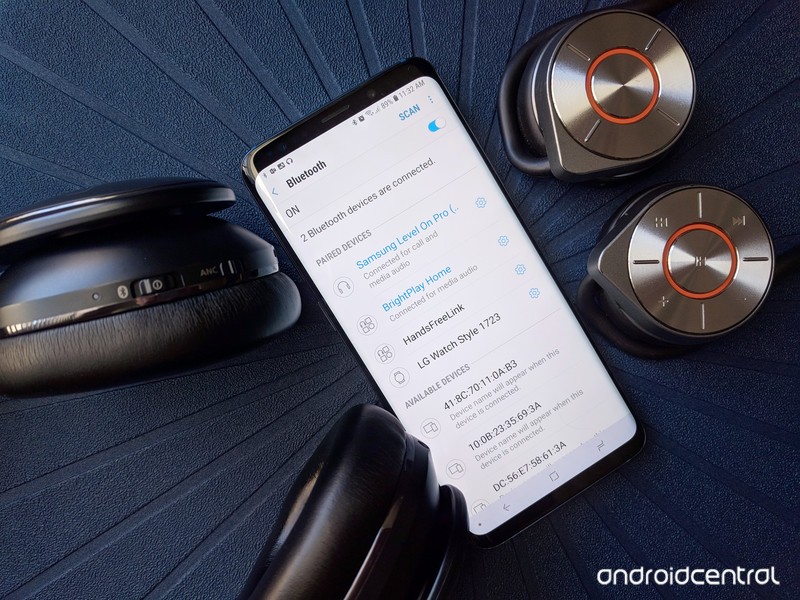
Samsung’s brought some Bluetooth magic to the Galaxy line with Dual Audio.
We’ve all tried to share what we’re listening to with someone. We’ll split earbuds with our partner while watching a movie on a flight, and it seems romantic, right? Then reality sets in, and it’s just awkward. It’s cramped. It’s also gross because you’re sharing nasty earbuds.
There’s a better way to share your listening, and you can both have your own headphones for it. It’s called Dual Audio, and it’s one of the best Samsung Galaxy S9 features you’ve never heard about — even though it was introduced last year on the Galaxy S8, S8+ and Galaxy Note 8.
Here’s how it works.
Dual Audio allows you to send your media audio to two different Bluetooth devices at once. This means that not only can you use two pairs of headphones at one time, but you get to ditch the wires, too! After pairing both Bluetooth headphones to your Samsung Galaxy S9, you just need to enable Dual Audio so that both phones can receive the media audio at once.
Open Settings.
Tap Connections.
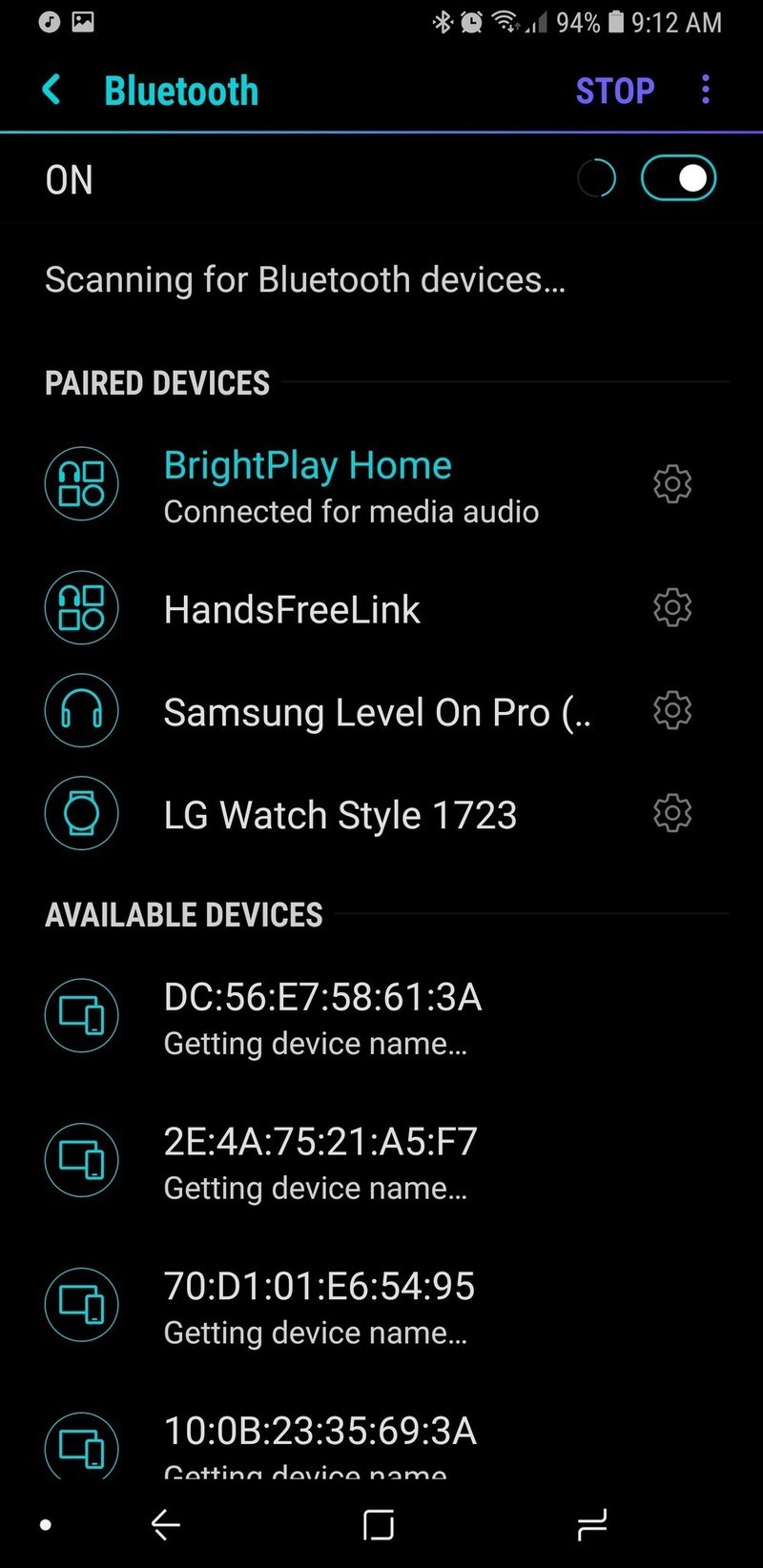
Tap Bluetooth.

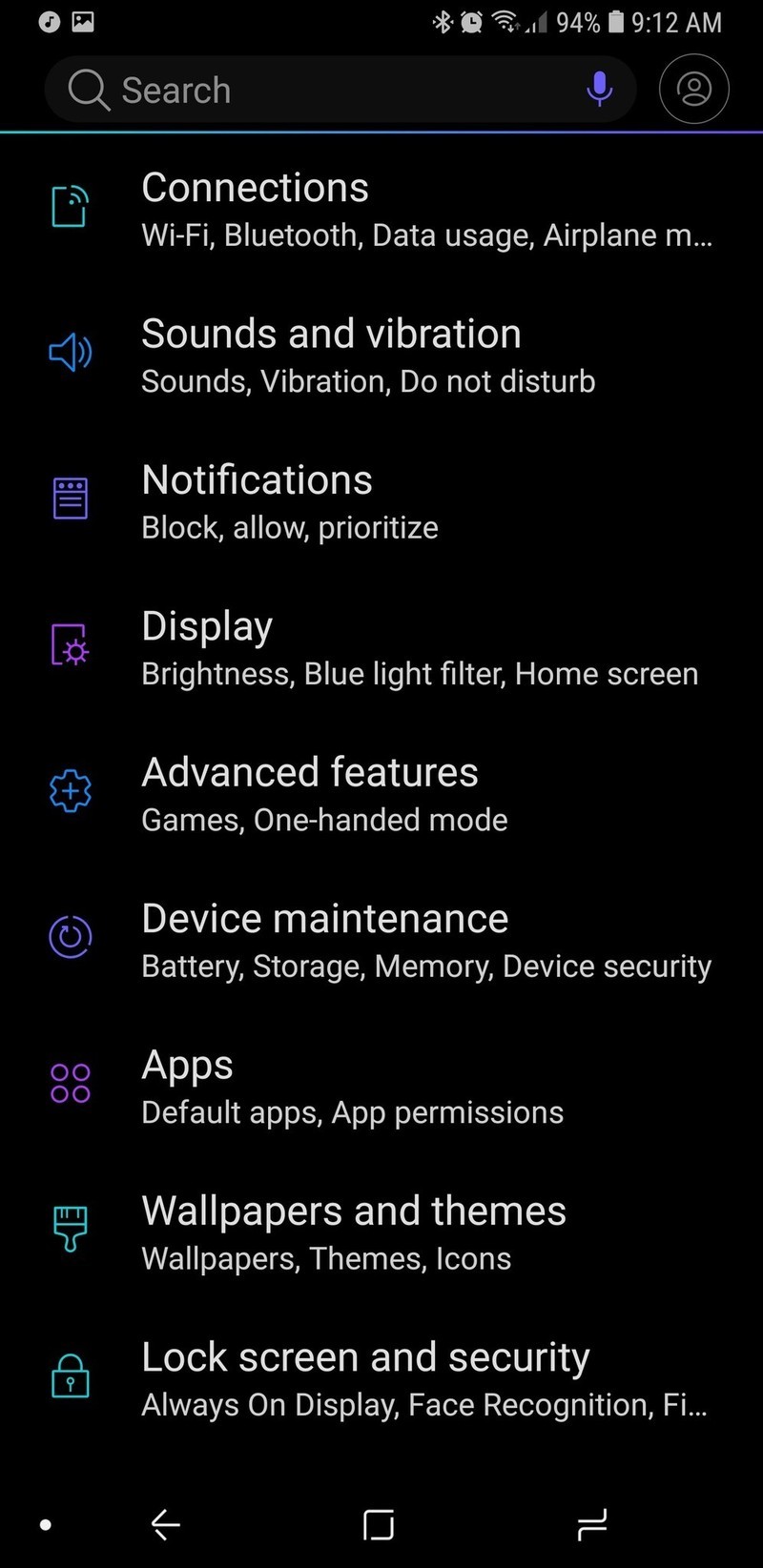
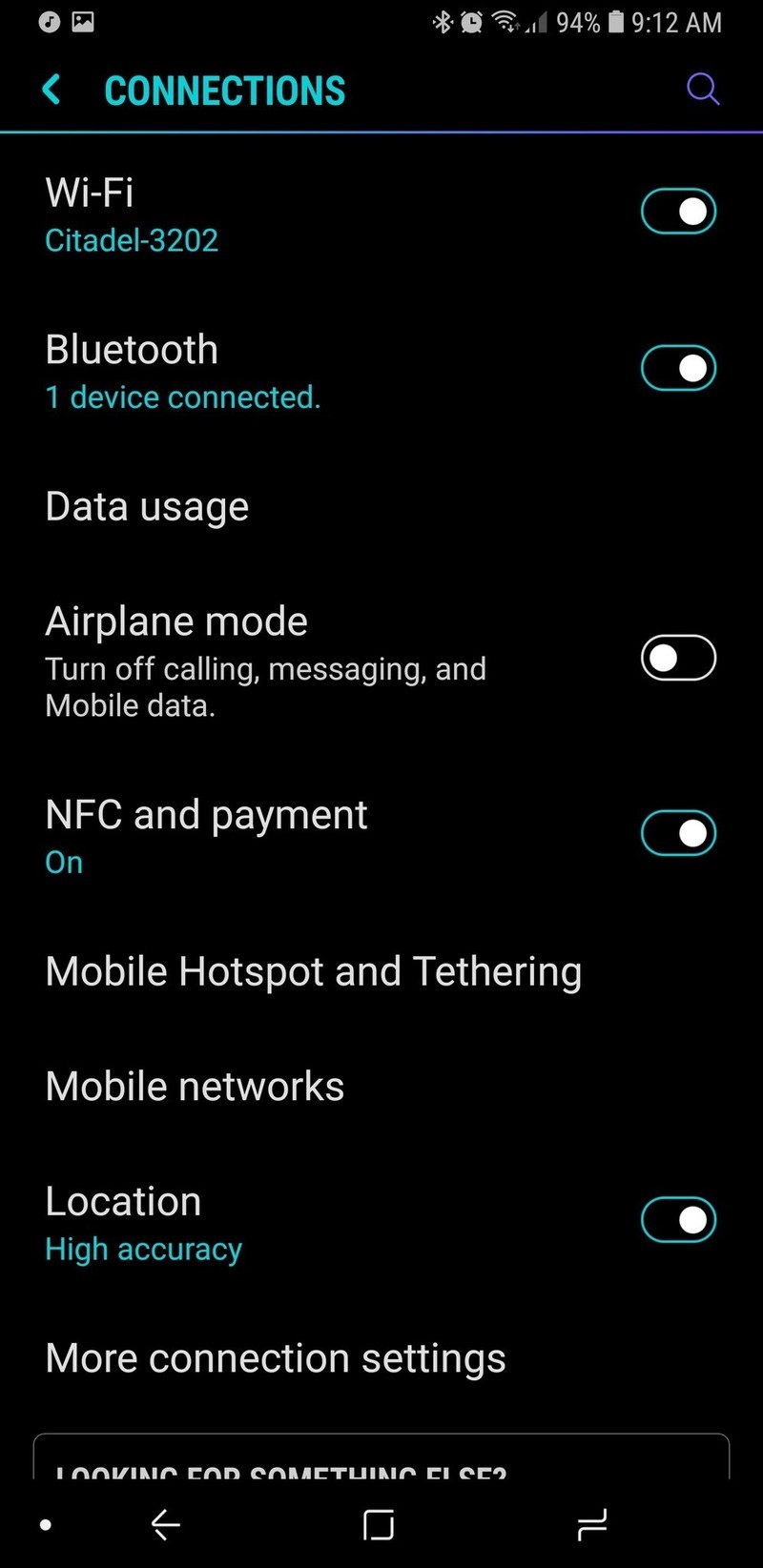
Tap the three-dot menu icon in the top right corner of the screen.
Tap Dual audio
Tap the toggle in the top right corner of the Dual audio page.
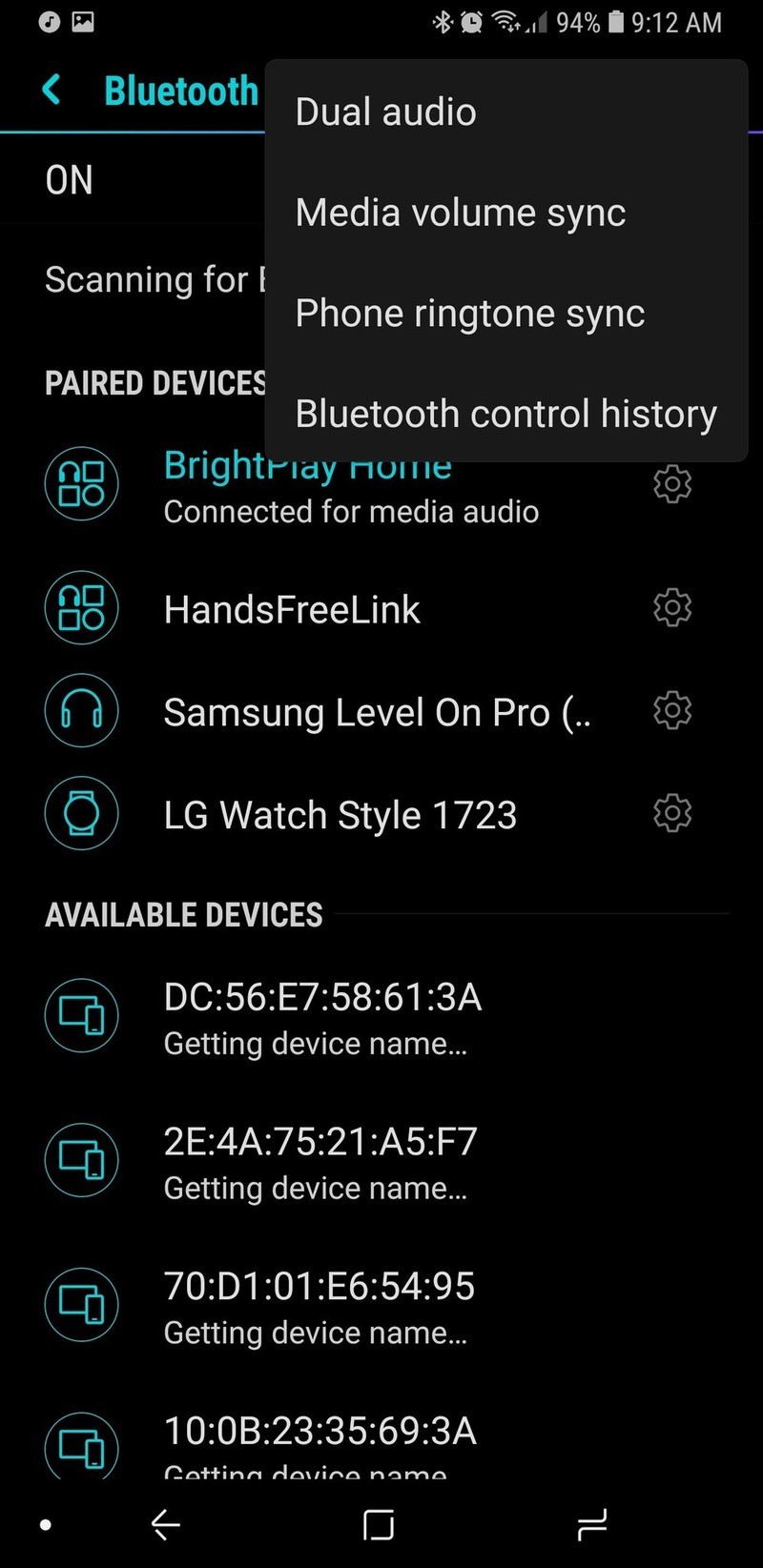
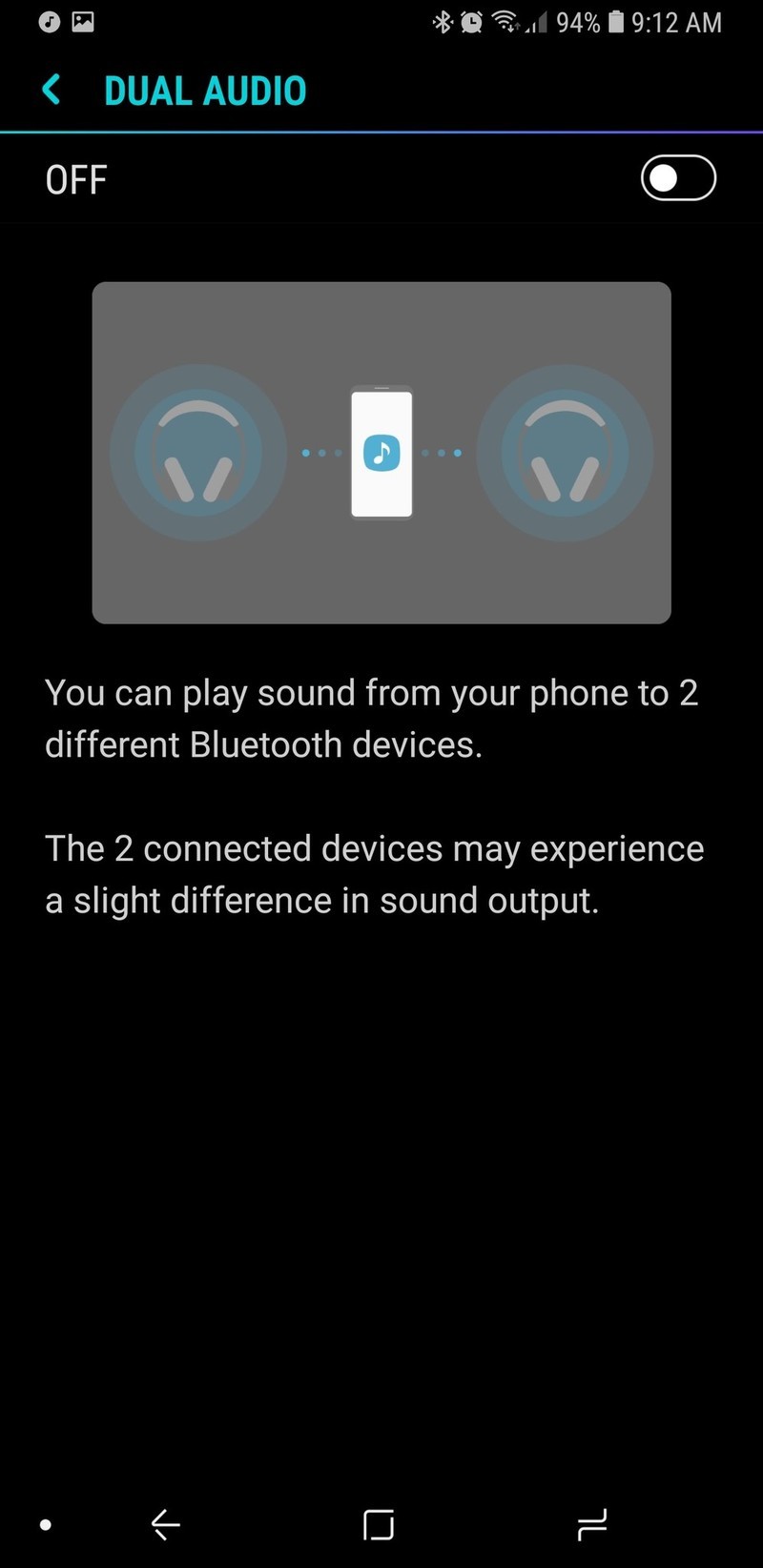
It’s worth noting that there may be some slight differences in audio between two headphones, such as slight delay on one or the other. Samsung doesn’t have any calibration tools to fix this, the way Google’s Chromecast Audio does, so it probably won’t work well if you use it with two speakers in the same room. The primary function here is to let two Bluetooth headphones hear what you’re listening to at the same time, like if you’re watching a movie on a flight or jamming out to Spotify.
Even if you don’t plan to share your Bluetooth with anyone else, having Dual Audio can be useful to keep on. For instance, if you forget to turn off your Bluetooth headphones before getting into the car, Dual Audio can let the music play over both your head unit and the headphones you don’t want to dig out of your backpack.
Samsung Galaxy S9 and S9+
- Galaxy S9 and S9+: Everything you need to know!
- Galaxy S9 review: A great phone for the masses
- Complete Galaxy S9 and S9+ specs
- Galaxy S9 vs. Galaxy S8: Should you upgrade?
- Join our Galaxy S9 forums
Verizon
AT&T
T-Mobile
Sprint
Cambridge Analytica is shutting down following Facebook scandal
Today, Cambridge Analytica was shut down following the Facebook scandal and subsequent investigations, The Wall Street Journal reports. During a conference call today with the tech firm’s employees, chairman Julian Wheatland of parent company SCL Group announced the news, according to Gizmodo. But it isn’t just the tech firm: SCL Group is closing down too, its founder Nigel Oakes told The Wall Street Journal. Shortly after the news broke, Cambridge Analytica itself issued a press release announcing it and SCL would stop operating, and the former would begin bankruptcy proceedings.
Due to the ongoing investigations and ongoing scandal, Wheatland said according to a documents Gizmodo received, the corporate board determined that rebranding Cambridge Analytica was “futile.” The loss of reputation and clients was too costly. Workers were instructed to return their keycards immediately.
Cambridge Analytica was struggling to emerge from under the scandal, but reports and inquiries have kept expanding the firm’s privacy sins. Twitter admitted it had sold user data to the researcher who had originally passed along Facebook personal info to Cambridge Analytica, though the latter denied it received any from the former. Combined with evidence of suspended CA CEO Alexander Nix’s blackmail tactics and involvement with the Trump campaign, along with the eventual hearing before Congress, it’s hard to argue with SCL Group’s decision to deem the firm beyond salvaging.
In its press release, Cambridge Analytica maintained its innocence and “has been vilified for activities that are not only legal, but also widely accepted as a standard component of online advertising in both the political and commercial arenas.” While its own internal investigation concluded that allegations against the company weren’t factually supported, the “siege of media coverage has driven away virtually all of the Company’s customers and suppliers,” necessitating a shutdown.
We’ve reached out to Cambridge Analytica and will add their response when we hear back.
Source: The Wall Street Journal, Cambridge Analytica
Facebook trained image recognition AI with billions of Instagram pics
Training deep learning models to recognize images, as well as objects within those images, takes quite a bit of effort. Often, each training image has to be labeled by humans and when you’re using millions of images, that process becomes rather labor-intensive. Scaling up to billions of images becomes nearly impossible. So, Facebook has been working on a way to train deep learning models with limited human supervision. Instead, its researchers have turned to public images that are, in a way, already labeled — with hashtags.
With this method, Facebook researchers and engineers trained image recognition networks with up to 3.5 billion Instagram images labeled with as many as 17,000 hashtags. After training the computer vision system with one billion images and 1,500 hashtags, it was able to achieve 85.4 percent image recognition accuracy on the popular benchmarking tool ImageNet. It beat out the previous state-of-the-art model, which achieved an accuracy rating of 83.1 percent.
The work shows that weakly supervised training is a valid option moving forward, opening up deep learning model training to larger data sets and, possibly, more accurate image recognition and classification. Better image recognition could improve AI-generated audio captions of photos for the visually impaired, but Facebook says there are other useful applications as well. Using hashtags as labels for computer vision could impact how Facebook ranks images in feeds and improve an AI system’s understanding of video footage.
“As training data sets get larger, the need for weakly supervised — and, in the longer term, unsupervised — learning will become increasingly vital,” said Facebook. “Understanding how to offset the disadvantages of noisier, less curated labels is critical to building and using larger-scale training sets.”
Click here to catch up on the latest news from F8 2018!
Source: Facebook (1), (2)
Stephen King’s ‘Castle Rock’ series streams on Hulu July 25th
If you’re eagerly anticipating Castle Rock, the new Hulu show from Stephen King and J.J. Abrams, you’re in luck. Hulu has revealed a release date of July 25th for the first three episodes of the show, along with a new teaser.
The teaser features the voice of Terry O’Quinn, perhaps best known as John Locke from the television show Lost, as he muses over the sins of the past that the denizens of Castle Rock are now paying for. It certainly sets a dark tone for the ten-episode series, which also stars Andre Holland, Billy Skarsgard, Sissy Spacek, Melanie Lynskey, Jane Levy and Scott Glenn.
Source: YouTube
ESPN brings a curated daily version of SportsCenter to its app
ESPN isn’t just bringing versions of SportsCenter to social networks like Snapchat and Twitter. The network is launching a daily edition of SportsCenter within the ESPN App. Anchors like Scott Van Pelt will host a “curation” of top sporting news, such as highlights from last night’s games or things to expect from upcoming matches. It’ll certainly be hard to miss — the show will “feature prominently” on the app’s home screen in the morning whenever you open it for the first time that day.
As with the social network shows, ESPN is ultimately trying to reach viewers who primarily or exclusively watch online. It’s not just an upsell to services like ESPN+ — it gives you a reason to keep coming back to ESPN’s own offerings instead of drifting to other internet sources. ESPN’s brand is still strongest on conventional TV, and it knows that it needs digital-friendly shows like this if it’s going to reach cord cutters.
Source: ESPN
Oculus prototype uses moving lenses for sharper focus
While the first day of Facebook’s F8 conference focused in on consumer issues like data privacy and, uh, dating, the second day is all about the future. Specifically, the company spent F8’s Day 2 keynote talking about topics that would be of interest to developers, like AI, connectivity and VR. Right at the tail end of the conference, Oculus’ head of Core Tech product management Maria Fernandez Guajardo gave some insights into the kind of VR investments the company was working on. Of special note, she also gave a sneak peek at a brand new Oculus prototype, which is currently referred to as “Half Dome.”

The most interesting thing about the Half Dome prototype seems to be the varifocal displays with lenses that move up and down depending on what you’re focusing on. There also appears to be eye-tracking tech at play here as well. Guajardo says that most headsets struggle with viewing items held up close to your eyes, but the varifocal displays will make them appear much sharper and crisper. It also has a much wider 140-degrees field of view (the Rift has a 110-degrees FOV), which offers better peripheral vision. And, despite all the new tech, it has the same size and weight as the existing Rift.
Guajardo also spent some time talking about other advancements in VR, like facial and hand tracking. It’s currently working on making those cartoonish avatars in Spaces a lot more photorealistic, to the point where they might push some uncanny valley buttons.
Of course, it’s still too early to say when the tech in Half Dome will make it to a new Rift, but it certainly points to the possibility of a Rift 2. Here’s hoping we’ll hear more about it at Oculus Connect later this year, or maybe even prior to that.
Click here to catch up on the latest news from F8 2018!
Google reportedly backing a new social games startup
Michael Sayman, originally invited to Facebook as a 17-year-old by Mark Zuckerberg, created a video-centric social app for teens, Lifestage, when he was 19. Now the young superstar is behind a secret Google social-gaming startup called Arcade, according to a report at Bloomberg. The new company’s first app, say the site’s sources, is set to debut this summer with elements of trivia games at its core.
Bloomberg reports that Google confirmed the existence of Arcade, and that it focuses mainly on mobile gaming with friends. The startup is part of Google’s side-project assistant, Area 120, which lets employees spend 20 percent of their time doing passion projects. Sources say that the games at Arcade aren’t connected to any current social networks; instead, users create accounts using their own phone number.
Source: Bloomberg
Senator urges Uber to stop forced arbitration in sexual assault cases
A CNN investigation recently revealed that Uber has had at least 103 different sexual assault cases filed against its drivers in the past four years. What’s worse is that Uber has also reportedly forced victims to settle their cases via arbitration rather than open court, a move which helps keep the epidemic silent. Democratic senator Richard Blumenthal is now calling on the company to release the survivors of these assaults from these agreements and allow them to seek justice in court.
“I challenge you to finally demonstrate how seriously you take the issue of sexual harassment and assault,” said Blumenthal in a letter to Uber. “Your company must lead by example and show that it values transparency and your users’ safety more than your company’s bottom line. I respectfully request that you immediately stop enforcing arbitration agreements against individuals who bring claims of sexual harassment or assault. More broadly, I urge you to end your use of these dangerous agreements against your customers.”
Forced arbitration clauses, says Blumenthal, also prevent victims from joining class-action suits. They disadvantage consumers for the benefit of large corporations and can also deter victims from seeking justice in the first place. The letter also points out that Microsoft has voluntarily ended its practice of using arbitration agreements in the case of sexual harassment, and calls on Uber to do the right thing and follow suit. “A company that is focused on its customers should be working to protect their rights,” Blumenthal wrote, “not to eliminate them.”
Source: Senator Blumenthal
Twitter will stream 20 regular-season WNBA games starting May 20th
For the second year in a row, Twitter will livestream WNBA games. The coverage starts on May 20th with a four-game blitz starting at 1PM ET, and will follow with one streamed every Tuesday until the season finale on August 19th.
Renewing its WNBA coverage is the latest in Twitter’s ravenous appetite for sports content. While it lost Thursday Night Football last year, the platform has plenty of programming lined up, from Major League Soccer to a World Cup live show to ESPN content, including SportsCenter Live.
While the 20 total games broadcast on Twitter won’t cover the entire season, each WNBA team will appear in at least two of them. If you don’t want to watch on the social site, you can still catch the action on ESPN2, NBA TV, the WNBA League Passa nd the ESPN app.
 AIVAnet