


General Motors is 3D printing parts to make EVs more efficient
The virtues of 3D printing have long been touted by a vast range of manufacturers, so it was only a matter of time before the EV industry got in on the action. General Motors has announced that, alongside design software company Autodesk Inc, it’s creating lightweight 3D parts that’ll help it meet its ambitious plan to add 20 new electric battery and fuel cell batteries to its global lineup by 2023.
Printing lightweight parts could signal a step change for the EV industry — and for mainstream EV adoption. Lighter vehicles means better fuel efficiency, which will help allay the range anxiety consistently cited by would-be consumers. One example of the technology touted by GM and Autodesk is a 3D-printed stainless steel seat bracket. Normally, this is made up of eight parts requiring a number of separate suppliers. The printed version is not only one solid component, but is 40 percent lighter and 20 percent stronger.
GM, like its rival Ford and other manufacturers such as General Electric, has been using 3D printing to create prototypes for years, but says the technology is now ready for the real deal. In fact, according to GM’s director of design and manufacturing Kevin Quinn, these 3D parts could appear in high-end motorsports in as little as a year. And within five years, GM wants to be producing tens of thousands of parts at scale.
Source: Reuters
Developers would rather ignore Cambridge Analytica at F8
Facebook is ready to turn the page on the Cambridge Analytica user privacy scandal, and CEO Mark Zuckerberg made that perfectly clear yesterday during his F8 opening keynote. “I’m going to go through all of that head-on in just a minute, because I think it’s important that everyone here knows exactly what we’re doing to address [these issues],” he said. “These issues” being the safety of your data, more robust privacy controls, and the spread of fake news (which was a major part of a campaign to interfere with the 2016 presidential election). “But we also have a responsibility to move forward.” And that he did, as he barely addressed the CA incident on stage and quickly moved on to making product announcements. And apparently all the developers in the room were eager to follow his lead.
You would think finding developers to speak to at F8 wouldn’t be an easy task — it is a developer conference after all. There are literally thousands of them here, but the moment you start asking about one of the biggest cases of data misuse in history, they clam up.
As I walked around the Festival Hall, where Facebook teaches developers about augmented reality and advertising platforms, I was looking to interview some of them on what they thought about Facebook’s handling of the Cambridge Analytica incident. Even those that seemed willing to talk at first changed their minds as soon as I told them that the story was about CA and data privacy.

Even before the start of F8, we knew the big elephant room was going to be user data and privacy, a topic that shouldn’t concern only consumers but also those who are building the apps that they use on Facebook. The developers silence on the matter at F8 is concerning. You’d hope that developers would be holding Facebook accountable for not keeping their users’ information safe, and for not being transparent enough.
When I asked why they didn’t want to be interviewed on this topic, a handful of them said because they didn’t feel “comfortable” or that it was something they simply didn’t want to talk about. Others just walked off without saying a word. Yes, it’s no secret that Facebook has been ramping up its efforts in recent weeks to ensure that what happened with Cambridge Analytica never happens again, but it’s hard to ignore the deafening silence from developers.
About the only thing many developers seemed interested in talking about with me was the free Oculus Go virtual reality headset Facebook handed out to F8 attendees. Seems a $200 gadget is more important than your privacy and safety. That doesn’t bode well for anyone — except Facebook.
Click here to catch up on the latest news from F8 2018!
Xiaomi is officially coming to the UK and Europe
In addition to filing what could be the world’s largest IPO since Alibaba, Xiaomi is also spreading its wings and landing in the UK and other European markets. Thanks to a partnership with CK Hutchison, the Chinese electronics giant’s smartphones will soon be available through the Hong Kong conglomerate’s telecom subsidiary Three UK. You’ll also find other Xiaomi products in A.S.Watson’s retail locations in various parts of Europe in the future. The company offers a whole bunch of devices other than smartphones and laptops, including robotic vacuums, smart bikes, rice cookers, air purifiers and so on and so forth. It’s unclear which ones will make their way to Europe, but the partnership also covers Xiaomi’s Mi Ecosystem IoT and lifestyle products for certain markets in addition to phones.
Xiaomi focused on Asia for years, and its efforts definitely paid off: it’s consistently one of the top smartphone makers in the world. After launching a Mi store in Barcelona in 2017, though, the company announced its plans to enter more European markets. The tech giant’s products will initially be available in 3 Group’s (Three UK’s parent company) stores in Austria, Denmark, Hong Kong, Ireland, Italy, Sweden and the UK, as well as in A.S. Watson’s Fortress, Superdrug and Kruidvat stores in Hong Kong, Ireland, the UK and the Netherlands.
Three UK’s chief digital officer Tom Malleschitz told us in a statement:
“We have been watching Xiaomi’s success from afar and are impressed with the huge range of connected devices that they currently offer. This partnership provides us with another leading brand in our smartphone range and also opens the door for innovative new connected products that we can provide to Three customers in the future. So watch this space!”
Xiaomi’s offerings are expected to be available in more locations after the initial launch — whether that’s before or after the brand arrives in the US remains to be seen. Company chief Lei Jun said last month that Xiaomi intends to sell phones in the US by the end of 2018 or early 2019.
Facebook is winning the augmented reality war
If it weren’t for data privacy, fake news and hate speech taking up so much air time, this year’s Facebook conference would’ve probably centered around a far less controversial topic: augmented reality. It’s one of a few unifying themes that’s spread across most of Facebook’s product announcements this week. Now that AR is in Facebook’s News Feed, Instagram and Messenger, the company is poised to have the biggest AR platform on the planet.
It’s all based on the Camera Effects Platform that CEO Mark Zuckerberg unveiled at F8 last year. The idea is simple: Use your Facebook camera to interact with digital items laid over the real world. The obvious example is selfie filters — imagine bunny ears or a crown floating above your head — but it can also do tricks like fill a room with liquid or add virtual steam to a real cup of coffee.
While it all started with Facebook’s own Camera, third-party AR filters are finally rolling out to the rest of Zuck’s family of apps — including Instagram and Messenger. At F8’s keynote earlier this week, Facebook showed a “floating heart” selfie filter. The hearts featured a headshot of Jiffpom, a cute Pomeranian pup with the unique distinction of being the most famous animal on Instagram.

If that sounds very different from anything on Facebook’s own camera app, that’s on purpose. While the underlying tools and platform are the same, the filters are not. “We could’ve just brought over the AR filters from Facebook to Instagram, but we recognize that the two networks are very different,” said Ficus Kirkpatrick, an engineering director in charge of Facebook’s AR projects. While Facebook is more for friends and family, Instagram has a greater emphasis on brands and personalities. “In the end, we want to increase the diversity of AR. The same tools produce fairly different results depending on who’s using them.”
A more obvious example is with the AR implementation on Messenger, which is far more commerce-oriented. Head of Messenger David Marcus showed how Nike would use Messenger and AR to debut a pair of limited edition sneakers. Just strike up a conversation with the SNKRS bot, answer some questions and you’ll unlock that exclusive pair of kicks. You’ll then get a full 360-degree close-up look at a virtual render of the shoe before purchasing it. Other brand-related implementations include trying on virtual makeup with Sephora and customizing a Kia hatchback.
At the heart of Facebook’s plans for AR domination is AR Studio, an in-house tool Facebook updated this year with even more ways to create and distribute AR content. It’s so easy to use that you can drag and drop elements without having to write any code. “We’re aspiring to have the easiest to use creation tools,” said Kirkpatrick. “You don’t have to know code to use this. Artists and creators who just want to make art can play with it too.”

This is one important difference between Facebook’s approach to AR versus Apple’s ARKit and Google’s ARCore. Developers who use the latter two are usually building purpose-built apps, for arranging furniture on IKEA or building blocks with Lego Studio for example. Facebook, on the other hand, is making it more accessible. “We’re more focused on tighter, simpler, shorter experiences,” said Kirkpatrick. “We want to add on to something you’re currently using.”
Of course, Facebook is definitely not the first to incorporate AR in this way. Snapchat and Pokemon Go have implemented AR to varying degrees of success. But Pokemon Go is waning in popularity and Snapchat is suffering a drop in user growth. With more than 2 billion users on Facebook, more than 800 million on Instagram and over 1.3 billion on Messenger, Facebook is as popular as ever despite constant controversy.
With Facebook’s AR platform, people can play around with AR in the app they already have. That, combined with the variety of AR effects, is how Facebook wants to differentiate itself from the pack. “This is why we’re not doing all of it ourselves,” explains Kirkpatrick on why Facebook opened up its AR platform to developers. “We need a lot of ideas for AR to succeed […] Having more types of situations for more people to have other experiences is a big first step in.”

Still, it’s hard to take some of this seriously. After all, most of the AR use cases tend to be trivial (remember those bunny ears?). Yet, Kirkpatrick doesn’t see this as a bad thing. “A lot of the apps for the iPhone when that first came out felt trivial too,” he said, pointing out that there were a plethora of fart apps in the beginning. “Often things that turn out to be profound look like toys.”
In the end, he’s confident that face masks and selfie filters aren’t the be-all and end-all for AR. At F8, head of VR Rachel Franklin showed a way that you could incorporate a 3D object into a Facebook news post in the form of a virtual gift. Earlier this month, Facebook also debuted a “target tracking” feature that lets you connect images, logos and signs — like in movie posters — with augmented content. Which could mean a future in which virtual ads are as commonplace as physical billboards.
“What we’re trying to do is take the first steps toward the first generation of computing that’s more immersive, and more visual, than ever before,” said Kirkpatrick. With its clout and its reach, Facebook might very well accomplish its AR goals. That is, if it can deal with the harsh realities of scandal and controversy at the same time. There’s no AR filter that’ll make that go away.
Click here to catch up on the latest news from F8 2018!
iPad Recorded Highest Market Share in First Quarter Since 2014 According to IDC
Apple on Tuesday reported that it sold 9.1 million iPads during the first quarter of 2018, giving the company its highest share of the worldwide tablet market during that quarter in four years, according to IDC.
The research firm estimates that iPads accounted for 28.8 percent of tablet shipments over the three-month period, compared to 24.9 percent in the year-ago quarter. The modest growth resulted in the iPad’s highest first quarter market share since 2014, when it captured a 32.7 percent stake.
iPad’s first quarter market share per IDC:
- 2013: 40.2%
- 2014: 32.7%
- 2015: 26.8%
- 2016: 25.9%
- 2017: 24.9%
- 2018: 28.8%
IDC said worldwide tablet shipments from all vendors combined declined 11.7 percent in the first quarter on a year-over-year basis, making the iPad’s gains in sales, revenue, and market share all the more impressive.
iPad remains the world’s most popular tablet, as it has been since shortly after it launched in 2010. Samsung finished runner-up in the first quarter with an estimated 5.3 million tablet shipments, down from six million in the year-ago quarter, although its market share stayed put at 16.7 percent.
 Top Five Tablet Vendors, Detachable + Slate, Worldwide Shipments in Millions, via IDC
Samsung managed flat growth due to significantly lower shipments from other tablet vendors in the first quarter, according to IDC. Amazon, for instance, is estimated to have shipped just 1.1 million tablets from January through March, a 49.5 percent decline from the year-ago quarter.
However, research firm Strategy Analytics estimates Amazon shipped 2.8 million shipments in the first quarter, and it’s unclear why there is such a large discrepancy between the numbers. IDC said Amazon’s quarterly downturn “does not come as a surprise” given that its tablet sales are highly seasonal.
Looking ahead, the new sixth-generation 9.7-inch iPad should have more of an impact in the second quarter of 2018, as the tablet launched with only four days remaining in the first quarter, amid education buying season.
In terms of what’s next for the iPad, Apple is rumored to launch at least one new Pro model with slimmer bezels, no home button, and Face ID later this year. The fate of the iPad mini is less certain, but it could eventually receive a routine speed bump should it remain part of Apple’s tablet lineup.
Tags: IDC, Strategy Analytics
Discuss this article in our forums
Google Says Assistant Works With Over 5,000 Smart Home Devices, HomeKit/Siri Around 200
Google this morning posted a story on its Keyword Blog that highlights the ongoing growth of its AI helper, Google Assistant. According to the company, the Assistant now works with “every major device brand” in the U.S., meaning that it can connect with more than 5,000 smart home devices, up from 1,500 in January.
This growth period saw media and entertainment queries increase by 400 percent, with Google users taking advantage of “OK Google” commands on Android TV, smart TVs, and Chromecast. Another popular area for Google is security cameras like Nest’s products, including the Nest Hello doorbell. When someone rings the doorbell, Nest can communicate a chime to Google Home, play a livestream on Chromecast, and then users can respond to their visitor on their smartphone.
Google also laid out plans for Assistant expansions later this year, including placing the Assistant on DISH Hopper receivers, Logitech Harmony remotes, smart door locks from August and Schlage, security cameras from Panasonic, and alarm brand support from ADT, First Alert, and Vivint Smart Home.
Over the past year, we’ve made great progress ensuring that the Google Assistant can work with all types of connected devices, and now every major device brand works with the Assistant in the U.S.
Just how many devices is that? Today, the Google Assistant can connect with more than 5,000 devices for your home—up from 1,500 this January. That includes cameras, dishwashers, doorbells, dryers, lights, plugs, thermostats, security systems, switches, vacuums, washers, fans, locks, sensors, heaters, AC units, air purifiers, refrigerators, ovens … we can keep on going!
For home automation, Apple’s solution is HomeKit and Siri. Although not an exact comparison due to potentially missing products, Apple’s website has a list of HomeKit-compatible smart home products that reaches to about 200 as of writing, with some yet to launch. Even if it is missing numerous smart home devices, Siri would still be far below Google’s newly reported compatibility number. Amazon’s Alexa assistant is believed to be leading the field through support with roughly 11,200 smart home products as of 2017, according to market analyst Blake Kozak, who spoke with CNET.
HomeKit users are currently waiting for support from devices like the Ring line of doorbells, while integration with Nest’s products is less likely after Nest and Google doubled down on hardware collaborations.
For Siri, Apple’s assistant remains many users’ least favorite part of their Apple devices, with Siri amassing a 20 percent satisfaction rate among early adopters of the iPhone X. In a recent report by The Information, Siri was described as “limited compared to the competition” like Google Assistant, and the report went so far as to say that the assistant has become a “major problem” within Apple, originating from the company’s decision to rush the technology into the iPhone 4s.

Many have theorized the reason behind Siri’s lackluster performance could be Apple’s commitment to user privacy, unlike Google’s actions of leveraging and retaining user data off-device in an effort to enhance queries.
Siri co-founder and creator Norman Winarsky looked back on the digital assistant’s creation earlier this year. In an interview, he discussed Apple’s decision to “take Siri in a very different direction than the one its founders envisioned,” the original plan to focus Siri’s intelligence on a few key areas and “gradually” expand its knowledge, and finally stated that Apple is now “looking for a level of perfection they can’t get.”
As Apple continues to expand Siri, the company in April hired John Giannandrea from Google’s own search and artificial intelligence division. Apple’s latest Siri- and HomeKit-supported device is HomePod, which allows users to invoke the assistant and interact with compatible products like Philips Hue lights, Ecobee thermostats, August smart locks, and more.
Google is expected to reveal more news about Assistant and other products and services during its I/O conference later this month.
Tags: Siri, Google, Google Assistant
Discuss this article in our forums
Tesla’s latest prediction for Model Y’s arrival is 2020
Tesla has largely kept its forthcoming Model Y shrouded in mystery. We know it’s a crossover EV, and we know it might not have mirrors, and that’s about it. But CEO Elon Musk has now revealed that the company aims to bring the new vehicle to production in 2020, adding in its conference call that doing so will spark a “manufacturing revolution”. Although he didn’t expand on what that revolution will look like.
Obviously Tesla is keen to get the hype machine going as soon as possible, but it’s worth taking this timeline with a pinch a salt. It had originally aimed for a 2019 release date, then pushed it back to 2020 because of plans for an entirely new production platform. Musk then ditched that idea in a bid to bring the car to market sooner, and yet here we are: the original production platform and a later launch date.
To be fair, it seems Tesla has learned from its mistakes with the Model 3. Production has been a low-grade nightmare for the company since the outset, but despite a brief manufacturing pause last month, the company now says it’ll soon be on track to deliver 5,000 per week. So, keen to avoid the same hiccups with the Model Y, it’s clear Tesla is taking a cautious approach to every aspect of its arrival.
Source: electrek
Australia is forming its own space agency
Australia is finally getting its own space agency. After months of talks, the federal government has decided it’s time the land down under is on par with other developed nations — including its neighbour New Zealand — and has put $50 million aside to launch the program.
The government is expected to unveil its funding proposal at the federal budget on May 8, and it is likely former CSIRO boss Megan Clark will be announced as head of the agency for its first year. Of course, while $50 million is not an insignificant sum, launching a space agency is pretty expensive so the private sector will be expected to contribute the majority of funding — a doable task considering the economic boost the program is likely to deliver.
Speaking to CNET, director of the Australian Centre for Space Engineering Research at the University of NSW Andrew Dempster said he was confident that “they should be able to do something useful with the money”, and suggested the program could facilitate the development of startups, too. However, he cautioned that “what we need is technical people who sit in the agency and are proactive and not reactive.”
Source: CNET
Google Assistant now works with every major smart home device brand
Google’s I/O developer conference is happening next week, and it’ll be just about two years since the Google Assistant was first introduced. As such, the company is taking some time to announce a few new features, all of which are meant to expand the Assistant’s usefulness in a smart home.
Part of making the Assistant able to take on Amazon’s Echo / Alexa powerhouse is having broad support for the massive number of smart home devices out there, and Google undeniably has that now. The company says that the Google Assistant works with more than 5,000 devices, up from only 1,500 at the beginning of the year. It’s a number that doesn’t mean much on its own, but Google VP of Assistant and Search Nick Fox said “the Assistant now supports essentially all the major brands.”
Fox also noted that the Assistant’s smart home features fall into three broad categories: entertainment, security and control. Under entertainment, Google is working with Dish to integrate its Hopper receivers with the Assistant, so users will be able to say things like “Hey Google, switch to ESPN” through either their phones or a Google Home device. The Assistant will also work with Logitech’s Harmony remotes, which will let you go to favorite channels, pause playback, adjust volume and more.
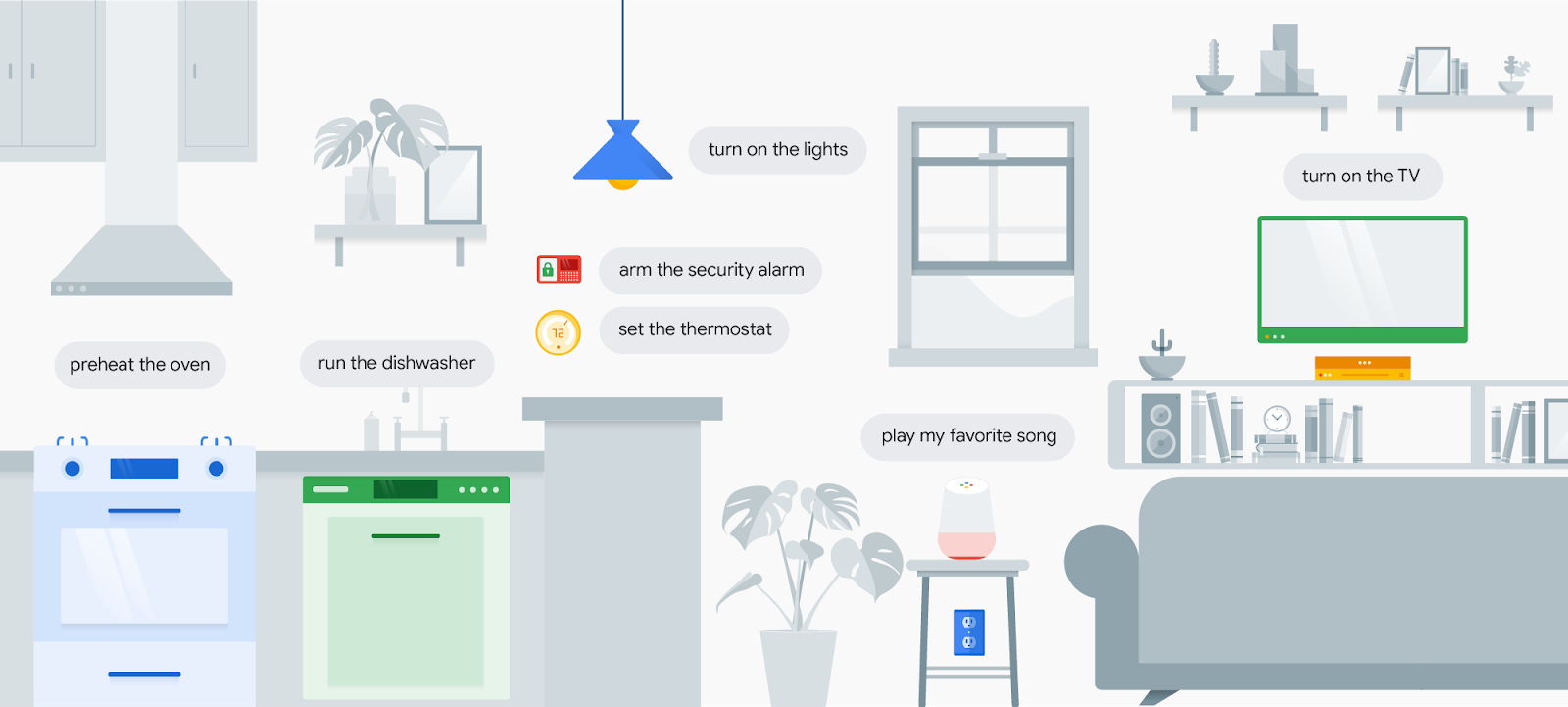
As for home security, Google has the Assistant working with the new Nest Hello doorbell. If someone’s at your door, a chime will be sent to Google Home devices and the Assistant will offer to pull up the doorbell’s video feed on your phone. For now, this feature is only available on the Nest Hello, but Google says it’ll enable similar features on similar products from other companies “later this year.”
Finally, Google is highlighting some of the new smart home companies whose devices will be working with Assistant soon. They include ADT lights, Xiaomi lights, Hunter Douglas window blinds and other treatments, Hisense A/C and humidifiers, Arlo security cameras and some new LG appliances. The combo of Google’s recently-launched routines and broad device support means the Assistant is pretty well suited for home automation. Google’s made a few improvements here, but we expect to hear a lot more about what’s next for the Assistant next week at I/O.
Amazon puts Seattle expansion on pause over tax proposal
Amazon is extremely unhappy over a Seattle tax proposal that would set it back between $20 to $30 million a year that it halted its major expansion plans in its home city. According to The New York Times, the e-commerce giant has put the construction planning of a building it was going to build downtown later this year on pause. It’s also reconsidering its plans to occupy a building that’s already being built — both of those decisions jeopardize 7,000 jobs in Seattle.
The city’s tax proposal would charge employers in Seattle that make $20 million or more annually in taxable gross receipts — and we all know Amazon makes a lot more than that — $500 per employee. Seattle’s goal is to raise $75 million from taxes, three-fourths of which will be used to build 1,800 affordable housing units in the city. Authorities will then use the rest to fund services for the homeless. Spokesperson Drew Herdener said Amazon has halted all construction planning “pending the outcome of the head tax vote by City Council.”
According to city council member Mike O’Brien, Amazon didn’t leave room for discussion when it informed the local government that it’s putting all its construction plans on hold. It simply told them what it was going to do. The tech titan has been lobbying behind the scenes against the proposal for quite some time, likely because the $500-per-head tax would transform into a payroll tax by 2021 and could cost the company significantly more than $20 to $30 million. Besides, various locations across the US had already offered it tax breaks to become the site of its second headquarters.
If it decides to back the proposal and pay those taxes, though, we doubt $20 to $30 million would hurt the company deeply. It reported $51 billion in sales for the first quarter of 2018, 43 percent more than the same period last year. Amazon chief Jeff Bezos himself is worth $131 billion and spends $1 billion a year on his private space endeavor Blue Origin.
Council member O’Brien pointed out that while Amazon isn’t solely to blame for the increasing homelessness in the city, the company and Seattle’s booming tech industry as a whole are driving up costs of living and driving people out of their homes. Based on an annual report by the Department of Housing and Urban Development in 2017, Seattle now has the third largest homeless population in the country after New York and Los Angeles. City officials are struggling to find a balance, and they believe this tax proposal is the answer. “I need to run a city that has room for prosperous businesses,” O’Brien said, “but doesn’t do it at the expense of people getting pushed into poverty.”
Via: Gizmodo
Source: The New York Times
 AIVAnet