


How to ‘Drop In’ on an Echo, Echo Show, or Echo Dot
Last year, Amazon released the touchscreen-equipped Echo Show, which allowed users to make voice calls through their Echo devices for the very first time. Shortly after that, Amazon rolled out yet another feature, Drop In, which allows users to drop in on their friends’ and family members’ Echo devices unexpectedly. This feature is different from your standard voice call because it allows you to connect to a device automatically, assuming you have access and the person on the other end hasn’t muted the feature.
For users who have multiple Echo devices around their home, this feature can work a lot like an intercom system or baby monitor. While it does bring up some potential privacy concerns, Amazon has done a pretty good job to ensure that you are in as much control as possible when it comes to who it allows to drop in on your life. The feature is not enabled on any contacts by default, however, so you must manually grant users access to your device(s). Here’s how.
Step 1: Download the app
First, ensure that you have the Alexa app downloaded on your Android or iOS device (and that is it is the latest version). Currently, Drop In is only available on the Echo, Echo Dot (first- and second-generation), Echo Show, and via the Alexa app. With the app, you can drop in on other devices, but you can’t receive a drop-in call (you can receive voice calls, though). Once you’ve downloaded and launched the app, you should be prompted to set up Alexa Calling and Messaging. If you aren’t, tap the speech bubble at the bottom of the screen to sign up.
Step 2: Enable Drop In
Next, tap Settings and select which devices you want to allow Drop In on. Tap Drop In under General and turn that on as well. On will allow you to receive calls from pre-approved contacts, while Only My Household will restrict calls to devices within your home. Off, on the other hand, will disable the function altogether. Again, the feature will not be enabled for any of your contacts by default, so you must manually grant users access to your device(s).
Step 3: Begin calling
To access your contacts and initiate a call, tap the Conversations icon again, then the silhouette of a person in the upper-right corner. Click the person you would like to give access to, and select Allow Drop In. Once you’ve finished setting up the feature, simply say your device’s wake word and “Drop in on [person’s name]” to begin a call. You can also start a call from within the Contacts page.
When someone drops in on you, the light ring on your Echo will pulse green, and they will be connected automatically, allowing them to hear anything that is within range of your device. If you and your contact are using devices equipped with a screen, the video will appear somewhat distorted for several seconds, giving you the opportunity to make yourself more presentable, if you’re not already. Keep in mind, however, that you can turn off the video at any point during the call by saying “video off,” or by touching the screen and selecting Video Off.
If you do not want to be able to receive Drop In calls — after all, who wants their friends knowing what they are doing every second of the day? — you can also enable the Do Not Disturb mode on your Echo, which will block the Drop In feature until you turn it off.
David Cogen — a regular contributor here at Digital Trends — runs TheUnlockr, a popular tech blog that focuses on tech news, tips and tricks, and the latest tech. You can also find him on Twitter discussing the latest tech trends.
Editors’ Recommendations
- Amazon Echo Show Review
- Got a new Amazon Echo? Here’s how to set it up
- Amazon Echo review
- Amazon Echo could inadvertently be teaching your kids bad words
- How to ‘Drop In’ on an Echo, Echo Show, or Echo Dot | The Unlockr
Kia unveils production Niro EV crossover with 280-mile range
When Kia unveiled the Niro EV at CES, it prompted one main question: how much would the electric crossover change between its flashy concept and the on-the-road car? We now have a better idea. Kia has unveiled the first details of the production Niro EV, and it’s toned down in most respects… aside from the one that counts the most. The finished car will look much more like the everyday hybrid model, ditching the grille-mounted message display, flashy wheels and exotic lights. However, Kia now estimates that the version with a 64kWh battery will net roughly 280 miles a charge on the WLTP test cycle. That’s likely to be lower on the more pessimistic US cycle, but it suggests the original 238-mile range estimate may have been conservative.
Like the Kona Electric, the Niro EV will have both the 64kWh battery option as well as a lower-cost 39.2kWh pack (with 236 miles of range on WLTP). As our Autoblog colleagues noted, though, it’s likely that Americans will only get the 64kWh battery.
Kia hasn’t detailed the performance (likely 201HP and 291lb/ft of torque), interior or pricing, although those are expected to come when it formally launches the car in September, just ahead of the Paris Motor Show. It’s safe to presume the Niro EV will be relatively affordable as far as electric crossovers go, though, and it should include the updated UVO infotainment system with Google Assistant support. It won’t dazzle anyone, but that’s part of the allure — it’s helping transition EVs from novelties to practical transportation.
Via: Autoblog
Source: Kia
Police face recognition misidentified 2,300 as potential criminals
Ask critics of police face recognition why they’re so skeptical and they’ll likely cite unreliability as one factor. What if the technology flags an innocent person? Unfortunately, that caution appears to have been warranted to some degree. South Wales Police are facing a backlash after they released data showing that their face recognition trial at the 2017 Champions League final misidentified thousands as potential criminals. Out out of 2,470 initial matches, 2,297 were false positives — about 92 percent.
The police unit pinned the results on both “poor quality images” from Interpol and UEFA and the novelty of the technology. “No facial recognition system is 100% accurate under all conditions,” the force wrote. It was also quick to defend the overall track record, noting that there had been 2,000 positive IDs in nine months with 450 arrests and no people mistakenly taken into custody. The accuracy is believed to be improving, although there have been false positives around events since last June.
The absence of mistaken arrests supports the force’s claim that there are extensive safeguards. Officers still check the initial alerts to see if they’re authentic, and an “intervention team” can interact with the target to determine whether or not it’s the right person. Even so, the gap between the number of potential matches at the Champions League final and actual arrests is hard to ignore. Privacy issues notwithstanding, there’s a chance those false positives could bog down officers who are looking for suspects in urgent situations.
Source: Guardian, South Wales Police
Apple Updates Repair Policy for iPhone X Units With Face ID Issues
Apple has updated its service policy for a limited number of iPhone X units that may be experiencing issues with Face ID.
Apple Stores and Apple Authorized Service Providers are now authorized to perform a whole unit replacement for iPhone X units with Face ID issues, instead of a display repair, according to an internal document obtained by MacRumors.
Apple Stores and Apple Authorized Service Providers have been advised to first run diagnostics on the iPhone X’s rear camera and potentially repair that system if necessary to see if that resolves the problem. If the issues persist, then a whole unit replacement is now permitted, the document states.
There appears to be some kind of link between failure of the iPhone X’s rear camera and front TrueDepth system, although it’s not entirely clear.
The document in full reads:
In order to provide the best customer experience, if a customer reports that their iPhone X is having Face ID issues, you may be able to resolve the issue with a rear camera repair. Run AST 2 on the customer’s device to check the camera. If the diagnostics find issue with the camera, perform the repair to see if the issue is resolved. If the issue is not resolved, perform a whole unit replacement instead of a same-unit display repair.
Apple has not commented on this matter publicly, or launched any sort of official repair program, as these are internal guidelines.
Affected customers can book an appointment with an Apple Authorized Service Provider or Apple Store via the Contact Apple Support page: iPhone → Repairs & Physical Damage → The Topic is Not Listed → Bring In For Repair. Following those steps also presents options to contact Apple by phone or email.
Related Roundup: iPhone XTags: Face ID, GSXBuyer’s Guide: iPhone X (Neutral)
Discuss this article in our forums
7 ways we’ll interact with computers in the future
Fifty years ago, pioneering computer scientist Doug Engelbart showed off a series of breathtaking new technologies in one astonishing keynote that’s referred to as “The Mother of All Demos.” Demonstrating the computer mouse, the graphical user interface, hypertext, video conferencing and more, it was the equivalent of a modern Apple event unveiling the Macintosh, the iPhone, the iPad and the iPod all at the same time.
Half a century after Engelbart’s demo, we’re still relying on a lot of the computer interactions he helped to pioneer. But the means by which we interact with computers are changing, slowly but surely. So put down your mouse and keyboard, because here are seven of the ways we’ll interact with machines in the decades to come:
Voice control
Simon Hill / Digital Trends
We’ll start with an obvious one. Just a few years ago, voice control was incredibly limited. While it was decent enough for transcribing text, and useful as an accessibility tool for people with impaired vision, few folks were going to voluntarily give up their mouse to speak to their computer instead.
Today, this sci-fi dream has finally come true. Aided by breakthroughs in artificial intelligence, smart speakers like Google Home and Amazon Echo not only understand what we are saying, but can make sense of it, too. Voice controls are able to greatly speed up our interactions with computers, while meaning we no longer have to physically be right in front of them in order to use them.
The technology also lowers the barrier to entry since asking a machine to perform a task, using everyday words, is a whole lot simpler than requesting people learn to grapple with different computer operating systems and software layouts.
Emotion sensing
It’s great if a machine can do what you ask of it. Even better is when a machine can predict what you want before you even have to ask. That’s where emotion tracking technology could help change things.
While it’s more of a way of improving interfaces, rather than an interface in its own right, emotion sensing can assist users by pulling up relevant suggestions based on how you’re feeling at that precise moment.
Knowing the optimal time for you to do work based on your productivity levels? Analyzing your typing to ascertain your mood and pull up the right apps accordingly? Emotion sensing will help with all of this.
Gestural sensing
We already use gestures to control our devices, but there’s so much more that can be done in this area — such as machines which can use image recognition technology to better recognize hand and body motions, even when we’re not physically in contact with a screen.
Devices like the Kinect have already explored this in the gaming space, but companies such as Apple have also explored it for (presumably) more serious productivity-oriented applications.
Aside from image recognition, embedded implants might be another way to let us interact with smart environments with little more than the wave of a hand. Don’t fancy getting a chip injected into your body? Then maybe consider technology like…
Touch surfaces everywhere
Remember rapper Trinidad James’ 2012 song “All Gold Everything?” Well, in the future it seems that “All touch-sensitive everything” is going to be the name of the game.
Researchers at places like Carnegie Mellon have been working on ways to turn just about any surface you can think of — from desks to human limbs to entire walls of your home — into smart touch surfaces. Why limit your touch interactions to the tiny form factor of a smartwatch, or even a tablet computer, when virtually everything can be made smart with the right paint job?
Particularly as the “smart home” comes of age, this tech will allow us to control our surroundings with assorted virtual buttons and the like. The results will be the most complete realization of the late computer visionar Mark Weiser’s statement that the most profound technologies are those which, “weave themselves into the fabric of everyday life until they are indistinguishable from it.”
Pre-touch
In today’s busy world, who has time to actually touch a touchscreen? That’s right: nobody. Fortunately, smartphone makers everywhere — from Samsung to Apple — are actively investigating pre-touch sensing. (Samsung’s current Air Gesture tech is one early implementation.)
The idea is to track your fingers as they hover over a display, and then trigger interactions accordingly. In terms of functionality it could work a bit like Apple’s 3D Touch feature for the iPhone, with apps or files able to offer a sneak preview of what’s inside before you actually open them up. Except without the indignity of actually having to touch the display to do it.
Virtual and augmented reality
Virtual and augmented reality technology opens an entire new world of ways to interface with our devices. Want to surround yourself with infinite MacOS screens for some bonkers multitasking? Fancy designing three-dimensional objects in the virtual world? Dream of being able to summon information about an object or device simply by looking at it? AR and VR will make all of this commonplace.
Add in the number of breakthrough haptic controllers to make the virtual experience even more lifelike, and this is one of the most exciting options on this list.
Brain interface
The ultimate computer interface would surely be one that doesn’t require us to do any more than think about a task and have it performed immediately for us. Brain interfaces could effortlessly carry out certain tasks for us, while also allowing us to tap into the devices around us to access an enormous amount of information.
Groups such as DARPA have investigated brain interfaces, while real-life Iron Man Elon Musk’s proposed Neuralink technology plans to create consumer-facing cybernetic implants that will turn us all into real life cyborgs.
Editors’ Recommendations
- Raspad is a portable Raspberry Pi tablet for bringing creative projects to life
- Microsoft tests new privacy settings interface in latest Windows Insider build
- Leap Motion is pioneering how users interface with menus in mixed reality
- Wacom’s new Intuos pen tablets are a light, cheap entry into photo editing
- Hulu with Live TV has an updated UI that runs on even more platforms
Today’s best deals you won’t want to miss
Whether you’re looking for new tech gear or household items, we’ve got you covered.
Today you can get big discounts on Amazon hardware, the Google Home Mini, the UE Boom 2, mixed reality headsets, and more! Don’t pass these up.
View the rest of the deals
If you want to know about the deals as soon as they are happening, you’ll want to follow Thrifter on Twitter, and sign up for the newsletter, because missing out on a great deal stinks!
California to require solar panels on most new homes
There’s no question that solar power is entering the mainstream, but California is about to give it a giant boost. The state’s Energy Commission is expected to approve new energy standards that would require solar panels on the roofs of nearly all new homes, condos and apartment buildings from 2020 onward. There will be exemptions for homes that either can’t fit solar panels or would be blocked by taller buildings or trees, but you’ll otherwise have to go green if your property is brand new.
The plan doesn’t require that a home reach net-zero status (where the solar power completely offsets the energy consumed in a year). However, it does provide “compliance credits” for homebuilders who install storage batteries like Tesla’s Powerwall, letting them build smaller panel arrays knowing that excess energy will be available to use off-hours.
The new standards are poised to hike construction costs by $25,000 to $30,000 (about half of which is directly due to solar), but the self-produced energy is estimated to save owners $50,000 to $60,000 in operating costs over the solar technology’s expected 25-year lifespan.
Short of a surprise rejection at the Energy Commission’s May 9th vote, this will make California the first state to have a solar panel requirement. It’s relatively easy to do this in the region given California’s abundance of warm, sunny days and high real estate prices — it’s hard to see this happening in the American Midwest, where winter and lower home prices could make solar decidedly less practical. Critics have complained that this could make California’s housing shortage worse by pricing people out of those homes that are available, and note that most people in the state only really draw on non-renewable energy when they come home from work and strain the electrical grid.
Even so, this could change the landscape for both California’s energy and the market as a whole. Right now, no more than 20 percent of new single-family homes in California include solar power. Boost that by five times and that’s a lot more business for panel makers and installers. That, in turn, could reduce the costs of panels and make solar more affordable in many places, not just in California or even the US.
Source: Orange County Register
After Math: Robot revolutionaries
The whole “fear of SkyNet” trope is a bit moot at this point, seeing as how robots have already infiltrated our roads, skies and cafeteria-style eateries. You can already see it happening with Lyft adding 30 self-driving vehicles to its Las Vegas fleet, Sphero debuting yet another domestic robopanion, and gangs leveraging drone swarms to blindside the FBI. Numbers, because how else are we going to learn to speak the binary language of our future overlords?

0 times before: Drones have made themselves right at home in the criminal underworld. Typically leveraged for counter-surveillance these remote controlled quadcopters are now taking a more active role in illegal activities — specifically, buzzing FBI agents while they attempt a hostage rescue.

30 Lyfts: Remember those self-driving cars-on-demand cars we showed you back in January? Turns out, they worked so well that the company is expanding the pilot program to more than two dozen autonomous vehicles. The opt-in program still only delivers passengers between high-demand locations but at least you won’t have to worry about making small talk with the driver.

7 auto woks: Because who doesn’t want their next meal to come out of what is essentially a miniaturized cement mixer?

6 months: Testing autonomous vehicles on public streets is a risky — and occasionally deadly — stage for self-driving technologies. While companies like Waymo are attempting to instruct their vehicular AIs the rules of the road in virtual reality, Toyota is attempting to strike a balance between the two. The car company is currently constructing a test track in Michigan that will simulate urban driving environments (just without the pedestrians). It’s expected to open for operations by October.

10 Kilowatts: Get far enough away from the sun and even the most powerful solar-powered killbot will be next to useless. Good thing then that NASA has just finished testing these portable nuclear reactors for deep space missions.

$1,500: You would have thought that the Child’s Play series would have clued more of us in on the dangers of letting potentially possessed animatronic toys into our homes. But noooooooooo, here’s the Misty II from Sphero spin-off Misty Robotics trying to win hearts and minds right before it starts getting stabby.
‘Eve Online’ turns 15 today, and its history is epic
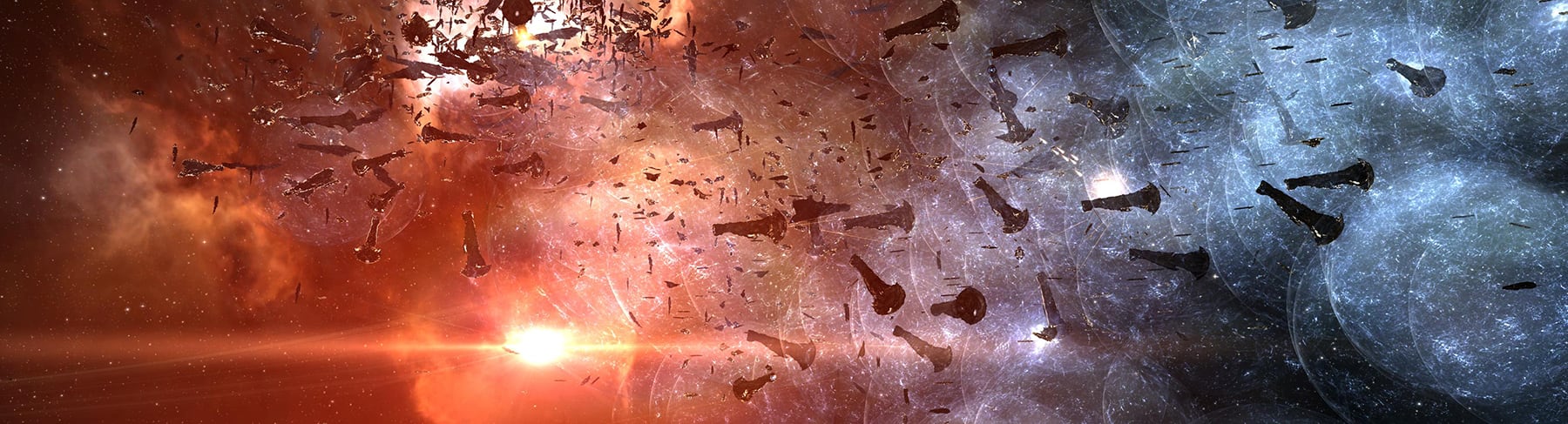
Today is the 15th anniversary of the legendarily fascinating virtual world EVE Online, a massively multiplayer spaceship game that has become famous for the incredible stories that sometimes emerge from the community about heists and wars between thousands of players.
EVE is so interesting that it even has its own historian, Andrew Groen, a video game writer formerly of Wired who studies the politics and sociology at work in EVE’s virtual community over its 15-year history.
Groen raised $95,729 from a Kickstarter campaign to independently publish his first book, Empires of EVE: A History of the Great Wars of EVE Online, which has now sold 17,000 copies worldwide and is in its third printing. He’s currently Kickstarting a sequel which has already brought in more than $115,000 in support and concludes this week.
Empires of EVE is half Star Wars, half Decline and Fall of the Roman Empire. It is a true and fact-checked account of what happened inside EVE Online from the years 2003-2009 as player factions began to accumulate power and eventually wage a years-long war between more than 50,000 real players. It’s a space opera that takes place on our own internet, and all the characters are 2003 internet users attempting to build their own digital fiefdom.
The excerpt that follows is chapter four of Empires of EVE, and takes place near the beginning of the story.
A civil war in the north
On May 6, 2003 EVE Online officially launched to the public.
Thousands of players from hundreds of corporations (EVE’s equivalent of “guilds” or “clans”) excitedly logged into the game for the first time and made their move. Everybody had their plan when the game first launched: how they’d become rich, how they’d become powerful.
However, one of the greatest conquerors in New Eden’s history chose to remain still.
A group of hardcore strategy gamers from the community of a previous space-based multiplayer game called Homeworld decided to try to make a name for themselves in EVE. They called themselves “Evolution,” and they were led by the chiseled sneer of their tyrannical leader, a player who called himself “SirMolle.”
In real life, SirMolle was Par Molen, a 40-year-old Swede living in Denmark. He fixed air conditioners by day, and by night he commanded the most feared fleets in New Eden.
In an interview in 2014, SirMolle told me that Evolution’s original plan was to quietly take over “New Eden,” the name of the star cluster where the game takes place. It set out to become the Illuminati of EVE Online. The plan was to maintain a low profile, creep into the ranks of larger entities, and then use espionage to simply take over without anyone having noticed.
But Evolution found that espionage in a virtual world is long, dreary work. It takes months to earn the trust of your superiors, and the only way to do that is by acting normal. So infiltrating a corporation has more to do with being a diligent miner and soldier than being a stealthy assassin.
Rather than trudge through that boring work just to maliciously deceive people, Evolution’s leaders opted to stay silent and observe. Evolution had enjoyed quite the reputation as an organization of elite players during the beta phase, and that extra attention made things more difficult for its leaders. So they chose to hit reset for a month and quietly build. The leadership was waiting to see what the optimal move would be. And so, for the first month EVE Online was live, Evolution stayed quiet, building ships and plotting its move.
When it did make a move it headed toward Fountain, a region of space in the West that wasn’t controlled by a major alliance. There were a few corporations operating out of that territory, but none that individually posed a large threat to an organized force like Evolution.
It’s important to remember that the gaming world was much different in 2003 than it is in 2018. Today, voice communication and a strict chain of command are the default in EVE, but back then everything was informal. Many corporations only used in-game text chat which was much slower than being able to talk to your allies. It took a lot more effort and commitment to become a tight-knit group that could coordinate times to play together and talk on TeamSpeak. Evolution was highly organized. It had its own website, forums, and TeamSpeak server. This fact alone made it a formidable foe.
But Evolution’s players were also exceptionally devoted. Evolution itself was a communist organization focused almost exclusively on military pursuits. Each pilot had to submit an application to join, and if they were accepted they were expected to give up all of their belongings to the control of SirMolle, for the glory of the greater whole.

SirMolle.
“I believe the first official war we had was with some entity in towards [the region of] Fountain,” said SirMolle to me in 2014. “We had like a three week war where we destroyed them, and they posted on the forums ‘Okay, we’re defeated.’
“That was the kind of level you had in the wars back then. It was very isolated with two corporations. It was 30 people altogether. It was concentrated to two or three systems, and you actually had honorable wars as in ‘I declare war on you.’ That changed over the years.”
But Evolution had trouble pacifying “the locals”—as SirMolle diminutively called them—and they resisted Evolution’s attempts to take over. The local corporations were successful at preventing their own eviction, and eventually a ceasefire was brokered which joined the corporations together as the “Fountain Alliance.”
However, the newly unified Fountain Alliance wouldn’t last long. Several Fountain Alliance leaders I spoke to described Fountain Alliance as a group that eventually became bogged down with bureaucracy. Five hour weekly council meetings became the norm as they discussed logistics, territorial mining rights, and endless other laborious topics. Nobody was having much fun, and EVE became work. A lack of fun is the silent killer of alliances in EVE.
The boredom and bureaucracy of Fountain Alliance became too much for Evolution over time. In a matter of just a few months Evolution left Fountain Alliance on amicable terms, said their farewells, and headed North.
SirMolle wanted to fight a war, and he was prepared to manufacture one if he had to.
Andrew Groen
Casus Belli
Meanwhile, in the northern regions (Fountain is in the West,) a group called the Venal Alliance had formed and was in the process of consolidating power. The corporations of Venal Alliance worked together for mutual benefit, and made a lot of money in the process. What the Venal Alliance didn’t know was that one of its main corporations—a group called “Taggart Transdimensional”—had a bullseye on its back. Taggart and Evolution had fought months earlier in the EVE Online beta, and now that Evolution had left Fountain Alliance in the west to search for a war in the nearby north, there was no better target than its old enemy.
But Evolution couldn’t just march in and declare war against an innocent corporation. That would paint it as the villain, which would harm its recruitment, and potentially draw new allies to Taggart’s aid. SirMolle’s Evolution hoped to ruin Taggart’s reputation to get their allies in the Venal Alliance to abandon them. Evolution needed a proper reason to fight, and it set to work trying to manufacture one. A player by the name of “Mr. Blonde” turned out to be adept at this type of spywork.
The plan Mr. Blonde concocted was to send small raiding gangs into Venal Alliance territory and take cheap shots at Venal ships, the goal being to simply raise the blood pressure of the region. He wanted to make Venal afraid and get its leaders thinking about a fight. Venal Alliance didn’t take the bait though, and Evolution was forced to play along.
Text conversations still exist between the leaders of Evolution and Venal Alliance from this time as Venal Alliance sought answers for why its allies were being targeted. In the logs, SirMolle feigns ignorance and claims the shootings were surely caused by a spate of new recruits who didn’t understand Evolution’s sterling code of conduct. SirMolle assured Venal Alliance leaders that he’d look into the problem and get back to them. He gave Venal’s directors the runaround in every way short of asking them to submit a complaint to Evolution’s department of personnel. Then he posted these conversations in Evolution’s forums to have a laugh with his comrades in a forum thread titled, “Who? Me? What why? Naaaaaaaaaaaaaah.”
Venal Alliance wasn’t ready to go to war. It was wealthy enough that a few ship losses weren’t very meaningful. Especially when its leaders had been assured by their would-be enemies that these were isolated incidents that would be dealt with.
So Evolution kicked things up a notch. Mr. Blonde—also known by the nom de guerre “Femme Fatale”—set to work concocting a new plan to paint Taggart Transdimensional as the secret aggressor in a new war, planting evidence that Taggart Transdimensional was going behind their Venal Alliance allies’ backs to hire mercenary pirates to attack Evolution’s people.
“Independent sources are now stating that M0o, Sinister and Rus (well-known pirate factions of 2003 EVE) received payment from Taggart Transdimensional for [Evolution] ships proven destroyed,” SirMolle wrote in July 2003 on the public EVE Online forums.
Again, there are surviving conversation logs from this time showing Evolution players attempting to convince pirates from the accused factions to play along. In them, SirMolle sends a message to Stavros—leader of the most infamous pirate faction in EVE history, “M0o” (short for “Masters of Ownage,”)—and smugly tells him he’s going to give Stavros “an opportunity.” SirMolle requests that Stavros lie and say his alliance was paid to attack Evolution. But Stavros informed him that he’s mistaken and no such payment occurred.
SirMolle’s reply: “Meh.” He asked him to confirm it anyway.
Ultimately, Stavros refused, and SirMolle never found someone to lie on his behalf. So he had to do it himself and pretend he couldn’t say where he got the information from out of a need to keep his sources confidential.
It’s time…
You have been tried and found guilty. The verdict is simple; Annihilation.
Among the various accusations are these;
Paying known pirates ISK (EVE’s currency) for hits on Evolution.
Supplying same pirates with Ships/Equipment.
Withholding information and blatantly lying.
These accusations have been reviewed internally, and the answer is simple. Taggart Transdimensional will die.
Sincerely,
SirMolle, CEO, Evolution
Just days later, Evolution determined that public sentiment (which it judged by conversations with allies and responses on the Corporation, Alliance, and Organization Discussion section of the official EVE Online forums) was favorable enough for it to start its war. SirMolle’s pilots were behind him and the average player wasn’t willing to rush to the defense of Taggart. Evolution was being given the benefit of the doubt. And so, still feigning shock, Evolution formally declared war against a confused Taggart Transdimensional.
Some people demanded proof of Evolution’s allegations against Taggart Transdimensional, and SirMolle replied with such a transparent lie it’s a miracle it wasn’t figured out.
“Our statement is clear, we have no wish to try and convince anyone,” SirMolle wrote on the forums. “This statement is good enough for us, and our sources are valid. That is all that matters. You may make up your own minds. That is not our decision. Our decision is made.”
In other words, SirMolle said Evolution didn’t care if the public approved of his cause for war or not—an obvious lie given that that he was declaring the war and its causes on a public forum. He wanted the EVE-playing public to take Evolution at its word even though it would take mere seconds to copy the supposed evidence into a forum post.
Eleven years later, SirMolle tells stories like this with a laugh. He’s more than happy to admit his insatiable love of starting political fires, and he still clearly gets joy out of recounting the tales of his conquests over truth.

Murder and Butchery
With impending aggression right on their doorstep and Evolution banging its war drums, the leaders of Venal Alliance convened to determine their official response. The decision was unanimously made to stand by Taggart Transdimensional and wage war against the invading forces of Evolution.
Evolution was not a large group by any standard. It had only a few dozen players, but it was spectacularly well-organized. As such, Evolution was ready to go to war. Its pilots had outfitted themselves in some of the best ships available. They were ready and willing to show up for battles, and most importantly they enjoyed warfare. Venal Alliance, by contrast, was a group that was largely set up for monetary gain. Even its best pilots tended to be former pirates who had more experience picking on defenseless miners than engaging in large fleet fights.
Evolution came north from Fountain through the regions Pure Blind and Tribute, and began its attack on Venal Alliance’s trade routes and mining spots.
“The war began, and we got slaughtered,” said Venal Alliance’s Jade Constantine in 2014. “Just outright murder and butchery. We lost ship after ship after ship.”
Warfare in July 2003 was more informal, but also more hectic than in the modern game. There wasn’t yet a system in EVE Online for defining which player groups owned which territory. It was very much defined by cultural understanding. The players knew who owned which territory, and didn’t need official records.
But this also meant that in warzones there were no battle lines, and nothing to specifically be gained by short-term victories. With no official sovereignty to take from an enemy the main goal was to figure out how they made money and disrupt their operations. Evolution knew this very well, and it became equal parts famous and reviled for its “hit and fade” attacks. An Evolution fleet would show up, inflict as much damage as it could, and then disappear before the enemy fleet had time to gather for a response.
Evolution’s enemies mocked its perceived cowardice and unwillingness to commit to a full fight. Evolution mocked them right back for expecting warfare to be conducted like renaissance-era musketeers exchanging volleys in turn. A dance would occur between the two enemies that stretched around the clock. Depending on where in the real world each fleet primarily hailed from, they would be dominant at different hours. When Evolution’s commanders didn’t feel they could win a fight, they would leave.
Occasionally, both would catch each other feeling confident and sparks would fly.
Bloody BKG
Few details remain of the battles from this time. What we do know is that the bulk of the fighting centered around the system BKG-Q2 in the heart of the Branch region, home to a valuable station that everyone wanted to control. The specifics of the individual battles were less important than the general fact that Evolution was handing out a beating on the battlefield. Yet Venal Alliance was winning on another front.
Venal’s figurehead leader, Jade Constantine, was hard at work waging a war of propaganda. From the very beginning, Venal Alliance’s vision was that of a free north. Jade Constantine crusaded to keep the northern territories free from the type of corporate dictatorships—like Evolution—that had sprung up all over the rest of New Eden. In those places the law was simple: anyone who isn’t a confirmed ally was kill-on-sight. Even if they were unknown, kill them. The thinking was that it wasn’t worth the risk to have random people in your territory in case they’re spies, saboteurs, or pirates.

Jade Constantine.
The dream of Jade Constantine’s Venal Alliance was to create a territory where average players could come, do business, build ships, conduct commerce, and leave freely. It was a vision of a civilization that co-existed with the rest of EVE Online rather than trying to militarily protect itself from all potential threats.
“We were running a PR campaign at the time that was saying essentially that Venal is a free port,” said Jade Constantine in 2014. “This is a place of free trading. It’s **somewhere anyone from Empire space (the new player zone) can come out to. So why not come out and fight for the Venal Alliance against the Evolution oppressors?”
You might be thinking that this sounds a great deal more honorable than Evolution’s deceptive warmongering. The citizens of New Eden at the time largely agreed, and Venal Alliance was becoming the martyr in the north.
Jade Constantine is an extremely divisive force in the history of EVE Online, but an undeniably important one. At the time, many players hated seeing her face beside long propaganda screeds on the forums. Some saw her as pompous, self-righteous, and devious. They believed she twisted the facts to conform to her self-serving narrative. Jade carried herself with a pomposity that annoyed some, and she had a way of speaking down to dissenters, famously calling them “m’dear.”
The real life player behind Jade, was exceptionally talented at painting a picture of warfare for the people of New Eden. Every week, players could find a 2,000-word essay he’d written attempting to control the conversation.
When I interviewed the player behind Jade Constantine, he told me about an old English king whom he’d taken inspiration from. It’s the story of King Henry II of England in the 12th century who was traveling through Britain, putting down rebellions in his various territories. At one point he traveled to Ireland and put down a rebellion, only to be informed he’d have to go back to London to suppress an even larger one. The trouble was that his army had dwindled, and to make matters worse he was forced to travel through potentially hostile territory—Wales—to get there.
King Henry’s astonishing solution was to pretend he was the reincarnation of the legendary King Arthur. He hired seamstresses to create great white banners bearing Arthur’s sigil, a red dragon. He hired minstrels and storytellers to travel ahead of his army to tell stories of how Arthur had been seen again after hundreds of years. According to the tale, he arrived on the shores of Wales that winter with basically nothing except his knights dressed in exceptionally flashy garb. For whatever reason, the people of Wales bought it. Not only did Henry II gain safe passage through the territory, but the Welsh people joined his army by the thousands.
Cruse told me this story to illustrate a point about shaping a conflict through words, and how a story alone can change the course of history.

Jade Constantine the Verbose
As a result of Jade Constantine’s propaganda/public relations campaign, Venal Alliance started attracting numerous new corporations from Empire space who wanted to try their hand at warfare in nullsec. Some people loathed Jade, but others believed in her vision of a free port in the untamed north.
Venal Alliance had a strong financial backbone, and these new recruits provided the manpower the alliance needed to keep the defense strong at all hours of the day. So Venal began buying dozens of small, cheap ships for the new players it described as its “meatshield.” The combination of an effective narrative, a bevy of new volunteers, and strong finances allowed it to stabilize as sufficient defenders of the north.
Unfortunately, defense was all its pilots could manage. It could stand its ground against Evolution, but Venal Alliance was far from winning the war. Its miners were safe enough to keep mining, and the merchant ships stayed safe, but the battles weren’t being won.
It wasn’t long before the members of Venal Alliance started to notice that the members of Taggart Transdimensional—the people Venal Alliance banded together to defend from Evolution in the first place—were barely ever seen anymore. Battles would break out and Taggart members weren’t fighting them. Taggart was an exceptionally wealthy corporation with a population of players that made up roughly 40 percent of the Venal Alliance. In battles, however, it represented far less than that.
Jade Constantine and others called for another gathering of Venal Alliance’s war council to discuss how to deal with this. Taggart heard their arguments and offered to help out its allies in the Venal Alliance by selling them battleships at “only” a 20 percent markup from the cost Taggart incurred in building them. Which, it tried to justify, was 15 percent less than they sold for on the open market.
I like to compare this situation to a person asking their friends to help them move house. Except when the friends arrive to help, the homeowner doesn’t move any boxes. When the friends inevitably complain, the homeowner feigns sympathy and tries to make amends by offering to sell them a hand truck for a profit. It was a deal that was obviously rejected and was borderline insulting.
Around this time, SirMolle of Evolution reached out to contact Jade Constantine for a parlay. He spoke to Jade with his trademark patronizing tone, telling her that Evolution had been impressed by the “fighting spirit” of the Venal Alliance. However, what Evolution wanted was to hurt Taggart Transdimensional, and SirMolle was frustrated that Taggart was so often missing from the battlefield.
So SirMolle offered his deal: throw Taggart Transdimensional out of Venal Alliance, and Evolution would recognize Venal Alliance’s sovereignty in the north and call a ceasefire with everyone but Taggart.

This Treacherous Night
Jade took the deal back to Venal and called a meeting of what was known as “The Council of the Free Captains.” It was a midnight meeting where a dozen delegates from all factions within Venal Alliance got together to cast their votes.
Jade had gone to the leader of Taggart Transdimensional, a player named Ragnar, to discuss the meeting beforehand. She told him that she and her corporation—Jericho Fraction—were prepared to stick by Taggart if it started pulling its weight. Her proposal was to alter the Venal Alliance tax system which at the time mandated that each member corporation contribute 25,000,000 ISK per week to the alliance to cover ship replacements and ammunition for the war effort. Taggart was a very large corporation of over 200 people—several times larger than other Venal Alliance corporations—but it still only had to pay 25,000,000 per week, a tiny fraction of its earnings. Jade wanted to bring that up to an amount proportional to the massive size of the corporation.
This was a philosophical problem for Taggart Transdimensional.
Why? Because Taggart Transdimensional…were space libertarians.
Its leaders were stalwart believers in Ayn Rand’s Objectivist philosophy both in EVE and in their ordinary lives. The name Taggart Transdimensional itself comes from Rand’s book Atlas Shrugged, which stars protagonist Dagny Taggart as a vice president of a railroad company called Taggart Transcontinental.
The leader of the corporation was Ragnar Danneskjold (also a character from Atlas Shrugged,) the single wealthiest person in all of EVE Online, worth an unthinkable billions of ISK.
This idea of having to pay a heavy tax to a government that would seek to control his actions was horrifying to Ragnar. He refused Jade Constantine’s deal.
Sensing that there was a very real chance Taggart could be abandoned by its allies, Ragnar moved to consolidate power. He privately consulted with the member corporations of Venal Alliance, and lobbied them to side with him.
“There is a rift coming and there is one side that is safe and one that is not,” Ragnar told one such corporation.
The day of the vote arrived. The ballots were cast and counted. The vote was 6 to 5; six votes in favor of preserving the Venal Alliance and standing by Taggart, five votes in favor of tossing them to the wolves. Taggart managed to survive, and the Venal Alliance was preserved.
Evolution heard every word of the meeting. It had a spy—again Mr. Blonde—in Venal Alliance’s midst and he was relaying the minutes of the meeting. To put it mildly, Evolution was disappointed. Venal Alliance banding together could spell the death of its campaign. If Evolution couldn’t break Venal in the previous months there was no reason to believe it would happen now. Especially with all of Venal’s foreign volunteers still flooding in from empire space.
But just as the Venal Alliance council meeting moved on to other matters, a spokesman for Ragnar interrupted to deliver a prepared statement.
“Taggart Transdimensional does not recognize the authority of this council, nor the voting power of a corporation 1/10th of our size having the same power to limit our sovereignty. It is clear that the anti-Taggart effort has been led by Jade Constantine, who has been bought off by Evolution. We will start with a 100 million ISK bounty on Jade Constantine. Taggart and our friends will remain in Venal and we will openly attack all of the pro-Evolution people that have just voted against their one-time friends in Taggart. This is fair warning. Thank you.”
— Ragnar, CEO, Taggart Transdimensional
(Edited for clarity.)
The Venal Alliance council was stunned. In the view of these council members, this vote was just a natural process of inter-alliance diplomacy. At first, it wasn’t clear Ragnar actually understood what had happened. Maybe he misheard the vote count and thought Taggart was being evicted?
No such luck. Taggart Transdimensional understood completely, and had declared war on its former allies who had the audacity to vote against them. Almost instantly, the region of stars called Venal shut down, and became a war zone.
Jade Constantine commemorated the occasion with yet another epic, soaringly dramatic forum post.
“I, Jade Constantine, take up the mantle of Ragnar’s 100 million ISK of blood money and wear it proudly as a shroud to brittle avarice and all the works of foolish craven traitorlord below. Death to Taggart, Death to Ragnar, Death to the memory of this treacherous night.”

Battle lines
The Venal Alliance immediately demanded a re-vote in light of Taggart’s war declaration against its own allies. It should go without saying that this changed the minds of a number of swing votes. The original vote was 6-5 in favor of Taggart, but the new vote was 9-2 against Taggart (not counting Taggart’s vote.) It was partially meaningless given that Taggart had made no qualms about burning the alliance to the ground. But this was a moment for the other Venal Alliance corporations to reform and to clarify that their dedication was to Venal Alliance, not Taggart.
Venal Alliance as it once existed was now dead. The nine remaining members reformed and began calling themselves the New Venal Alliance, shifting their focus to destroying Taggart Transdimensional.
This was more difficult than it sounds, however. Taggart was still staggeringly wealthy and well-equipped. One of the first issues that divided the former Venal Alliance was that Taggart wasn’t showing up for battles. SirMolle himself was upset that Taggart wasn’t hurting enough. The members of the “New Venal Alliance” had just ended a large, highly destructive war against Evolution, and were now expected to fight a war against Taggart, which had barely taken any damage in that war. Taggart was fresh and flush with equipment for fighting a long war.
Taggart Transdimensional was not a fighting corporation, though. Its pilots liked to mine and make money, and they were exceptionally good at it. Taggart preferred to stick to its own niche while fighting its wars through proxies and mercenaries. It had all the resources needed to fight a war without the will necessary to see it through personally.
Taggart got together with the two other former Venal Alliance members who had voted to stand by it (former pirates who had been hired to become a makeshift military,) and the new group began calling itself the Northern Alliance. It attracted one more new member: the well-known pirate group “M3G4.” Taggart was now at the head of an alliance that featured some of the most feared pirate factions in the north of New Eden. It claimed Venal for its own uses and warned all others to evacuate.
However, Taggart had drastically underestimated the disastrous results of spurning its former allies when those allies voted democratically to stand by Taggart. It left an alliance of free spacers in favor of an alliance filled with hated pirates.
Jade Constantine’s propaganda machine used this to her advantage and was effective at painting Taggart in a horrible light. Jade rebranded Taggart Transdimensional as “Taggart Transpiratical.”
Over the next week the New Venal Alliance started receiving care packages from all over New Eden. People were sending ships and money and morale-boosting well wishes inspiring the New Venal Alliance to keep up the fight and wipe out the enemies Jade had painted as hypocritical capitalist snakes.
More foreign volunteers continued to come up North to fight with the New Venal Alliance. Venal Alliance had been through hell for the last two months, but its leaders understood better than anyone in New Eden how to make a war fun. It was managing to win wars while it was actually losing on the battlefield, because it understood that EVE players need to have a goal to stay entertained. The New Venal Alliance gave its members a goal using ideology, and attracted other players from around the New Eden star cluster because it offered these people something to believe in—a real reason to be playing this video game.
This alone would have been bad news for Taggart Transdimensional’s brand new Northern Alliance, but something else happened that Ragnar didn’t expect: Evolution was true to its word.
Evolution held up its end of the cease-fire bargain and stopped fighting the New Venal Alliance. Beyond that, Evolution went so far as to actually aid the New Venal Alliance in its oncoming civil war. Evolution supplied it with ships, minerals, and manpower, essentially making the New Venal Alliance into Evolution’s proxy for destroying its sworn enemies: Taggart Transdimensional and its gang of pirates.
The New Venal Alliance knew, however, that it wasn’t going to beat Taggart through force of arms. Taggart was simply too wealthy and could replace ships too easily. So Venal started training its new allies in unconventional tactics in order to disrupt Taggart’s income. One new corporation called Reikoku stood out from the crowd. Its pilots were new to EVE and Jade Constantine had recruited it as a mercenary unit and schooled its pilots in the dark art of “suicide ganking.”
The basic idea is to equip a cheap ship with 100% of the ship’s energy focused on burst firepower—with no concern for survivability—to almost instantly kill your enemy. This way you can attack them right in front of EVE Online’s NPC police force in high-security Empire space, and still be able to secure the kill. The NPC police will show up and destroy the attacking ship as well, but it’s cheaper, easier to replace, and not filled with valuable mining cargo.
“We basically funded a suicide ganking campaign against Taggart miners in northern Lonetrek,” said Jade Constantine. “Which was the other front of the war. To be quite honest, Reikoku did more to crush Taggart than anybody else because they absolutely loved [suicide attacks.]”
This went on for two weeks. The New Venal Alliance fought a series of battles for Venal itself while Reikoku hammered the Taggart supply lines and trade routes throughout Lonetrek to the south. Only fifteen days after this fighting officially began, a delegate from Taggart appeared in the EVE Online forums.
“Earlier today Ragnar Danneskjold officially stepped down as President and CEO of Taggart Transdimensional and declared his retirement from EVE. […] We wish to put the controversy of recent times behind us, and as such are wiping the slate clean. Our kill-on-sight list is empty, and we are declaring a unilateral ceasefire effective immediately. All bounties have been revoked, and all existing alliances have been dissolved. In particular, while Taggart Trandimensional has never condoned piracy, we have in the past been members of alliances which have included pirate corporations. This is no longer the case, nor will it ever be in the future.
We look forward to reaffirming our diplomatic and trade relations with all other corporations and alliances, and working towards a secure and prosperous future for all.
— GunnyP, new CEO of Taggart Transdimensional
October 2, 2003
The day before, Ragnar had undocked his famously rare and expensive Navy Issue Apocalypse-class battleship and made a proclamation in front of his people.
“I’m going away planetside for a time,” he is said to have written (some speculate that he was going on vacation.) “Fight hard. Fight to the last. Never surrender.”
And then he logged off and was never seen in New Eden again.
Though Taggart tried as hard as possible to hide it, this was a surrender. Taggart’s figurehead leader, Ragnar, had left the game suddenly and without explanation, and leadership fell to people who no longer believed in this war. They wanted to go back to building wealth, not squandering it on a pointless war. Taggart Transdimensional evacuated the north and tried to get back to the peace that used to be considered normal.
Almost every other corporation involved in the fighting agreed to the ceasefire eagerly. SirMolle was still skeptical, and didn’t seem happy to stop killing Taggart ships, but he went along with it.
Taggart had been wounded badly through all of this. Its membership had dropped catastrophically, and it had grown to depend more and more on mercenaries. Then a player named Anla Shok broke its back.
A former director in Taggart Transdimensional, Anla Shok, recognized the corporation’s weakness for the opportunity it was and executed the largest corporate theft in the first year of EVE. The still vast coffers of Taggart Transdimensional (filled to the brim when the ultra-wealthy Ragnar left his fortune) were looted. In total, 1.2 billion ISK was stolen from the shared corporate account all of the directors used to pool their funds—an incredible amount of money for the era that would have paid for hundreds if not thousands of ships.
Anla Shok then took the ill-gotten gains and joined Evolution.
Ragnar’s fortune would become the seed money SirMolle needed to embark on a mission to fulfill his destiny and conquer all of New Eden.
Empires of EVE: A History of the Great Wars of EVE Online is available in Kindle, audiobook, hardcover (currently sold out) and softcover versions. The Kickstarter for Volume II ends Thursday, May 10th.
Images: Razorien (Eve photography), Andrew Groen (Avatar images), CCP Games (Eve Online).
Apple Celebrates 20th Anniversary of Steve Jobs Unveiling the iMac
Today marks the 20th anniversary of the late Steve Jobs introducing the iMac, in what has become a defining moment in Apple’s storied history. Apple CEO Tim Cook commemorated the occasion on Twitter today.
20 years ago today, Steve introduced the world to iMac. It set Apple on a new course and forever changed the way people look at computers. pic.twitter.com/GbKno7YBHl
— Tim Cook (@tim_cook) May 6, 2018
“This is iMac,” said Jobs, who had returned to the helm of Apple as interim CEO just eight months prior, after being ousted from the company twelve years earlier. A large crowd erupted with applause at the Flint Center, the same theater where Jobs unveiled the original Macintosh back in 1984.
The excitement centered upon the fact that the iMac didn’t look anything like other desktop PCs of the time. This wasn’t a typical boxy monitor-and-tower in dull beige. This was an all-in-one machine with curvy, translucent plastic, first in bondi blue, and later in several other colors of the rainbow.

Jobs was as charismatic as always on stage:
This is iMac. The whole thing is translucent. You can see into it. It’s so cool. We’ve got stereo speakers on the front. We’ve got infrared right up here. We’ve got the CD-ROM drive right in the middle. We’ve got dual stereo headphone jacks. We’ve got the coolest mouse on the planet right here. All of the connectors are inside one beautiful little door here—the Ethernet, the USB stuff. Around the back, we’ve got a really great handle here. The back of this thing looks better than the front of the other guys, by the way.
iMac was all about getting everyday people connected to the internet. In fact, the letter I in iMac stood for internet, according to Ken Segall, the creative director who came up with the name for the computer. It also stood for individual, instruct, inform, and inspire, according to Apple’s presentation.
More importantly, the iMac was a turning point for Apple, a company that had lost its direction by the mid-1990s. Apple was hundreds of millions of dollars in debt, had a bloated product lineup with over a dozen Macintosh models, and seemed to lack a clear plan forward. That is, until Jobs stepped in.
Jobs aimed to simplify Apple’s product lineup with a four-quadrant product matrix, with one desktop computer and one portable computer for consumers and professionals respectively. iMac filled the consumer-desktop quadrant.
Jobs in Apple’s press release for the iMac:
We designed iMac to deliver the things consumers care about most—the excitement of the Internet and the simplicity of the Mac. iMac is next year’s computer for $1299; not last year’s computer for $999.
Today we brought romance and innovation back into the industry. iMac reminds everyone of what Apple stands for.
The original iMac pioneered many industry firsts such as USB, FireWire, and quiet fan-less operation, and while the removal of the floppy drive and legacy ports was controversial, the computer ultimately pushed the industry forward.
The original iMac’s tech specs:
- PowerPC G3 processor clocked at 233MHz
- 15-inch display with 1,024×768 resolution
- Two USB ports and Ethernet with a built-in software modem
- 4GB hard drive
- 32MB of RAM, expandable to 128MB
- 24x CD-ROM drive
- Built-in stereo speakers with SRS sound
- Apple-designed USB keyboard and mouse
- Mac OS 8.1
The strategy was effective, as the iMac kickstarted Apple’s return to profitability, just months after it flirted with potential bankruptcy. iMac sales topped 278,000 units in the first six weeks, and in October 1998, Apple reported earnings of $106 million in its fourth quarter, contributing to its first profitable year since 1995.
Apple’s naming scheme lived on with the iPod in 2001, iPhone in 2007, and iPad in 2010, products that led it to become the world’s most valuable company.
The success of the iMac was due in part to a significant marketing campaign developed by ad agency TBWA/Chiat/Day. The ads, both in print and video form, focused on the iMac’s design and the simplicity of both setting it up and connecting to the internet. A few of the spots featured actor Jeff Goldblum.
A sampling of taglines from the campaign:
- Yum.
- Sorry, no beige.
- Chic. Not geek.
- High-technicolor.
- No artificial colors.
- The rebirth of cool.
- The most colorful way to the Internet.
- Family vehicles for the information superhighway.
- The thrill of surfing. The agony of choosing a color.
- The most dramatically new Macintosh since the original.
In the two decades since, the iMac has undergone several revisions, keeping up with rapid technological advancements. Over those years, Apple’s attention to both design and function hasn’t wavered.
In 2002, the iMac received its first significant redesign, with a thin flat-panel display affixed to a white semicircular base with a cantilevered metal arm. In 2004, Apple integrated the main logic board, optical drive, and other components behind the display, allowing for a thinner aluminum stand.
 iMac in 2002 on left and 2007 in middle, iMac Pro on right
In 2007, Apple ditched white plastic and gave the iMac an aluminum enclosure backed by black plastic. A model with a complete aluminum unibody enclosure was released in 2012. Starting in 2014, the iMac gained high-resolution 4K and 5K Retina displays. And, in 2017, the powerful iMac Pro was released.
It is 1998, though, that will always be remembered as the year Apple started a new chapter of success. Happy birthday to the iMac.
Related Roundup: iMacBuyer’s Guide: iMac (Don’t Buy)
Discuss this article in our forums
 AIVAnet