


A.I. scans social media to predict when protests will turn violent
With all the hostility on social media, it may sound oxymoronic to say that social media platforms could curb violence.
But studies have shown it could help fight wildlife poaching, and now new research from a new study out of the University of Southern California (USC) suggests social media may help avoid violence between humans as well.
USC psychologists and computer scientists created an artificial intelligence (A.I.) algorithm that scanned posts and correlated their content with impending violence at protests. Such a tool could be used to better prepare for demonstrations that are prone to escalation.
By analyzing posts on Twitter, the algorithm was able to pick up on language that signaled hostilities. The research also revealed that moral topics (issues that users regarded as blatantly right or wrong) were most likely to ignite violence.
“Our findings suggest that people are more likely to condone violent protest of an issue when they both see it at as a moral issue and believe others share this position, a pattern we refer to as moral convergence,” Morteza Dehghani, one of the USC researchers who led the study, told Digital Trends.
Dehghani and his team turned their gaze toward some 18 million tweets about the 2015 Baltimore protests against police brutality, following the death of Freddie Gray. The system scanned arrest rates, a statistic that’s often used as a proxy for violence, and found that arrests increased as “moralized” tweets increased, nearly doubling on days of violent clashes between police and protestors.
“By tracking moralized tweets posted during the 2015 Baltimore protests, we were able to observe that not only did their volume increase on days with violent protests, but also that their volume predicted hourly arrest rates, which we used as a proxy for violence, during the protests,” Dehghani said. “To further unpack these effects, we conducted a series of controlled behavioral experiments and we consistently observed the same effect of moral convergence.”
From Dehghani’s point of view moral convergence is a kind of fuel that contributes to violence, but it isn’t the sole factor. By identifying when a protest is more likely to turn violent, authorities may act accordingly, treating the situation with more caution.
“Protests that exhibit high convergence should be handled carefully, as even a small spark of conflict could lead to violence,” Dehghani said. “Perhaps monitoring convergence on an issue could help emergency services devise and implement strategies for promoting peaceful protest.”
A paper detailing the study was published last week in the journal Nature Behavior.
Editors’ Recommendations
- Social (Net)Work: Fake news spreads faster than truth, but bots aren’t to blame
- Teen who allegedly threatened school is barred from playing video games
- Can an algorithm be racist? Spotting systemic oppression in the age of Google
- Crime-predicting A.I. isn’t science fiction. It’s about to roll out in India
- 9 things you need to know about the Russian social media election ads
HTC U12 vs Google Pixel 2 XL: Can HTC take out the stock Android king?
HTC has finally unveiled the new HTC U12 Plus, its latest and greatest flagship phone aimed at taking on the likes of the Samsung Galaxy S9, LG G7 ThinQ, and the Google Pixel 2 XL. The new device boasts the latest Qualcomm chip, plenty of RAM, and dual-sensor cameras on both the front and the back.
But just how does it compare with the likes of the Google Pixel 2 XL, considered by many to be the best Android phone on the market? We put the HTC U12 Plus and Google Pixel 2 XL head-to-head to find out.
Specs
HTC U12 Plus
Google Pixel 2 XL
Size
156.6 x 73.9 x 8.7 mm (6.17 x 2.91 x 0.31 inches)
157.9 x 76.7 x 7.9 mm (6.22 x 3.02 x 0.31 inches)
Weight
188g (6.63oz)
175g (6.17oz)
Screen size
6 inches
6 inches
Screen resolution
2,880 x 1,440 pixels
2,880 x 1,440 pixels
Operating system
Android 8.0 Oreo
Android 8.0 Oreo
Storage space
64GB, 128GB
64GB, 128GB
MicroSD Card slot
Yes
No
Tap-to-pay services
Yes
Yes
Processor
Qualcomm Snapdragon 845
Qualcomm Snapdragon 835
RAM
6GB
4GB
Camera
Dual 12MP + 16MP rear, dual 8MP + 8MP front
12.2MP rear, 8MP front
Video
4K at 60fps, 1,080p at 240fps
4K at 30 fps, 1,080p at 120fps, 720p at 240fps
Bluetooth version
Version 5.0
Version 5.0
Ports
USB-C
USB-C
Fingerprint sensor
Yes
Yes
Water resistance
IP68
IP67
Battery
3,500mAh
Quick Charge 3.0 (QC 4.0 supported but requires separate charger)
3,520mAh
Fast charging
App marketplace
Google Play
Google Play
Network support
T-Mobile, AT&T, Verizon
T-Mobile, AT&T, Verizon, Sprint
Colors
Translucent Blue, Ceramic Black, Flame Red
Just Black, Black & White
Price
$800+
$849+
Buy from
HTC
Google, Amazon, Verizon
Review score
Hands-on review
4.5 out of 5 stars
Performance, battery life, and charging
Julian Chokkattu / Digital Trends
Both the HTC U12 Plus and Google Pixel 2 XL may be flagship phones, but that doesn’t mean that they feature the same specs. In fact, they don’t. The Google Pixel 2 XL, for starters, is a 2017 flagship, meaning that it uses the slightly outdated Qualcomm Snapdragon 835 processor and 4GB of RAM, compared to the Snapdragon 845 and 6GB of RAM on offer in the HTC U12 Plus. In other words, while the Google Pixel 2 XL will perform perfectly well for the vast majority of users, the HTC U12 Plus will simply be faster. It may not necessarily feel much faster because the stock Android experience on the Pixel 2 XL is as slick as they come.
Both of the phones offer options for 64GB or 128GB of storage, but the HTC U12 Plus has a MicroSD card slot — meaning you can expand upon that storage if you want.
When it comes to battery capacity, the phones are very similar. The HTC U12 Plus’ battery comes in at 3,500mAh, while the Pixel 2 XL has a 3,520mAh battery. Both the phones support Qualcomm’s Quick Charge 3.0.
In the end, the phones have some similarities, but the HTC U12 Plus has more raw power under the hood and expandable storage.
Winner: HTC U12 Plus
Design and durability
Julian Chokkattu/Digital Trends
When it comes to design, the phones are a little different. The HTC U12 Plus features a glass-back design with a few different color options. It also offers a dual-sensor camera with a fingerprint sensor. The Google Pixel 2 XL also has a fingerprint sensor on its back, but only a single-lens camera and a half-glass back.
On the front, the two phones have some similar features. The display on the Google Pixel 2 XL features rounded corners and a forehead and chin — unlike many 2018 flagships. The HTC U12 Plus actually keeps the forehead and chin, doing away with the rounded corners on the display.
The phones are a little hit-and-miss when it comes to durability. The HTC U12 Plus features IP68 water-resistance, meaning it should withstand up to 1.5 meters of water for up to 30 minutes, while the Google Pixel 2 XL offers a IP67 rating, limiting the depth of water to 1 meter. Still, the glass back on the HTC U12 Plus means it’s more prone to shattering.
Winner: Tie
Display
Both the Google Pixel 2 XL and the HTC U12 Plus feature a 6-inch display, along with a resolution of 2,880 x 1,440 pixels. Where they differ, however, is in display type — while the HTC U12’s display is a Super LCD, the Google Pixel 2 XL instead offers a P-OLED display — meaning it should offer deeper blacks and slightly brighter colors.
Winner: Google Pixel 2 XL
Camera
Julian Chokkattu/Digital Trends
Perhaps the most interesting thing to note about the HTC U12 Plus is that it features two dual-sensor cameras — one on the back, and one on the front. On the back of the phone, you’ll find a 12 megapixel wide-angle lens with an aperture of f/1.8, coupled with a 16 megapixel telephoto lens which has an aperture of f/2.6.
The Google Pixel 2 XL’s camera is a whole different beast. Google has decided to develop artificial intelligence to perform many of the same tasks you would expect from a dual-sensor camera, and it manages to do so pretty well. Many consider it to be the best phone camera on the market. The device has a 12.2 megapixel rear-facing camera with an aperture of f/1.8.
Around the front, HTC has again gone for the dual-sensor camera. The device offers a dual 8-megapixel camera aimed at applying Portrait Mode effects to selfies. The front-facing camera on the Google Pixel 2 XL comes in at 8 megapixels.
We’ll have to wait to see just how good the HTC U12 Plus’ camera really is. For now, this one’s a tie.
Winner: Tie
Software and updates
Julian Chokkattu/Digital Trends
The HTC U12 Plus and Google Pixel 2 XL both currently have Android 8.0 Oreo, and they’ll both be getting the update to Android P, whatever it ends up being called, once it becomes available to customers. Still, when it comes to updates, Google will likely be much faster at getting them out to customers.
While the Google Pixel 2 XL offers a stock take on Android, HTC has made a few tweaks for the U12 Plus. The tweaks fall under the HTC Sense UI, and they include things like support for Amazon’s Alexa and an A.I. Companion.
Still, given the quick updates, we’re giving Google the win here.
Winner: Google Pixel 2 XL
Special features
Julian Chokkattu/Digital Trends
HTC offers the innovative Edge Sense, a feature that allows you to squeeze the phone to activate certain functions. You can use it to open Google Assistant or snap a photo, for example. HTC has gone a step further this time around to allow users to double tap the side of the phone to activate a feature. Thankfully, Edge Sense is user programmable, so you can dictate what each action should do.
The U12 Plus also offers HTC’s BoomSound speakers, which aim to offer stereo sound through the bottom-firing speaker and top earpiece.
The Google Pixel 2 XL may feature stock Android, but that doesn’t mean it doesn’t have some cool features of its own — though most of those cool features are available on non-Pixel phones. For example, Google Lens, which offers intelligent image recognition, was expanded to other phones a few months ago.
Winner: HTC U12 Plus
Price
The phones are both flagship devices, but they don’t have the exact same price. The Google Pixel 2 XL starts at $850, while the HTC U12 Plus starts at only $800 for the 64GB version. For the 128GB Google Pixel 2 XL, you’ll need to shell out a cool $950, while the HTC U12 Plus 128GB model rings in at $850.
Overall winner: Pixel 2 XL
This is a close contest. The HTC U12 Plus may feature improved performance and newer specs, but the Google Pixel 2 XL is able to hold its own when it comes to things like the display. That begs the question: Which one should you buy? Well, if you’re looking for a phone with the best performance possible, then the HTC U12 Plus is an excellent choice. If, however, you prefer to get a stock Android experience with quick updates and the best camera software, the Pixel 2 XL still tops the charts.
Editors’ Recommendations
- HTC U12 Plus vs. HTC U11: Is it time to upgrade?
- HTC U12 Plus hands-on review
- HTC U12 Plus vs. Galaxy S9 Plus: Clash of the plus-sized phones
- HTC U12 Plus: Everything you need to know about HTC’s latest phone
- HTC Vive vs. Vive Pro
UE MEGABLAST: The perfect summer speaker? (Review)

The weather is starting to heat up and that means more time spent outdoors. If you’re anything like me, a party isn’t a party with the proper tunes accompanying the people, food, and drinks. I’m constantly looking for the best speaker to take along with me to keep the party going. In the past, we’ve taken a look at other speakers like the ECOXGEAR Eco Slate, Leeron Sport Bluetooth Speaker, and the Braven BRV-XXL in search of the perfect speaker. While those are all great speakers and tick plenty of boxes, I think I’ve found my new favorite speaker, the Ultimate Ears (UE) MEGABLAST.
Design

UE’s lineup of speakers, including the Blast, Boom, and MEGABOOM have been around for a few years. UE decided to stick with an aesthetic that works instead of changing things up. That being said, if you’ve seen one UE speaker, you’re likely to recognize the others at this point. The rounded shape with a raised platform for the volume keys is familiar to us and looks pretty good.
The MEGABLAST comes in several color combinations, including Graphite, Blue Steel, Merlot, and Blizzard. Our review unit, the Blizzard variety, looks fantastic with its stunning white plastic and darker grill. The grill looks (and feels) like a black and white mesh that gives the speaker a little bit of visual flair without being too flashy. But, if you want flashy, you may want to check out the Blue Steel or Merlot colors because they’re definitely head turners.
When I say that the top, base, and volume bar you may get it in your head that this is somehow a cheap design, but you’d be mistaken. The speaker is strong and sturdy and the hefty plastic is built to last for years. Its soft to the touch and wipes off easily when it gets dirty.

The bottom of the speaker has a detachable area that holds a carabiner hook. That’s a really nice feature, so why would you want to remove it? Well, UE also sells a dock that you can pick up and keep your speaker charging even while it’s playing. To use the dock, you remove a section of the base and replace it with a new one that comes with the charger. This allows it to continue charging while still pumping out the tunes. Sure, the MEGABLAST claims a 16-hour battery life, but why use the battery if you don’t have to?


The charging base is a great option, but it’s also another $40. And it doesn’t add a ton of functionality. Sure, you can sit your speaker in the dock and charge it up, but you still have access to the microUSB charging port to charge it up. In our review of the UE Blast, Josh calls the charging dock and luxury and I couldn’t agree more. If you have the extra $40, it’s a cool accessory but it’s certainly not required.
Function
I was surprised to learn that the UE MEGABLAST had a ton of tricks up its sleeve. We expect to connect our speaker to our phones through Bluetooth or NFC and play music from there, but you can do more with the MEGABLAST. The speaker also has WiFi connectivity that allows it to play music from other sources.
Not only that, but UE included a smart assistant in the MEGABLAST. And not just any generic assistant, but Amazon’s Alexa and all of the awesome functionality that comes along with her. The addition of Alexa takes this from a “dumb” Bluetooth speaker to one of the best sounding smart speakers on the market.
Even though you wouldn’t look at the MEGABLAST and put it in the same category as an Amazon Echo, it can do all of the same things. It can control your smart home appliances, remind you how to spell onomatopoeia, or check the weather for tomorrow. So, all of the other speakers out there can play music too, which means the MEGABLAST can as well, right?

Sure, but there’s a drawback. The MEGABLAST is limited to playing music through Amazon services. Those include services like iHeartRadio, SiriusXM Radio, Pandora, TuneIn, and Amazon Music Unlimited. You actually get a three month Amazon Music Unlimited subscription when you purchase the BLAST or MEGABLAST, but after that, you’re on your own. A recent update brought support for Spotify too but there are hoops to jump through to enable it and it just doesn’t feel… intuitive. If reviewing electronics has taught me anything its that if you make people jump through a bunch of hoops, they’re just going to forget it and not buy your product in the first place.
As a lover of all things Google Assistant and Google Play Music (Spotify too!), I do feel a bit limited here. Amazon Music Unlimited is a fine service, but it’s definitely not something I’m going to pay for after the free trial. I’m left feeling that there’s a big missed opportunity here to let users choose which music service they want to play their music through. Sure, I get that this is a partnership between UE and Amazon, but we don’t like walled gardens and this definitely feels like one.
Now, don’t get us wrong, you can play anything you want through this speaker when you connect your phone to it through Bluetooth and that’s all well and good. But, we’d have loved to see a nice competitor to the high-end Google Home Max here and we’re just not getting that because of the integration of Alexa instead of Google Assistant.
So, how do you enable all of this? You first need to go grab the Ultimate Ears app from the Google Play store. The app will actually guide you through the setup and pairing process once you get the speaker. It asks you to sign into your Amazon account for Alexa access and gives a pretty decent tutorial on what you can do with the speaker. Even if I don’t love Alexa, I do love that you can yell at the speaker to turn down the volume, switch tracks, or play a different playlist. Nothing sucks more than getting out of the pool to mess with a speaker on a hot day.
Sound

Okay, let’s start with a big bold statement here: The UE MEGABLAST is one of the best sounding speakers we’ve ever reviewed. We’ve reviewed huge speakers that shake windows and little speakers that you carrying around on the outside of your backpack. But nothing has wowed me personally like the MEGABLAST. It isn’t the loudest speaker (although it is damn loud), but the audio quality it’s able to put out is simply fantastic.
If you love bass, you’re going to love the MEGABLAST. I suppose with a name like MEGABLAST, it has to thump with the best of them, and it certainly does. I was very impressed at the bass response when listening to some of my favorite EDM songs like Antihero by Noisestrom, I Remember by Tristam, and Here With You Now by Grabbitz.
Mids and highs are overshadowed a bit by the lows, but I still enjoyed them just the same. I was surprised and pleased with how powerful pop vocals sounded through the speaker, especially when it was in an outdoor setting. Clear audio and excellent volume combine to make a great speaker for your next outdoor event.
Conclusion

If you have $249 in your pocket and you’re looking for a fantastic speaker, it’s easy to recommend the MEGABLAST. Again, this is one of, if not the, best sounding speakers I’ve ever heard. While you can find other speakers that put out great sound or louder speakers, I believe the MEGABLAST is a great combination of quality and max volume.
The smart features are really the killer. Sure, they’re limited in what you can do, but I feel like that’s the case with pretty much every smart speaker on the market at the moment. If you’re comfortable using Alexa’s voice interface and supported service, this is a no-brainer. Even if you’re not, it’s nice to be able to turn down the volume, stop playback, or skip to the next track with just your voice. Sure, we’d love the option of Google Assistant here, but you can’t always get what you want.
For my money, the UE MEGABLAST is one of the most compelling options on the market right now and among the best of the premium Bluetooth speaker segment. It gets our recommendation.
UE MEGABLAST purchase links: Ultimate Ears | Amazon | Best Buy | Target
3 Risks Facing Bitcoin in 2018
As an electronic currency, Bitcoin is often presented as both anonymous and perfectly transparent. As an investment opportunity, it was seen as one of the largest gold mines in 2017. Still, many questions remain, namely in terms of risks, as Bitcoin becomes increasingly mainstream. Answering these questions is extremely important for all cryptocurrencies as Bitcoin is the clear pioneer and frontrunner of blockchain technology.
This is what we would like to address in this article, looking at three major risk factors that Bitcoin will have to face down in 2018. For those interested in more information, they can check out ExpressVPN’s Bitcoin: Ultimate Security & Privacy ebook.
- Hacking & Theft
Bitcoin hacks have received worldwide attention from small-time criminals hacking computers to possibly rogue government-backed attacks on major exchanges. It took the industry years to develop sound practices and properly take security into account because of the difficulties involved. This is because unlike traditional financial networks which can rely on trusted custodians, Bitcoin relies upon blockchain encryption. This basically means users can only rely on themselves to secure their assets through the use of wallet technology. Backups can further enhance this security.
- Regulatory Risks
However, risks facing Bitcoin are not exclusively technical or criminal in nature. When exchanging Bitcoin or investing speculatively, physical security aspects and compliance issues may need to be taken into account. For example, lost of Bitcoin stored in hardware is a definite possibility that was played for laughs by American sitcom Big Bang Theory in November 2017, but is actually a serious issue. Furthermore, regulatory changes and restrictions may also impact Bitcoin prices, with trade requiring counterparty and regulatory risk assessment for it to be truly safe.
- Systematic Collapse
Lastly, as Bitcoin (and all cryptocurrencies) are a new financial product, and one that lacks the backing of any trusted institutions, there is a risk of systematic collapse. With its value based upon trust and provided by the masses, one must have to consider the possibility, however remote, of Bitcoin collapsing on its own. It is also possible for governments, banks, or major institutions to simply flood the Bitcoin market with miners, forcing others out of business.
For answers to these risks and more, remember to check out Bitcoin: Ultimate Security & Privacy.
Atari co-founder and video game pioneer ‘Ted’ Dabney dies at 81
Ted Dabney, from left, Nolan Bushnell, Fred Marincic, and Allan Alcorn Allan Acorn/CompuerHistory
Samuel “Ted” Dabney, one of the earliest pioneers of the gaming industry and a co-founder of Atari, passed away May 26 after a battle with cancer. He was 81.
The news has many of his contemporaries and veterans of the video game industry mourning the loss of such an important player in the early development of the first arcade games.
Dabney had a varied career throughout his working life. He was a U.S. marine, an electrician with Bank of America, a grocery store owner, and deli operator. But it is his time at Atari, and his second company, Syzygy Game Company, that he is best known and remembered for.
Dabney co-founded Atari alongside friend and fellow Ampex employee Nolan Bushnell. Inspired by computers they had seen at the Stanford Artificial Intelligence Laboratory, the friends founded Atari in 1972 and produced their first game, Computer Space. Dabney was responsible for the game’s physical function — he used affordable components from standard television sets, rather than computer parts, which were far more expensive.
Although not a commercial success, Atari would go on to use the concept created by Dabney with that first game to create its second, a far more popular and impactful arcade release: Pong.
After a falling out with Bushnell in 1973, Dabney left Atari but remained linked with the company through the creation of new games that Atari would use for its own physical arcade outlets. He also spent time working at companies like Raytheon and Fujitsu, before leaving the video game industry and opening a grocery store with his wife.
Dabney was diagnosed with esophageal cancer in late 2017, and as Eurogamer reports, chose not to receive treatment.
Since the news of his death came to light, a number of Dabney’s peers have released statements praising him. Historian Leonard Herman said that his legacy will live on a long time as he mourned the loss of his “dear friend. The official Atari Facebook account took a moment away from promoting its own cryptocurrency to send out a post announcing the sad news and wishing he’d had a little more time.
Whatever bad blood there was between Dabney and Bushnell appears to have dissipated now, too, as Bushnell tweeted that he would always cherish the time he and Dabney spent together.
Ted was my partner, co-founder, fellow dreamer and friend. I’ll always cherish the time we spent together. RIP
— Nolan K Bushnell (@NolanBushnell) May 26, 2018
Editors’ Recommendations
- John Bain, better known to gamers as TotalBiscuit, dies at 33
- A 21-year-old is heading up Google’s new social gaming startup
- World Video Game Hall of Fame welcomes John Madden and Lara Croft
- Documentary ‘Do You Trust This Computer?’ free to stream courtesy of Elon Musk
- Steve Jobs’ pre-Apple job application sold for nearly $175,000 at auction
Best Memory Cards for Amazon Fire Tablet

The Amazon Fire Tablet is a great investment, but it can run out of storage space pretty fast. That means it’s time for a microSD card. Here are some you should definitely check out.
Whether you have a Fire Tablet for yourself or your kids, you’ve probably noticed that the internal storage doesn’t go very far. You can easily fill it up with some games, a few apps, and media, which is a bit disappointing. Instead of trying to figure out what to delete, and how to better manage the storage, why not make things easier and add a microSD card so it can hold more?
There are tons of great microSD cards out there, and not all of them are expensive. Depending on your needs, you can get cards with as little as 8GB or as much as 400GB. Spend whatever you’re comfortable spending. Figure a 32GB card will be the bare minimum you’ll want, and frankly getting anything less is just a waste of a shipping fee. But if I were you, I’d get whatever’s on sale in the highest capacity you can afford. (Because this is the sort of thing you can use anywhere, not just in an Amazon tablet.)
Whether you are waiting for your brand new Amazon Fire tablet to arrive, or are using the previous generation, here are some great options you will want to consider.
- SanDisk 64GB microSD
- Samsung 32GB microSD
- Silicon Power 64GB microSD
- PNY Elite 128GB microSD
- SanDisk 200GB microSD
- SanDisk Ultra 400GB microSD
SanDisk 64GB microSD

SanDisk is a well-known brand when it comes to portable storage, and its cards are almost always highly recommended. The company offers a bunch of different cards in different storage capacities, and this one is specifically made for the Fire Tablets and Fire TV. For most of what you will do with your Fire Tablet, the microSDXC UHS-I will be fast enough to meet your needs. It may take a few minutes longer for the initial transfer of information to the card, but after that, you won’t notice much of a difference.
With 64GB of extra storage, you’ll easily be able to install a ton of new apps, save music and movies locally to access whenever you want, and much more. Priced at around $22, it’s hard to find a much better value than this microSD card.
See at Amazon
Samsung 32GB microSD

Samsung has been making storage products for quite some time and has been offering extremely affordable microSD cards as well. You won’t find the smaller sizes, like 8GB or 16GB from Samsung, but from 32GB all the way up to 256GB, you’ll find great deals. This high-performance card offers transfer speeds of up to 80MB/s, and they’re built to last. These cards are water-, temperature-, magnetic-, and even X-ray-proof.
All of these good things must mean that it is on the pricey side, right? Wrong. A 32GB card will only set you back around $15, which is less than many people pay to go see a movie.
See at Amazon
Silicon Power 64GB microSD

Silicon Power’s 64GB microSD offers speeds you’d expect out of a memory card for this price, with nothing crazy that makes it stand out. It can work in a variety of devices and comes with a lifetime warranty, so you shouldn’t have to worry much about it. Another great feature of the cards is the included SD adapter which allows you to put the microSD card in your computer, camera or anything else that takes a full-sized SD card.
Coming in at around $18, you can’t go wrong with adding one of these to prevent the inevitable running out of storage.
See at Amazon
PNY Elite 128GB microSD

If you are looking for more storage, PNY may make the card for you. The company makes a variety of different sizes at different price points, and the 128GB sits at a pretty sweet spot. It may be more than you need initially, but having extra space is never really a bad thing. With it you can load tons of movies, endless amounts of apps and pictures, and have to worry very little about filling it up.
Of course, the more storage you get the more it will cost. PNY is quite reasonable with pricing, having this card listed at around $48 right now.
See at Amazon
SanDisk Ultra 200GB microSD

200GB is the largest capacity that the Fire Tablet is meant to use, and you may just want to purchase a microSD of that size to put in and forget that it is there. Sure, 200GB is a lot of space to have, but do you want to have to worry about storage ever again? A few years ago it would have cost a fortune to put that much storage inside your tablet, but now it is totally affordable.
You can usually find a pretty good deal on this card, making it run anywhere from $65 to $70, which is a great price for how much it can hold. If you don’t want to worry about what you have on the tablet or deleting one thing to install another, you’ll want to get one of these right now!
See at Amazon
SanDisk Ultra 400GB
 Sure, 200GB is cool. But you know what’s really cool? Twice that much storage. Nearly half a terabyte of storage. So much storage that your storage has storage. Because, yo dawg.
Seriously, this is a ridiculous amount of removable storage. It’s a Class 10 card, with transfer speeds up to 100MB a second. And that’s good, because there are a LOT of MBs on this thing. It’s also not inexpensive, at upwards of $200.
See at Amazon
Your favorite?
Do you have a favorite microSD card that isn’t listed here? If so, be sure to drop a link and brief description of why you like that one so others can check it out as well!
Updated end of May 2018: Updated pricing. These are still the best microSD cards for your Fire tablet!
iOS 12 Concept Augments the World With New ‘Siri Sight’ Mode
Just one week before Apple’s annual Worldwide Developers Conference in San Jose, California, where the company is expected to introduce iOS 12, several graphic designers have created their own fanatical concepts.
The latest comes from Michael Calcada, a fourth-year design student at York University and Sheridan College in the Toronto, Canada area.
Calcada’s concept envisions several changes and additions to iOS, including an all-new “Siri Sight” augmented reality mode with overlays of useful information on stores, restaurants, transit stops, landmarks, and other points of interest, in addition to timely information such as road closures.
“As I believe augmented reality is a technology that will be fundamental to the future of digital interaction, I integrated AR into the core of the iOS experience, providing new innovative and intuitive ways to interact with your digital and physical worlds at once,” said Calcada, who shared his video with MacRumors.
Calcada’s concept also envisions grouped notifications, a notification dot in the status bar, more granular controls in the default Camera app, a systemwide dark mode, FaceTime group chats, improved volume controls, and a general makeover to iOS that has some promise, even if it is not entirely realistic.

Any improvements to Siri would be welcomed, as multiple reports have suggested that Apple’s assistant has fallen behind its rivals, including Amazon Alexa and Google Assistant. A recent survey also found early adopters of the iPhone X to be impressed with all of the device’s major features, except Siri.
In terms of the expanded augmented reality capabilities, they could be be better suited for iOS 13, as rumors suggest Apple will release at least one iPhone with a triple-lens rear camera system in 2019. The triple-lens array would reportedly enable both expanded zoom and 3D sensing for augmented reality.

As with most concepts, this one is unlikely to look like Apple’s actual version of iOS 12. But with only a week remaining until the WWDC keynote, which MacRumors will be attending, it’s fun to look at fan-made mockups.
Stay tuned to MacRumors for live, on-scene coverage of the WWDC 2018 keynote on Monday, June 4, beginning around 8:30 a.m. Pacific Time.
Related Roundup: iOS 12Tag: Concepts
Discuss this article in our forums
What Are Carbon Nanotubes and Why Should You Care?
Have you heard of carbon nanotubes? Probably not.
They sound like a futuristic technology that has lots of vaguely high-tech properties. And that is pretty much exactly what they are.
Carbon nanotubes are made from similar materials to carbon fiber, and while the nanotubes do have structural applications like carbon fiber, they also do so, so much more.
In this article, we’re going to break down the what, why, and how of carbon nanotubes so that you understand what they are, and why they actually matter to you.
What Are Nanotubes?

Carbon nanotubes are made from a graphite-like compound – hence the “carbon,” in the name. The same material that makes everything from coal to pencil ‘lead’ to diamonds can be altered to create a tubular, chicken wire-like sheet of nanoparticles. The nanotube part comes from the way the tubes are formed. They are quite literally ‘sheets’ of graphene which are then rolled into small “tubes,” so small that the term ‘nano’ is fully accurate.
A nanoScience Instruments notes:
A carbon nanotube is a tube-shaped material, made of carbon, having a diameter measuring on the nanometer scale. A nanometer is one-billionth of a meter, or about 10,000 times smaller than a human hair. CNT are unique because the bonding between the atoms is very strong and the tubes can have extreme aspect ratios. A carbon nanotube can be as thin as a few nanometers yet be as long as hundreds of microns. To put this into perspective, if your hair had the same aspect ratio, a single strand would be over 40 meters long.
These tubes can exist on their own or be made multi-walled by wrapping layers of varying diameter around each other. The way graphene sheets and carbon nanotubes are actually formed in the manufacturing process involves chemical alchemy and heat curing, but is rather similar to the way carbon fiber sheets are produced.
How Do They Work?
This is where things get interesting. Unlike carbon fiber, which is typically used as a structural component in everything from golf clubs to car bodies, carbon nanotubes operate both as structural components and as conductors.
Today, nanotubes are most commonly used as structural reinforcement for carbon-fiber products. In this application, the tubes act somewhat like rebar does in a traditional concrete structure, where they add directional support along the larger, planar ‘sheets’ of carbon fiber.
But the application that made headlines when nanotubes were first developed (and continues to promise radical technological breakthroughs) is as conductors, with physical properties and performance specs that make silicon chips seem like Stone Age relics.
Single-walled carbon nanotubes can be as small as a single carbon atom across. That means the entire tube has a diameter of one nanometer, which is roughly 1/10,000 the thickness of a human hair. When acting as a semiconductor, carbon nanotubes can fit dramatically more transistors on a same-sized ‘chip’ as today’s silicon versions.
More transistors equals more power, less heat generation, and greater reliability across a product’s service life.
How Will They Change Our Lives?
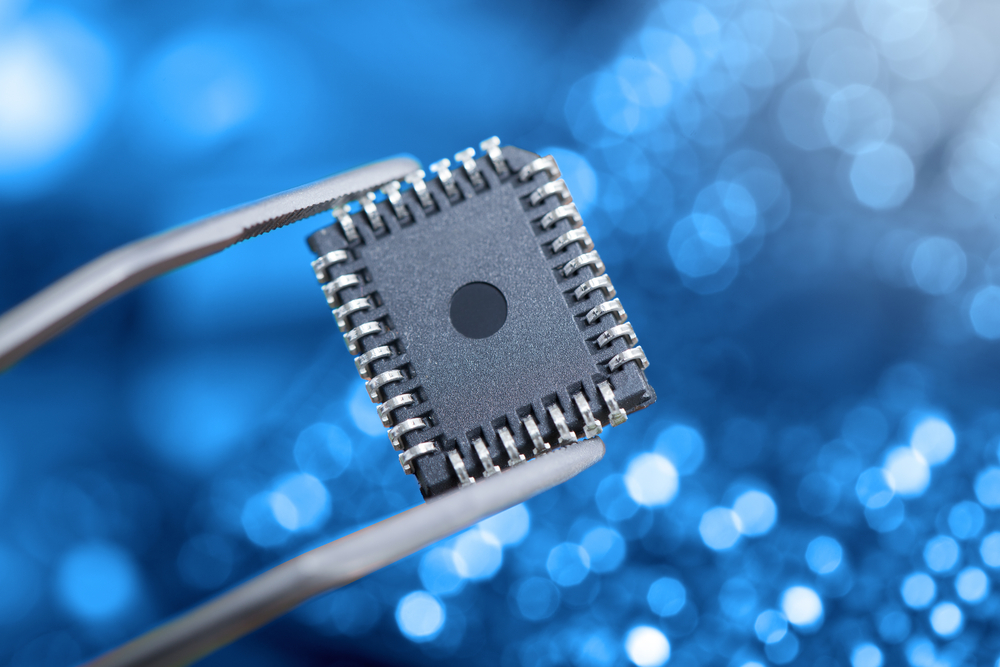
Carbon nanotube chips are not only smaller (or substantially more powerful at comparable size), they also operate more quickly and more efficiently while generating far less heat than today’s silicon chips.
There is almost no explanation required to break down the potential developments that carbon nanotubes would allow in the software and hardware realm. Smaller devices, more memory, faster speeds, less overheating, and longer battery life are all obvious implications, and the degree of improvement over today’s technology will not be incremental, it will be radically transformative.
Moore’s Law, which states that every 18 months the number of transistors on a computer chip will double has held true since it was first posited in the 1960’s. However, in recent years, the capacity of chips has slowed down. After all, there is only so much space on a chip. Carbon nanotubes could create the next iteration of Moore’s Law.
The higher power, smaller size, lower heat, and faster speeds of carbon nanotube-enabled technology also promises radical improvements over today’s technology. X-ray machines could be more precise with greater processing power, digital cameras could become staggeringly faster and higher resolution, and smartphones could easily offer as much memory as today’s laptop computers.
There are myriad medical technology experiments underway involving nanotubes which promise to make the ways we treat many diseases far more advanced and less invasive.
Ingestible sensors and cameras could allow doctors to closely examine internal conditions that used to require invasive biopsies; the conductivity and heat resistant properties of carbon nanotubes will facilitate more targeted, less damaging radiation and laser treatments than ever before.
Nanotubes’ small size, flexibility, and organic chemical makeup offer a promising fusion of health science and high technology that seems long overdue.
Sci-Fi Brought to Life
There are also truly sci-fi implications of energy storage in carbon nanotubes. From using their capillary-style tube structure to hold hydrogen gas in fuel cells to creating complex batteries with the intricate latticework and, the energy storage, power transmission, and massive strength of nanotubes has the potential to open up new avenues of alternative energy.
Nanotubes also possess some unique photovoltaic properties which make them one of the most promising material breakthroughs in solar energy. Because of their structure, carbon nanotubes have applications in nearly every phase of solar power collection and in every type of solar panel, from acting as acid-doped light harvesting media to fitting into the photovoltaic layer to acting as transparent electrodes; then, nanotubes can be used in batteries to store the energy they also gather from sunlight.
As if that weren’t enough, the nanoscopic nature of carbon nanotubes means that they will soon act as reusable water filters–and not just for home drinking water. While it has potential to filter drinking water more effectively and with far longer-lasting filtration media than today’s carbon-based filters, the world-changing benefits of carbon nanotubes in water filtration come from researchers’ breakthrough discovery about nanotube-based ‘paper’ that is hydrophobic, meaning it does not absorb water, but can soak up other organic compounds.
Oil and other toxic waste spills could effectively be ‘mopped up’ by nanotube-based mobile filtration systems, which could transform the way we clean up our planet after contaminating precious water resources.
Today, when you hear ‘wearable technology,’ you think a smartwatch or perhaps Google Glasses. Soon, that will mean exercise shirts with heart rate monitoring, hospital garments that monitor patients’ vitals, and even casualwear that is capable of monitoring long-term health for a variety of pre-existing conditions.
Nanotubes can be woven into fabric without changing the feel or appearance while creating miniature conductive pathways and ‘circuits’ that feed the information to a smartphone or other data monitoring device.
The Future Is (Almost) Now

There are still some technical hurdles to overcome before carbon nanotubes become mainstream in consumer electronics and other public-facing applications, but it is only a matter of time before these tiny graphite-based tubes become a big part of our daily lives.
Many applications are already in testing or in use in limited capacities before large-scale industrial and consumer products are ready for mainstream use. Many more are waiting on nanotubes to see widespread manufacturing adoption so that potential bugs are worked out and pricing is low enough to integrate the material into pre-existing designs.
The rest are somewhere between theoretical and fully tested, but access to the manufacturing technology will only make nanotubes more ubiquitous and the most sci-fi applications closer to real-life sooner.
So, next time you see ‘Nanotechnology’ on a label or in an article online, this is what they’re talking about. It just might be something that can change the world.
OnePlus 6 vs. OnePlus 5T vs. OnePlus 5 vs OnePlus 3T camera shootout
Andy Boxall/Digital Trends
Usually, comparing the camera on four consecutive phone releases from any other major manufacturer would be pointless. That would represent three to four years worth of development, and therefore the features, quality, and technology would differ greatly. However, OnePlus is not your everyday manufacturer.
The OnePlus 3T came out in November 2016, the OnePlus 5 in June 2017, the OnePlus 5T in November 2017, and the OnePlus 6 — the company’s latest release — in May 2018. Four phones in the space of a year and a half, which is less time than many people spend owning a single phone, let alone upgrading three times.
How much has changed for OnePlus during that time, in terms of camera performance and ability? OnePlus’ cameras have never stunned, but they’ve been strong performers without any frills. Is the OnePlus 6 substantially better than those that came before it? To find out, we took these four OnePlus phones on a long weekend in the surprisingly sunny U.K., and here are the results.
Camera specs
Before we get into the photos, how about the on-paper specs? The OnePlus 3T, being the oldest, is the most different, primarily for having a single camera lens rather than a dual-lens setup like the other three. It has a 16-megapixel Sony IMX298 sensor with an f/2.0 aperture, HDR, and optical image stabilization (OIS).
The OnePlus 5 combined a 16-megapixel Sony IMX398 wide-angle, f/1.7 aperture lens with a second telephoto lens, the Sony IMX350 with an f/2.6 aperture. It uses electronic image stabilization (EIS), and introduced both a 2x hybrid zoom and a portrait mode. The OnePlus 5T used the same front camera sensor, paired with a 20-megapixel IMX376X, f/1.7 aperture lens. It also uses EIS, and has a portrait mode.
Finally, the new OnePlus 6 uses a Sony IMX519 16-megapixel lens with an f/1.7 aperture, OIS, and EIS. The secondary lens is the same IMX376X as the OnePlus 5T. Again, the OnePlus 6 provides a hybrid zoom and a portrait mode. We’re only comparing still photography taken with the rear cameras here.
Camera apps
The OnePlus 5, 5T, and 6 all run Android 8.1 and OxygenOS 5.1, meaning the camera app across all three phones is identical. Our OnePlus 3T has Android 8.0 with OxygenOS 5.0.1, and the app is slightly different. However, it’s refreshing to see the three main previous phones all providing the same software experience. Try finding that on another phone outside the iPhone and Google’s Pixel devices.
It’s a basic app. Swipe left or right to switch between portrait and video, and swipe up to switch features, including panorama and a “Pro” manual mode. For our tests, we shot entirely in automatic, simply pointing the camera and pressing the shutter release. In some situations, we forced the camera to focus on a particular area, ensuring a consistent look across all four images.
Provided you aren’t expecting the many features offered by Huawei, Samsung, and others, the OnePlus camera app is refreshingly easy to use, and almost entirely bloat-free. There’s nothing here you’ll never bother to try out. On the flip side, there’s little to experiment with, and it doesn’t inspire creativity like the Huawei P20 Pro, for example. It’s a camera for people that want to take good photos, and that’s all.
-
1.
OnePlus 6 -
2.
OnePlus 5T -
3.
OnePlus 5 -
4.
OnePlus 3T
Beware of Trains
Our photo test took place on the Isle of Wight, a small island off the south coast of England for those who don’t know it. It’s a popular holiday destination, known for its traditional English beauty, slow pace of life, and amongst other things, a still operating steam railway at Havenstreet.
It turns out that the camera apps aren’t the only thing that stays consistent across the last four OnePlus phones, because like many of our other examples, there’s little to split the pictures. Interestingly, the OnePlus 3T tends to group with the OnePlus 6, while the 5 and 5T huddle together.
There are differences, but the one you prefer will likely come down to personal preference. Examine the photos closely, and there is less detail in almost all aspects of the OnePlus 3T’s photo, from the rocks in front of the signpost, to the aging and patina on the red sign itself. The yellow flowers are brighter and more vibrant too.
If you think splitting the other three will be as easy, it’s not. They’re almost identical in the forefront of the frame, with the main differences coming in how each handled the blue sky, and the trees in the far distance. From the OnePlus 5 through the 5T, and to the 6, you can see the sky get progressively more blue, and the trees get less green. The change is incredibly subtle, but the OnePlus 6 is undoubtedly the best balanced image here; but the OnePlus 5T is very close behind it.
Winner: OnePlus 6
-
1.
OnePlus 6 -
2.
OnePlus 5T -
3.
OnePlus 5 -
4.
OnePlus 3T
Culver Down
This viewpoint gives a commanding view over the coastline and towns in the surrounding area, along with access to Bembridge Fort, which dates back to 1860. Again, we have to look at the blue sky to separate the four cameras. This time, the OnePlus 3T holds its own when looked at casually, creating a beautiful contrast between the green countryside and blue sky. The clouds are a little muddy though, and it’s lacking detail along the coastline.
The OnePlus 5 and 5T are almost inseparable, with the same slightly washed out sky, which doesn’t look like it did in real life. The cliff face looks realistic when zoomed in, but the overall view isn’t one we really like. We like the OnePlus 3T picture, even though it’s not technically very good; but the OnePlus 6 smashes it when it comes to detail and color balance.
Winner: OnePlus 6
Flower
-
1.
OnePlus 6 -
2.
OnePlus 5T -
3.
OnePlus 5 -
4.
OnePlus 3T
While walking along the cliffs at Culver Down, we tried out the portrait mode on a flower. The OnePlus 3T has a single camera lens, but because the subject is very close, it still managed to capture a great bokeh (with strong blur behind the subject) shot. In fact, when you examine the pictures, the OnePlus 3T’s bokeh picture is more realistic that the OnePlus 5’s picture. The OnePlus 5 fails to recognize the flower’s edges, and blends them into the background, making the image unpleasant and unrealistic.
The OnePlus 5T fares better, as the gradual blurring is more subtle, but it’s still not perfect. The OnePlus 6 does the best job out of all the dual-lens phones, isolating the subject almost in its entirety. It also captures the dappled light effectively, and it’s a great-looking picture. However, the OnePlus 3T keeps more of the flower in focus and shows more detail, giving it a surprising win here.
Winner: OnePlus 3T
-
1.
OnePlus 6 -
2.
OnePlus 5T -
3.
OnePlus 5 -
4.
OnePlus 3T
Beach huts at night
All four cameras have varying apertures and stablization technology, suggesting some may not produce great night shots. On an evening walk along Prince’s Esplanade in the yachting town of Cowes, we took this great opportunity to measure performance. The OnePlus 5 and 5T are the first to fall here, taking basically the same photo, and suffering for the lack of OIS compared to the OnePlus 3T and 6.
However, the OnePlus 6 trounces all three, perfectly balancing the dusk sky, calm water, and dark huts. Take a look at the tide markers in the sea in comparison to all the others, and you’ll see a sharpness and clarity the previous phones cannot match. None of the others show just how pebbly the beach is like the OnePlus 6 either. An easy win for OnePlus’s latest phone here.
Winner: OnePlus 6
-
1.
OnePlus 6 -
2.
OnePlus 5T -
3.
OnePlus 5 -
4.
OnePlus 3T
Food
Have you really visited a seaside town in the U.K. if you didn’t eat fish and chips at least once? The answer is, of course, no, and our culinary photographic choice was the classic scampi, chips and peas. It was lovely, before you ask. The four cameras were once more split into two groups, with the OnePlus 3T and OnePlus 6 taking similar photos, and the OnePlus 5 and 5T being too close to call.
We’re judging here on the social share-ability of each photo, because that’s the reason why we take pictures of our food. Both the 5 and 5T darkened the scampi down, and made it look less appetizing. The colors and texture captured by the OnePlus 3T and 6 are similar; but the OnePlus 3T managed to take a photo with more detail on the crispy surface of the scampi. It looks so good, we could eat it again right now. Therefore, it’s our winner.
Winner: OnePlus 3T
-
1.
OnePlus 6 -
2.
OnePlus 5T -
3.
OnePlus 5 -
4.
OnePlus 3T
Cowes and Yachts
Cowes is famous for its yachts, and this photo is taken in East Cowes looking out over the bay. Here, we used the 2x hybrid zoom feature on the OnePlus 5, 5T, and 6, along with the digital zoom on the OnePlus 3T. The OnePlus 3T performs better than you may think, and the quality loss is minimal in the boats, and the sky is a beautiful blue. However, the houses on the shore are washed out and lacking in detail, and there’s almost no detail in the water. Hardly a surprise, but better than we’d initially expected.
The OnePlus 5 takes the better image compared to the 5T, with a less muddy sky, and more pleasant waters. The level of detail when zoomed in even further is identical though. The OnePlus 6’s photo has greater detail in the water and a better blue sky than the 5 and 5T’s picture; but we wish the blue were as vibrant as the OnePlus 3T. It’s still the winner though.
Winner: OnePlus 6
-
1.
OnePlus 6 -
2.
OnePlus 5T -
3.
OnePlus 5 -
4.
OnePlus 3T
The Devil’s Chimney
One of the island’s hidden gems, the eerie, atmospheric Devil’s Chimney was once used by smugglers bringing illicit goods up the cliff from the shore. It’s a thin, deep cut in the rock where sound doesn’t seem to penetrate as you climb the steps. You definitely get the feeling it wouldn’t be wise to hang around.
The conditions here were difficult. The sun was shaded by the rock and trees, and we wanted to capture the steps as they disappeared into the cliff. The OnePlus 3T doesn’t perform well, and is unable to balance the color, detail, and lighting conditions seen in the other photos. The OnePlus 5 and 5T once again take the same photo.
Compare it to the OnePlus 6 and the difference is immense. The color of the rock, the texture of the ground, the green of the foliage, and the darkness of the path is completely different. We prefer the way the OnePlus 6 captures the scene, but can see how others could prefer the OnePlus 5/5T’s handling of the environment.
Winner: OnePlus 6
Conclusion
It’s a clear win for the OnePlus 6. It easily won five out of the seven categories, and came second in the other two. However, the biggest shock here is how well the OnePlus 3T performed. It won two categories, while the OnePlus 5 and 5T didn’t win any, although they did come close in a handful.
The good news is there is enough of an improvement in the OnePlus 6’s camera to warrant an upgrade from all three phones that came before it, should you be considering it. Our photos illustrate the improvement in low light, color balance, and exposure you’ll find using the OnePlus 6, especially if you own a 5 or a 5T. If you’re interested in knowing more about the phone itself, we’ve got a complete review here.
Editors’ Recommendations
- OnePlus 6 vs. OnePlus 5T vs. OnePlus 5: Is it worth it to upgrade?
- OnePlus 6 vs OnePlus 3T vs OnePlus 3: Is the new phone worth the upgrade?
- OnePlus 6 review
- Everything you need to know about the 6-inch OnePlus 5T
- OnePlus 6 vs. Samsung Galaxy S9 Plus: Which big phone is better?
You could soon be using your iPhone to unlock doors and ride transit
Apple is making preparations to expand the near-field communication (NFC) capabilities of the iPhone beyond Apple Pay transactions, a report suggests.
The update could be announced as early as next month during the iOS 12 keynote at the WWDC — Apple’s annual developer gathering that kicks off on June 4.
NFC chips are built into many of today’s mobile devices, allowing for secure wireless communication between a device and a receiver when one is held close to the other.
The new functionality would allow owners of Apple’s NFC-enabled handsets — including the iPhone SE, iPhone 6 and later — to unlock house, car, office, and hotel room doors while also bringing transit fare payment capability to many more people, The Information reported over the weekend.
The news outlet points out that although Bluetooth technology is already used for operating a number of smart locks using the iPhone, NFC technology offers a more secure system.
Apple has reportedly been working with HID Global — an American secure identity solutions firm — to bring broader NFC functionality to the iPhone. While you can already use NFC-equipped iPhones to whiz through transit turnstiles in some cities in the U.S., U.K., Japan, China, and Russia, the expectation is that the greater functionality will allow the iPhone to operate as a transit card on a far grander scale, in many more locations around the world.
The Information’s unnamed source said the tech company has been testing the functionality with employees at its new headquarters in Cupertino, California, allowing them to use their iPhones to unlock doors (when they notice them) for access to buildings and offices around its huge new campus.
The update seems like a long time coming. Back in 2014, soon after the launch of the iPhone 6 — the first Apple phone to incorporate NFC technology — there were reports that the company was exploring ways to use NFC for secure access to buildings and as public transit tickets. In other words, pretty much the same as we’re hearing today, although that original report didn’t put a time frame on any possible launch.
This time around, we should soon know any plans Apple has for NFC functionality on its range of handsets. We’ll keep you posted.
Editors’ Recommendations
- How to make coasters that connect guests to your Wi-Fi with a single tap
- Boost your iPhone’s security just by tapping it against this gadget
- Apple iPhone X Plus: News, rumors, specs, and more
- So long to security? ‘GrayKey’ box picks the locks on Apple’s iPhones
- Apple’s wireless, mixed-reality glasses could launch in 2020
 AIVAnet