


Surgeons might soon train in VR simulations instead of using real cadavers
It’s not the most glamorous part of medicine, but cadavers, aka dead bodies used for training, are an essential resource for learners. Unfortunately, they are also not readily available. An increasing number of physician assistant and nurse practitioner programs, along with a shortage of donations, means that there is frequently a strain on supply. Could cutting-edge technology help?
Quite possibly so, suggests a project from Montpellier Medical University in France, Artec 3D and medical assessment company IMA Solutions. They are using the latest 3D scanning and virtual reality technology to create photorealistic virtual cadavers which can be used by students and professionals to carry out realistic dissections — without necessarily having to touch a real dead body in the process. The tool is being turned into an app, which is planned for release later in 2018.
“Two surgeons from the Montpellier Medical University city anatomy laboratory, Dr. Guillaume Captier and Dr. Mohamed Akkari, had the idea to create a VR application so medical students will be able to practice dissecting bodies in VR before attempting the task on a real cadaver,” Andrei Vakulenko, chief business development officer at Artec 3D, told Digital Trends. “In the app, there will be a practice mode and also an examination mode for the professors to run. In the practice mode, the user can select a part of the anatomy, will be given information on how best to dissect this area and can attempt it. In the examination mode, the student will need to answer questions and show his or her dissection ability. Once a student passes the examination mode, he or she will have sufficient practice and experience to try dissecting a real corpse.”
The cadavers in the app are 3D-scanned versions of real bodies. These were scanned with a metrological grade Artec Space Spider 3D scanner to ensure that the visuals look as realistic as possible. Vakulenko noted that the scanning had to be carried out very quickly because of the changes the body undergoes over time, and the fact that it needed to appear consistent in the app itself. The dissection itself can be carried out using haptic tools which will allow trainee surgeons to practice their operating skills.
“The app is still in development, but the plan is to make the dissection as realistic as possible, working at high 3D real-time refresh rates and also simulating the use of surgical tools with a device like the 3D Systems’ haptic device, which gives the actual sense of touch and physical pressure,” Vakulenko said.
Editors’ Recommendations
- 8 Amazing accessories that could make virtual reality even more immersive
- Haptic VR surgery isn’t for the faint of heart, but it could help surgeons
- Gaming is just the beginning. Here are 8 innovative ways VR is being used today
- 14 major milestones along the brief history of 3D printing
- Disney and MIT made a jacket that mimics feeling of snakes slithering on you
People are apparently using their phones too much and getting ‘numb thumbs’
Are you a numb thumber?
Smartphones have become a regular part of our daily lives. We use them to text, tweet, and stream videos, and all of this requires the use of our fingers — more often than not, specifically our thumbs.
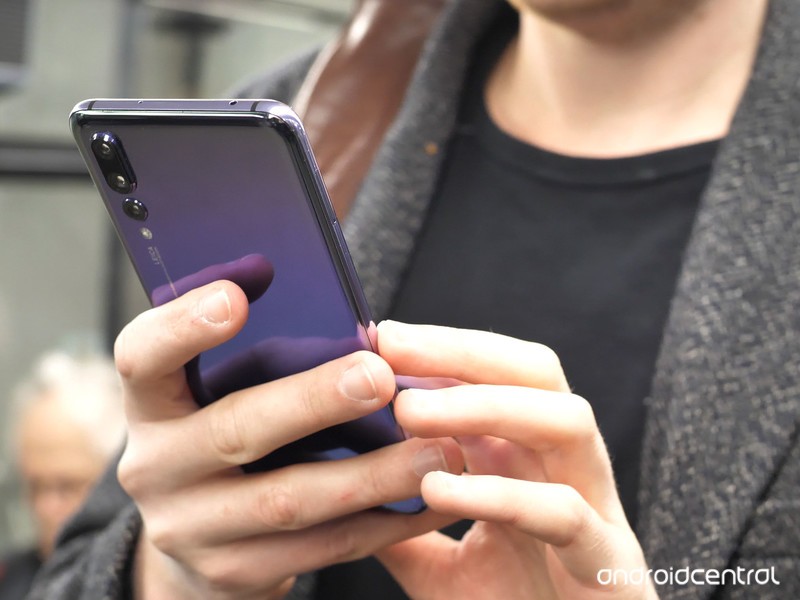
Nellie Bowles at The New York Times recently published an article called “Me and My Numb Thumb: A Tale of Tech, Texts and Tendons.” In it, Bowles talks about how, as she’s continued to use her phone day after day, she’s discovered a pain in her right thumb. She calls this “a depressingly modern condition in which the tendons around the thumb inflame as a result of repetitive strain,” but one day, it got pretty serious —
Eventually, my right thumb just stopped working. It could not muster the strength to press down on my phone. It was both numb and achy. And the pain that had started in my hand was now shooting down my arm. I had a problem, one I later learned was becoming common.
Bowles says she soon discovered that many of her co-workers and friends had experienced similar issues, and after speaking with her doctor, discovered she may have a condition called De Quervain’s Tendinosis. This is caused when a tendon is overused due to repetitive motions/actions, and as Bowles continues —
“It’s a crisis,” said Sanjeev Kakar, an orthopedic surgeon at the Mayo Clinic in Minnesota who specializes in hand injuries and has seen an increase in the number of thumb “overuse cases.” Dr. Kakar said he had noticed that the condition was spreading among adults and older people in particular.
Bowles also reached out to Professor of Communication Nancy Ann Cheever from California State University, who said —
We assume teenagers are using their phones more, but it’s actually not the case, because younger people tend to have a lot more awareness of their smartphone use. They have a more complete understanding of the harmful effects of smartphone use because they’ve been taught about it since they were kids.
I’ve personally never experienced anything along these lines, but a couple of my family members have previously complained about their hands and thumbs hurting from holding/using their phones as often as they do.
What about you? Do you have numb thumbs? Let us know (if you can) in the comments below 👍
Phone addiction is making me sad and anxious, but so is the idea of quitting
Pick up the Samsung Galaxy Tab A tablet for just $150 today
This 8-inch tablet is down to an all-time low price via Amazon right now.
The Samsung Galaxy Tab A 8″ Tablet is down to $149.99 at Amazon for a limited time. This deal marks the lowest it’s ever dropped there by $10 and saves you $50 off its regular price.
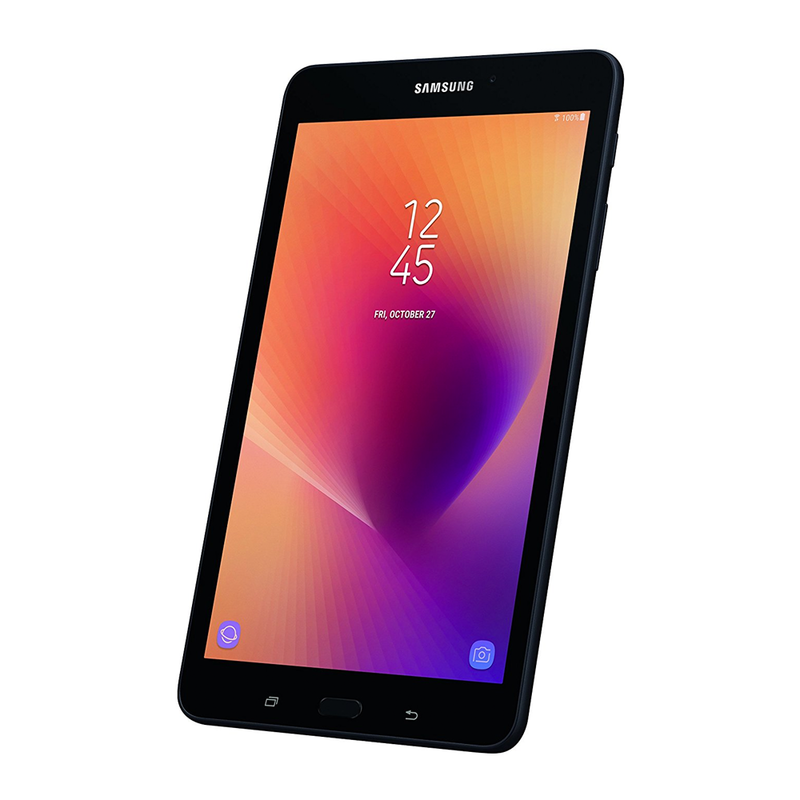 Carrying the Samsung Galaxy Tab A around is like having a giant smartphone to play around on. You can watch movies or TV, play games, read and send emails, browse the web and more. It comes with 32GB of internal storage, but you can add in a 128GB micro SD card with triple the storage space for an extra $37 right now.
This tablet can last for up to 15 hours while using the Internet, or up to 153 hours while just listening to music. It has a rear 8MP camera with flash, featuring HDR mode along with a 5MP front-facing camera. Over 160 Amazon customers rated it with 4.5 out of 5 stars collectively.
See at Amazon
SuperTooth TW1 Review: mid-range sound and price, complete with all its flaws

When it comes to truly wireless earphones, there’s really only a few different tiers. There are the budget models, which routinely run under $75 and generally have poor performance, the mid-range, which is about $100, and the premiums, which can run from $150 up to $250. The premium tier is where you’d expect to find earphones that include unique features, like audio transparency, companion apps and the like. The mid-range tier generally offers a similar hardware experience without the software support to enhance it. It’s in this mid-range tier that the SuperTooth TW1 falls.
Build & Design

There are only so many form factors for Bluetooth earphones. And while that can be a bit boring, it also gives us a great barometer for the difference between good design and bad design. When something works, it stands apart from the crowd in a special way. When something really doesn’t work, it stands out in a pretty crummy way.
Build
On the whole, I wish the Supertooth TW1 felt a bit more premium. It’s extremely lightweight, which is great, but that comes at the cost of feeling a little cheap. The two-piece mold has a clear seam, and the feel of the plastic leaves something to be desired.
Internally, the TW1 is pretty standard affair for as truly wireless headset. It comes with Bluetooth 4.2, and outputs your standard array of 20-20,000Hz. Each earphone holds an 80mAh battery, and the charging case (while I’ll talk about later) contains a 640mAh battery for a total of 14 hours of playtime.
Design

While the aesthetic design of the TW1 is nondescript – it’s highly unlikely anyone but an enthusiast will identify them at a glance – it has a few design quirks that set it apart from other earphones of its ilk.
Unlike many wireless earphones, which rely on outer ear hooks or shaped design to secure them in your ears, Supertooth has taken a slightly different approach with three sets of inner ear hooks. The tabs are silicon, which makes them very pliable and easy to insert. However, that softness also makes them a bit less secure than I’d like to see. The method of switching these tabs out, though is rather clever. Each one is held in place by an expanded, hard plastic tab that holds it in place, and all that’s needed to remove it is to stretch the silicon over the tab. It’s just as easy to secure in place.

Performance
In terms of sound quality, the Supertooth TW1 is pretty standard affair for a mid-range Bluetooth headset. It’s got solid clarity and depth of sound, but inadequate bass – as is typical of its tier. Bluetooth 4.2 means that you’ll get solid connectivity, but far from the bleeding edge. Unfortunately, Bluetooth 5 has been out for more than a year now and manufacturers are still churning out 4-series Bluetooth accessories.
The microphone on the TW1 is adequate but nothing spectacular and includes the now-characteristic distant quality on the other end of a call.
Charging Case

The TW1’s charging case is pretty uninspired. The texture of the case is okay, but it’s made of such thin plastic that it feels like a toy. It’s got a big, gross hinge that dominates the back of the case, with just a button to release the lid. There are two LEDs on the case; one for each earphone. It’s not as handy as you’d expect, really only displaying when you first insert the earphones into the case. The earphones are not the smallest around, and as such the charging case ends up being bulky and not particularly pocket-friendly.
Despite the design flaws, though the case is rather functional. The TW1 fits snugly inside the case, and it closes securely without concern of it opening accidentally. As mentioned above, it contains a 640mAh battery, good enough for 4 full recharges of the TW1 – 14 hours of play time. Unfortunately, as per the industry’s usual at the moment, the charging case still rocks the venerable MicroUSB rather than the modern Type-C USB.

Value
I’ll be frank – the price of the of the Supertooth TW1 is less than ideal. When compared to headsets with a companion app, such as the Jabra Elite 65t and Yevo 1, which can be tuned via software update, it’s tough to go back to an out-of-the-box, as-is experience.
Now, that’s not meant to be a criticism of the Supertooth TW1 specifically – more, a recognition of the plight of the mid-range Bluetooth headset. When compared to the price of a low-end headset and the high performance of a high-end one, mid-range Bluetooth earphones kind of flounder in middle. The TW1 retails for 99.95€ ($119.99) which makes it neither particularly expensive nor a thrifty purchase.
Obtaining a TW1, though is a bit tricky at the moment if you’re in the U.S. Currently it’s only available on Amazon in the German store, though that likely ships to most European countries. If you’re stateside, you’re a little out of luck for now.
Buy the Supertooth TW1 on Amazon.de
watchOS 5 Wishlist: Features MacRumors Readers Want to See Introduced in the Next Apple Watch Software Update
The Worldwide Developers Conference is just about a week and a half away, and while we’ve heard some rumors on what we might see in iOS 12 and macOS 10.14, watchOS 5, the next-generation software update for the Apple Watch, remains a total mystery.
With no idea what to expect, we asked MacRumors readers what new features and tweaks they would most like to see in the watchOS 5 update.
- Live step count complication – MacRumors reader Breezygirl would like to see Apple add a live step complication that lets you see how many steps you’ve completed at a glance, rather than just a complication that lets you know how close you’ve come to hitting your activity ring goal.
- Third-party watch faces – Third-party watch faces are highly desired by most Apple Watch owners on the forums, but so far, Apple has kept the Apple Watch locked down to control the design and interface of the device. As MacRumors reader Relentless Power suggests, a watch face store that includes a variety of watch faces from third-party developers and companies would be great.
- Activity app improvements – Right now, the Activity app requires you to hit your goals each and every day to keep a streak going, which can be difficult at times and allows for no rest. MacRumors reader SoYoung would like to be able to set rest days.
- Workout app improvements – In the same vein, MacRumors reader Rbart is hoping for a better workout app for running that’s closer in design to Strava with additional statistics, a complete history, best performances, and more. Honglong1976, meanwhile, would like to see automatic activity detection to alleviate the need to start a workout.
- Podcasts for Apple Watch – Multiple MacRumors readers would like to see a dedicated Podcasts app on the Apple Watch for listening to podcasts on the wrist-worn device.
- Off-wrist Notifications indicator – MacRumors reader Lennyvalentin would like to see the Apple Watch better able to keep track of incoming notifications even when off the wrist, with those notifications still showing up but with an indication to note that they were received while the Apple Watch was idle.
- Proximity notifications – There’s no way to set the Apple Watch to ping when it goes out of range of the iPhone, a feature MacRumors reader Justiny would like to see as a way to keep track of the iPhone and get a reminder if it’s left behind.
- Sleep tracking – This one is probably a long shot given that Apple suggests people charge their Apple Watches at night, but MacRumors readers would like to see native sleep tracking capabilities.
- Always-on display – Given battery constraints, Apple has never implemented an always-on display for the Apple Watch, which is another highly desired feature. The Apple Watch display comes on when the wrist is raised, but it would be nice to have always-on access to the time as is possible with a traditional watch.
- Better health analysis and suggestions – MacRumors reader Bluecoast would like to see Apple better take advantage of the health information it collects with the watch to add recommendations and coaching for those who are aiming to meet health goals, as well as deeper analysis.
Is there something you’re hoping to see in watchOS 5 that didn’t make it on our list? Make sure to let us know in the comments.
Related Roundups: Apple Watch, watchOS 4Buyer’s Guide: Apple Watch (Neutral)
Discuss this article in our forums
French chemists have an ingenious new use for rotten, discarded wine grapes
You can trust the French, masters of wine that they are, to find amazing innovations involving grapes. That is what a team of researchers at the University of Clermont Auvergne have done with research which seeks ways to transform the waste grape skins, stems, and seeds left behind during wine production into more durable plastics.
“In France, doctors recommend drinking a glass of wine per day because it is rich in antioxidants,” researcher Audrey Diouf-Lewis told Digital Trends. “The wine industry transform 25 percent of the raw grapes into residue composed by seeds, grape marc, and lees, which are also rich in the same polyphenols. Thus we studied the potential of these molecules as novel biobased stabilizers for polymers.”
In the human body, polyphenols play an important role in preventing or reducing the progression of diabetes, cancer, and neurodegenerative and cardiovascular diseases. In plastics, meanwhile, they can help prevent similar reactions which have the effect of making plastics brittle after they have been exposed to the light and air for long periods of time.
For their research, the University of Clermont Auvergne scientists placed leftover materials from Pinot noir grapes into a microwave, before freeze-drying the resulting liquid to make it into a powder. This powder was then incorporated into the molecular matrix of melted polypropylene, a plastic which is frequently used for packaging and containers.
Tested under accelerated aging conditions, untreated plastics started to crack after just 25 hours. However, plastic which had been made using the grape residue lasted for more than twice as long. While Diouf-Lewis noted that their process is not as effective as some commercial stabilizers, it has the benefit of being more eco-friendly — and there is the potential to improve its performance in later research.
“These new bio-based additives will mainly be used to strengthen plastics and bioplastics intended for outdoor application, as they are exposed to sunlight,” she continued. “This is the case [for] garden furniture, car headlights or plastic packaging.”
In the future, she noted that the team aims to study the effectiveness of biowaste from other industries, such as byproducts from the wheat industry. A paper describing the work was recently published in the Journal of Applied Polymer Science.
Editors’ Recommendations
- Awesome Tech You Can’t Buy Yet: Wine preservers, pocket typewriters, and more
- Is there horse in your hamburger? How blockchain could fight food fraud
- 14 major milestones along the brief history of 3D printing
- Scientists figure out how to monitor the brain activity of bats in midflight
- High-tech ‘best before’ label aims to ensure you never get food poisoning
Facebook and Google racked up $8.8 billion in lawsuits from one day of GDPR
Europe’s data protection law went into effect on Friday and technology giants Facebook and Google are already facing multi-billion dollar lawsuits for failing to comply with the General Data Protection Regulation. The 3.9 billion euro suit against Facebook and 3.7 billion euro suit against Google were filed by pro-privacy advocate Max Schrems, an Austrian lawyer, on behalf of unnamed individuals affected by products such as Facebook, WhatsApp, Instagram, and Google’s Android operating system. The total lawsuit amounts to nearly $9 billion.
As a long-time critic of Facebook, Schrems argued that the company is violating a provision of GDPR by forcing users to consent to share their personal data, and that the company has gone as far as blocking accounts of users who have not given consent. “In the end users only had the choice to delete the account or hit the “agree”-button — that’s not a free choice, it more reminds of a North Korean election process,” he said in a statement published on TechCrunch.
Speaking at the Paris VivaTech conference on Tuesday, Facebook CEO Mark Zuckerberg defended the company’s ad practices, arguing that “the vast majority of people choose to opt in to make it so that we can use the data from other apps and websites that they’re using to make ads better.” However, he didn’t go as far as offering users a choice on declining advertising, and the only option right now is quitting the network.
A similar lawsuit filed against Google alleged that users are forced to share their personal data to be able to use an Android device. Both Google and Facebook deny the allegations of GDPR violations, stating that they are fully complying with the new laws. “We build privacy and security into our products from the very earliest stages,” Google’s statement to The Verge reads.
“We have made our policies clearer, our privacy settings easier to find and introduced better tools for people to access, download, and delete their information,” Facebook’s Chief Privacy Officer Erin Egan wrote in a statement sent to various media publications, noting that the company had been preparing for GDPR for the past 18 months. “Our work to improve people’s privacy doesn’t stop on May 25th. For example, we’re building Clear History: a way for everyone to see the websites and apps that send us information when you use them, clear this information from your account, and turn off our ability to store it associated with your account going forward.”
If the allegations prove true, Google and Facebook stand to lose even more money, as regulators can impose fines of up to four percent of global revenue. The tough privacy laws have even forced some companies, like Pinterest-owned InstaPaper, to temporarily shutdown until it can comply. It’s unclear if European regulators will impose strict fines for first-time offences given that GDPR just recently went into effect.
“We probably will not immediately have billions of penalty payments, but the corporations have intentionally violated the GDPR, so we expect a corresponding penalty under GDPR,” Schrems said in a statement.
Editors’ Recommendations
- Facebook highlights privacy settings you forgot about as new tools roll out
- Here’s what we learned from Mark Zuckerberg’s EU hearing on privacy
- 9 things to know about Facebook privacy and Cambridge Analytica
- Senators craft bill to tame social media with privacy requirements
- Facebook’s photo tag suggestions could violate Illinois law — and cost billions
OnePlus 6 vs. Google Pixel 2 XL: What difference does $300 make?
By offering flagship-level specs at a price hundreds of dollars less than the competition, the OnePlus 6 has shown the world why it deserves to be known as the flagship killer. But what’s in a name, and how does the OnePlus 6 actually fare when it goes head-to-head with one of the top flagships of the moment? To find out, we put the OnePlus 6 against the best Google has to offer — the Google Pixel 2 XL.
Specs
OnePlus 6
Google Pixel 2 XL
Size
155.7 x 75.4 x 7.8 mm (6.13 x 2.97 x 0.31 inches)
157.9 x 76.7 x 7.9 mm (6.22 x 3.02 x 0.31 inches)
Weight
177 grams (6.24 ounces)
175 grams (6.17 ounces)
Screen size
6.28-inch AMOLED display
6-inch P-OLED display
Screen resolution
2,280 x 1,080 pixels (402 pixels per inch)
2,880 x 1,440 pixels (538 ppi)
Operating system
Android 8.1 Oreo
Android 8.1 Oreo
Storage space
64GB (with 6GB of RAM), 128GB, 256GB (both with 8GB of RAM)
64GB, 128GB
MicroSD card slot
No
No
Tap-to-pay services
Google Pay
Google Pay
Processor
Qualcomm Snapdragon 845
Qualcomm Snapdragon 835
RAM
6GB, 8GB
4GB
Camera
Dual 16MP and 20MP rear, 16MP front
12.2MP (with OIS) rear, 8MP front
Video
Up to 4K at 60 frames per second, 1080p at 240 fps, 720p at 480 fps super slow motion, HDR
Up to 4K at 30 fps, 1080p at 120 fps, 720p at 240 fps
Bluetooth version
Bluetooth 5.0
Bluetooth 5.0
Ports
3.5mm headphone jack, USB-C
USB-C
Fingerprint sensor
Yes (back)
Yes (back)
Water resistance
No
IP67
Battery
3,300mAh
DashCharge
3,520mAh
Fast charging
App marketplace
Google Play Store
Google Play Store
Network support
AT&T and T-Mobile
T-Mobile, AT&T, Verizon, Sprint
Colors
Midnight Black, Mirror Black, Silk White
Just Black, Black & White
Price
$530
$850
Buy from
OnePlus
Google, Amazon
Review score
4.5 out of 5 stars
4.5 out of 5 stars
Performance, battery life, and charging
Andy Boxall/Digital Trends
The OnePlus 6 comes with Qualcomm’s latest Snapdragon 845 processor, and the benchmarks from our OnePlus 6 review show that OnePlus is using that power well, with results that beat some of the flagships from this year. Being a 2017 flagship, the Pixel 2 XL doesn’t have the luxury of the Snapdragon 845’s power and instead relies on the older Snapdragon 835. In terms of benchmarking and power on paper, the OnePlus 6 has it beat. But in real-world terms, the Pixel 2 XL has the advantage of Google’s Android expertise — simply put, the Pixel 2 XL works so well with Android that it’s an exceptionally smooth mover, and though the OnePlus 6 is also silky smooth, it’s hard to separate them in real terms.
We need more time with the OnePlus 6 to be sure of its battery capabilities, but from our initial testing, the OnePlus 6 will last at least a day. That puts it on par with the Pixel 2 XL’s larger battery, but it remains to be seen whether the OnePlus 6 can stretch out for longer. In terms of charging speed, OnePlus’ Dash Charge is one of the fastest charging methods on the planet, with OnePlus promising a day’s worth of charge in 30 minutes. While the Pixel 2 XL is also a speedy charger, topping up 40 percent in just 40 minutes, we give it to the OnePlus 6 charger here.
It’s exceptionally hard to choose a winner here, and while the OnePlus 6 has the raw power and numbers to back it up, the Pixel 2 XL’s performance speaks for itself. This has to be a tie.
Winner: Tie
Design and durability
Julian Chokkattu/Digital Trends
To call the Pixel 2 XL’s looks divisive would be an understatement — while we like the unique two-tone blend of metal and glass, there’s definitely a difference of opinion, even in our offices. By contrast, the OnePlus 6 is one of the most gorgeous phones we’ve seen to date, with a beautiful mirror finish on the glass body. They’re both in line with the latest bezel-less trends, but the inclusion of a notch on the OnePlus 6 is sure to cause some consternation, but that may be balanced by the lack of a headphone jack on Google’s phone.
You’re going to want a case for both of these phones — glass may look amazing, but it’s only so strong and one careless moment could ruin your phone’s looks. The Pixel 2 XL comes with an IP67-rating, giving it some water-resistance, while the OnePlus 6 lacks an IP rating, so be careful around the toilet.
This is another tough category to judge — the OnePlus 6 is probably the more attractive phone, but we don’t find the Pixel 2 XL’s unique looks bad at all. For those to whom durability is a bigger issue, the water-resistance on the Pixel 2 XL is the clincher here. For others, the lack of headphone jack on the Pixel 2 XL will mean the OnePlus 6 wins. This is another draw.
Winner: Tie
Display
Andy Boxall/Digital Trends
You’ll find OLED tech in both of these screens, and they’re both crisp, and capable of showing a huge depth of colors and inky blacks. In terms of color reproduction and quality, there’s not much to really separate the two. However, you’ll find a much higher resolution (and therefore, a sharper display) on the Pixel 2 XL’s 6-inch screen, with a resolution of 2,880 x 1,440 pixels going up against the OnePlus 6’s 2,280 x 1,080-pixel display. While you might be hard-pressed to tell the difference in normal usage, the Pixel 2 XL’s display is the superior here.
Winner: Google Pixel 2 XL
Camera
Julian Chokkattu/Digital Trends
The OnePlus 6 comes with a dual-lens system in the rear of the phone, with the 16-megapixel and 20-megapixel lenses working together to provide an excellent camera experience. While we haven’t had a chance to really put it through its paces yet, the initial signs for the OnePlus 6’s camera are good. But it’s up against one of the greats here — the Pixel 2 XL has been on top of our list of the best camera phones for some time, and it’s going to take a monumental effort to shift it. What everyone else does with two lenses Google does proudly with one. It’s quite simply one of the best cameras in the business for shooting still images.
It’s more of a mismatch in video. The OnePlus 6 can shoot 4K video at a full 60 frames per second, as well as slow-motion video at 480 fps — the Pixel 2 XL can only shoot 4K at 30 fps and slow-motion at 120 fps. However, how much of a difference either one of those makes to your daily life is purely personal — for us, images are more important than video.
Without having fully completed our tests on the OnePlus 6, it’s impossible to deliver a real verdict here. The Pixel 2 XL is one of the finest camera phones around right now, but a good number of phones are nipping at its heels, or exceeding it in different areas. The OnePlus 6 could be one of them. This is a tie.
Winner: Tie
Software and updates
Andy Boxall/Digital Trends
If you want the most up-to-date version of Android, then you’re in luck. Both of these phones have the latest build of Android — Android 8.1 Oreo. If you prefer the stock Android experience, then the Pixel 2 XL is about as stock as you can get, while the OnePlus 6’s OxygenOS Android skin is still a pleasure to use.
In terms of update speed, while OnePlus is generally quite quick with updates, Google literally makes Android — so the Pixel range is always going to get the latest Android builds first. That includes the upcoming Android P — although both these phones can access the Android P beta right now.
Winner: Google Pixel 2 XL
Special features
Julian Chokkattu/Digital Trends
The OnePlus 6 is a flagship-level phone with a midrange price point — as such, there probably wasn’t much room to cram in extra features once the basics were polished. However, there are a couple of additional options that might catch your eye. There’s an optional gesture system, similar to the iPhone X and Nova Launcher software, as well as the slide-in Shelf, which shows recent apps, contacts, and other useful info.
The Pixel 2 XL is similar, being mostly a stock Android experience. There are a few additions though. Google Assistant is obviously closely tied into the phone, with the Pixel 2 range having the special “Now Playing” feature that identifies music around you without needing a command. Google has taken a page from HTC’s book with squeezable sides that trigger commands — here known as Active Edge. It’s useful, especially to activate Google Assistant without needing a voice command. Plus, there’s always Google’s Daydream VR.
There’s not much to pick from here, but we think the Pixel 2 XL edges its rival with just slightly more useful features.
Winner: Google Pixel 2 XL
Price
Here’s the big difference. You can grab the Google Pixel 2 XL right now, and buying it from Google means you can get the phone on any major U.S. carrier. Buying one SIM-free will set you back $850. In contrast, the OnePlus 6 will only set you back $530, but it’ll only work on AT&T and T-Mobile. Still, that’s one heck of a price difference.
Overall winner: Google Pixel 2 XL
That was one heck of a battle, and it’s a close result. Despite having the older hardware, the Pixel 2 XL’s close relationship with Android really means it comes out ahead, even against newer hardware. It’s an amazing piece of tech, and really showcases how well Google can tune software to match hardware perfectly. For our money, it’s the consistently superior of the two.
With that said, there’s really not much in it, and with the OnePlus 6 being more than $300 cheaper than the Pixel 2 XL, OnePlus’ newest flagship wouldn’t be a bad choice at all — especially if you can’t bear to lose your headphone jack, or if your budget (understandably) doesn’t stretch to $800 for a phone.
Editors’ Recommendations
- Huawei P20 Pro vs Google Pixel 2 XL: Can the P20 Pro dethrone Android royalty?
- LG G7 ThinQ vs. Google Pixel 2 XL: A brains-versus-brawn comparison
- OnePlus 6 vs. LG G7 ThinQ: Can the flagship killer sink LG’s latest?
- Flagship face-off: Samsung’s Galaxy S9 Plus vs. Google’s Pixel 2 XL
- Sony Xperia XZ2 vs. Google Pixel 2 XL: Newest Sony flagship tackles Android king
Net neutrality bomb threat suspect has a history of hoax calls
A federal grand jury has indicted Tyler Barriss on two counts of making hoax bomb threats, including one that famously delayed the Federal Communications Commission’s vote to repeal net neutrality in December, Engadget reports. He called a similar bomb threat into the FBI headquarters later that same month. Barriss was already in police custody, however, charged with manslaughter for orchestrating a “swatting” that resulted in the death of 28-year-old Andrew Finch in Wichita, Kansas, also last December.
The December 14 bomb threat to the FCC only temporarily delayed Chairman Ajit Pai’s effort to repeal Barack Obama-era regulations for ensuring a fair and open internet. The U.S. Senate recently voted by a narrow margin to overturn the FCC’s ruling, but the bill faces an uphill battle through the House of Representatives and a particularly business-friendly White House in order to keep net neutrality alive.
“Swatting” is the practice of calling in extreme hoax threats (hostage situations and the like) on unsuspecting victims, severe enough that the police will send in a SWAT team. In this case, it’s particularly popular among gamers and has gained traction in recent years as streamers make juicy targets for such a cruel, dangerous and non-consensual show. According to court documents, Casey Viner, 18, and Shane Gaskill, 19, got into an argument as teammates while playing Call of Duty: WWII, leading Viner to ask Barriss to swat Gaskill. Gaskill dared Barriss to do so but gave him the address of a home his parents owned and rented to Finch and family. While only Barriss is being charged with manslaughter for directly instigating the swatting, both teens are being charged with some combination of conspiracy, wire fraud, and obstruction of justice for their roles in the incident, as well as its cover-up by deleting direct messages after processing the severity of what went down.
Barriss’ association with the bomb threats should come as no surprise to anyone that knows him, as he has a history of similar incidents. In 2015, Barriss was arrested and charged for calling in a bomb threat to CNN affiliate KABC in Los Angeles, for which he served a two-year sentence.
Editors’ Recommendations
- U.S. Senate votes to overturn FCC’s repeal of net neutrality protections
- AT&T and Verizon lobbying for increased pricing power over smaller ISPs
- Rhode Island lawmakers look to limit internet porn with a $20 fee
- Oregon is the latest state to jump on the net neutrality bandwagon
- FCC puts a date on net neutrality’s tombstone ahead of Senate vote
Elon Musk Tweets Tesla Model Y will be revealed on March 15, 2019
Tesla
Elon Musk has set a date for the reveal of Tesla’s next vehicle, the Model Y. That date is supposedly March 15, 2019, after a curious and inquisitive Tesla Twitter fan tweeted Mr. Musk himself about the new model. Musk replied “March 15,” relating that date to the Roman calendar’s Ides of March.
“I just made that up, because the Ides of March sounded good,” Musk initially tweeted, only to reply to his own tweet: “But consider it real. We could unveil Model Y anytime from late this year to mid next year, so March 15 is about right.”
March 15
— Elon Musk (@elonmusk) May 24, 2018
But consider it real. We could unveil Model Y anytime from late this year to mid next year, so March 15 is about right.
— Elon Musk (@elonmusk) May 24, 2018
Despite the barrage of negative press, along with delays in Tesla’s Model 3 production, liability and safety woes with Autopilot, and financial troubles, it seems the company still plans to continue introducing new models.
For some time now, we’ve known about Tesla’s next up and coming vehicle, temporarily and unofficially dubbed the “Model Y.” It’s supposed to be a new compact all-electric crossover that sits below the larger, more expensive Model X, as the company seeks to take advantage of the hot crossover SUV boom.
According to what Musk shared on previous earnings calls, the new Model Y will get its own bespoke platform to any Tesla models preceding it, featuring a “completely different” architecture. Some information suggests Tesla might be reconsidering this new bespoke platform due to cost and ease of production, in favor of the preexisting Model 3 architecture.
According to a report from The Verge, the new Model Y will also ditch the traditional car-based 12-volt battery system in favor of a completely new, redesigned network that is said to simplify production and require less wiring. The new system supposedly requires only 328 feet of wiring in assembly and construction, compared to the current Model 3’s 5,000 feet worth of wiring and the Model S, with its 10,000 feet connecting all of its systems.
In that same report, Musk said Tesla intends to begin Model Y production sometime in late 2019. Given that Tesla has developed a reputation for missing deadlines, however, some are saying to take this date with a grain of salt. So far, the company only released a teaser photo of what the new car could possibly look like.
Editors’ Recommendations
- Tesla boss admits company had been too reliant on robots
- Tesla fires back after Model 3 fails to earn Consumer Reports recommendation
- This has not been an easy year for Tesla and its Model 3
- Performance option pushes Tesla’s mass market Model 3 into Model S territory
- Is the revolutionary Tesla Semi dead? Some analysts believe so
 AIVAnet