


Essential Phone 2 reportedly canceled, Andy Rubin considering selling the company [Update]
More than $100 million was used to develop Essential’s first products.
Updated 6:51 PM — Following Bloomberg’s report, Andy Rubin has since taken to Twitter with the following message: “We always have multiple products in development at the same time and we embrace canceling some in favor of the ones we think will be bigger hits. We are putting all of our efforts towards our future, game-changing products, which include mobile and home products.”
According to a new report from Bloomberg, Andry Rubin is considering selling his startup Essential and has canceled the launch of the 2nd-gen Essential Phone.

Per Bloomberg’s report —
The startup has hired Credit Suisse Group AG to advise on a potential sale and has received interest from at least one suitor, the people said. Essential is now actively shopping itself to potential suitors, one of the people said.
Playground Global, Rubin’s incubator that was used to launch Essential, is said to have raised around $300 million from the likes of Amazon, Tencent Holdings Inc., and Redpoint Ventures. Of that $300 million, one-third of it ($100 million) was used just for developing Essential’s first round of products. Considering we never saw more than renders of the Essential Home, it’s safe to say that the majority of that $100 million was focused on the first Essential Phone and its 360-degree camera attachment.
As Bloomberg continues —
Current discussions are focused on a sale of the entire company, including its patent portfolio, hardware products like the original smartphone, an upcoming smart home device and a camera attachment for the phone, said the people, who asked not to be identified because the talks are private. Essential’s engineering talent, which includes those hired from Apple Inc. and Alphabet Inc.’s Google, would likely be part of a deal. The company hasn’t yet made a final decision on a sale, the people said.
Essential has yet to comment on this report, and while a new buyer could come in and pick the company up out of this rut, there’s no way of painting this as good news. It’s unclear if Essential will continue to support the existing Essential Phone, but we’ll be sure to let you know as these details come to light.
Only 88,000 units of the Essential Phone were supposedly sold in 2017
Listen closer with Symphonized’s $12 Wooden XTC Noise-Isolating Headphones
Grab a pair at a discount.
For a limited time, you can pick up a pair of Symphonized XTC Premium Noise-isolating Headphones at Amazon for only $11.99. This deal is available in three different colors (black, red, and white) and saves you $13 off the regular price of these headphones.
We previously shared a deal on the very similar Symphonized NRG Headphones which are currently available for $16. The big difference there is that those feature a built-in remote control and come in six different colors.

The XTC in-ear headphones are handcrafted from real wood which helps deliver powerful acoustics. There’s a built-in microphone allowing you to answer calls hands-free and activate voice control, while the noise-isolating properties help drown out ambient noises around you. Three sizes of silicone ear tips are included as well so you can find the right fit for you, along with an eco-friendly carrying pouch to store them safely while not in use.
Symphonized includes a one-year warranty with purchase of these earphones. Close to 750 Amazon customers reviewed them with 4.1 out of 5 stars collectively.
See at Amazon
Samsung Ordered to Pay Apple $539 Million in iPhone Design Patent Retrial
The latest Samsung v. Apple trial wrapped up this afternoon after the jury decided that Samsung must pay Apple a total of $539 million for violating Apple’s design patents with five android devices sold between 2010 and 2011, reports CNET.
A total of $533,316,606 was awarded to Apple for Samsung’s violation of three design patents, while the remaining $5,325,050 million was for Samsung’s infringement on two of Apple’s utility patents.
Samsung and Apple were back in court to redetermined damages after Samsung appealed to the Supreme Court and said that the original damages award, which was set at $399 million after several appeals, was a “disproportionate” sum for the design violation.
The Supreme Court ordered the U.S. Court of Appeals to redetermine the damages amount, leading to today’s victory for Apple.
The core issue of the retrial was whether the damages should be based on the total value of the iPhone or if Samsung’s fee should be based on just the elements of the iPhone that it copied.
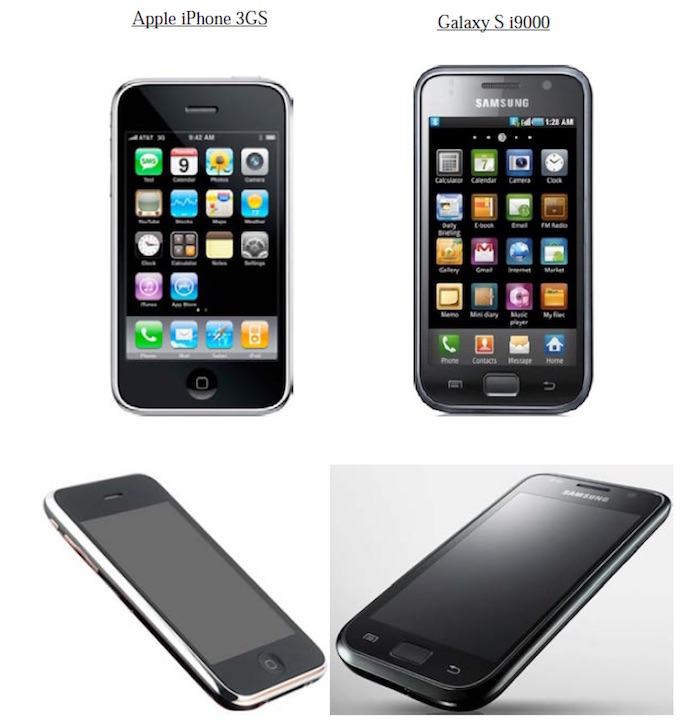
Apple argued that its payment should be based on the full value of the iPhone, while Samsung argued that it should pay a lesser amount. They’re seeking profits on the entire phone,” argued Samsung lawyer John Quinn. “Apple’s design patents do not cover the entire phone. They are entitled to profits only on [infringing] components, not the entire phone.”
Apple asked the jury to award $1 billion in damages, while Samsung asked jurors to limit the damages to $28 million. Unfortunately for Samsung, the jury sided with Apple, and the new award is more than Samsung would have had to pay had the retrial not happened.
In a statement, Apple had this to say: “It is a fact that Samsung blatantly copied our design. We’re grateful to the jury for their service and pleased they agree that Samsung should pay for copying our products.
Update: Samsung also gave a statement on the verdict: “Today’s decision flies in the face of a unanimous Supreme Court ruling in favor of Samsung on the scope of design patent damages. We will consider all options to obtain an outcome that does not hinder creativity.”
Tags: Samsung, lawsuit, patent trials
Discuss this article in our forums
Apple Rejects Valve’s Steam Link App Due to ‘Business Conflicts’
It looks like Valve’s planned Steam Link app for iOS devices isn’t coming after all, because Apple has rejected the app due to “business conflicts.”
In a statement, Valve said that Apple initially approved Steam Link for release on May 7, but ultimately decided to reject the app because of conflicts that had not been recognized by the original review team.
On Monday, May 7th, Apple approved the Steam Link app for release. On Weds, May 9th, Valve released news of the app. The following morning, Apple revoked its approval citing business conflicts with app guidelines that had allegedly not been realized by the original review team.
Valve appealed, explaining the Steam Link app simply functions as a LAN-based remote desktop similar to numerous remote desktop applications already available on the App Store. Ultimately, that appeal was denied leaving the Steam Link app for iOS blocked from release. The team here spent many hours on this project and the approval process, so we’re clearly disappointed. But we hope Apple will reconsider in the future.
Valve’s appeals have not been successful at the current point in time, and the company is now hoping that media attention may spur Apple to change its mind.
The Steam Link app for iOS, which was announced on May 9, is designed to allow Steam users to play their Steam games on an iPhone, iPad, or Apple TV using either a 5GHz WiFi network or a wired Ethernet connection to a host PC or Mac.
Valve was planning to launch the Steam Link app this week, and Valve had worked to add Steam Link support for the Steam Controller and Made for iPhone controllers ahead of the app’s debut.

Earlier this week, our sister site TouchArcade was able to go hands-on with the Steam Link app and said that it works so well that “it feels like there’s some kind of actual wizardry powering it all.” In what might have been a bit prescient, TouchArcade editor-in-chief Eli Hodapp said he was “dumbfounded” Apple was allowing it given how good the gaming experience was.
If you’re the kind of person who is always hungry for “real” PC-like game experiences on your Apple device, but have been dismayed by the amount of junk on the App Store, you can basically delete everything else but the Steam Link app. I’m still dumbfounded by Apple apparently allowing this on their platform, as I could see a very real situation where many people just straight up stop buying things from the App Store and exclusively purchase Steam games through Valve instead.
As Valve says, there are many other remote access-style apps available in the App Store, so the reasoning behind Apple’s decision is unclear. It is not known if Apple will ultimately end up reversing its position on the Steam Link app given the media attention, which has happened in the past, but we’ve reached out to the company for a comment.
Tags: App Store, Valve, Steam
Discuss this article in our forums
South Park: Phone Destroyer review – a raunchy card game based on the super popular show

These days almost every popular franchise has a mobile app or two. And South Park, the low-fi animated series about a group of prepubescent misfits living in Colorado, is no different.
The raunchy cartoon series has been recently turned into a mobile game. Called South Park: Phone Destroyer, this is a card-based strategy game set in the South Park universe, complete with tons of inappropriate content.
It’s a freemium game, which means you’ll be able to continually play the game, although you’ll encounter a fair share of pay-to-win opportunities and skill/pay walls.
How to get started
Download the app from the Google Play Store. It’s free to get and install on your device. Launch the game and start playing.
Impressions

The South Park kids have gathered to play Cowboys and Indians. You are the New Kid, who has been recruited by Cartman to join the forces against Stan’s unbeatable team. And as the New Kid you quickly learn the drill.
You start off by playing some solo campaign stages that are classic card-based strategy. Basically you’ll have to battle your way to the end of the stage to see what type of boss Stan summons. And defeat other characters in the process.
Ok, so everyone is dressed up in costumes (which range from Cowboys and Indians to Wizards, Aliens, and Pirates) and fight each other. The team chats with each other via texts.

The battles are mostly automatic. You have a deck of cards you use to summon characters onto the battlefield. There’s also an energy bar and as you automatically regenerate energy, you get to pull out cards onto the playground. The main goal is to defeat the boss each level, but if the New Kid dies first, you will have to start over.
The cards come in five categories: tank, ranged, fighter, assassin, and spell. Obviously, they come with their own customary strengths and weaknesses.
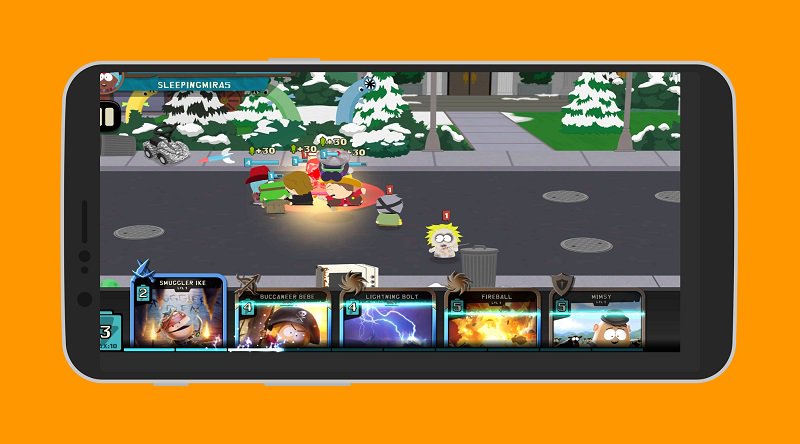
South Park fans will certainly appreciate all the familiar faces and voices, as well as the brand of dark humor that kept the TV show going for as long as it did.
Phone Destroyer is also peppered with PvP (player-versus-player). This mode works pretty similarly although this time you’re on a timer. So you could end up losing by having less health than your opponent when the time runs out.
With year completed mission or PvP battle, you get to open three lockers and uncover some loot like in-game dollars, gold coins or cards needed to upgrade my characters. As you accumulate things like in-game dollars you can spend them to purchase more upgrades or to open my lockers and get the loot you need.

As I mentioned above, Phone Destroyer does feature some additional themes beyond Cowboys and Indians. Unfortunately, it takes a lot of playing through solo stages and PvP to unlock them. And I mean a lot!
Then you’ll need to go back through the solo stages on a harder difficulty or play even more PvP matches, if you want to upgrade your cards or to progress at all. As you make headway, you’ll find the PvP maestro Don King Buttons, might not let you go any further unless you complete the required amount of PvP matches. Being forced into these PvP matches quickly become quite irritating.
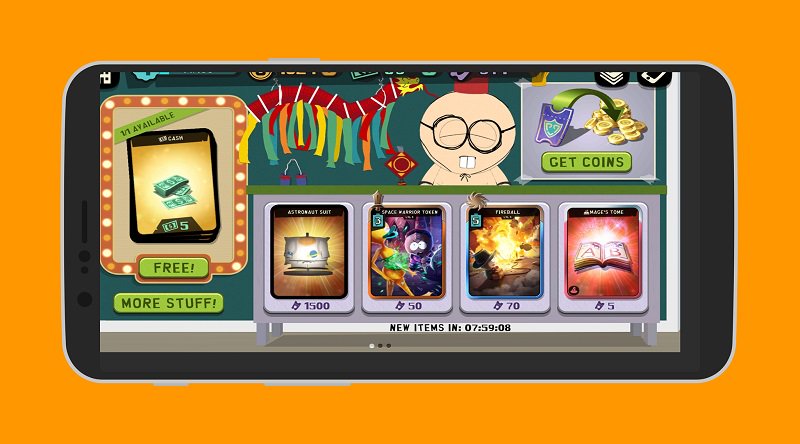
I get it, it really pays to have the most powerful cards, so I understand why the game encourages grinding, but playing the same missions and PvP battles becomes extremely dull after a while. It actually made me abandon the game for a few days, but I eventually returned with renewed strength (of mind).
The game also ends up eating a lot of your time. It’s not a game you pick up when you have a few minutes to spare and leave at any time. No, you’ll have to come back to it over and over again. That is if you want to unlock certain themes or advanced to more advanced stages.

Another thing that becomes apparent after spending some time with the game: tactical prowess doesn’t seem to matter that much. Most of the time, scattering as many units as you can on the battlefield tends to have the desired effect. No artifices needed.
To be frank, for the most part, I was only half-playing battles. Meaning I was paying attention occasionally while making sure I was dropping my best cards when things got nasty. You can change the course of the characters who advance in a similar pattern.

What about this New Kid character? Well, you get to customize him or her by changing their appearance (skin color, hair) and outfit (headgear and clothes). Unfortunately, although your character levels up, it has no actual bearing on gameplay. You get no additional development that affects the overall story.
Conclusion
Phone Destroyer is a challenging game which draws you in and gets you excited quite fast. However, it doesn’t do such a great job at converting this initial enthusiasm into addiction. It’s heavily focused on grinding, so if you don’t like doing pretty much the same thing over and over again to get upgrades, you will get disheartened fast. Additionally, I wish there was some added complexity to the overall story, which often feels flat.
tvOS 12 Wishlist: Features MacRumors Readers Want to See Added to the Apple TV in 2018
At the upcoming Worldwide Developers Conference, Apple will introduce new versions of iOS, macOS, tvOS, and watchOS, and for those latter two updates, we have no idea what to expect.
Historically, Apple hasn’t introduced major changes in its tvOS updates, but the operating system is still new and there could be some larger scale changes in the works for 2018. We’ve asked MacRumors readers what they’d most like to see in tvOS 12, and this is what they had to say.
- Atmos support – Apple promised to add Dolby Atmos support to the Apple TV, and has yet to do so. tvOS 12 would be the ideal time to do so, and it’s certainly a feature many MacRumors readers want.
- Audio passthrough – Along those same lines, MacRumors readers would also like to see support for digital audio passthrough.
- Picture-in-picture – A classic feature on a lot of television sets, picture-in-picture mode is not supported on the Apple TV. MacRumors reader Bbednarz would like to see picture-in-picture added for watching multiple shows, watching a show while using an app, and more.
- Safari – Apple isn’t likely to add Safari to the Apple TV to allow for web browsing, but it’s still a feature at least one MacRumors reader would like to see available as an option.
- Open screensavers – The Apple TV can only display screensavers that are sourced from Apple, but it would be nice to be able to add non-Apple screensaver options if desired.
- tvOS App Store access via computer – MacRumors reader HobeSoundDarryl has a long wishlist for tvOS 12, including a suggestion for an option to browse through tvOS apps on a Mac or PC to make it easier to discover tvOS apps.
- iCloud playlists for movies and TV shows – You can create playlists for Apple Music, and Leon1988 would like to see that same functionality made available for television shows and movies on the Apple TV.
- Multi-user support – Each Apple TV is limited to a single iCloud and iTunes account, but multi-user support, as suggested by MacRumors reader The 12th Man, would make it easier for different family members to have access to their favorite apps and channels and suggestions through the TV app without having to mix content.
What do you want to see added to the Apple TV with tvOS 12? Let us know in the comments, and make sure to check out the full tvOS 12 wishlist thread.
Related Roundup: Apple TVBuyer’s Guide: Apple TV (Neutral)
Discuss this article in our forums
Apple’s macOS reaches a historic milestone in its life span
Apple
Happy anniversary Mac OS X! It’s not quite an annual anniversary, but Thursday, May 24, is a big milestone for Apple’s desktop operating system. Mac OS X — which Apple has since rebranded to just MacOS — has been in service for as long as the classic Mac operating system was until Apple retired it.
Apple released its Mac OS X 10.0 operating system on March 24, 2001, which means that the OS has been in service for 17 years and 29 days, or the exact same number of days that the original classic Mac operating system on the Macintosh, which launched on January 24, 1984 and was kept in service until Mac OS X replaced it in 2001.
“Today the Mac’s second operating system era, powered by Mac OS X (now MacOS) has been in existence as long as the first era was,” Six Colors wrote of the news, noting a few caveats that may affect the timing. “There was a Mac OS X public beta. The funeral for Mac OS 9 wasn’t held until 2002. Classic Mode continued to function within Mac OS X until it was removed in Mac OS X 10.5 Leopard.”
The MacOS operating system was created when Apple co-founder Steve Jobs returned to Apple. After Jobs left Apple, he founded a new company called Next, and when he returned, Apple bought Next and merged Next’s software into Apple’s operating system development efforts, resulting in MacOS. Today, the roots of Next’s software code could be found across Apple’s various operating systems, like iOS, tvOS, and watchOS, powering smartphones and tablets, televisions, and smartwatches, respectively.
This new milestone arrives ahead of Apple’s planned developer conference in June. The company is expected to unveil updates to its software platforms, and it’s widely anticipated that Apple will announce its next version of MacOS and iOS on stage at its Worldwide Developers Conference keynote. Though those updates won’t mark a monumental transition — like the switch from the classic Mac operating system to Mac OS X — there have been rumors that Apple could be exploring new processors to power its Macs.
Apple is not one to shy away from embracing new technologies. In 2005, Apple embraced Intel and used the company’s x86 processor — Intel’s seventh-generation processors power Apple’s latest computing products today — in a dramatic switch away from the PowerPC architecture made by Intel rivals IBM and Motorola. After Apple launched the iPhone, it made its own A-series processors based on designs from ARM Holdings, and the iPhone X’s A11 Bionic chip outperformed Intel’s laptop processors in synthetic benchmark tests. Those rumors fueled further speculations that Apple could explore options to replace Intel as its silicon supplier in laptops, and Apple could move to a custom ARM-based processor in its MacBook.
Editors’ Recommendations
- Games on MacOS, iOS will get a graphical boost that even Mr. Spock should admire
- Here’s what we want from MacOS in 2018
- Support for external graphics on MacOS finally arrives, but on select devices
- Tim Cook doesn’t believe customers want MacOS and iOS combined
- Tim Cook says people don’t want iOS and MacOS to merge. What do you say?
These are the best Nokia 6.1 cases to keep your fantastic phone beautiful
Julian Chokkattu/Digital Trends
So you’ve bought a Nokia 6.1 (2018), and despite the tank-like build quality, you’re worried about keeping it in one piece before your next upgrade. That makes sense — budget handsets should last a good amount of time, and you don’t want a slip or tumble to affect that.
One of the easiest ways to put your mind at rest is to wrap your Nokia 6.1 in a protective case — but which one is best for you? We’ve done the hard work for you, narrowing down some of the best Nokia 6.1 cases that you can grab to protect your phone from the elements, bumps, and scratches.
Yiakeng Clear Case ($8)
So you want to slap a bit of protection on your phone, but you’re not keen on obscuring it from view. That’s fine — that’s exactly why clear cases are useful. Made from durable and soft-feeling thermoplastic polyurethane (TPU), this clear case from Yiakeng wraps around your phone and helps to shield it by providing extra resistance — the shock-absorbent TPU mitigates harsh jolts that might otherwise cripple your phone. There’s also a raised lip around the camera lens and the display to stop those areas from resting on surfaces and it adds a good amount of grip, too. It’s not going to be the most protective case in the world but it will provide a decent level of protection while still allowing you to show off your phone.
Buy it now from:
Amazon
Suesan Reinforced Clear Case ($8)
Looking for a clear case with a bit more protection? Suesan’s reinforced clear case could be the one for you. It’s also made from TPU, which means it has similar shock-absorbing qualities to other clear TPU cases on the market, as well as providing additional grip on your device. What really sets this case apart from other clear cases though, is the inclusion of some additional reinforcements that help to bolster your device against drops. It’s known that the corners of a device will usually be the part that takes the brunt of a drop, so Suesan added airbags to each corner of this case, effectively dispersing some of the damage before it reaches your phone. It’s bulkier than your usual clear case, but it does the job pretty well.
Buy it now from:
Amazon
Vinve Anti-Scratch Case ($5)
Your Nokia 6.1 has an attractive, all-metal style, but what if you want to give it a new look? Cases aren’t just for protection, they can be used to completely change the look of your phone. This case from Vinve has a leather and brushed metal look that gives your phone a subtle executive style, while also offering some great protection. It’s obviously not brushed metal and leather (not at this price), instead, it’s made from specially textured TPU that also boosts grip and gives some good drop protection. There is a hardened TPU edge forming a bumper around the sides of your phone, helping to stop scratches and other damage, while the thin design means it adds barely any bulk to your phone.
Buy it now from:
Amazon
Dretal Carbon Fiber-Style Case ($8)
Do your tastes run a bit more towards futuristic and sci-fi? Then check out this case from Dretal. Again made from our old friend TPU, this case has been styled into a duo of brushed metal and carbon fiber, with a look that is more than a bit science-fiction, and rather cool. The shock-absorbent TPU also comes with a hardened bumper edge and airbags at each of the corners, in order to help resist damage from falls and knocks, while the additional brushed metal textures and panels at either end help grip. It’s light, slim, and provides great protection and style for a bargain price.
Buy it now from:
Amazon
Osophter Leather-Style Wallet Case ($10)
A bit of class never goes amiss and there is no reason not to look classy even if you’re on a budget, thanks to this wallet case from Osophter. It’s not made from real leather, but most people will be hard-pressed to tell the difference when they see it. The PU leather used to make the outside of the case is durable, easy-to-maintain, and exudes an air of business executive. Best of all, wallet cases never look out of place in any environment, so this is definitely a case you don’t need to swap out for another one in a different situation. Your phone is held in place with a TPU inner shell, which provides all the usual protection you expect, while the wallet cover flips over your display when not in use, protecting your screen.
Buy it now from:
Amazon
Noreve Leather Wallet Case ($69+)
Your Nokia 6.1 deserves the best, and if you’re looking for luxury then you just found it. Noreve offers a massive range of leather cases for phones, and you would be hard-pressed to find many manufacturers that can top Noreve. While $69 for a case is a lot, especially when compared to other cases in this list, you get a whole lot for your money. The case is made of gorgeous genuine leather and a soft inner lining that nestles your phone and keeps it safe. If the smooth leather isn’t grabbing you, then you have the choice of many other materials and colors, from grained leather, all the way to the super-premium aged patine leather, so you can tailor your choice to fit your taste and budget. There is also the option to add a belt clip, and each wallet case comes with space for two credit cards.
Buy it now from:
Noreve
Maikezi Hybrid Kickstand Case ($8)
If you need something that can take a little rough and tumble, then you’re probably interested in a more rugged case. This case from Maikezi is a dual-layer case, which means it uses soft and non-absorbent TPU as well as the harder material polycarbonate (PC). What does that mean for you? It means this case comes with all the shock-absorbency of TPU, paired with the durability and lightness of PC — a great combination that works well together in protective cases. The PC outer shell has been molded to add grip, and the back also comes with a horizontal kickstand that is perfect for watching media on the go. While the kickstand is a little flimsy, the case really isn’t and should protect well.
Buy it now from:
Amazon
Editors’ Recommendations
- The best Nokia 7 Plus cases to keep your noteworthy Nokia untarnished
- Nokia 6.1 has Android One, takes funky ‘Bothie’ pictures, and is yours for $270
- Don’t live on the edge, get one of the best Galaxy S7 Edge cases
- The best LG G7 ThinQ cases to keep your LG phone looking new
- These are the best iPhone X cases to protect your new Apple investment
Microsoft patent could make playing ‘NBA 2K18’ in VR feel more realistic
Microsoft’s patent for an augmented and virtual reality accessory could make interacting with the virtual world feel more realistic by giving users more tactile feedback in the real world. The patent for a device called an electrostatic side clutch was originally filed in 2017 and was recently only publicly published by the United States Patent and Trademark Office. The side clutch, which Microsoft illustrated as an arm-worn accessory with haptic feedback motors, allows users to feel resistance when interacting in a virtual environment.
“While mixed reality and virtual reality systems may provide an immersive visual and auditory experience, such systems may not provide a satisfying tactile experience for the user, in which virtual objects feel like real objects,” Microsoft said, noting that its electrostatic side clutches “may be used for tactile feedback in mixed reality and virtual reality settings.”
If you’re playing a basketball game, for example, wearing the side clutch device on your wrist could allow the game to mimic drag as you’re attempting to make a free throw shot in NBA 2K18. “In particular, haptic device may be configured to provide resistive contact sensation in response to detection of contact between the body of the user in a virtual display object projected into a field of view,” Microsoft wrote in its patent filing. Potentially, the system could even allow you to feel if you’ve been illegally hand-checked in a game of virtual hoops.
In addition to the arm sleeve, a glove may also be worn to replicate the real-world resistive sensation. Microsoft detailed different configurations for how its side clutch, sleeves, and gloves would work, but in essence, the side clutch is coupled to the headset to allow the device to apply the resistive force at the appropriate time in VR or AR gameplay. The electrodes are placed on regions of the body that could move, like your hands, arms, or legs.
Since Microsoft officially entered the mixed reality space with the debut of HoloLens, it has been researching different ways users could interact with the virtual environments. A recent Microsoft patent hinted at using a wand to control the virtual world, and the company showed off some of its work in the augmented reality space at its Build developer conference.
Editors’ Recommendations
- Haptic VR surgery isn’t for the faint of heart, but it could help surgeons
- 8 Amazing accessories that could make virtual reality even more immersive
- Oculus wants to stretch your skin to see what it feels like to be human
- Oculus could be aiming to make VR a bit more real with these haptic gloves
- Facebook wants to make your virtual self appear as real as possible in VR
The latest Asus gaming monitor will be insanely expensive
The Asus Republic of Gamers-branded Swift PG27UQ desktop display for gamers will finally ship in late June. But hold on to your seat for the price — it’s $2,000. For that amount, you can buy a decent gaming desktop or laptop, or even a large, curved 4K HDR TV for your entire family can enjoy.
Key specs
Screen size: 27 inches
Panel type: IPS
Resolution: 3,840 x 2,160
Typical brightness: 300 nits
Max brightness: 1,000 nits
Typical contrast ratio: 1,000:1
HDR contrast ratio: 20,000:1
Response time: 4ms
Display colors: 1.07 billion
Max refresh rate: 144Hz
The ROG Swift PG27UQ is based on Nvidia’s G-Sync HDR reference design originally introduced in January 2017 to launch in products toward the end of the year. That never happened, given both Asus and Acer delayed their products. But Nvidia said in March that it was confident solutions would launch by the end of April.
Nvidia’s design focuses on increasing four key areas: brightness, contrast, color gamut, and refresh rate. In the case of the new ROG Swift panel, it has a typical brightness of 300 nits but a peak brightness of 1,000 nits, qualifying it as a certified DisplayHDR 1000 product. It also has an HDR contrast ratio of 20,000:1 and a typical contrast ratio of 1,000:1, support for 1.07 billion colors, and a maximum refresh rate of 144Hz at a 3,840 x 2,160 resolution.
The display relies on an in-plane switching quantum-dot panel, meaning you get rich colors and wide viewing angles. The quantum dot aspect means the panel relies on nano-sized crystals that absorb and emit specific shades of color, depending on the size of their core. Ultimately, quantum dots provide “precise” colors whereas a color generated by a single pixel in a typical LCD panel will bleed into the color of a neighboring pixel.
“With local dimming, its LED backlight is dynamically controlled across 384 zones, providing very high contrast for richer, more natural-looking dark scenes,” the company says. “It can selectively turn LEDs on and off to create a wide range of dynamic luminance.”
The new display includes a built-in ROG Light Signal in its stand to display the logo on a wall or backdrop. There is also a Light Signature projection kit to create and customize light effects to beam on your desktop surface, such as an illuminated custom logo. The panel supports the Aura Sync platform so you can synchronize the illuminated logo with the colors and effects assigned to your other supported devices.
On the connectivity front, the new G-Sync HDR display includes one HDMI 2.0 port, a headphone jack, two USB-A ports, and one USB-B port that connects to your PC. It also provides a five-way OSD Navigation joystick to manage the settings and a built-in ambient light sensor that adjusts the brightness levels of the display based on your current lighting conditions.
If you think the ROG Swift PG27UQ is crazy expensive, it’s no different than the other monitor in the G-Sync HDR duo: The $2,000 Acer Predator X27. It’s out of stock on Newegg and won’t return until the beginning of June.
Editors’ Recommendations
- The best HDR monitors
- Nvidia ‘confident’ monitors using its G-Sync HDR tech will arrive in April
- Philips claims a ‘world’s first’ with a 4K HDR display for PC arriving this summer
- Acer’s new 4K, HDR, 144Hz G-Sync gaming monitor will cost $2,000
- HP targets gamers on a budget with new Pavilion notebooks, desktops, and more
 AIVAnet