


Who Owns Who In the Tech World?
A few years ago, the idea of having big data and its possibilities to improve sales would make the worldwide market go to a craze. However, the tech companies back then didn’t know how to utilize the collected information. But, with the increasing thirst for information, tech giants today can analyze the raw data and turn this into useful statistics that help forecast future trends.
Today, it is a norm to see smaller companies being gobbled by well established giants who desire to create even more massive conglomerates. For example, a few years ago Rakuten acquired both Buy.com and Ebates, effectively spreading the company’s influence across the continental United States. While it may seem that there are hundreds of brands in the market, they actually have a lot in common (same owners, shareholders, etc.)
So, why do companies merge?
Eliminate Competition
In an attempt to eliminate competition, well established tech companies buy any startups that may be a threat to its operation in the future. Through this, the new company acquires a more significant market share and clientele dominance.
Increase the supply chain power
By merging with other companies, tech giants increase their geographical coverage and supply stores, therefore eliminating a level of costs such as transportation and consulting, among others. The merger also diversifies its products. This reduces the stretch of a company’s focus, helping it to concentrate on one operation, increasing its performance and profitability.
Tech mergers help gain a competitive advantage in the distribution and marketing networks. Rather than expanding to a new zone and start from the ground up, the alliance practically helps new companies gain thousands of customers overnight.
URL: https://www.16best.net/blog/the-web-world-who-owns-who/
How to Convert Several Images into a Single PDF Using Preview
Over the years, Adobe’s PDF file type has become a universally accepted method for sharing digital documents. The format’s cross-platform adoption means the documents can be viewed on almost any mobile device or computer, so it’s no surprise to find that macOS includes native support for viewing and creating PDF files.
In the Preview app, for example, it’s possible to create a single multi-page PDF document out of several separate image files. The feature is particularly useful if you need to share a number of scanned documents over email or digitize something for reference. Keep reading to learn how it’s done.
How to Convert Several Images into a Single PDF
In Finder, select all the images you want to include in the PDF. To do this, drag a box over several images files using your mouse cursor, or select them individually by holding the Command key and clicking them one by one.
Right-click (or Ctrl-click) one of the highlighted files and select Open With -> Preview in the contextual dropdown menu.
In Preview’s sidebar, drag the thumbnail images into the order that you want them to appear in the PDF document. Use the Rotate button in Preview’s toolbar to change the orientation of individual pages (drag a selection over multiple pages to rotate several at once).
In the Preview menu bar, select File -> Print…, or use the Command+P keyboard shortcut to bring up the Print dialog.
Click Show Details to expand the Print dialog and browse the full set of options. Make sure the All button is selected in the Pages options. Note that you can double-check the orientation of each image by clicking the arrows below the print preview, and use the Orientation buttons to correct any if required.
Select Save as PDF from the PDF dropdown menu in the lower left of the Print dialog.
The Save dialog will appear. Give your new PDF a name and choose a save location. Fill in the Title, Author, Subject, and Keywords fields if desired (these details are searchable in Spotlight). The Security Options… button also lets you optionally set a password to open the document, copy from it, and/or print it.
Click Save when you’re done.Note that the Save as PDF option can be accessed from the Print dialog window within a number of macOS apps, not just Preview. You can use it to create PDFs of web pages viewed in Safari, or Word documents opened in Pages, for example.
Tag: Preview
Discuss this article in our forums
Bitcoin’s profitability called into question as energy consumption rises
Energy consumption required to mine for Bitcoin may soon become too expensive for cryptocurrency mining to become profitable. It’s estimated that cryptocurrency mining can consume as much as 0.5 percent of the world’s energy by the end of this year, according to economist Alex de Vries.
“The Bitcoin network can be estimated to consume at least 2.55 gigawatts of electricity currently, and potentially 7.67 gigawatts in the future, making it comparable with countries such as Ireland (3.1 gigawatts) and Austria (8.2 gigawatts),” de Vries said. “Economic models tell us that Bitcoin’s electricity consumption will gravitate toward the latter number. A look at Bitcoin miner production estimates suggests that this number could already be reached in 2018.”
Using a series of mathematical models that take hardware, electricity, and cooling costs into account, de Vries was able to approximate total energy consumption using upstream chip production numbers. In the past, more accurate energy estimates were not possible because of the secretive nature of Bitcoin mining facilities, which keep their operations behind closed doors.
So much energy is required in mining because of the decentralized nature of Bitcoin. Because cryptocurrency relies on a peer-to-peer network to keep records of transactions, energy is needed to power large distributed networks of computers.
“Those computers collectively perform quintillions of calculations per second, each “mining,” trying to solve a math problem that will give it the right to form the next block on the chain,” Live Science said of the process. “And the winner every 10 minutes is rewarded with 12.5 Bitcoins. That’s more than $100,000 at the coin’s current exchange rates.”
To capitalize on the rewards, miners need to have facilities with numerous computers dedicated to mining, and these computers generate heat. In addition to the energy consumed to mine, these systems also require a significant amount of energy for cooling. In the past, it was estimated that the power required to mine for a single Bitcoin could power your home for an entire week. To help offset some of the cooling costs, operations like Miner One want to locate mining facilities in cooler climates, like in Sweden. Another startup is using the heat generated from mining to warm your home as an alternative to using energy to cool mining facilities.
Because of the high cost associated with mining, a university researcher misappropriated the institution’s hardware and electricity to obtain $8,000 to $10,000 worth of Bitcoin, which incurred a total cost of approximately $150,000. In another example, a mining facility in Russia was suspended for not paying for several million kilowatt-hours of electricity.
As a result of rising cost, malicious agents may be motivated to steal energy for their own mining operations. However, there will still be some who will continue to mine for Bitcoin at a loss, and those people may be motivated by ” libertarian ideology (supporting a payment network that does not rely on a central authority), or speculative reasons.” As energy costs continue to rise, cryptocurrency mining may no longer be a profitable enterprise.
Editors’ Recommendations
- How to mine Bitcoin
- Miner One takes Bitcoin mining to new heights with space mission
- What is an ASIC miner?
- What is Bitcoin mining?
- A New York city becomes first in the U.S. to temporarily ban Bitcoin mining
Here’s how to hack an Ikea lamp and transform it into a mixed-reality projector
Do you have access to an Ikea lamp, a 3D printer, a few electronics components, and a bit of free time? If so, you could hack together a pretty awesome creation — a nifty user interface projector that’s bound to enliven any home. Combining a lamp, laser projector, and Google’s Internet of Things software platform, Android Things, the smart “Lantern” projector can be used to create a range of augmented UI elements. For example, you could use it to create an augmented clock where your appointments are overlaid around a real-world clock. And that’s just for starters!
“Using the companion app for Lantern, anyone can assign ‘channels’ to display information to their choice of orientation,” Michael DelGaudio — a product design lead at Google, whose job is to envision and design products related to our connected future — told Digital Trends. “As of now, we have built a calendar overlay for a clock, a ‘currently playing’ song [status] to project onto a speaker, a star chart for the ceiling, and ambient weather for your desk. Anyone can create a channel for themselves, and we are excited to see what people will come up with.”
There’s plenty of buzz around augmented reality technology right now. For the most part, this has focused on use cases in which users are asked to view the world through their smartphone or tablet display in order to see the augmented elements. This project is different, since the augmented interface is actually projected onto the world in front of you, something referred to as “mixed reality.” At present, this is predominantly a fun home hack, but long term, team members are serious when they suggest it could be an alternative to our regular screens, giving us a user interfacethath appears when we need it and fades away when we don’t.
“The team wanted to explore the relation between augmented reality and everyday objects,” DelGaudio saidd. “We started by sketching possible containers that a projector might sit inside while in a home. A lamp is a natural fit because it is movable and already projects light. From there, the team iterated on various housing configurations and interaction design for assigning content, using the physical form.”
If you’d like to build your own Lantern, step-by-step instructions can be found on the website Hackster.io. If you’re wondering how to spend your weekend and fancy picking up a few new skills in the process, there are worse things to do than check out what could possibly be the computer interface of the future.
Editors’ Recommendations
- The best home theater projectors you can buy
- Awesome Tech You Can’t Buy Yet: Glamping hammocks, plasma lighters, and more
- Weird VR project shows you life through the eyes of a frustrated Roomba vacuum
- These 8 portable projector deals let you enjoy big-screen video without a TV
- What is a smart plug? Here’s all you need to know
Global financial giant Goldman Sachs is launching its own cryptocurrency
While the number of cryptocurrencies has exploded in the last few years, so too has skepticism about many of them. Companies like Microsoft, Google ,and Facebook have all decided to ban ads for these digital currencies — and a big reason for that is concerns about possible scams, bad actors, and a general lack of adult supervision in the field. Wouldn’t it be good if we could have a financial name we could trust in the cryptocurrency mix?
If that’s the way you think, you may well be pleased to hear that Circle, a payment startup owned by none other than multinational investment banking leviathan Goldman Sachs, has just announced the launch of its very own bitcoin rival. Called Circle USD Coin, it’s the first cryptocurrency to be created and released by one of the world’s leading financial giants. Yes, that is kind of the antithesis of the countercultural mentality that spawned the likes of Bitcoin. But it’s also a familiar name and, as the continued popularity of McDonald’s and Hilton Hotels around the world shows, that’s a big selling point for many people.
Helping further reduce volatility is the fact that, unlike a lot of other cryptocurrencies, Circle is tied to the U.S. dollar. People owning the cryptocurrency must own one dollar for each Circle USD Coin they have — with the hook being that, essentially, this is a U.S. dollar that operates on blockchain technology.
“A price-stable currency, such as a token pegged to the U.S. dollar, is critical for enabling mainstream adoption of blockchain technology for payments, as well as for supporting maturation in financial contracts built on smart contract platforms, such as tokenized securities, loans, and property,” a press release for the new currency notes. “There are several interesting approaches to solving this need, spanning algorithmic reimaginations of money supply to crypto-backed tokens to fiat asset-backed tokens.”
This does take out some of the thrill of cryptocurrency, which is at least partially rooted in the massive fluctuations in value that saw a single bitcoin rise from virtually nothing to more than $10,000 in less than a decade. In some ways, it’s more like a Venmo-type service that gives you an alternative to using your regular credit or debit card for purchases. But it’s still an important step in the maturation of cryptocurrencies.
Circle also shared news about a $110 million investment round led by Bitmain, the bitcoin miner that operates Antpool, one of the largest bitcoin mining pools.
Editors’ Recommendations
- World domination, phase two: Facebook ponders its own cryptocurrency
- Who owns all the Bitcoin? A few billionaire whales in a small pond
- From gold to greatswords, blockchain lets gamers truly own their loot
- Cambridge Analytica designed cryptocurrency to sell back your personal data
- 50 Cent made thousands, not millions, from Bitcoin — and doesn’t have any of it
First preproduction units of the Pimax ‘8K’ VR headset to ship to testers in May
The developers behind the first “8K” virtual reality headset plan to ship the preproduction unit, aka the M1, to 10 participants in the closed beta testing group this month. If these testers give the green light, the general launch will begin in June for backers of the Kickstarter project. The team says the “8K” model will have a steady 80Hz refresh rate, while the “5K” model, also shipping in June, can reach a higher 90Hz refresh rate.
Don’t let the “8K” branding fool you — the Pimax VR headset doesn’t produce a full 7,680 x 4,320 resolution. Instead, it relies on two 3,840 x 2,160 screens, which is higher than what’ll you currently find in the Oculus Rift, the original HTC Vive, and the newer HTC Pro. Essentially, the screens combine to create a 7,680 x 2,160 viewing area with an extremely wide 200-degree field of view. Branding the device as the Pimax 4K+4K would be a marketing nightmare, and there’s currently no industry standard to correctly label VR resolutions.
Regardless of the branding, the journey to the point of finally releasing the first preproduction model wasn’t easy for the Pimax team. As previously reported, they originally targeted a January 2018 full product launch, but after five prototypes decided to explore new hardware in December 2017 to better maintain high refresh rates. To appease backers, the team said they would release a preproduction model called the M1, but even that model experienced a setback because the lenses due to arrive in February showed up late.
While the current design supports two 3,840 x 2,160 screens running at a stable 80Hz refresh rate, the team is still working on improving that number to the target 90Hz. Units shipping to Kickstarter backers may still run at 80Hz, while the 5K unit will push frames at 90Hz. Of course, these headsets don’t guarantee a VR experience running at those rates given that the overall performance falls to the parent PC’s hardware configuration, especially when you throw two 4K screens into the mix.
“Up to now, the 80Hz [refresh rate] is confirmed stable.[Eighty-two] Hz just passes the initial test standard, and now we’re trying to optimize on 85Hz and 87Hz [refresh rates]. [Ninety] Hz is the [theoretical] upper limit of the whole system,” the Kickstarter post reads. It goes on to list the 80Hz to 85Hz range as a “worst-case scenario” for the final product.
Funding for the Pimax Kickstarter project began in September 2017 and ended 45 days later, reeling in 5,946 backers pledging a hefty $4,236,618, exceeding the original $200,000 goal. The first working prototype controllers are expected to arrive sometime in June or July, followed by a general availability in the fourth quarter of 2018. Compatible lighthouses are scheduled to ship in October.
According to the team’s latest update, the upcoming Pimax headset will support games and experiences sold for the Oculus Rift. The team is also refining the head strap design and has plans for a face cushion and cooling fan. The 33-foot cable passed the internal sample test but is undergoing additional tests, they said.
Editors’ Recommendations
- Pimax takes notes from Valve for its prototype ‘knuckles’ VR controller
- Google’s upcoming OLED display for VR headsets may pack a 3182p resolution
- Unboxing the HTC Vive Pro: Take a peek at what you get
- Oculus Rift review
- Oculus Go and Santa Cruz will have a 72Hz mode for smoother mobile VR
Here’s what’s changing with YouTube Music, YouTube Red, and Google Play Music
Google’s music strategy is confusing, and its latest effort to streamline everything isn’t helping. The company announced major changes to its streaming lineup Thursday, including a re-imagined YouTube Music service, but there were some real lingering questions after the dust settled. We reached out to Google to clarify the details of its new service, as well as how it affects Google Play Music, which is the default music app on many Android phones.
What’s going on?
Google has two music streaming services: Google Play Music, which launched in 2011, and YouTube Music, which debuted in 2015. If you purchased a subscription to Google Play Music, you also got access to YouTube Red (or vice versa), an ad-free version of YouTube with access to premium content.
Now, there’s been a shake-up. YouTube just announced a completely revamped and re-imagined version of YouTube Music. It has access to thousands of playlists, songs, albums, artists, and more; and it has neat features like the ability to search for songs via vague descriptions or lyrics. There’s a free version with ads, or you can pay $10 a month for YouTube Music Premium, which offers “background listening, downloads, and an ad-free experience.”
YouTube Red is now called YouTube Premium, and it will still provide an ad-free experience across all of YouTube, along with background play, the ability to download videos to watch offline, and access to YouTube Originals. YouTube Premium includes the new YouTube Music Premium experience, though, so its price is now $12 per month, as opposed to the previous $10 price tag for YouTube Red.
So to break it down: YouTube Music lets you stream music with ads; YouTube Music Premium lets you stream music without ads, and has a few extra perks; YouTube Premium gives you an ad-free experience on YouTube, with some additional features and access to YouTube Music Premium.
So where does that leave Google Play Music?
Naturally, with all this streamlining, you’d think Google would just replace Google Play Music with the new YouTube Music experience, right? A lot of news websites seem to think so, claiming that the long-standing service will eventually be replaced by the new YouTube Music — but there is no official confirmation this is the case.
“If you use Google Play Music, nothing will change,” Google said in the blog post.
Current YouTube Red and Google Play Music subscribers in the U.S., Australia, South Korea, New Zealand, and Mexico “will continue to get the features they already enjoy at the same price they pay today.” In other countries, Google Play Music subscribers will automatically get access to YouTube Music Premium as soon as it’s available in those countries.
We asked Google if Google Play Music will get replaced at a certain point in time, and a Google spokesperson didn’t say yes or no. Instead, the spokesperson reiterated that nothing will change for Google Play Music subscribers. So it doesn’t look like Google Play Music is on the chopping block anytime soon.
When asked if Google Play Music subscribers will easily be able to transition to YouTube Music Premium with the same library of music, the spokesperson simply said “nothing will change for Google Play Music subscribers.” It’s unclear why Google Play Music subscribers in the U.S., Australia, South Korea, New Zealand, and Mexico won’t immediately get access to YouTube Music Premium, but those in other countries will.
Since Google Play Music is the default music player on many Android phones, we asked if YouTube Music will be pre-loaded onto Android phones. The Google spokesperson said the company has no “plans or news to share.”
Here’s what else we confirmed:
- Family plans are still available for current and new Google Play Music subscribers.
- There will be no podcasts on YouTube Music or YouTube Music Premium. Instead, you can access podcasts through Google Play Music, or Google Search on Android, as well as the Google Assistant.
- You will not be able to upload your own music to YouTube Music as you can in Google Play Music — at least, “not at this time.”
So yes, Google’s music strategy is still a confusing mess that requires a bit of explanation — not unlike its messaging strategy. Hopefully we’ve cleared a few things up, but we’ll certainly know more in the coming weeks and months as the new YouTube Music continues to roll out. It will launch in early access on May 22 to select countries.
Editors’ Recommendations
- Revamped YouTube Music is Google’s latest effort to take on Spotify
- How to download music from YouTube
- YouTube plans to ‘frustrate’ music fans into paying for its ad-free service
- Google will reportedly kill Play Music when it launches YouTube Remix
- DT Daily: YouTube announces Premium subscription service
Spotify’s Android app is crashing on users when streaming songs via Wi-Fi
A new version of the app should fix the issue soon.
Spotify is my music streaming service of choice, as it probably is for a lot of you reading this. For many users, unfortunately, a bug with the most recent version of the Android app is making it unusable.
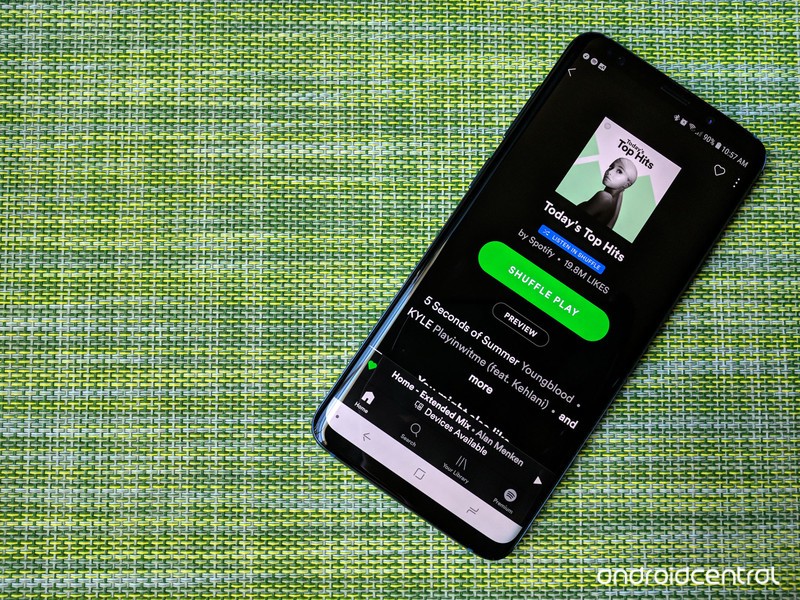
On May 16, user Danalite took to the Spotify community with the following complaint —
As of around 2 hours ago, using Spotify with wifi enabled on my android phone (s8) causes the application to lag for about 5 seconds before it crashes. If I use the app with 4g or with wifi turned off then it works just fine. I’ve tried the usual troubleshooting (reinstall, clear cache, ect) and none of that has fixed it.
Shortly after this thread was created, user after user replied with reports of having the same problem on the OnePlus 5/5T, LG G6, Samsung Galaxy A5, Huawei P20 Pro, and many more.
The issue is still persisting as of today, May 17, but Spotify is apparently aware of what’s going on and working on a fix. I haven’t had any problems on my Pixel 2, but what about you? Sound off in the comments below.
Spotify vs. Google Play Music: Which should you subscribe to?
Netflix: Everything you need to know
Educate yourself on the world’s biggest video streaming service 📺
When it comes to video streaming companies, few are as iconic as Netflix. What started out as a DVD rental service quickly turned into the world’s largest platform for binging old movies, classic TV shows, and a heap of original programming.

No matter if you’re looking to cut your cable cord or simply want some extra content to supplement it, Netflix can be a great addition to any household’s entertainment needs.
To ensure it has exactly what you’re looking for in a video service, here’s everything you need to know!
May 17, 2018 — HDR playback comes to four new Android phones
Netflix is constantly supporting more and more phones for HDR playback, and most recently, the company rolled out this functionality to four new handsets.
This time around, HDR playback is coming to the Huawei P20 and P20 Pro, Huawei Mate 10 Pro, and the Sony Xperia XZ2.
April 19, 2018: Mobile Previews are Netflix’s take on Snapchat Stories

Ever since Snapchat popularized the Stories format, we’ve seen it expand to Instagram, Facebook, and even Google search. On April 19, Netflix announced it was launching its own take on stories with its Mobile Previews feature.
Launching first on iOS and coming soon to Android, Mobile Previews will show up as circles at the top of the Netflix app and showcase a 30-second vertical preview of recommended shows. According to Netflix –
The previews are shown like a slideshow, so if you see something you like, you can tap to play or add to your list. If not, you can swipe or tap the screen to advance to the next preview.
Plans start at just $7.99/month
Netflix has three main plans to choose from, including Basic, Standard, and Premium.
Basic is the cheapest plan with a subscription fee of just $7.99/month, but since it’s limited to Standard Definition and only allows you to have one stream going at a time, you’ll likely want to upgrade to the Standard tier for $10.99/month. With Standard, you’ll get access to HD streams and can watch Netflix on up to 2 screens at once.

If you’ve got a 4K television and/or have a big family that wants to use one account, Netflix’s Premium plan will likely be the best fit. For $13.99/month, you’ll get access to Ultra HD video content and can watch any shows you’d like on 4 different screens at once.
New members can sign up for a 1-month free trial of whatever plan you’d like, and you can cancel at any time as there’s no commitment required.
T-Mobile customers get the Standard plan for free!
Netflix’s current pricing is more than reasonable, but if you happen to be a T-Mobile customer, you’ll get it for free!
T-Mobile subscribers get Netflix’s Standard plan bundled with their cell service at no extra charge, and if you want to upgrade to the Premium tier, you’ll pay just $3/month extra.
It’s available on pretty much everything
In addition to its excellent library of content, one of Netflix’s strong suits is its wide availability across pretty much any gadget you can think of.
For watching Netflix on the big screen, you can download its official app on Android TV, Amazon Fire TV, Roku, Apple TV, cast it from your phone using Chromecast, and access built-in apps across a variety of smart TVs and Blu-Ray players.
You’ll also find the Netflix app on Android, iOS, Windows Phone, PlayStation 4, Xbox One, and from your desktop/laptop at netflix.com.
Netflix’s official list of all supported devices
The Android app recently got a big overhaul
Netflix’s Android app is one of the best ways to access the service, and it recently got a big update that makes everything look much more polished.
The old navigation menu on the left-hand side has been replaced for a simple navigation row at the bottom for Home, Search, Downloads, and More. Home is where you’ll be taken upon opening the app and tapping the TV Shows, Movies, and Originals tabs near the top will allow you to quickly filter the content that’s presented to you.

The Search and Downloads sections are pretty self-explanatory, and More is where you’ll be able to switch profiles, customize notifications, and adjust all of your other account/app settings.
Everything works about the same as it did before, but the new layout is still greatly appreciated and considerably easier to understand.
New content’s being added (and removed) all the time
Every month, Netflix changes its content library by adding and removing titles from its lineup. The company’s taken a big bet on original movies and TV shows over the last few years, but you can still find a wide array of third-party content, too.
The Netflix app does a pretty good job at highlighting new/trending content as it’s released, and Joseph Keller at iMore does a regular roundup of the best shows you should be watching at any given time.
Best TV shows and movies on Netflix right now
Some Android phones support HDR playback
The displays on our smartphones are crispier and more colorful than ever before, some of which go as far to support High Dynamic Range (more commonly known as HDR). HDR offers more vivid colors and higher contrast, and Netflix supports this type of content on the following phones:
- Huawei Mate 10 Pro
- Huawei P20 / P20 Pro
- LG V30
- Razer Phone
- Samsung Galaxy Note 8
- Samsung Galaxy Tab S3
- Samsung Galaxy S9
- Sony Xperia XZ Premium
- Sony Xperia XZ1
- Sony Xperia XZ2
You can still rent physical DVDs
Although renting physical DVDs to customers may not be its primary focus anymore, this is something that Netflix does still offer.

The DVD business has since been moved to DVD.com, but it’s just a full-featured as ever before. Plans start at $4.99/month to rent one disc at a time with a cap of two discs per month, or you can step all the way up to $11.99/month to have two discs out at once and rent as many movies as you want each month (prices are increased to $5.99/month and $14.99/month respectively for HD Blu-Ray).
Netflix finally brought its DVD app to Android in October of 2017, and while the service may not be nearly as popular as the on-demand streaming platform, it’s still alive and kicking for anyone that wants to see that iconic red envelope in their mailbox.
What are you waiting for?
If you somehow still haven’t checked out Netflix, you owe it to yourself to at least sign up for a free trial. My fiance and I use Netflix just about every day, and whether you’re using it to re-watch The Office for the eighth time or catch up on the latest Marvel movies, it’s well worth every penny.
See at Netflix
Dragon Ball Legends for Android is officially available in the U.S.

It’s also Kamehameha-ming to European Android devices real soon.
Last week, we told you that Dragon Ball Legends was available for Android — which was true, at least for us lucky Canadians who managed to download it from the Google Play Store.
Today, Bandai Namco officially announced that the game is now available in the U.S., so if you were unable to download it last week, now you can!
This is a highly anticipated game that, for once, is being made available to Android users ahead of an iOS release. Legends Featuring all your favorite characters from the Dragon Ball franchise and the mobile version is brilliantly animated and designed to be played with one hand.
Battles take place in real-time in a 3D space that lets you dodge and counter your opponent’s attacks with simple swipes on the screen. Special attacks are available as cards, and you can link your cards together to create a devastating combo.
There’s an original storyline to play through featuring a brand new character created by Dragon Ball’s creator himself Akira Toriyama, and the game also features top-notch voice acting. Once you’ve progressed through the first four chapters of story mode, you unlock PvP mode for battling other players along with other good stuff.
If you’re a fan of the Dragon Ball series, this is one game you should definitely check out.
Download: Dragon Ball Legends (Free w/IAPs)
Android Gaming

- Best Android games
- Best free Android games
- Best games with no in-app purchases
- Best action games for Android
- Best RPGs for Android
- All the Android gaming news!
 AIVAnet