


Apple will fix bug affecting iPhone 7 and 7 Plus microphones
Some iPhone 7 and 7 Plus models running iOS 11.3 or later are experiencing an issue with their microphones. Some users have reported that after updating, their phones’ microphones stopped working, affecting voice memos, calls, FaceTime and speakerphone. Some also reported that Siri was no longer accessible. But Apple has apparently acknowledged the problem — though not publicly — and an internal document obtained by MacRumors instructs Apple Authorized Service Providers how to proceed if faced with an affected phone.
The document notes that in some cases the phones’ speaker buttons will be greyed out and service providers should first ask customers to disconnect any Bluetooth accessories connected to their phones. If that doesn’t help, they should run audio diagnostics. In the case that “device could not detect dock” or “accessory not supported” alerts come up, the service provider can repair the phone. MacRumors also reports that if the affected iPhone 7 or 7 Plus is no longer under warranty, Apple says the repair providers can request an exception for this issue.
The document is apparently light on the details as to why this issue has come up. But since a repair might be warranted it seems like the software update is leading to a hardware defect. MacRumors says it verified the document — which was distributed to Apple Authorized Service Providers this week — with a reliable source and suggests that users escalate their cases to a senior AppleCare advisor if repair technicians say they can’t fix the problem.
Last month, Apple released an update that addressed a bug causing some replacement displays to be unresponsive to touch.
Via: VentureBeat
Source: MacRumors
What to expect at Microsoft’s Build 2018 conference
Fresh off of Windows 10’s major April update, Microsoft is gearing up for its Build conference in Seattle Monday. The annual event, like Google I/O (which starts just one day later), is a celebration of the company’s developer community. That means you can expect plenty of technical details and (gasp) on-stage coding during the two keynotes, which will be led by Microsoft CEO Satya Nadella and operating systems head Joe Belfiore. But of course, we’ll also hear more about the company’s broader goals for the next year, and we’ll get a first look at new features for Windows, Office and the rest of its product line. Here’s a brief glimpse at what we expect to see.
A bigger focus on AI

Microsoft hasn’t been shy about throwing the term “AI” around over the past few years, but it’s clear by now that’s not just marketing fluff. In particular, we expect to hear a lot more about Windows ML, the machine learning platform that arrived alongside last month’s Windows 10 update. It lets developers take advantage of pre-trained AI routines in their apps, which they can run either locally or over the Azure cloud. Windows ML can also take advantage of hardware acceleration from GPUs, something Build attendees will likely appreciate.
Microsoft has made huge strides in bringing artificial intelligence to its consumer products recently. Its Cortana virtual assistant is steadily getting smarter (it’s certainly more useful on a desktop than Siri). AI also sits at the core of the Translator app, which can now tap into AI even when it’s offline. Meanwhile, the company’s XiaoIce chatbot in China has learned how to politely interrupt conversations, making it more like a natural speaker, instead of a voice-powered computer. We’re a long way from Hollywood-level superintelligent AI, but the pieces are falling in place for the next generation of computing.
Windows 10 and the evolving Microsoft Graph

Microsoft
With Timeline in Windows 10, Microsoft not only created a way to track your work across multiple PCs, but also on your iPhone or Android device. So far, that’s mainly limited to synchronizing your Edge browsing history, along with Office 365 apps on Android. But the company has hinted in the past that Timeline will eventually be more far reaching. At Build, we can expect to hear more about how that’ll happen, as well as how the Microsoft Graph, which stores all of your progress, can evolve. In particular, it’ll be interesting to learn how Timeline can better integrate with iOS, which is notoriously restrictive when it comes to third-party integration.
And of course, we’ll definitely learn more about other upcoming features for Windows 10. Remember, Microsoft has committed to updating the OS frequently, instead of the annual (or even longer) updates from past versions of Windows. For one thing, we’ll probably hear more about Sets, the experimental feature that lets you run apps in tabs, similar to web browsers. Microsoft hasn’t talked much about Sets since its unveiling last year, but developers will need to understand it better before they can implement it in their apps.
What’s up with Windows Mixed Reality?

Devindra Hardawar/Engadget
No really, what’s going on? After launching Windows Mixed Reality last fall, alongside a slew of headsets from PC makers like HP, Acer and Samsung, Microsoft has been surprisingly quiet about the state of its VR and AR platform. Perhaps there’s just not much to say, though. The fact that many headsets have gotten drastically cheaper in just a few months (Lenovo’s was on sale recently for half-price — $200) is a clear indication these things aren’t flying off the shelves. At Build, Microsoft has yet another chance to convince developers to give Mixed Reality a shot (though the people they really need to reach will be at E3 in June).
Expect a lot of Azure talk

Take one look at Microsoft’s last few earnings reports, and one thing is clear: its cloud business is booming. So don’t be surprised if the company spends a large chunk of time at Build talking about how it can make Azure better for developers. For the most part, that’s not something consumers will notice directly. But for brands and businesses, it’s yet another way to insure their apps and online services are stable, secure and can withstand a potential onslaught of demand.
YouTube music app gets a streamlined now playing screen
With YouTube Remix on the horizon and Google Play Music on its way out (not to mention Google I/O next week), it’s not a surprise that YouTube Music, the app that the company rolled out in 2015, is getting a bit of a refresh. Originally spotted by Redditor c2fifield, the redesign includes some streamlined changes to the “now playing” interface as well as the queue lists below it. Only some users are seeing this new update, so be patient.
We were able to try out the redesign ourselves and confirmed that the screenshots from Reddit are indeed accurate, for both iOS and Android. The new player window looks more like other music apps, and the Now Playing queue can be easily rearranged. Whether these changes presage a YouTube Remix takeover or whether there will be a new app is unclear. For now, though, you can at least enjoy the changes while you listen to your tunes via YouTube.

Via: The Verge
Source: Reddit
F8 proved there’s no escape from Facebook
During a keynote about privacy at F8, Facebook’s Chief Security Officer Alex Stamos shared an image of the world that used light to show the sheer size of the company’s network. It was intended to highlight all the places where people are using a Facebook product, and as you might expect, there weren’t many dark spots.
This year, Facebook’s F8 developers conference was bound to be different. After all, the company is still dealing with the aftermath of the Cambridge Analytica (CA) data privacy scandal. But, Zuckerberg said during the opening keynote he was ready to “move forward,” and instead he came to talk about how Facebook plans to light up the rest of Stamos’ map.
The goal, Zuckerberg said, is to make the world smaller by building products that will help people connect in “meaningful ways,” no matter where they are or what device they’re using. With more than 2.2 billion monthly active users, Facebook alone is already hard to escape. How else will you find out about your next high school reunion or when your distant cousin has a baby? For millions it’s their preferred means of communication, and for an alarming amount of people, it’s how they get their news.
Facebook has also found ways to inject itself in people’s lives in an almost unthinkable way. If you want to donate to charities, you can do that on Facebook. Want to promote your bands show, it has you covered. And with Groups, which it now plans to make more of a centerpiece of its site, you can be in touch with like-minded individuals who you may never meet in person.

This reach is magnified even further when you remember that Facebook owns some of the other most popular social apps and services across the globe. This includes Instagram, which has more than 800 million monthly users (and will likely hit a billion soon); WhatsApp, which has 1.5 billion monthly users (almost as many as Facebook); and Messenger, the standalone chat app that now has more than 1.3 billion monthly users.
Oh, and let’s not forget about Oculus, which Facebook bought in 2014 and is arguably the most promising virtual reality company. Oculus just launched its first mobile VR headset, the Go, with a $200 price tag that puts it in impulse purchase territory.
VR hasn’t gone mainstream yet, but Facebook has a chance to make that happen with its Oculus Go. One of the ways it plans to do that is by making virtual reality social, with features that will let users “hang out” with others in digital, 360-degree spaces. You can be watching a movie with friends and it’ll be like going to the theater, except you won’t be there physically and you’ll have a headset strapped to your face. Facebook is also rolling out similar experiences for live events, including concerts and sports matches.

Bloomberg via Getty Images
All of this is to say Facebook has something for everyone, whether you want to stay in touch with your older relatives (Facebook), make new friends (Instagram), chat with friends overseas (WhatsApp) or soak in the future of entertainment (Oculus). And as the company continues to grow, it will only collect more data on you and everyone you know.
Simply put, Facebook doesn’t just want to be a part of your life, it wants to be your life.
And the company isn’t done yet. At F8, it announced that it would be taking on Tinder with its own dating service, which is scheduled to launch in the next few months. With the billions of dollars it makes every quarter, Facebook could’ve just bought Tinder and called it a day. But why spend all that money when it can just build a similar experience and, perhaps, make it even better?
Facebook’s hefty user base will make it an immediate threat to other matchmaking offerings. We don’t know yet if Facebook’s matchmaking feature will be a hit, but with the amount of data it already has on people and the resources at its disposal to create seamless apps, no one will be surprised if it simply makes all other dating services obsolete.
Case in point: When the company reportedly failed to buy Snapchat in 2013 for $3 billion, it went ahead and just cloned its most popular feature, Stories, which is now a big part of the Facebook and Instagram apps. It didn’t take long for Snapchat to start losing users as a result, and it also affected its bottom line, as advertisers flocked to Facebook’s product. Instagram is now at 300 million daily active users, compared to Snapchat’s 191 million. It’s clear this has paid off for Facebook, which says Stories will soon be the most popular way people share updates.

We should be concerned with the growing reach of Facebook.
Michael T. Zimmer, Associate Professor at The School of Information Studies, UCM
“We should be concerned with the growing reach of Facebook,” said Michael T. Zimmer, an associate professor at the School of Information Studies at the University of Wisconsin-Milwaukee. “The rise of Messenger — especially once it spun into a standalone app — was a big step in its reach into our daily activities. But more than that, the ubiquity of ‘Like’ buttons and ‘Login with Facebook’ features across the web means it is nearly impossible to avoid touching Facebook in your daily online activities.” Zimmer added that whether or not users take control of their privacy settings when they post on Facebook, which is what Zuckerberg focuses on when asked about privacy, nearly everyone will still be subjected to “Facebook’s immense apparatus of tracking and data collection.”
“Either you give enough people in the world what they want, or you don’t succeed. And Facebook over and over again is giving people what they want.”
Other academics don’t see an issue with Facebook becoming too powerful. “The success of Facebook in these various things that it does, and the fact that it just keeps doing more and more, is a reflection of the fact that [it’s] doing something right [and] that people are enjoying by and large what they’re doing,” said Paul Levinson, professor of communications and media studies at Fordham University. He noted that, while it’s obvious that Facebook has made mistakes and it’s not perfect, its success shouldn’t come as a surprise. “Either you give enough people in the world what they want, or you don’t succeed,” Levinson said. “And Facebook over and over again is giving people what they want.”

Some have even raised the “M” word when talking about Facebook. Senators Lindsey Graham (R-SC) asked Zuckerberg directly during his congressional hearing: “You don’t think you have a monopoly?”
“It certainly doesn’t feel like that to me,” the embattled Facebook CEO answered with a nervous smirk, which drew laughs, including from Graham. It may not feel like it to Zuckerberg, but the truth is that Facebook really doesn’t have any competition — Twitter and Snapchat’s combined have around 400 million monthly users. That’s nowhere near Facebook’s 2.2 billion — and that’s not even counting Instagram or WhatsApp.
Even with the massive web it’s already created, Facebook says there are still more than 3 billion people who don’t have access to the internet, and by extension, it’s services. It wants to change that by building fast and cheap networks that will make internet accessible in every part of the globe. Theoretically, whether or not you use Facebook is up to you, though at the end of the day it may not feel like you have much of a choice.
Images: Getty Images
Click here to catch up on the latest news from F8 2018!
MacRumors Giveaway: Win a Rugged 100W USB-C Cable From Nomad
For this week’s giveaway, we’ve teamed up with Nomad to offer MacRumors readers a chance to win a rugged, high-quality USB-C cable designed for Apple’s latest Macs that use USB-C and other USB-C accessories like the Nintendo Switch or Android smartphones.
Priced at $39.95, Nomad’s USB-C cable supports full 100W power transfer and 10Gb/s USB 3.1 data transfer speeds, making it compatible with all of Apple’s USB-C devices. It will charge your MacBook, 13-inch MacBook Pro, or 15-inch MacBook Pro at full speed paired with an appropriate power adapter.
With more and more device manufacturers adopting USB-C, it’s always useful to have an extra USB-C cable around, especially because Apple’s USB-C power adapters designed for MacBook and MacBook Pro models don’t ship with USB-C cables. If you want to pick up a spare, you’ll need to buy a cable separately.

Nomad describes its USB-C cable as “ultra rugged” because it’s made from a braided ballistic nylon and an extra thick wire gauge with a polyamide core, making it resistant to wear and tear from daily use. Nomad has also included reinforced RF shielding for fast data sync, along with a thick fire resistant PVC jacket.

The cable measures in at 1M in length, an ideal size for use at home or when traveling, and you can be sure that it’s going to hold up well even if you’re a little rough with it.

We have eight of Nomad’s USB-C cables to give away to MacRumors readers. To enter to win, use the Rafflecopter widget below and enter an email address. Email addresses will be used solely for contact purposes to reach the winners and send the prizes. You can earn additional entries by subscribing to our weekly newsletter, subscribing to our YouTube channel, following us on Twitter, or visiting the MacRumors Facebook page.
Due to the complexities of international laws regarding giveaways, only U.S. residents who are 18 years or older and Canadian residents (excluding Quebec) who have reached the age of majority in their province or territory are eligible to enter. To offer feedback or get more information on the giveaway restrictions, please refer to our Site Feedback section, as that is where discussion of the rules will be redirected.
a Rafflecopter giveawayThe contest will run from today (May 4) at 11:00 a.m. Pacific Time through 11:00 a.m. Pacific Time on May 11. The winners will be chosen randomly on May 11 and will be contacted by email. The winners will have 48 hours to respond and provide a shipping address before new winners are chosen.
Tags: giveaway, Nomad
Discuss this article in our forums
Mercedes-Benz’s New MBUX System Will Feature Wireless CarPlay
Mercedes-Benz has confirmed that its new MBUX infotainment system will feature support for wireless CarPlay in future vehicles.
The all-new 2019 A-Class will be Mercedes-Benz’s first vehicle equipped with the MBUX system when it goes on sale later this year, according to a spokesperson for the automaker’s parent company Daimler in Germany. Wireless CarPlay will expand to other new Mercedes-Benz vehicles in 2019, the spokesperson told MacRumors.
The automaker previously announced that the 2019 A-Class will be available in a sedan model in the United States, while a hatchback version will also be sold in Australia, Canada, the United Kingdom, and select other regions. The spokesperson said wireless CarPlay will be available in all of those markets.
A spokesperson for Mercedes-Benz in the United States declined to comment on MBUX’s wireless capabilities until midsummer. It’s still early, so it’s possible the company’s exact vehicle and market rollout of wireless CarPlay could change.
Barring announcements from other automakers, Mercedes-Benz will likely become the second to offer vehicles with wireless CarPlay functionality, after BMW rolled out the feature starting with its 2017 5 Series a few years ago. Apple first introduced wireless CarPlay in 2015 alongside iOS 9.
Alpine Electronics also offers an aftermarket infotainment system with wireless CarPlay for self-installations in other vehicles.
Every other automaker that offers CarPlay currently uses a wired implementation that requires connecting the iPhone to the system with a Lightning to USB cable. The platform is available in well over 300 vehicle models, and it’s generally considered to be a highly desired feature with strong customer satisfaction.
Related Roundup: CarPlayTag: Mercedes-Benz
Discuss this article in our forums
LG Denies Copying iPhone X’s Notched Design With New G7 Smartphone
LG has denied copying the iPhone X’s notched design with its latest G7 ThinQ smartphone, unveiled on Wednesday, according to The Korea Herald.
“We planned the notch design before Apple,” said Hwang Jeong-hwan, chief of LG’s mobile division, in an interview. “The display design may look similar to that of other smartphones, but boasts differentiated features.”
LG is one of several Android smartphone makers that have unveiled iPhone X lookalikes in the months following the debut of Apple’s flagship handset, alongside the likes of Asus, Huawei, and others. One notable holdout is Samsung, with its latest Galaxy S9 devices retaining uniform top and bottom bezels.
Google introduced support for “the latest edge-to-edge screens” with a “display cutout for camera and speaker” in Android P, the next major version of its mobile operating system that will be seeded to devices like the G7 ThinQ.
Apple has previously said the iPhone X reflects the next decade of smartphones, suggesting the controversial notch will remain for the foreseeable future. However, a questionable report from Korean website ET News recently suggested that Apple may remove the notch from iPhones starting with 2019 models.
Tag: LG
Discuss this article in our forums
Next Year’s iOS 13 Update to Feature iPad-Focused Upgrades Like Revamped Files App
Apple has several major iPad-focused features planned for next year’s iOS 13 update, codenamed “Yukon,” according to information shared by Bloomberg reporter Mark Gurman on Twitter.
Apple is said to be working on a revamped Files app, in-app tabs similar to the tabs that are available in macOS apps, support for using the same app side-by-side in Split View multitasking mode, and unspecified improvements to Apple Pencil. Some of this information was previously shared by Gurman in reports on Bloomberg, but details such as a revamped Files app are new.
Gurman also previously said that some features originally planned for iOS 12 will be pushed back to iOS 13 to allow Apple to work on bug fixes and performance improvements. These features include a redesigned Home screen (which will include changes on the iPad) and a revamped Photos app.
Somewhat. iOS 13 “Yukon” will have a big iPad-focused feature upgrade as well, including an updated Files app. some other things in the works are tabs in apps like in MacOS, same app side by side, Apple Pencil stuff. The home screen redesign is iPad focused.
— Mark Gurman (@markgurman) May 4, 2018
iOS 11, the current version of iOS, was also an iPad-focused update, introducing the Files app, a revamped iPad dock, a new App Switcher, Drag and Drop support, new Apple Pencil features like Instant Markup and Instant Notes, a redesigned QuickType keyboard, and more.
iOS 12, coming this year, will offer fewer new features than Apple had originally planned, but Gurman believes Apple will introduce at least one major change that also affects macOS 10.14 – support for cross-platform apps. Apple is said to be working to implement features that would allow apps designed for the iPhone and the iPad to run on the Mac, but there has been some disagreement over when this feature will debut.
Daring Fireball’s John Gruber says Apple will not introduce this functionality until iOS 13 and macOS 10.15, so it is unclear if it will indeed be coming in iOS 12. Gurman does, however, often share accurate information on Apple’s software updates ahead of their release.
Other features planned for iOS 12 include additional Animoji characters, a new Animoji interface and Animojis on iPad, FaceTime support for Animoji, updated parental controls with a new Digital Health tool to allow parents to better monitor screen time, a revamped Stocks app, an enhanced version of Do Not Disturb, and support for multiplayer augmented reality games.
Apple will unveil iOS 12, macOS 10.14, tvOS 12, and watchOS 5 at its upcoming Worldwide Developers Conference that kicks off on Monday, June 4. The first day will include a keynote event where Apple will share all of the new features coming in the software updates, and following the keynote, developers will be provided with access to the software to begin to prepare their apps ahead of a fall public launch.
Related Roundups: iPad Pro, iPad, iOS 12Buyer’s Guide: 10.5″ iPad Pro (Caution), 12.9″ iPad Pro (Neutral), iPad (Buy Now)
Discuss this article in our forums
iTunes Chief Eddy Cue to Testify in Qualcomm v. Apple Lawsuit
iTunes chief Eddy Cue will be forced to testify in the ongoing Apple v. Qualcomm legal dispute, reports Bloomberg.
A San Diego judge on Friday ordered Cue to be deposed in the case, siding with Qualcomm and ignoring Apple’s arguments against the deposition. Eddy Cue handles Apple’s services businesses, including Apple Music, Apple’s television products, iTunes, and more.
In November, Qualcomm filed a motion to depose Cue. Apple pushed back stating that Cue’s role overseeing services made him unrelated to the case. Qualcomm cited past Apple statements pinpointing Cue as one of the lead negotiators when the iPhone launched in 2007 exclusively on AT&T Inc.’s network in the U.S.
As previously shared, Apple CEO Tim Cook is also set to provide testimony in the Apple v. Qualcomm trial on June 27. It’s not clear when Eddy Cue will be interviewed.
Along with Cue and Cook, other Apple executives including Chief Operating Officer Jeff Williams, marketing chief Phil Schiller, and vice president of hardware technologies Johny Srouji will be involved in the case.
Apple and Qualcomm have been facing off in a legal battle since the beginning of 2017, when Apple sued Qualcomm for $1 billion for charging unfair royalties on Apple products.
Apple claims Qualcomm charges excessive fees for “technologies [it] has nothing to do with,” while Qualcomm claims its technology is “at the heart of every iPhone.”
Qualcomm has since countersued Apple for a licensing breach, and both companies have levied patent lawsuits against one another. Qualcomm has also been seeking import and export bans on some iPhones in the United States and China.
Tag: Qualcomm
Discuss this article in our forums
Gear Up: Belkin USB Type C chargers and cables
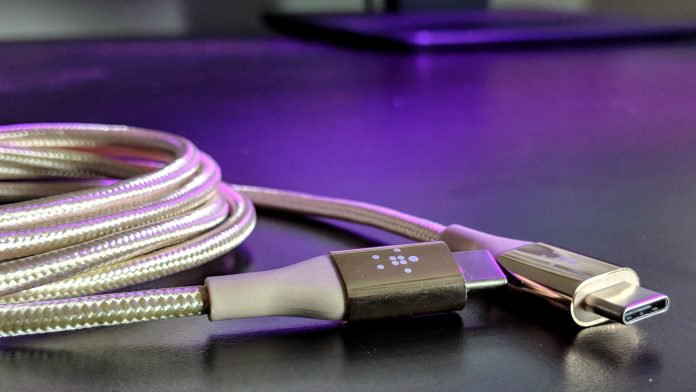
With so many smartphones and electronics having transitioned over to USB Type C for charging, it stands to reason you might need to pick up a couple of new cables or chargers. Sure, you get one with pretty much every device you buy, but who wants to drag a cord around the house or lug it back and forth to school or work?
If you’re the proud owner of a new flagship phone, you probably have a handset that relies on USB Type C for its charging port. Moreover, laptops, Pixelbooks, and gadgets like the Nintendo Switch also feature the new standard plug.
We were recently sent a handful of products from Belkin which center around the Type C plug. Having spent some time playing with them and putting them in our cars, home, and office, we’ve found each to be helpful in their own respect.
If you’re looking to pick up some cables or chargers for your devices, check out Belkin’s selection. Without further ado, here’s some info on the various products we’ve tested and are happy to recommend.
USB-C Charger Kit + Cable
This three pack bundle includes a 15W USB-C Home Charger, 5W USB-C Car Charger, and a USB-C to C cable. The 15W allows for safe, and really quick charging of smartphones and tablets. This is roughly 50% faster than what you’d get out of a normal 5W charger.

The cable, which is Type C on both ends, can connect to both the wall charger and the car charger. Moreover, you can use it for file transfers or sharing photos between devices. And, at five feet long, it’s the kind of cable you can tuck away behind a hard-to-reach spot under the desk. Pick this kit up for about $50 directly from Belkin.
BOOST↑UP Quick Charge 3.0 Home Charger with USB-A to USB-C Cable
When what you really care about is charging and getting back out there, you want something that’s super fast. That’s what you get here in the 18W charger that features Qualcomm Charge 3.0 technology. Backwards compatible with QC 2.0 devices, it’s smart enough to know what speeds your device needs.

The included cable is USB C on one end and traditional USB A on the other. At four feet long it’s tested to be tough and works great for syncing files or devices. Add it to the charger and you’re looking at about a half hour to go from empty to around 80 percent full. Now, get back out there. Belkin offers this two-piece kit for around $35.
MIXIT↑ DuraTek USB-C Cable Built with DuPont Kevlar (USB Type-C)
If you’re the type of person who does need to carry a cable with you, the build quality makes all the difference in the world. Chances are you’ve seen a regular cable break at the charging port or even split along the line. That doesn’t happen to strong cables with Kevlar and braided coating.

Backed by a five year warranty, this cable comes in four color options: Black, Gold, Silver, and Rose Gold. You’ll have a hell of a time trying to tangle this one up. The cable is as flexible as anything else you’ve used, but it’s a lot tougher and a whole lot smarter.
The intelligent chip supports up to 60W optimal charging and up to 480Mbps data transfer. Oh, and kiss those breaks goodbye as this cable features a longer neck at the end which can withstand more than 5,000 charges when the cable is bent at 180 degrees. Grab yours for about $30 at Belkin’s website.

