


iPad Recorded Highest Market Share in First Quarter Since 2014 According to IDC
Apple on Tuesday reported that it sold 9.1 million iPads during the first quarter of 2018, giving the company its highest share of the worldwide tablet market during that quarter in four years, according to IDC.
The research firm estimates that iPads accounted for 28.8 percent of tablet shipments over the three-month period, compared to 24.9 percent in the year-ago quarter. The modest growth resulted in the iPad’s highest first quarter market share since 2014, when it captured a 32.7 percent stake.
iPad’s first quarter market share per IDC:
- 2013: 40.2%
- 2014: 32.7%
- 2015: 26.8%
- 2016: 25.9%
- 2017: 24.9%
- 2018: 28.8%
IDC said worldwide tablet shipments from all vendors combined declined 11.7 percent in the first quarter on a year-over-year basis, making the iPad’s gains in sales, revenue, and market share all the more impressive.
iPad remains the world’s most popular tablet, as it has been since shortly after it launched in 2010. Samsung finished runner-up in the first quarter with an estimated 5.3 million tablet shipments, down from six million in the year-ago quarter, although its market share stayed put at 16.7 percent.
 Top Five Tablet Vendors, Detachable + Slate, Worldwide Shipments in Millions, via IDC
Samsung managed flat growth due to significantly lower shipments from other tablet vendors in the first quarter, according to IDC. Amazon, for instance, is estimated to have shipped just 1.1 million tablets from January through March, a 49.5 percent decline from the year-ago quarter.
However, research firm Strategy Analytics estimates Amazon shipped 2.8 million shipments in the first quarter, and it’s unclear why there is such a large discrepancy between the numbers. IDC said Amazon’s quarterly downturn “does not come as a surprise” given that its tablet sales are highly seasonal.
Looking ahead, the new sixth-generation 9.7-inch iPad should have more of an impact in the second quarter of 2018, as the tablet launched with only four days remaining in the first quarter, amid education buying season.
In terms of what’s next for the iPad, Apple is rumored to launch at least one new Pro model with slimmer bezels, no home button, and Face ID later this year. The fate of the iPad mini is less certain, but it could eventually receive a routine speed bump should it remain part of Apple’s tablet lineup.
Tags: IDC, Strategy Analytics
Discuss this article in our forums
Google Says Assistant Works With Over 5,000 Smart Home Devices, HomeKit/Siri Around 200
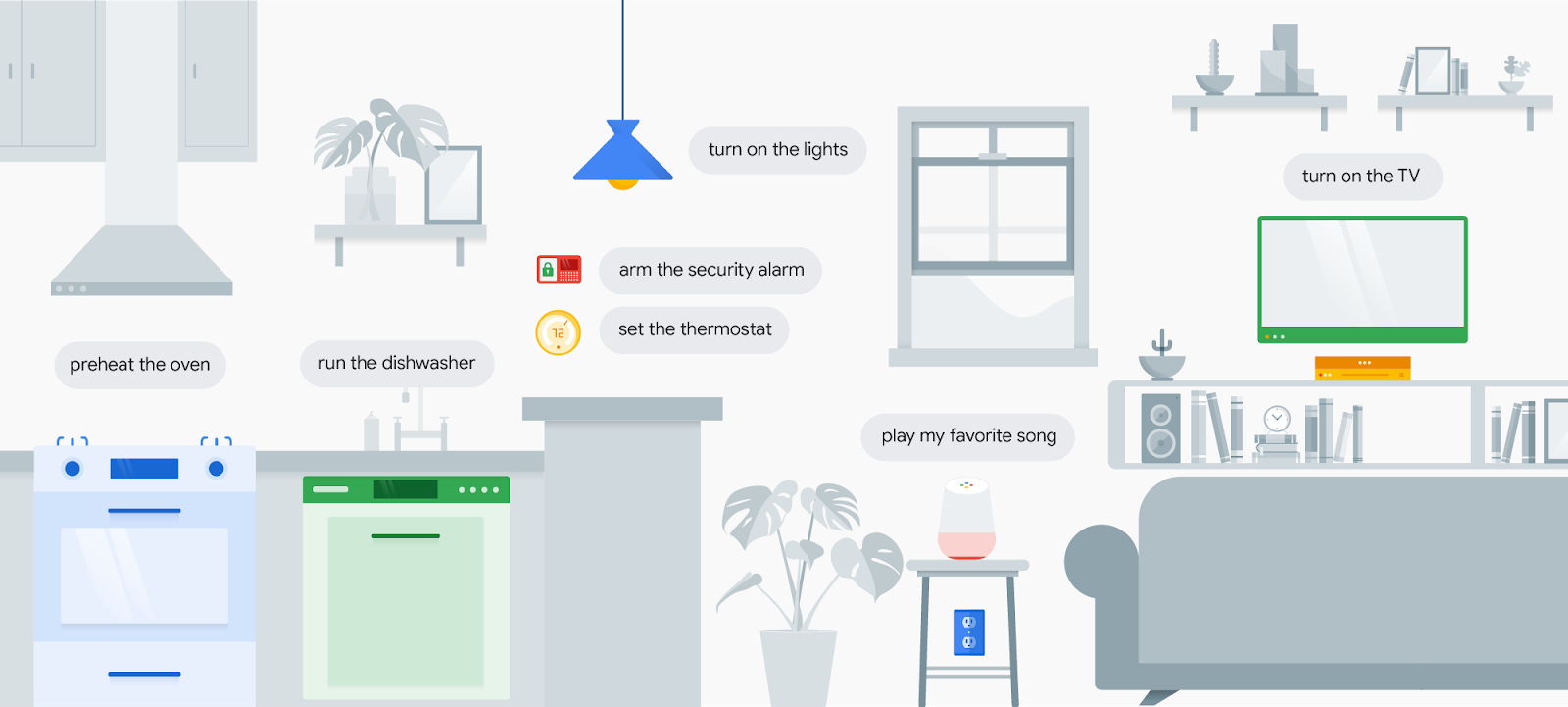
Google this morning posted a story on its Keyword Blog that highlights the ongoing growth of its AI helper, Google Assistant. According to the company, the Assistant now works with “every major device brand” in the U.S., meaning that it can connect with more than 5,000 smart home devices, up from 1,500 in January.
This growth period saw media and entertainment queries increase by 400 percent, with Google users taking advantage of “OK Google” commands on Android TV, smart TVs, and Chromecast. Another popular area for Google is security cameras like Nest’s products, including the Nest Hello doorbell. When someone rings the doorbell, Nest can communicate a chime to Google Home, play a livestream on Chromecast, and then users can respond to their visitor on their smartphone.
Google also laid out plans for Assistant expansions later this year, including placing the Assistant on DISH Hopper receivers, Logitech Harmony remotes, smart door locks from August and Schlage, security cameras from Panasonic, and alarm brand support from ADT, First Alert, and Vivint Smart Home.
Over the past year, we’ve made great progress ensuring that the Google Assistant can work with all types of connected devices, and now every major device brand works with the Assistant in the U.S.
Just how many devices is that? Today, the Google Assistant can connect with more than 5,000 devices for your home—up from 1,500 this January. That includes cameras, dishwashers, doorbells, dryers, lights, plugs, thermostats, security systems, switches, vacuums, washers, fans, locks, sensors, heaters, AC units, air purifiers, refrigerators, ovens … we can keep on going!
For home automation, Apple’s solution is HomeKit and Siri. Although not an exact comparison due to potentially missing products, Apple’s website has a list of HomeKit-compatible smart home products that reaches to about 200 as of writing, with some yet to launch. Even if it is missing numerous smart home devices, Siri would still be far below Google’s newly reported compatibility number. Amazon’s Alexa assistant is believed to be leading the field through support with roughly 11,200 smart home products as of 2017, according to market analyst Blake Kozak, who spoke with CNET.
HomeKit users are currently waiting for support from devices like the Ring line of doorbells, while integration with Nest’s products is less likely after Nest and Google doubled down on hardware collaborations.
For Siri, Apple’s assistant remains many users’ least favorite part of their Apple devices, with Siri amassing a 20 percent satisfaction rate among early adopters of the iPhone X. In a recent report by The Information, Siri was described as “limited compared to the competition” like Google Assistant, and the report went so far as to say that the assistant has become a “major problem” within Apple, originating from the company’s decision to rush the technology into the iPhone 4s.

Many have theorized the reason behind Siri’s lackluster performance could be Apple’s commitment to user privacy, unlike Google’s actions of leveraging and retaining user data off-device in an effort to enhance queries.
Siri co-founder and creator Norman Winarsky looked back on the digital assistant’s creation earlier this year. In an interview, he discussed Apple’s decision to “take Siri in a very different direction than the one its founders envisioned,” the original plan to focus Siri’s intelligence on a few key areas and “gradually” expand its knowledge, and finally stated that Apple is now “looking for a level of perfection they can’t get.”
As Apple continues to expand Siri, the company in April hired John Giannandrea from Google’s own search and artificial intelligence division. Apple’s latest Siri- and HomeKit-supported device is HomePod, which allows users to invoke the assistant and interact with compatible products like Philips Hue lights, Ecobee thermostats, August smart locks, and more.
Google is expected to reveal more news about Assistant and other products and services during its I/O conference later this month.
Tags: Siri, Google, Google Assistant
Discuss this article in our forums
Tesla’s latest prediction for Model Y’s arrival is 2020
Tesla has largely kept its forthcoming Model Y shrouded in mystery. We know it’s a crossover EV, and we know it might not have mirrors, and that’s about it. But CEO Elon Musk has now revealed that the company aims to bring the new vehicle to production in 2020, adding in its conference call that doing so will spark a “manufacturing revolution”. Although he didn’t expand on what that revolution will look like.
Obviously Tesla is keen to get the hype machine going as soon as possible, but it’s worth taking this timeline with a pinch a salt. It had originally aimed for a 2019 release date, then pushed it back to 2020 because of plans for an entirely new production platform. Musk then ditched that idea in a bid to bring the car to market sooner, and yet here we are: the original production platform and a later launch date.
To be fair, it seems Tesla has learned from its mistakes with the Model 3. Production has been a low-grade nightmare for the company since the outset, but despite a brief manufacturing pause last month, the company now says it’ll soon be on track to deliver 5,000 per week. So, keen to avoid the same hiccups with the Model Y, it’s clear Tesla is taking a cautious approach to every aspect of its arrival.
Source: electrek
Australia is forming its own space agency
Australia is finally getting its own space agency. After months of talks, the federal government has decided it’s time the land down under is on par with other developed nations — including its neighbour New Zealand — and has put $50 million aside to launch the program.
The government is expected to unveil its funding proposal at the federal budget on May 8, and it is likely former CSIRO boss Megan Clark will be announced as head of the agency for its first year. Of course, while $50 million is not an insignificant sum, launching a space agency is pretty expensive so the private sector will be expected to contribute the majority of funding — a doable task considering the economic boost the program is likely to deliver.
Speaking to CNET, director of the Australian Centre for Space Engineering Research at the University of NSW Andrew Dempster said he was confident that “they should be able to do something useful with the money”, and suggested the program could facilitate the development of startups, too. However, he cautioned that “what we need is technical people who sit in the agency and are proactive and not reactive.”
Source: CNET
Google Assistant now works with every major smart home device brand
Google’s I/O developer conference is happening next week, and it’ll be just about two years since the Google Assistant was first introduced. As such, the company is taking some time to announce a few new features, all of which are meant to expand the Assistant’s usefulness in a smart home.
Part of making the Assistant able to take on Amazon’s Echo / Alexa powerhouse is having broad support for the massive number of smart home devices out there, and Google undeniably has that now. The company says that the Google Assistant works with more than 5,000 devices, up from only 1,500 at the beginning of the year. It’s a number that doesn’t mean much on its own, but Google VP of Assistant and Search Nick Fox said “the Assistant now supports essentially all the major brands.”
Fox also noted that the Assistant’s smart home features fall into three broad categories: entertainment, security and control. Under entertainment, Google is working with Dish to integrate its Hopper receivers with the Assistant, so users will be able to say things like “Hey Google, switch to ESPN” through either their phones or a Google Home device. The Assistant will also work with Logitech’s Harmony remotes, which will let you go to favorite channels, pause playback, adjust volume and more.
As for home security, Google has the Assistant working with the new Nest Hello doorbell. If someone’s at your door, a chime will be sent to Google Home devices and the Assistant will offer to pull up the doorbell’s video feed on your phone. For now, this feature is only available on the Nest Hello, but Google says it’ll enable similar features on similar products from other companies “later this year.”
Finally, Google is highlighting some of the new smart home companies whose devices will be working with Assistant soon. They include ADT lights, Xiaomi lights, Hunter Douglas window blinds and other treatments, Hisense A/C and humidifiers, Arlo security cameras and some new LG appliances. The combo of Google’s recently-launched routines and broad device support means the Assistant is pretty well suited for home automation. Google’s made a few improvements here, but we expect to hear a lot more about what’s next for the Assistant next week at I/O.
Amazon puts Seattle expansion on pause over tax proposal
Amazon is extremely unhappy over a Seattle tax proposal that would set it back between $20 to $30 million a year that it halted its major expansion plans in its home city. According to The New York Times, the e-commerce giant has put the construction planning of a building it was going to build downtown later this year on pause. It’s also reconsidering its plans to occupy a building that’s already being built — both of those decisions jeopardize 7,000 jobs in Seattle.
The city’s tax proposal would charge employers in Seattle that make $20 million or more annually in taxable gross receipts — and we all know Amazon makes a lot more than that — $500 per employee. Seattle’s goal is to raise $75 million from taxes, three-fourths of which will be used to build 1,800 affordable housing units in the city. Authorities will then use the rest to fund services for the homeless. Spokesperson Drew Herdener said Amazon has halted all construction planning “pending the outcome of the head tax vote by City Council.”
According to city council member Mike O’Brien, Amazon didn’t leave room for discussion when it informed the local government that it’s putting all its construction plans on hold. It simply told them what it was going to do. The tech titan has been lobbying behind the scenes against the proposal for quite some time, likely because the $500-per-head tax would transform into a payroll tax by 2021 and could cost the company significantly more than $20 to $30 million. Besides, various locations across the US had already offered it tax breaks to become the site of its second headquarters.
If it decides to back the proposal and pay those taxes, though, we doubt $20 to $30 million would hurt the company deeply. It reported $51 billion in sales for the first quarter of 2018, 43 percent more than the same period last year. Amazon chief Jeff Bezos himself is worth $131 billion and spends $1 billion a year on his private space endeavor Blue Origin.
Council member O’Brien pointed out that while Amazon isn’t solely to blame for the increasing homelessness in the city, the company and Seattle’s booming tech industry as a whole are driving up costs of living and driving people out of their homes. Based on an annual report by the Department of Housing and Urban Development in 2017, Seattle now has the third largest homeless population in the country after New York and Los Angeles. City officials are struggling to find a balance, and they believe this tax proposal is the answer. “I need to run a city that has room for prosperous businesses,” O’Brien said, “but doesn’t do it at the expense of people getting pushed into poverty.”
Via: Gizmodo
Source: The New York Times
Cambridge Analytica Shutting Down After Facebook Data Scandal
United Kingdom-based data firm Cambridge Analytica is shutting down operations following the ongoing Facebook data scandal, in which the firm improperly amassed sensitive Facebook user data to target messages to voters during the previous U.S. presidential election. Cambridge Analytica affiliates SCL Group and SCL Elections will also shut down in the U.S. and U.K.
In a statement on the closure, the company said that “parallel bankruptcy proceedings” will begin for Cambridge Analytica and “certain of the company’s U.S. affiliates.” The decision to end its business came after it began losing clients and facing “mounting legal fees” from the Facebook investigation, people familiar with the matter told The Wall Street Journal.
In its statement, Cambridge Analytica remained adamant that many of the accusations against the data firm have been “unfounded.”
“Over the past several months, Cambridge Analytica has been the subject of numerous unfounded accusations,” the statement said. “The siege of media coverage has driven away virtually all of the company’s customers and suppliers. As a result, it has been determined that it is no longer viable to continue operating the business.”
Cambridge Analytica has denied wrongdoing in the Facebook incident. The company said in the Wednesday statement that despite the efforts to correct the record, it “has been vilified for activities that are not only legal, but also widely accepted as a standard component of online advertising in both the political and commercial arenas.”
Despite the closures, leaders at Cambridge Analytica and SCL Group are said to be “involved in a variety of other entities,” which could lead to the companies rebranding their data firm operations under a different name. The New York Times suggests this could be a new Britain-based firm called Emerdata, with one SCL Group executive, Nigel Oakes, publicly describing Emerdata as a way of rolling up the two companies under one new banner.
In the weeks following the news of the data controversy, Facebook shared numerous blog posts about policy changes and updates that launched on the social network to enhance its users’ privacy. When asked what he would do if he was Mark Zuckerberg, Apple CEO Tim Cook in March said: “I wouldn’t be in this situation” and called for stronger data privacy regulations.
Note: Due to the political nature of the discussion regarding this topic, the discussion thread is located in our Politics, Religion, Social Issues forum. All forum members and site visitors are welcome to read and follow the thread, but posting is limited to forum members with at least 100 posts.
Tag: Facebook
Discuss this article in our forums
Apple Pay Promo Takes $15 Off 1-800-Flowers Gift Orders for Mother’s Day
Apple Pay’s new promotion offers savings on 1-800-Flowers just in time for Mother’s Day on May 13. With the promo, if you use Apple Pay to shop the Gift Collection in the 1-800-Flowers iOS app [Direct Link] or on 1800Flowers.com, you can get $15 off your order.
The discount will be applied automatically in the checkout process, and will last through May 13, 2018 at 11:59 p.m. EST. The flower shop’s Gift Collection includes floral collections, popcorn tins, tea and fruit baskets, and more bundles ranging in price from $25 to over $100. Many of the arrangements support same-day delivery by local florists.
The Mother’s Day promotion encourages customers to shop for their moms at retail stores like Saks Fifth Avenue, Macy’s, and Lululemon, where Apple Pay is supported. Within apps, Apple says that Etsy, Soothe, and Print Studio make it “even easier to show Mom you love her” with unique gift options.
Apple has been consistently launching promos for Apple Pay users this year, last week focusing on furniture savings with Hayneedle. Prior to that, partners included McDonald’s, Adidas, Hotwire, Fanatics, Grubhub, Seamless, TouchTunes, Fandango, and more.
Related Roundup: Apple PayTag: Apple Pay promo
Discuss this article in our forums
Harmonix is reviving Rock Band Network in ‘Rock Band 4’
During a livestream on Tuesday, Harmonix announced that after a few years away, the Rock Band Network is coming back. Originally announced in 2009 near the height of plastic guitar controller mania, it allowed content creators to import their own tracks for play (and most importantly, for sale) within the Rock Band series of games.
Now the network will reopen its doors inside Rock Band 4 on PlayStation 4 and Xbox One (crowdfunding for a PC version never materialized) however, there is some bad news for fans still sticking with the games — apparently due to royalty agreements, purchases made on older systems won’t carry over. Harmonix is apparently prioritizing songs that had been the most popular before on RBN, but it is still taking requests via an online form.
Via: Game Informer
Source: Harmonix (Twitch)
Nest’s $39 Room Temperature Sensors Now Available to Order
Nest’s new Temperature Sensor, which works with the company’s latest Learning Thermostat and the Thermostat E, is available to buy online from today.
The battery-powered, inch-wide sensors are designed to be placed in different rooms around the house where they silently monitor how warm or cold it is.
The white puck-shaped sensors continually relay this information to the companion thermostat, which responds by adjusting the central heating system to keep those rooms at the temperature level the user specified.
Nest started taking pre-orders for the Temperature Sensor in March, but is now selling them direct from the website. Each sensor costs $39, or $99 for a three-pack, and comes with wall mounting screws and up to 2 years of battery life. Up to six sensors are supported per connected thermostat, and up to 18 are supported per home.
Customers looking to pick up a Nest Learning Thermostat or Nest Thermostat E can also order the Temperature Sensor as part of a bundle pack, which gets them $20 or $10 off the standard price for a single sensor, respectively.
Nest products don’t integrate with Apple’s HomeKit setup, but are popular competing connected home solutions. See the Nest website for more details.
Tag: Nest
Discuss this article in our forums
 AIVAnet