


These super-popular iOttie car mounts are heavily discounted at Amazon
Keep it out of your hands.

Amazon currently has a bunch of the insanely-popular iOttie car mounts on sale for as low as $9.99. The iOttie Easy View 2 is down $5, making it just $9.99 in black only. It can hold phones from 2.5 to 3.5 inches in width. Next up is the One Touch XL, which is only $10.99 thanks to this sale. It releases your phone with just the press of a button, making it extremely easy to not only put your phone into but also get it out of.
The Easy One Touch 2 offers similar ease of use, except it adds a telescoping arm for easier reach in your car. You can grab it for $12.73 today, which is within a few cents of its all-time low. Lastly, the most compact option in this sale is the Easy Flex 3 for $12.74. It can only hold phones up to 3.1 inches wide, but if you cherish the space on your dashboard, this is the way to go.
Price drops on iOttie mounts don’t ever seem to stick around for long, so be sure to grab one before they disappear.
The 3rd-gen Nest Learning Smart Thermostat is down to just $200
Adjust the temp without getting up.
The Nest Thermostat 3rd generation is down to $199.99 on Amazon. Outside of eBay’s last site-wide sale, this is one of the Nest’s lowest prices. It regularly sells for as much as $250, and right now the other colors are selling around $230.

The Nest Learning Thermostat is full of Smart features to help make your home more energy efficient. It can learn your habits and save you money by automatically adjusting the temperature. You can even pair it with other products, like the Nest Protect to have it automatically turn off your gas furnace if carbon monoxide is present. Connect the Nest to an Echo Dot or Google Home Mini and control it with your voice.
See on Amazon
It sure looks like Google is about to kill Inbox
The age of AI-powered Google is causing its email clients to merge.

It has been almost exactly three years since Google made its new email client available to the whole world.
Inbox by Gmail was sold as a “completely different type of inbox, designed to focus on what really matters,” and while I think this mission was a huge success, the client never really caught on the way Gmail itself did. Fast forward to today, Inbox has become stagnant and Gmail is being regularly updated to compete with modern email clients. In fact, with the recent revelation of an upcoming new Gmail design, including several features straight from Inbox, it’s not difficult to imagine this once futuristic-feeling email client being sunset before too long.
The big thing that sets Inbox apart from other email clients is automation. Inbox automatically sorts your email into themed piles, so you can sift through them as you see fit or archive whole stacks with a swipe. You can snooze emails, too, so they disappear from your main feed and arrive, magically, when and where you want them. That feature, which largely sets Inbox apart from Gmail, is now coming to Google’s primary email client. And that’s good because it’s incredibly useful worth having everywhere. But seeing it come to Gmail caused me to look at what else sets Inbox apart, and that list is quite slim these days.

Google has been working on things like smart replies and several other features for Inbox and Gmail at the same time, but if you look at the Gmail blog, the last time Inbox got a solo update was way back in August, 2016. There’s been little momentum since then, something iPhone users have found especially frustrating as the iOS Inbox app is one of the few remaining Google apps without iPhone X support. Any way you look at it, the Inbox experience has been largely unchanged for quite some time now.
The biggest reason this frustrates me as an Inbox user is how it aligns with Google’s overall trend of focusing on automation products. The AI-powered revolution, the “Personal Google” experience powered by machine learning, is the kind of thing I expected would make Inbox even more capable over time. In reality, Inbox doesn’t feel any smarter to me now than it did two years ago. That’s not necessarily a bad thing, since I already enjoy it for what it is, but it seemed likely that Google would sink some resources into making its predictive, intelligent email system a big part of its machine learning future. Instead, it feels more like successful parts of Inbox are being woven into Gmail.

Its possible Google will never fully “sunset” Inbox, as it is mostly just a different front-end for the existing Gmail platform. Google did not immediately respond to requests for comment on the future of Inbox.
Soon enough, no doubt at Google I/O in less than a month, we’ll likely all have access to this new Gmail and everyone will be able to enjoy most of the things that make Inbox cool. But for now, I’m not quite ready to give up on an email system that pre-sorts my messages so I never have to look at a giant list of emails ever again.
Boost your Gmail productivity with these tips and tricks
Razer Phone now being updated to Android 8.1 Oreo
All units should be updated over the next few weeks.
The Razer Phone, the ultimate phone for gamers, is now getting better across the board thanks to Android Oreo. Razer announced at the end of March that this month would see Android 8.1 Oreo make its way to the device, and now that day has come.

Although Razer’s initiating the update today, it may be a few more days before it actually arrives on your unit. Razer says that 8.1 will be available on all Razer Phones “over the coming weeks”, so be sure to keep tapping that “Check for update” button every now and then.
When Oreo does arrive on your handset, you’ll have a lot to check out. Per Razer –
The latest update has a cleaner visual design, under-the-hood improvements for a better overall experience, Dolby Atmos app improvements and support for the Netflix widget. The update is rounded off by major security patches and bug fixes.
If you’ve got the Razer Phone, have you been graced with the Oreo update yet?
Razer Phone review, 4 months later: Gamers’ delight
Android Oreo
- Android Oreo review!
- Everything new in Android Oreo
- How to get Android Oreo on your Pixel or Nexus
- Oreo will make you love notifications again
- Will my phone get Android Oreo?
- Join the Discussion
Fitbit Versa and Android: Top 10 things you need to know
Fitbit’s got a winner on its hands.
I’m a big fan of 2017’s Fitbit Ionic, but as it turns out, a lot of people aren’t. Not pleased at all with the Ionic’s sales performance, Fitbit went back to the drawing board to create something that’d appeal to a larger audience. Five months later, we have the Fitbit Versa.
Where the Ionic is a smartwatch that’s really meant for sports and fitness enthusiasts, the Versa is supposed to be Fitbit’s truly mass appeal option. There’s a lot the Versa has going for it, and if you’ve been thinking about picking one up for yourself, these are the top 10 things you need to know before doing so.
See at Fitbit
It’s incredibly small and lightweight
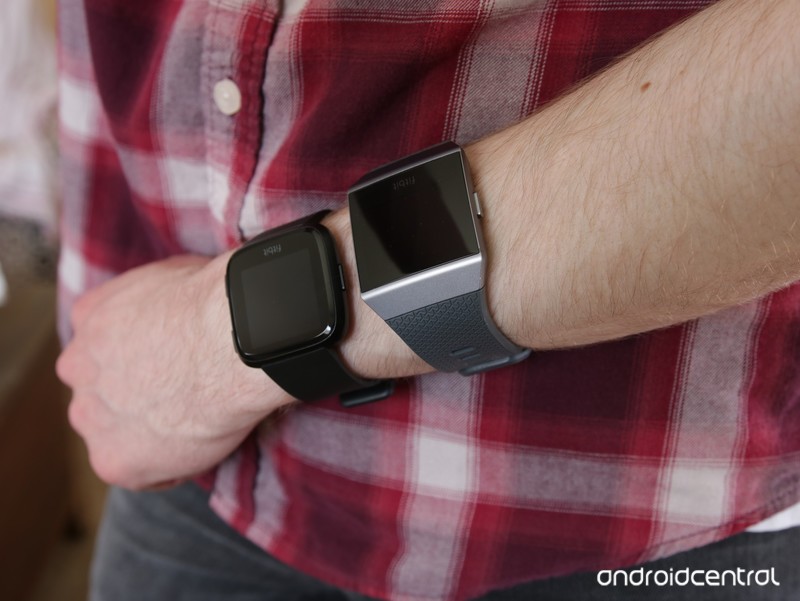
Fitbit Versa (left) and Fitbit Ionic (right)
The Fitbit Versa looks like the love-child of a Pebble Time and Apple Watch, and that honestly works towards its benefit. The watch feels great on my wrist, and when Fitbit says it’s the “lightest metal smartwatch you can buy in the U.S. today”, it’s not joking around. The Versa practically disappears once you strap it on, and this makes wearing it for hours on end a joy.
Practicality isn’t the only thing the Versa gets right, however. Not only does the Versa feel good, it also looks good. Fitbit went with a squircle design for Versa’s body, and it’s available in Black, Graphite, Silver, and Rose Gold colors with a variety of different bands.
Versa looks right at home when worn at the gym with a sports band, but throwing on something leather or metal dresses it up nicely for a night out on the town. This flexibility with its design is really what wins me over, and it’s something I think Fitbit knocked out of the park.
Proprietary bands

Speaking of watch bands, it’s worth mentioning that Fitbit decided to go with proprietary ones. The watch bands here are different than the Ionic’s, and you can swap them out by moving a small metal nub that’s on each one. They’re not as easy to take on and off compared to the Ionic’s bands, but they often feel more secure thanks to the new mechanism.
Fitbit sells a number of bands in different colors and materials directly on its website, but you can also find a good selection of third-party ones on Amazon that cost considerably less.
Battery life is great
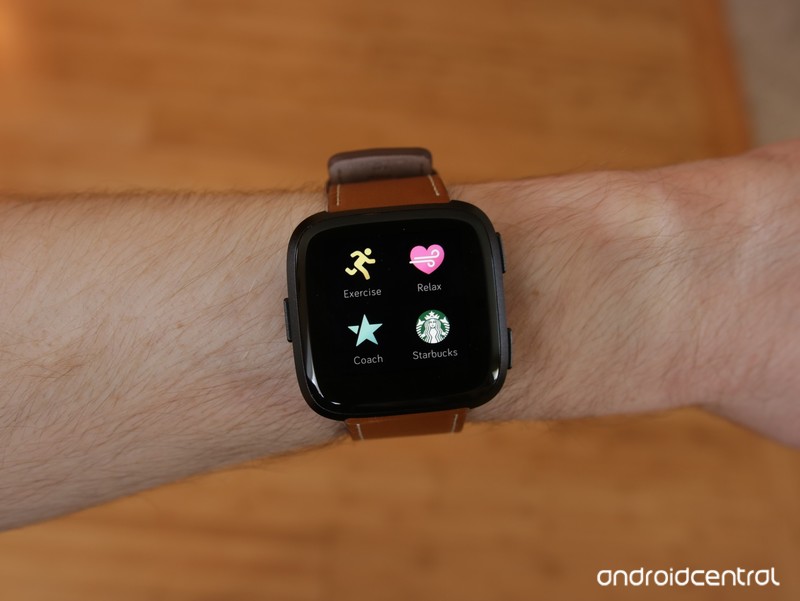
Battery life on the Fitbit Ionic is easily one of its best features, and despite the smaller size of the Versa, Fitbit’s touting that it can still get 4+ days of use on a single charge.
With the first review unit of the Versa I received, I was only seeing around 1-2 days of use before being forced to place it back on the charger. After contacting Fitbit and getting it swapped out for a fresh model, I was pleased to see that my shorter endurance was nothing more than a fluke.
The Versa that I have now consistently sees 4 days of continuous use before needing to sit on the charger, and if used sparingly, it’s possible to even pull 5 days out of it.
There’s no GPS
Although the Versa has most of the same features that the Ionic does, one thing you won’t find is built-in GPS. As such, if you want to go for a run/walk and see a path of where you go, you’ll need to bring your phone with you.
The lack of GPS is not a big deal.
I personally prefer to have GPS on my smartwatches, but that’s also because I’m a huge running nut. This likely won’t be a huge deal for most people, and anyone that needs built-in GPS that badly likely won’t blink an eye before picking up the Ionic.
NFC is only available with the Special Edition
Fitbit introduced Fitbit Pay with the Ionic last October, and this allows you to use the watch to pay for things at grocery stores, vending machines, and other places that accept NFC as a form of payment. Fitbit Pay makes a return to the Versa, but only for certain models.
In the U.S., only the Special Edition Versa comes with NFC to support Fitbit Pay. The Special Edition also comes with an exclusive fabric band in two color options, and this will set you back $30 more compared to the standard variant. However, if you live in Asia or Europe, NFC/Fitbit Pay will be available on all models.
The Versa is an excellent fitness-tracker
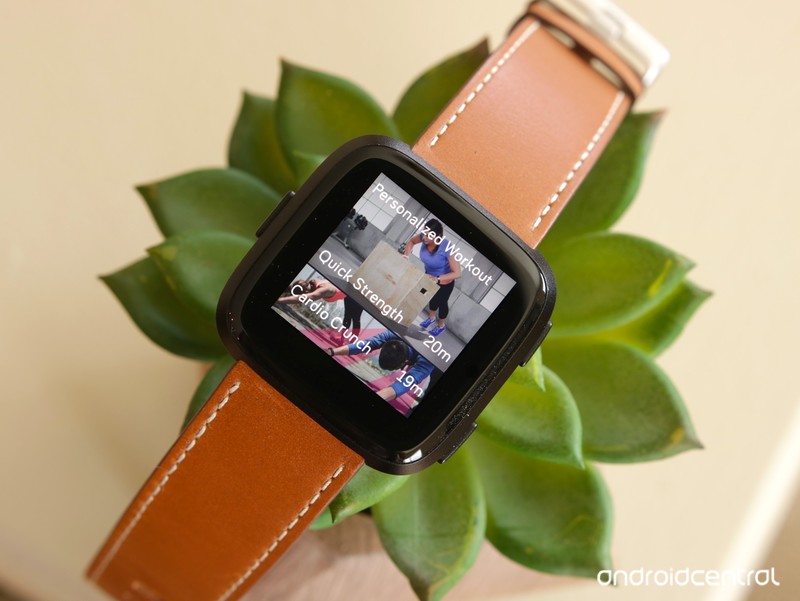
This should go without saying, but the Fitbit Versa is a superb fitness-tracker. It can do basic things like track your steps, calories burned, distance, stairs, and active minutes, but the Versa also goes far beyond that. Wearing the watch to bed will track how long you sleep and the quality of your rest, and Fitbit’s PurePulse heart-rate tracking keeps tabs on how fast or slow your heart is pumping 24/7.
The Exercise app can record a variety of workouts, such as Run, Walk, Treadmill, Weights, and more, and you can even use Versa to log your swims thanks to 50M water-resistance. If you want to take things a step further, there’s also the Fitbit Coach app.
Fitbit Coach offers guided workout routines directly on Versa’s screen, and there are three included out of the box. If you decide to pay $39.99/year for Fitbit Coach, however, you’ll get up to six that often change based on your performance and fitness level.
Fitbit OS 2.0 is polished and fast
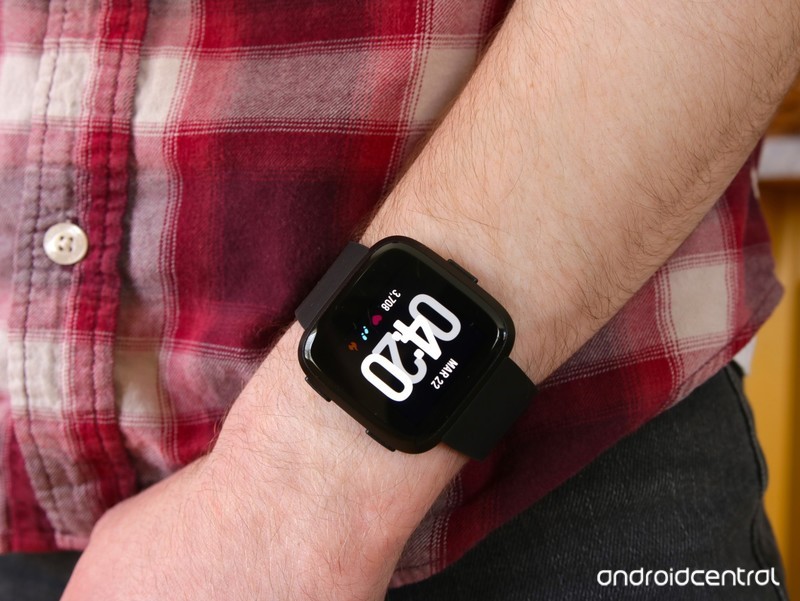
Fitbit OS powers the Versa, and this is the same operating system that shipped with the Ionic. Fitbit has since updated the platform to v2.0, and it offers a lot of welcome improvements.
The Fitbit Today app now shows more information than ever, including your three most recent workouts, a 7-day graph for your primary goal (such as steps, calories, etc.), and your resting heart-rate for the past week. Apps open faster, animations are considerably smoother, and you can now use Deezer to store music right on the Versa (in addition to Pandora and any local music you already own).
Quick Replies are coming in May (Android only)
When paired with your phone, the Versa will notify you of any incoming calls, text messages, calendar appointments, and notifications from any other apps you’ve granted permission to. Being alerted of these things is great, but as it stands, there’s no way to interact with these things. Thankfully, this will soon be changing.
You’ll be able to use five customizable responses.
This coming May, Fitbit will add Quick Replies to the Versa and Ionic, allowing you to reply to texts, WhatsApp messages, and more right from your wrist. There will be five pre-loaded responses that you can send, and you’ll be able to customize what these say in the Fitbit app (up to 60 characters per response).
Quick Replies are currently an Android-only feature, meaning that they won’t work if you pair the Versa with an iPhone or (shudder) Windows Phone.
Pricing starts at just $199
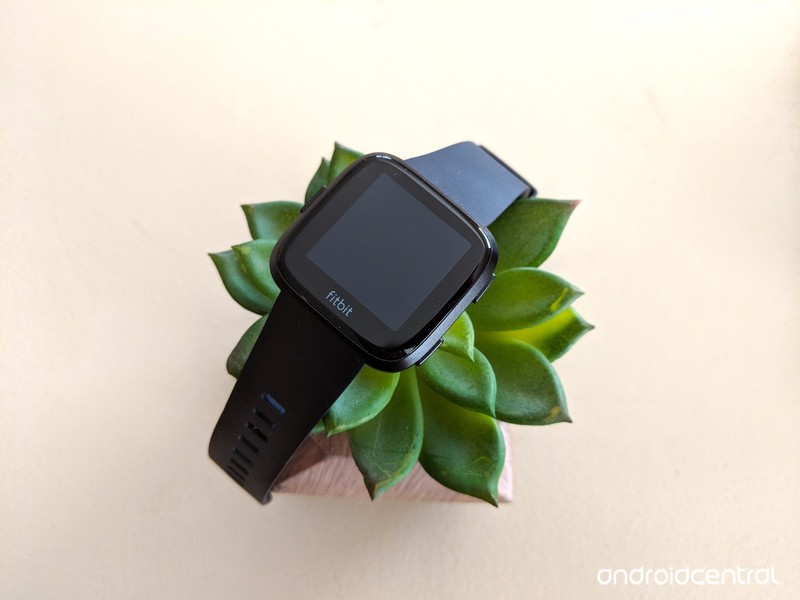
If you’re interested in buying the Versa, it’ll cost you $199.95 for the standard version and $229.95 for the Special Edition. The standard option comes in Black, Rose Gold, and Silver colors for the body, each being accompanied by a matching silicon band.
The Special Edition offers a woven fabric band in addition to the regular silicon one, and it’s available with a Graphite and Rose Gold body.
You can buy it right now!
If you want to buy the Fitbit Versa for yourself, you can pick it up at Fitbit’s website or at “major retailers worldwide.’
As mentioned above, the regular model costs $199.95 and the Special Edition will set you back slightly more at $229.95.
See at Fitbit
Updated 4/16/18 – Updated sections about battery life and availability.
Best Android Phone Under $700 in 2018
- Best overall
- Best for battery life
- Best in compact size
Best overall
Google Pixel 2

See at Best Buy
The smaller of Google’s Pixel phones is fantastic, thanks to a no-nonsense design and plenty of features to get enthusiasts and average users alike excited. For a starting price of $649, the Google Pixel 2 mirrors the last 5-inch flagship with a manageable size and sleek hardware.
But it has a laundry list of upgrades, including a faster processor, more default storage, a better-calibrated OLED display, and, of course, a stupendous 12MP camera that beats everything else on the market. Plus, the latest version of Android first — and for three years.
The battery life can be a little weak compared to larger phones, but considering it’s $200 less than the Pixel 2 XL it’s easy to say the standard Pixel 2 is a better overall value.
Bottom line: There’s nothing quite like the Pixel, which marries hardware and software into an exceptional Android experience.
One more thing: Verizon will tout the Pixel 2 as an “exclusive” device, but you can buy it unlocked to use on whatever carrier you wish.
Why the Google Pixel 2 is best
If you weren’t a fan of the first Pixel’s looks but enjoyed everything else about it, the Pixel 2 is for you. Available in three awesome colors with a soft-touch metal finish that’s perfect to hold without a case, the Pixel 2 is easy to use in one hand, extremely performant and reliable, and easily has the best camera on the Android market today.
Add to that the fact Google will first give its Pixel phones updates to the latest version of Android, but it’s also promising three years of updates, which is unprecedented in the Android space. Google has done a lot to improve the reliability of the Pixel 2 (despite some early software issues) and battery life has also improved considerably over the first version.
Best for battery life
Huawei Mate 10 Pro

See at Amazon
Unlike its predecessor the Mate 9, Huawei’s Mate 10 Pro is an absolute looker — and it clearly positions itself right next to the flagship competition. Metal and glass are finely crafted and filled with top-notch specs, and its Leica-tuned dual cameras are capable of some wonderful shots with the help of the Kirin processor inside.
Alongside all of that, the Mate 10 Pro hits it out of the park with battery life. The combination of a 4000mAh battery, efficient processor, somewhat-restrictive software and a 1080p display make this a true two-day flagship for many people, and that’s rare today.
The only downside, as ever, is Huawei’s EMUI software. Though it has gotten better with Oreo, it still has many areas that are rough on the eyes, not very functional or inexplicably broken when it comes to integrating with third-party apps.
Bottom line: It’s a true flagship with all of the best specs, and incredible battery life. You just have to give a little in terms of software experience.
One more thing: When searching for a Mate 10 Pro, make sure you’re getting the U.S. unlocked model so that you have proper network bands and warranty support.
Best in compact size
Sony Xperia XZ2 Compact

See at Best Buy
Sony’s new Xperia XZ2 comes in a “Compact” size, and that also brings with it a smaller price — just $649 retail. The 5-inch 18:9 display and rounded body make this feel like a more modern phone than previous Sony models, albeit at the cost of some of that distinctive Sony design language. On the other hand we get water resistance, a rear fingerprint sensor and stereo speakers — making this a phone with very few compromises.
Internally, the XZ2 Compact has top-notch specs despite its smaller size. A Snapdragon 845 processor runs the show, and all of the supporting cast is here to offer up a flagship-level experience — and a 2870mAh battery should be enough for most people. The 19MP rear camera is a good improvement over the last generation as well, even though it still lacks OIS.
Bottom line: For a lower price, you get a little less phone — but this is absolutely a flagship in every way but screen real estate, and some may even prefer its manageable size.
One more thing: The Xperia XZ2 Compact is only available unlocked in the U.S., and won’t be fully available until mid-May.
Conclusion
The Pixel 2 is a fantastic phone with so much going for it, and it happens to be under $700 as well. For a larger size and longer battery life you can pick up a Huawei Mate 10 Pro for about the same price, and for something smaller you can go with the Xperia XZ2 Compact.
Best overall
Google Pixel 2
See at Best Buy
The smaller of Google’s Pixel phones is fantastic, thanks to a no-nonsense design and plenty of features to get enthusiasts and average users alike excited. For a starting price of $649, the Google Pixel 2 mirrors the last 5-inch flagship with a manageable size and sleek hardware.
But it has a laundry list of upgrades, including a faster processor, more default storage, a better-calibrated OLED display, and, of course, a stupendous 12MP camera that beats everything else on the market. Plus, the latest version of Android first — and for three years.
The battery life can be a little weak compared to larger phones, but considering it’s $200 less than the Pixel 2 XL it’s easy to say the standard Pixel 2 is a better overall value.
Bottom line: There’s nothing quite like the Pixel, which marries hardware and software into an exceptional Android experience.
One more thing: Verizon will tout the Pixel 2 as an “exclusive” device, but you can buy it unlocked to use on whatever carrier you wish.
Update April 2018: The Google Pixel 2 is still our top choice in the sub-$700 segment, but we’ve also added the Huawei Mate 10 Pro as a good choice for a larger size and longer battery life. The Xperia XZ2 Compact joins the list as a great choice in a smaller size. The LG G6+ drops on account of its age, and the OnePlus 5T leaves as we get ready for the OnePlus 6 to launch.
Inside BMW’s Autonomous Driving Campus and plans
Dr. Dirk Wisselmann, senior expert for autonomous driving at BMW, tells me that the automaker’s first level 3 car will have the technical capabilities for level 4 or 5 highway driving. “We can create a software update (for the car) and inform our drivers, ‘We are are very confident on this road. We are very sure nothing can happen. You can sleep if you want to.’” He makes sure to note that this is a best-case scenario.
“The idea is that we really have to develop a car today on a highly sophisticated level.”
We’re sitting in the automaker’s latest research center built specifically for that highly sophisticated car. Or in BMW’s case, two cars. One is the all-electric level 3 iNext that will be sold to the public. On the highway, the car should be able to drive itself under set circumstances.

The other is a fleet vehicle with level 4 (and potentially level 5) capabilities that will be part of BMW’s upcoming branded ride-hailing service.
The automaker plans on delivering both of these vehicles in 2021. BMW has been erring on the side of caution when it comes to autonomy (I’m reminded of this multiple times while in Munich). Who can blame them with the recent Uber tragedy and Tesla Model S accident?
It’s important to remember that cars are not phones or laptops or even electric push scooters. Sure the technology inside automobiles is advancing far quicker than ever, but automakers still have to produce software and hardware solutions that appease regulators and, more importantly, keep drivers safe.
When a smartphone freezes up, you just restart it. When a car freezes up at 80 miles an hour on the freeway, it’s suddenly an uncontrollable death machine. So whatever resources BMW wants to throw at autonomous car research are welcome.
But making sure the automaker’s 2021 plans (and beyond) come to fruition means it’s decided to go all in on self-driving research. With that in mind, BMW opened its Autonomous Driving Campus near its headquarters in Munich, Germany, this week. The facility’s 23,000 square meters (5.6 acres) will eventually accommodate 1,800 employees and 500 vehicles.

While I attended the grand opening of the campus (that’s still under construction), there are already employees at the site working. During a tour of one of the completed buildings, the automaker showed off how it plans to achieve autonomy in the future and change the way it works. Instead of a single team working on an entire system, sub-tasks (features of a system) are assigned to various departments to tackle problems in a fast-paced environment. BMW compared it to how startups work and touted how agile this will allow them to be.
The automaker noted that since deploying its test fleet in California, it has racked up 24 million kilometers (14.9 million miles) in data. But 95 percent of those miles were tested in a proprietary BMW simulator using data from its test cars, Pegasus the open-source scenario database, and a scenario editor. The result is something that looks like a video game where researchers fine-tune edge case situations to see how BMW’s AI reacts to certain events.

Other companies like Mercedes, GM and Waymo also use simulators to test and train their AI. It’s become an important part of the research. It’s nearly impossible to encounter every situation while driving test vehicles. It’s completely impossible to recreate and slightly tweak those situations to account for changing weather and road conditions and the presence of more (or fewer) vehicles, pedestrians and other objects.
Of course, all the car data has to come from somewhere. During a sensor demonstration, BMW shared a new solid-state LiDAR system that it says has double the range and 2.5 times the resolution of what’s currently on the road today. On its test vehicles, laser-based sensors are placed in the front center and sides and rear. The result should be a higher-quality image of a car’s surrounding area than what we’ve seen in the past.
Typically a sensor helps parse the objects it detects and passes it on to the vehicle’s computer. BMW has decided to use the raw data directly from the cameras, LiDAR, radar, etc, combine it and do its own object detection. So instead of three pieces of hardware telling a computer if they see a person, the internal CPU uses the combined raw data to “see” a pedestrian.
BMW also believes mapping is part of that data-gathering package. “It’s very important. We see it as a different sensor. With our onboard sensors, we are creating a live map of just what’s happening around the car and we have a live map coming from Here,” Dr. Wisselmann told Engadget. The live information and saved map data are overlaid to make sure the car is where it says it is.

Nokia’s Here maps was acquired by BMW, Audi and Daimler in 2015. Mercedes uses it to for Active Distance Assist Distronic on the new S-Class to slow a car down if the map determines an upcoming corner is too sharp for the car’s current speed.
BMW’s iNext won’t be the first level 3 car available for purchase. That distinction goes to Audi’s 2019 A8. Unfortunately, there are regulatory issues that determine when and where the technology can be deployed. BMW is hoping by 2021 countries (and states) will have figured out how to accept vehicles like the iNext and A8.
Meanwhile, the automaker is determining how to actually navigate the autonomous future. The new Autonomous Driving Campus is not just a solid step in the right direction, it’s a huge leap both financially and in how it builds cars generally. If an automaker isn’t working on this issue, it risks being left behind.
BMW wants to make sure it does this right. It wants to be cautious. Seriously, they told me that over and over again. But that’s important. Not just for the automaker but for the entire industry. Being careful about introducing these types of features keeps drivers safe and cars out of headlines.
BMW is known for fast cars. But fast doesn’t necessarily mean unsafe and a giant facility dedicated to making sure its first self-driving cars are conservative on the roads is a good thing.
Ray tracing explained: The future of hyper-realistic graphics
Ray tracing has long been gaming’s holy grail. A method of creating hyper-realistic lighting and graphics, for years ray tracing has been promised as the technology that will take games the next step closer to total realism. Ray tracing has perennially been just on the horizon, but at GDC 2018, but NVIDIA and Microsoft both showed off technology that could make ray tracing a reality.
Typical graphics technology, struggle with how light works. Most games used rasterization, which draws a frame almost the same way someone paints a picture, one bit at a time, and with a lot of approximation. Ray tracing hews closer to how light works in the real world, by modelling millions of beams of light, and calculating how they’d bounce around a scene.
This is actually the technique that movie studios use to make modern special effects look so good. But those film studios have render farms of dozens of computers running for hours or even days to ray trace each individual frame in a special effects shot. A game needs to be able to crank out at least 30 frames per second on your one lowly computer. There just hasn’t been enough computational power in the average computer to run ray-traced graphics.
But here’s where there’s some interesting news. At GDC 2018, Microsoft and NVIDIA demoed new technology that supports ray-tracing in games. Microsoft’s tech, called DXR, adds software support for ray tracing to DirectX 12, the toolset that underpins most Windows games. NVIDIA announced support for DXR as well as hardware-acceleration for real-time raytracing for its Volta line of graphics cards. AMD also announced driver support for DXR, and some updates to its own ray tracing technologies called ProRender.
NVIDIA’s RTX is potentially really exciting. Hardware acceleration is part of what makes things like playing back HD video so smooth on most modern computers, and it’s probably crucial to real-time ray tracing. NVIDIA, Microsoft, Epic Games, Remedy and a few other studios have shown off incredible demos of ultra-high quality game footage using ray tracing and being rendered in real-time.
It’s a huge technical achievement to get footage like this rendering in real time, but there are a few reasons why it may still be a while before you see ray tracing in your favorite games.
UK reportedly preparing for a Russian-backed cyberattack
As tensions between the UK and Russia continue to mount, both sides appear to be bolstering themselves for retaliatory cyberattacks. The Times reports that Prime Minister Theresa May has been receiving intelligence risk assessments regarding a potential Russia-based cyberattack that might result in the release of embarrassing or compromising information about UK ministers, members of parliament and others. Unnamed security sources told The Times that in the case of an attack on UK infrastructure, British officials were prepared to launch their own cyberattack against Russia.
British intelligence officials are on the alert for such an attack that may serve as retaliation for both the UK response to a nerve agent attack on former Russian spy Sergei Skripal and his daughter as well as this weekend’s strikes on Syrian chemical weapon storage facilities, development centers and bunkers — in which the US, France and the UK all participated.
Intelligence sources told The Times that British politicians could be singled out in a Russian attack and that the nation’s cyber-intelligence agency and the Ministry of Defense were prepared to retaliate “proportionately.” “It wouldn’t be impossible that they get through in some way that really hurts us. If they aggressively come after us, we will certainly have the ability to do some stuff to them. But unlike Russia, we abide by the law, so anything we do would be proportionately done,” said one source. Another added, “They’re more likely to revert to targeted information and try and cause as much embarrassment and chaos as possible.”
Via: Reuters
Samsung Expected to Begin iPhone X Plus Display Production in May
Samsung will begin manufacturing OLED displays for a new iPhone X and iPhone X Plus next month, according to Taiwan’s Economic Daily News.
Mockup of iPhone X and iPhone X Plus alongside iPhone 7 Plus via Reddit user SpaceKonk
The report claims Samsung will restart its production line in May, with plans to double its production capacity in June. The timeline appears to be slightly ahead of schedule, as it was supposedly believed that Samsung would not begin production until the end of June, or the beginning of the third quarter.
The report is a good sign that Apple’s widely rumored trio of 2018 smartphones will be released simultaneously, including a new iPhone X, a larger iPhone X Plus, and a mid-range LCD model with Face ID. The new smartphone lineup will likely be announced in early September and available to order later in the month.
This would contrast with Apple’s staggered release of the iPhone 8, iPhone 8 Plus, and iPhone X last year. While all three models were unveiled in September, iPhone 8 and iPhone 8 Plus pre-orders began September 15, while iPhone X pre-orders didn’t begin until October 27, nearly a month and a half later.
The delayed launch of the iPhone X was attributed to reported production challenges with the TrueDepth camera system powering Face ID. Those issues have since been resolved, and shouldn’t have any effect on the 2018 launch.
All in all, getting your hands on Apple’s flagship new smartphone may be quicker and easier this fall. But, as with any iPhone launch, pre-order availability will likely be limited, so early adopters will probably still need to act fast.
Related Roundup: 2018 iPhonesTags: Samsung, OLED
Discuss this article in our forums
 AIVAnet