


Suicide, violence, and going underground: FOSTA’s body count
Maybe you’ve noticed a sudden flood of updates to Terms and Conditions recently from the internet services you use. A close look at those agreements will show that many are GDPR related, but some are most definitely not.
Welcome to the culture of fear, ushered in by the passing of FOSTA-SESTA.
For example, Twitter’s latest Terms update includes a clause about kicking you off the service if “you create risk or possible legal exposure for us.” At the same time we’re seeing these updates, a sex workers’ rights blog reports: “One person has already taken their life because of this [FOSTA] legislation.”
FOSTA is a deeply flawed bill that claims to stop sex trafficking, but works directly against law enforcement efforts to do so and was opposed by the Department of Justice. Everyone from the ACLU and EFF to actual sex trafficking organizations say it is a terrible, harmful, deeply flawed law. Lawmakers didn’t fact-check it, question the religious neocons pushing it, nor did they listen to constituents. It has bipartisan support and bipartisan opposition.
Still, you may think that FOSTA only affects the 42 million sex workers in the world trying to use the open internet. But you’d be wrong.
The law legalized sex censorship online, and now we’ve got a body count for it. Literally.
Let me explain. In the past month net neutrality ended and FOSTA was signed into law. The end of net neutrality will curtail what we can see and access in regard to the internet. FOSTA places control over what we can say into the hands of internet companies, thanks to the US government. Due to impossibly loose language and civil/criminal penalties for companies, it also dictates who can and cannot use online services that are central to the daily life of internet citizens around the globe.
The law conflates sex work with sex trafficking, and much ado has been made about Craigslist shuttering its personals and Reddit deleting community forums before the law was even signed. Not to mention all the others, like life-saving violent-client blacklists and vetting resources.

In what’s become an elaborate game of cover-your-ass, internet giants are taking the definition of sex work to extremes in their eagerness to censor, shut down, and eject anyone who even talks about it.
Twitter’s new Terms update is just one example. Facebook on Wednesday updated its “Community Standards” regarding “Sexual Exploitation of Adults” to prohibit “sexual solicitation slang terms” and “Offering or soliciting sex or sexual fetish partners.” In case you didn’t know, Facebook was a huge, vocal supporter of FOSTA. In what Techdirt described as Sheryl Sandberg’s “glowing, but factually inaccurate, support for SESTA.” She wrote it would “make sure that the internet becomes a safer place for all vulnerable girls, children, women, and men who deserve to be protected.”
But industry cornerstone Cloudflare really put a pin in it last week. It’s a company that people in infosec and wider tech communities think of as the good guys. The content delivery service (among other things, like DDoS mitigation and security) showed what to expect from organizations whose primary stated company value is “free speech.”
Cloudflare’s General Counsel Doug Kramer told Engadget that FOSTA “poses a challenge to every internet company.” Mr. Kramer explained the company’s objections to the law, repeatedly stating “It is a bad law that sets a dangerous precedent.” He also stressed the company’s role in lobbying lawmakers for changes and clarifications. “FOSTA tears a big hole in Section 230,” he said. “We think that it makes the Internet a little less free than before, and we’re going to continue to do everything we can to make changes to this law.”
Yet actions speak louder than words. Less than a week after Trump signed FOSTA, a social network for sex workers (and others, including journalists, with over 55,000 users) went offline without notice. “Switter” had been hosted on Cloudflare, and the company unceremoniously pulled the plug, allegedly cutting off Switter’s access to its data logs. Founder, Assembly Four, told press the only notice it received was an email from Cloudflare’s legal team saying service was terminated due to terms violations.
Cloudflare’s General Counsel would not confirm to Engadget what exactly triggered its booting of Switter from its services. “Under FOSTA, when we have knowledge or a complaint that anyone might be violating that law, we have to act and examine,” Kramer said.
When pressed if there had been a complaint or if the company’s actions were voluntary, Mr. Kramer repeated that FOSTA is terrible, specifically in that it requires websites to act if they have knowledge any of their clients or customers could be in violation of the law. “One of the elements under the law that triggers it is knowledge (and we lobbied to clarify this),” he said. “We had information that raised an issue we felt we had to follow up on.”

Matthew Prince, co-founder and CEO of Cloudflare Inc.
So perhaps Switter’s only real crime was Cloudflare finding out about it. In Cloudflare’s case, FOSTA has run sex workers — and any traffickers trying to hide among them — firmly underground.
Cloudflare, you may remember, made headlines recently for another high-profile ejection: it joined Google, YouTube, Twitter, Sendgrid, Zoho, PayPal, Apple Pay, Discord, Reddit, Spotify and Facebook in kicking nazis (in the form of Daily Stormer) off its service. After Stormer drew attention for condoning the death of Heather Hayer in Charlottesville, Cloudflare announced it would no longer do business with the site because Daily Stormer had bragged that Cloudflare supported its mission.
The thing is, Cloudflare felt really, really bad about kicking the nazis off its service. Matthew Prince, co-founder and CEO of the company, told CNN he regretted the decision because “it sets a dangerous precedent when a company that most of your viewers have never heard of is effectively deciding what can and cannot be on the internet.” Prince added later that he hated kicking them off and was determined to never censor hate speech again.
We asked how Cloudflare’s decision regarding sex workers reconciles with its regrets over Daily Stormer. “I think we have expressed similar regret over the decision,” Kramer stated. “In the case of Daily Stormer it was ‘do the right thing’.”
Between Switter and Daily Stormer he said, “They are fundamentally different circumstances.”
Cold comfort. Never mind Facebook: We all know they’re the world’s biggest and most eager censor. Internet companies — the gatekeepers of free speech — are afraid of what the US government will do to them without knowing exactly what they would be doing wrong… so they’re taking it out on us.
And we have cause to be afraid: Do you dare link to an article about Stormy Daniels on websites that police content with incompetent algorithms? Can you talk about the Steele Dossier’s more salacious accusations on social media without worrying about being reported by a Russian troll, or penalized by a content review farm in another country?
Under the loss of net neutrality, it’s perfectly reasonable to wonder if ISP’s will filter access to websites according to their own interpretations of FOSTA — or any kind of speech they don’t like. Sort of like how the World Health Organization is categorized as “pornography” in web filters used in Kuwait and the UAE.

At least you’re not a sex worker. They have an actual FOSTA body count to contend with now. Sex worker blog Tits and Sass wrote Wednesday in a post about FOSTA-SESTA and the simultaneous shuttering of Backpage (which was originally FOSTA’s target website):
The sex worker community online started to hear about workers going back out on the street and missing their check-in calls — as of April 14th, just based on anecdotal data passed between us, 13 workers have gone missing and two have been confirmed dead. Two workers have been assaulted at gunpoint, and I can’t even count how many other stories of rape and assault I’ve heard from people returning to or just learning the streets for the first time. One person has already taken their life because of this legislation.
Kicking sex workers off the open internet is the kind of thing many of us once thought couldn’t be possible. The stuff of Margaret Atwood fiction. The laughably bland fantasy of righty wingnuts who can’t grasp what the internet really is, or how it works.
But, you know. First they came for the sex workers.
Images: AOL (Craigslist); Bloomberg via Getty Images (Cloudflare CEO); gremlin / Getty (Woman on bridge)
Essential Phone is available in more countries, including UK and Japan
Essential announced today that it will open up its online store to more countries. Now along with US residents, those living in Canada, France, Japan, the UK and Germany can buy Essential’s products through its online shop. The Financial Times reported last July that Essential was in talks with British carriers and that the UK would be getting access to its first phone before the end of the year, but it didn’t happen. Canada’s Telus carrier has offered the Essential phone for a little while now, but only in limited color options, while Amazon started selling it in Canada earlier this month.
Starting today, we’re opening the https://t.co/5XqZeQu9cW store to orders from more countries, including Canada, France, Japan and UK. Special terms and conditions apply to these orders, so please read the information carefully: https://t.co/uZK8sLvUA5 pic.twitter.com/QXEWf8OEnE
— Essential (@essential) April 27, 2018
Essential noted in its tweet about the expansion that special terms and conditions apply to these orders. You can find terms of use and warranty information specific to each country here. And Essential also has information on additional terms that are applicable to international orders, which covers topics such as customs, duties, taxes and fees.
US customers finally got access to the Essential Phone last year after a number of delays. IDC reported in February that the company only shipped around 90,000 units during the first six months the phone was available.
Source: Essential
MoviePass no longer lets you see the same movie more than once
MoviePass just instituted a new change to its terms of service and the company will now prevent subscribers from seeing the same movie more than once. iMore spotted the update and reports that the new limitation will apply to all subscribers, new and existing. MoviePass’ website says, “We recently updated our Terms of Service to reflect that MoviePass subscribers are only permitted to see a select movie in theaters once with your MoviePass. We hope this will encourage you to see new movies and enjoy something different!”
This isn’t the first time the company has done this, however. It limited users to seeing titles just once in its earlier days as well and CEO Mitch Lowe said the rule’s reinstatement is to cut down on fraud. “When we took that policy down, we saw some people turning MoviePass into a cottage industry, standing in front of a theater selling their tickets to Star Wars, or whatever,” he told The Hollywood Reporter. Lowe also said that new features are in the works including couples plans and options that include 3D and IMAX movies.
The company has changed its model a few times since its launch, but it’s most well known for its one movie per day option. However, it recently began offering a plan that comes with a three-month trial of iHeartRadio premium but limits users to just four movies per month. When asked if the one move per day plan would return, Lowe told The Hollywood Reporter that he didn’t know. The limited plan comes as the company continues to lose money — an external auditor recently expressed concern about the company’s trajectory and its $150.8 million loss.
MoviePass’ app for Android has been updated to reflect the new terms of service, though the update for its iOS version hasn’t yet been released as of writing. iMore reports that once updated, the app grays out movies users have already seen and includes a note stating, “You’ve already seen this movie.”
Via: iMore
Source: MoviePass
There’s no escape from the harrowing truth about reality in VR
It’s been a dark, harrowing week covering the VR experiences at Tribeca Film Festival. From the devastation of nuclear bombs and air raids to a post-apocalyptic wasteland, the festival’s filmmakers relentlessly depicted scene after scene of death and destruction, all in the hopes of getting the viewer to see the impact of their actions. And because many of these works were designed for you to watch alone in the confines of VR, you’re at the mercy of the filmmakers — subject to their narrative for as long as you keep the headset on.
Using graphic material to convey brutal truths is nothing new. We’ve seen it on TV and in movies. But because virtual reality is such a closed-off and isolating medium, there is basically no escape. In the theatre or on your couch, you can whisper to your friend or discreetly check your phone; in VR, however, you are all alone.
On my own, I had to decide what to do in Hero after the virtual Syrian city I was in got bombed. I couldn’t ask a coworker what path I should take. Later, I watched a man describe how he survived the nuclear bomb that fell on Hiroshima in 1945, and even though I was technically accompanied by two other viewers, their silhouettes in the simulation looked so much like nuclear shadows it was more terrifying than comforting to interact with them. I couldn’t pull out my phone to look up the cold detached facts of the incident on Wikipedia. I was simply forced to absorb the emotional narration of a massacre.
Sure I could have closed my eyes (and I did when the objects of my phobias like whales and rats appeared), but there is no blocking out the screeching and screaming in these scenes.

This is the concept of a captive audience taken to its logical extreme, and it makes VR a uniquely powerful storytelling medium that the filmmakers at Tribeca this year used with little restraint. The festival has its roots in activism, so it’s no surprise that cause-related topics were the most popular. That’s not to say that there weren’t lighthearted experiences on display. There were quirky interactive music-making games, nostalgic tours through a hoarder’s paradise and even a vacation simulator for the escapists. But for the most part, Tribeca’s VR artists chose to impress upon viewers some heavy messages. Many also wanted their work to galvanize people into action — whether it’s signing up for a campaign or saving lives.
Now that VR creators have grown comfortable with the technology, they’re not only exploring deeper topics, but also making use of the distraction-free zone that the medium creates to drive home their points. The stories would have been powerful in any format, but with an audience that’s basically trapped, storytellers have unprecedented control over the viewing environment. And Tribeca 2018 has shown us that the kid gloves are off. VR is no longer just a fun coloring book; it’s a canvas waiting to be painted into a flag and waved at rallies and parades.
Click here to read all the news from Tribeca Film Festival 2018!
Ford’s decision to kill most of its cars was inevitable
American drivers have made up their mind. Bigger is most certainly better and the Ford Motor Company has reacted. This week the automaker announced that over the next few years it would be phasing out all its cars (except for the iconic Mustang) in favor of SUVs, trucks and commercial vehicles (vans) in the United States. Don’t @ me about the upcoming Focus Active, it’s a crossover, it’s not a car. The surprise wasn’t that it happened, the surprise is that it took so long.
It wasn’t that long ago that many drivers regarded SUVs as gas-guzzling behemoths that took up more than their fair share of the road. And yet, sales of these vehicles grew. And grew, and grew (small SUVs are up 27.8 and luxury SUVs are up 9.7 percent between March 2017 and March 2018), and now if you’re an automaker that’s not in the SUV game, you might as well close up shop.
Meanwhile, car sales have slipped. Actually, to be honest, they’ve driven off a cliff and exploded in a ball of fury like an accident from an 80s movie. Between March 2017 and March 2018, the sales of mid-size automobiles have gone down 14.5 percent. Small cars, didn’t fare much better with a 10.8 percent drop.

It turns out, we don’t want small, nimble, fun cars. We want SUVs and crossovers that we can fill with stuff (and friends). And even our friends’ stuff. As a nation, we want to sit high up in our driver’s seats and survey the land. To see a few more feet ahead of the folks slumming it down there in their sedans and coupes.
We want to live large. Everything needs to be bigger. From the number of seats in our cars, thanks to third-row seating, to the amount of cash we throw at the oil companies as we watch the numbers at the gas pump tick higher and higher.
The weird effects of our love of cavernous vehicles is the new crossover segment (up 18.2 percent between March 2017 and March 2018). It’s both a small SUV and a car that’s higher off the ground. Most look like hatchbacks with lift kits. But you can tell your friends you bought an SUV but still be able to parallel park it without calling out a survey crew.
An even more bizarre result of our love of sport utility vehicles, that are rarely used for actual “sport,” is their electrification. Jaguar and Hyundai know the score and their upcoming EVs are both crossovers. We can be green while pretending that we’re going to use all that cargo space all the time. This year, we’re really going to take up kayaking. So goodbye gas-guzzlers, hello… electricity-eaters?
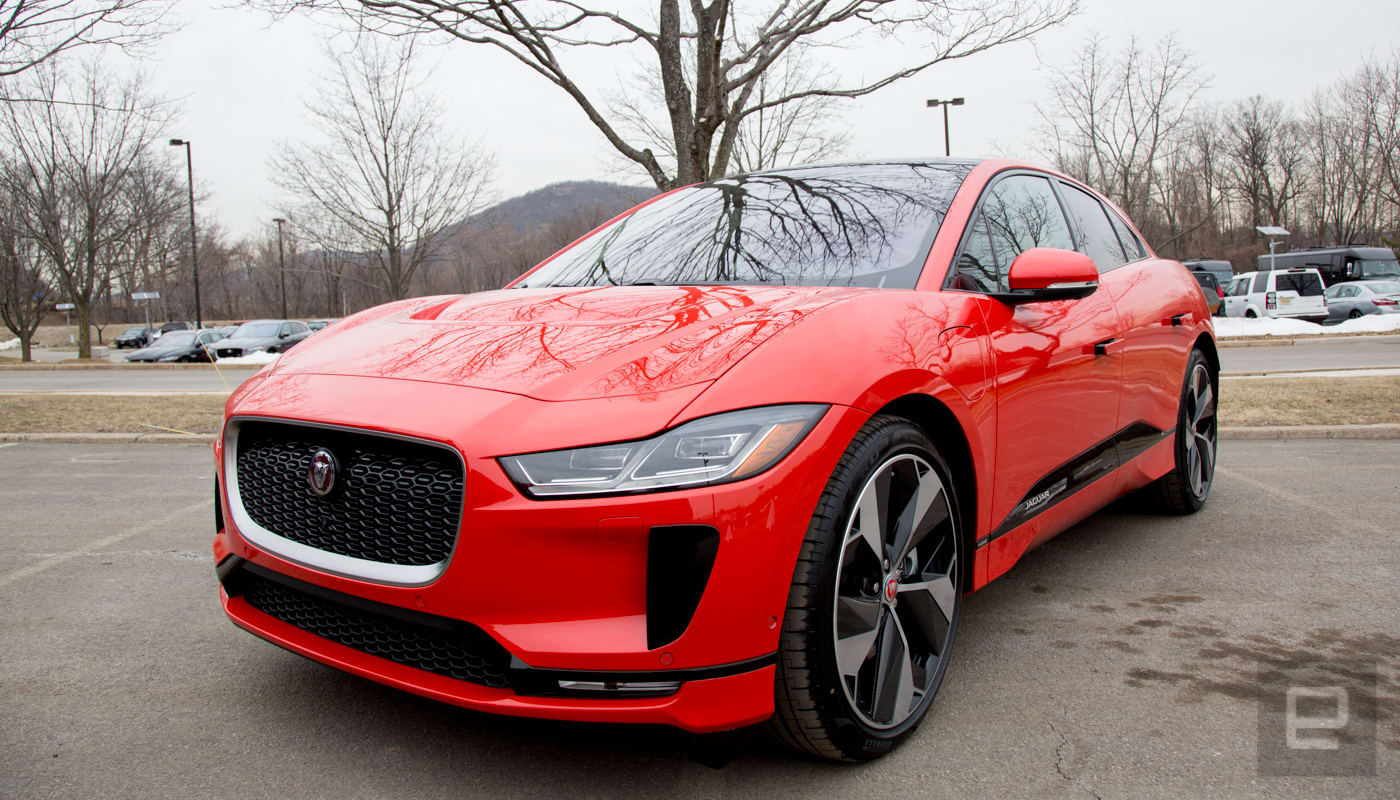
Fortunately for fans of cars, the EV and hybrid space still has a ton of sedans, coupes and hatchbacks in it. The Nissan Leaf, Chevy Bolt and Tesla Model 3 are all doing pretty well for their respective automakers. So far none of those companies have decided to drop car sales in the United States. But who knows, we might see a Bolt Crossover soon.
Of course, the car isn’t going away. At least not yet. While other countries have fallen under the spell of the SUV, it’s not the full-on lust that we feel for the large vehicles here in the US. There are still plenty of car buyers in Europe, Asia, Africa, really everywhere else on the planet. So even though you’ll lose access to the Ford Fiesta in the United States, you can still move to the UK and get one there. The market for those vehicles is still there and Ford is more than happy to fill it.
Who can blame Ford for getting out of the car game in the United States, though? The automaker was just looking at the numbers and, let’s face it, they’re bleak. Why invest in a market that’s shrinking? Instead, the automaker can focus on what the people want. And dammit we want to an SUV that has the capabilities drive over the scattered ruins of a post-apocalyptic wasteland. Or at least be high enough so we don’t have to reach up to get our lattes at the Starbuck drive-thru.
MacRumors Giveaway: Win a USB-C Multiport Travel Charger From Satechi
For this week’s giveaway, we’ve teamed up with Satechi to offer MacRumors readers a chance to win a Type-C 75W Travel Charger for powering both USB-C and USB-A devices.
Ideal for travel, the Satechi USB-C Multiport Charger comes equipped with one USB-C port compatible with Apple’s USB-C MacBook and MacBook Pro models, two standard USB 3.0 ports that offer 2.4A for charging iPads and iPhones at fast speeds, and a Qualcomm Quick Charge 3.0 port that charges compatible Android devices faster.
The built-in USB-C port delivers 60W of power, which is suitable for the 13-inch MacBook Pro but won’t be able to charge the 15-inch MacBook Pro at full 87W speeds. It is, however, likely enough power for non-system intensive tasks and it will keep your machine topped up and ready to go.
You can also use the USB-C port with a USB-C to Lightning cable for fast charging the iPhone X, iPhone 8, iPhone 8 Plus, and iPad Pro models.

All four of the ports can be used at the same time to provide a max of 75W of power to your devices. An LED light at the top indicates when something is being charged, and the removable AC plug lets it collapse down for portability.
Priced at $64.99, the USB-C Travel Charger has been designed specifically with travel in mind, so it supports a broad input range (100 to 240V) to meet international voltage requirements.

We have 10 of Satechi’s USB-C Travel Chargers to give away. To enter to win, use the Rafflecopter widget below and enter an email address. Email addresses will be used solely for contact purposes to reach the winners and send the prizes. You can earn additional entries by subscribing to our weekly newsletter, subscribing to our YouTube channel, following us on Twitter, or visiting the MacRumors Facebook page.
Due to the complexities of international laws regarding giveaways, only U.S. residents who are 18 years or older and Canadian residents (excluding Quebec) who have reached the age of majority in their province or territory are eligible to enter. To offer feedback or get more information on the giveaway restrictions, please refer to our Site Feedback section, as that is where discussion of the rules will be redirected.
a Rafflecopter giveawayThe contest will run from today (April 27) at 11:00 a.m. Pacific Time through 11:00 a.m. Pacific Time on May 4. The winners will be chosen randomly on May 4 and will be contacted by email. The winners will have 48 hours to respond and provide a shipping address before new winners are chosen.
Tag: giveaway
Discuss this article in our forums
Apple Working on AR/VR Headset With 8K Displays and No Smartphone or Computer Tether
Apple is working on a powerful headset that will support both augmented reality and virtual reality applications, according to an inside source that spoke to CNET.
The headset, which is codenamed T288, features an 8K display for each eye that would be untethered from either a computer or a smartphone.
Instead, it would connect to a “dedicated box” using a high-speed short-range wireless technology called 60GHz WiGig. The box would be powered by a custom 5-nanometer Apple processor that’s “more powerful than anything currently available” and similar to the custom chips that Apple will use in future Macs. At the current time, the box resembles a PC tower, but it “won’t be an actual Mac computer.”
The future of VR is expected to be cordless devices — and Apple wants to bring its trademark simplicity to the setup. The box would use a wireless technology called 60GHz WiGig, the person familiar with Apple’s plans said. A second-generation version, called 802.11ay, would boost speeds and range and make the technology more attractive for high-end VR headsets that aren’t tethered to computers.
Users will not need to install special cameras in a room to detect their location as with some available VR headsets. All of the technology will be built into the headset and the box.
Past rumors have suggested that Apple is working on a number of virtual and augmented reality prototypes using a secret research unit, but recent information has been specific to a set of augmented reality smart glasses. It is not clear if the smart glasses mentioned in previous rumors are the same as this new AR/VR headset.
Those rumors have suggested Apple is developing an augmented reality headset with a dedicated display, a built-in processor, and an “rOS” or reality operating system that’s controlled using input methods like touch panels, voice activation, and head gestures.
Apple has been heavily focused on augmented reality with the launch of ARKit in iOS 11, and Apple CEO Tim Cook has said multiple times that he believes augmented reality is more important than virtual reality. Augmented reality, says Cook, is the “larger of the two” because it allows people to “be very present,” but he has admitted that virtual reality has interesting use cases for education and gaming.
Apple is said to be aiming to launch the headset in 2020, but CNET’s source warns that work on the device is in the early stages and plans could be changed or scrapped.
Related Roundup: Apple VR ProjectTag: cnet.com
Discuss this article in our forums
UAG Plasma and Plyo Cases for the Galaxy S9 Review

Urban Armor Gear (UAG) makes some of our favorite cases. They don’t come cheap, but the notion of “You get what you pay for” totally applies here. So what makes them so special? Well, they strike such a good balance between durability and slimness. And do so with unique style.
 UAG cases and colors available for the Galaxy S9 and S9+.
For Samsung’s new Galaxy S9 series, UAG offers four variants of its classic, composite design. We had our pick of two, and we went with the toned-down Plyo case for the Galaxy S9 and the more traditional Plasma case for the larger S9+. Let’s check ’em out.

Plasma Case
We’ve looked at UAG’s classic composite cases in the past, and the feel here is very familiar. Namely, the time-honored topographic stiffener design, hexagonal texturing, and faux screws continue to be carried over. The newest tweaks you’ll find are on the details around the perimeter, and the vibrant color additions.


We weren’t sure about this seemingly bright Cobalt blue color based on the product page. Our worries were calmed when we got it. The blue is actually deep and lush in person. It pairs fantastically with the Midnight Black Galaxy S9+, since the case has black accents throughout.
Speaking of which, the matte plastic you’ll find around the frame of the case is of a thick, rubbery quality – very durable stuff. It also contrasts nicely with the glossy body. Just like we said in the beginning, this case has equal amounts of looks and protection (rated with the military MIL-STD-810G impact standard).

That said, we imagine that not everyone will fancy the industrial facade. All of UAG’s cases follow this design language. The Plyo series is the only one that makes a departure (toning things down), which is why we’ve chosen to look at it too.
For being so rugged, we’re surprised at how slim the Plasma case is. It has bulk in just the right places, such as beefed up corners, suitably raised front lips to protect the phone’s display, and the ribbed sides to enhance grip. The cutouts for the phone perfectly align. We especially appreciate that the openings for the bottom port are enlarged to make sure the case doesn’t get in the way with usual phone operation.


We must say that although the case provides ample protection, UAG doesn’t opt to cover up the curved design of the Galaxy S9 – the sides slope down to follow the form of the phone and let the eye-catching curved display to show. Case makers always struggle with Samsung’s non-conventional design. The downside here is that, at the right wrong angle, the glass can be impacted here.
We’ve always loved the way UAG does the physical button overlay. They have the perfect thickness and tactile feel. The power button (and now also the Bixby button) have a very identifiable ridged texture, while the volume rocker is thicker on its ends. A pleasure as ever to use.
 The power button.
Plyo Case
In a nutshell, the newer Plyo case is provides the same protection as the Plasma but in a more traditional form. UAG simplifies the back panel, removing all the texture of the composite case. This makes the Plyo look like the common transparent cases you find out there.

We initially thought this was a lite version of UAG’s signature case, but in-hand, it feels just as tough. UAG manages to maintain the stiff and sturdy quality (and military durability rating) despite the slimmer package. The design also retains the thicker frame (and corners), raised lip protection on the front, ribbed sides, and the same meaty buttons as on the Plasma. Though, the case has a tighter fit than most of its type, something to consider if you’ll be taking it on and off.


Being UAG, there is a distinctive flare in the design, though subtle. At a close look, you’ll catch that the back panel has a trapezoidal slope (with creases connecting all four corners). It looks nice to us and a great way to address the otherwise standard look to the case.

Final Thoughts
In our opinion, the only thing not to like about UAG’s cases is the price. It’s not exorbitant, but it’s hard to overlook the whole selection of cases on Amazon that cost much less. You can somewhat justify it by the excellent protection that UAG supplies (which it does without turning your phone into a brick), but there are still less expensive options that can too. We’ll say, if you love UAG’s design and plan to have your phone for the long run, then it’s worth it.
Official UAG Galaxy S9 page
How to create an Alexa Blueprint on your Amazon Echo
Build stuff just for your household, and have some fun with it!

Amazon’s Alexa platform has more Skills in it than any other smart home system, giving the Echo and Echo Dot a ton of things to use that can’t really be found anywhere else. Easily the coolest addition to the Alexa Skills lineup to date, however, is one which allows you to make your own Skills to only be used inside your household. These Skills are called Blueprints, are super simple to set up, and range from being a tremendous amount of fun to a serious and potentially life-saving resource.
Here’s how to take advantage of Blueprints for your Amazon Echo.
What is a Blueprint?
Amazon has created a series of question and answer shells based on a number of topics, and made it easy for you to plug in the answers you want. Blueprints turns those collections of answers into separate Skills, making it possible for anyone in your home to access this information and use it as they see fit. Currently, Blueprints are built so you can create your own private versions of a ton of different things. Amazon breaks these up into four categories:
-
At Home is a collection of Skills for interacting with your family. These can be critical bits of information like how to get in touch with the Vet when someone is pet sitting or a list of instructions for the Babysitter, or you can create a collection of your favorite spots around town for house guests to hear when you’re not home.
-
Storyteller is filled with ways to make your own stories for Alexa to read, complete with sound effects at the right time. You can create special bedtime stories for kids when you’re away from home, scary stories to play during a sleepover, or longer stories featuring your favorite princess or hero.
-
Learning & Knowledge is the category for education. You can create flash card-style questions for your Echo to fire at you as you get ready for the day, assemble a collection of facts to be read to you as you cook, or create a quiz on a preferred topic to help you study.
-
Fun & Games is the biggest section by far, filled with unique ways to smile either alone or with a group. Create a couples quiz for your friends to get themselves into trouble with, add jokes only your family will get to a special Skill, or see how far you can get playing the Letter Game with your kids.
The key to these Blueprints is they are simple to make, and they belong to only you. These Skills are created in your account, and only work on your connected Echo units, so you can have a lot of fun building something that won’t leave your home.
How to create an Alexa Blueprint

Creating your own Alexa Blueprint doesn’t happen from within the Alexa app, but instead from the special Blueprint website. You can access this site from your phone or your computer. To get started with your Blueprint, you first need to choose which kind of Skill you want to create from the list of available options.
Once you have chosen, you will be taken to a form to fill out the answers needed for Alexa to appropriately answer as many questions as possible. Some of these questions will be required to complete the Skill. If you try to move on to the next step without answering those questions, the website will prompt you with red text to fill out those sections.

After you have answered all of the questions in the Customize section of the form, hit the blue button labeled Next: Experience to be taken to the next section. The Experience part of the Blueprint handles the way Alexa responds to opening and closing the Skill.
You can personalize these messages however you see fit, and add as many alternate responses as necessary for when your Skill is used multiple times in a day. Once you have completed this section, you can name your Skill and send it off to your Alexa account.

Amazon doesn’t let you name your Skill anything it can’t pronounce in your language, but there are some other limitations. Special characters and punctuation cause some problems, so you may find yourself trying a few names before one is accepted.
Once a name is approved, you’ll be asked to log in to your Amazon account and the Skill will be uploaded to your Echo units. This takes a couple of minutes, but when it is finished you’ll see a green bar over the Skill and you will be ready to go!
How to use a Blueprint on your Echo
Alongside the name of your Skill, the Blueprint website has the verbal command associated with it for you to read. This is usually something simple like “Alexa, open X” where X is the name of the Skill you created in Blueprint.
Once you are able to access the Blueprint from your Echo, it will be available on every Echo connected to your Amazon account.
Amazon Alexa
- Which Amazon Echo should you buy?
- Get more Alexa Skills
- How to enable and disable Alexa Skills
- How to customize Flash Briefing
- How to get sports updates
- How to sync your calendar with Alexa
- How to shop with Alexa
- Send voice messages with Alexa
See more at Amazon
Take a nostalgic trip to Another World [Retro Review]

Another World is still a daunting challenge for gamers over 25 years later.
I’ll admit that I totally missed out playing Another World when it was initially released in 1991. Granted, I was three years old at the time of its initial release but still — no excuses. Another World was one of the more celebrated independent games of the early 1990s — an era of gaming that’s known for creating some of the most notoriously difficult games.
Another World absolutely falls into this category. Released as Out of this World for its North American release, this is a cinematic-style platformer that was widely celebrated by critics and gamers at the time for its art style and story.
Having never played the game despite it being ported and released on over 20 different gaming platforms, I decided to look through the Google Play reviews for the 20th Anniversary Edition released for Android back in 2011 — the general consensus seems to be “wow, this game was amazing when I was a kid, but tough as nails then and still tough as nails to play today.”

Lacking the nostalgic connection from my childhood, would Another World draw me in? To start, the story focuses on Lester, a scientist who is accidentally transported to an alien world when an experiment goes wrong. Lester must figure out the rules of this strange new world, avoid the many deadly creatures that inhabit it, and find a way to escape.
It was a super cool concept back in 1991, and still is over 25 years later, but this the game does you NO favors when you’re just starting out. The game barely explains the controls, which default to intuitive touch controls with an option to switch to on-screen buttons. There’s also no directions given as to where to go or what to do, so you’re kind of left to figure things out through trial and error. When you discover your blaster pistol, you’re kind of left to figure out on your own that a single press shoots a laser, a medium press puts up a force field, and a long press can destroy walls.

I’ll admit, I almost gave up on this game in the first few minutes because I couldn’t figure out how to get past the first big enemy. I immediately commiserated with all those poor kids who struggled with this game back in the day.
Fortunately, one of the benefits we enjoy in 2018 that wasn’t available to gamers in 1991 is the Internet. I was able to easily find a walkthrough to lead me towards the solution, and I leaned on it to get through some of the tougher sections that sometimes require leaps of logic that certainly explains why so many gamers at the time had a hard time beating it.


Once you’ve figured out how to manage the controls, and after a lot of trial and error figuring out what the game wants you to do, you work your way through what is still a pretty intriguing game. Even without the nostalgic connection, I was pretty hooked on seeing this game through to completion. I also appreciated the option of switching between the HD remastered graphics and the old-school graphics from the original game.
Ultimately, it’s hard to justify the premium Google Play Store price for this title unless it’s a total nostalgia trip for you. Otherwise, your best bet to check out this game in its full glory is via GameStash, where Another World is but one of hundreds of cool games available to play unlimited and ad-free for just $4.99 a month. Check it out and start your 30-day free trial.
See at GameStash
 AIVAnet