


6 months after Pixel 2 launch, Google has nothing to say of its success — but hardware focus is bigger than ever

Other parts of the hardware and operating system business take the spotlight instead.
Alphabet just released its Q1 2018 earnings, and I followed along with the earnings call afterward to pick up further context on the numbers from Google CEO Sundar Pichai. The most striking thing from the call, at least as it pertains to us here in the Android world, is that the word “Pixel” was used only once — mentioned as an aside when talking about overall customer satisfaction with a wide range of Google hardware products. This comes despite the fact that we’re just about 6 months removed from the Pixel 2 and 2 XL launch, and this earnings report comprised the first full quarter of the phones’ retail availability — a perfect time to tout some numbers.
Google Home, Nest, Android One and Chrome OS took the focus in Q1.
After covering what are honestly more important parts of Google’s business, including the advertising and search divisions, Pichai gave a quick rundown of the Google hardware division in addition to the latest in Android and Chrome OS. He made a point of specifically calling out how excited he was about the launch of Android One devices at MWC 2018, as well as the growth of Chrome OS in education with new devices and service improvements. Looking specifically at hardware, Nest’s growth in the last year was heralded, as was Google Home for its worldwide sales expansion and high customer satisfaction numbers. Pixels? Nothing to mention one way or the other. Previous earnings calls at least make some mention of Google’s phone hardware, even if it’s a generic statement about how well they’re being received in the market or how proud the company is of the months following the launch.
For fans of the Pixel 2 and 2 XL, this is moderately worrisome. Not because it’s at all important to a Pixel 2 owners how many Pixels sold compared to other devices, but because hearing confidence in Google-branded phones from the company’s leadership means we will continue to expect developments and improvements in the Pixel line — for the Pixel 3, and beyond.
Google thinks its hardware development is top-notch, but its marketing and sales aren’t up to speed.
But we shouldn’t lose hope. This earnings report marks several changes that could positively influence the development of future Pixels. Early in the quarter Google completed its acquisition of talent from HTC, totaling over 2,000 employees, now integrated into Google’s hardware division (which also now includes Nest). Subsequently, Google’s “other revenues” segment that comprises hardware and the Play Store, among other small segments, increased its revenues by $1 billion in the last year to $4.35 billion — not huge by Alphabet standards, but big enough to warrant its own segment in the earnings release and too big to ignore.
Pichai also had one final statement that was rather intriguing regarding hardware, saying that Google now has “all of the end-to-end capabilities of a world-class hardware organization” to match its already strong software offerings. He notes that it takes a very long time to scale these operations, specifically noting how difficult improvements in in-house-designed silicon — like the Pixel Visual Core — take to hit the market. The next step, he says, is scaling up go-to-market strategies to drive adoption of Google’s own hardware to match its strong capabilities in product development. The time frame mentioned for getting the scale where they want to see it is 2 to 3 years, Pichai said, and “we’re committed to getting there.”
When you see comments like that, you can’t say that Google is slowing down on its hardware efforts. Talking about long-term road maps and big investment in all parts of the hardware division bodes well for all of its products — just how much of that is spent on Pixel phones in particular has yet to be determined.
Google Pixel 2 and Pixel 2 XL
- Pixel 2 FAQ: Everything you need to know!
- Google Pixel 2 and 2 XL review: The new standard
- Google Pixel 2 specs
- Google Pixel 2 vs. Pixel 2 XL: What’s the difference?
- Join our Pixel 2 forums
Best Buy
Verizon
Google Store
Project Fi
Where to buy a used VR headset

VR is expensive. Buying used might be the solution.
Google Daydream, Samsung Gear VR, and the PlayStation VR are taking the world by storm when it comes to amazing VR experiences. The only problem for some people is the price of getting started. For instance, the PlayStation VR is about $349 on Amazon for a bundle with Skyrim. But what if we don’t have that kind of money?
No worries, we’re here to walk you through all your buying used options!
What to consider before buying a used VR headset

Do you have everything that’s required?
You’ll need to make sure you have a dedicated VR space, which is extremely important. Your entire gaming experience can be ruined if you find yourself trying to play in the smallest space possible because you keep running into walls or furniture!
For the PlayStation VR you’ll obviously need to have a PlayStation 4 to run the device. A PlayStation Pro is recommended for the best PSVR experience, but you can still get a good quality of gameplay on the PlayStation Slim. Not just that, but the PlayStation Slim goes for about $299 which is $100 cheaper than the Pro.
Now with the Google Daydrea you will need to ensure that you have a device that is supported to run the headset.
Last but not least the Samsung Gear VR also requires supported devices you can check out here by clicking “Compatibility” on the menu bar.
Cleanliness

Let’s just get right to it: Buying a used VR headset thethe somewhat akin to buying a used pair of headphones. It’s been tight against someone’s face and they’ve likely sweat into it with perhaps an eye goober or two has slipped into the mix. Or their house is a lot like mine where there is a little gremlin who’s super interested in everything they can’t use. So, from jelly-fingers to other human eye-gunk you need to be okay with where your headset has been and know how to clean it off.
- The Google Daydream is extremely easy to clean and disinfect. Since most of the surface is hard plastic, most times you can wipe down with disinfectant wipes and call it a day.
- The PlayStation VR is a bit more of a pain to clean, but it’s still very possible.
- The Samsung Gear VR has replacement parts available should you need to replace foam for more cleanliness. Other than that, here’s how to clean your device.
Working condition
Is the used VR headset that you’re considering in working condition? If at all possible, test it to make sure. This will be nigh-impossible if you’re buying online, so you should ask for photos of the hardware working and more detailed photos of the hardware (ports and all) to make sure it’s not damaged.
Also, be wary when you come across sellers who are marketing their equipment “as is.” If there aren’t enough photos to suggest that the hardware is not damaged and in good working condition, ask for more. If the seller refuses, no soup for you.
Better yet, most of us have smartphones now (all the cool kids, anyway), so ask the seller to send you a short video of the equipment in action.
Buy only from trusted sellers

Until VR really takes off, Craigslist just isn’t going to be a valid source for used VR headsets. If you’re purchasing your used VR headset online from sites like eBay or Swappa, make sure you’re buying from trusted sellers and only those with great track records.
Where to buy used VR headsets

Here are the few places we’ve found used VR headsets and so far:
- Swappa: Google Daydream, PlayStation VR, Samsung Gear VR,
- eBay: Google Daydream, PlayStation VR, Samsung Gear VR
- Amazon: Google Daydream, PlayStation VR, Samsung Gear VR
- Call your local GameStop.
We all know GameStop is not one to cut prices down as cheap as buying it from a private seller, but you can get a console for a discount that can come with a warranty.

Where else?
Have you found used VR headsets from any reputable sellers that we may have missed? Out the back of a hatchback in an alley doesn’t count! Sound off in the comments below!
Updated April, 2018: We’ve updated links and information about buying used headsets as well as price updates!
The first major ‘PUBG’ tournament takes place in Berlin this summer
Player Unknown Battlegrounds, aka PUBG, has been pushing its way to the eSports realm for quite some time now. While it has moved beyond the straight-up battle royale genre it popularized with new gameplay like War Mode, it’s the behind the scenes tech that will have the most impact on the game’s success as an eSport title, including its 3D replay systems and help from chipmakers like AMD. Now, according to a report from Polygon, PUBG‘s first major eSports tournament take place July 25th through the 29th.
While one of the running jokes about PUBG is that it is eSports “ready” with its many bugs, the PUBG Global Invitational 2018 will drop 20 professional teams into a $2 million tournament with prizes for both first-person and third-person champions. Teams can qualify via regional tournaments in North America, Europe and Asia, reports Polygon. The site also notes that this isn’t the first tournament, per se; the Gamescom PUBG Invitational took place last August in Germany, but only had a $350,000 prize pool.
Source: Polygon
A VR film forced me to confront my fear of the sea

The first time I realized I was terrified of whales, I was surprised. I had been scrolling through Instagram and saw a picture of a boat adrift in the ocean with the gigantic shadow of a whale below it. The hairs on the back of my neck stood, and I was overcome with an unshakable sense of foreboding. Those animals are massive, and I know they’re generally gentle (orcas aside), but the thought of such a large swimming creature gave (and still gives) me the heebie jeebies.
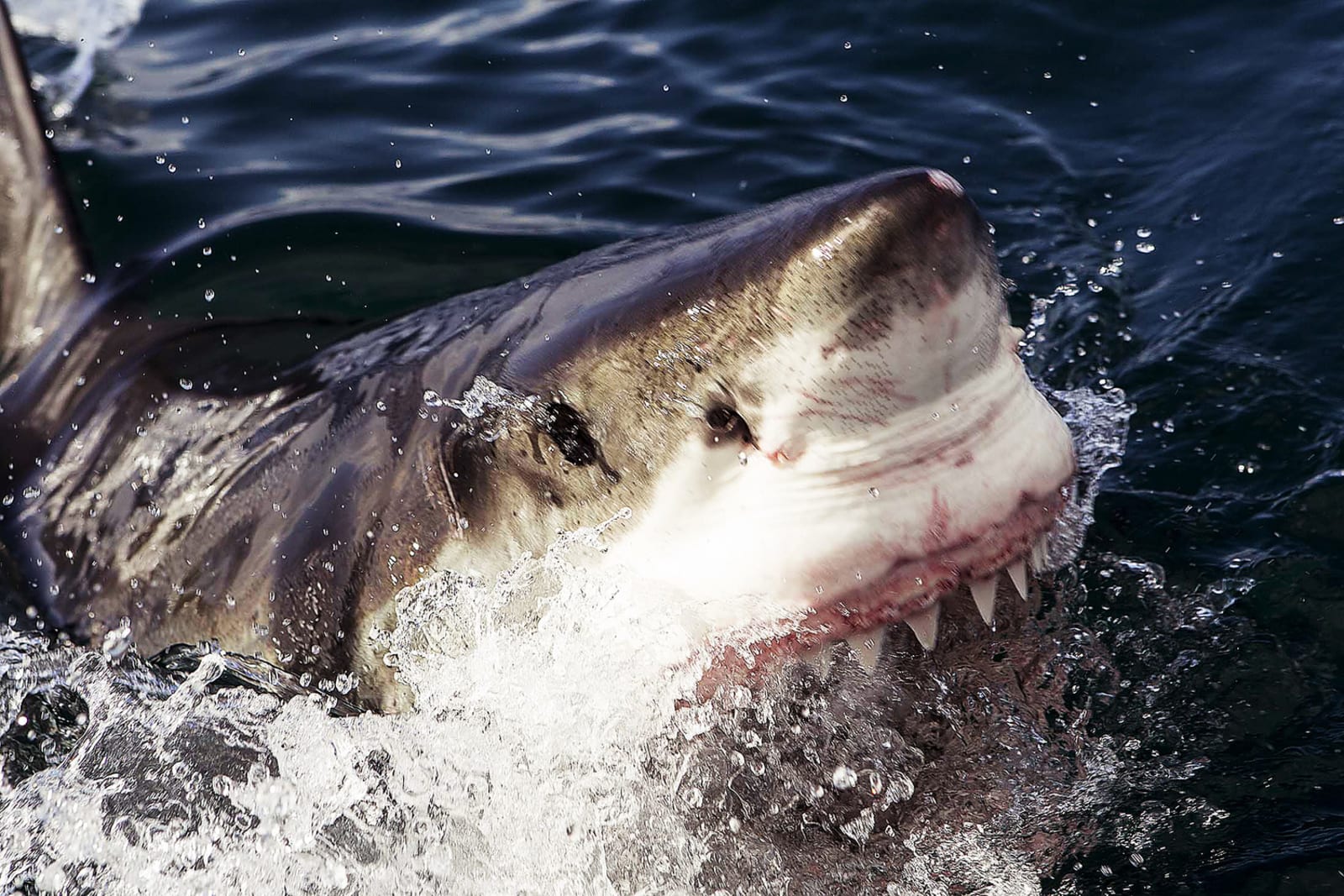
Considering I also get creeped out by schools of fish, my whale phobia isn’t actually too shocking. Many fears are irrational, and trying to overcome them is no easy feat. Photographer Michael Muller confronted his own deep fear of sharks by “learning to dive without protection and cage-free with great white sharks,” ultimately documenting that journey in his new VR film series Into the Now.
Premiering at Tribeca Film Festival’s VR Arcade this year, Into the Now is an exploration of a wide range of issues and was produced by Ridley Scott’s RSA VR studio. From how virtual reality can help stress disorders like PTSD and anxiety, to climate change and overfishing, the first episode was a meandering ride that covered myriad topics. It could do with more focus and a coherent plot or message. Muller expects to have 10 to 15 installments of Into the Now, and having each episode look closer at one part of the conversation, whether it’s climate change or treating phobias, could prevent the material from becoming overwhelming.
During my preview, I was seated in a Positron Voyager virtual reality chair, which I can best describe as a swivel chair that turns around for you. It not only ensured I didn’t have to keep turning my head around to focus on where the action was happening, but gave me a floating sensation that made the underwater experience seem more real. I felt like I was in a submarine looking out of borderless windows. In fact, I was so caught up that at one point I whipped out my phone out to take a selfie with the virtual school of fish, only to remember I wasn’t actually there.
Without the chair, you’ll likely still find Into the Now enchanting. It’s incredibly realistic, thanks to the high quality footage that Muller and his team captured with 9 large format cameras in 4K Stereoscopic 3D. I watched, fascinated and petrified, as they got up close with sharks, whales, stingrays and other underwater organisms. If you share my fears, you may not want to subject yourself to this — I was squirming in the chair for many parts of it because there were massive whales swimming barely a foot away from me. But those who don’t mind or love these creatures will really enjoy the experience.

Into the Now VR
Entertainment and educational value of Into the Now aside, I’m most intrigued by the potential it (and similar VR experiences) could bring in treating phobias and stress-related conditions. Muller and his team are partnering with Stanford University’s Neurology department as part of an ongoing research project on the benefits of VR for people with PTSD, anxiety and other stress disorders.
Meanwhile, Muller is looking for distribution for the series, which will next air at the Cannes Film Festival. If you’ll be there or are here in New York for Tribeca, check it out. Into the Now is a captivating ride that’ll take you briefly to a world you’d rarely get to see otherwise.
Click here to read all the news from Tribeca Film Festival 2018!
Samsung could use AR Emoji as stand-ins during video chats
Samsung’s AR Emoji may be useful for considerably more than the occasional funny reaction GIF. The tech giant recently received a US patent for a “hybrid visual communication” system that would replace live video of a person with an augmented reality 3D model (basically, AR Emoji) that reflects their facial expressions in real time. This virtual self would stand-in for you during video chats when your connection is flaky, so you could hold a call without the stops and stutters that come with low bandwidth. We’d add that it could be helpful for those moments when you’re less-than-presentable but still want to talk face to face. Just got out of bed? You won’t look quite so groggy.
The concept could even draw on ambient and biometric data (such as your heart rate or pupil dilation) to gauge your emotional state and reflect that in your avatar.
This is just a patent, and there’s no certainty that Samsung will make use of it. The company first filed the patent in March 2016, or a full two years before the Galaxy S9 arrived — Samsung might have had a chance to implement the technology by now. Even if nothing happens, though, the patent shows that Samsung has been exploring augmented reality avatar uses for a long while.
Via: Patently Mobile, The Verge
Source: USPTO
Netflix gives ‘Fast and Furious’ the cartoon treatment it deserves
With eight feature releases and a couple of short films, the Fast and Furious franchise has worked its way into the public consciousness. When you think about it, though, while the films are rated PG-13, the core concept is pretty kid-friendly: fast cars and one-liners abound. It doesn’t hurt that it’s also the sixth-highest-grossing film series of all time. That’s probably why Netflix and DreamWorks are bringing the concept to the small screen as an animated series.
The collaboration is part of a five-year relationship that has already brought 14 animated kids and family programming to Netfix based on DreamWorks properties, like Guillermo del Toro’s DreamWorks Trollhunters, DreamWorks Spirit Riding Free (there’s a naming convention here) and All Hail King Julien. There are an additional four planned series coming this year, as well.
The new Fast & Furious animated series will revolve around Tony Toretto, a teen who follows in the footsteps of his cousin Dom (played by Vin Diesel in the movies). Tony is recruited by a government agency to infiltrate an elite racing league bent on world domination, which sounds about as plausible as anything in the live-action flicks. “We are thrilled to take our fantastic partnership with DreamWorks Animation to the next level with new opportunities from the vast library of Universal Pictures,” said Netflix’s VP of Kids and Family, Melissa Cobb in a statement. “The Fast & Furious franchise is a global phenomenon beloved by audiences of all ages, and we can’t wait to get started on the new animated series that will capture the action, heart, humor and global appeal of the feature films.”
Via: Deadline
Source: Netflix
Twitch’s custom extensions can now ask for Bits
You didn’t think Twitch would offer streamer extensions without finding a way to generate money from them, did you? Sure enough, the customization feature now accepts Bits (the microtransactions you normally use to tip streamers) for on-page games and other features. Chip in a few cents and you can participate in games with broadcasters (such as arcade or trivia titles), predict who’s likely to win and mess with the streamer by voting in polls that decide what they do next.
The support is available today through dozens of extensions on launch, and it’s available to both Affiliates and Partners.
No, the thought of having to pay just to interact with a streamer isn’t thrilling — some of these features have been available for free, including channel bots that don’t require extensions. This does give you a better reason to buy Bits outside of pure financial support, however. And it’s not just another source of revenue for Twitch streamers — they can use it as a gatekeeper that keeps (some) trolls out of on-stream events. There is the chance that hosts could misuse their newfound power, but it could also create new opportunities.
Source: Twitch (Medium)
Adobe Premiere makes it easier to edit Insta360 Pro footage
Insta360’s more affordable 8K VR camera was made available for pre-orders in 2017, with a major software update in December of that same year that kicked the high-end 360-degree camera’s image processing up a notch. The camera got a stamp of approval from Google last year, too, which gives you the power to contribute to the tech giant’s Street View mapping with the device. Now Adobe just made editing 360 video captured with the Insta360 Pro much easier with a new plugin for Adobe Premiere Pro CC.
360 video typically needs to be stitched together before and after editing, making for a pretty tedious process. Now, if you’ve got an Insta360 Pro camera and a copy of Premiere, you can start editing right after import – no pre-editing stitching required. The plug-in that allows this basically creates proxy footage, a quick-stitched, lower-resolution substitute that you can edit just like regular source footage. This makes for a much quicker start to the editing workflow, and will help ameliorate any chugging your processor might do when editing 8K video. When you’re all done editing, Premiere will stitch together only the video you used in your project, further reducing the time to export.
Source: Insta360
Byton teases its second “experience-driven” vehicle
Byton wowed us at CES back in January with its first autonomous EV concept car, a smart SUV built for passenger comfort. At the Beijing Motor Show, the company teased its second vehicle concept, an electric sedan slated to go into series production in 2021.
Byton isn’t releasing details for the unnamed sedan until CES Asia in June, though we do know it’s built on the same electric platform as the company’s SUV concept. The ‘Smart Utility Vehicle’ as the company named it, is the first in an expected lineup of vehicles prioritizing the passengers’ in-car experience with dashboard-spanning screens replacing the instrument panel and swiveling seats. Conceivably, the sedan will integrate all the bells and whistles that debuted in its big brother.
It’s interesting that the SIV hasn’t even started production (it’s allegedly slated to launch in China in 2019) before the company announced its second car. After the sedan starts rolling off assembly lines in 2021, Byton will begin work on an MPV that seats seven. The ambitious plans follow the company’s announcement that it’s building a new ‘Future Lab’ in LA devoted to user experience research.
Facebook details its fight to stop terrorist content
Last June, Facebook described how it uses AI to help find and take down terrorist content on its platform and in November, the company said that its AI tools had allowed it to remove nearly all ISIS- and Al Qaeda-related content before it was flagged by a user. Its efforts to remove terrorist content with artificial intelligence came up frequently during Mark Zuckerberg’s Congressional hearings earlier this month and the company’s lead policy manager of counterterrorism spoke about the work during SXSW in March. Today, Facebook gave an update of that work in an installment of its Hard Questions series.
Facebook defines terrorism as, “Any non-governmental organization that engages in premeditated acts of violence against persons or property to intimidate a civilian population, government or international organization in order to achieve a political, religious or ideological aim.” And it notes that governments aren’t included due to a “general academic and legal consensus that nation-states may legitimately use violence under certain circumstances.” The company said that detection technology has been instrumental to its success in rooting out terrorist content as has its counterterrorism team, which grew from 150 people to 200 since June.
Focusing on ISIS and Al-Qaeda — since they pose the greatest global threat, says Facebook — the company took action on 1.9 million pieces of content in the first quarter of 2018, twice as much as the last quarter of 2017. The report also notes that 99 percent of that content was spotted without a user having to report it, with both technology and internal reviewers contributing to that rate.
Along with removing content, the speed at which it’s found and taken down is also important. Facebook says that for newly uploaded content, it was able to be identified in less than one minute on average during Q1. Quick removal of terrorist content has been a focus of European guidelines regarding social media sites.
Additionally, Facebook is also working on finding old content. It has designed tools specifically geared towards finding older content and in Q1, 600,000 pieces of terrorism-related content were removed through these means.
“We’re under no illusion that the job is done or that the progress we have made is enough,” said Facebook. “Terrorist groups are always trying to circumvent our systems, so we must constantly improve. Researchers and our own teams of reviewers regularly find material that our technology misses. But we learn from every misstep, experiment with new detection methods and work to expand what terrorist groups we target.”
Via: Reuters
Source: Facebook
 AIVAnet