


Nest will give away smart thermostats to low-income families
This Earth Day, Nest Labs, Inc. will launch a new initiative called The Power Project that will help get Nest E thermostats in the hands of lower income Americans. It’s a way to ensure that socioeconomic status isn’t a bar to accessing the energy savings that Nest’s smart thermostats can provide.
Over the next five years, Nest plans to install one million Nest E thermostats in what it describes as “low- and moderate-income homes.” To do this, the company will work with various lenders, government programs, utility companies and non-profits, including Habitat for Humanity, Fannie Mae and Southern California Gas.
The driving force behind all of this is that lower income households spend more of their income on utilities than the average US family. According to Nest, on average, an American household spends 3.5 percent of income on their energy bills. But one in five families spends over 20 percent (some even as high as 50 percent) of their income on heating and cooling their homes. Smart devices like the Nest Thermostat E can help lower those bills.
“Creating a home that takes care of the people inside it and the world around it has been Nest’s mission since day one,” Jeff Hamel, head of energy partnerships at Nest, said in a statement. “We’ve joined with Habitat for Humanity, Fannie Mae, and energy providers across the country this Earth Day to bring this mission to life through The Power Project, to connect families with the tools and programs that can help alleviate the burden of high energy costs. Every family deserves to have heat in the cold and light in the dark.”
eBay app uses barcode scanning to list your items in seconds
It’s usually a pain to list your goods on an auction or marketplace site, especially if it’s your first time. You have to describe them, choose photos and (worst of all) choose a price that will reel in potential bidders. eBay, however, thinks it can cut the process down to a few taps. It’s updating its Android and iOS apps with a simplified selling process that it claims can list a product in a matter of seconds. If you have the box for an item, you just have to scan its barcode (or, if that fails, search by name) and choose the item’s condition. After that, the app can fill in a basic description, photos and even the starting price — as elsewhere, eBay can use a mix of structured data and predictive analytics to choose a price based on what’s likely to get a response.
You can still edit the listing before you post it, so you can fine-tune the price or otherwise customize your entry if you don’t completely trust eBay’s judgment.
The company isn’t shy about who the feature is for: it’s aimed at “new sellers” who may not know the ropes. At the same time, it can help would-be buyers by providing more well-labeled listings to choose from. With that said, this approach isn’t for everyone. It won’t help if you don’t have a barcode, of course, but it’s also less than personal. If you’re selling more than what came in the box, or you want to take photos to prove your item is still intact, you’ll still have to put in some work. Think of this as a gentler introduction to eBay’s world rather than a solution for everyone’ problems.
Source: App Store, Google Play
Qualcomm will lay off 1,500 workers to cut expenses
Today, chip maker Qualcomm began the process of laying off around 1,500 workers in California. The move is a part of the company’s promise to its investors that it would cut costs by about $1 billion, according to Bloomberg.
This action comes after a hostile takeover bid from rival Broadcom. Qualcomm pledged that it would cut costs in order to improve earnings, but shareholders were more interested in Broadcom’s offer. However, President Trump intervened in the potential merger, blocking it in the interest of national security. Now, Qualcomm must take steps to improve its earnings. Cutting jobs is, unfortunately, one of those steps.
A person with knowledge of the situation told Bloomberg that these layoffs represented the majority of the job cuts Qualcomm would make, though there would be some others in different departments. The company did look at other options before resorting to layoffs. “We first evaluated non-headcount expense reductions, but we concluded that a workforce reduction is needed to support long-term growth and success, which will ultimately benefit all our stakeholders,” the company said in a statement to Bloomberg.
Source: Bloomberg
Motorola aims to keep the cheap phone crown with the G6 and G6 Play
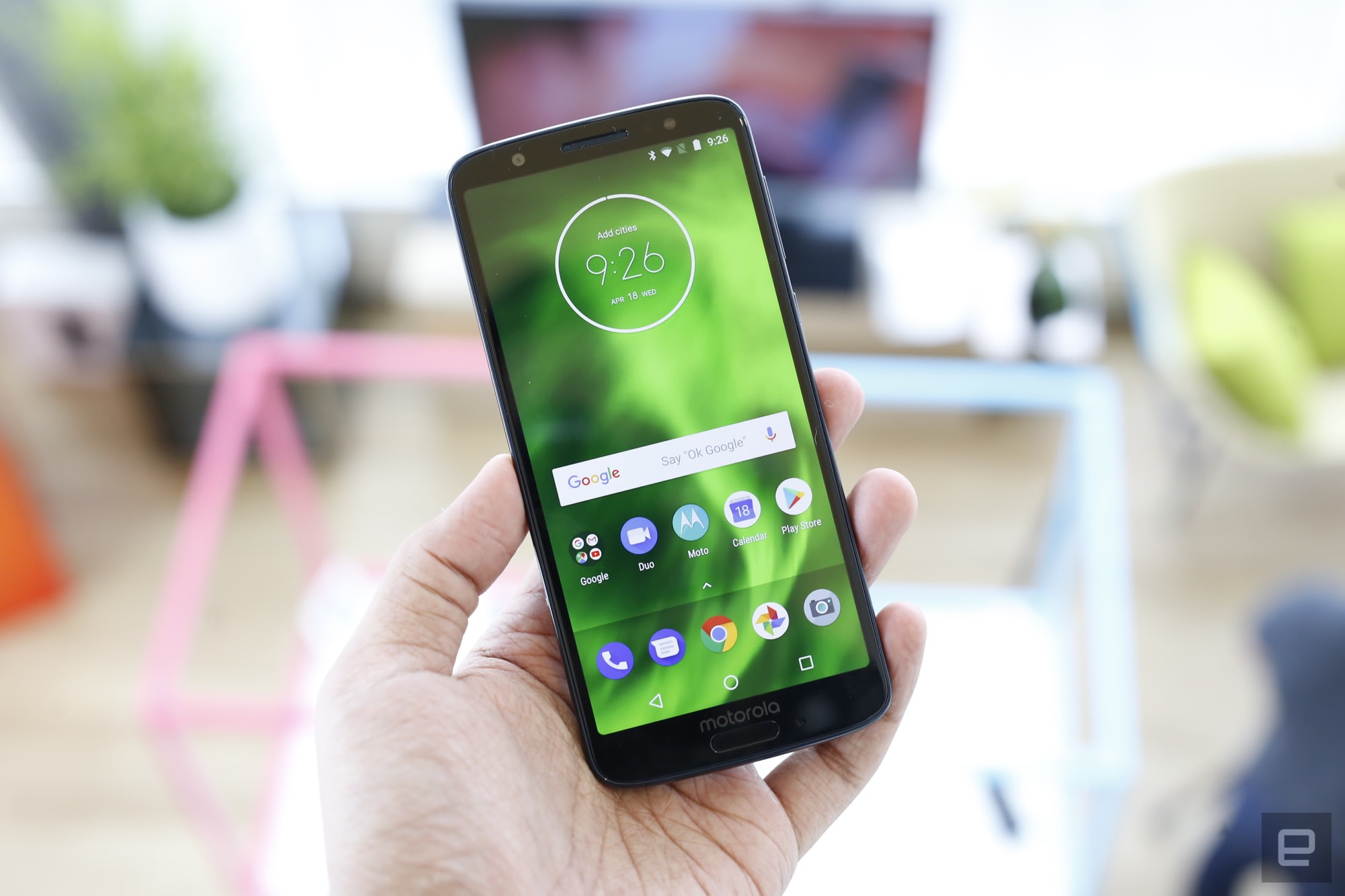
Year after year, Motorola churns out some of the best inexpensive Android phones money can buy and parent company Lenovo is eager to keep that streak alive. That’s where the new Moto G6 and G6 Play come in — Motorola has embraced some of the trends that have made this year’s premium phones so palatable, and that’s great news for smartphone shoppers who don’t feel like shelling out flagship-level wads of cash.
Now, I know what some of you are thinking: isn’t there a usually a G Plus model too? You’d be correct: the G6 Plus packs a 5.9-inch, 18:9 screen and a camera with an f/1.7 aperture and dual-pixel autofocus. The reason info is so scarce is because Moto doesn’t plan to bring it to the United States — no launch means no hands-on time and very little in the way of detail. Boo.

I’m not too disappointed, though, because the standard Moto G6 is actually quite a bit nicer than I expected. For one, it has the sort of glass-wrapped body one would normally associate with premium phones — the device’s back is wrapped in Gorilla Glass 3 for scratch and scuff protections, though it probably won’t help much in the event you drop it. The mostly metal bodies we got with last year’s G5 series could handle meetings with asphalt much better, but the Moto X4-inspired style on display will be worth the trade-off for some. (Count me in on that one.)
Motorola also jumped on the extra-tall screen bandwagon with its 18:9 Max Vision display — this one in particular is 5.7 inches and runs at Full HD+. In general it’s plenty crisp and vivid for a budget phone, but as with earlier models, you might run into some trouble in direct sunlight. Even when we popped outside to snap a few photos of the New York skyline — in the shade of a tall hotel, no less — it was sometimes difficult to read.
And speaking of the camera, Motorola fitted its G6 with a dual camera comprised of a 12-megapixel and 5-megapixel sensor. Diehards will remember that last year’s G5S Plus was the first Moto device with a dual camera, and the experience here seems very similar — expect a pleasant level of detail and lively colors. Having two rear cameras also makes depth effects possible, and under solid lighting conditions, the dual camera did an impressive job isolating our mostly willing subjects from the background. Not bad at all for a $250 phone. Like a handful of other smartphone makers, Motorola has also released the value of weaving AI into its camera experience, but its approach is a little different.
Unlike, say, Huawei’s P20, the G6 doesn’t recognize what’s in front of the camera and tweak its settings accordingly. Once you’ve downloaded the necessary databases, though, you can point the phone at landmarks and other objects to get more information about them without having to leave the camera app. It’s a great idea in theory, but it could use a little fine-tuning. When I pointed the camera at One World Trade — easily one of the most recognizable landmarks in New York City — the camera drew a total blank. Not a great start. Object recognition fared much better, though. When I pointed the camera at an apple, the G6 offered up a surprisingly pertinent list of web links. Even better, the G6 correctly identified my SLR as a Canon 6D and threw up links to even more information. I didn’t get to test these AI chops too thoroughly but considering the Galaxy S9 and LG’s V30S ThinQ couldn’t correctly identify my specific camera model, it sure seems like Motorola’s in-house AI efforts are on the right track.

Chris Velazco/Engadget
The 8-megapixel front camera has gained some new (if familiar) tricks, too. Most notably, you can now gussy up your face with a set of Live Photo effects in case you want to strap on a set of virtual rabbit ears or wail into a microphone — complete with concert lighting — without jumping into Snapchat or Instagram. You’ll also be able to use that camera to unlock the phone with your face, but it’s a purely 2D solution — that is, it checks your face against stored image data, which makes for super-fast (albeit less secure) authentication.
As usual, Motorola didn’t stray too far from stock Android 8.0 Oreo here, and I’m still perfectly pleased by that. That light touch with software combined with an octa-core Snapdragon 450 keep everything moving at a respectable pace — just don’t expect to do any heavy gaming on this thing. Depending on the model, you’ll also get either 3GB of RAM and 32GB of storage, or a slightly snappier 4GB of RAM with 64GB of storage. Don’t fret about free space too much, though: you can add microSD cards as large as 128GB. There’s also a 10W fast charging USB-C adapter in the box, for rapid refills.
The dual camera and the AI frills won’t appeal to everyone, which is why Motorola put together a more practical option: the Moto G6 Play. At $200, it’s a less expensive option than the standard G6, but you’ll get a much bigger, 4,000mAh battery for your trouble. Combine that with a 5.7-inch Max Vision screen running at 720p and a less powerful Snapdragon 427 CPU and you’ve got a device that, while not tremendously speedy, should get you through your daily routine with plenty of battery life left over. (If performance is a concern, you could shell out a few extra bucks for an improved version with 3GB of RAM instead of 2GB, and 32GB of storage rather than 16GB.) Motorola claims the G6 Play can squeeze 36 hours of use out of a single charge, but we’ll have to see about that.
Considering how well the regular G6’s dual camera seemed during our hands-on time, it’s a shame Motorola couldn’t squeeze it into the less expensive G6 Play. Instead, there’s a more traditional 13-megapixel rear camera (phase detection autofocus) with an LED flash sitting next to it. To Motorola’s credit, however, the G6 Plus definitely doesn’t feel like a $200 phone — it’s wrapped in a glossy non-Gorilla glass and has a reassuring heft to it.
Between these strong mid-range options and the more modest Moto Es the company also announced, it seems clear Motorola is trying to sew up the low-cost smartphone market for itself. The competition is only going to get more fierce as the year rolls on, but Motorola has proven itself to be one of the world’s best — if not /the/ best outright — at crafting quality, inexpensive devices. Based off what I’ve seen so far, Moto just might hold onto that crown for another year.
The Moto E5 Plus is Motorola’s biggest budget phone yet
Ever since their debut in 2014, Motorola’s Moto E series phones have garnered a very specific reputation: they’re decently competent and very, very cheap. With the new Moto E5 Plus, though, Motorola has decided to fiddle with the formula in some interesting ways. It’s easily the most premium Moto E the company has ever made, a fact made more apparent when you compare the E5 Plus to its less powerful sibling, the new Moto E5 Play. In some respects, The E5 Plus even outclasses the more modest of the two new Moto Gs announced today. It’s clear that the role of the Moto E line is shifting, but after some hands-on time, I think Motorola might be onto something here.

A quick note before we go any further: Motorola hasn’t discussed official US prices for either of these phones, leaving that task to the carriers and retailers that’ll sell them. Considering that the price tag is usually one of the Moto E’s standout features, it’s unfortunate Motorola decided not to share that info ahead of time — I’ll update this story once new information becomes available.
The first thing you’ll notice about the E5 Plus is its size — this is a big phone. Part of that is because Motorola went with a 6-inch, 18:9 LCD screen that occupies almost all of the phone’s face. For those keeping count, that’s the biggest screen ever used in a Moto E phone — it even edges out the not-for-US Moto G6 Plus’s 5.9-inch screen — and in general, colors were vivid and viewing angles were solid. The panel itself only runs at 1,440×720 — an obvious concession to keep the price down — but even now, 720p still offers a decent amount of clarity and detail. The other reason the phone is so large is because of its battery: there’s a 5,000mAh cell tucked away in there, and that’s the largest we’ve seen in a mainstream smartphone for a long time. (Just a reminder: the Moto G6 Play also announced today only has a 4,000mAh battery.)
Despite being a big beefy phone in all dimensions, the E5 Plus is wrapped in a glossy plastic that evokes a sense of cohesiveness with the rest of Moto’s new phones and feels awfully nice to hold. Tucked away inside is one of Qualcomm’s Snapdragon 435 chipsets with 3GB of RAM and 3GB of storage (though you can bump that total up with a microSD card). We’ll need to spend more time with the phone before we can pass any real verdicts on performance, but the E5 Plus certainly won’t blow you away — what else would you expect from a phone that should sell for around $200? That said, it had no trouble whipping through apps and playing videos, so users with modest needs probably won’t need to fret much.
The E5 Plus isn’t making its journey to the US alone — there’s also an E5 Play model that feels much more like one of the company’s traditional cheap phones. Unassuming plastic back? Check. Smaller, less impressive screen? Check — it’s 5.2 inches diagonal LCD running at 720p. The camera around back is a purely passable 8-megapixel affair.
To be clear, there are some nice touches here, too. There’s a fingerprint sensor mounted in the Moto logo dimple on the phone’s back, and Motorola’s Moto Actions make what would otherwise be a clean build of Android 8.0 Oreo feel a little more thoughtful and capable. Again, the performance being squeezed out of its Snapdragon 425 (or 427, depending on where you get your phone) and the 2GB of RAM onboard is adequate at best, but that just’s par for the course for these things.
Ultimately, Motorola has churned out one highly impressive Moto E and another cheaper, more traditional model. Having more choice definitely isn’t a bad thing when it comes to smartphones, but I do find my concerned that Motorola might be harming its own chances by blurring the once-firm lines between the Moto G and E series. Right off the bat, I’d personally splurge on an E5 Plus than a G6 Play, and while we’re still not sure about prices, their respective spec sheets hint that they’ll probably be pretty close. That raises a question about whether Moto really needs a cheap phone portfolio this broad in the US, but hey, for now I’m willing to see how things go.
Facebook to exclude 1.5 billion users from GDPR privacy protections
Europe’s GDPR privacy regulations go into effect May 25th and Facebook showed how it plans to comply earlier this week. What has been on many people’s minds though is whether the company will extend those consumer protections to users outside of Europe. Facebook has given a few answers to that question over the past few months, with CEO Mark Zuckerberg telling Reuters earlier in April that the company would extend it “in spirit” elsewhere but then telling Congressman Gene Green during his hearing last week, “We believe that everyone around the world deserves good privacy controls…The GDPR requires us to do a few more things and we are going to extend that to the world.” But Reuters reports that whether or not Facebook decides to offer the same protections worldwide, it’s at least making sure it can’t be punished by the European Union if it doesn’t.
Currently, around 1.5 billion Facebook users in Africa, Asia, Australia and Latin America are held to terms of service connected to the company’s Ireland headquarters. But that subsidiary will fall under GDPR jurisdiction. So soon, Facebook will change it so that only European users fall under GDPR while everyone else will be subject to the more lenient US regulations. Facebook told Reuters that the move was largely due to the “specific language” required by the new EU law but noting, “We apply the same privacy protections everywhere, regardless of whether your agreement is with Facebook Inc or Facebook Ireland.”
The new European regulations stipulate that the company can be fined up to four percent of its global annual revenue for GDPR infractions, so it’s not surprising that the company would make moves to ensure an additional 1.5 billion of its users didn’t fall under EU jurisdiction. Reuters reports that LinkedIn is making similar changes, rerouting non-European users from terms agreements with its Ireland offices to agreements through its US-based offices instead.
Source: Reuters
Startup will launch nationwide high school eSports league this fall
Professional eSports is entering the mainstream and the college competitive gaming scene is heating up. But what about high school? One Los Angeles start-up is gearing up to start a nationwide league next fall, and it’s looking for teams to sign up — but it’s not looking alone. The venture-backed organization PlayVS has partnered with the Nationial Federation of State High School Associations (NFHS) — the high school version of the NCAA — to bring eSports to 14.5 million American high schoolers in a national league.
While scattered leagues have started to crop up in the US, PlayVS has a couple of advantages. Obviously, an exclusive partnership with the association that sets the rules for most American high school sports will help make inroads. But PlayVS also has a tech platform that integrates into the games themselves, enabling the league to set up matches and track player stats.
That requires PlayVS to plug in to the game at, say, the API level, requiring the league to coordinate with publishers to get access to their video games. Worst-case scenario, a company not wishing to cooperate could lock PlayVS out of a game, preventing players from getting to compete in their favorite eSports games. But CEO and founder of PlayVS Delane Parnell is confident that publishers will see the value in getting in on the ground floor of high school-age competition.
“This partnership [with NFHS] combined with our technology and publisher relationships will help us create the first scalable competition for high school students,” Parnell said in a press release. “Esports is about more than just playing games – it can be used to help students grow their STEM interests and develop valuable life skills and since there are more high school gamers than athletes, it’s about time we foster this pastime in an educational setting.”
Just don’t expect to play any shooters, which the league is avoiding for obvious reasons. Instead, it will only field competition in Mobile Battle Arena (MOBA), sports and fighting games.
Like traditional sports, PlayVS isn’t free. To participate, each student must pay $16 per month — which ends up being cheaper on average than the hundreds to thousands of dollars they pay for each traditional sport every year. For that price, students can participate in two 3-month seasons per academic year, with playoffs in the last month culminating in offline regional and state championships, which PlayVS will pay for. Finally, there will be summer competition to bide players’ time until the first season starts in fall.
PlayVS is announcing the league today, with its inaugural season starting this October. They expect to roll out to schools in 15 to 20 states by fall.
Netflix’s Snapchat-like trailers are now on iOS
Last month, Netflix announced that it would be bringing previews to its mobile app and as of today, they’re now available. Each one is around 30 seconds long and in a vertical format, giving them a Snapchat or Instagram Story-type feel, and they’re contained in a new dedicated preview section on the app. Just scroll through the circular thumbnails to find previews you’d like to see and once you’re watching one, you can play the movie or show from that screen, add it to your list or swipe over to the next preview.
Netflix introduced video previews to its TV experience last year. The new mobile previews are currently only available on iOS, but the company says they’ll launch on Android sometime soon.
Via: Variety
Source: Netflix
Popular Sleep Cycle iPhone App Expands to Apple Watch With ‘Snore Stopper’ and Haptic Wake Up Features
Sleep Cycle, a popular and highly downloaded alarm clock and sleep tracking app available for the iPhone, today announced a new Apple Watch app that introduces more features for an even better waking up experience. With the Sleep Cycle for Apple Watch, Sleep Cycle users can enable “snore stopper” and silent wake up options.
Sleep Cycle uses “sound analysis technology” to detect when someone is snoring, subtly alerting them with a silent vibration sent to the Apple Watch for a more restful night of sleep. The company says that this will “not cause you to wake up,” but instead simply encourage you to change position and stop snoring.
Additionally, the app has a silent wake up function that taps you with haptics to wake you from sleep and avoid disturbing anyone else nearby. Sleep Cycle will also continuously track your heart rate average, providing data that you can revisit when you wake up.
Available from today, Sleep Cycle’s Apple Watch app release features a snore stopper, a welcomed added feature. In addition to the snore tracker, already available in the existing Sleep Cycle alarm clock app using patented sound analysis technology. Snoring is more likely to occur in certain positions. For example, sleeping on your back can cause your tongue and soft palate to collapse to the back of your mouth.
The Sleep Cycle snore stopper uses the silent haptics function of the Apple Watch to gently nudge your wrist when it detects snoring. The alert will not cause you to wake up. But it will have you change position without knowing it and stop snoring. Much like the old trick of sewing tennis balls onto the back of your pajama shirt. No more snore means better quality sleep – for both the snorer and to the delight of potential roommates.
Sleep Cycle on iPhone also uses the same sound analysis technology that tracks snoring to detect movement in an effort to distinguish different sleep phases and provide information on sleep length and quality. This information, which can be viewed on either iPhone or Apple Watch, is used to determine the best time to wake a sleeping person up in the morning, with the aim of cutting down on grogginess by waking people up during the lightest sleep phase.

Sleep Cycle on Apple Watch follows a few sleep tracking apps that have been popular on the App Store, including Sleep++ (which updated recently with automatic sleep tracking), Pillow, and AutoSleep. For Sleep Cycle, the app is free to download and has a collection of features for free, while other features can be added on with a “premium” subscription at $29.99/year.
Beddit is another well-known sleep monitor app, which was acquired by Apple about a year ago. Beddit’s sleep tracking data is accumulated using a thin, flexible sensor — sold for $149.95 on Apple.com — that provides detailed sleep analysis in areas like respiration, temperature, movement, snoring, and more. Apple’s acquisition of Beddit hinted at potential implementation of similar sleep tracking technology in a future Apple Watch, but as of yet the company has not launched a wearable device with built-in sleep analysis features.
Sleep Cycle is available to download for free on the App Store [Direct Link].
Mitchel Broussard contributed to this report.
Related Roundups: Apple Watch, watchOS 4Buyer’s Guide: Apple Watch (Neutral)
Discuss this article in our forums
Verizon Announces Updated ‘Smart Family’ iOS App With Screen Time Management, Content Filters, and More
Verizon today announced the evolution of its existing “FamilyBase” parental controls product into “Smart Family,” a redesigned app that lets parents track screen time, set content filters, monitor whereabouts, and more.
With the Verizon Smart Family app, parents can instantly pause the internet to manage their kids’ screen time, check the battery status of their phone, and look at a summary of their text and call activity. Usage limits can be set by reducing access to texts, calls, and data, and what the parent deems inappropriate can be blocked with content filters for websites and apps.
There is also a location tracking feature with alerts that push to the parent’s smartphone, notifying them when their kid arrives or leaves a specified location.
“Being a parent in today’s digital world can be daunting, but it doesn’t have to be,” said Susie Fernandes, senior product manager at Verizon. “We created Verizon Smart Family to give parents the tools they need to help them raise tech savvy kids with a healthy and responsible approach to screen time and content viewing.”
Verizon Smart Family is available to download for free [Direct Link], but eventually requires a monthly subscription to access its features. The two subscription tiers include an entry level $4.99/month option that lacks location tracking and alerts, and a $9.99/month Premium plan with all features included (a 30 day free trial is available for Premium as well).
Smartphone over-use has become an increasingly debated topic in the past few months, with Apple investors urging the company to do more to protect its younger users from device addiction. Soon after, Apple said that new and “robust” parental controls would be coming, and such features are now rumored to be one of the major updates to iOS 12 this fall.
Apple CEO Tim Cook has touched upon the topic as well, discussing in an interview earlier this year how he has “put some boundaries” on his nephew’s smartphone use. He continued: “There are some things that I won’t allow; I don’t want them on a social network.”
Tag: Verizon
Discuss this article in our forums
 AIVAnet