


How Philips Hue lights work with Nest
 Philips Hue color ($45 at Amazon) and Nest Cam IQ indoor ($299 at Nest).
Very well, thank you very much.
Three little letters that may well be one of the most important parts of the Internet: A, and P, and I.
An API is an application programming interface. And in a nutshell it’s what lets one thing talk to another when the two comes from different owners or different families. It’s what lets Amazon Alexa talk or Google Assistant or Siri and HomeKit talk to everything else.
And in this case, it’s what lest Philips Hue be a part of the “Works with Nest” ecosystem.
The principle is simple, and it’s the same across accessories. You’ll connect your Philips Hue account with your Nest account (by allowing one to log into the other), and then the services can talk to each other. That doesn’t mean uncontrolled access, but it does mean that Nest can make Philips Hue do some specific things with your lights.
To connect your Nest account with your Philips Hue account, start here.
See Philips Hue at Amazon

Here’s the list of what Nest can do with Philips Hue:
- Automatically fade the lights off when Nest goes into Away mode.
- Automatically turn lights on to make it appear that you’re home when you’re actually gone.
- Fade lights to save energy when you’re not in the room.
- Turn on lights if suspicious activity is noticed.
- Flash Hue lights if Nest Protect (smoke and CO detector) notices an issue.
That’s it so far. But because this is a software-controlled thing, it means Nest and Philips can add (or remove) features at any point, without you having to go out and buy new hardware.
That’s what makes APIs so cool, and so powerful.
Nest
- Review
- News
- Specifications
- Discussion
Nest
Amazon
Apple
Best Buy
Home Depot
Lowes
How to move your Amazon Music locker library to another service

All good things must come to an end, and for some Amazon Music users, it’s time to face the music.
Amazon Music has announced that it will no longer allow subscribers to renew their subscriptions for Amazon Music’s locker service, which allowed users to store their music on Amazon’s servers and stream it back on all their devices using the Amazon Music app. Amazon only allowed users to store 250 songs for free before requiring them to pay, so it’s not a big surprise that there weren’t many takers while Google Play Music lets you store 50,000 for free. Amazon Music locker users have plenty of time to migrate their library somewhere else, but you should definitely start looking at your options as downloading and reuploading your library somewhere else can take time, especially for larger, higher quality libraries.
So, where do we go from here? Where can we store, stream, and play our music?
Google Play Music

If you liked paying to host your music library on Amazon, good news! There’s another music locker service available for you, and this one is free for up to 50,000 songs. Google Play Music was a music locker long before it was a subscription streaming service, and using the service is refreshingly easy to use as long as you have a computer handy for the upload process. You cannot upload music to Google Play Music from Android — only on computers, using Google Play Music Manager on Windows or Mac and the Google Play Music website on Google Chrome. Once your music is uploaded, you can stream it on up to 10 devices, arrange it into playlists, and even mix it with paid songs if you get a subscription to Play Music’s streaming library.
Google Play Music: Everything you need to know
Cloud hosting and cloud players

If you’re looking for a music hosting service that you have more control over that doesn’t require you to keep your whole library downloaded locally, you can host your music library on a cloud storage service like Google Drive or Dropbox. This allows you to download specific playlists or albums you want to hear, or you can tie directly into your cloud libraries through cloud players like DoubleTwist’s CloudPlayer or CloudBeats, which allow you to stream from the cloud, organize your music into playlists, and download music for offline playback. These options are more flexible than a proprietary locker like Google Play Music, but can also require a little more work to replicate playlists from player to player.
Another cloud alternative is to basically host your own media cloud using Plex. You can keep your media safe and secure on your own machine and then stream it using Plex’s easy-to-control app. Plex has free options, but there are also paid features that can be well worth the expense for having a personal media cloud that you can easily access anywhere.
Get started with Plex
microSD card

If you want to keep your music library on hand at all times, there’s really only one way to do it: keep it on your phone with a microSD card. Not every phone supports microSD cards — looking at you, Google Pixel 2! — but the large majority of Android phones do, and microSD cards can help you keep even the largest music libraries on constant standby. If you’re looking for a microSD card, there are a few things you need to keep in mind:
- Some phones support larger microSD cards than others. It shouldn’t be hard to find for your phone, the maximum size microSD card supported is usually listed in the specifications for your phone when mentioning SD support. While larger cards might work, it’s not guaranteed, so pick a size your phone supports.
- Speed matters. The faster the read/write speeds on a microSD card, the faster the system can read your music and the less frequently your music should buffer. Higher speed cards will also mean that writing your library to it should take less time. When looking at microSD cards, look for UHS-I cards.
For most folks, a UHS-I U3 microSD card like this Samsung EVO Select should be just about perfect for keeping their music library secure and handy on their phones.
See Samsung EVO Select microSD card at Amazon
Abandon your library and build a new one in Spotify

If all of this seems like a big hassle for music that’s 95% available on every music subscription service, the easiest way to deal with your library after losing Amazon’s music locker might be to just forgo the old MP3s and switch to a subscription. Google Play Music allows you to mix a music locker and a subscription, but if you’re wanting to just start fresh, Spotify will give you a blank slate and 40 million songs to stream. It’s a big step to switch from building a library of bought and paid-for music to music that you lease via a subscription, but it’s one that millions of music lovers around the world have taken.
If you undertake this option, still download your music out of Amazon’s servers and put it somewhere safe, like your personal backups, Google Drive, or a flash drive that you keep plugged into your TV or Blu-ray player.
Getting started with Spotify
I just want to play my music

So, where will you turn to with your library now? Will you turn to Google’s cheaper music locker? Will you go back to the good old reliable microSD card? Or are you about ready to say forget this nonsense and move to Spotify like your friends have? Whatever your decision, I just hope you keep the music flowing in your life.
After all, music makes us better.
OnePlus 5T officially updated with iPhone X-like navigation gestures
Both the OnePlus 5 and 5T are also being updated to Android 8.1 Oreo.
At the tail-end of January, OnePlus introduced a new gesture-based navigation system for the OnePlus 5T with its OxygenOS Open Beta program. The setup very closely resembled the gestures found on the iPhone X, and now with the OxygenOS 5.1.0 public update that’s rolling out, all users of the 5T are will gain access to it.

In case you missed Daniel’s hands-on from earlier this year, OnePlus’s gesture system is actually pretty great. It can be enabled from the settings page, and once this is done, Android’s iconic navigation buttons will be hidden in favor of the following:
- Swipe up from middle – Home
- Swipe up from left/right – Back
- Swipe up from middle and hold – Recents
In addition to the new gestures, OxygenOS 5.1.0 also upgrades both the 5T and 5 to Android 8.1 Oreo, adds the latest April 2018 security patch, category tags in your app drawer/search, and folders are automatically assigned names based on what’s in them.
Last but not least, Gaming Mode is also being updated with power saving and pausing adaptive brightness features, as well as a network boost that’ll prioritize your data/Wi-Fi connection for the game that you’re currently playing.
OxygenOS 5.1.0 is rolling out to the OnePlus 5T and 5 now, and OnePlus says its broader rollout will begin “in a few days.”
OnePlus 5T review, 4 months later: Still the phone to beat
OnePlus 5T and OnePlus 5
- OnePlus 5T review: Come for the value, not the excitement
- OnePlus 5T specs
- Should you upgrade from the OnePlus 3T?
- OnePlus 5T vs. Galaxy S8: Beast mode
- All of the latest OnePlus 5T news
- Join the discussion in the forums
OnePlus
Amazon
New teaser suggests the OnePlus 6 will be water resistant
The OnePlus 6 will have some form of water resistance.

OnePlus gave us a tantalizing peek of the OnePlus 6 design last week, with the company stating its upcoming flagship will offer a “refined” form factor. The teaser revealed little about the design aesthetic of the phone other than the fact that the Alert Slider will move to a new position, and now OnePlus’ latest teaser highlights another feature of its upcoming phone: water resistance.
A tweet posted by OnePlus India suggests the OnePlus 6 will be the first phone from the manufacturer to offer water resistance.
Don’t you just hate it when you have to stop using your phone when it rains? So do we 😉 pic.twitter.com/WsWc4Mw3Yz
— OnePlus India (@OnePlus_IN) April 16, 2018
That’ll be welcome news for prospective fans awaiting the launch of the OnePlus 6. Thus far, Samsung was the only manufacturer actively incorporating water resistance into its phones, so it’s great to see OnePlus joining the fray. We’ll have to wait until the launch to find out if the phone is IP68 certified — like most Samsung phones — or whether it carries a different IP rating.
Whatever the rating, the phone will offer some form of protection against the elements, and that’s great news.
That’s so millennial of you [#acpodcast]

Daniel Bader, Andrew Martonik, and Jerry Hildenbrand dissect Samsung Galaxy S9 battery life and the claim that numerous Android OEMs have been lying about security patches. They also check out the new Sony Xperia XZ2 and XZ2 Compact, the latter of which is the new standard for small phones.
Android TV has been approved by the FCC, signaling an impending launch for Google’s streaming dongle. Additionally, LG is trying to regroup with the G7 ThinQ and efforts to offer Oreo support and improved stability for the G6.
Finally, a new Gmail new is launching soon for desktop. How will this trickle down to mobile platforms, and is Google heading towards a one app future?
Listen now
- Subscribe in iTunes: Audio
- Subscribe in RSS: Audio
- Download directly: Audio
Show Notes and Links:
- Samsung’s Galaxy S9 battery ‘issues’ are all about Apple
- Samsung addresses battery issues with Exynos-powered Galaxy S9
- Android TV dongle passes through FCC with giant Google logo
- Numerous Android OEMs discovered to be lying about security patches
- Sony Xperia XZ2 Compact review: The new standard for small
- Sony Xperia XZ2 and XZ2 Compact U.S. pre-orders begin April 13
- LG G7 ThinQ will be unveiled in NYC on May 2
- The LG G7 launch needs to be perfect, but LG has a dismal track record
- LG’s new ‘Global Software Upgrade Center’ promises Oreo for the G6 by end of April, improved stability
- A new Gmail design is launching ‘in the coming weeks’ with fresh features
- This is an early look at Gmail’s new design for desktop
Sponsors:
- Thrifter.com: All the best deals from Amazon, Best Buy, and more, fussily curated and constantly updated.
- GameStash: Hundreds of awesome games on your Android phone. Try it free for 14 days!
Chromebooks in education: Everything you need to know

Chromebooks are the foundation of a complete solution for teachers and students.
A student needs a few basic things to get the most an education has to offer and a Chromebook is a great way to fulfill those basics. A big part of the essentials are tools to get and stay organized, a resource to study and find the information they need to know, and a system where they can communicate with other students and educators. Students of higher learning, whether young adults or older adults, know this and can make sure they have the tools needed. For younger students, it’s important that the right tools be provided so they can learn about the world around them and what they can do when they are pushed into it. They also need to learn how to learn, which can be the biggest challenge to an educator.
Google has stepped into the education market in a big way with Chromebooks in public schools. As of January 2018 there are 25 million students using a Chromebook at school, 30 million students using Google Classroom, and 80 million using G Suite for Education. While most Google educational services (including Chromebooks) are used by students and teachers in the U.S., Google is also seeing growth in the U.K, Canada, and many other countries. With partners like the British Museum and the National Trust for Scotland, more than 500,000 British students have been able to use Google Expeditions for virtual tours of places a school district could never afford to visit. Google is serious about the education market and providing products that meet the needs of school boards, teachers and students alike.
Why use a Chromebook in the classroom?
There’s a reason so many schools use Chromebooks in the classroom. Actually, there are several reasons; each just as important as the next.
- The price. Chromebooks designed for classroom use can be bought in bulk for hundreds of dollars less than other devices like iPads and Windows laptops.
- They’re powered by Google. Google is a household name when it comes to technology and school districts know the company will be around to offer support for the life of the product.
- Security and administration tools. Chromebooks are very secure by design and s G Suite administrator can lock things down even further to meet the needs of any school system’s IT policies.
- Parents can provide a Chromebook, too. Because they are inexpensive and easy to use, parents can provide a Chromebook for a child who isn’t in a 1:1 school program, or during summer recess.
School systems are notoriously cash-strapped and understaffed, yet they have the responsibility of shaping the next generation through their formative years and beyond. School officials have told me that this can be the most frustrating part of their job because sometimes they can’t provide teachers and other hands-on educators with the tools they need to teach our children. Because Chromebooks are inexpensive to buy and support, they are a welcome addition to the classroom by frustrated school officials.
In the classroom itself, Chromebooks provide a gateway to everything a student needs in order to learn and everything a teacher needs to guide them. Little things a consumer may take for granted, like automatic updates and the ability to sign in to any device and have your profile available mean more time can be dedicated to studies instead of administration.
Chromebooks are designed to be used with Google’s educational suite of applications.
Chromebooks also work seamlessly with Google’s educational software. Google Classroom and G Suite for Education, as well as Google’s consumer applications like Gmail or Google Keep, are integrated into the Chrome OS experience. When these applications are present students and teachers can work online or offline, and the application syncs with Google’s servers in a seamless way. It’s very difficult to tell you’re working with an app that stores its data in the cloud because the experience is so good. But you’ll know it did when you pick up a completely different Chromebook and everything is just as you left it. This is great for students and allows them to focus on the task in front of them instead of making sure things are properly saved and synchronized.
Chromebooks and Google’s educational application suite are simple to use, well integrated into inexpensive Chromebooks and are the perfect foundation for an education.
What’s special about an educational Chromebook?

Really, nothing. Any Chromebook can be used in the classroom and still have access to Google’s educational suite and work, communicate and collaborate with other students and teachers. The applications and services are lightweight and easy on resources so no fancy (read: expensive) hardware is needed. What is different is the support contract. School districts that purchase through education channels can also opt in for various levels of support from the company that made the Chromebooks, or through Google itself.
This can include on-site service and you can even have a Google specialist help students and teachers get started in person. Traditional warranty service is also available through the manufacturer the same way as any other Chromebook should a school board decide to opt out. And because Chromebooks and Google’s services are intuitive and administration is similar to enterprise Gmail administration, opting out is an acceptable solution for schools to save money if they have knowledgeable staff on hand.


Companies that make education-focused Chromebooks do offer models that are built with an eye on durability. You’ll find thick polycarbonate shells and rubber bumpers to withstand bumps and falls, MIL-SPEC approval for survivability in the elements and even special features like microbe-resistant screens to cut down on spreading germs from student to student or waterproof keyboard pans because kids will be kids.
Education Chromebooks all have one thing in common: they’re tough.
Google does have some standards a Chromebook must adhere to for educational certification, but they are common sense requirements you’ll find that almost all Chromebooks follow. If you ever wondered why a Chromebook built for students has lower-case letters on the keyboard instead of capital letters like most other keyboards, it’s because Google said they should. For a small child learning how to read and type, it’s important that a key be marked with what it will print on the screen when pressed. Ingenious!
Who makes Chromebooks built for education?

You’ll find education-focused Chromebooks from the names you already know and trust. Companies like Acer, ASUS, Dell, HP, Lenovo and more all make educational Chromebooks at various price levels.
You’ll find that they all have a few things in common regardless of the price tag: the ability to install and run Android applications from Google’s Play Store is a must-have feature. This gives teachers and students a huge library of apps that can be installed, and many are built specifically for learning. Google’s educational services also have dedicated Android and iOS applications so teachers and students can collaborate from a phone or tablet as well as a Chromebook, and since they are web-based they can also be accessed from any computer with the Chrome browser installed.
The companies you already know and trust make Chromebooks designed for schools.
On the hardware front, you’ll find that Chromebooks built for the classroom will have a touch-enabled display and the ability to convert into a tablet-form factor by way of 180-degree hinges. This year has also ushered in Chromebook tablets, which educators agree are better for smaller children to begin their education. Small fingers and a big screen allow young students to draw letters and numbers in a familiar way so the basics can be taught before they graduate to a keyboard form factor.
 Acer’s Chromebook Tab 10 in the hands of students. Image courtesy of Google.
Higher-end Chromebooks for education also come with extras like an active stylus, and can even be bought with current generation high-performance internal hardware. This may seem like overkill for a consumer model, but Chromebooks are right at home in places like chemistry labs, where students can use temperature and pH probes to collect, analyze and visualize data, or when used budding engineering students can use Google Sketch to design models for 3D printing.
Where can I buy a Chromebook built for education?

In the past, and as recent as just a few years ago, you had to purchase Chromebooks that were approved for education from special channels through the companies that manufacture them. That’s a thing of the past and you’ll see education-focused Chromebooks from every well-known laptop manufacturer for sale online and in stores.
This is a boon for consumers who want to buy a Chromebook for Education model because they are designed and built for a bit of abuse, but it’s really great for teachers and parents who may just want to buy one or two Chromebooks to use at home. Not having to buy in bulk removes the barrier that prevented everyone from having access and it’s a welcome change.
Chromebooks, including models for schools, are for sale in the same places as any other laptop like Amazon or Best Buy.
If you’re a consumer who is in the market for a Chromebook for education for yourself or a child, we recommend the same places you’ll find other electronics like Amazon or Best Buy. Many Best Buy stores will have a Google-trained Chromebook specialist on site who can help answer any questions you have as well as a section of the store dedicated to Chrome hardware. This is a great resource, but the products are exactly the same as you’ll find at any retailer so it’s not necessary to search out a store with a Chromebook section when you want to take a look.
For educators buying in bulk, it’s worthwhile to go outside normal purchasing channels and contact manufacturers directly, as well as contacting Google about sales. Chromebooks for schools are great for kids and teachers alike, but they are also big business. Google and the companies that make Chromebook for education models treat them as such and you’ll find representatives that are ready to talk to your purchasing department as well as IT staff and the teachers themselves — who are really the most important link in the whole chain. All companies want to make money, but Google in particular also wants to help kids get a better education and provide assistance to teachers to make sure it can happen.
The best Chromebooks for students
There is nothing more important than teaching the next generation and it’s great to see Google and other tech giants like Apple and Microsoft have products that can help make that happen as well as have a genuine concern about doing what’s best for the students. And there is plenty of room for all three companies in our schools and each can fill a certain set of needs. When it comes to everyday education, especially for younger students who have moved past a tablet and are ready for a real laptop, it’s hard to beat a Chromebook. Because they are inexpensive and easy to administer, they’re also great for teachers and budget committees.
Chromebooks
- The best Chromebooks
- Should you buy a Chromebook?
- Google Play is coming to Chromebooks
- Acer Chromebook 14 review
- Join our Chromebook forums
ZTE banned from using U.S.-based hardware or software in its products
In other words, ZTE’s smartphone business in the United States may be coming to an end.
The United States government has been heavily targeting China-based technology companies throughout all of 2018, and the latest move from the Department of Commerce is a particularly large blow against ZTE. On April 16, Secretary of Commerce Wilbur L. Ross, Jr. issued a Denial Order against the company that essentially kills its smartphone business in the U.S.

Per the order –
[ZTE] may not, directly or indirectly, participate in any way in any transaction involving any commodity, software or technology exported or to be exported from the United States.
According to the Ross, Jr., the order is being issued in response to ZTE illegally sending telecommunications equipment to North Korea and Iran. ZTE agreed to a criminal and civil fine of $1.19 billion in 2017, and in addition to this, said it would fire four of its executives and either reprimand or cut back bonuses of 35 other workers. ZTE did fire the four execs, but it failed to institute any punishment for those 35 employees.
ZTE made false statements to the U.S. Government when they were originally caught and put on the Entity List, made false statements during the reprieve it was given, and made false statements again during its probation.
Going back to the Denial Order itself, this has the potential for huge repercussions against ZTE. For starters, it prevents the ZTE from buying hardware components from companies like Qualcomm and Intel. Secondly, and perhaps even more damning, also makes it impossible for Google to license any of Android’s apps/services to ZTE.
Shortly after the order was issued, the National Cyber Security Centre also reached out to the United Kingdom’s telecom entities saying that using any services or equipment provided by ZTE would be a national security risk.
Per Dr. Ian Levy, the Centre’s technical director –
It is entirely appropriate and part of NCSC’s duty to highlight potential risks to the UK’s national security and provide advice based on our technical expertise. NCSC assess that the national security risks arising from the use of ZTE equipment or services within the context of the existing UK telecommunications infrastructure cannot be mitigated
Where in the world does ZTE go from here? The company may still have a chance at redeeming itself in the UK, but as far as the U.S. goes, that’s a much different story. A ban of this magnitude is effectively a death sentence for ZTE’s US smartphone operations, so this could very well be an end of an era.
No matter where you live in the world, what’s your take on all this?
ZTE’s apparently making a phone with two notches because of course they are
Apple vs. Samsung: State of the mobile silicon
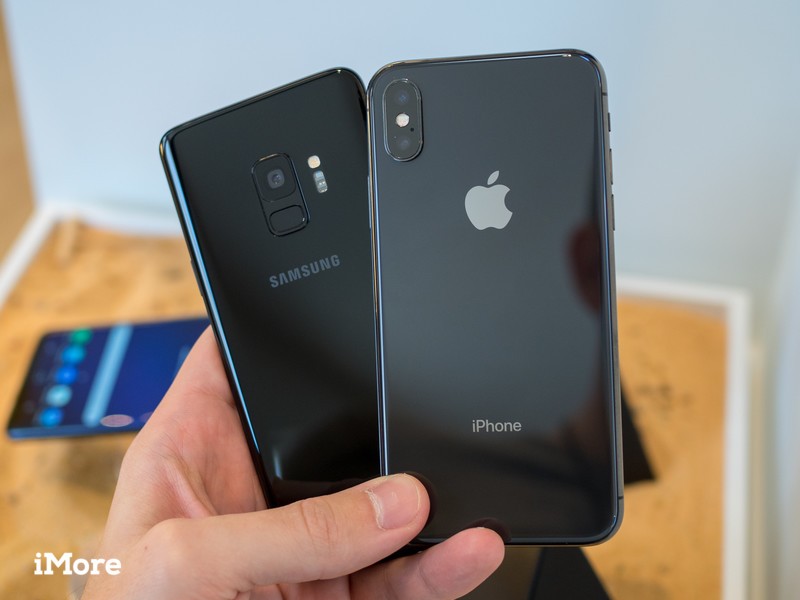
Geekbench’s John Poole discusses how Apple balances performance and efficiency, how Samsung is ramping up single-core, and where Qualcomm — and maybe Google? — fit in.
Listen to the podcast version:
Subscribe for more: Apple Podcasts | Overcast | Pocket Casts | YouTube | RSS
 Rene Ritchie: Joining me again, we have John Poole from…I am going to say Primate Labs, but I think most people know you from Geekbench.
 John Poole: Exactly.
Rene: [laughs] Like the 1Password folks. The name of the product is so popular, [laughs] it’s just the name of the company.
John: Exactly. It’s the joys of having an incredibly successful product, and a company just to sort of go along with it.
Rene: The company ends up being the trailer that you hitch behind you to maintain the car. [laughs]
John: Exactly.
The Exynos Kerfuffle
Rene: The reason I wanted to talk to you is that whenever one of these…I am going to call them a kerfuffle because it sounds like a funny word. Whenever one of these processor, kerfuffles, comes up, you have a lot of people…you have so many things to deal with.
First, you have people who don’t have what’s suddenly considered the good processor being all salty. You have the companies trying to say, “Nothing is wrong. Everything is fine.” You have people like you, people like a non-tech trying to dig into it.
You have the blogs who just take whatever you say and try to make it into an exciting story, regardless sometimes of what you say.
I figured it’d be good to go to source. For people who aren’t familiar, what happened was the “Yonhap News Agency” put out an article saying that the battery performance of the Samsung Galaxy S9 smartphone trail behind rival products.
Industry watchers said, Monday, causing consumers to express his content. I think this was based on a strategy analytic survey which may have been sponsored by Sony, but it was comparing a bunch of different phones. It turned out…we can get into awhile later, but Samsung has split processor strategy where they have Qualcomm in North America and Exynos in parts of the rest of the world.
The Exynos version was not performing as well as the Qualcomm version when it came to battery efficiency. Phone Arena also found similar. The non-tech, they’re usual real deep dive. They said it absolutely felt flat on the face in this test, and post to the worst results among our tracking of the latest generation devices lasting three hours less than Galaxy S8 with an Exynos processor.
Yonhap have theorized that it was because Samsung was being more conservative, given what happened with the recalls around the Galaxy Note 7. That didn’t seem to be the case. Correct me if I am wrong, John. It looked like to AnandTech that they were instead of doing race to sleep, they were doing what they called walk to burn, where the increase in the performance course was resulting in a similar decrease in the efficiency.
John: Right. One thing I want to say before I get too much into this is that we still are trying to get our hands on one of these new Galaxy S9s with the Exynos processor, the joys of living in North America and not being to access these as easily as other locales. Some of my comments, we’re anxiously awaiting being able to do our work into this and take a deeper dive into it ourselves.
But what Samsung’s done we think, from what we’ve seen from other sources such as AnandTech, is they’ve actually come close to hitting Apple performance in their mobile cores. I’ve said this on multiple occasions before. I’ve never understood why the Android vendors has had such a huge gap in performance compared to Apple.
What I think Samsung’s done is Samsung’s really the first mobile SoC that’s come within striking distance of Apple. If you look at, say, the Geekbench scores, I believe the Exynos gets about 3,500 or so whereas Apple’s at just a smidge above 4,000, 4,100, or something like that. They’ve really closed that gap.
The problem is when you have that much performance is that are easy ways to get there and there are hard ways to get there. The easy way or maybe not even necessarily, easy being a very relative term here, is you’re going to use a lot more power.
With the poor battery results that we’re seeing, with the complaints about battery lifetime in the Exynos chipsets, that makes a certain amount of sense because these big cores could be using a lot more power than the previous generation Exynos and the current-generation Snapdragon.
Single Core Bottlenecks
Rene: It does seem to me for a long time, they just didn’t have that single-thread efficiency. People blamed that on everything from UI lag to basically roadblocks. Android, like Apple, did Grand Central Dispatch years ago to try to multi-thread things. Android has really been focusing on multi-core, multi-thread performance.
But my understanding is that you still have a highway that if it ever gets blocked down to one lane, you are restricted by the speed of that one lane. That’s why single core is still important no matter what you do on multi-core.
John: Exactly. Single-core performance, this is one of the reasons why Geekbench breaks down performance in just those two separate numbers, a single-core and a multi-core number, is that there are lots of applications. Speaking as a developer, having multiple cores is great because that can greatly improve my workflow.
But for most people and for most operations, what number really matters is that single core performance because there are just certain operations on your phone, on your computer that aren’t going to be able advantage of multiple cores or might only be able to take advantage of one or two cores instead of six or eight cores that are available.
You really want that single-core performance to make sure that your system on your phone or your laptop is snappy and responsive. With Samsung and the new M3, they’ve got that single core performance, which is great and it’s amazing. The problem is it seems to have come with a huge power draw.
Rene: I think just to help people understand this…Because a lot of people look at spec sheets and they go, “Oh my god, 12 cores, it must be better than 8 cores.”
It’s almost like the megapixel race all over again. But if we equate cores to tires, having 18 wheels on a Mack truck is very different than having four wheels on a Ferrari. It’s just the number of wheels that matter.
John: More cores can be great for certain applications. In other applications, it’s not going to matter one bit.
Rene: The tasks that you give a Ferrari are very different than the tasks you give a Mack truck as well.
The increased performance and there’s a couple things that can happen. One is if you were incredibly inefficient in the past, then you have a whole bunch of efficiency that you can spend when you increase performance.
But Samsung as far as I know, their chipset team is really, really good. They probably didn’t have a lot of poor efficiency they could draw on to increase performance. You’ve got to pay for that somehow.
I know Apple’s been working towards building these performance cores for years. But if you do that leap year over year, I think you sort of end up paying for that with efficiency. You’re doubling the amount of performance. That has to come from somewhere.
John: There are certain things in the design that you can do when you’re doing that big leap forward so to speak where you might be able to mitigate some of the energy that you’re going to have to spend.
Because these performance leaps, we’re well past the age of low-hanging fruit. It used to be you just ramp up the clock speed, maybe make some tweaks, and then you go home. That era’s over. We can’t really increase clock speed anymore.
You’re in a small package. You’ve got a battery that you have to worry about. You’ve got the fact that this is going to live in somebody’s pocket for two, three years at a time. It’s a very constrained environment.
When they design these new processors, they have to come up with ways of where can they extract more performance. It basically involves a processor looking for ways to do more things at once. That search, that process of looking for more things to do, takes more energy. There are ways to do that that are arguably more energy efficiency than another.
If you look at how Apple’s done it with their cores, there’s an obvious point. You can point to them and say, “Apple’s been able to figure it out.” But Apple’s also had a multi-year lead doing this. They’ve been able to move incrementally and such.
Samsung came out and basically doubled performance in on generation which, as much as Apple’s continually refining, they haven’t had that huge jump forward for a while now. Samsung, they’re playing catch-up.
It might be that maybe they focused more on performance rather than efficiency for this round. I’m sure the next generation of Exynos will be a much more efficient core.
It’s just simply a case of do you want that huge leap forward now or do you want a smaller leap and maybe then you’re playing around with your energy budget a bit more. I think it’s a case of trade-offs in why the energy use is so high.
The true enemy is time
Rene: I actually never thought about this, but it was explained to me when I was asking around about it that a real gating factor of processor design is time, that if these design teams had infinite time, they could make you the absolute best processor in the world.
But they don’t. They have a year-over-year cycle. Maybe they have a year or two years or three years of lead time. But to your point, when you double it and you only give them a year to do it, it’s not the same as saying, “Double it in the next 10 years,” for an example. There’s a lot less you can do.
John: That’s one of the things I know, being involved in a lot of planned obsolescence discussions in the last few months, people look at Samsung and Apple and all these other companies and say, “Why don’t they take that extra year and do a better design?”
It’s like, one, you’ve got all your competitors are on a year cycle now. Everybody’s expecting Apple…God forbid Apple should ever take a year off and not release a new iPhone and say, “No, we’re going to do a better job next year. Don’t worry. We’re just taking a break.” I think people would scream bloody murder. Also then their competitors would say, “Well, great. Thanks for the extra year.”
There’s a lot of neat things you can do if you do things incrementally and you have that nice year-over-year improvement. But I’m sure if the Samsung design team, the System LSI folks, had a two or three year design where they could focus on just getting the M3 out and getting the M3 perfect, I’m sure we wouldn’t be having this discussion.
But I think it’s just simply the reality of business of the ecosystem of the market. They have to be on this year cadence. Sometime you’re going to have to cut corners somewhere. Unfortunately, it looks like energy efficiency was one of those places where they had to make some sacrifices.
Rene: I think it’s funny that you mention that because I was talking about it. One of the chip analysts said, “Apple’s got to pick up the pace. China’s putting out great new phones every six months. Apple can’t stick to this slow once a year pace.”
They were talking about the new Pro camera that has three lenses on it. Some of them have two notches now. One notch isn’t enough. Or Huawei where they’re super aggressive. The one-year schedule was already too slow.
I was like, “Aw, come on. I don’t think this is sustainable.”
John: Just think of it from the flip side of people complaining about Apple’s release schedule for software right now, saying a new operating system every year is too much. We want 18 months. We want two years. There’s definitely a balance there.
I don’t even know, just thinking about the realities of manufacturing pipelines, even a year seems aggressive to me. Shortening that down to six months just seems insane.
Rene: Not to get off on a tangent, and maybe we’ll revisit this later, you look at what’s happened with Intel and their drive to get to 10 nanometer. They went from tick tock, tick tock to tick tock tock tock, oh damn, tock tock, oh crap again, tock tock.
John: I have no idea what’s going on at Intel. I’ve talked to a few analysts about this. They’re all shaking their heads. Intel had this huge process lead. Now they’re behind. They’re last. It’s a bizarre situation we’re in now.
A tale of two Samsungs
Rene: Some people I think don’t understand this either is that Samsung is a foundry as well as a design company. They have in some years manufactured Apple chipsets, and they manufacture their own chipsets. But just by being a manufacturer doesn’t automatically mean that you’re a leader in the design department. Those are two separate skill sets.
John: It is two separate skill sets. I’d say definitely having the foundry in-house helps. I know Intel’s talked about the efficiencies and the advantages of having the foundry in-house where the foundry design can influence the chip design and vice versa. There are definitely efficiencies there that you can have.
Samsung I don’t think has really taken full advantage of that. I don’t know whether they will.
I know the structure of Samsung is very different than a North American company where they very much keep their different departments siloed, but it’d be interesting to see if there are any synergies. Definitely System LSI now is really…
I still think even with the energy issues, the M3 is a great core. I’m really excited to see what the M4 does. But it’s a case of it’s growing pains in a way. As I mentioned earlier, they’re the first Android SoC that’s come within spitting distance of an iPhone in terms of single-core performance. We just haven’t seen that from other manufacturers yet.
Rene: Neil on Twitter said that basically these are separate companies that both license the Samsung name in response to, “Why does…” [laughs]
John: That’s actually a really good way of thinking about it is that they are very different. They’re almost separate companies that just happen to share a name.
Rene: Apple is different in that all iPhones use Apple silicon. They know what the roadmap is two, three years out. The silicon team can target the features that the features team wants, and the features team can target the capabilities that the silicon team provides them.
Three years ago, they could start working on the neural engine and FaceID at the same time and deliver them both with iPhone X where if you have, like Samsung, half your phones are going to get Qualcomm, half of them are going to get Exynos, it’s much harder to…You can’t guarantee which chip your users are going to. You can’t build those silicon-specific features.
You can layer RAM on top of the camera as a workaround to do that, but I think you lose the benefits of having in-house silicon that way.
John: There was one Galaxy, I can never remember is it was the S6 or the S7, where Samsung went Exynos across the entire lineup.
I thought, “Oh, this is interesting. They’re really trying to maybe take advantage of some of that vertical integration that Apple has where at least if they knew everybody’s running the same chip and the same OS and the same hardware design and they can sort of consolidate that, that would be great.”
But the next S8 or whatever it was went back to the split Exynos, Snapdragon. I thought, “OK, well, I guess not.” I’ve never understood why Samsung does that bifurcation. I’m sure they have reasons, but I’ve never quite figured them out.
I think you look at Apple and that vertical integration they have, I think that’s one of the things that Samsung…It’s clear that they’ve looked into this and they’ve tried this, the talk of ties-in a few years ago. Clearly the more that they’re investing in their in-house CPU design, the fact that they have their foundries, I think these are all pointers that they’d like to do this.
I think in an organization that big I imagine the political factors that influence we’re going to do this instead of that are huge and hard to surmount.
Rene: I think different people offer different suggestions on why Samsung does this. .
Qualcomm is two companies. It is a patent licensing company and a chip design company. The chip design part is not their biggest business.
I think a lot of companies, unless you’re Apple and incredibly stubborn, find it easier to acquiesce to Qualcomm’s chipset demands in North America where they own so much of the CDMA patent portfolio than it is to fight them and force your own silicon in there.
John: That’s an interesting way of looking at it. I hadn’t thought of that.
Rene: Again, I think it would be easier for them to ship a unified SKU.
I love that Apple bullies the carriers. I know that’s a horrible thing to say. But I think if there’s anyone who should be bullied, it’s the carriers. Huawei could, but they have so many problems with just the US government and being China-owned that politically they can’t bully the carriers.
But I think Samsung is one of the companies, maybe Blackberry back in the day, that could start exerting its will upon the carriers.
John: Right. I’d be curious to see over the years whether Samsung’s a little more willing to flex its muscles.
Really the smartphone market now in North America is consolidating around Apple and Samsung and then everybody else at the fringes. I’m sure it’s very similar in the States where you walk into a mall or you walk into a cell phone store, and most of the advertising is either for Apple or for Samsung. That’s really what people are being pushed toward.
I’d love to see Samsung use its influence as a force of good in the industry for the consumer. It’s seem they’re not quite at that point yet though.
That Google silicon
Rene: There’s rumors that Google is going to enter the custom silicon market in a big way. It’s going to take a couple years to wrap up, but they are serious about having their own iPhone. We’ve seen that with Pixel 1 and Pixel 2 which currently use Snapdragon systems on a chip, bu I wouldn’t be surprised if they shipped with Google systems on a chip within a few years.
John: Google’s been doing all sorts of interesting things with dedicated hardware for machine learning, the custom TPU units. They’re more data center-focused than consumer-focused, but it’s clear that Google understands the value of designing your own silicon, designing your own processors in-house and being able to fully tweak them and tune them to your needs.
It’d be really interesting to see if they do decide to design a custom SoC and a custom core where they go with that.
The efficiency gap
Rene: It’s better for us if there’s multiple options out there.
One of the things Andre said that was interesting is he said it felt like Samsung LSI — which if you’re not familiar with Samsung LSI, listeners, it’s the silicon division, the company that makes all the chips as opposed to Samsung Electronics which makes the phones — they’re one generation behind when it comes to efficiency.
He’s comparing them to ARM, but I think it’s probably fair to compare them to Apple as well. They continue to be one generation behind when it comes to efficiency.
But he says currently at 17, 20 percent performance lead does not seem worth the 35 to 58 efficiency disadvantage along with the two times higher silicon area cost. That was one of his key takeaways here. Time again as a gating factor, do you see a way for them to catch up or, unless they have some sort of big revelation, is this going a pattern going forward?
John: I was thinking about this. What I found interesting was that if you look at what Apple’s done for their die sizes, and Apple’s dies are quite large as well, I’m sure there are non-linearities there where to get 10 percent extra performance, you’re going to end up spending 20 or 30 percent extra die because nothing’s ever easy when it comes to electronics.
But if you look at what Samsung’s done and compare it to what Apple’s done, Apple doesn’t put four big performance cores on their SoCs. They put two. Maybe they put three in an iPad, but they really do limit the number of performance cores which in turn also helps minimize battery life use.
Right now if I were to take the same workloads — let’s say hypothetically speaking I had something that used four threads — and I ran it on an iPhone and I ran it on a Samsung Exynos chip, the iPhone’s going shunt some of that work off to the low power, the high-efficiency cores whereas Samsung might happily light up the big performance cores.
Even something like that I was surprised to see that they still stuck with that four big, four little design that they used to use when single core performance wasn’t as great. I’m almost wondering if they would have been better off to limit the number of big performance cores.
Now that they’ve got really got single core performance, there’s not the need to have four of them. Why not put two of them in and then shunt other stuff off to the low power cores, the efficient cores? Part of that might just be…
That would reduce your die size, that would reduce your power usage, that would reduce your thermal output. It might have solved a lot of the issues that people were seeing because Android much more so than iOS will happily use all the cores that you’ve got in your phone.
Eight core chips in Android have been common for quite a while now. Android takes full advantage of them when doing all sorts of things that maybe aren’t necessarily latency-sensitive. Even a really trivial example like rotating your phone when you go from portrait mode to landscape mode, there’s a lot of work that goes on behind the scenes to make that happen. That will use all your cores.
If you’ve got four big, power-hungry performance cores, it’ll happily use those in which case then that’s going to impact your battery life. There might be other ways that this comes out too.
But even still, even if that’s not the case, then you could have done some other interesting tweaks with the performance cores, the big cores, where if you only have two of them, maybe you can run them at higher frequency, maybe you can get more performance out of that.
I know Andre did all these experiments with writing his own custom scheduler and whatnot for the Exynos and found if you do all these sorts of interesting things, then you get more performance or you get better battery efficiency. There are ways to do trade-offs that Samsung hadn’t done in their stock implementation. It’d be interesting to see if Samsung actually does any of that work as well.
To go back to my original point, just from a pure efficiency standpoint, I think even doing something as simple as removing two of the cores would have been a huge advantage for them.
Rene: I always try to assume that the chip companies aren’t stupid. It’s easy to say, “Oh, they’re just dumb. They made a mistake. They can fix it in software.” But I try assume at first that they’re not.
It’s not even a guess, but I have this wonder that they know what they’re producing in terms of chips. They might have made a decision to run it this way because they knew, depending on the yield or the bins or the performance of individual cores, that they would have a bigger problem if they implemented the fixes at scale.
Because anything’s easy on one chip, but to do it on a million chips, you might have outliers. Either they run too hot, they disperse too fast, they have other problems. This might have been the safest balance they could have found for the entire run of the chipset.
John: It might have even been something as easy as just simply a spec war because I know six core designs, the two big, four little designs, in the Android market haven’t been well-accepted in the past. I know outside North America, people are much more attuned to those sorts of spec sheets than, say, the folks in North America.
It might have just been viewed as people would view do you want the eight course Snapdragon with the four performance cores or do you want the Exynos with the two performance cores? It might have just been something as simple as it just would come off as a less powerful processor, even though it wasn’t. It could be even marketing decisions like that. Who knows, though?
The benchmark business
Rene: I hate relitigating this, but we have in the past where they would amplify their frequencies for Geekbench and other benchmarking apps even if those weren’t the actual frequencies for the chip because they wanted so much face out of getting those high numbers.
John: The benchmarks are incredibly important to a lot of people in the industry.
It’s always unfortunate when you see people playing games whether it’s boosting stuff past the stock frequency, whether it’s removing thermal lineaments, whether it’s changing the way that this operating system interacts with threads in the cores just to provide higher benchmark scores. I’m really glad that that’s something that seems to be as the industry we’ve moved past.
But at the same time, I could see that sort of thing influencing decisions where maybe you do something where it’s not maybe necessarily the ideal for most applications but it’ll give you better benchmark number. I can definitely there would be people in the industry that would think, “Oh, this is the reasonable trade-off to make.”
Rene: A long time ago, I’m not going to name any names, there was a vendor who said, “It doesn’t mean so much to me what camera we have as long as Best Buy puts the CNET best camera sticker on it on the shelf.” That was the most important, not the actual component but the perception of the component.
We see that with the DxOMarks and we see that with Geekbench marks, fiercely competing for what are in the end very slice-of-time specifications.
The other thing that you said that I thought was so interesting is when you look at what Apple did, they came out with 64 bit with the A7. That was a bit of a shock in the system to mobile processors.
But then when those started being super-high performance, they had so much gap underneath that they slid in the efficiency cores to make sure that they weren’t sacrificing too much performance for efficiency on the high end.
Then with the next iteration, they close to doubled the performance of the efficiency core. Even the efficiency cores now are fast. They also broke them up so that they didn’t have to be paired. You could use them all separately or jointly.
That looks like an interesting step. I called them performance.EFFICIENCY and got a really nasty look, but I do like the idea of that kind of architecture.
[laughter]
John: I remember when ARM was first proposing that architecture back about five years ago now. I thought, “Well, this is crazy. This’ll never work.”
Because Android vendors have been doing this for years, Apple’s now doing this too, I think it’s a great way to balance the power consumption that comes with these big, fast cores where you’ll need them for certain things.
You’re logging in. You’re taking a picture of your kids. There’s just that brief moment when they’re being adorable and they’re not hitting each other. You want to capture that versus when I’m streaming Spotify. There are lots of things that are time sensitive. You really want that great performance, but a lot of the rest of the time, you don’t care as much because it’s not as critical.
I think having those efficiency cores paired with the performance cores is a great way to achieve that because there are so many design decisions that go into performance, that you’re going to sacrifice so much power usage for that. Whereas if you’ve got these nice efficiency cores, then you can say, “Well, OK, yeah. We’ll use all of our energy budget on these when we really need it.”
But then we can fall back and use these really still performant but not as fast, but they use so much less energy. I think that’s a really great design. I’m glad to see Apple’s adopted that.
Because one of the tricky bits has always been when do you move stuff from one set of cores to another? When do you use the performance cores? When do you use the efficiency cores?
I’m hoping now that the industry, I think Intel’s really the only manufacturer for mobile parts that doesn’t do this, I’d love to see more open research into how do we make the best advantage of this because even talking to people…
I’m completely unsurprised Andre’s found some low-hanging fruit when he did his work on custom building the Exynos stuff because it’s such a fertile area of research. It’s such a fertile area for improvements. I’m sure Apple internally has been doing amazing things with that because they’ve got such a tight coupling whereas Android obviously it’s a bit more Wild West out there.
There’s so much interesting stuff people could be doing to improve efficiency even without hardware changes. I’m really curious to see it. I’m really curious to see if Samsung, especially with the M3, takes some updates as an opportunity to tweak behavior and improve battery life or improve battery life or do both.
The controller keys
Rene: I think Apple hasn’t been too secretive about this. They’ve said part of their secret sauce is the custom controllers that really handles all this and that’s an integral…Having the chips is one thing. Knowing when and how to apply them is something else.
Otherwise, instead of race to sleep, you do get walk to burn. You’re just spending battery on nothing which is what you were talking about earlier with so many performance cores.
The other thing that’s interesting to me about all of this is you have this market where you have customers who want infinite battery life, limitless performance, and zero weight on the device. If it would float and be lightning fast and last forever, they would be happy. Anything less than that…
So you’re not only balancing the incredibly hard…It seems like dark arts honestly that this stuff works because you have to battle…
You have to balance the thermals of the processor against the size of the battery, the RF transparency, how fast these things ramp up, all of these factors to get to this product. Then we just complain about whichever one they took the biggest compromise on. [laughs]
John: Exactly. Looking back on what the Android phones have been, I’ve publicly complained about this, and I’ve said they’re slow. Looking at single-core performance, they’d fallen so far behind Apple that a new phone would come out and be a, “OK, great, you’re still hovering around the same point in performance that you’ve been for the last two years. What’s going on?”
Now, of course, that Samsung’s caught up, it’s like, “Well, your battery life’s gotten bad.” The question is I’d love to see daily usage, because I know, speaking as someone who has written a synthetic battery test, these things can be torture tests, and they can exacerbate poor design decisions that were made that may not necessarily have a huge impact on the day-to-day use.
This is, again, coming back to why I’d love to have one of these phones in my hand, so that we could play around with it here in our lab to see what’s going on with it. To see how much of this is a you run a intensive battery test app on it and it’s going to drain really quickly, versus a “I’m able to make it through a day without a charge.”
For most people, that’s their gold standard, is that if they can start in the morning and get to the end of the day without having to recharge their phone, they’re happy.
It could be that the Samsung S9, regardless of whether it’s a Snapdragon or an Exynos, can do that. It’s a case of maybe you can’t get through two days with it, which is one of the things I will say.
I’ve been using the iPhone X lately, and I love the fact that I can now go about three days without having to charge it. It feels like magic to me. If all of a sudden it dropped to two, I don’t think I’d complain that loudly.
Limitless power, endless battery life, zero weight
Rene: [laughs] No, but you bring up a great point, too. Our expectations have changed. Every time we get more powerful phones, we do more with them.
It’s not like they have a static target, say, “OK, this is what people are doing. We’re going to double battery life.” It used to be that you had PIN-based messaging and WAP browsers. With the iPhone we went to the WebKit browser and you checked your email.
Now you might have Snapchat running a lot of the day, with Geofilters, screen on, always downloading large video files, playing them over, keeping the radio lit up, keeping the screen lit up, keeping the GPS lit up. Like, “Oh, my battery wore down by 3:00 PM because I was out being an influencer all day.” [laughs]
John: I look at it. I was speaking earlier about taking pictures of my kids. I now expect my cell phone to be as fast and as responsive as my old SLR. I expect it to be always on.
I expect to be able to, regardless of where I am, load up Tweetbot, refresh things, and see what’s going on in the world. I expect my watch to tell me when stuff’s going on, and that needs the phone to be in reach, and be able to use a transmitter, and all that stuff.
I’m sure if we went back and started using an original iPhone we’d be shocked at how little functionality we actually used on there. Even looking at screen resolutions.
If you look at the screen resolution, this is a slight exaggeration, but not too much, the whole screen on the original iPhone is roughly the size of an icon on the iPhone X, give or take a little bit. You’re driving more pixels. You’ve got such nicer displays, so much faster processors that are doing more.
The web pages we’re viewing, even over the last 10 years, have gotten more complicated and there’s more interactivity. There’s so much we expect from our phones. When it falls short in one area, we throw our hands up, and we’re like, “Oh, this is horrible, and this is the worst.”
There are times where I’ve definitely done that. There are times where people are being a little unreasonable. There are other times where it’s like, “Yeah, this makes total sense.”
With this particular issue with the S9 and the Exynos chips, I’m not quite sure where that falls. If you’ve got a phone, you’re using it lightly throughout the day, and it dies at 3:00 PM, that’s not great.
If you’re out being an influencer, you’re doing all that sort of thing, and your phone would die anyway, regardless of which one you’re using, maybe take a step back from Instagram a little bit.
State of the mobile silicon
Rene: [laughs] What’s your sense now of the current mobile chip set landscape? We have MediaTek. We have Exynos. We have Snapdragon. We have Apple’s A series.
Intel’s probably not there anymore. Nvidia seems like they could do a lot, but they don’t do a lot yet.
How do you look at it now, someone who’s been doing all this for years and has seen desktop performance end up where it is? What’s your sense of the market now for mobile silicon?
John: For mobile silicon, you’ve got at the high end. You’ve got Apple, but Apple’s off in their own island. No one’s going to go off and build a phone around an Apple chip set, aside from Apple.
Apple’s got a little bit of an odd point in the market, where a lot of people aim to be where they are, but it’s more from a whole package. You’re not necessarily going to have someone say, “Well, we’d pick an Apple chip set, but we can’t, so we’re going to go do this,” or something like that.
It’s going to be more of a whole phone. It’s going to be Samsung worried about selling an S9 to somebody, instead of them going off and buying an iPhone X.
If you look at — ignoring Apple — Qualcomm still has that issue that they’ve struggled with in the past, of the lower performance thermals and whatnot, which they seem to be getting a handle on. The 845 looks like it’s not as huge of a leap forward, but they’re moving in the right direction.
The 845 is a definite improvement over the 835. These things, they’ll continue to move forward.
Looking at MediaTek, MediaTek’s going at it from a different angle. If you think about Apple, Apple really targets the high end of the market, and not much else. MediaTek’s more interested in the budget smartphones, if you will, like something where you go, you pay $200 or $300 out of pocket, and you get the whole phone.
They’re doing a great job going after that market. Every once in a while they do something completely crazy, like they had a 10-core smartphone chip that I thought was ridiculous, and I don’t actually know if anybody ended up using it.
You’ve got MediaTek coming in at the bottom, and Qualcomm, of course, exists at both the high end and the low end. Exynos exists at both the high end and the low end, as well.
Rene: Huawei. We don’t see it in North America, but Huawei is in there.
John: Huawei, with the HiSilicon group they have, they’ve been doing really interesting stuff, but I don’t think they’re quite at the point where they’re doing their own custom cores.
It looks like they’re mostly licensing ARM’s existing cores, which are great cores, but there’s not much of a competitive differentiator there if you’re pulling those cores off the shelf.
What it seems to be that Huawei’s doing that’s kind of interesting is that they seem to be spending more time on doing AI, the neural network accelerators and whatnot, and seem to be getting some really promising results from their early silicon in that.
Rene: John, thank you so much. If people are interested in following you and seeing your work, where can they go?
John: I’m on Twitter, where I post pictures of pugs, as well as insightful analysis of the upcoming silicon, @jfpoole. Also, Geekbench, the application that we’re best known for, geekbench.com.
VECTOR | Rene Ritchie
- Video: YouTube
- Podcast: Apple | Overcast | Pocket Casts | RSS
- Column: iMore | RSS
- Social: Twitter | Instagram
You don’t need a Facebook account to use Bumble
You don’t need a Facebook account to sign up for Bumble anymore. Starting tomorrow, you can use your phone number to register for a new account on the dating app, according to Wired. Like Tinder, Hinge and countless other apps and services, Bumble streamlined the process of setting up a profile and adding photos by offering Facebook as a login option. Last week Tinder users had trouble logging in due to a glitch with Facebook privacy settings.
In the wake of Cambridge Analytica (CA) and Mark Zuckerberg’s congressional testimony, Bumble’s VP of international marketing and communications Louise Troen said “many” of its over 30 million users were looking for a different sign-up/log-in method. As you might expect, Bumble got access to things like your friends list, liked pages and more in an effort to find better matches. If you sign up with a phone number, however, you’ll bypass Facebook entirely and have to upload all your own photos and profile information.
Don’t mind the Facebook connection? It’s still a login/sign-up option. But how long before the next CA happens? During his testimony last week Zuckerberg said that it was fully investigating app-data access from the time of CA to ensure there weren’t other data abuses. If Facebook’s privacy nightmares continue, you can probably expect more and more companies will stop building their services on top of the social network.
Source: Wired UK
Target brings same-day delivery of in-store purchases to five cities
Target announced today that it’s bringing same-day delivery to five major US cities this month. Customers shopping in nearly 60 stores in Boston, Chicago, New York City, San Francisco and Washington DC will be able to have their purchases delivered to their homes within a two-hour timeframe. The service costs $7, unless large furniture is being delivered, in which case an additional $25 fee may apply.
Last year, Target bought two companies — Grand Junction and Shipt — to help get its same-day delivery ambitions up and running. After acquiring Shipt in December, Target said that it planned to offer same-day delivery services in the majority of its stores by the 2018 holiday season. The company has also been expanding the next-day delivery feature of its Prime Pantry-like Restock service. The pressure to offer fast delivery is one also felt by Walmart as both continue to compete with Amazon.
To take advantage of the same-day delivery option, just tell the cashier at checkout. The service should launch in the aforementioned cities by the end of the month and Target says it plans to offer same-day online deliveries through Shipt by the end of the year.
Source: Target
 AIVAnet