


Netflix will soon be included with Comcast Xfinity subscriptions
The bundles will be available this month.
Netflix and Xfinity are two of the biggest names when it comes to home video content, and now the two companies are joining forces to include Netflix subscriptions as part of certain Xfinity plans.
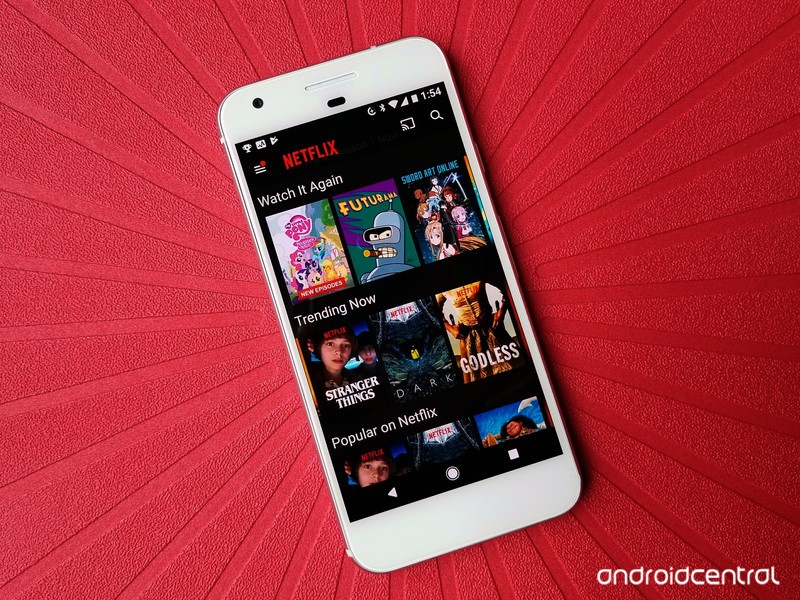
Comcast made this announcement on April 13 and described it as an extension of the partnership that already exists with the Netflix app on its X1 platform. Per Comcast’s Chief Business Development Officer, Sam Schwartz –
Netflix offers one of the most popular on demand services and is an important supplement to the content offering and value proposition of the X1 platform. Netflix is a great partner, and we are excited to offer its services to our customers in new ways that provide them with more choice, value, and flexibility.”
This promo sounds very similar to T-Mobile’s “Netflix On Us” one that launched last year, and as bad of a rap as Comcast often gets, free Netflix is always a good thing.
Xfinity plans that include Netflix will launch later this month and be available for both new and existing customers.
Download: Netflix (free)
Trump follows Amazon jabs by ordering US Postal Service review
President Trump recently tweeted that the US Postal Service’s deal with Amazon was bad for taxpayers, but he has now taken his complaints beyond social media, the New York Times reported. The White House has convened a task force to examine the service’s operations and “conduct a thorough evaluation of the operations and finances of the USPS,” the order states.
Trump has said that the USPS loses $1.50 for every Amazon package it delivers. However, experts have countered that the while the service does lose money delivering first class mail, e-commerce package deliveries are profitable. In 2017 they brought in $19.5 billion, up 11.4 percent over the year prior.
Trump ordered the task force to look at how the USPS does package deliveries with companies like Amazon, and also at declines in mail volume. “A number of factors, including the steep decline in first-class mail volume, coupled with legal mandates that compel the USPS to incur substantial and inflexible costs, have resulted in a structural deficit,” the order states. “The USPS is on an unsustainable financial path and must be restructured to prevent a taxpayer-funded bailout.”
Amazon also uses all major logistics companies in the US. Amazon does use USPS but, if an arrangement were to become uneconomic to Amazon, Amazon has plenty of options. What are the options for the USPS?
Trump’s Amazon Twitter tirades have often coincided with negative press from the Washington Post, a paper owned privately by Amazon CEO Jeff Bezos. Experts have noted that its nearly unprecedented for a sitting president to criticize a US business, and some of those rants have actually caused the company’s stock to fall.
In any case, revenue the USPS makes from Amazon helps offset unprofitable parts of its business, so raising rates to gain more revenue may produce the opposite outcome, said financial analyst Scott Devitt. “Amazon also uses all major logistics companies in the US,” he wrote in a report. “Amazon does use USPS but, if an arrangement were to become uneconomic to Amazon, Amazon has plenty of options. What are the options for the USPS?”
Source: New York Times
Volvo’s first electric truck is built for city use
Today, Volvo announced its first electric truck for commercial use, called the Volvo FL electric. It’s specifically designed for use in cities, intended for distribution and waste management in urban areas. The truck weighs in at about 16 tonnes (17.64 tons) and has different battery options totaling 100 to 300 kWh, depending on the size and scope of the job. Its range is up to 300 km (186 miles).
These trucks will make their debut in Europe; sales and series production will both start next year. The 10 hour charge time on AC battery (1–2 hours on fast DC charging) seems to suit a city vehicle that will operate primarily during the day perfectly. It has 175 continuous horsepower, with 248 at its peak.
Volvo’s aim is to seamlessly integrate electric vehicle technology into existing urban environments. Volvo Buses has been operating since 2010 and has sold over 4,000 electric buses. The Volvo FL Electric has adapted similar technology. “From experience we know how important it is that cities, energy suppliers and vehicle manufacturers cooperate in order for large-scale electrification to become a reality,” said Jonas Odermalm, the head of product strategy for Volvo FL and Volfo FE. “With attractive incentives, agreed standards and a long-term strategy for urban planning and expansion of the charging infrastructure, the process can go much faster.”
Volvo isn’t the only car company interested in electric trucks in urban environment. Daimler’s eCanter is already making deliveries in the US and Japan for 7-Eleven and UPS, respectively.
Via: Autoblog
Source: Volvo
Anchor’s new Cohost feature matches podcasters with similar interests
Less than two months after the the DIY podcasting app Anchor underwent a major revision, the service is ready to announce another notable new feature: Cohosts. As the name implies, Cohosts lets Anchor users quickly match up with others who want to talk about similar topics — ideally, this will help facilitate group discussions, rather than forcing a podcaster to forge ahead on their own. Anchor was originally built as a community of users sharing audio, so letting those users get together to host a show fits with the app’s social audio roots.
To use the Cohosts feature, you start by either picking a topic from Anchor’s home screen or by adding your own custom topic, which can be as broad or specific as you want. Once the app finds you a match, Anchor basically puts both users into a shared call and gives you a scant 30 seconds to chat before a recording automatically starts. That recording is capped to 15 minutes, and bother users get a copy of the recording once it is finished — it can be published directly to a new podcast or add as part of a bigger episode later.
If you happen to hit it off with your Anchor match, the app will let you record with them again using a “record with friends” feature. That feature removes the 15-minute time limit that comes with a first match. Of course, people act horrible on the internet, so Anchor is putting some protections in place to help avoid abuse. According to TechCrunch, Anchor asks you to rate your cohost with a simple thumbs-up or down once you’re done recording. If you choose thumbs-down, the app will prompt you to tell it why so Anchor can investigate; if someone has abusive or otherwise troublesome on the platform, Anchor will ban them.
Anchor says that Cohosts is available today in its Android and iOS apps, and it’s free, like the rest of Anchor’s features.
Source: Anchor
Senators plan privacy legislation following Zuckerberg hearings
Following Mark Zuckerberg’s hearings earlier this week, two Senators have announced legislation they plan to introduce regarding the protection of consumers’ online data, 9to5Mac reports. Senators Amy Klobuchar (D-MN) and John Kennedy (R-LA) will propose regulations that would increase transparency, give consumers more control after their data has been breached and make sure companies like Facebook are working within privacy policies that protect consumers and their data. “The data breach at Facebook showed the world that the digital promised land is not all milk and honey. We’ve discovered some impurities in the punch bowl,” Senator Kennedy said in a statement. “I don’t want to regulate Facebook half to death, but there are things that need to be changed. Our bill will help protect Americans’ online data fingerprint.”
The legislation, yet to be introduced, would give consumers the right to opt out of data tracking and collection, give them more control over their data, require terms of service documents to be written in plain language and allow consumers to see what information of theirs has been collected and shared. Additionally, the legislation would require companies to notify consumers of a data breach within 72 hours and ensure online platforms have an adequate privacy program.
Earlier this week, Senators Edward Markey (D-MA) and Richard Blumenthal (D-CT) introduced the CONSENT Act, which stands for Customer Online Notification for Stopping Edge-provider Network Transgressions. It proposes a handful of requirements for companies like Facebook and Google, such as opt-in consent for data tracking and sharing, reasonable data security practices, notification of data collection and sharing and notifications when a data breach occurs. Enforcement of these regulations would fall to the FTC.
“Consumers have the right to know if their personal information is being sold and they have the right to easily see what data has already been sold or distributed,” said Senator Klobuchar. “And most importantly, consumers should have the right to keep their information private, be alerted when a data breach has occurred and be informed of the remedies available to them when their personal information is compromised. The digital space can’t keep operating like the Wild Wild West at the expense of our privacy.”
Via: 9to5Mac
Source: Senate
Rapper Cardi B Breaks Taylor Swift’s Apple Music Record for Most First-Week Streams by Female Artist
It’s been one week since Cardi B released her debut studio album “Invasion of Privacy,” and over that time it’s reached more than 100 million streams on Apple Music. According to stats provided by Apple to The Verge, this means that Cardi B has set a new record for first-week streams by a female artist on Apple’s streaming music service.
The previous record holder was Taylor Swift and her album “Reputation,” which launched late last year. Invasion of Privacy is said to have broken Swift’s streaming numbers on Apple Music by the middle of this week, and it’s now the “fifth most-streamed album ever” on Apple Music, surpassing both The Weeknd’s “Starboy” and Ed Sheeran’s “Divide.”
Cardi B’s record breaking debut comes as Apple Music hit a new milestone in subscribers earlier this week, reaching 40 million paid users across 115 countries. Additionally, there are eight million people on the service’s three-month free trial, bringing the total to nearly 50 million users listening to Apple Music, which is closing in on its 3-year birthday this June.
Apple Music has been growing quickly since last summer: there were 27 million subscribers last June, 30 million subscribers last September, 36 million subscribers in February, and 38 million subscribers in March. Adding an additional 2 million subscribers to hit 40 million subscribers in April was Apple Music’s fastest growth yet.
Tag: Apple Music
Discuss this article in our forums
Telegram banned in Russia following court ruling
Russian authorities have been threatening to ban Telegram since 2017 due to its developers’ repeated refusal to give them access to users’ data. Well, they can soon make good on that threat now that a Moscow court has officially issued a ban on the secure messaging application. It all started when KGB successor Federal Security Service (FSB) demanded access to Telegram’s decryption keys last year. FSB wants those keys so it can read user messages, apparently as part of its anti-terror measures.
It’s no secret that Telegram has a terrorist problem due to the emphasis it places on user privacy — in fact, the company has been blocking ISIS channels for years, though new ones continue to pop up. But it’s also because of how much Telegram values security and privacy that its founder, Pavel Durov, wouldn’t budge no matter hard the agency pushed.
While his company eventually agreed to register with the Russian government as an information distributor that officially operates within the country, Durov refuses to comply with any request that can compromise user data. As a result, Russian communications watchdog Roskomnadzor asked the court to ban the app.
According to Russian news agency Tass, the ban will take effect immediately. However, Financial Times says the ban will likely come into effect after Telegram has exhausted all its appeals next month, and Roskomnadzor can only order internet providers to block Russian users’ access to the application if the company continues to lose in court.
Source: BBC, Financial Times, MediaZona, Tass
AMD unveils its second-generation Ryzen CPUs
With last year’s Ryzen processors, AMD made a grand re-entry into the world of high-performance desktop computing. Now its improving on those designs with its second-generation Ryzen chips, which are a bit faster and more efficient. And, due to fan demand, AMD is also throwing in free “Wraith” coolers with every CPU. The big takeaway this year: AMD is in an even better place to compete with Intel.
The highest end Ryzen model is the eight-core Ryzen 7 2700X, which replaces the 1800X and 1700X from last year (honestly they weren’t that different). With a base clock of 3.7GHz, and a boost speed of 4.3Ghz, it’s faster than the 1800X, which ran between 3.6Ghz and 4Ghz. The new chip is also a much better deal at $329, compared with the $399 and $499 launch prices of the 1700X and 1800X. In comparison, Intel’s six-core i7-8700K sells for around $350.
At the more affordable end, there’s the six-core Ryzen 5 2600, which will go for $199. It’s clocked between 3.4Ghz and 3.9GHz, and it should be a solid competitor to Intel’s similarly priced Core i5-8500. The new chips are built on AMD’s 12 nanometer Zen+ architecture, so you can think of them as a slight upgrade over last year’s models. Its true platform followup, Zen 2, is expected to debut next year.
| MODEL | CORES | THREADS | CLOCK SPEED MAX BOOST/ BASE (GHZ) | SMART PREFECT CACHE | TDP | COOLER | SEP (USD) |
| Ryzen™ 7 2700X |
8 |
16 | 4.3/3.7 | 20MB | 105W | Wraith Prism (LED) | $329 |
| Ryzen™ 7 2700 | 8 | 16 | 4.1/3.2 | 20MB | 65W | Wraith Spire (LED) | $299 |
| Ryzen™ 5 2600X | 6 | 12 | 4.2/3.6 | 19MB | 95W | Wraith Spire | $229 |
| Ryzen™ 5 2600 | 6 | 12 | 3.9/3.4 | 19MB | 65W | Wraith Stealth | $199 |
AMD is keeping full details about the new Zen chips under wraps until their April 19th launch. But it did reveal a few tidbits: They’ll run on its new X470 AM4 chipset, and they’ll support its StoreMI technology, which can speed up disk performance by linking together SSDs, traditional hard disks and RAM.
A look at the ad-targeting tools AggregateIQ left exposed online
Throughout discussions of Cambridge Analytica, its parent company Strategic Communication Laboratories (SCL) and how they came to obtain information on some 87 million Facebook users, you’ve probably also heard the name AggregateIQ. The Canada-based data firm has now been connected to Cambridge Analytica operations as well as US election campaigns and the Brexit referendum. Now, cybersecurity firm UpGuard has discovered a large code repository that AggregateIQ left exposed online and through that, we’re getting a better look at the company, what it does and how it does it.
Before jumping into UpGuard’s findings, let’s review AggregateIQ. Whistleblower Christopher Wylie, a former Cambridge Analytica employee who has been central to information about the company coming to light, told The Observer last month that he helped get AggregateIQ up and running in order to help SCL expand its operations. “Essentially it was set up as a Canadian entity for people who wanted to work on SCL projects who didn’t want to move to London,” he said. “That’s how [AggregateIQ] got started: originally to service SCL and Cambridge Analytica projects.” Earlier this month, Facebook suspended AggregateIQ for its connections with Cambridge Analytica and the possibility that it might, therefore, have some of the data Cambridge Analytica improperly obtained.
Though AggregateIQ and SCL have tried to distance themselves from each other lately, they worked quite closely together for some time. “AggregateIQ were the ones that took a lot of data that Cambridge Analytica would acquire and the algorithms they build, and translated that into the actual physical targeting online, they [AggregateIQ] were the bit that actually disseminated stuff,” Wylie told The Observer. And AggregateIQ co-founder Jeff Silvester told Gizmodo recently, “We did some work with SCL and had a contract with them in 2014 for some custom software development. We last worked with SCL in 2016 and have not worked with them since.” AggregateIQ’s website now says it “has never been and is not a part of Cambridge Analytica or SCL” and that it “has never entered into a contract with Cambridge Analytica.”
Of course, now we know that Cambridge Analytica did improperly obtain information on 87 million Facebook users through researcher Aleksandr Kogan and that Donald Trump and Ted Cruz both used its services during their campaigns. We also now know that AggregateIQ developed some of the tools marketed by Cambridge Analytica and that it worked with a number of British political groups who campaigned in support of the UK leaving the European Union during the Brexit referendum.

But now we also have a look into the powerful tools AggregateIQ developed and how they work and we have that information because the company left them exposed online. Last month cybersecurity firm UpGuard released a report detailing how its researchers were able to access an AggregateIQ code repository with just an email address. The registration process didn’t even require a verification of that email address.
After registering, UpGuard researchers were able to access AggregateIQ’s Gitlab subdomain. “Within these repositories appear to be nothing less than mechanisms capable of organizing vast quantities of data about individuals, measuring how they are being influenced or reached by advertising and even tracking their internet browsing behavior,” said UpGuard. The repository included data management programs, advertising trackers and information databases as well as credentials, keys, hashes, usernames and passwords, which could be used to access other AIQ assets, such as databases, social media accounts and Amazon Web Services repositories.
UpGuard’s findings also indicated that AggregateIQ and SCL worked together on the Ripon platform developed for the Cruz campaign and that AggregateIQ worked with at least seven British political groups. Some of those, like Vote Leave, the Democratic Unionist Party and Veterans for Britain were already known to have worked with AggregateIQ, but others weren’t publicly linked to the data firm prior to UpGuard’s findings. Of note, a majority of the groups with repositories in AggregateIQ’s Gitlab subdomain actively campaigned for UK to leave the European Union ahead of the Brexit referendum.
Today, UpGuard publishes the third piece of its AggregateIQ series and it’s focused on the tools the firm developed and left exposed online. As UpGuard reports, two project families dubbed Saga and Monarch “are designed to gather and use data across a number of platforms through a variety of means.” And for the first time, we’re getting a hard look at how they work and their potential applications.
The first, Saga, appears to be able to automate the creation, analysis and targeting of advertisements in a way that would make it quite easy for a small number of people to manage a large number of Facebook ad accounts. “Saga was used specifically to interface with the Facebook ad system through APIs and scraping methods and gauge response to images and messages and posts,” says Chris Vickery, UpGuard’s director of cyber risk research.

And the information Saga scripts were designed to collect was quite specific. One script suggests AggregateIQ could targe political ads to individuals based on who they were friends with. Another suggests the firm’s tools could target geo-specifically down to the neighborhood or even the household. And of course, engagements with messages and posts could be monitored — actions such as who liked it, how quickly they liked it, how many people liked it, what regions people were liking it in and so on.
“The capability’s all there to do highly advanced targeting not only down to latitude and longitude in a radius,” Jon Hendren, UpGuard’s director of strategy, told us. “But you could also combine that with age demographics and gender, for example, and really focus in on a specific type of individual.” And since it’s all automated, it could be done incredibly easily and at a large scale.
Monarch takes over where Saga leaves off. “If Saga is a tool capable of tracking what happens when someone clicks a Facebook ad, Monarch seems designed to track what happens afterward, giving the controlling entity a more complete picture of their targets’ behavior,” says UpGuard. The sub-projects within Monarch include tools like pixel tracking and can monitor online behaviors like submitting forms, watching videos, hitting the bottom of a webpage and submitting a donation. “It’s pretty advanced for what it is,” says Hendren.
Hendren points out that nearly every company does ad-targeting, but he says usually they’re trying to get leads. “This is very plainly set up not to necessarily gather leads. They don’t want your email address so they can contact you. They already know who you are. What they’re tracking is your behavior and how you’re responding to the ad,” he says.
AggregateIQ didn’t respond to a request for comment.
The UpGuard team is no stranger to finding large amounts of shockingly unprotected data. They discovered exposures of 14 million Verizon customer records, personal information on nearly 200 million US citizens as well as classified US Army and NSA data. But Vickery says this finding takes the cake. “I’ve come across systems that are marked for handling top secret information and public key infrastructure data for people at the Pentagon, and all of that pales in comparison to coming across the tools that very well could have been used to manipulate the American public and swing an election,” he says.

It’s important to note that there’s no way to determine whether AggregateIQ or its customers ever put these tools to use. But that’s not the big picture here. What’s important about this finding is that these sophisticated tools designed to gather and use data in order to specifically target particular individuals were left out in the open. And though UpGuard didn’t use the data contained in the repository to access AggregateIQ’s databases, they could have in theory, which means someone else could have in theory. There’s no way to know what might be contained within those databases but if they held sensitive information, such as psychographic profiles on US, Canadian or UK citizens, it was left open to anyone willing to grab it.
And the appeal of these tools isn’t limited to political uses. “These tools are certainly designed for political purposes but I see no reason they couldn’t be applied towards criminal ends,” says UpGuard Cyber Resilience Analyst Dan O’Sullivan. “Social engineering and phishing attacks, they can be quite effective in that regard.”
UpGuard’s analysis of its AggregateIQ findings is ongoing and it will be releasing additional reports on the topic in the future. You can read the first two installments of its report here and here. You can find today’s report here.
Images: Jim Watson/AFP/Getty Images, UpGuard and Samuel Corum/Anadolu Agency/Getty Images
Source: UpGuard
Comcast is bundling Netflix into cable packages
It may sound strange at first, but the latest option in Comcast’s Xfinity cable bundle is… Netflix. Despite their differences, the two have forged a partnership lately, with the Netflix app included on Comcast’s X1 platform since 2016 (with access by voice, universal search and recommendations) and already available as an add-on through customer’s cable bills.
Comcast wasn’t specific about the “new and innovative” offers it will roll out, saying they will vary by market and are available to both new and existing customers. No matter how customers pay for or access Netflix streaming, though, it still counts as part of their 1TB data cap.

‘Stranger Things’
Netflix
If you’re wondering why the two are taking this step, it’s important to remember that Netflix CEO Reed Hastings has talked about Netflix being bundled into cable subscriptions for years. In 2012 there were rumored meetings between the two sides, and in Europe the arrangement already exists with certain providers. Just last summer Hastings mentioned on an earnings call that the company had increased interest in the area:
Reed Hastings (7/27/17):
“…as you point out, we’re now looking at proposals for including Netflix in some services and beginning to learn the bundling part of the business. We’re doing a little bit of that in Europe already and it’s been quite successful, thus we’re interested in expanding that.”
While concerns over cord-cutting would suggest the two companies see each other as enemies, Netflix is a popular service for Comcast subscribers. In their joint statement, the two said nearly 50 percent of X1 customers are “actively” using Netflix on the platform, and that in households that use the app via X1, it’s the most-used platform for streaming Netflix.
Another factor is the potential merger between HBO-owner Time Warner and AT&T. Hastings has long positioned HBO as the competitor for Netflix, in terms of dollars and customer attention, and if Comcast needs any additional leverage in negotiating arrangements, having Netflix to swap in makes a lot of sense. U.S. antitrust officials suing to block the deal recently claimed Time Warner used HBO as leverage to put its other cable channels on YouTube TV and argued that AT&T could try to raise prices on its rivals like Comcast.
Netflix’s global head of business development Bill Holmes said: “We can’t wait to introduce more X1 customers to Netflix with Xfinity’s new packaged offers.” The sentiment is mirrored by his Comcast counterpart Sam Schwartz, who said: “Netflix offers one of the most popular on demand services and is an important supplement to the content offering and value proposition of the X1 platform.”
On Netflix’s side, this arrangement provides easy access to any customers who aren’t already signed up for its subscription service (52 million in the US and counting) with someone else handling the billing and marketing. all while coming off the quarter with its biggest growth ever. Not a bad deal for the Albanian army.
Source: Comcast, Netflix
 AIVAnet