


Apple Lost Lawsuit Against Independent iPhone Repair Shop in Norway Over Unauthorized Parts
Apple last year sued an aftermarket repair shop in Norway, accusing the owner, Henrik Huseby of infringing on Apple’s trademarks by using non-genuine aftermarket repair parts.
Details on the lawsuit were shared today by Motherboard, a site that has been covering “Right to Repair” efforts in the United States.
Apple started out by sending Huseby a letter demanding that he stop using aftermarket displays to repair broken devices after Norwegian customs officials seized iPhone 6 and 6s replacement screens that were addressed to him and discovered they were counterfeit.
Image via iFixit
Huseby had ordered the screens, which were “refurbished screens assembled by a third party” from Hong Kong. The displays were refurbished using genuine broken iPhone components.
Apple wanted Huseby to destroy the counterfeit displays, pay a fine of about $3566, and sign an agreement not to manufacture, import, sell, or otherwise “deal with any products that infringe Apple’s trademarks.” Huseby decided he would not sign Apple’s settlement, instead deciding to fight it, leading Apple to sue him.
According to Norwegian news sites, Apple had five lawyers working on the case against Huseby, but he ultimately won when the court sided with him. Apple appealed the decision and Huseby is waiting to hear whether or not a court will accept the appeal.
The court decided that Norwegian law “does not prohibit a Norwegian mobile repair person from importing mobile screens from Asian manufacturers that are 100 percent compatible and completely identical to Apple’s own iPhone screens, so long as Apple’s trademark is not applied to the product.” […]
“It is not obvious to the court what trademark function justifies Apple’s choice of imprinting the Apple logo on so many internal components,” the court wrote. “Huseby is largely dependent on being able to import screens with covered up Apple logos to be able to operate in the market as a non-authorized iPhone repair technician.”
“They threw all kinds of claims against me and told me the laws and acted so friendly and just wanted me to sign the letter so it would all be over,” Huseby told Motherboard. I had a good lawyer that completely understood the problem, did good research, and read the law correctly.”
As Motherboard points out, while the specifics of the legal case will only be relevant to Norway, the lawsuit should be of interest to other independent repair shops around the world who may face similar situations with Apple. In the U.S., for example, Apple has worked with ICE and the Department of Homeland Security to seize counterfeit parts and raid independent iPhone repair shops.
It’s no surprise that Apple does not want its iPhones and other devices repaired with counterfeit and inauthentic parts because it can lead to a whole slew of problems, and in fact, damage caused by such repairs can void a device’s warranty.
Some repair shops don’t want to pay Apple’s fees or submit to Apple’s restrictions to become an Apple Authorized Service Provider, however, which is the only way to receive genuine replacement parts. This dispute between Apple and independent repair shops is at the heart of the “Right to Repair” legislation that Apple is lobbying against in several states.
Apple may also be disabling certain iPhone features after repairs are done by aftermarket shops, even when using genuine parts. Earlier this week, a report suggested iPhone X, iPhone 8, and iPhone 8 Plus display repairs disable the ambient light sensor on the devices, preventing the device’s auto brightness features from working. It’s still not clear if this is a bug or intentional, as Apple has not commented.
Tag: Right to Repair
Discuss this article in our forums
HyperloopTT takes another step toward completing its test track in France
Full-Scale Hyperloop Tubes Arrive in HypleroopTT’s Toulouse R&D Center (PRNewsfoto/Hyperloop Transportation Techno)
Our dreams of being shuttled around in vacuum tubes are coming yet another step closer to fruition. Hyperloop Transportation Technologies (HyperloopTT) has received the first sets of tubes needed to build its test track in Toulouse, France. The tubes measure 4 meters (about 13 feet) in diameter, and the entire system is purported to be “optimized both for passenger capsules and shipping containers.” As part of the first phase of the test track, HyperloopTT will build a 320 meter (1,050 feet) system that is slated to begin operations sometime in 2018. Another full-scale system that is elevated to a height of about 5.8 meters (19 feet) should be completed by 2019.
Both of these systems are planned to be “fully upgradable,” and will be leveraged by HyperloopTT and its partner companies. The passenger capsule, which will be used to actually shuttle individuals from Point A to Point B, is “near completion” at a facility in Spain, and should be delivered for assembly and integration sometime this summer.
“Five years ago, we set out to solve transportation’s most pressing problems — efficiency, comfort and speed. Today, we take an important step forward to begin to achieve that goal,” said HyperloopTT CEO Dirk Ahlborn. “Hyperloop is more than just displays of rapid acceleration and more than just breaking speed records. The real opportunity is to create an efficient and safe system with an unparalleled passenger experience.”
HyperloopTT has been hard at work since 2013 on its goal of delivering one of these next-generation transportation systems. The Los Angeles-headquartered company maintains presences across the world, with its team of 800 individuals spread out across Abu Dhabi, Dubai, Slovakia, France, Brazil, and Spain. Thus far, the company has agreements to begin test tracks in the United States, Slovakia, Abu Dhabi, the Czech Republic, France, India, Indonesia, Brazil, and Korea.
“Building in full-scale means we’re committed to innovation in the long term,” said Bibop Gresta, HyperloopTT chairman. “We’ve pioneered the technology, proved feasible and insurable by the world’s largest reinsurance company, Munich RE. We have agreements in place in nine countries where we’re working on feasibility and regulations. We have a research center for freight and logistics in Brazil and a facility in Toulouse where we’ll deliver the first full-scale passenger capsule. Hyperloop is no longer a concept, it has become a commercial industry.”
Editors’ Recommendations
- Lunar lava tubes may provide access to vast polar ice reservoirs on the moon
- Hyperloop One joins HTT with its own hyperloop project in India
- Elon Musk teases plan for a record-breaking Hyperloop speed test
- Airbus’ odd-looking BelugaXL aircraft is one step closer to its maiden flight
- Elon Musk wants to whisk you from NYC to DC in 30 minutes with a new Hyperloop
Biologists have found an oil-hungry bacterium that’s ideal for oil spill cleanup
Although different types of sustainable energy are gaining momentum, we still rely to a large degree on oil. That’s not good news when it comes to the potential risks associated with oil spills, as was seen to devastating effect in 2010 with the BP spill in the Gulf of Mexico. Although that remains the largest oil spill on record, other hazardous spills are nonetheless an unfortunately regular occurrence. Cleaning up after them takes both time and resources — not to mention the enormous toll on the environment. Could hungry bacteria help?
Researchers from the University of Quebec’s National Institute of Scientific Research certainly think it could. For the past several years, a research team including Professor Satinder Kaur Brar, Dr. Tarek Rouissi, and others have been searching for the perfect strain of bacteria to munch up large quantities of oil. The results might be a simple, effective and eco-friendly approach to decontaminating the site of oil spills.
“[This is the] first time that enzyme based-technology is proposed for decontaminated of petroleum sites [for large areas],” Brar told Digital Trends. “It can decontaminate sites in only a few days to weeks of application. We have seen that it can be applied to both contaminated soil and water. We are developing this technology of fast bioremediation using low cost enzymes with a safe bacteria.”
The bacteria the team has experimented with is a non-pathogenic marine bacterium classified as a “hydrocarbonoclastic,” meaning a bacterium which uses hydrocarbons as a source of energy. This particular bacterium is already present in oceans, where it drifts with currents. When it comes into contact with large amounts of oil compounds, it multiplies. This explains the natural degradation which has been observed after some oil spills.
In tests on contaminated soil, the team demonstrated that enzymes from the bacterium can degrade up to 80 percent of the compounds which result from oil spills. These include benzene, toluene, and xylene. Delivered to the site of an oil spill, the bacteria could be a powerful way of cleaning up polluted land and marine environments.
“The next step is the formulation and fields tests in real conditions,” Brar explained.
Editors’ Recommendations
- One way to cool your massive bitcoin mining rig? Submerge it in oil
- Scientists mimic odd leaf structure for potential use in cleaning up oil spills
- Broccoli and reprogrammed gut bacteria team up to battle cancer
- One Way to Cool Your Massive Bitcoin Mining Rig? Submerge It In Oil
- Forget oil, Saudi Arabia to create world’s largest solar power project
Astronaut training app could earn you a real-life trip into space
Space Nation
Here in 2018, there are a bonkers number of different fitness apps. Some let you drill down to receive mind-boggling amounts of data about your fitness levels. Others boast a sarcastic A.I. leading you through your workout. Still others promise to scare you fit by plunging you into an immersive zombie apocalypse scenario. One of the latest boasts a new hook that we’ve never come across before: It’ll help you train like an astronaut.
Oh, and if you’re particularly good at it, its creators might even send you into space for real!
Created by Finnish startup Space Nation, the Space Nation Navigator app for Android (an iOS version is reportedly in the works) features a range of boot camp-style fitness training regimes, alongside quizzes and even a narrative adventure element. These are designed to test and train not just users’ physical abilities, but also their cognitive and social skills — such as problem-solving or managing a crisis.
Trainees collect points to reach increasingly difficult levels, with the potential of winning prizes at assorted milestones in the program. After three 12-week cycles, around 100 trainees from all over the world will be selected to participate in a real-life training camp. Of these 100, a dozen will then be invited to participate in a more intensive 10-week astronaut training camp in Iceland, which will be filmed and broadcast. The winning person gets an expenses-paid trip to the stars.
“Space Nation itself does not run any rockets or spaceships,” Mazdak Nassir, CCO and co-founder of Space Nation, told Digital Trends. “Instead, we collaborate with a number of space companies, several of which are expected to launch their first commercial space flight at the end of this year or in 2019. The selected candidate that will go as the first Space Nation Astronaut to space will travel with one of those spaceships. Which one the astronaut will travel with will be decided later as we see which companies actually deliver. The first flight in 2019 will be suborbital, with the aim to send the first Space Nation astronaut to the International Space Station in 2020.”
The app’s launch (no pun intended) coincides with the first human space flight on April 12, 1961, by Soviet cosmonaut Yuri Gagarin. If you’re interested in cementing your own space travel legacy, you can download the Space Nation Navigator app through the Google Play Store.
Samsung addresses battery issues with Exynos-powered Galaxy S9
Samsung’s equivalent to “you’re holding it wrong.”
Depending on where you live, you’ve got access to one of two variants of the Galaxy S9/S9+ – one that’s powered by Qualcomm’s Snapdragon 845 processor and another that uses Samsung’s own Exynos 9810 chipset. Reports came out earlier this month highlighting the Exynos version’s considerably worse battery performance compared to the Snapdragon one, and since then, users have been demanding answers from the company.
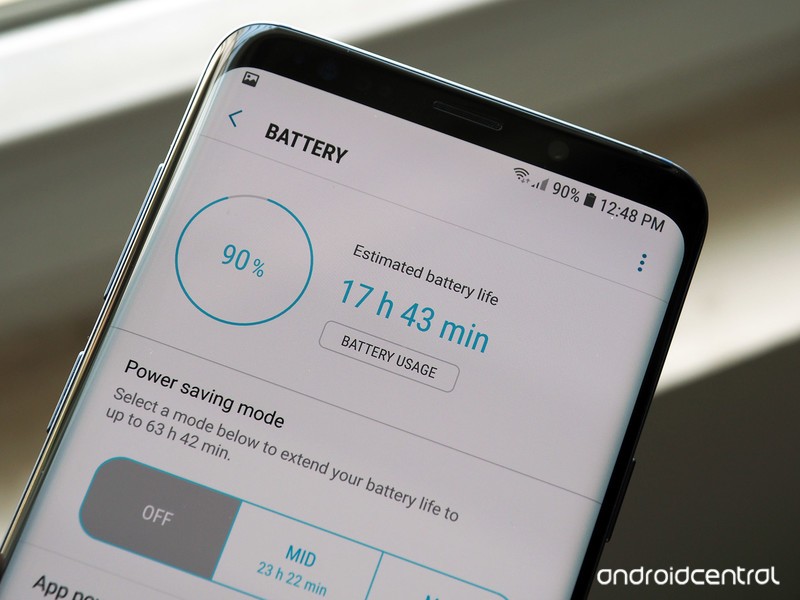
A little less than two weeks since a light was shed on the matter, a Samsung spokesperson commented on it, saying –
The Galaxy S9 is a reimagined smartphone designed to provide the best experience possible. Battery discharge time is dependent upon each user’s specific installed apps and settings, as well as other environmental factors. Both processors go through strict and rigorous testing considering real life usage scenarios, in order to provide the same top-of-the-line experience regardless of processor. Samsung is committed to delivering consistent battery performance over the lifecycle of the phone to provide users with an optimal experience.
In other words, Samsung’s saying that the Exynos Galaxy S9 is fine and that the shorter battery life is a non-issue.
Daniel recently wrote a great explainer highlighting why the Exynos chip is delivering consistently poor longevity, and it essentially boils down to the 9810 being incredibly fast but up to 50% less power efficient when compared to other mobile processors.
As noted in that piece:
The reason for Samsung’s poor showing isn’t because the Exynos 9810 is a bad chip, or even that it’s inherently power-hungry; it appears that Samsung merely programmed the core scheduler poorly, resulting in clock speeds and voltage settings that aren’t appropriate for the task at hand.
With all that said, it doesn’t sound like Samsung’s rushing to come up with a fix for the Exynos variant of its latest phone. People who live in regions where that’s the version sold are simply out of luck this time around, and those with the Snapdragon model can gloat about their longer endurance.
If you have an Exynos Galaxy S9/S9+, what do you think about Samsung’s stance here?
Samsung Galaxy S9 and S9+
- Galaxy S9 review: A great phone for the masses
- Galaxy S9 and S9+: Everything you need to know!
- Complete Galaxy S9 and S9+ specs
- Galaxy S9 vs. Google Pixel 2: Which should you buy?
- Galaxy S9 vs. Galaxy S8: Should you upgrade?
- Join our Galaxy S9 forums
Verizon
AT&T
T-Mobile
Sprint
Fingerprint sensors are still better than facial recognition

Face unlock is great when you’re wearing gloves, but fingerprint sensors are good for more than just authentication.
Alongside the various Android phones I’ve tested, I’ve been using the iPhone X for about two months now. One of the most noteworthy changes to the iPhone X over previous models is the removal of the Touch ID fingerprint sensor, now replaced with a high-tech face unlock function Apple calls Face ID. Some Android phones have similar features; the OnePlus 5T, Huawei P20 Pro, and the Galaxy S9 all feature facial recognition in some form, but all maintain the fingerprint sensor, too. Why?
Facial recognition is great for a lot of reasons. It’s completely effortless, since the only step you have to take is waking your phone’s display — though if you have raise to wake enabled, you don’t even have to do that much. Once your phone knows to look for you, it quickly authenticates you and unlocks to the home screen, without you ever having to type in a PIN or touch the fingerprint sensor. It’s almost like not having any lock screen security at all — until someone else tries to get into your phone, that is.
Face unlock feels almost like not having lock screen security.
It’s also nice to still be able to unlock your phone when the fingerprint sensor is out of reach. In today’s landscape of phones that try to maximize screen space, most fingerprint sensors are moving to the back to help trim down on the bezel below the display. While this is ergonomically convenient when you’re holding your phone, it makes it impossible to quickly unlock your phone on a flat surface like a table or wireless charger. Fingerprint sensors are no good in the dead of winter, either, since they can’t work through gloves. With facial recognition, as long as your display is facing you, you’ll likely have no trouble getting into your phone.
That’s not always a guarantee, though. If you’re in a bright environment like broad daylight, your phone may have some trouble seeing you. Likewise, facial recognition makes it hard to covertly check your phone in a movie theater or meeting (not that you should be doing that anyway) due to the angles required for your phone to identify your face. None of that is a problem for fingerprint sensors, which work in any lighting or angle.

Fingerprint sensors are also multifunctional. In addition to authenticating you, many fingerprint sensors are capable of recognizing swipes in different directions for carrying out navigational gestures. The most common of these gestures is a swipe down on a rear-mounted fingerprint sensor to pull down the notification shade, but some phones make even more use of gestures.
Huawei phones with rear fingerprint sensors, for example, allow you to swipe left or right on the sensor while in your gallery to scroll through photos. On the other hand, Huawei phones with fingerprint sensors beneath the display are able to entirely replace the software keys with taps and swiping gestures. The same goes for Motorola phones, though the exact gestures differ.
I think the best security solution is having both facial recognition and a fingerprint sensor. Samsung’s Intelligent Scan software on the Galaxy S9 combines both technologies, along with iris scanning, to give users the best of both worlds. But if I could only choose one option, I’d stick with a fingerprint sensor for now. In addition to quicker unlocking when I’m holding the phone, I love the convenience of swiping down to access my notification shade — especially as phones get increasingly tall aspect ratios and move the notification shade farther away from my fingers.
See at Amazon
What are your thoughts? Do you prefer fingerprint sensors or are you a fan of the more futuristic facial recognition? Let us know in the comments below!
Samsung Galaxy S9 and S9+
- Galaxy S9 review: A great phone for the masses
- Galaxy S9 and S9+: Everything you need to know!
- Complete Galaxy S9 and S9+ specs
- Galaxy S9 vs. Google Pixel 2: Which should you buy?
- Galaxy S9 vs. Galaxy S8: Should you upgrade?
- Join our Galaxy S9 forums
Verizon
AT&T
T-Mobile
Sprint
This WeMo dimmer light switch is down to just $50
Time to dim the lights!
The WeMo dimmer Wi-Fi light switch is $49.99 on Amazon. This is Black Friday pricing. We haven’t seen it go this low since last year and it usually sells around $70 or more.

You can control this switch from the wall, the WeMo app, and your Alexa or Google Assistant device. You don’t need anything special other than Wi-Fi. With this dimmer, you can schedule your lights to do what you want. Adjust them with the sunset or sunrise. Turn off your lights with your phone when you’re at work and realize you forgot to — or from bed when you’re like me and being extra lazy. Set your lights to turn on slowly and help you wake up. The dimmer switch has 3.9 stars based on more than 9,800 reviews.
See on Amazon
Speed to freedom in the action-packed PAKO 2! [Game of the Week]

Update, April 13, 2018: Outrun the cops in the ridiculous endless action driving game PAKO 2. Also be sure to check out Dissembler, your next puzzle obsession.
PAKO 2
You know the crazy car chase scene in The Blues Brothers where the cop cars just keep crashing into each other? That’s essentially the core gameplay of PAKO 2, an intense arcade driving game that features the most outrageous car chases you’ve ever seen on mobile.
You play as a getaway driver for hire picking up crews from heist spots and escorting them to their drop point. Sounds simple enough — until you factor in the endless barrage of cop cars trying to take you out. If they’re closing in, use Turbo to get some breathing room. Just don’t drive off a cliff or let the cops ram your car too many times or it’s game over.
There are a ton of vehicles available for purchase in the game — either using money earned from your heists or via in-app purchases — and each features unique stats for hit points, speed, and weaponry. There are also five maps to play, but those, too, require a lot of in-game cash to unlock (or an in-app purchase with real money).
The good news is that this game is fun to play without spending any money, and despite the grind of collecting money to unlock new cars, the manic gameplay and randomized upgrade system makes every play-through feel unique.
Download: PAKO 2 (Free w/IAPs)
Dissembler
Who doesn’t love a good puzzle game? Dissembler is a colorful and abstract game that has you flipping tiles to match three — pretty standard stuff. Except, unlike other match-three games you may have played before, you don’t get new tiles dropping in replacing the ones you’ve cleared. Instead, you’re tasked with clearing the whole board.
It all starts out nice and easy as the game lays out the basic principles before gradually presenting you with more complex puzzles — check out the trailer above to see what I mean.
With over 120 puzzles to play with no time limits, move limits, or in-app purchases or ads to deal with this just might be your next puzzle obsession!
Download: Dissembler ($2.99)
Android Gaming

- Best Android games
- Best free Android games
- Best games with no in-app purchases
- Best action games for Android
- Best RPGs for Android
- All the Android gaming news!
List of available apps for Daydream, and upcoming releases

Just go ahead and install all of them. You know, for fun.
With the second iteration of the Daydream View now available, Google has really pushed the Daydream ready Apps in the Play store, though it is still difficult to find them in the Play Store itself. That’s why we took it upon ourselves to make as an exhaustive list as possible of all the games you download for the Daydream View, free and paid.
To make it a little easier, we’ve tracked down all of Google Daydream apps that are available to install now, so you can load up your Pixel with VR goodness and see what this experience is all about. If you’re a regular visitor to this page, the listings that have been bolded like this are the newest entries!
Free Apps and Games
- Exo – Free
- Plex VR – Free
- Swish – Free
- Into the Blue – Free
- Hidden Fortune – Free
- Comets! VR Space Adventure – Free
- VR Abyss: Sharks & Sea Worlds HD – Free
- Bowling Mania – Free
- The Path to Luma – VR – Free
- VR Puzzle Room – Free
- VR Dead Target: Zombie – Free
- Avem33 VR – Free
- Spacewalk VR Experience – Free
- Underwater VR – Free
- BBC Earth: Life in VR – Free
- Poker VR – Free
- Reflekt 360 – Free
- Justice League VR – Free
- Fishing Star VR – Free
- Oz Chicken Slayer – Free
- Gunship Battle2 VR – Free
- Ace Fishing VR – Free
- Inmind 2 – Free
- Merry Snowballs – Free
- WDR 360 VR – Free
- Rez Infinite – Free
- AMC VR – Free
- Frostbound – Free
- Amusement Planet VR – Free
- Fruit Slicer VR – Free
- Action Bowling 2 – Free
- Pop Styly – Free
- Vera Bradley VR – Free
- Montana VR – Free
- Gubbie Arena – Free
- Storm Shelter – Free
- Capsule Commander – Free
- Pixel Zombie Fight VR – Free
- Can You Survive – Free
- Saint Motel – Free
- ComixV VR – Free
- AurorA Videos – Free
- Cinema Variety VR Lite – Free
- Time Rider – Free
- Boom Boom Slash – Free
- Fidget Spinner VR – Free
- Skyvu Places VR – Free
- VR Flight Dash – Free
- Spheres – Free
- Economist VR – Free
- MEL Chemistry VR – Free
- Gun Hacker – Free
- The Breakpiece – Free
- Shoot the Cans VR – Free
- GrooVR – Free
- Daydream Elements – Free
- MLB.com At Bat VR – Free
- Bandit Six: Salvo – Free
- Dragon VR – Free
- VR Run! – Free
- Spotlight Stories – Free
- Audio Factory – Free
- RT360 – Free
- Voxelus – Free
- Coastiality – Free
- Ocean Rift – Free
- Vicarious – Free
- VR Music Visualizer 360 – Free
- The Lost Future – Free
- Slingshot Shenanigans – Free
- Sliver.tv – Free
- King Arthur VR – Free
- theViewer 360 – Free
- SkyVu Social World Builder – Free
- 871VR – Free
- Unimersive – Free
- Vravo! – Free
- Twilight Pioneers Chapter Two – Free
- Digital Domain VR – Free
- Vision Maker – Free
- Confucious Was a Foodie – Free
- InMind 2 – Free
- VeeR VR – Free
- VR Flight Dash – Free
- AltSpaceVR – Free
- TinyWar VR – Free
- Domino VR – Free
- Rave VR – Free
- Sky VR – Free
- The Reaction Room – Free
- Magnetique – Free
- Agelore’s Fantasy FPS – Free
- Wizard Stole My Goose – Free
- Frisbee Frolics! – Free
- VR Battle Grid – Free
- Damnfields – Free
- VR Water Bottle Flip – Free
- myVR – Free
- Exo – Free
- NFL VR – Free
- NBA VR – Free
- Art Plunge Preview – Free
- 405 Road Rage – Free
- Gala360
- SKYBOX VR Player – Free
- OZ Chicken Slayer – Free
- Labster: World of Science – Free
- VR Wifi Discovery
- Inception: VR and 360-degree videos – Free
- Gravity Pull – Free
- Coloring VR – Free
- Avakin Life – Free
- vTime – Free
- Space VR Beta – Free
- New York Times VR – Free
- Asteroids! – Free
- Horizons – Free
- LittleStar VR – Free
- Moatboat – Free
- Playground – Free
- Fulldive VR – Free
- Netflix VR – Free
- LEGO Brickheadz Builder VR – Free
- HBO GO VR – Free
- HBO Now VR – Free
- Jaunt VR – Free
- NextVR – Free
- Hulu – Free
- INVASION! – Free
- BBC The Turning Forest – Free
- YouVisit VR – Free
- Within – Free
- Graveyard – Free
- PolyRunner VR – Free
- USA Today VR Stories – Free
- Wonder Glade – Free
- VR Karts: Sprint – Free
- Street View – Free
- Wall Street Journal VR – Free
- Guardian VR – Free
- Play Movies – Free
- YouTube – Free
- CNN VR – Free
- UE4 Demo – Free
- ZDF VR – Free (German language only)
- ARTE360 VR – Free
- Arts and Culture VR – Free
- Photos – Free
- Rose – Free
- Wayfair Ideaspace – Free
- realestate VR – Free
- 8ninths Enterprise Demo – Free
Paid Apps and Games
- RocketCop 2045 – $0.99
- Alien Shot VR – Surrender – $11.99
- IT: Escape from Pennywise VR – $0.99
- Colossal Quest – $1.49
- Fantastic Beasts – $4.99
- Rangi – $4.99
- Dragon Flight – $3.99
- Turret Attack – $2.99
- Dinosaur Hunter – $1.99
- Magna Brave – $2.99
- Recall – $3.49
- Lithium – $1.99
- Nyoro The Snake & Seven Islands – $4.49
- Tank Commander – $3.99
- Volkan – $1.49
- VR Duck Hunting – $1.99
- 2 Star Resort – $2.99
- Overtake VR: Traffic Racing – $0.99
- The Rabbit Hole – Escape the Room – $2.99
- In the Dark – $0.99
- SBK VR – $3.99
- Disc League – $4.99
- Daedalus – $5.99
- Skylight – $9.99
- Tactera – $9.99
- Samurai Chef – $2.49
- Dreadhalls – $4.99
- Radial-G: Racing Revolved – $6.49
- Virtual Minigolf – $2.99
- Orbital Loop – $1.99
- Flutter VR – $4.99
- Hunters Gate – $5.99
- Elevator… to the Moon! – $5.99
- Narrows – $9.99
- Paint VR – $1.99
- Onyx: Quest for the Midnight Stone – $5.99
- Daylight Dojo – $1.99
- Relic Seeker: Hypogeum – $4.99
- Ultrawings – $4.99
- So Let Us Melt – $3.49
- Beartopia – $14.99
- Need for Speed No Limits VR – $14.99
- The Other Room – $4.99
- Faye & Elsa Part III – $4.99
- Cosmos Crash VR – $2.99
- Baskhead – $2.99
- Demon Grade VR – $3.99
- Untethered – $4.99
- MLB.com Home Run Derby VR – $4.99
- Virtual Rabbids: The Big Plan – $4.99
- Virtugo VR – $0.99
- Raptor Valley – $2.99
- Spark of Light – $4.99
- Relax River – $0.99
- Cyber Paint – $4.99
- SONAR – $0.99
- WE COME IN PEACE – $2.99
- VR Music Visualizer – Spectrum – $3.49
- Floor Plan – $4.99
- Belt Miners – $8.99
- Zombie Elevator – $1.99
- West Gangs – $5.49
- Relic Seeker: Hypogeum VR
- Onyx: Quest for the Midnight Stone – $5.99
- Hungry Shark VR – $4.99
- Feasible Food – $4.99
- Unimersiv – $9.99
- Cinema Variety VR Pro – $1.99
- Haunted House – $1.99
- House of Meditation – $6.99
- Mysteries of China: The Great Wall – $1.99
- Solar Eclipse 2017 VR – $0.99
- Zombie Rush Coaster – $0.99
- Jing Yang Ridge 2 – $2.49
- Darknet – $9.99
- City Traffic Control VR – $0.99
- Pull Out Block – $2.49
- Sisters: Faye & Elsa Part II – $6.99
- Babel – $4.99
- Kismet – $3.99
- Ghosts in the Toybox – $3.99
- Shoot Fireworks! VR – $3.49
- Feed The Cat VR – $.99
- Boberboard VR – $3.49
- Unicorn Happy Place – $2.99
- Access Code – $4.99
- Poker VR – $4.99
- Balloon Shooter VR – $1.49
- Farmer vs Evil 2.0 – $1.49
- Hungry Shark VR – $4.99
- Lola and the Giant – $10.99
- Apnea – $2.99
- Cubed – $.99
- Last Z Killer – $5.99
- My Cube – $1.99
- Baskhead Training – $5.99
- Terror Cave HD – $.99
- Body VR for Beginners – $4.99
- Eclipse: Edge of Light – $8.99
- Along Together – $8.99
- Virtual Rabbids: The Big Plan – $5.99
- Toy Clash – $4.99
- Polaris – $4.99
- The Other Room – $4.99
- Solitaire VR – $2.99
- Flushy Fish – $3.49
- SculptrVR – $4.99
- Building Panic – $4.99
- Walk Man – $1.99
- TacoFace – $.99
- Raptor Valley – $2.99
- Tipsy Bat – $2.99
- Pirates Shooter – $1.99
- Virtual Virtual Reality – $8.99
- Air Hockey VR – $1.99
- Baseball – $2.99
- Vendetta Online – $2.99
- Vaporwave – $1.99
- Sky Fighter: Training Day – $5.49
- Battle Planet – $10.99
- Audio Arena – $2.99
- Walking in clouds – $1.99
- Bandit Six – $2.99
- Virush – $2.99
- Splash VR for Reddit – $2.99
- WE COME IN PEACE… – $2.99
- Relax VR: Rest & Meditation – $5.99
- Bait! – $7.99
- Speech Center VR – $4.99
- Baskhead – $2.99
- Cerevrum – $6.99
- Cosmic Chef – $9.99
- AFFECTED – The Manor VR – $3.49
- Floor Plan – $4.99
- Untethered – $4.99
- Hello Mars – $.99
- Sherlock VR – $1.99
- Need for Speed: No Limits VR – $14.99
- Archer E. Bowman – $3.99
- Layers of Fear: Solitude – $9.99
- Wands – $5.99
- Underworld Overlord – $7.99
- Evil Robot Traffic Jam – $9.99
- Daydream Blue – $4.99
- MLB.com Home Run Derby VR – $4.99
- Action Bowling – $3.49
- Sisters: Faye and Elsa Part I – $6.99
- Gunjack 2: End of Shift – $12.99
- Claro – $4.99
- Frostbound – $4.99
- Star Chart VR – $4.99
- Keep Talking and Nobody Explodes – $9.99
- Danger Goat – $5.99
- Hunter’s Gate – $5.99
- Mekorama – $3.99
- Earthshape – $4.99
- The Arcslinger – $7.99
- Drift – $10.99
As you can see, that list is growing fast and it’s full of great experiences. Google promised there would be 50 Daydream apps available by the end of 2016, and delivered a great deal more! We’re Just starting 2018 and there are already well over 200 apps and games to choose from, over 50 apps in the last month!
This train isn’t slowing down, either. There are a lot more apps coming! Here’s a complete list of the apps Google says are coming to Daydream soon, but so far most of these app developers have been a little shy about a release date for their new VR apps.
Daydream apps planned for the future
- Island Bombers
- Flocklore
- Classroom Aquatic Demo – Here
- Loco Motors
- SuperVektroids!
This post was last updated on 4/12 to add new apps! Be sure to check back regularly for more updates.
Google Daydream

- Daydream View review
- The ultimate guide to Daydream
- These phones support Daydream VR
- Every Daydream app you can download
- Catch up with Daydream in the forums!
Xiaomi’s $480 Black Shark gaming phone is designed to take on the Razer Phone
Xiaomi’s Black Shark gaming phone offers liquid cooling to keep thermals in check.

The introduction of battle royale games like PUBG and Fortnite has catalyzed the mobile gaming market, and manufacturers are now starting to roll out products aimed at gamers.
Razer got in on the action early with the Razer Phone, and now Xiaomi is making its foray into this segment with the Black Shark phone. The device in question has an aggressive black-and-green color scheme and an X-type layout at the back that’s designed to make it easier to hold the phone.
Coming to the hardware side of things, the Black Shark gaming phone has a 5.99-inch FHD+ display with 97% DCI-P3 color gamut, and is powered by the Snapdragon 845 chipset. There’s a liquid cooling system that is claimed to reduce the temperature by up to eight degrees Celsius, allowing you to play for a prolonged duration of time without having to worry about the phone overheating.

There’s also a dedicated button on the left hand side that kicks the phone into high-performance mode, essentially delivering the maximum performance. You get dual stereo sound — with the earpiece doubling up as the secondary speaker — but oddly enough, it doesn’t look like the Black Shark phone has a 3.5mm jack, as there’s no cutout for the analog port at the bottom and no indentation at the top.
Other specs include a dual 12MP + 20MP camera configuration at the back, 20MP camera up front, and memory variations that include 8GB of RAM and 128GB of storage, and 6GB of RAM and 64GB of storage. The phone doesn’t come with a microSD slot, but the 128GB option should be more than adequate for mobile gaming. There’s a 4000mAh battery, and you also get Quick Charge 3.0.

On the software side of things, the Black Shark phone is running Android 8.0 Oreo based on Joy UI, a custom skin that includes a few apps from MIUI. Another interesting feature is a Nintendo Switch-style controller that can be attached to one side of the phone. The Black Shark Gamepad has its own 340mAh battery that’s touted for 30 hours of playing time, and it connects to the device over Bluetooth. The first 50,000 orders of the phone will get the controller for free, and following that it will retail for ¥179 ($30).
As for the phone itself, the Black Shark will go on pre-order in China starting April 20 for ¥2,999 ($480). That’s for the variant with 6GB of RAM and 64GB of storage, and the model with 8GB of RAM and 128GB of storage will set customers back ¥3,499 ($560). There’s plenty to like in the phone, and the pricing makes it one of the best deals in the market if you’re interested in a gaming-focused device.
The only issue will be availability, as it looks like this is yet another phone that will be limited to the Chinese market. We’ll let you know should that change, but what do you guys make of Xiaomi’s gaming phone?
 AIVAnet