


Clean that winter salt off your lenses with this $13 Philips headlight restoration kit
It’s always safer to have clean headlights.
The Philips Headlight Restoration Kit with UV protection is only $13.39 on Amazon. That’s the lowest price we’ve seen in almost a year for a product that normally sells for around $20 or more.

In four simple steps you can clean the front of your headlights from all the dust, haze and yellowing that has been building up on them. Great for getting rid of that salt build up from the winter roads. It requires no tools than what’s included in the box and you’ll definitely see a noticeable improvement in how bright your lights are. This treatment also provides two years of UV protection for your lenses, and you can use it on your taillights or turn signal lights as well. Users give it 4.1 stars based on 73 reviews.
See on Amazon
How to get the most out of Google Home using Bluetooth
Bluetooth and Google Home are a perfect pairing.
Smart speakers have quickly become commonplace in the consumer tech space, and one of the most popular entries is the Google Home lineup. The Home Mini is an excellent buy for folks that want all of the Google Assistant’s power in an affordable package, the regular Home finds a nice middle-ground between value and sound quality, and the Home Max is an audiophile’s dream.

There’s a neverending list of things you can do with the Google Home, and believe it or not, one of its best features is its expansive use of Bluetooth.
You can use Bluetooth to stream audio from your Google Home to another speaker, send audio from your phone to your Google Home, and even connect your Google Assistant-equipped phone with a Bluetooth speaker to create your own makeshift Home device. If you need a helping hand on how to go about doing all this, you’re in the right place.
How to connect Google Home to other Bluetooth speakers
Although the Google Home Mini sounds quite good considering its small price tag, it can still be easy to wish it had more kick when jamming out to your favorite tunes. Thankfully, there’s an easy way to retain all of the smarts of the Home Mini (or any Home speaker) while amplifying the power of your music.
This is done by connecting your Google Home to another Bluetooth speaker, and the process for doing this is fairly simple.


Open the Google Home app.
Go to the Hamburger menu, and select Devices.
Tap the three dots on the Home speaker you want and choose Settings.
Scroll down and tap Default music speaker.
Turn on pairing mode on your speaker, tap Pair Bluetooth speaker, and select the one you want from the list


You’ll still need to talk to your Google Home in order to issue commands, but music, podcasts, and audiobooks will now play through your Bluetooth speaker instead of the Google Home itself. Responses to questions about the weather, your calendar, traffic, etc. will still play from your Home, but any media will default to the Bluetooth speaker.
If you decide you don’t want to use your Bluetooth speaker any longer, simply go back to the “Default music speaker” tab and choose your Home.
How to connect your phone to Google Home
Google’s Cast technology is used by most apps for easily sending music from your phone to your Google Home, but even so, not every single app has adopted this technology yet. Thankfully, good old Bluetooth still works just fine.


Open the Google Home app.
Go to the Hamburger menu, and select Devices.
Tap the three dots on the Home speaker you want and choose Settings.
Scroll down and tap Paired Bluetooth devices.
From here, choose Enable pairing mode, go to the Bluetooth settings on your phone, pair a new device, and select the Google Home.
With this done, you’ll now be able to see on your phone that it’s connected to your Google Home via Bluetooth.
Alternatively, you can simply say “Ok/Hey Google, Bluetooth pairing” and then jump into your phone’s Bluetooth settings and do it that way.
How to connect Google Assistant on your phone to a Bluetooth speaker
If you don’t have a Google Home but still want the same general experience of owning one, you can sort of replicate this as long as you have a Bluetooth speaker and a phone with the Google Assistant.
Assuming your phone and Bluetooth speaker are already paired with one another, you’ll want to make sure “Ok, Google” detection is enabled on your phone.
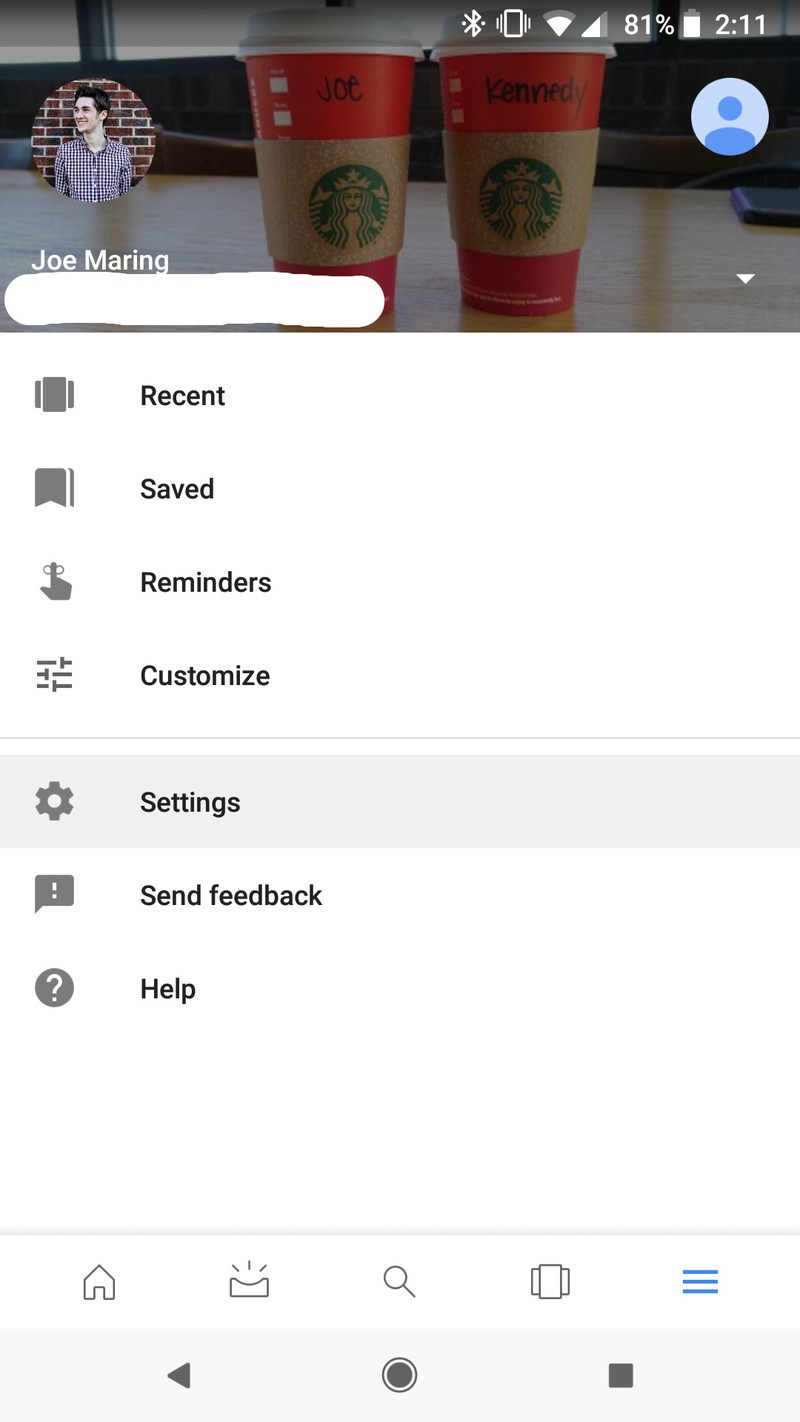


Open the Google app.
Tap the three lines on the bottom navigation bar, and go to Settings.
Choose the Voice option and select Voice Match.
Make sure the Say “Ok, Google” any time and Unlock with Voice Match toggles are enabled.
With this setup, you’ll be able to say “Ok, Google” or “Hey, Google” at any point to your phone and have the Google Assistant pop up – even if your phone is locked. Once you issue your command, the audio will play through the Bluetooth speaker.
It’s not as seamless as having a legit Google Home, but it’s a process that works and can save a bit of money if you want a Google Home-like experience without actually spending any cash for one.
Google Home
- Google Home review
- Google Home Mini: Everything you need to know!
- Google Home Max review
- These services work with Google Home
- Google Home vs. Amazon Echo
- Join our Google Home forums!
Verizon
Best Buy
Target
Google Store
OnePlus 6: News, Rumors, Release Date, Specs, and more!
This is everything you need to know about the OnePlus 6!
OnePlus has been on a cycle of releasing two smartphones per year: a major release in the spring, and a minor tweak of that previous phone in the fall. It’s nearly spring 2018, which means it’s nearly time for another OnePlus phone. Here’s everything you need to know about the upcoming OnePlus 6!
April 4, 2018 – You’ll be able to hide the notch using software
There’s no getting around the fact that the OnePlus 6 will have a notch, but thanks to a software trick, you’ll at least be able to hide it by blacking out a top portion of the phone’s screen.
This won’t be available to use at launch as OnePlus originally decided against including something like this, but CEO Pete Lau recently shared on the OnePlus forums that “it will be added in a future software updated released after the launch of the OnePlus 6.”
April 3, 2018 – OnePlus confirms Snapdragon 845, 8GB RAM, and 256GB storage for OP6.
OnePlus phones typically come with the latest and greatest processing internals around, and although we weren’t expecting the OnePlus 6 to be any different, OnePlus has confirmed a few of the specs we’ve been anticipating for some time.
On its forums, CEO Pete Lau made it official that the OnePlus 6 will have the Snapdragon 845 processor, 8GB RAM, and 256GB of storage. It’s unclear if OnePlus will also offer a 6GB RAM option with less storage like it did with the 5T, but we should know more about that very soon.
The design

The OnePlus 5T was the first time the company increased the size of its displays, and it looks like there will be more refinements coming with the OnePlus 6. The 6 will keep the stretched out design, but will add a notch up top, similar to… some other phones you may have seen. In addition to a high-quality display, OnePlus is also expected to move to a glass back, hopefully including Qi wireless charging in the process.
According to the image, the fingerprint reader will still be mounted on the rear of the phone, though earlier rumors suggested there would be an in-display fingerprint sensor. The dual cameras are still present, though this time in the center instead of the upper left. Of course, this is a leaked image and should be taken with a grain of salt until the official announcement is made.

Not too long after that first photo was shared, Evan Blass shared the above one on Twitter – further confirming much of what we were already expecting. The dual cameras are positioned in a vertical fashion, the fingerprint sensor lies below them, and there’s a 3.5mm headphone jack (yay!).
However, unlike the previous photo, Blass’s shows the back of the OnePlus 6 to have a textured, wood-like finish. OnePlus experimented with a lot of different back materials with the OnePlus One in 2014, and finishes like Sandstone White and Lava Red for the 5T show that the company is trying to stand out with its design. I’m guessing this isn’t the only special back material we’ll see for the 6, and it’ll be exciting to see what else OnePlus has up its sleeve.

Official picture of the OnePlus 6’s notch.
And, of course, the OnePlus 6 will have the infamous notch. This is something we were already anticipating, but OnePlus confirmed our suspicions while speaking to The Verge on March 28.
OnePlus’s reasoning for the notch is that it gives users more screen real-estate as opposed to using a more traditional design, and co-founder Carl Pei argues that it’s more thought-out than a lot of the notches we saw during MWC 2018.
The notch will be hidden whenever you’re watching a video, the clock has been moved to the left of the status bar, and we’ll also see the same gesture system that OnePlus added to the 5T with its OxygenOS Open Beta in late January.
More: OnePlus 6 supposedly leaks with iPhone X notch and glass back
Specifications

Of course, a phone isn’t just a pretty external design. The internal hardware needs to be up to snuff to push pixels and take all of our lovely Instagram photos. Fortunately, it seems the OnePlus 6 will be up to the task. Early benchmarks suggest the phone will ship with Qualcomm’s Snapdragon 845, the same chip that will likely be found in every other flagship device this year. Benchmarks have been gamed in the past — so take this all with the same grain of salt as before — but it’s a safe bet for OnePlus to include all the latest internal hardware with the OnePlus 6, just like they’ve done in previous generations.
A new image recently popped up revealing numerous specs for the OnePlus 6, and while we can’t confirm any of the information presented, it does allow us to build the following spec sheet:
| Operating System | Android 8.1 with Oxygen OS |
| Display | 6.2-inch OLED with notch 2160x 1080 resolution, 18:9 aspect ratio |
| Processor | Qualcomm Snapdragon 845 |
| Camera | 12MP + 20MP rear combo |
| RAM | 8GB |
| Storage | 256 GB |
| Battery | 3300mAhNon-removableDash charging (assumed) |
| Rear cameras | Dual cameras |
| Water resistance | No |
| Colors | Black |
More: Exclusive: OnePlus 6 has 19:9 notched display, Snapdragon 845, top benchmarks
The software

We haven’t seen any leaks for specific software features coming with the OnePlus 6, but it’s safe to expect the same vanilla Android style that OnePlus has used since 2014. OxygenOS is a known quantity at this point, featuring a few key improvements over what ships in Google’s Pixel line. There will surely be an Open Beta for users who like to live on the bleeding edge and try new features at the cost of stability. Expect a true dark theme, expect gesture controls and a few other little niceties that add up to a great software experience.
Price and availability
This is still up in the air at this point, but we can make an educated guess based on OnePlus’ previous devices. The OnePlus 5 retailed for $479, while the OnePlus 5T goes for a cool $499. It’d be nice if the OnePlus 6 kept that same price, but another small price increase isn’t out of the question.
That same leaked image mentioned above suggests that the OnePlus 6 will cost as much as $749, but it’s unclear what currency this is representing. The same post compares the OnePlus 6 against the iPhone X and Galaxy S9+ with $1517 and $1200 price tags, respectively, so either way, we can probably expect OnePlus’s next flagship to cost a good deal less compared to most other OEMs.
As for availability, the OnePlus 3 was released in June of 2016, and the OnePlus 5 in June of 2017. Some early reports suggest we may see an earlier release this year, but June is a safe bet.
Stay tuned for more!
This is what we know — and a bit of what we’re guessing — about the OnePlus 6 for now. We’re expecting an earlier than normal release this year, so stay tuned for more coverage!
OnePlus 5T and OnePlus 5
- OnePlus 5T review: Come for the value, not the excitement
- OnePlus 5T specs
- Should you upgrade from the OnePlus 3T?
- OnePlus 5T vs. Galaxy S8: Beast mode
- All of the latest OnePlus 5T news
- Join the discussion in the forums
OnePlus
Amazon
Updated 4/04/18 – Added info about hiding the notch.
Best Android Phone Under $400 as of April 2018
- Best overall
- Best for Europe
- Best for less
Best overall
Moto X4

See at Amazon
The Moto X4 is the long-awaited sequel to the Moto X Pure Edition, and at $399.99, it’s the best phone you can buy under $400. It has a striking design, clean software, a great display, and a pretty good pair of cameras on the back. It’s also one of the few phones in its price range with an IP68 rating. Even better, you can get the Amazon’s Prime Exclusive version for $280.
Bottom line: If you’re buying an unlocked phone and have a $400 budget, the Moto X4 is your best bet right now.
One more thing: The model made for Project Fi is the only Moto X4 with Android One, and the only model that’s guaranteed to receive updates for at least two years.
Why the Moto X4 is the best
The phone to get if you want bang for your buck.
The design of the Moto X4 is just as nice to hold as it is to look at, thanks to its gentle curves, and it’s relatively durable with IP68 water and dust resistance. The software is as close as it gets to stock Android without bearing the Pixel brand (even more so with the Android One variant on Google Fi), but you still get all of Motorola’s useful motion gestures for quickly launching functions like the camera and flashlight.
You won’t get support for Motorola’s extensive collection of Moto Mods like on the Z2 Play, nor is the battery life from its 3000 mAh cell the best we’ve seen. But the display is terrific, performance with its Snapdragon 630 chipset is smooth and speedy, and its dual cameras can take some really great photos.
Best for Europe
HTC U11 Life (Android One)

See at HTC
If looks are a priority for you, the U11 Life is a great way to get the eye-catching style of HTC’s U11 flagship at about half the price. All it’s missing is that stunning Solar Red finish — or better yet, the translucent look on the new U11+.
The HTC U11 Life is available for $300 from T-Mobile in the U.S., but the model we recommend is the $349 Android One variant you’ll find globally. In our review, we found performance on the Sense version to be slower and less consistent than its specs (Snapdragon 630, 3GB RAM) are capable of, and just like with the Moto X4, only the U11 Life running Android One is guaranteed to receive at least two years’ worth of software updates.
With either model, the U11 Life has some pretty compelling features: IP67 water resistance, a fast fingerprint sensor, HTC’s Edge Sense squeeze functionality, and even a pair of active noise-canceling USB-C headphones included in the box.
Bottom line: If you want flagship style on a budget and don’t mind losing the headphone jack (or living the dongle life), the U11 Life is a great option.
One more thing: Android One is the only software shipping on global units, so if you do want to use the U11 Life with Sense, you’ll need to buy it from T-Mobile in the U.S.
Best for even less
Moto G5 Plus

See at Amazon
The Moto G5 Plus is a wonder of cost-cutting in the right places. For either $229.99 (2GB RAM/32GB storage) or $299.99 (4GB/64GB) you get one of the most well-rounded budget phones out there. Featuring an excellent 5.2-inch display, a great 12MP rear camera, and awesome software touches, the Moto G5 Plus is truly a remarkable achievement.
Bottom line: You can’t go wrong with the Moto G5 Plus, one of the best budget smartphones available right now.
One more thing: The Moto G5 Plus has a smaller, cheaper sibling in the Moto G5, but it’s not officially available in the U.S.
Conclusion
The sub-$400 market is both extremely competitive and a little confusing, but there’s never been more great options readily available, and with the emergence of Android One, you can finally count of getting consistent updates without having to buy a flagship phone straight from Google. The Moto X4 and U11 Life are both great examples of attractive, affordable phones with premium features like water resistance and fast fingerprint sensors. At the same time, devices like the Moto G5 Plus redefine what it means to be a top-tier budget device.
Best overall
Moto X4
See at Amazon
The Moto X4 is the long-awaited sequel to the Moto X Pure Edition, and at $399.99, it’s the best phone you can buy under $400. It has a striking design, clean software, a great display, and a pretty good pair of cameras on the back. It’s also one of the few phones in its price range with an IP68 rating. Even better, you can get the Amazon’s Prime Exclusive version for $280.
Bottom line: If you’re buying an unlocked phone and have a $400 budget, the Moto X4 is your best bet right now.
One more thing: The model made for Project Fi is the only Moto X4 with Android One, and the only model that’s guaranteed to receive updates for at least two years.
Update, April 2018: The Moto X4 is still our best phone under $400, while the U11 Life with Android One has become our top recommendation for European shoppers. We removed the ZTE Axon 7 because it is no longer widely available.
Dell’s new XPS 15 has faster chips in the same bezel-less body
Dell has just revealed its new spring lineup, and among the all-in-ones and gaming PCs taking centre stage is the revamped Dell XPS 15 — and it’s the most powerful version yet. While it looks largely the same as its 2017 predecessor, with an identical chassis, what lies beneath packs a serious punch.
The entry-level model is getting the new six-core H-series CPU, with integrated graphics and the Core i5-8300H CPU as standard, but the top of the line boasts a Core i9 processor, GeForce GTX 1050 Ti graphics and 1TB PCIe NVMe SSD, making the ultrabook a viable option for gamers and creatives.
Like previous XPS 15s, low-end models come with a 56WHr battery, but higher-spec versions come with a 97WHr battery as standard, which according to Dell will give you an impressive 21.5 hours of juice. The upgrade also includes increased memory to 32GB of RAM and a “more power-efficient” 4K Infinity Edge panel. Prices start at $1,000 (costs are yet to be confirmed outside of the US), with pre-ordering open from Dell’s website on April 16.
Via: The Verge
Source: Dell
‘Minit’ is a delightful introduction to speedrunning
I’ve never liked rushing through video games. I prefer to take my time, strolling aimlessly through the digital brush and marveling at each beautifully-realized world. There’s just one problem: I don’t have 100 hours to spend on Monster Hunter World or Assassin’s Creed: Origins. Still, when I dive into a game I want to immerse myself and move at a speed that respects the time and effort put in by the developers.
That glacial pace means I rarely play the same game twice. And it’s why, sadly, I’ll never become a speedrunner with a Super Mario 64 record. I can’t invest the time required, or charge to the finish line without stopping for a moment and admiring the detail in Cool, Cool Mountain. These feelings, though, are why I’ve fallen in love with Minit, a quirky adventure game for the PS4, Xbox One and PC. You can beat the main quest in a few hours and, along the way, gain an intricate understanding of its map, items and puzzles. By the end, I guarantee that you’ll feel like an expert speedrunner.
It all comes down to the 60-second respawn mechanic. At the start of the game, you leave a beach house and find a cursed sword that limits your life to a minute. Every time you die, though, it’s not game over — you simply walk out the door and continue your adventure. To progress, then, you’ll need to understand the world and how its puzzles interconnect. In 60 seconds, for instance, you can find a bartender who wants five crabs obliterated. On your next run, you can look for their positions, and then finally defeat them all on the third.
That’s easier said than done, though. The crabs are spaced out in a way that gives you just enough time to complete the quest. If you’re successful, though, the bartender will give you a cup of coffee and the strength to push large boxes. The latter is required to unlock new parts of the map and create shortcuts for previously impossible tasks. Venture far enough and you’ll find new safe houses — a hotel near a graveyard, for instance, or a steel trailer by the desert. Walk inside and it’ll become your new respawn location, increasing the reach and possibilities of your next run.
How ‘Minit’ was born
Minit was dreamt up during an Adventure Time-themed game jam in 2012. The original project was called ‘Adventure Minute’ and let you play as Finn, with his plucky sidekick Jake in tow. “The whole idea was that you had a minute and whatever direction you headed in, there was completely different stuff waiting for you,” Jan Willem Nijman, a programmer and designer on Minit said. Each run, or minute, unraveled like a self-contained cartoon episode. The team ultimately won the competition and was given a real-life crossbow — which now sits in Devolver Digital’s offices — as a prize. “It was a total surprise that we got it,” Kitty Calis, a designer and Artist on Minit said. “I didn’t see that one coming!”
The team spent the next four years thinking about the game’s untapped potential. Finally, they decided to build a small prototype and show it to Devolver at GDC. “I don’t why, but we decided to just show it and say, ‘Hey, we’re working on a game, would you be interested in publishing it?’” Nijman said. To their surprise, the indie game publisher agreed immediately. “It was just a little house with the character walking around, and the dog sleeping, I think. And then Devolver was like ‘alright, let’s do it!’” The group then spent a year working on the project full-time.
Minit isn’t about maximizing each life; there are no crazy combos or high scores to aim for. Instead, it’s a race to understand what you need to do next and executing that plan within a perfectly-timed minute. Each bite-size puzzle becomes, in essence, its own tiny speedrun. And if you mess up, it’s no big deal because you’ve only wasted a measly minute. “The idea is like, ‘What is a minute in a lifetime?’” Calis said. “It’s just a minute,” Nijman added. “If it was a 30-minute game, where you died every half-hour, it would be horrible and nobody would want to play it!”
Of course, there is a little bit of pressure. Nijman, Calis and the rest of the Minit team — Dominik Johann, co-founder of Accounting+ developer Crows Crows Crows, and Jukio Kallio, a prolific video game composer — know how far you can travel in a minute and designed each puzzle accordingly. “There is an old guy in the game that talks very, very slowly,” Nijman said. “You need to run there right away if you want to hear his whole story. And that’s just something we made. We tried some text, ran to him and said, ‘OK, he can say a few more words’ or ‘Something needs to be shorter.’”
There will be times, though, when you enter an area and have no idea what to do or expect. You might get lost in the haunted house or stumble on a group of enemies armed with bows and arrows. In these instances, the Minit team wants you to “take your time, smell the flowers and look at the little details.” Yes, there’s a timer, but the world is small enough that backtracking rarely feels like a chore. Each area is also packed with hidden hearts and coins, the latter of which can be spent on crucial running shoes.

‘Minit’ has a few bosses that will test your mental dexterity.
Playing Minit, then, is a back-and-forth between speedrunning and goal-less exploration. Nijman said he was inspired by Grim Fandango and other point-and-click adventure games. “Sometimes you’re a bit stuck but then you just go and try somewhere else. A lot of games now are super-hand-holdy, And with Minit we didn’t want to make a really hard game, but we were also OK with people feeling lost for a little bit.” I appreciated those moments of befuddlement because they built up to a “eureka” moment and an exhilarating dash to execute my (often incorrect) solution.
Some puzzle-solving and items are required to reach the end credits. There’s a lot of optional content, however, that players will likely miss the first time through. I never fixed a boat, for instance, that would have opened up an island and a fast-travel system between the different safe houses. There’s also a strange bone in the graveyard that I didn’t know what to do with. According to Nijman, it’s possible to avoid some items altogether or collect them out of the team’s intended order. “I don’t know the optimal route to go through the whole game,” he admitted.
“I don’t know the optimal route to go through the whole game.”
Once you’ve beaten the game, you’ll be given a time, completion rate and respawn tally. A New Game+ mode will then unlock, allowing you to start over with normal or Second Run difficulty. The latter makes the puzzles more complicated — the crabs will be placed in trickier positions, for instance — and cuts the timer to 40 seconds. Normally, I would just move onto a new game, but with Minit I’m tempted to jump back in and test my newfound speedrunning abilities. The adventure takes less than three hours to complete, after all, and I know where most of the items are.
Who knows, maybe I’ll build up the courage someday to complete a speedrun of Super Mario 64.
Source: Minit
Apple exploring ‘touchless’ gestures and curved iPhone screens
A future iPhone could be controlled without you even touching it. Apple is exploring touchless gesture control and curved screens, according to the latest rumors from Bloomberg. A display that “gradually” curves inward from top to bottom is still at least two to three years away, while the touch-free tech “likely won’t be ready for consumers for at least two years.” That’s assuming Apple finds merit in continuing with the R&D cycle for it.
Samsung and Motorola have both used touchless gestures in their handsets before, but it sounds like Apple’s version is a bit different in terms of implementation. Rather than using motion sensors in the bezel, Bloomberg says that the display itself will apparently act as the sensor and your hands will have to be much closer to the screen as a result.
Of course, Apple works on far out technology all the time, and more often than not, it doesn’t come to market. Remember when the company teased swappable camera lenses back in 2012? Or a solar powered iPhone? Well, it’s six and eight years, respectively, since those patents were filed and neither feature has been added yet.
Source: Bloomberg
Watch the first-ever NBA 2K League draft right here at 1PM ET!
Interested in watching the first-ever NBA 2K League draft? Then tune into NBA TV or Twitch today at 1PM from the Hulu Theater at New York’s Madison Square Garden. Each team in the league will pick six players. Pre-show coverage including a press conference with commissioner Adam Silver, Brendan Donohue from 2K League and Take-Two Interactive (2K’s publisher) CEO Strauss Zelnick will live on NBA TV as well, with the NBA’s website and 2K League’s Twitter account doling out additional updates. However, only the first round will be broadcast on NBA TV — you’ll have to peep Twitch for the rest.
Watch live video from NBA2KLeague on http://www.twitch.tv
Source: Twitch
What you might have missed from the New York Auto Show

Automakers used the New York Auto Show as an opportunity to show the world that they’re still all about the electrification of their fleets. From hybrids and long-range EVs to futuristic and America-centric concepts, the Big Apple was home to an impressive amount of automotive news.
Before the show even started Honda unveiled its latest Insight hybrid with an impressive 55 mpg city mileage rating. Inside the convention hall, Hyundai shared range details (250 miles) about its upcoming Kona Electric while its luxury brand Genesis took the wraps off its futuristic Essentia EV. The Korean automaker isn’t messing around when it comes to electrification.
Meanwhile, for the driver that loves the outdoors, Subaru’s new Forester continues its rugged wagon tradition but has added facial recognition so the car knows when the driver is tired or distracted. Volkswagen is targeting Americans that would rather kayak than sit at the local coffee shop with the Tanoak concept truck. No word on if the automaker will actually build the truck, but judging from the reaction from the press at the auto show, it really should get this pick up on the road soon.
Click here to catch up on the latest news from the 2018 New York Auto Show.
Photos show the epic scale of VW Dieselgate
When you think about the numbers associated with Volkswagen’s US “Dieselgate” scandal, it’s easy to zone out. $25 billion in claims and fines … 500,000 vehicles affected … 294,000 vehicles in storage — figures like that are hard to fathom. Reuters has put some of it in perspective, however, with a photo essay showing how VW and Audi are housing affected vehicles.
The scandal erupted when investigators discovered that VW used software that reduced vehicle emissions during tests, even though real world pollution levels were up to 35 times higher. As part of a $25 billion settlement, which includes claims from owners, dealers and government, Volkswagen agreed to buy back 500,000 affected cars. So far, it has fixed and resold 13,000 of those, and destroyed 28,000. But where is it keeping the rest?
Images in the article show some of the 294,000 vehicles housed at 37 facilities by the tens of thousands. Those include a defunct Detroit football arena, a shuttered paper mill in Minnesota and a desert vehicle cemetery in Victorville, California.

From afar, they’re just specs of mostly black, white red, and gray (black is not a very original car color choice, it seems). Zooming in close, however (above) you see that these are actual vehicles, some of which cost upwards of $80,000, built from the blood and talent of thousands of workers in the US and abroad.
By some estimates, VW’s corporate malfeasance caused up to 20,000 deaths a year from respiratory disease and other health issues. It’s also lamentable that perfectly good cars are being stored or destroyed, considering the amount of time and energy that went into making them and the use that they could otherwise be put to.
For all that, the automaker received a relative wrist-slap of three years probation and a $4.3 billion fine for three felony counts. US compliance officer Oliver Schmidt did get seven years for his part in the cover-up, but no higher-level executives have even been charged. That’s despite the fact that Schmidt told a judge he “was directed to follow [talking points] … approved by management level supervisors at VW, including a high-ranking in-house lawyer.”
Source: Reuters
 AIVAnet