


Deal: BYOD to Boost Mobile and get a free month of unlimited data!

If you’re in the market for a new phone plan, Boost Mobile may have just the thing.
There’s a deal on a great BYOD plan at Boost Mobile! For just $50 a month, you’ll get unlimited talk, text & data along with streaming (in standard definition) and 8GB of mobile hotspots. Act now and you’ll get a full month of unlimited data free. Offer ends April 5, 2018
How this deal works:
New Boost Mobile customers who bring their own phones and sign up for the $50 Unlimited Gigs plan will get a one month credit of $50.
- Must be a new customer & requires an initial payment of $50 at time of activation.
- Customers can bring their compatible devices (select iPhone and Android models) and former Sprint devices are not eligible.
Boost Mobile: Unlimited Gigs plan
- Unlimited Data, Talk & Text, after you reach 23GB speeds may slow temporarily during times of high network traffic
- Coverage on Sprint’s nationwide network
- 8GB of mobile hotspots
- SD video streaming, up to 480p
- All taxes and fees included
See at Boost Mobile

Honor 7X vs. Huawei Mate SE: What’s the difference?

Two nearly identical phones set apart by a small price increase and an equally small spec bump.
Huawei hasn’t exactly been having the best year so far. Back in January, the company saw AT&T back out of a deal to sell its phones in the U.S., and more recently Best Buy pulled a similar move. But the company is nothing if not resilient, and has put out yet another phone directed at the U.S. market in the form of the Mate SE — a $250 aluminum phone with an 18:9 display and dual cameras.
If that sounds familiar, that’s because Huawei’s subsidiary brand Honor already released a nearly identical phone back in December, the Honor 7X. For $200, it’s one of the best bang-for-your-buck values around, but Huawei’s new Mate SE complicates things a bit. What’s the difference? And which one should you buy?
The reigning budget champ
Honor 7X

Even four months after its release, it’s hard to beat the value of the Honor 7X. For $200, you get an aluminum unibody chassis with dual cameras and a rear fingerprint sensor. There’s an 18:9 Full HD+ (2160×1080) display up front that brings a modern look and feel to the phone, and it’s even dual SIM-compatible.
Inside is a respectable Kirin 659 chipset — it’s a rough equivalent to Qualcomm’s mid-range Snapdragon 630, and while not blazingly fast it’s enough to power the Honor 7X through most tasks. Along with the processor, you get 3GB of RAM in the U.S. variant, and 32GB of onboard storage (expandable via microSD).
The budget champion is made even better with its recent Oreo beta.
Even at launch, the Honor 7X felt a bit long in the tooth on the software side. It shipped with Android 7.0 Nougat and EMUI 5.1, which left out a number of improvements from newer software iterations that already existed on Honor’s other products (namely, the Honor View 10). Thankfully, we’re already seeing Honor make efforts towards improving its software front, with a beta version of Android Oreo available for users in certain markets brining the Honor 7X up to date with EMUI 8.
With this update, the Honor 7X feels like an even better value than before, and the newly added support for Project Treble means that it should stay up to date for years to come.
See at Amazon
The new kid on the block
Huawei Mate SE

The most perplexing thing about the Huawei Mate SE is how indistinguishable it is from the Honor 7X. Aside from differing logos and a full enclosure around the dual camera module (as opposed to the Honor 7X, whose cameras individually protrude from the chassis), the Mate SE is completely identical to the Honor phone that came before it. The antenna lines are in the same spots, and the fingerprint sensor and display remain unchanged as well. Unfortunately, that also means the Mate SE retains the ever-aging microUSB standard.
Where you’ll finally start to notice some changes made is in the internal specs. Though the Mate SE comes at a $50 premium over the Honor 7X, that extra money buys you an additional gigabyte of RAM (up from 3 to 4GB) and twice the internal storage at 64GB.
The Honor 7X and Mate SE are almost indistinguishable, but the latter pulls ahead with improved specs.
The rest of the specs remain the same, including the Kirin 659 processor, 3340mAh battery, and 16MP + 2 MP rear camera combo. In most applications, you likely won’t notice the added RAM (and some models of the Honor 7X already feature 4GB), but this should help with multitasking features like PIP video once the Mate SE eventually gets updated to Oreo.
Unfortunately, at the moment the Mate SE is running the same dated software as most Honor 7X units — Android 7.0 Nougat and EMUI 5.1. Shipping with software from 2016 was bad enough back in December, but in late March of 2018 it’s just egregious. Hopefully Huawei will be quick to update its new budget phone — especially since Oreo is already in testing on the Honor 7X.
See at Amazon
Which one’s right for you?
This time around, this is a pretty easy question to answer. With both phones so similar, there are only a few things to consider when deciding between the Honor 7X and Huawei Mate SE. Is $50 worth an 1GB of RAM and double the storage to you? Rather, with the option to expand the storage capacity of either phone with a microSD card, you might only need to consider the extra RAM.
In the short term, you might also want to take into consideration the Honor 7X’s beta rollout of Android Oreo. Honor is clearly prepping for an official release, but meanwhile there’s no word on an update for the Mate SE. If you’re in a rush to get the latest software, the Honor 7X might be the better option for now — otherwise, the Mate SE’s slightly improved specs may be worth the extra cash.
Which phone would you buy? If you already have the Honor 7X, do you wish you could switch to the Mate SE or are you content with what you have? Let us know in the comments below!
Samsung Galaxy Note 9 rumors: Release date, specs, price, and features!
Here’s everything we know about the Galaxy Note 9!
Now more than ever, Samsung’s Galaxy S+ phones are becoming eerily similar to the Note series. The Note used to be Samsung’s way of touting all of the latest and greatest tech it had to offer, and while this is still the case, the same can be said for this year’s Galaxy S9+.

Samsung needs more than just the S Pen to make the Note 9 stand out from its own phones and the rest of the competition, and luckily, all signs are pointing to something exciting for this year’s release. Here’s what we know so far!
March 29, 2018: Samsung may launch the new Note as early as July
Samsung’s Galaxy Note series usually makes its debut in August, but according to a report from The Investor, the Note 9 could launch much sooner.
Samsung typically starts producing its OLED panels for Note devices in June, but it’s said that the company will be moving ahead of schedule this year and start production as soon as April. As such, we could see the Galaxy Note 9 released as early as July.
The reason for this change? Although not confirmed, it’s reported that this is a result of unimpressive sales of the Galaxy S9 and Apple’s own OLED production requirements for two of the iPhones it’s expected to release this September.
March 23, 2018: A new report suggests that the Note 9 will have an in-display fingerprint sensor
As bezels continue to shrink, the mobile industry is being forced to come up with new ways to implement biometric security systems. This means moving fingerprint sensors to the back of phones, and in some cases, replacing them entirely with face-unlock setups.
According to a report from The Korea Herald, Samsung will use the Galaxy Note 9 as its first phone to ship with an in-screen fingerprint sensor. Per a source that spoke with The Herald –
Samsung Display has prepared three or four solutions for Samsung Electronics to embed the fingerprint sensor inside of the main display, and both are seriously considering one of the solutions.
In addition to this, the anonymous source also noted that –
The delay in deciding on the final concept for the Note 9 is due to the work in adopting the in-display fingerprint sensor. A final decision on adoption of the technology will be made by this month.
Previous reports from earlier this month have indicated that Samsung would skip out on an in-display sensor for the Note 9, so it’s hard to say for sure what’ll come of this considering the back-and-forth we’ve heard. The Galaxy Note 9 would be a perfect showcase for this new technology, but if the sensors don’t meet Samsung’s criteria quite yet, we may not see this tech arrive on a Samsung phone until the S10.
February 27, 2018: Bixby 2.0 could make an appearance on the phone
During MWC 2018, Samsung’s chief of mobile, DJ Koh, spilled some beans regarding Bixby 2.0.
Bixby 2.0 is expected to be a big improvement compared to its current iteration, offering things like a more natural-sounding voice and availability on more devices. Speaking to ZDNet, Koh said –
At this speed, I think we will be able to unveil Bixby 2.0 when we launch the Galaxy Note 9.
When will the Galaxy Note 9 be released?
Samsung typically releases its Galaxy Note series in the second-half of the year, often in mid-to-late August.
It was reported on March 29 that Samsung had begun production of OLED panels for the Note 9 two months earlier than it usually does, suggesting that this year’s Note may be released as early as July.
How much will the Galaxy Note 9 cost?
Pricing for the Note series has steadily been going up each year, as has the majority of the smartphone industry.
The Galaxy Note 8 costs $950 unlocked, and I’d expect the Note 9 to cost either the same or slightly more. Apple proved with the iPhone X that people aren’t afraid to shell out $1000+ for a new smartphone, and I don’t consider it to be out of the question for Samsung to follow suit with the Note 9 – especially if it adopts newer technologies like an in-display fingerprint sensor.
Samsung Galaxy S9 & S9+: Everything you need to know!
USA Today’s first AR app brings a rocket launch to your table
After a series of VR apps like The Wall and USS Eisenhower VR, USA Today Network is now exploring storytelling on another new (ish) platform: AR. 321 Launch is the network’s first AR app, and it’s designed to deliver what it says is the “industry’s first, multi-layered interactive experience for space news and content.” It’s a collaboration between USA Today and one of the company’s local news brands Florida Today, which makes sense since the Kennedy Space Center is in that state. The app releases today, and you can try it out if you’re using an iPhone 6S or later with at least iOS 11, or a handset running Android 7.0 or newer. If you’re a space buff or enthusiast, you’ll probably enjoy it.
The app is straightforward. Open it and select “Launch Simulation” or “Live Mission.” The former lets you build and launch a rocket from scratch, while the latter takes you to a faux launch pad with a live feed of a real launch (if one’s happening). Since there wasn’t an actual launch during my time with the app, it wasn’t streaming anything. The home page helpfully shows a countdown to the next launch, which will take place on April 2nd. You can get an alert about the event closer to the day, too.
Until then, you can still play with the simulator, which is educational and fun. Using your phone’s camera, you’ll scan for a flat surface in your vicinity on which to place the virtual launchpad. The app taps ARCore and ARKit for Android and iOS to do this, and my Pixel 2 struggled to find a suitable patch on my cluttered work desk.

During my recent demo at USA Today’s offices, though, we quickly found several surfaces to use, and the app marked them out with white boxes. I dragged a SpaceX assembly building to the lid of a MacBook in front of me, then followed instructions like “place the strongback” and “swipe to fill up the fuel gauge.” At each stage, the app showed interesting nuggets of information, like how structures around a launch pad are filled with water to dampen the sound energy from rocket engines.
I won’t spoil the experience for you — it’s more fun if you don’t already know this information when putting your rocket together. By the time I finished the simulation, which took about 15 minutes, I was impressed by the crisp quality of the digital graphics, even when I moved up close to inspect the spacecraft. Make sure you have audio turned on, too. The launch countdown sequence was made all the more realistic thanks to the sound effects that were reminiscent of all my favorite space movies (or just Apollo 13). All told, the simulation was engaging and educational, although I was slightly distracted by how hot my phone got.

Come April 2nd, you’ll be able to watch the launch of the SpaceX Falcon 9, with live video streaming from the app, alongside real-time commentary from Florida Today’s space reporters. You can also use your phone’s GPS to see where the Kennedy Space Center is relative to your location, as well as see the rocket’s flight path to see if it crosses where you are.
USA Today Network has won awards for its previous VR apps, and continues to explore new means of storytelling. Ray Sotos, director of emerging technologies at USA Today Network, told Engadget that his team plans to add more launches to 321 Launch, as well as create other AR apps in collaboration with the network’s other brands.
Given Google just released ARCore 1.0 to let any developer publish apps which use that toolkit, 321 Launch is a relatively early example of a fun, educational way to use AR. We’re sure to see loads more intriguing examples in the months to come, though, so get ready for your reality to get very augmented.
The Genesis Essentai Concept is the automotive future we were promised
The Essentia is what I expected all cars to look like after the year 2000. Alas, vehicles still pretty much look the same now as they did way back in the 80s. But that shouldn’t stop the luxury arm of Hyundai, Genesis from putting this car in showrooms as quick as possible to satisfy my childhood dreams.
Unveiled at the New York Auto Show, the pure electric Essentia coupe hits all the marks with its bubble roof, butterfly doors and body panels crafted from carbon fiber. To get those doors open the car uses biometric fingerprint and facial recognition scanners to make sure you’re the driver. Just walk up, get scanned and the car comes alive.
The interior of the car at te show is a bold red with blue dash accents. If Superman needed a car, he’d have this interior. The dash is a series of screens (as you would expect) and supports voice recognition. Genesis says you’ll be able to have two-way conversations with the car which I assume means it’s like talking to KITT from Knight Rider.

The car will also connect to your smart home not that you would ever want to go back to your house if you ever got behind the wheel of the the Essentia. But this is a concept car which means no matter how many emails I send to Genesis, it’s unlikely this car will ever appear in showrooms. But, as a design template for the luxury brand, there is the possibility that a tamer, more refined version of this car will go into production sometime in the future. Let’s just hope it keeps the bubble roof.
Click here to catch up on the latest news from the 2018 New York Auto Show.
Source: Genesis
Mark Zuckerberg won’t lose his job any time soon
We’ve seen it countless times. A technology company enters the market with a bang, throwing established industries into chaos and forever changing the lives of everyday people — and then a scandal breaks and the founder or CEO is publicly ousted.
Uber co-founder Travis Kalanick was kicked out as reports of the company’s sexist culture flooded the news; Equifax CEO and chairman Richard Smith suddenly decided to retire amid a data breach affecting more than 140 million people; Theranos founder Elizabeth Holmes was charged with fraud by the SEC, forced to give up control of her business and barred from serving as the leader of a public company for 10 years. Even Yahoo CEO Marissa Mayer couldn’t keep a job during the Verizon acquisition, following a series of security scandals, including a hush-hush hacking campaign that hit billions of accounts.
So it would seem the writing is on the wall for Mark Zuckerberg, the founder, CEO and chairman of Facebook. His company is at the heart of a massive political and data-security scandal, accused of turning a blind eye as British political-consulting firm Cambridge Analytica collected information from 50 million Facebook users without their consent. That information was then piped into Donald Trump’s successful campaign for president.

This isn’t Facebook’s first brush with large-scale privacy concerns, but the political implications have made the scandal mainstream news. Shareholders and Facebook users have filed lawsuits against the company; Mozilla, Tesla and other major organizations have pulled their ads and pages from the site; Congress wants Zuckerberg to testify; and the Federal Trade Commission is investigating the company’s privacy practices.
However, Zuckerberg doesn’t appear to be worried about his position at Facebook. He’s completed the expected apology tour, publishing a Facebook post about the issue, participating in interviews where he reiterated his written sentiments, and finally appearing on CNN to say the same things yet again, but this time, on-camera. He’s appeared appropriately calm, concerned and confident, and not once has he had to answer questions about his own job security.
There may be a hashtag to #DeleteFacebook, but there are no rallying cries to #FireZuckerberg or otherwise see him step down. This is because Zuckerberg is uniquely insulated at the top of the company, with no one truly able to force his hand in any direction. The same reason he should be held responsible for Facebook’s gross mismanagement of user data is also the reason he isn’t sweating over his role — Zuckerberg is the king of Facebook. It’s nearly impossible to exile him.
Facebook is a public company, which means it has a board of directors representing the stockholders. Traditionally, when a CEO is forced out of their public company, it’s because the board voted to get rid of them — each member owns a different percentage of shares and thus a different percentage of the vote, giving some folks more power than others. But, if a majority vote the same way, the motion passes.
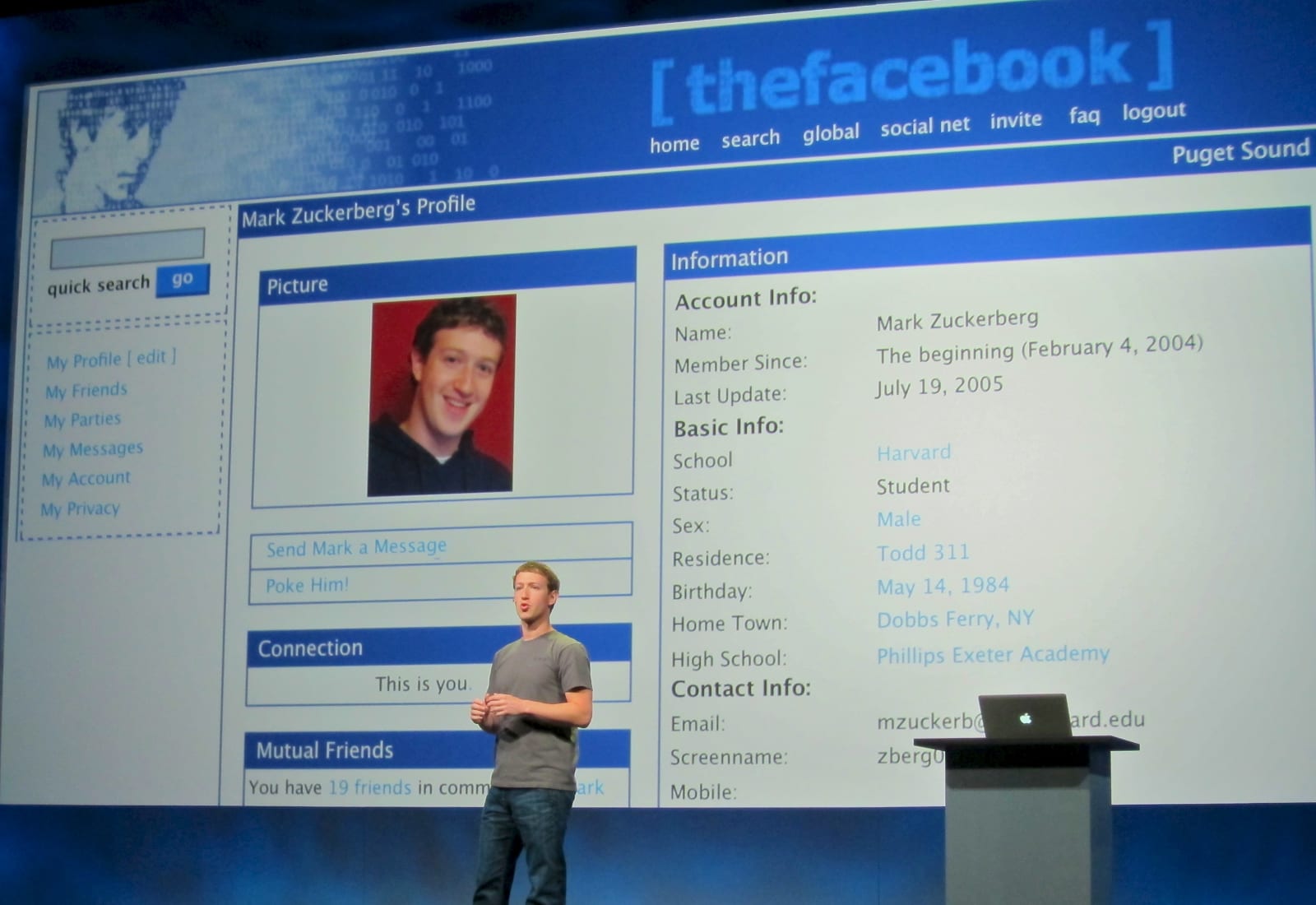
As chairman of the board, Zuckerberg controls 87 percent of Facebook voting shares. Even if the remaining eight board members wanted to kick him out, they don’t have the power to do so, unless Zuckerberg decides to play along and vote himself out.
This consolidation of power didn’t happen by accident. In December 2015, Zuckerberg pledged to give away 99 percent of his Facebook shares — valued at $45 billion at the time — to fund the Chan Zuckerberg Initiative, a charitable organization he founded with his wife. In order to do this without reducing Zuckerberg’s majority on the board, Facebook took a page of out the Google founders’ handbook. It introduced a new type of non-voting stock, Class C, that split every share for every stockholder into three distinct shares. A share worth $100 was transformed into three $33 shares, two of which were Class C, meaning they didn’t carry any voting rights.
Zuckerberg controls 87 percent of Facebook voting shares.
This allows Zuckerberg to divest 99 percent of his shares without giving up control of the board. When Google did this same thing in 2014 to protect the status of founders Larry Page and Sergey Brin, shareholders weren’t too pleased with the plan — just 12.7 percent voted to pass it. Page and Brin used their majority to push it through regardless.
Facebook drew ire for its Class C plan, too. In February 2017, a proposal to oust Zuckerberg as chairman gained traction among shareholders, with the Class C changes cited as proof of his unchecked power.
However, a few upset shareholders can’t get rid of Zuckerberg — and besides, the board doesn’t seem to want that. Aside from Zuckerberg, the Facebook board includes eight people, all of whom have high-profile histories in tech entrepreneurship: Peter Thiel, Jan Koum, Reed Hastings, Susan Desmond-Hellmann, Kenneth Chenault, Erskine Bowles, Marc Andreessen and Sheryl Sandberg.
These folks are generally happy with the way Zuckerberg runs Facebook as a business. Even after the Cambridge Analytica scandal wiped out about $100 billion from Facebook’s market capitalization, the company is still worth about $440 billion. Facebook earned a record $12.97 billion in profit just in the final quarter of 2017, despite the fact that people are spending less time on the site. Zuckerberg has proven himself to be a capable leader in times of crisis, navigating the site through fake news debacles, questions over its political influence and previous privacy concerns.
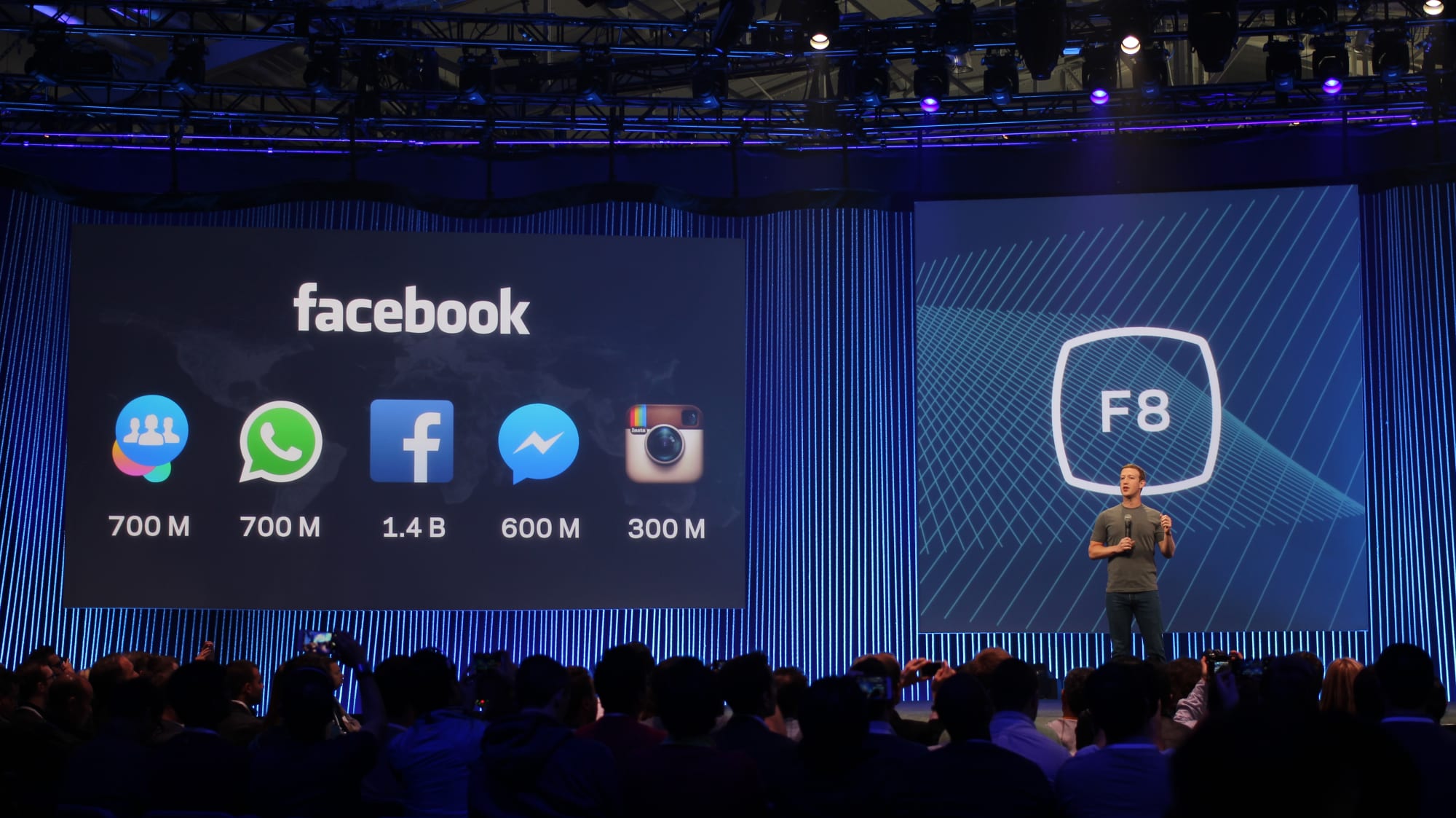
Zuckerberg is doing the same thing with the Cambridge Analytica scandal and board members have no reason, for now, to stop him. Disrupting the Facebook hierarchy would only throw the company into further turmoil. Besides, they’re all still making money.
Whether at a public or private company, profit is the defining factor when it comes to kicking out a CEO. Uber was bleeding cash at the time of Kalanick’s firing, and Yahoo was in such dire straits under Mayer that Verizon requested a $1 billion reduction in its acquisition price. For now, Facebook is still making bank for its board members, meaning Zuckerberg is secure.
At Facebook, nothing happens without Zuckerberg’s approval.
As chairman, CEO and founder of Facebook, Zuckerberg enjoys vast control over the entire company. Even outside of Facebook, in the real world, he’s a prominent figure who’s been canonized on the silver screen as a hesitant kid genius, idolized by hoodie-wearing computer science majors across Silicon Valley and beyond. Zuckerberg’s success has been wrapped up with Americana fantasy, presented as proof that talent and a good idea are enough to make somebody’s — anybody’s — life.
But that’s all armchair psychology. Perhaps there’s no outcry for Zuckerberg’s removal because things simply aren’t bad enough yet. Maybe if the official number of mined Facebook accounts hits 1 billion, or if more evidence of mishandled data comes to light, public pressure will grow to a fervor that forces him to step aside, for the good of the company’s bottom line. For now, though, Zuckerberg is protected by a clean reputation, the dazzle of Hollywood and the company hierarchy that he personally built.
At Facebook, nothing happens without Zuckerberg’s approval: This includes letting a company like Cambridge Analytica mine Facebook users’ data without their permission or firing the CEO. Especially when that CEO is Zuckerberg himself.
Grindr security flaws risk exposing users’ location data
Two security issues could expose personal data for up to 3 million users of the gay dating app Grindr, according to an NBC OUT report. In the first, a website letting users log in with their Grindr credentials got wide-ranging access to data that isn’t publicly available. This includes that user’s unread messages, email addresses, deleted photos and real-time location — even if they’ve opted out of publicly sharing the latter. But the second simply intercepts unencoded location data going from the app to servers, allowing anyone observing that user’s internet traffic to pinpoint their position.
Trever Faden originally discovered the first flaw after creating the website C*ckblocked (asterisk intentional) to scrape data from anyone who logged in with their Grindr username and password. The second would let anyone monitoring web traffic observe the location-pings the Grindr app sends to its servers — and while that’s a creepy thing to do anywhere (like, say, over public Wi-Fi), it’s also something that anti-gay governments or groups could use to peek at anyone who might use the service.
We’ve reached out to Grindr for comment and will add when we hear back. The company assured NBC OUT that the C*ckblock flaw had been fixed (the site was shut down anyway), but the second exploit reportedly remains.
Via: TechCrunch
Source: NBC OUT
Snap lays off another 100 employees
Snap, the parent company of Snapchat, is undergoing yet another round of layoffs, according to Bloomberg. This time, the cuts are mostly focused in its advertising department. Variety confirmed with Snap that the company is laying off around 100 workers. Snap confirmed to Engadget that the layoffs took place.
This is the third round of layoffs for Snap in a year that’s only three months old. People who had inside knowledge of the issue say this is the last round of cuts associated with a restructuring plan that was put into place last year. The company previously let go staff from the engineering and content teams.
“These changes reflect our view that tighter integration and closer collaboration between our teams is a critical component of sustainably growing our business,” Chief Strategy Officer Imran Khan said in a statement to Bloomberg. “While this process has required us to make some really tough decisions, we believe that rigorously ensuring our team structure always aligns with our goals will make us stronger.”
Snap has had its share of troubles over the last year. The company has been losing ground to its rival, Instagram, and it’s unclear how successful its original content has been. However, its fourth quarter was its best since launching an IPO in March of 2017, so this reorganization may end up working out in the medium term.
Source: Bloomberg
Apple Pay Debuts New Promo Offering 20% Off Orders $25 or More on Fanatics
In Apple’s latest promo for Apple Pay, sports fans can save 20 percent on gear when paying with Apple Pay in the Fanatics app or on Fanatics.com.
To see the discount, make a purchase worth $25 or more on Fanatics, then enter the coupon code APPLEPAY20 during checkout to redeem the 20 percent off savings. The promo runs from today, March 29, through April 4 at 11:59 p.m. ET.
Fanatics’ website has a complete collection of brands and merchandise offered under the promotion, as well as a detailed list of exclusions at the bottom of this page.
Apple’s new promotion also highlights sporting goods stores like Champs Sports, Dick’s Sporting Goods, and Foot Locker, as well as sporting event apps like MLB Ballpark, StubHub, and Gametime.
Apple has launched a consistent series of promos for Apple Pay over the past few months, most recently including food deliveries from Grubhub, Seamless, and Eat24. Each new promotion also reminds users that they can pay friends back for a variety of things using Apple Pay Cash.
Related Roundup: Apple PayTag: Apple Pay promo
Discuss this article in our forums
Bumble sues Tinder’s owners for stealing company secrets
Bumble isn’t done swiping left on Tinder’s parent company Match Group. After publishing an open letter excoriating Match, the women-focused dating app has filed a lawsuit against Tinder’s owner, accusing it of stealing trade secrets, among other things. Match started the legal battle when it sued Bumble for allegedly violating its patents, but TechCrunch says this isn’t Bumble’s response to that lawsuit — it’s a separate one altogether. In the complaint, Bumble argued that the patent lawsuit is baseless but admitted that the two were discussing acquisition over the past few months.
It said that when Match found out other companies were interested in either acquiring Bumble or investing in it, Match filed that patent lawsuit to make the dating service less appealing to rival buyers and investors. The company is also suing Match for publishing “false or disparaging information about it” and claiming that it infringed Match’s intellectual property in that lawsuit.
More importantly, Bumble is accusing Match of stealing the trade secrets it requested during their acquisition talks. Match reportedly asked for confidential info to be able to provide a higher offer, but once it got its hands on those details, it never proposed a better deal. Bumble believes Match only requested for its trade secrets for “the financial benefit of its dating app businesses.”
Bumble is now asking for $400 million in damages, along with a permanent injunction preventing Match, its properties and affiliates from using the trade secrets it provided. The dating service clearly hasn’t blocked its competitor yet: it’s striking back and facing Match head on.
Source: TechCrunch
 AIVAnet