


Scientists mimic odd leaf structure for potential use in cleaning up oil spills
Mother Nature is perhaps the most reliable muse, inspiring the likes of artists, scientists, and engineers with tried-and-true evolutionary designs. But many of nature’s most sophisticated structures have only recently been unlocked, enabling researchers to mimic things like a gecko’s grip and the ability of an octopus to camouflage itself.
To tackle some of today’s most pressing man-made natural disasters, a team of researchers from the University of Southern California have turned to the leaves of a floating fern called Salvinia molesta, which have strange eggbeater-shaped protrusions. The unusual shape contained within these leaves makes them “super-hydrophobic,” meaning they repel water. The aim is to make man-made materials that are inspired by these leaves that can separate oil from water, hopefully resulting in more efficient oil spill cleanups.
“In our work, super-hydrophobic, micro-scale artificial hairs with eggbeater heads inspired by the Salvinia molesta leaf were fabricated by a new three-dimensional printing process,” Yong Chen, a USC engineer who led the research, told Digital Trends. “We are the first to build this eggbeater structure, at the same size as in nature, by using 3D-printing technology.”
It isn’t easy to re-create the complex structures found in nature. To do so, Chen and his team used an advanced technique called immersed surface accumulation 3D printing to develop the array of microstructures that have both super-hydrophobic and oil-absorbing properties. Together, these forces offer an efficient way to separate oil from water, and potentially clean up vast areas on contaminated ocean.
“Eventually, the technology can be applied to manufacture materials in large scale and accommodate massive oil spills in the ocean,” Chen said. “The ‘Salvinia effect’ also has the potential for liquid-handling technology that executes micro-droplet manipulation, a breakthrough where the adhesion of liquid to a robotic arm can be tuned accordingly and result in the efficient transfer for tiny amounts of liquid and 3D cell culture.”
So far, the researchers have developed a small prototype demonstrating the eggbeater structures. Moving forward, they plan to increase the size of their structure to treat larger areas, such as oceans impacted by oil spills.
A paper detailing the prototype structure was recently published in the journal Advanced Materials.
Editors’ Recommendations
- Graphene-based wearable could help save babies from ‘crib death’
- Awesome Tech You Can’t Buy Yet: Stink-proof pet beds, origami kayaks, and more
- 14 major milestones along the brief history of 3D printing
- A material supreme: How graphene will shape the world of tomorrow
- MIT’s latest invention pulls clean drinking water out of thin air
T-Mobile is bringing back the Sidekick, but it isn’t what you think
T-Mobile rolls out the world’s first Smartshoephone.
The T-Mobile Sidekick was an iconic product that introduced a slide-out screen, and now the carrier is bringing back the name. The T-Mobile Sidekicks are the world’s first Smartshoephone, and T-Mobile is leveraging a “Step into Something Amazing” foot-first design to bring the capabilities of your smartphone to your feet.
The Sidekicks are “fully tricked out for speed on the fastest LTE network ever and optimized for unlimited data with T-Mobile ONE,” and offer a bonus slide-out screen, toe tap to exchange contact info, and a feature that lights up the shoes when you’re receiving a call.

There’s also a built-in fitness tracker, hazard avoidance, edge to edge smart design, retractable smart laces that double up as charging cables, and a “no-BS personal voice assistant.”
T-Mobile rolls out some of the best April Fools’ Day gags (remember the T-Mobile Onesie from last year?), and this time around the carrier is going all-in with the Sidekicks. The shoes are actually up for pre-order for $65, but sadly they’re just regular sneakers decked out in T-Mobile magenta and with Sidekicks printed on the side. If you’re interested, you’ll have to pick these up before April 15.
See at T-Mobile

OnePlus explains the rationale behind the notch on the OnePlus 6
This is why the OnePlus 6 will have a notch.
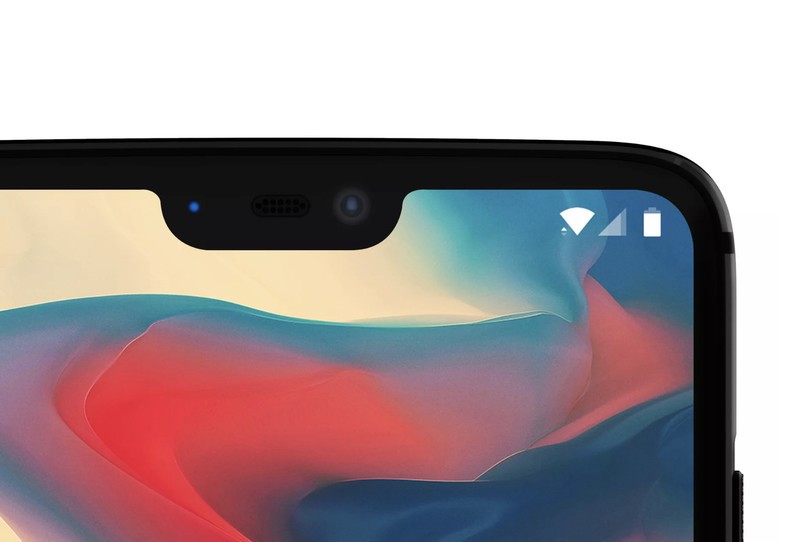
OnePlus confirmed earlier this week that the OnePlus 6 will feature a cutout at the top of the display. The move ostensibly led to a lot of backlash, and OnePlus CEO Pete Lau took to the company’s forums to discuss the decision, stating that the notch was borne out of a pursuit of “optimal phone design.”
OnePlus realized it wasn’t going to need the entire width of the bezel for the components, and it didn’t want to switch the front camera away from a central position as it would affect the Face Unlock feature. Lau said the company even considered a pop-out camera along the lines of the Vivo Apex, but ultimately disregarded the idea as the technology was still in its infancy.
According to Lau, the notch also maximizes screen real estate, freeing up space at the top of the screen. Furthermore, Lau said that the display OnePlus selected for its upcoming flagship was already optimized for a notch-based design, making it easier to ramp up production.
Lau’s reasoning makes sense from a business standpoint, but it’s clear that the design of the OnePlus 6 will be a polarizing issue for its fans. Here’s Pete Lau’s forum post in its entirety.
Hey everyone,
Even among tech communities, the OnePlus Community is a little different. Through your tech-savviness and passion you hold us accountable for our decisions. In doing so, your help has been instrumental to our success. By now, most of you are aware that our next device will feature a cut-out near the top of the display, popularly known as a “notch”. A fiery debate has sparked online, so we wanted to give you guys some insight into our rationale behind this product decision.
One of our biggest challenges as a smartphone manufacturer is to make the most out of every square inch of your device. A well-known principle in tech is that individual components become smaller with each passing year. Our role as a smartphone manufacturer is to maximize the use of the space we free up. Since our components no longer require the entire width of a top bezel, we focused our efforts on maximizing the amount of screen real estate. It’s easy to get caught up in a debate on aesthetics, but to us this decision was simply about pursuing optimal phone design. Being able to offer more screen without compromising on size or performance is a great benefit. That said, we wanted to offer the biggest display possible without compromising on hardware, which is why we opted for the notch design.
A central placement is optimal for our front-facing camera for several reasons. Moving the module elsewhere would also affect the angle of the camera, making it harder to orient the camera and take photos quickly. Such a move would also compromise the speed and reliability of our industry-leading Face Unlock feature. We also considered using a smaller module, but decided not to as this would have lowered the quality of your photos. Other speculative technologies, such as a mechanical ‘pop-out’ camera, are currently in their infancy. While interesting, the technology is not at a stage where it can deliver on durability, speed and performance.
To offer our users the best possible viewing experience, we work with world-leading screen manufacturers. We prioritize three key considerations when implementing a new display. First, we look to maximize the viewable area. Through the notch, we can free up a considerable amount of space near the top of the display, absorbing the notification and status icons. At 19.616mm by 7.687mm, the notch occupies a minimal amount of space in the top-center part of the display. Our research has shown that the space occupied by the notch typically goes unused in standard use. The notch makes optimal use of the vacated space. You gain more viewable space, without losing anything.
Our second priority is display performance. Whether you’re looking at brightness level, chromatic accuracy, or color range, there are a lot of factors that determine whether a display is comfortable to look at. Our displays have to match a wide range of requirements, before we consider them ready for market. We ultimately selected a display that matched all of our criteria. It was also optimized for a notch-based design, which we considered an additional benefit. The result is a screen with a larger viewable area and superior performance.
Finally, as our devices gain in worldwide popularity, we need to scale up production accordingly. That means using a display that is readily procurable is the only way we can keep up with global demand. This translates to fewer delays, faster shipping, and the ability to service more people. Our mission is to share the best technology with the world. We dedicated ourselves to implementing a display that is both scalable, while delivering a viewing experience that matches our quality standards. To grow into a sustainable business, we have to deliver a high quality experience on every level. In order to do so, we will continue to make use of any opportunity to improve the accessibility of our devices around the world.
We believe in offering our community the best possible smartphone experience. By listening to your opinions and feedback, we aim to design smartphones that meet your needs and standards. While many of you have asked us not to increase the physical size of our phones, others requested larger and more immersive displays. The notch helps us accomplish both requests. No two people have the same opinion on smartphone aesthetics. Our focus was to deliver the biggest and best screen we’ve ever had, without compromising on the tech you love. When all is said and done, that’s what matters most.
Frequently Asked Questions
We know you guys have a lot of questions. Below you will find answers to some of the most frequently asked questions we’ve seen.
Will the notch cut off my notifications if the status bar reaches a certain width?
OxygenOS will be optimized to work alongside the notch, ensuring you will always be able to view and access all of your notifications.
The notch cuts into the display, so the actual display size is smaller!
You actually get more screen. Thanks to the notch, we have managed to significantly increase our screen-to-body ratio. It’s like booking an airplane seat with extra leg room, which is used to absorb the clock and status bar.
If you’re integrating the front-facing camera, receiver, and LED light in the notch, why do you still need a chin?
A ribbon found at the bottom of each display connects the display to the internal hardware. This connection in itself demands the use of a bottom bezel. Our goal is to maximize the amount of real estate available to the user. So, we decided to reduce the size of the top bezel. The result is the largest viewable area we have ever produced.
The notch ruins my ability to enjoy movies and games. Can’t you block out the notch through software?
We understand the need to tailor your experience to your personal preferences. That’s why we have a compatibility mode on our next device. By setting this mode to individual apps, you are able to black out the sides of the notch when in landscape mode. We have tested compatibility mode with the 1000 most popular apps in the Play Store, and it works wonderfully.
Tesla recall covers 123,000 pre-April 2016 Model S EVs
While Tesla’s current-day Model 3 production tries to keep up with demand, the company is dealing with an issue affecting earlier cars. Today it announced a recall affecting every Model S built before April 2016. That adds up to about 123,000 vehicles worldwide that it plans to retrofit with new power steering bolts because it has “observed excessive corrosion in the power steering bolts, though only in very cold climates, particularly those that frequently use calcium or magnesium road salts, rather than sodium chloride (table salt).”
According to Tesla, it’s initiating this recall (similar to others it has done in the past) even though it estimates that fewer than 0.2 percent of vehicles will exhibit this issue. In an email to owners it explained that if the bolts fail then the steering would still work, but with lost or reduced power assist. I’ve experienced this while driving and can attest that it’s something you should probably hope to avoid. There’s a sizeable thread on Tesla Motors Club showing at least one vehicle this happened to, but with less than an hour of service it should be preventable on other cars.
Source: Tesla
Leaked Facebook memo: ‘ugly truth’ justified any growth tactics
Buzzfeed has published an internal Facebook memo entitled “The Ugly” from 2016 that shows just how much emphasis the social network places on growth above safety, privacy and everything else. Written by Facebook VP Andrew “Boz” Bosworth, one of Mark Zuckerberg’s staunchest allies, the memo tries to defend the social network’s “questionable contact importing practices” and pretty much takes a very “ends justify the means” tone. Part of the memo reads:
“…Maybe someone finds love. Maybe it even saves the life of someone on the brink of suicide.
So we connect more people
That can be bad if they make it negative. Maybe it costs a life by exposing someone to bullies. Maybe someone dies in a terrorist attack coordinated on our tools.
And still we connect people.
The ugly truth is that we believe in connecting people so deeply that anything that allows us to connect more people more often is *de facto* good. It is perhaps the only area where the metrics do tell the true story as far as we are concerned.
That isn’t something we are doing for ourselves. Or for our stock price (ha!). It is literally just what we do. We connect people. Period.
That’s why all the work we do in growth is justified. All the questionable contact importing practices. All the subtle language that helps people stay searchable by friends. All of the work we do to bring more communication in. The work we will likely have to do in China some day. All of it.”
Based on those words, Facebook’s top execs knew the issues that could arise from the way its platform works. In fact, as Buzzfeed noted, Boz posted the memo a day after Facebook Live captured the moment when a man from Chicago was shot to death. Shortly after that, a terrorist who posted about his plans to die as a martyr on Facebook stabbed and murdered an Israeli teen.
The memo shows the social network in an even worse light than before, considering its messsage. Facebook has been under fire more than usual ever since Cambridge Analytica’s secret data collection was exposed to the public. An executive defending its “questionable contact importing practices” (even if it is in a 2-year-old memo) is definitely not a good thing.
A former senior employee told Buzzfeed that the note “speaks to the majority of Facebook employee views,” but not everyone within the company believes growth should be everything: at least one engineer said it became a significant factor in his decision to leave. Former employee Alec Muffett said that an underrepresented portion of the company’s Engineering community really do care about user privacy.
As a response to the memo’s release, Boz claimed in a statement posted on Twitter that he didn’t actually agree with it when he wrote it, and he doesn’t agree with it today. He said its purpose was to surface the issues he thought deserved more discussion within the company:
My statement on the recent Buzzfeed story containing a post I wrote in 2016 pic.twitter.com/lmzDMcrjv5
— Boz (@boztank) March 29, 2018
Facebook chief Mark Zuckerberg also denied that the social network doesn’t care if someone loses a life or if people’s data are collected, so long as it connects more and more people, telling Buzzfeed in a statement:
“We’ve never believed the ends justify the means. We recognize that connecting people isn’t enough by itself. We also need to work to bring people closer together. We changed our whole mission and company focus to reflect this last year.”
Source: Buzzfeed (1), (2)
Shred like a cyborg with this endurance-boosting exoskeleton for skiers
Whether it’s the workplace, war zones, or the home, exoskeletons are being used in a wide variety of settings and applications here in 2018. The latest? A new prototype exoskeleton, created by Roam Robotics, that’s designed to help wearers on ski slopes. Resembling a pair of leg braces with a connected backpack, the wearable device works by effortlessly replicating wearers’ movements. It does this using built-in, air-filled bladders to absorb the shock of impacts, and thereby protect skiers’ knees.
“Think of them as lightweight shock absorbers for your legs,” Roam Robotics CEO Tim Swift told Digital Trends. “There is a lightweight brace on each leg, which is connected to the corresponding boot. Both legs are powered by a lightweight backpack worn by the skier. As a skier needs support — during turns, stops, or whatever — the product provides that support.”
Swift said that he realized early on that exoskeletons were the way of the future. However, he also realized that it’s important to reduce their size and cost to make them the mainstream product they can be. As a result, he’s worked to replace the metal and motors of conventional systems with fabric and air, as can be seen with this creation.
So when can you get your hands (or, more accurately, feet) on this wearable device? “It will be rolled out in two main phases,” Swift continued. “For this coming season, a limited number of our ski product will be available at ski resorts in Utah and Northern California. They’ll be available through rentals with a small number of pilot devices available for purchase. We then hope to offer general availability to one and all for the 2019-2020 ski season.”
If you’re interested, you can pay $99 to reserve a unit, with the final price likely to fall in the $2,000-$2,500 range.
“We feel it will appeal to a wide variety of skiers,” Swift said. “In our initial testing, it’s helped skiers across a wide spectrum. If someone is already a strong skier, it helps them ski even longer with less exertion; if someone is an intermediate or beginning skier, it provides the support they need to ski longer and with better form.”
Editors’ Recommendations
- FDA-approved robotic exoskeleton magnifies wearers’ strength tenfold
- Downhill skiers test new wearable airbag at 2018 Olympics
- Snowpulse Highmark’s avalanche airbags help save lives of snowmobilers
- The best sleeping bags you can buy
- The best ski backpacks
The ‘fog harp’ pulls water out of thin air, could help drought-prone communities
Brook Kennedy / Virginia Tech
Harvesting water from fog isn’t just a chore for young Luke Skywalker — it’s become an important part of bringing clean water to people living in drought-prone climates across the globe. The problem is that harvesting tools can be pretty inefficient.
Now, engineers from Virginia Technical University have designed a device that may be able to extract three times as much water from fog as previous tools. They’re calling the device the “fog harp” because the secret is in the way its array of parallel wires lines up like the strings of the instrument.
Most fog harvesters used today are massive nets that capture water droplets blown in by the wind. The droplets merge on the net and then stream down to a collection container at the bottom. If the net’s holes are too large, the droplets sneak through. If they’re too small, the holes can get clogged.
“What we demonstrated here is that using a ‘harp’ geometry, rather than nets, can solve the clogging problem to maximize the efficiency of fog harvesters,” Jonathan Boreyko, a Virginia Tech engineer who worked on the project, told Digital Trends. “By only having vertical, parallel wires, the droplets are able to slide down into the collector at very small sizes, preventing clogging even when small wires are used. So our harps can both catch the fog efficiently from the air, and avoid the clogging problem that plagues conventional nets.”
Some four billion people face severe water scarcity, according to a report from 2016, and their situation may worsen if the effects of climate change intensify. Since the 1980s, fog nets have helped drought-prone communities with access to low, moving fog, with the largest fog nets able to collect some 6,000 liters of water each day.
In the lab, the fog harp was able to increase water capture threefold compared to traditional devices. The current fog harp prototype is three feet by three feet, but the Virginia Tech team aims to increase the size in future iterations. By overcoming the constraints of traditional fog nets, the team hopes the fog harp will offer a tool that effectively captures droplets and avoids clogging.
“Fog harvesting is already used to obtain fresh water in arid regions, particularly along the coastal regions of South America and Africa,” Boreyko said. “When rainfall is scarce, fog becomes an invaluable source of water for drinking and agricultural purposes. Many desert animals and plants know this too, for example the pointy needles of cacti are highly efficient at capturing fog from the air.”
A paper describing the project was published this week in the journal ACS Applied Materials & Interfaces.
Editors’ Recommendations
- The best survival gear
- Sling your suds in style with this DIY beer caddy made from a pallet
- How ‘speed breeding’ will supercharge farming to save us from starvation
- MIT’s latest invention pulls clean drinking water out of thin air
- Here’s how to clean a Keurig in just a few simple steps
Latest Festo creations include a bionic bat and somersaulting robo-spider
We sure love nature-inspired robots a whole lot, and German automation company Festo is one of the most exciting companies working in this space. Its latest creations are two of its greatest yet: A BionicWheelBot robotic spider that resembles a Star Wars battle droid and a BionicFlyingFox which is, well, pretty much what its name suggests.
The BionicWheelbot was inspired by the flic-flac spider and its highly unusual way of moving, which includes a combination of walking, somersaulting and rolling on the ground. When it’s not busy scampering, the robot — which is powered by 15 motors — begins its rolling action by bending three legs on each side of its body to form a wheel. Two additional legs then extend, pushing the rolled-up spider off the ground, and forward. Doing so allows it to move over rougher ground at high speeds, even including uphill slopes.
The BionicFlyingFox, meanwhile, is a 580g creation with a 3D-milled foam body, carbon fiber skeleton, and 228cm wingspan — comprised of a wafer-thin, ultralight membrane material. The robot doesn’t just look like a real actual flying fox (aka a fruit bat), but can actually fly by flapping its wings in a realistic approximation of the genuine article. It’s launched via remote control but can then carry out its actual flight using an autopilot system — aided by infrared cameras built into its legs and wing tips.
Sadly, you won’t be able to buy either robot anytime soon. “Both projects are tech demos so there won’t be a real-world application for them — maybe a bit similar to concept cars in the automotive industry,” Dr. Elias Knubben, head of corporate bionic projects at Festo, told Digital Trends. “Nevertheless we’re trying to transfer the knowledge gained in the development of the bionic projects on product-related topics like energy efficiency and lightweight construction, so we can offer more efficient products and solutions to our partners and customers.”
Ultimately, Knubben said that the goal is to show off the company’s technology — and hopefully to inspire kids about the possibilities offered by science and technology in the process. We have to admit that that is a pretty good rationale for creating these critters!
Editors’ Recommendations
- Spirit animals: 9 revolutionary robots inspired by real-world creatures
- Robotic 3D printer uses augmented reality to fabricate designs as they’re created
- Stanford students are trying to design the perfect delivery drone
- Rise of the machines: Here are the best robots we saw at CES 2018
- This adorable robo-tortoise teaches kids that beating up robots isn’t okay
Drug enforcement agency turns to A.I. to help sniff out doping athletes
In the constant battle between doping athletes and the officials trying to catch them, the athletes have almost always remained ahead of the curve. They’re the better-funded side in the war and can stay ahead of the latest testing methods that regulatory agencies are using. Most notably, in cycling, it’s an open secret that many of the sport’s athletes are on some kind of doping regimen. Lance Armstrong, the disgraced American cyclist who became the sport’s most popular figure before admitting to years of doping, was able to pass drug tests throughout his career despite being the most tested athlete on the planet.
So, the testing agencies are in dire need of help. Hoping to narrow the divide between the cheaters and the testing methods is the World Anti-Doping Agency (WADA), which recently announced it would begin using artificial intelligence systems to help flag suspected cheaters across all sports.
“There’s a lot of data that is being collected in anti-doping — whether it is through the [athlete’s biological] passports, through the tests, through the results of the athletes,” WADA Director Olivier Niggli told iNews. “If you manage to create a system that will meaningfully use this data, I think you can create some very powerful tools.”
WADA has lamented that its lack of resoures (both in personnel and finances) makes its job of catching doping athletes difficult much of the time. With A.I., the agency would be able to sift through an exponetial amount of extra data and subsequently raise red flags when it catches suspect patterns in an athlete’s performance and/or testing results. While the A.I. would be able to highlight who might be using performance-enhancing drugs, it would not be considered evidence of cheating. Instead, that highlighted athlete might subsequently go through a more rigorous drug-testing regimen as a result of being flagged by the computer.
“Only sophisticated algorithms would be able to spot the differences, which would allow the anti-doping organizations to focus on the right individuals,” Niggli said.
There are not a whole lot of specifics on the program yet as WADA will be testing a few pilot programs in the coming years. It’s likely going to take time before WADA might see real results from its new efforts.
“I hope that in five years we will be much better at analyzing all this data that we already have and are already collected,” Niggli said.
Editors’ Recommendations
- Social (Net)Work: What can A.I. catch — and where does it fail miserably?
- Don’t be fooled by dystopian sci-fi stories: A.I. is becoming a force for good
- Zwift brought together 15 countries for an online stationary bike race
- A.I. perfectly predicted last year’s Super Bowl score. What happens to betting?
- Truly creative A.I. is just around the corner. Here’s why that’s a big deal
Scientists nix Alzheimer’s-causing brain plaques in mice. Could humans be next?
Alzheimer’s disease is the most common form of dementia, affecting roughly 5.7 million Americans at this moment. In 2018, Alzheimer’s and other dementias will cost the U.S. an estimated $277 billion — not to mention the immeasurable amount of emotion labor it inflicts on patients and their careers. Unfortunately, right now it is an incurable disease for those affected by it. While that will remain true for the time being, a promising new piece of research suggests that there may soon be a way to better treat or even prevent the disease altogether. In experiments with mice, researchers at Washington University School of Medicine have demonstrated that it is possible to remove the plaques which begin forming in the brains of future Alzheimer’s patients, sometimes years before the disease manifests.
These sticky masses are called amyloid plaques. As they form in the brain, they damage nearby cells. The plaques are made up of a brain protein called amyloid beta, along with another Alzheimer’s protein called Apolipoprotein E (ApoE). In their study, the Washington University researchers demonstrated that a DNA-based compound can be made to target ApoE in a way that also removes the plaques. It does this without removing the ApoE protein which is present in our blood and brain.
The DNA-based compound is an antibody called HAE-4. It was given to the mice in the study for six weeks and was found to cut the level of plaques in half. It could represent a new treatment for Alzheimer’s, without the side effects of some current alternatives.
“It is possible that what we have shown in mice with anti-ApoE antibodies in the future could move into human trials,” Dr. David Holtzman, head of the Department of Neurology, told Digital Trends. “Part of this will have to do with whether the effects we have seen in mice is similar to what is seen with anti-amyloid beta antibodies, but yet has less side effects. That remains to be determined.”
While it’s still far too soon to start celebrating the idea of a medicine people could proactively take to delay or stop the onset of Alzheimer’s, this still represents incredibly exciting research. Let’s hope that the subsequent steps prove as promising as the initial developments.
Editors’ Recommendations
- In new breakthrough, CRISPR tools target RNA to tackle dementia
- Broccoli and reprogrammed gut bacteria team up to battle cancer
- CRISPR gene editing may have just become a whole lot more accurate
- New DNA vaccine could lead to a one-dose universal vaccine for the flu
- Harvard’s new skin-style bandages heal wounds at an accelerated rate
 AIVAnet