


Mark Zuckerberg won’t lose his job any time soon
We’ve seen it countless times. A technology company enters the market with a bang, throwing established industries into chaos and forever changing the lives of everyday people — and then a scandal breaks and the founder or CEO is publicly ousted.
Uber co-founder Travis Kalanick was kicked out as reports of the company’s sexist culture flooded the news; Equifax CEO and chairman Richard Smith suddenly decided to retire amid a data breach affecting more than 140 million people; Theranos founder Elizabeth Holmes was charged with fraud by the SEC, forced to give up control of her business and barred from serving as the leader of a public company for 10 years. Even Yahoo CEO Marissa Mayer couldn’t keep a job during the Verizon acquisition, following a series of security scandals, including a hush-hush hacking campaign that hit billions of accounts.
So it would seem the writing is on the wall for Mark Zuckerberg, the founder, CEO and chairman of Facebook. His company is at the heart of a massive political and data-security scandal, accused of turning a blind eye as British political-consulting firm Cambridge Analytica collected information from 50 million Facebook users without their consent. That information was then piped into Donald Trump’s successful campaign for president.

This isn’t Facebook’s first brush with large-scale privacy concerns, but the political implications have made the scandal mainstream news. Shareholders and Facebook users have filed lawsuits against the company; Mozilla, Tesla and other major organizations have pulled their ads and pages from the site; Congress wants Zuckerberg to testify; and the Federal Trade Commission is investigating the company’s privacy practices.
However, Zuckerberg doesn’t appear to be worried about his position at Facebook. He’s completed the expected apology tour, publishing a Facebook post about the issue, participating in interviews where he reiterated his written sentiments, and finally appearing on CNN to say the same things yet again, but this time, on-camera. He’s appeared appropriately calm, concerned and confident, and not once has he had to answer questions about his own job security.
There may be a hashtag to #DeleteFacebook, but there are no rallying cries to #FireZuckerberg or otherwise see him step down. This is because Zuckerberg is uniquely insulated at the top of the company, with no one truly able to force his hand in any direction. The same reason he should be held responsible for Facebook’s gross mismanagement of user data is also the reason he isn’t sweating over his role — Zuckerberg is the king of Facebook. It’s nearly impossible to exile him.
Facebook is a public company, which means it has a board of directors representing the stockholders. Traditionally, when a CEO is forced out of their public company, it’s because the board voted to get rid of them — each member owns a different percentage of shares and thus a different percentage of the vote, giving some folks more power than others. But, if a majority vote the same way, the motion passes.
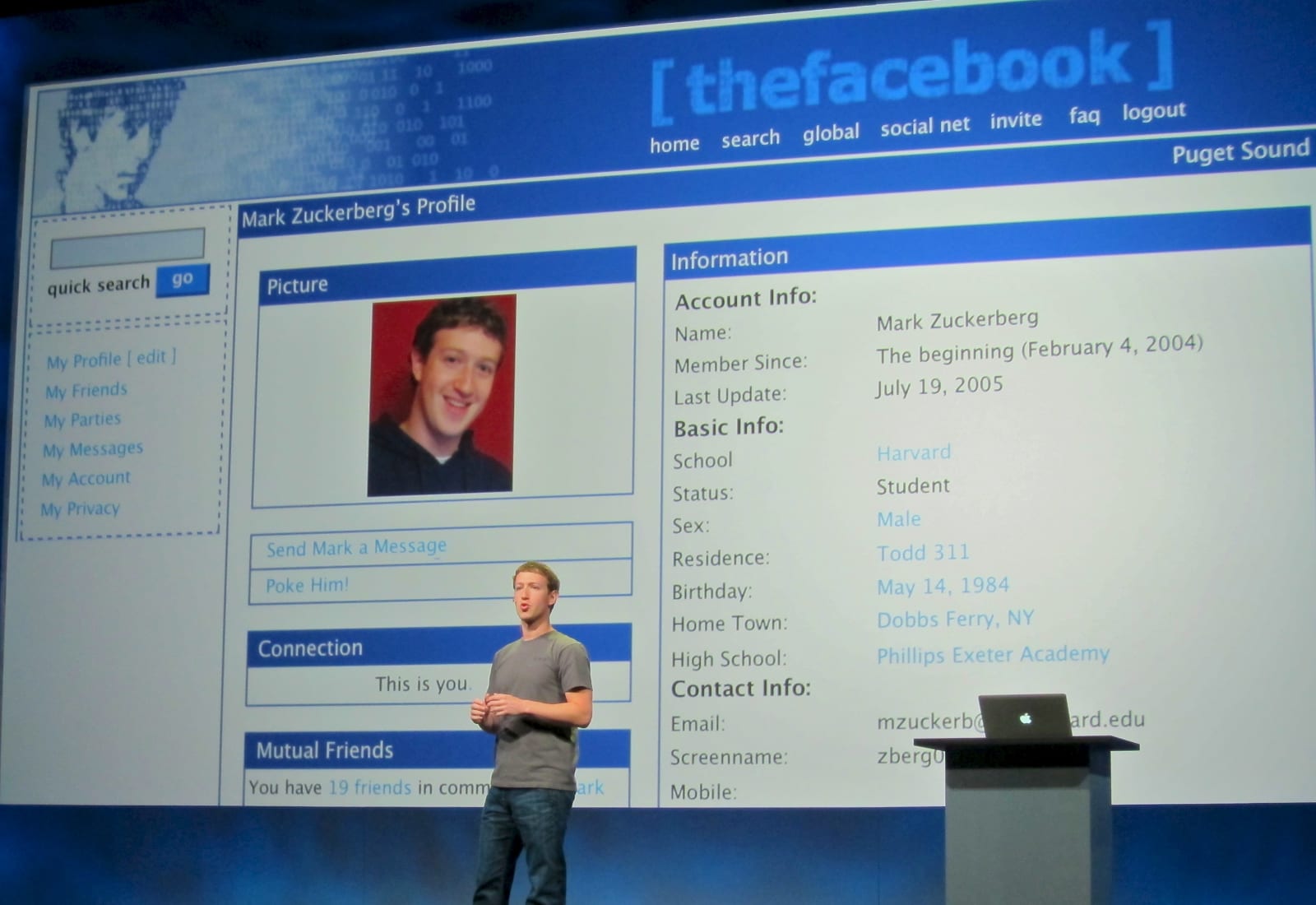
As chairman of the board, Zuckerberg controls 87 percent of Facebook voting shares. Even if the remaining eight board members wanted to kick him out, they don’t have the power to do so, unless Zuckerberg decides to play along and vote himself out.
This consolidation of power didn’t happen by accident. In December 2015, Zuckerberg pledged to give away 99 percent of his Facebook shares — valued at $45 billion at the time — to fund the Chan Zuckerberg Initiative, a charitable organization he founded with his wife. In order to do this without reducing Zuckerberg’s majority on the board, Facebook took a page of out the Google founders’ handbook. It introduced a new type of non-voting stock, Class C, that split every share for every stockholder into three distinct shares. A share worth $100 was transformed into three $33 shares, two of which were Class C, meaning they didn’t carry any voting rights.
Zuckerberg controls 87 percent of Facebook voting shares.
This allows Zuckerberg to divest 99 percent of his shares without giving up control of the board. When Google did this same thing in 2014 to protect the status of founders Larry Page and Sergey Brin, shareholders weren’t too pleased with the plan — just 12.7 percent voted to pass it. Page and Brin used their majority to push it through regardless.
Facebook drew ire for its Class C plan, too. In February 2017, a proposal to oust Zuckerberg as chairman gained traction among shareholders, with the Class C changes cited as proof of his unchecked power.
However, a few upset shareholders can’t get rid of Zuckerberg — and besides, the board doesn’t seem to want that. Aside from Zuckerberg, the Facebook board includes eight people, all of whom have high-profile histories in tech entrepreneurship: Peter Thiel, Jan Koum, Reed Hastings, Susan Desmond-Hellmann, Kenneth Chenault, Erskine Bowles, Marc Andreessen and Sheryl Sandberg.
These folks are generally happy with the way Zuckerberg runs Facebook as a business. Even after the Cambridge Analytica scandal wiped out about $100 billion from Facebook’s market capitalization, the company is still worth about $440 billion. Facebook earned a record $12.97 billion in profit just in the final quarter of 2017, despite the fact that people are spending less time on the site. Zuckerberg has proven himself to be a capable leader in times of crisis, navigating the site through fake news debacles, questions over its political influence and previous privacy concerns.
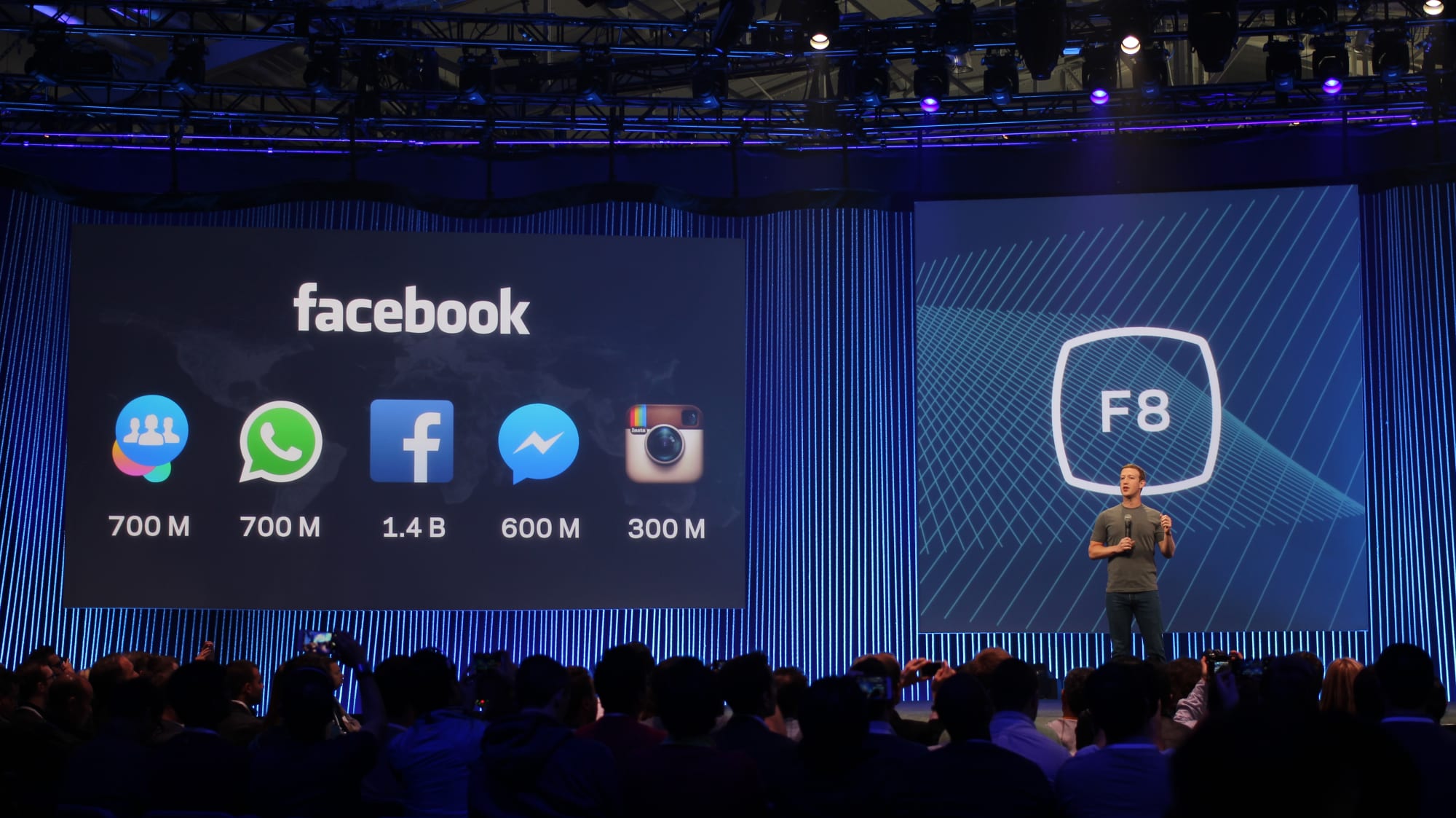
Zuckerberg is doing the same thing with the Cambridge Analytica scandal and board members have no reason, for now, to stop him. Disrupting the Facebook hierarchy would only throw the company into further turmoil. Besides, they’re all still making money.
Whether at a public or private company, profit is the defining factor when it comes to kicking out a CEO. Uber was bleeding cash at the time of Kalanick’s firing, and Yahoo was in such dire straits under Mayer that Verizon requested a $1 billion reduction in its acquisition price. For now, Facebook is still making bank for its board members, meaning Zuckerberg is secure.
At Facebook, nothing happens without Zuckerberg’s approval.
As chairman, CEO and founder of Facebook, Zuckerberg enjoys vast control over the entire company. Even outside of Facebook, in the real world, he’s a prominent figure who’s been canonized on the silver screen as a hesitant kid genius, idolized by hoodie-wearing computer science majors across Silicon Valley and beyond. Zuckerberg’s success has been wrapped up with Americana fantasy, presented as proof that talent and a good idea are enough to make somebody’s — anybody’s — life.
But that’s all armchair psychology. Perhaps there’s no outcry for Zuckerberg’s removal because things simply aren’t bad enough yet. Maybe if the official number of mined Facebook accounts hits 1 billion, or if more evidence of mishandled data comes to light, public pressure will grow to a fervor that forces him to step aside, for the good of the company’s bottom line. For now, though, Zuckerberg is protected by a clean reputation, the dazzle of Hollywood and the company hierarchy that he personally built.
At Facebook, nothing happens without Zuckerberg’s approval: This includes letting a company like Cambridge Analytica mine Facebook users’ data without their permission or firing the CEO. Especially when that CEO is Zuckerberg himself.
Grindr security flaws risk exposing users’ location data
Two security issues could expose personal data for up to 3 million users of the gay dating app Grindr, according to an NBC OUT report. In the first, a website letting users log in with their Grindr credentials got wide-ranging access to data that isn’t publicly available. This includes that user’s unread messages, email addresses, deleted photos and real-time location — even if they’ve opted out of publicly sharing the latter. But the second simply intercepts unencoded location data going from the app to servers, allowing anyone observing that user’s internet traffic to pinpoint their position.
Trever Faden originally discovered the first flaw after creating the website C*ckblocked (asterisk intentional) to scrape data from anyone who logged in with their Grindr username and password. The second would let anyone monitoring web traffic observe the location-pings the Grindr app sends to its servers — and while that’s a creepy thing to do anywhere (like, say, over public Wi-Fi), it’s also something that anti-gay governments or groups could use to peek at anyone who might use the service.
We’ve reached out to Grindr for comment and will add when we hear back. The company assured NBC OUT that the C*ckblock flaw had been fixed (the site was shut down anyway), but the second exploit reportedly remains.
Via: TechCrunch
Source: NBC OUT
Snap lays off another 100 employees
Snap, the parent company of Snapchat, is undergoing yet another round of layoffs, according to Bloomberg. This time, the cuts are mostly focused in its advertising department. Variety confirmed with Snap that the company is laying off around 100 workers. Snap confirmed to Engadget that the layoffs took place.
This is the third round of layoffs for Snap in a year that’s only three months old. People who had inside knowledge of the issue say this is the last round of cuts associated with a restructuring plan that was put into place last year. The company previously let go staff from the engineering and content teams.
“These changes reflect our view that tighter integration and closer collaboration between our teams is a critical component of sustainably growing our business,” Chief Strategy Officer Imran Khan said in a statement to Bloomberg. “While this process has required us to make some really tough decisions, we believe that rigorously ensuring our team structure always aligns with our goals will make us stronger.”
Snap has had its share of troubles over the last year. The company has been losing ground to its rival, Instagram, and it’s unclear how successful its original content has been. However, its fourth quarter was its best since launching an IPO in March of 2017, so this reorganization may end up working out in the medium term.
Source: Bloomberg
Apple Pay Debuts New Promo Offering 20% Off Orders $25 or More on Fanatics
In Apple’s latest promo for Apple Pay, sports fans can save 20 percent on gear when paying with Apple Pay in the Fanatics app or on Fanatics.com.
To see the discount, make a purchase worth $25 or more on Fanatics, then enter the coupon code APPLEPAY20 during checkout to redeem the 20 percent off savings. The promo runs from today, March 29, through April 4 at 11:59 p.m. ET.
Fanatics’ website has a complete collection of brands and merchandise offered under the promotion, as well as a detailed list of exclusions at the bottom of this page.
Apple’s new promotion also highlights sporting goods stores like Champs Sports, Dick’s Sporting Goods, and Foot Locker, as well as sporting event apps like MLB Ballpark, StubHub, and Gametime.
Apple has launched a consistent series of promos for Apple Pay over the past few months, most recently including food deliveries from Grubhub, Seamless, and Eat24. Each new promotion also reminds users that they can pay friends back for a variety of things using Apple Pay Cash.
Related Roundup: Apple PayTag: Apple Pay promo
Discuss this article in our forums
Bumble sues Tinder’s owners for stealing company secrets
Bumble isn’t done swiping left on Tinder’s parent company Match Group. After publishing an open letter excoriating Match, the women-focused dating app has filed a lawsuit against Tinder’s owner, accusing it of stealing trade secrets, among other things. Match started the legal battle when it sued Bumble for allegedly violating its patents, but TechCrunch says this isn’t Bumble’s response to that lawsuit — it’s a separate one altogether. In the complaint, Bumble argued that the patent lawsuit is baseless but admitted that the two were discussing acquisition over the past few months.
It said that when Match found out other companies were interested in either acquiring Bumble or investing in it, Match filed that patent lawsuit to make the dating service less appealing to rival buyers and investors. The company is also suing Match for publishing “false or disparaging information about it” and claiming that it infringed Match’s intellectual property in that lawsuit.
More importantly, Bumble is accusing Match of stealing the trade secrets it requested during their acquisition talks. Match reportedly asked for confidential info to be able to provide a higher offer, but once it got its hands on those details, it never proposed a better deal. Bumble believes Match only requested for its trade secrets for “the financial benefit of its dating app businesses.”
Bumble is now asking for $400 million in damages, along with a permanent injunction preventing Match, its properties and affiliates from using the trade secrets it provided. The dating service clearly hasn’t blocked its competitor yet: it’s striking back and facing Match head on.
Source: TechCrunch
Canon takes on RED with its first full-frame cinema camera
Canon has unveiled its first full-frame cinema camera with some nice features and — if it’s serious about taking on rivals like RED and Arri — some major omissions. The C700 FF has a 5.9K sensor (5,952 x 3,140, or 18.7 megaxpixels), and can capture 10-bit DCI 4K (4,096 x 2,160) internally in ProRes by downsampling the entire sensor. You can also capture 5.9K RAW, but there’s a big gotcha: You must purchase Canon’s optional Codex CDX-36150 external recorder.
Canon promises a very decent 15 stops of dynamic range and a wide color gamut that conforms to top-flight cinema standards (ITU-R BT.2020). It supports internal 4K capture in ProRes or Canon’s XF-AVC format via CFast cards, and offers minimal moire and noise, even at higher ISO settings, thanks to the sensor oversampling. The optional Codex recorder supports up to 12-bit RAW files on 1TB or 2TB capture drives.
With a 17:9 ratio sensor, the C700 FF supports Super 35mm, Super 16mm and anamorphic modes. As such, it can be used either with full-frame Canon lenses or PL-mount and other lenses with a smaller image circle. Other features include Canon’s excellent Dual Pixel phase-detect autofocus, HDR via a Log2 shooting mode, the ability to capture proxies when recording RAW video, and up to 168 fps slow-motion in 2K mode. (With the Codex external recorder, you can shoot 5.9K at 60 fps and 4K at 72 fps.)

Canon is taking a risk by selling the C700 FF without the external recorder (there’s no price on that yet), considering the camera alone costs a whopping $33,000. For a fair amount less, you could get RED’s new Epic-W Gemini 5K S35 camera base package, and for a bit more, the Epic-W 8K Helium, also with the base package. Both of those cameras have smaller Super 35 sensors, but both offer native RAW video out of the box.
Despite the $33,000 price tag, though, the C700 FF is one of the cheaper full-frame cinema cameras on the market. Its excellent Dual Pixel autofocus, which trumps all other AF systems on the market, will also tempt independent and documentary filmmakers. Canon is no doubt hoping that potential buyers can live without RAW, “settling” for 10-bit ProRes with data rates up to 810 Mbps, more than double what Panasonic’s GH5s can do. That’s a decent gamble, because many cinematic releases were shot and conformed in ProRes, not RAW, on the original Arri Alexa camera.
Source: Canon
GoPro’s $199 Hero action camera is meant for newcomers
GoPro’s action camera lineup has skewed toward the enthusiast side for a while — you get a Hero6 because you intend to document your bike rides and surfing expeditions. Now, however, GoPro is ready to court more first-timers. It’s releasing a $199 Hero (no number, just “Hero”) meant for beginners and occasional users who’d rather not spend a fortune and passed on the similarly priced but relatively niche Hero5 Session. There’s no 4K or similar high-end features (you’re limited to 1440p at 60 frames per second), but GoPro is betting you won’t mind.
Instead, the focus is on ease of use: you get a 2-inch touchscreen with “streamlined” capture options, voice control and WiFi syncing with your phone. You can also expect virtually mandatory features like 30-foot water resistance, stabilization and support for GoPro’s usual mounting accessories. The new Hero is available worldwide as of today.
We’ve technically been here before, as GoPro had plainly-titled Hero cameras a few years ago. However, the revival makes sense in light of GoPro’s current situation. The company’s sales are hurting to the point where it’s licensing its technology to supplement its core business. A more affordable camera could not only give those sales a short-term boost, but help GoPro in the long run by prompting upgrades to higher-end models in the long run.
Source: GoPro
Report: Cambridge Analytica hasn’t deleted all of its collected data
According to Cambridge Analytica, it already deleted the Facebook data it collected from 50 million users years ago — it even announced that it’s undertaking a third-party audit to verify that claim. Based on a new report by UK broadcaster Channel 4, though, that might not be true at all. The broadcaster says it has discovered a cache of the data CA harvested, and it contains information on 136,000 individuals from Colorado, including their personality results and psychological profiles created from the info the firm collected.
The information in the cache Channel 4 saw was gathered a few years ago, dating as far back as 2014, which is in line with CA’s data collection timeframe. Channel 4’s source said Colorado Republicans used that data set to target voters in the state. They also said that the list is known to have been “passed around using generic, non-corporate email systems, outside of the servers of Cambridge Analytica, and linked company SCL.” If the broadcaster’s report is true, that means a lot of people might have access to the list, and it’s probably impossible to make sure it’s removed from circulation.
The people whose data are included in the cache are obviously unhappy to find out that their info is out there. Cambridge Analytica, however, continues to insist that it deleted the data it gathered from the 270,000 people who installed the “thisisyourdigitallife” Facebook app and all their friends. A spokesperson from the firm told Channel 4:
“We have never passed any data from GSR to an external party. After Facebook contacted us in December 2015 we deleted all GSR (Global Science Research, the research company that had obtained the data for CA) data and took appropriate steps to ensure that any copies of the data were deleted. This includes our lawyers taking action in late 2014 against a number of former staff members who had stolen data and intellectual property from the company. These former staff members each signed an undertaking promising that they had deleted all such material. It is untrue that we failed to take appropriate measures to ensure that GSR data were deleted.”
Source: Channel 4 News
ARKit-Only Apps Exceed 13M Global Downloads Since Launch as Games Remain Most Popular Category
Since ARKit debuted within iOS 11 on September 19 last year, iPhone and iPad owners worldwide have downloaded and installed more than 13 million ARKit-only apps. The data comes from Sensor Tower, which broke down the most popular categories of augmented reality apps fueled by ARKit, the top 10 free and paid apps, highest grossing apps, and more.
Games remain the dominant category for ARKit-only apps — or those apps built “expressly using” Apple’s framework — having grown from representing 35 percent of downloads one month after iOS 11’s launch, to 47 percent today. The second place category, Utilities, decreased from 19 percent last October to 15 percent in March. Rounding out the top six were Entertainment, Lifestyle, Photo & Video, and Education.
 Charts via Sensor Tower
Sensor Tower pointed out that for the games-specific charts, the top spots of all three sections (free, paid, grossing) were “still occupied by many of the same titles that found success several months ago,” suggesting not much variation in ARKit-only gaming on the App Store. On the other hand, when the researchers looked at non-game apps they saw multiple newcomers rising on the charts, like LEGO AR Studio — “a testament to the popularity of kid-focused AR content on the App Store thus far.”
From what we’ve seen in our latest analysis, ARKit-only apps only continue to grow in terms of installs and the number of experiences available to users. This isn’t including the numerous ARKit-compatible apps that have added some degree of AR functionality in the past six months and have pushed the number of AR apps on the App Store well beyond 2,000 to date.
There’s clearly substantial room for growth in terms of user base and revenue, but also ambition when it comes to this burgeoning category, and the apps above have built a solid foundation for what’s to come, especially as the capabilities of ARKit evolve and expand with future versions of iOS.
Popular free game “AR Dragon” retained the top spot as the most-downloaded free ARKit-only app and game during the framework’s first six months of availability. Other augmented reality apps that remain popular on the App Store include IKEA Place (#2 free apps), AR MeasureKit (#5 free apps/#5 top grossing), and CamToPlan Pro (#1 paid apps). For both paid and grossing categories, ARKit app downloads are leaning “predominantly” to the Utilities category.

Apple CEO Tim Cook has described augmented reality as “profound” in the past, claiming that Apple is in a “unique position” to lead when it comes to the technology. He thinks that AR will become “as key as having a website” for brands, and sees ARKit as the start of something much bigger: “This is very much like in 2008 when we fired the gun in the App Store. That’s what it feels like to me and I think it will just get bigger from here.”
Tags: Sensor Tower, ARKit
Discuss this article in our forums
Ashley Madison attempts to regain the public’s trust
Ashley Madison, the website for “married dating”, wants the public to know that it’s changed its ways.
It’s been a little under three years since the dating service for extra-marital affairs was hacked by a group calling itself the Impact Team, exposing the personal data and billing information of over 30 million customers — including users who spent $19 on a “paid delete” option for their accounts.
The fallout included a $11.2 million settlement with US victims and an additional Federal Trade Commission fine of $1.6 million. An Australian radio show outed a cheating husband to his wife on-air and a married New Orleans pastor committed suicide after he was discovered on the site. The massive data breach cost parent company Avid Life Media a quarter of its revenue, according to executives at the time (it’s now renamed Ruby Life, and also owns Cougar Life as well as sugar daddy dating website Established Men). Plans for a reported IPO on the London Stock Exchange just months before the hack — with the company valuing itself at $1 billion — were scuppered.
Now, Ruben Buell, who became CTO at Ruby Life in February 2017 and took the reins as president last April, is looking to regain public trust.
“We want to let people know that Ashley is here, Ashley is strong as ever,” said Buell in an interview with Engadget. “Yes, there was an incident in 2015 that was extremely unfortunate, and that the firm has learnt from that, grown from that and moved on.”
The company had attempted to keep a low profile and tame its branding — “Life is short. Have an affair” became “Find your moment” — after the hack. This week, the Toronto-based Buell is making the media rounds, armed with a new independent Ernst & Young report showing 5.7 million new accounts on the site in 2017 and a ratio of 1.13 active females for every active male on the site. The company is doubling down on its core purpose: facilitating infidelity. The infamous slogan is back.
“Ashley’s been the leader in the married dating space, the infidelity space, for a very long time now, and that is what we focused on [last year],” said Buell.
“We want to let people know that Ashley is here, Ashley is strong as ever.”
The company claims to have registered 54 million accounts since 2002, but this does not reflect the current number of active accounts, as many were deleted following the 2015 hack. According to Buell, there are 191,000 daily active users (defined as members who have exchanged messages) and 1.4 million new connections made each month.
Last year was the first since the hack that Ashley Madison saw “substantial growth” in its user base, Buell said, adding that its 2017 revenue grew 5 percent globally and 16.7 percent in the US compared to 2016. He declined to state the privately-held Ruby Life’s 2017 revenue figures or profits, but in a July 2016 Reuters interview, former president James Millership said it expected about $80 million in revenue that year, with a 35 to 40 percent EBITDA margin (a measure of profits, standing for earnings before interest, taxes, depreciation and amortization). “The firm has always been very profitable and we continue to enjoy nice profits,” said Buell.
Ashley Madison is essentially trying to reestablish trust in a business that’s entirely dependent on discretion. But post-Cambridge Analytica, post-Snowden, post-data breaches of LinkedIn and Yahoo (which is owned by Engadget’s parent company, Verizon), the public is even more skeptical about data privacy than it was three years ago.
Making any comeback tougher was the revelation that the site was riddled with female bots to draw in male users, which formed part of the FTC probe. Women can use Ashley Madison for free, but even after connecting on the site, men have to pay “credits” to kick off a conversation. The website’s fake females essentially lured them into spending money to talk to no one. The Ernst & Young report also verifies that the bots are gone.
Buell attributes the company’s growth to targeting “attached” users — those in committed relationships — who are mostly in their forties and form 70 percent of Ashley Madison’s customers. Brazil, the company’s new report claims, saw an average of 138,865 new members per month in 2017, second only to the US. This year, Buell intends to expand in Taiwan, Japan and South Korea.
Buell has an ironic rationale that affairs can be good for a relationship. “There is a better way to have an affair,” he said. The logic: many couples are in sexless couplings but want to maintain their family; there’s a disconnect between divorce being socially acceptable while non-monogamy is not; a discreet, anonymous dating platform allows users to take their roaming out of the workplace, which is Ashley Madison’s “number one competitor.” “Don’t put your career at risk along with your marriage,” he said.
“A lot of these women are looking to stray because they want to stay in their marriages. So they’re looking at ‘well I have the option of divorce or I have the option of having an affair but I’m not real happy just continuing in my daily life as things are now,’” he said, citing surveys Ashley Madison has done with its users. “They find once they meet a lot of these desires that they come back into the marriage happier, revitalized, and can be a better wife.”
Even if your partner consents to extra-marital engagements, these relationships require privacy, according to Buell, since on commonly-used apps like Tinder, couples may face judgement when spotted by acquaintances. “It still isn’t generally social acceptable,” Buell said. “Which we think is ridiculous, honestly.”
“Ashley’s core differentiator is discretion.”
Yet this imperative for privacy is precisely why regaining the public trust is going to be an uphill battle for the infidelity website.
According to the FTC complaint post-hack, Ashley Madison “had no written information security policy, no reasonable access controls, inadequate security training of employees, no knowledge of whether third-party service providers were using reasonable security measures, and no measures to monitor the effectiveness of their system security.” Part of the FTC settlement required that the company add “a comprehensive data-security program, including third-party assessments.”
Speaking with Engadget, Buell made a point to list the security measures that Ashley Madison has since added or will add this year: two factor authentication, a bug bounty program, adherence to the NIST cybersecurity standards. He highlights that it’s hired a new chief information and security officer, and the office displays “artwork that’s mirrored around the idea of a security camera lens.”
“We do not use the data for any type of third party advertising, we don’t run ads on our sites, the data is not moved anywhere from where we own it,” Buell said. “We hold that very, very close to us.”
“Security and discretion” were described among Buell’s key focuses for the 2018. “Ashley’s core differentiator is discretion.”
 AIVAnet