


Minnesota Twins go deep into analytics with adoption of Blast Motion bat sensor
It’s hard to imagine that in the early 2000s, certain baseball teams that relied heavily on analytical insights regarding player performances were decried by the sport’s purists as a bunch of nerds. The old-time scouts lambasted the practice of using copious amounts of data to judge a baseball player, saying they offered better insights using their own two eyes.
Well, the stat-inclined nerds won that war a long time ago. These days, the teams that aren’t using every scrap of data available to them are lagging mightily in the arms’ race of information. Case in point: The Minnesota Twins this week became the latest MLB team to adopt Blast Motion sensors and apps throughout all levels of its organization. Blast Motion brings real-time swing analytics to in-game data capture for postgame analysis.
“As a native Minnesotan and lifelong Twins fan, being able to provide solutions and insights to help a great organization become even better is extremely exciting,” Roger Weingarth, Blast Motion president and chief operating officer, said in a statement. “Through our work with the majority of the MLB teams, we’ve seen the positive impact that Blast information has had, and I can’t wait to see the benefits it will bring to the Twins. This is going to be a great season for baseball fans.”
CEO Michael Fitzpatrick told Sports Techie that more than half of MLB teams uses Blast Motion — the league’s official bat sensor — but the Twins and Houston Astros are the only teams who have publicly acknowledged its use to date. The sensors can be attached to either end of the bat, though their use is prohibited during games. In addition to MLB teams, Blast Motion technology is expanding to collegiate programs, elite travel teams, high schools, and baseball academies to help measure improvement through objective swing data, video and 3D visualizations, advanced insights, and personalized performance reports.
So if you’re looking to obtain some objective information on your swing — because maybe your coach could never catch up to a 90mph fastball — the Blast Baseball mobile app and sensor can be purchased for $150. The Carlsbad, California, company also offers cloud services, providing players and coaches with advanced features. Premium package subscriptions are available to players for $60 per year and coaches for $100 per year.
Editors’ Recommendations
- TaylorMade and Blast Motion team up for the Spider Interactive Putter
- The best sport trackers
- The best free MMORPGs
- An hour with the Galaxy S9 Plus reveals what the camera is all about
- Brew up to 20 liters of your favorite beer by remote control with the Brewie+
Drug testing could get a boost from MIT’s ‘body on a chip’
Felice Frankel
Drug testing is tricky business but it’s an essential step to bringing safer medications to the market. Pharmaceutical drugs are designed for a specific purpose, to treat a given ailment, but often come with a slew of “side effects may include…” — drug trials attempt to identify those side effects.
Almost all of these side effects are undesirable, but many of them are worth the risk as long as they treat the condition. Others, however, can have serious consequences.
Now a new technology called a microphysiological system — or “body on a chip” — may help identify potential problems faster. Developed by engineers at the Massachusetts Institute of Technology (MIT) the device is made up of a microfluid medium that connects tissues engineered from up to 10 different organs, allowing it to mimic mechanisms of the human body for weeks on end. With this system, which was detailed in a paper published last week in the journal Scientific Reports, the researchers hope to reveal how drugs designed to treat a specific organ might have an effect on other organs in the body.
“Some of these effects are really hard to predict from animal models because the situations that lead to them are idiosyncratic,” Linda Griffith, a professor of biological and mechanical engineering, and one of the senior authors of the study, said in a statement. “With our chip, you can distribute a drug and then look for the effects on other tissues, and measure the exposure and how it is metabolized.”
After researchers develop a pharmaceutical drug, they test it through a series of preclinical animal trials intended to demonstrate the drug’s safety and effectiveness. However, Griffith points out, humans aren’t exactly like other animals. Sure, we share a similar biology with lab animals, but the relation isn’t always one to one.
“Animals do not represent people in all the facets that you need to develop drugs and understand disease,” she said. “That is becoming more and more apparent as we look across all kinds of drugs.”
To get around this obstacle without testing on human subjects, researchers have developed “organs on chips,” miniature replicas of organs composed of engineered tissue.
While the basis of this technology isn’t anything new, Griffith and her colleagues are the first to fit so many tissue types onto a single open chip, enabling them to manipulate and remove samples.
The organ tissue types fit onto the chip include liver, lung, gut, endometrium, brain, heart, pancreas, kidney, skin, and skeletal muscle, each containing between 1 million and 2 million cells.
While the system is promising, it won’t be used to its full potential anytime soon. For now, Griffith and her team are using the system for more restrained studies, including just a few organs like brain, liver, and gastrointestinal tissue to model Parkinson’s disease.
Editors’ Recommendations
- New pressure sensor for medical uses dissolves in the patient’s body
- Biotech startup is creating genetically engineered ‘superblood’ to battle cancer
- Humanoid firefighting robot will go where it’s not safe for humans to venture
- Singapore has a flock of robo-swans patrolling its waters. Here’s why
- Johns Hopkins scientists genetically engineer malaria-resistant mosquitoes
Ear plugs at the ready? The horror of tech companies making music
In the same way not all musicians should make tech products, not all tech companies should make music. They don’t always listen, and decide the world needs a cringe-worthy theme song, an eye-watering promo track, or videos of executives wishing they were either auditioning for The Voice, or possibly, wishing they worked at any other company than the one forcing them to sing on the internet.
Do you think we’re exaggerating? That there’s no way companies responsible for some fine devices could be so tonally deaf? We’re here to prove that few of them have the skill, ability, or talent to carry the simplest tune. What we probably won’t be able to answer is why any of these songs were made in the first place. For the music lovers among you, we apologize in advance.
Huawei — “Dream it Possible”
This is the epitome of what’s wrong with tech companies commissioning theme songs. The singer, Delacey, has a beautiful voice; but the lyrics are corporate cringe made real. Add in a video that is so deliberately melodramatic and heart-rending, it borders on emotional torture; and what could have been vaguely acceptable becomes something you never want to see or hear again.
Honor — “We Are the Brave”
Huawei sub-brand Honor proves it can do anything its big sister can do, just as badly, with “We Are the Brave.” Presumably the lyrics were written by the same wordsmith as “Dream it Possible,” as it’s all the same pseudo-uplifting corporate nonsense repeated ad nauseam. Because Honor targets Millennials, the video has people with tattoos doing extreme sports, playing video games, and covered in colored powder at concerts. Awful.
Honor — “Honor is Mine”
“We Are the Brave” wasn’t Honor’s first try at embarrassing itself. “Honor is Mine,” made to promote the Honor 7X phone, is even more down-with-the-kidz because it has a rapper in it, some graffiti, parkour, and some flashy graphics. Rappist SonaOne oddly channels The Shining’s Jack Torrence at the end, as he scribbles “Honor is Mine” repeatedly down on paper; but to see that you have to watch the whole video. Sorry.
HTC — “Hold the Crown”
Honor’s dive into hip-hop is actually the gold standard for rap in the tech industry, mainly because abominations like “Hold the Crown” exist. Commissioned by HTC — a company eternally unsure of how to promote itself — and rapped by Doc G from P.M. Dawn, it doesn’t even bother to disguise the fact it’s about a phone. Let’s ignore the lyrics (please), and enjoy the scenes shot in an car park (complete with a yellow VW Beetle and an original, beige Toyota Prius; both rap video regulars) and HTC marketing executive David Bruce, who seems to be channeling Bez from Happy Mondays, just without the massive amount of drugs.
HTC — “We Are One”
Here’s an interesting, less hateful music video. HTC apparently has another song of its own, called “We Are One”, and HTC Taiwan released a video of former CEO Peter Chou and co-founder Cher Wang singing it on stage at a corporate event in 2015. We’re not here to comment on their individual voices (I know I’ve sung far worse at karaoke); but this is clearly the environment for which these songs are best suited. Behind closed doors, and not for public consumption.
BlackBerry — “BlackBerry Is Going To Continue Loving You”
This is so terrible, but so completely wonderful at the same time. It’s some dads getting together to cover the song that was on the radio when they had their first kiss, or something, only to find the boss has forced a lyric change in return for some time off to practice.
It’s bearable because REO Speedwagon’s original song is a rock classic. It’s laughable because it contains the lyrics “We’ll have BlackBerry 10, both in full touch and QWERTY editions’, and it’s lovable because VP Alec Saunders gives the thumbs up after singing that very challenging line. It takes the dubious award of being our favorite here.
Samsung — “Request”
Made for the Galaxy Note 3’s release, Samsung recruited K-pop boyband Infinite to feature the Note 3 and the Galaxy Gear in the music video “Request.” The song, which is actually great, is entirely ruined by Samsung’s heavy-handed marketing team stuffing the Note 3 into the group’s hands for almost every shot. Wait, they’re cycling? No problem. Get the Galaxy Gear on their wrists pronto. Worst crime? The damn Samsung “Over the Horizon” theme tune at the beginning and end. Just in case we didn’t realize Samsung sponsored it.
Samsung — “Sustainability Rap”
This is why corporations need to be kept away from music. In 2014, instead of narrating a video for its annual sustainability report, Samsung got someone to rap it. Why not, right? We’ll tell you why. Rapping about a report that’s of primary interest to its investors and partners doesn’t make it appealing to the rest of the world. Nor will it be rapped by kids in the playground, who’re all of a sudden interested in Samsung’s green efforts. Lesson for all involved: Stop giving serious tasks to the intern in marketing.
Jawbone — “Wednesday was a Good Day”
We really, really want this to be a knowing parody of Silicon Valley and tech culture from Jawbone, while still advertising its Jambox wireless speaker; but we don’t think it is. Jawbone thinks it’s being cool with its many cultural references — Angry Birds, Twitter, Groupon, Instagram, Nintendo Wii, Foursquare — and like many other videos here, appealing to a young audience. It’s not, of course, and it’s still embarrassing itself like all the rest. We also wonder if the marketing team ever listened to all Ice Cube’s “It Was a Good Day” lyrics, as they’re unlikely to be the type used to promote any company’s culture.
LG — “Life’s Good”
LG used the strapline Life’s Good for some time, so it made sense to create a song using those same words. It was an easy sell in 2012 — bright colors, uplifting lyrics, happy dancing, and endless hints as to how much LG will love you if you buy its new smartphone — the ancient Optimus G in this case. Actor and dancer Wes Scarpias is the lead, an unlikely contender for someone with the first name Minwoo, and this is one of many crimes against music LG created in the name of Life’s Good. Why is this so bad? It’s an early prototype for the terrible things to come, and therefore depressingly innovative.
Do you think it’s over? No. As we trawled the musical depths of the tech industry, some discoveries inevitably didn’t quite make the cut for the main list. We listened, so you should be made to as well. Samsung’s many remixes of its “Over the Horizon” ringtone are generally awful, but the 2016 version by Dirty Loops is a particular low point. One of Oppo’s unnamed theme songs is fine, but the highly cinematic yet utterly cringe-worthy video ruins it, while Motorola had a go at joining the rap crew with this historical travesty. Then there is the official song of China’s internet censorship department, apparently named “Cyberspace Spirit“, and we don’t really know what to say about that at all.
We’re sure tech companies have created beautiful, emotional, and not completely vapid and self-promotional pieces of music. Sadly, they’re completely buried under all this feculence.
Editors’ Recommendations
- ‘Game of Thrones’ season 8 is coming! Here’s everything we know so far
- HTC Vive Pro features big VR resolution boost, audio upgrade, more
- These are the 20 best HTC Vive games available today
- For singer Tory Lanez’ totally freestyled new album, memories are everything
- Jam out in style with the 25 best playlists on Spotify
Save $100 on Huawei’s unlocked powerful Mate 10 Pro
Don’t let this limited time discount slip out of your hands.
From its 6-inch display to its 6GB of RAM or 128GB of internal storage, the Huawei Mate 10 Pro packs a whole lot of features to justify its price tag. Right now, the powerful unlocked phone is $100 off, which drops it down to $699.99. It’s available in both blue and silver at this price.

Our review here at Android Central delved into the pros and cons of this device, stating:
Huawei will tell you the Mate 10 is all about onboard artificial intelligence and everything that AI can bring to the smartphone experience.
And AI is all well and good. What makes the Mate 10 Pro a great buy today is its excellence in the core smartphone experience. Things like getting to the end of the day on a single charge, no matter what you’re doing. And taking excellent photos even in challenging night-time conditions.
This is the first price drop we’ve seen on this phone, so don’t miss out. B&H has matched this discount, and keep in mind that it doesn’t charge sales tax at the time of purchase to those who live outside of NY and NJ.
See at Amazon
Most Reddit battles are started by 1 percent of communities
Are you convinced that just a handful of Reddit communities stir up the majority of trouble? You now have some data to back up your theory. Stanford researchers have released a study showing that just 1 percent of subreddits instigate 74 percent of all intercommunity conflicts on the site, including raids. The team analyzed 40 months’ worth of Reddit comments and posts to look for negative links to other communities, and tracked the virtual brawls that followed. The paper doesn’t name every group involved, but notes that the conflicts tend to be sparked between groups that are diametrically opposed to each other on controversial topics, such as conspiracy theorists and documentary fans.
A map of the conflicts (below) helps illustrate the subjects that tend to spark the most activity.
The data also sheds light on who picks these fights and their long term effects. It’s typically “highly active” users who start conflicts, but the quieter ones are those who participate. The groups don’t usually interact with each other, though, and tend to stay within their own bubbles. Conflicts can be damaging to a community in the long run. Despite what you’ve been told about engaging with trolls, though, fighting back does appear to help — a subreddit can mitigate the effect of a raid by engaging with the attackers instead of hoping they’ll go away.
This data doesn’t exist just to satisfy curiosity. The team has developed a deep learning model that can predict conflicts based on those linked posts. Eventually, it could be useful for moderators on Reddit and other internet forums as an “early-warning system” that gives them a heads-up when a harassment campaign is imminent. It could also be useful for site operators, for that matter. If Reddit could easily detect and track intercommunity raids, it could quickly clamp down on hostile communities instead of waiting for their next attack.

Via: CNET
Source: Stanford, Reddit
Invite-Only Game Fortnite Has Earned an Estimated $1.5M Since Launch
Epic Games’ popular Fortnite Battle Royale game for iOS devices has grossed an estimated $1.5 million worldwide since its release last Thursday, according to figures shared this afternoon by app analytics firm Sensor Tower.
Fortnite has topped the iPhone download charts in more than 40 countries since it was released, despite the fact that it continues to be invite only. As of now, it is the number one free app in the Games section of the App Store.
According to Sensor Tower, Fortnite earned $1 million during the first 72 hours after in-app purchases first became live in the game for beta testers.
In Fortnite, players can buy outfits, tools, weapons, emotes, gliders, and more using the in-game currency, V-Bucks. Players can purchase 1,000 V-Bucks for $9.99, which is the minimum in-app purchase. Higher quantities of V-Bucks are available for more money.
Fortnite earned far more than other survival-style games that were released at the same time. Knives Out, a competing game, earned $57k, while Rules of Survival earned $39k. Fortnite could have some competition now, however, as Tencent today released the official version of PUBG Mobile, which offers the same kind of gameplay available in Fortnite.
Compared to other popular games, Fortnite hasn’t brought in quite as much money, but it is still in a beta testing phase. Pokémon GO brought in $4.9 million just four days after release, and Clash Royale earned $4.6 million four days after it was released.
The goal in Fortnite is to be the last person standing, with players tasked with killing opponents using a variety of weapons while also avoiding death from other players. The game is also available on PCs and consoles, with cross-platform gameplay available if enabled.
Fortnite can be downloaded from the App Store for free, but a beta invite is required to play. Epic Games plans to expand the beta in the weeks to come, but it’s not yet clear when it will see an official launch. [Direct Link]
Tags: App Store, Sensor Tower, Fortnite
Discuss this article in our forums
Cambridge Analytica caught on tape proposing blackmail, propaganda
It has only been a few days since Facebook pulled access from Cambridge Analytica and some of its associates — for allegedly retaining data on millions of accounts that it pulled in via a “personality” app in 2014 — but the scrutiny around both companies continues to intensify. Today, UK’s Channel4 aired the results of an undercover investigation that shows Cambridge Analytica representatives — including CEO Alexander Nix — talking about how its strategies have worked in more than two hundred elections around the world, saying that employees can be disguised as researchers, and even using sex workers to entrap political opponents.
In a statement, Cambridge Analytica said that “Assessing the legality and reputational risks associated with new projects is critical for us, and we routinely undertake conversations with prospective clients to try to tease out any unethical or illegal intentions. The two Cambridge Analytica executives at the meeting humoured these questions and actively encouraged the prospective client to disclose his intentions. They left with grave concerns and did not meet with him again.” Said Nix, “In playing along with this line of conversation, and partly to spare our ‘client’ from embarrassment, we entertained a series of ludicrous hypothetical scenarios. I am aware how this looks, but it is simply not the case. I must emphatically state that Cambridge Analytica does not condone or engage in entrapment, bribes or so-called ‘honeytraps’, and nor does it use untrue material for any purpose.”
However, now that the report has aired, which you can watch here, UK Information Commissioner Elizabeth Denham said that she is seeking a warrant to search CA’s offices. Guardian reporter Carolyn Cadwalladr said that Facebook actually entered the offices tonight, but “stood down” after intervention by the ICO, which plans to go in tomorrow morning. In the US, Senator Dianne Feinstein asked Judiciary Committee panel chairman Chuck Grassley to hold hearings on the matter, with testimony sought from Nix, whistleblower Christopher Wylie and Professor Aleksandr Kogan, as well as officials from the Trump campaign.
To be clear, @facebook was trying to “secure evidence” ahead of the UK authorities. Nice try, @facebook. The UK Information Commissioner’s Office cracking whip…British legal investigation MUST take precedence over US multibillion $ company.. https://t.co/CNNXwv1M3R
— Carole Cadwalladr (@carolecadwalla) March 19, 2018
MORE: Feinstein asks Grassley to act on requests for committee to seek information from Trump campaign officials Brad Parscale, Dan Scavino and Steve Bannon in relation to involvement with Cambridge Analyticahttps://t.co/vA55yJbBuY
— Reuters Tech News (@ReutersTech) March 19, 2018
From Facebook’s end, while the company has already announced the hiring of a forensics firm to go over the data it thinks CA retained, VP Andrew Bosworth followed up his comments from the weekend with more details and answers to questions he’s received. Oh, and the New York Times reports that its CSO Alex Stamos is leaving the company after internal disagreements over how the company handles spreading disinformation.
Source: Cambridge Analytica, Channel4, Andrew Bosworth (Facebook)
Uber’s transparency is key to making self-driving cars safer
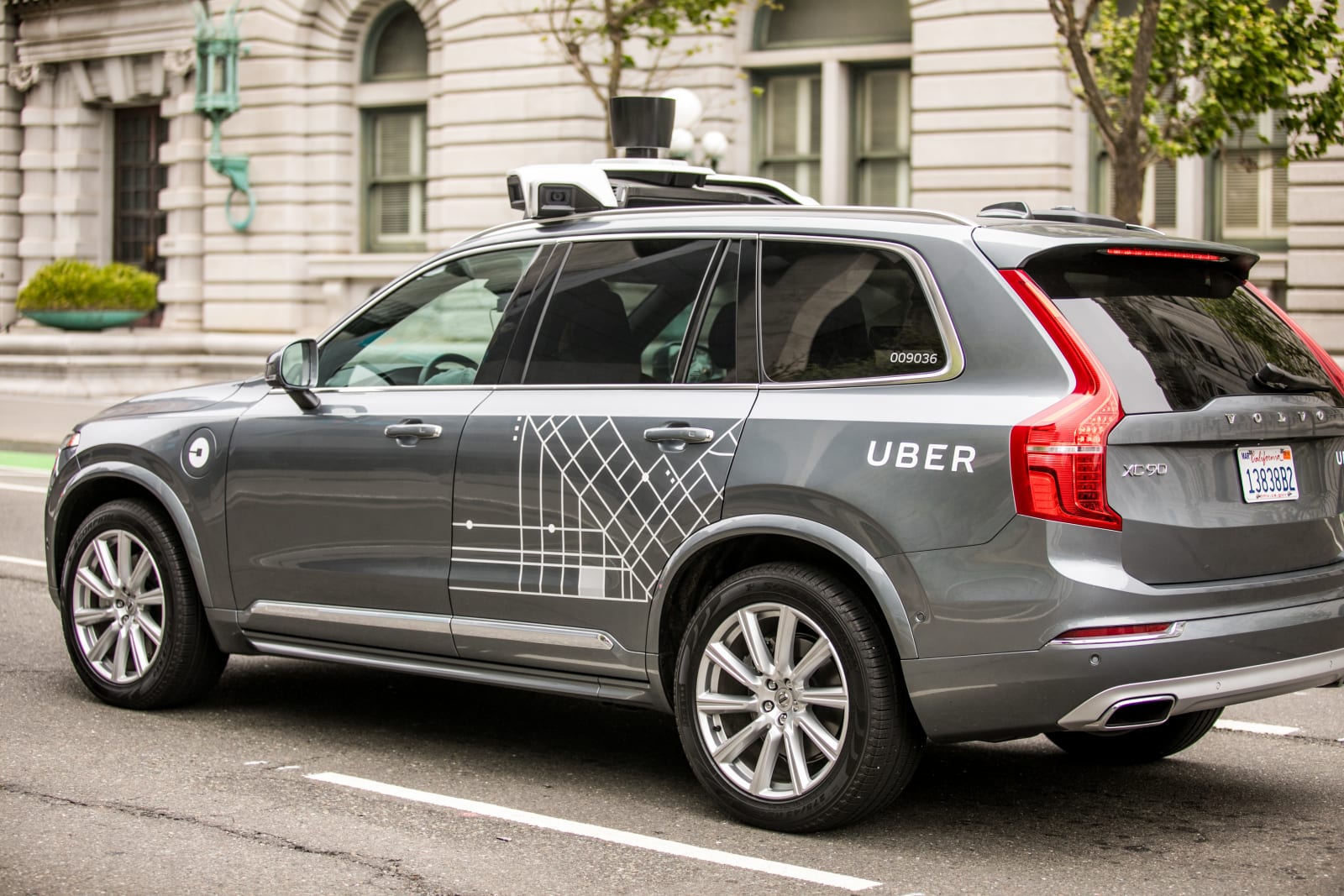
Yesterday evening, a self-driving Uber vehicle in Tempe, Arizona, struck a woman at a crosswalk. She would later die in the hospital as the result of the accident. Even though there was a human safety driver behind the wheel, the car is said to have been in autonomous mode at the time. The incident is widely described as the first known pedestrian death caused by an autonomous vehicle.
As a result of this incident, Uber has stopped all self-driving vehicle tests in San Francisco, Pittsburgh, Toronto and the greater Phoenix area. “Our hearts go out to the victim’s family. We are fully cooperating with local authorities in their investigation of this incident,” said Uber in a statement. CEO Dara Khosrowshahi echoed the sentiment on Twitter, saying that the authorities were trying to figure out what happened.
Some incredibly sad news out of Arizona. We’re thinking of the victim’s family as we work with local law enforcement to understand what happened. https://t.co/cwTCVJjEuz
— dara khosrowshahi (@dkhos) March 19, 2018
The trend towards self-driving cars seems inescapable. While most states still require a human driver behind the wheel, not all do. Arizona, for example, allows truly driverless cars. California has also agreed to let companies test self-driving vehicles without anyone behind the wheel starting in April.
This incident is likely to increase public scrutiny over self-driving cars. A recent survey by the American Automobile Association (AAA) shows that 63 percent of Americans are afraid of getting in them (a drop from last year’s 78 percent), while only 13 percent said they would feel safer when sharing the road with autonomous vehicles.
Yet, it’s far too early to say that self-driving cars are inherently more dangerous than cars with human drivers. In 2016, there were a total of 193 pedestrian fatalities in the state of Arizona, and of that, 135 took place in Maricopa County, which is home to both Tempe and Phoenix. According to the Bureau of Transportation Statistics, there were a total of 5,987 pedestrian fatalities in 2016 nationwide. And yes, all of those involved vehicles with human drivers.
“On average there’s a fatality about once every 100 million miles in the US, so while this incident is not statistically determinative, it is uncomfortably soon in the history of automated driving,” said Bryant Walker Smith, an assistant professor at the University of South Carolina, told Engadget. In short, the number of self-driving cars on the road is relatively small, making it harder to determine how dangerous they are in comparison.
“This would have happened sooner or later,” Edmond Awad, a post-doctoral associate at MIT Media Lab told Engadget. “It could certainly deter customers, and it could provoke politicians to enact restrictions. And it could slow down the process of self-driving car research.”
Where the problem lies, Awad says, is that there seems to be a general misconception that self-driving cars can’t make mistakes. “What should be done first of all, is for manufacturers to communicate that their cars are not perfect. They’re being perfected. If everyone keeps saying they’ll never make a mistake, they’re going to lose the public’s trust.”
This isn’t the first time an accident involving a self-driving car has occurred though. In 2016, a Tesla Model S collided with a tractor trailer, killing its driver — even though it was in autopilot mode. The driver apparently ignored safety warnings and it seems that the car misidentified the truck. In the end, the fault lied with the truck driver, who was charged with a right-of-way traffic violation.
This recent incident adds new fuel to the ongoing concern over the so-called “Trolley dilemma:” Would a self-driving car have the ethics necessary to make a decision between two potentially fatal outcomes? Germany recently adopted a set of guidelines for self-driving cars that would compel manufacturers to design vehicles so that they would hit the person they would “hurt less.”

Two years ago, Awad created the Moral Machine, a website that generates random moral dilemmas to ask the user what a self-driving car should do in two possible outcomes, both resulting in death.
While Awad wouldn’t reveal the details of his findings just yet, he did say that answers from Eastern countries differ wildly from those from Western countries, suggesting that car manufacturers might want to consider cultural differences when implementing these guidelines.
Recently, Awad and his MIT colleagues ran another study around semi-autonomous vehicles, asking participants who was to blame in two different scenarios: one where the car was on autopilot and the human could override it, or where the human was driving and the car could override where necessary. Would people blame the human behind the wheel, or the manufacturer of the car? And in Awad’s research results, most people blamed the human behind the wheel.
In the end, what’s really important is that we know what exactly happened in the Uber accident. “We have no understanding of how this car is acting,” said Awad. “An explanation would be very important. Was it a problem with the car itself? Was it something not part of the car, that’s beyond the machine’s capability? We need to help people understand what happened.”
Smith echoed the sentiment, stating that Uber needs to completely transparent here. “This incident will test whether Uber has become a trustworthy company,” he said. “They need to be scrupulously honest, and welcome outside supervision of this investigation immediately. They shouldn’t touch their systems without credible observers.”
The bigger question for autonomous cars and the safety of pedestrians in the future will largely depend on how the government responds. We already know that revised federal guidelines are coming this summer, but this recent tragedy could require a more immediate response. We reached out to both the NTSB and Azdot (the body that oversees self-driving cars in Arizona) about this, but have yet to hear back at this time.
For now, we’re still not clear on what the actual cause of the accident was. “At this time we don’t know enough about the incident to identify what part of the self-driving technology failed but quite likely the pedestrian was in a very unexpected location and the sensor technology did not adapt the model of its environment quickly enough,” Bart Selman, a computer science professor at Cornell University, said in a statement to press.

“In fact, self-driving technology cannot completely eliminate all accidents and the goal remains to show that the technology will greatly reduce the overall number of driving fatalities,” he added. “I firmly believe that this goal remains achievable in part because the automatic sensing system of the car can track many more events more accurately and reliable than a human driver. Still, an accident like this calls for a re-evaluation of how to introduce and further develop the self-driving technology so that people will come to recognize and accept it as feasible and very safe.”
Yet, regardless of statistics, this accident will certainly harm the faith in self-driving cars in the immediate aftermath. And no amount of legislative change will help the family of the person who died. “We should be concerned about automated driving,” said Smith. “But we should be terrified about conventional driving.”
What’s on TV: ‘Sea of Thieves,’ ‘Krypton’ and ‘Roxanne, Roxanne’
While the NCAA tournament moves on to the Sweet Sixteen and Elite 8, gamers have some interesting new options as Sea of Thieves arrives on PC and Xbox One, and the co-op escape game A Way Out goes on sale with an unusual twist — as long as you buy it, you can play with a friend even if they haven’t. On TV, Syfy drops its Superman prequel series Krypton and Portlandia wraps up its series run. Netflix has a busy release schedule this week, with the hip-hop biopic Roxanne, Roxanne, as well as a movie starring the Workaholics guys: Game Over, Man!. For movie fans there’s Jumanji available in 4K, and the F1 series starts Sunday morning on ESPN. Look after the break to check out each day’s highlights, including trailers and let us know what you think (or what we missed).
Blu-ray & Games & Streaming
- Jumanji: Welcome to the Jungle (4K)
- Pitch Perfect 3 (4K)
- The ‘Burbs (Collector’s Edition)
- Downsizing (4K)
- Pitch Perfect (4K)
- Pitch Perfect 2 (4K)
- Ichi the Killer
- Baal
- Audio Beats (PS4)
- Octahedron (PC, PS4)
- Attack on Titan 2 (PS4, PC, Switch, Xbox One)
- South Park: The Fractured But Whole DLC, (PS4, PC, Xbox One)
- RBI Baseball 18 (Xbox One, Switch, PS4)
- Velocity 2X: Critical Mass Edition (PS4)
- Don’t Bite Me Bro! (PS4)
- Minefield (PS4)
- Sea of Thieves (Xbox One, PC)
- Titan Quest (PS4, Xbox One)
- Where Are My Friends? (Xbox One, PS4)
- Assassin’s Creed: Rogue Remastered (PS4, Xbox One)
- Ark Park (PS4, PC)
- A Way Out (PS4, PC, Xbox One – 3/24)
- Castle of Heart (Switch)
- Ni No Kuni II: Revenant King (PS4, PC)
Monday
- D.C.’s Legend’s of Tomorrow, CW, 8 PM
- Lucifer, Fox, 8 PM
- The Voice, NBC, 8 PM
- WWE Raw, USA, 8 PM
- Man with a Plan, CBS, 8:30 PM
- McLaren, Starz, 9 PM
- The Alienist, TNT, 9 PM
- iZombie, CW, 9 PM
- The Resident, Fox, 9 PM
- Living Biblically, CBS, 9:30 PM
- American Dad, TBS, 10 PM
- McMafia, AMC, 10 PM
- Shoot the Messenger, WGN, 10 PM
- Good Girls, NBC, 10 PM
- Final Space, TBS, 10:30 PM
- Desus & Mero, Viceland, 11 PM
Tuesday
- The Standups (S2), Netflix, 3 AM
- NCAA Men’s Basketball Tournament, TruTV, 6:40 PM
- Shadowhunters (season premiere), Freeform, 8 PM
- WWE Smackdown, USA, 8 PM
- The Voice, NBC, 8 PM
- The Middle, ABC, 8 PM
- Fresh Off the Boat (season finale), ABC, 8:30 PM
- Black-ish, ABC, 9 PM
- Black Lightning, CW, 9 PM
- The Challenge, MTV, 9 PM
- LA to Vegas, Fox, 9 PM
- Rise, NBC, 9 PM
- The Mick, Fox, 9:30 PM
- Chicago Med, NBC, 10 PM
- For the People, ABC, 10 PM
- Baskets, FX, 10 PM
- Hate Thy Neighbor, Viceland, 10 PM
- NCIS: NO, CBS, 10 PM
- The Quad, BET, 10 PM
- Undercover High (season finale), A&E, 10 PM
- Unsolved: The Murders of Tupac and The Notorious B.I.G., USA, 10 PM
- Chicago Med, NBC, 10 PM
- Adam Ruins Everything (season premiere), TruTV, 10:30 PM
- Another Period (season finale), Comedy Central, 10 & 10:30 PM
- The Detour, TBS, 10:30 PM
- Desus & Mero, Viceland, 11 PM
Wednesday
- The Path, Hulu, 3 AM
- The Looming Tower, Hulu, 3 AM
- The X-Files (season finale), Fox, 8 PM
- Grown-ish, Freeform, 8 PM
- Survivor, CBS, 8 PM
- Riverdale, CW, 8 PM
- The Goldbergs, ABC, 8 PM
- Alone Together (season finale), Freeform, 8:30 PM
- Speechless (season finale), ABC, 8:30
- Life Sentence, CW, 9 PM
- Law & Order: SVU, NBC, 9 PM
- 9-1-1 (season finale), Fox, 9 PM
- The Magicians, Syfy, 9 PM
- Modern Family, ABC, 9 PM
- Seal Team, CBS, 9 PM
- American Housewife, ABC, 9:30 PM
- Krypton (series premiere), Syfy, 10 PM
- Designated Survivor, ABC, 10 PM
- American Crime Story: The Assassination of Gianni Versace (season finale), 10 PM
- Slutever, Viceland, 10 PM
- Criminal Minds, CBS, 10 PM
- Chicago PD, NBC, 10 PM
- Trixie & Katya Show, Viceland, 10:30 PM
- Full Frontal with Samantha Bee, TBS, 10:30 PM
- Desus & Mero, Viceland, 11 PM
Thursday
- Innocent (series premiere), Sundance Now, 3 AM
- NCAA Men’s Basketball Sweet 16, CBS & TBS, 7 PM
- Gotham: A Dark Knight, Fox, 8 PM
- Superstore, NBC, 8 PM
- Grey’s Anatomy, ABC, 8 PM
- Beyond (season finale), Freeform, 8 PM
- A.P. Bio, NBC, 8:30 PM
- American Ninja Warrior: Ninja vs. Ninja, USA, 9 PM
- Station 19 (series premiere), ABC, 9 PM
- Chicago Fire, NBC, 9 & 10 PM
- Showtime at the Apollo, Fox, 9 PM
- Champions, NBC, 9:30 PM
- Lip Sync Battle, Paramount, 9:30 & 10 PM
- Atlanta, FX, 10 PM
- Black Card Revoked, BET, 10 PM
- Portlandia (series finale), IFC, 10 PM
- Thursday Night Darts, BBC America, 10 PM
- The Rundown with Robin Thede, BET, 11 PM
- Desus & Mero, Viceland, 11 PM
Friday
- Roxanne, Roxanne, Netflix, 3 AM
- Paradox, Netflix, 3 AM
- Game Over, Man!, Netflix, 3 AM
- Alexa & Katie (S1), Netflix, 3 AM
- The Remix, Amazon Prime, 3 AM
- The Mechanism (S1), Netflix, 3 AM
- Layla M., Netflix, 3 AM
- Requiem (S1), Netflix, 3 AM
- Santa Clarita Diet (S2), Netflix, 3 AM
- Sword Gai: The Animation (S1), Netflix, 3 AM
- March of the Penguins 2: The Next Step, Hulu, 3 AM
- Fly Guys, Facebook, 12 PM
- NCAA Men’s Basketball Tournament Sweet Sixteen, CBS & TBS, 7 PM
- Once Upon A Time, ABC, 8 PM
- Blindspot, NBC, 8 PM
- The Dynasty, CW, 8 PM
- Jane the Virgin, CW, 9 PM
- Marvel’s Agents of S.H.I.E.L.D., ABC, 9 PM
- Taken, NBC, 9 PM
- Strike Back, Cinemax, 10 PM
- High Maintenance (season finale), HBO, 11 PM
- This Is Not Happening, Comedy Central, 12 AM
Saturday
- The 2018 Kid’s Choice Awards, Nick, 8 PM
- Christiane Amanpour: Sex & Love Around the World, CNN, 10 PM
Sunday
- F1 Australian GP, ESPN2, 1 AM
- The Good Fight, CBS All Access, 3 AM
- The Joel McHale Show, Netflix, 3 AM
- NCAA Men’s Basketball Elite Eight, CBS, 2 PM
- American Idol ABC, 8 PM
- Our Cartoon President, Showtime, 8 PM
- Top Gear, BBC America, 8 PM
- Instinct, CBS, 8 PM
- The Simpsons, Fox, 8 PM
- Brooklyn Nine-nine, Fox, 8:30 PM
- Genius Junior, NBC, 9 PM
- American Dynasties, CNN, 9 PM
- The Walking Dead, AMC, 9 PM
- Unsung: Shirley Caesar, TV One, 9 PM
- NCIS: LA, CBS, 9 PM
- Here and Now, HBO, 9 PM
- Homeland, Showtime, 9 PM
- Ash vs. Evil Dead, Starz, 9 PM
- Last Man on Earth, Fox, 9:30 PM
- Trust (series premiere), FX, 10 PM
- Billions (season premiere), Showtime, 10 PM
- Pope: The Most Powerful Man in History, CNN, 10 PM
- Naked & Afraid, Discovery, 10 PM
- Timeless, NBC, 10 PM
- Madam Secretary, CBS, 10 PM
- Deception, ABC, 10 PM
- Barry: Chapter One (series premiere), HBO, 10:30 PM
- Talking Dead, AMC, 10 PM
[All times listed are in ET]
Facebook security chief is reportedly leaving over misinformation dispute
Facebook’s struggle to deal with Russian manipulation campaigns has produced a casualty among its upper ranks. The New York Times has learned that chief information security officer Alex Stamos is expected to leave Facebook in August after butting heads with other executives (including COO Sheryl Sandberg) over the company’s approach to Russian influence campaigns. He had pushed for investigations and disclosures, sources said, much to the “consternation” of top staff.
Stamos said he planned to leave in December after his duties were assigned to others, according to tipsters, but Facebook convinced him to stay for several months both to ease the transition and to preserve the social network’s image. It would “look bad” for him to leave, the sources said.
We’ve asked Facebook for comment and will let you know if it can confirm or deny the move.
If accurate, the departure reveals high-level tension at Facebook over its approach to Russian meddling and other misinformation campaigns — it shows that some executives might not have wanted to verify the extent of the campaigns or notify users to the degree it has so far. The news certainly comes at a bad time, following right after word that Cambridge Analytica had collected the data of 50 million Facebook users without consent (and that Facebook may have sat on its knowledge of this since 2015). If Facebook really did time Stamos’ exit to minimize uproar, it’s having the opposite effect.
Update: In a Twitter post, Stamos confirmed that his “role did change,” but that he’s also still “fully engaged” with work at Facebook. He didn’t definitively say whether or not he was leaving, however.
Source: New York Times
 AIVAnet