


Look over your home with two wireless Yi Home Cameras for $40
You can’t be everywhere at once, but this could help.
Right now, you can grab two Yi Wireless Home Cameras for just $40 total when you enter promo code 32QMPUSR at checkout. You must add two to your cart to see this deal. $20 apiece is a price we’ve shared on this camera once before recently, and it sold out very quickly.

The wireless Yi Home Camera features 720p HD resolution with a 111-degree wide-angle lens. It can zoom up to 4X and has a 940mm infrared sensor for clear vision in the dark. It can send instant alerts to your phone when activity is detected, and you can also initiate a 2-way conversation with its built-in microphone and speaker. It’s a great option for baby monitoring or even pet monitoring.
This product supports up to a 32GB micro SD card but doesn’t include one. However, you can grab one by Samsung on sale for $10. Without it, you’d be able to view a live-stream of the camera’s video via your smartphone but you wouldn’t be able to save anything, so you’ll want to make sure to pick one up. There’s also a secure cloud service you can choose to pay for which could store your video footage.
See at Amazon
2017 laid the foundation for faster, smarter AI in 2018
“AI is like the Wild West right now,” Tim Leland, Qualcomm’s head of graphics, told me earlier this month when the company unveiled its latest premium mobile chipset. The Snapdragon 845 was designed to handle AI computing tasks better. It’s the latest product of the tech industry’s obsession with artificial intelligence. No company wants to be left behind, and whether it’s by optimizing their hardware for AI processing or using machine learning to speed up tasks, every major brand has invested heavily in artificial intelligence. But even though AI permeated all aspects of our lives in 2017, the revolution is only just beginning.
This might be a helpful time to clarify that AI is often a catch-all term for an assortment of different technologies. There’s artificial intelligence in our digital assistants like Siri, Alexa, Cortana and the Google Assistant. You’ll find artificial intelligence in software like Facebook’s Messenger chatbots and Gmail’s auto-replies. It’s defined as “intelligence displayed by machines” but also refers to situations when computers do things without human instructions. Then there’s machine-learning, which is when computers teach themselves how to perform tasks that humans do. For example, recently, an MIT face-recognition system learned how to identify people the same way humans do without any help from its creators.
It’s important not to confuse these ideas — machine-learning is a subset of artificial intelligence. Let’s use the term machine learning when we’re talking specifically about concepts like neural networks and models like Google’s TensorFlow library, and AI to refer to the bots, devices and software that perform tasks they’ve learned.

Still with me? Good. This year, AI got so smart that computers beat humans at Poker and Go, earned a perfect Ms. Pac Man score and even kept up with veteran Super Smash Bros. players. People started using AI in medicine to predict diseases and other medical conditions, as well as spot suicidal users on social networks. AI also began to compose music and write movie scripts.
Everywhere you look, there’s someone trying to add AI to something. And it’s all facilitated by neural networks that Google, Microsoft and their peers continued to invest in this year, acquiring AI startups and launching or expanding AI divisions. Machine-learning has progressed quickly, and it’s going to continue improving next year.
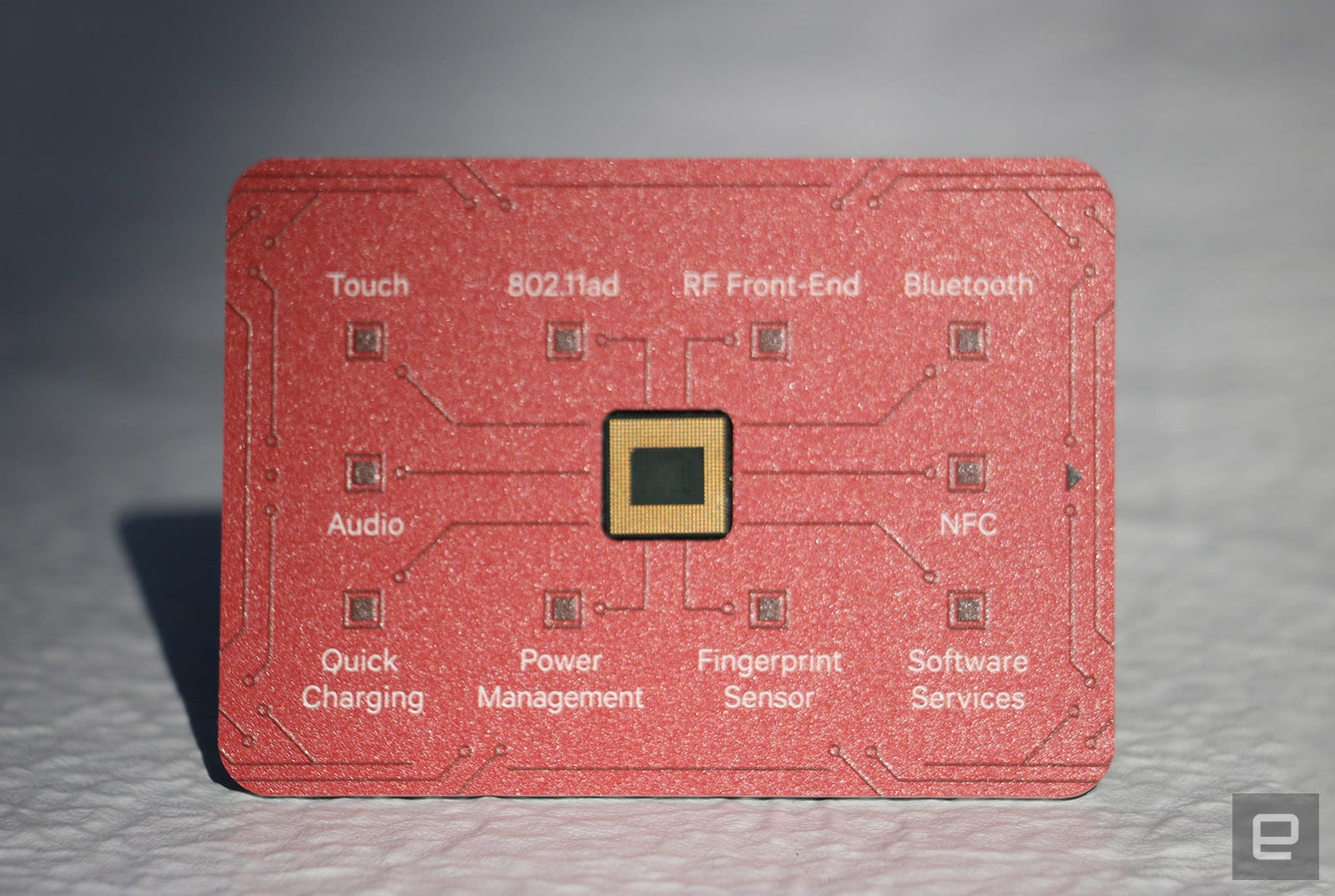
One of the biggest developments as we head into 2018 is the shift from running machine-learning models in the cloud to your phone. This year, Google, Facebook and Apple launched mobile versions of their machine-learning frameworks, letting developers speed up AI-based tasks in their apps. Chip makers also rushed to design mobile processors for machine learning. Huawei, Apple and Qualcomm all tuned their latest chipsets this year to better manage AI-related workloads by offering dedicated “neural” cores. But barring a few examples like Face ID on the iPhone X and Microsoft Translator on the Huawei Mate 10 Pro, we haven’t yet seen concrete examples of the benefits of chips tuned for AI.
Basically, AI has been improving for years, but it’s mostly been cloud-based. Take an image-recognition system, for example. At first, it might be able to distinguish between men and women who look drastically different. But as the program continues training on more pictures in the cloud, it can get better at telling individuals apart, and those improvements get sent to your phone. In 2018, we’re poised to put true AI processing in our pockets. Being able to execute models on mobile devices not only makes AI faster, it also stores the data on your phone instead of sending it to the cloud, which is better for your privacy.
It’s clear the industry is laying the groundwork to make our smartphones and other devices capable of learning on their own to improve things like translations, image-recognition and provide even greater personalization. But as the available hardware gets better at handling machine-learning computations, developers are still trying to find the best ways to add AI to their apps. No one in the industry really knows yet what the killer use case will be.

Eventually, every industry and every aspect of our lives — from shopping in a mall to riding a self-driving car — will be transformed through AI. Stores will know our tastes, sizes and habits and use that information to serve us deals or show us where to find what we might be looking for. When you walk in, the retailer will know (either by recognizing your face or your phone) who you are, what you’ve bought in the past, what your allergies are, whether you’ve recently been to a doctor and what your favorite color is. The system’s AI will learn what you tend to buy at specific times of the year and recommend similar or competing products to you, showing the information on store displays or tablets on shelves.
Cars will be smart enough to avoid obstructions and use machine-learning to better recognize dangers and navigate around hazards. Even your doctors will soon rely on AI to classify X-rays, MRI scans and other medical images, cutting down the time involved in diagnosing a patient.

AI is already prevalent in image-recognition, and it will soon become even more pervasive. Home-security cameras are already getting better at distinguishing between individual humans, dogs, cats and cars. Don’t be surprised if this is ultimately used in law enforcement to sift through traffic- and other public-camera footage to look for potential criminals or missing persons.
The digital assistants that we talk to through phones and smart speakers will not only get faster and converse more naturally by learning from our conversations, they’ll also better anticipate our needs to offer the things we want when we want them. When you walk into your home after work, your lights will come on, your thermostat will turn the temperature up and your favorite winding-down music will start playing.
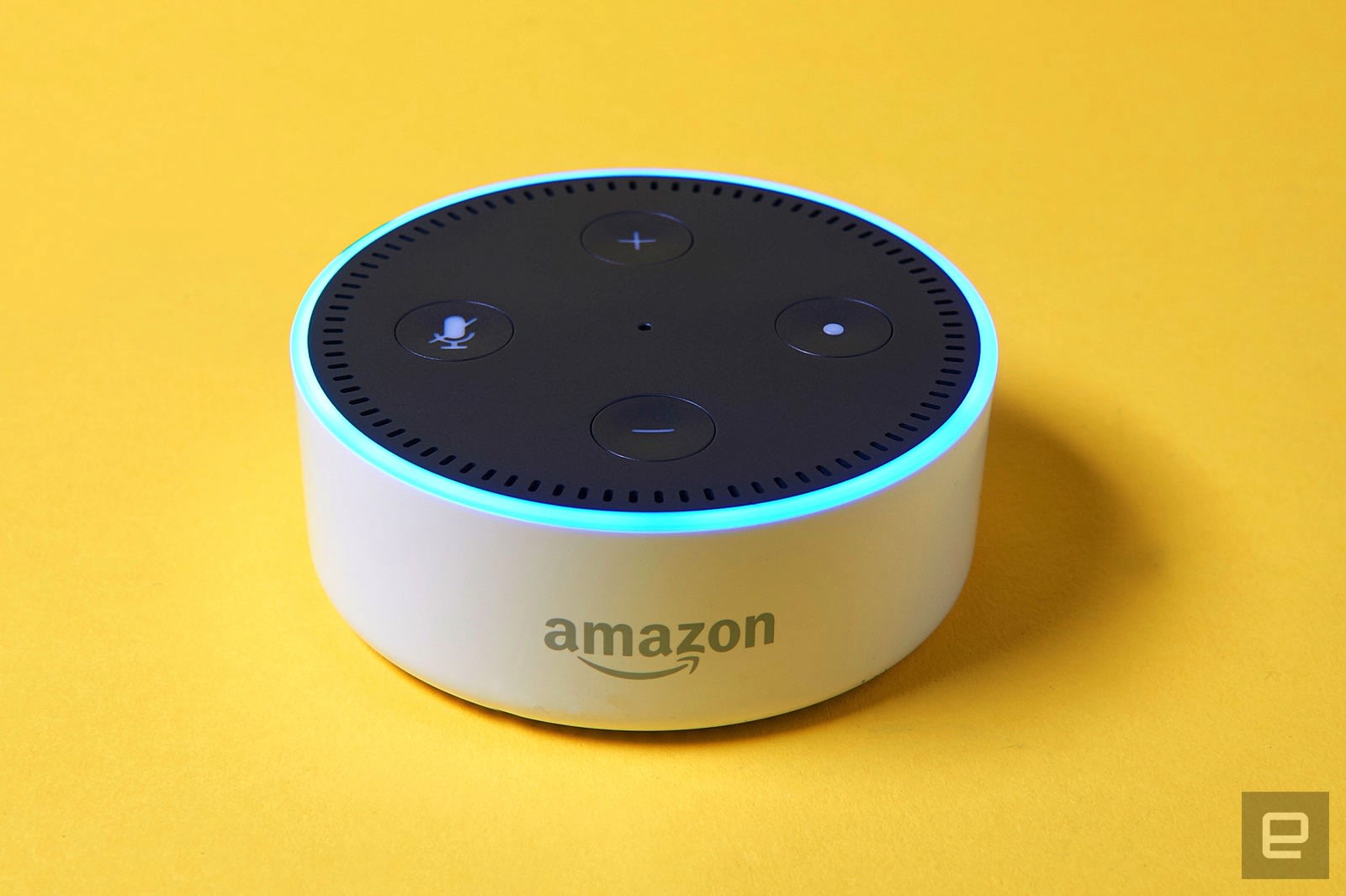
Sure, this already happens, but the existing method relies on triggers you’ve set based on your location or the time of day. In future, AI will know just how to adjust everything in your home just the way you like it while accounting for external factors. For example, if it’s a hot day, your digital assistant can turn up the air conditioning without your input after detecting temperature changes outside. All these automations could eventually make the world of Black Mirror a reality.
In 2017, the AI takeover gained momentum, but the most compelling use cases were confined to controlled, experimental environments. Next year, we’ll start to see more powerful AI emerge that might actually change the way we live. It might not happen right away, but soon AI will run our lives — for better and worse.
Check out all of Engadget’s year-in-review coverage right here.
Images: Chris Velazco/Engadget (Poker pro); Cherlynn Low/Engadget (Qualcomm chipset); Manuel Gutjahr (Security monitor, splitscreen); Engadget (Amazon Echo Dot)
The Mercedes C63S is a rare mix of style and nerdery
People seem to believe that the ability to drive fast makes them good drivers. Folks who drive below the speed limit are also under the same misconception. The reality is, if you’re a good driver, you should be able to handle anything that’s thrown at you while still treating your fellow drivers with respect. The Mercedes-Benz AMG C63S sedan is a good car not because it’s fast (though it is very fast with a zero-to-60 time of 3.9 seconds) — it’s a good car because it delivers everything you’d expect from a high-tech, luxury sports sedan.
Starting at $73,700, the C63S is out of reach for anyone who punches a clock or works in middle management (unless that management is helping to run a hedge fund). But get behind the wheel, and it becomes clear why the car merits all those extremely high monthly payments and insurance costs. It all comes down to a nearly perfect combination of speed, handling, comfort, technology and design.
Under the hood, the hand-built twin-turbo V8 outputs 503 horsepower and 516 pounds of torque to ensure that even in comfort mode, you have enough power to be the first off the line at the stop light. In the more powerful Sport mode and especially in Sport plus mode, you should expect to spin the tires a few times at the intersection if you don’t respect that beast of an engine.
Handling and tight-gear transitions are governed by the Ride Control sport suspension and AMG Speedshift 7-speed transmission, respectively. Together they helped the car make short order of the mountain roads around Mount Tamalpais in Northern California during my drive. But all that tight cornering comes at the price of a rough ride, even in Comfort mode. It’s not horrible, but it’s nowhere near as smooth as other luxury vehicles.

Normally, purchasing a car this powerful means of investing in something that could potentially land you in the hospital. Fortunately, the C63S is packed with safety features to reduce the chances of you ending up in the ICU. Foremost among them is the Distronic Plus driver assistance suite, which includes adaptive cruise control and steering assist. The car did an outstanding job tracking the vehicle in front of it with the Stop and Go Pilot feature. While stuck in various degrees of gridlock, I found the car’s ability to gently come to a stop and resume rolling to be the smoothest and most “human” of all the semi-autonomous systems out there. Even when a car cut me off, the Mercedes didn’t stomp on the brakes any more than it needed to. Performance was graceful in all situations.
Lane assist is a different matter. On long curves the vehicle would turn the wheel, straighten out, turn the wheel, straighten out and turn the wheel, creating a less-than-ideal experience. It does an adequate job assisting the driver stay in their lane, but it needs a bit more polish to catch up with systems from BMW, Tesla, Cadillac and Nissan.
The C63S is also equipped with the Mercedes Pre-Safe braking system that uses data about traffic down the road to get the brakes ready in case of a traffic slowdown. If it determines the car is about to hit gridlock it will help bring the vehicle come to a stop just that much quicker. The Mercedes will also brake automatically when it’s about to collide with a pedestrian or another car. I demoed these features during a recent trip to the automaker’s headquarters in Germany, and was particularly impressed by how well they performed during a rainstorm.

All of these safety measures are wrapped in a very elegant package. It’s tough to describe how much more striking the car is in real life compared to photos. It has a low and wide aggressive stance while still retaining an air of civility. It’s equally at home on the track as it is on a night out. The interior, though, is bound to be polarizing. It’s like sitting inside a stitched leather Coach handbag. It also has flourishes of metal and carbon fiber throughout the passenger cabin that I enjoy, but others might find ostentatious.

The feature-rich infotainment system in the C63S is packed behind a 7-inch screen. You can access the usual navigation and media integration, but also fine-tune how the car drives and sounds. It’s one of the best systems out there except for one thing: It has too many controls. Mercedes offers a touchpad and a click wheel to control its infotainment system. That would be fine, but they’re stacked on top of each other with the touchpad above the wheel. Both are capable of navigating many features. But it just seems like overkill to have them both, and a few times I inadvertently selected something with my hand on the pad. Either put a touchpad on the click wheel or remove the wheel all together.
All that said, Mercedes will unveil a new infotainment system at CES, so it’ll be interesting to see how they’ve evolved their system. But for now, the C63S is a top-notch sport luxury sedan with an eye on safety. It combines break-neck acceleration with safety features that keep you from actually breaking your neck.
Insta360 Pro goes ‘V2.0’ with image quality boost plus new tools
It’s only been half a year since the $3,499 Insta360 Pro VR camera started shipping, but the Chinese company is already offering a “V2.0” release right before the holidays. To be exact, this is actually more about a “major” firmware update with significant improvements on the same hardware, and existing users can already download the beta firmware for a spin (though it’s also possible to roll back should something go wrong). Once updated, the device will benefit from much improved image quality, as well as a 12K “Super Resolution” still photo mode, optical flow interpolation for double frame rate output plus a few new professional tools.

First off, based on the sample media provided by Insta360, the Pro’s V2.0 firmware does appear to offer a higher dynamic range plus improved image clarity. The above footage taken at the Insta360 office also shows reduced noise levels along with much better color accuracy. These improvements alone are already rather impressive.

In terms of new features, the aforementioned 12K “Super Resolution” still mode works for both stereoscopic and monoscopic capture. This is achieved by quickly taking a burst of ten 8K shots, and then merging them to form a 12K image, though this output resolution can also be lowered to 8.2K to suit Samsung GearVR’s maximum resolution while obtaining a sharper image.

Another noteworthy feature is optical flow interpolation, which allows you to natively adjust the output video frame rate up to twice as much for a smoother 360 video, as shown in the above comparison video. Other new handy tools include exposure curves, a new brightness histogram, much quicker on-device stitching when connected to a computer, optimized stitching at the zenith and the option to connect to a smartphone’s 4G hotspot or a mobile WiFi hotspot. Feel free to head over to Insta360’s blog post for more detail.
Source: Insta360
Belkin Halts Sales of ‘InvisiGlass Ultra’ Screen Protector for iPhone X Following Widespread Customer Complaints
Belkin has temporarily halted sales of its InvisiGlass Ultra screen protector for iPhone X after numerous complaints about it cracking way too easily.
The $39.95 screen protector is no longer available to purchase from Belkin’s website or Apple’s online store after dozens of customers—but not all—complained about it cracking in normal usage conditions and without ever dropping their devices. We’re told it has also been pulled from shelves at Apple retail stores around the world.
Here’s one customer review from Belkin’s website:
I purchased this at the Apple Store a little over a month ago and had them install it using their machine. Installation was quick and the fit on my iPhone X was flawless. I loved the glass feel and everything was fine until a couple days ago when I lightly tapped on the top portion of the screen with my pen and it cracked! There are 3 crack lines coming from the initial crack point. I am very disappointed in the durability of this product to say the least.
When we first reached out to Belkin about the InvisiGlass Ultra’s many one-star reviews in November, a company spokesperson informed us that it had not identified any issues with the screen protector at the time. It has since changed tune.
“We have been constantly testing this product since we released the first generation of it timed to iPhone X availability and things have evolved since you and I last spoke,” a Belkin spokesperson informed MacRumors. “We identified some improvements to be made in the next generation of this product.”
A new and hopefully improved version of the InvisiGlass Ultra screen protector for the iPhone X will be available to purchase from Apple in January and from Belkin around January or February, according to the spokesperson.
Belkin said it considers “product quality and consumer feedback of paramount importance” and said that customers who have any questions should contact the company directly or reach out to their local Apple store. Belkin didn’t specify if customers will be eligible for a refund, but hopefully it honors these requests.
The original InvisiGlass Ultra uses 0.21mm ion-strengthened glass from iPhone display glass manufacturer Corning. Belkin said the screen protector improved the iPhone X’s scratch resistance by up to three to five times, with up to a 25 percent increase in protection against cracking and breakage from drops.
The InvisiGlass Ultra was released in late October alongside Belkin’s anti-glare and tempered glass screen protectors for iPhone X, which both remain available to purchase for $19.95 and $24.95 respectively.
Tag: Belkin
Discuss this article in our forums
Tidal Offering Free 12-Day Trial Starting on Christmas, Including High Fidelity Tier
Tidal today announced that starting on Christmas Day anyone will be able to try out its music-streaming service for free for a period of 12 days. This free trial will include the company’s $19.99/month High Fidelity tier that includes lossless sound quality, and it does not require a credit card for you to start so all you will need is an email address (via The Verge).
Tidal’s new Apple TV app
To celebrate its free trial, Tidal will release exclusive content every day of the 12 day trial. The content will range from four new original shows to interviews, music videos, and documentaries on Rapsody and Trombone Shorty. Additionally, free trial users will have a chance to win concert tickets, but to which specific show was not mentioned.
Tidal has been in the news recently for its reportedly dire financial state, with the company believed to have enough capital to last only another six months. In the wake of that news, Tidal launched a new app for Apple TV and Android TV devices so users can listen to music and watch videos on a larger screen. With the new free trial, more users will have a chance to check out the service’s features and potentially bump up its “stalled” user growth.
Tag: Tidal
Discuss this article in our forums
LG G6: Specs, problems, availability, and more!

Here’s everything you need to know about the LG G6!
After a flirtation with mods in the LG G5, LG decided to change things up in a big way for 2017. The mods were gone after only one try. Additionally, LG got rid of the removable battery — a long time staple for power users — in favor of an all-glass build. The dual cameras are back and better than ever, as in LG’s brand of Android.
This is everything you need to know about the LG G6.
Check out our reviews
Honestly, the LG G6 doesn’t do anything poorly. It’s well-designed, gorgeously-engineered, and comes off as a mature, reliable piece of equipment. As MrMobile said in his review, it wears its chunkiness on its sleeve, not trying to hide its metal frame with sloping glass. As a result, it may feel a bit squat next to the Galaxy S8, but I’ve grown to really love that solidity, both in my hand and my pocket.
donm527
04-02-2017 01:07 PM“
The LG G6 has clean strong lines and thick frame leans on the industrial side. Bezels down to a minimum and screen framed with the right amount of chin. Silver has a business classy look to me while the murdered out black reminds me of my LG G2 days and very nice too.
You say the S8 UI looks clean but can’t understand how you can say that compared to the G6. The G6 would be closer to stock…
Reply
It’s waterproof, drop-resistant, and covered in glass, just like the Galaxy S8. And while it lacks this year’s Snapdragon 835 platform, I’ve yet to worry about its performance, since the Snapdragon 821 — which powers the Pixel and Pixel XL — is still so good, and feels so new.
The bottom-firing speaker is good, the headphone quality is great, as is the call quality and LTE reception. I had some trouble connecting to one particular LG Bluetooth speaker, and the Bluetooth volume was unexpectedly low on another speaker, but that’s the extent of the bugs I’ve found so far.
- LG G6 review
- LG G6 second opinion: This one’s the best
- LG G6, one month on: A great phone, and the best LG has ever made
It’s got a big screen, but feels really compact

The LG G6 is the first of likely many phones with a non-standard screen aspect ratio. Specifically, its 2:1 (or 18:9, for a more standard comparison) screen makes it considerably taller than most phones out there today, but coupled with the near-elimination of bezels around the bright, beautiful IPS display, it’s one hand-friendly.
The screen really is beautiful. Contrast is great for an IPS display, an area where Samsung’s AMOLED panels traditionally take the lead, and colors are punchy and accurate. Indeed, LG’s 2880×1440 pixel screen is Dolby Vision HDR certified, as well as HDR 10 certified, two competing standards that, with the help of Netflix, Amazon Prime Video, Vudu and others will make it much more pleasant to watch video content on a relatively small phone screen.
How the LG G6 was made
It’s got wireless charging, but only in the U.S. and Canada

For some reason, LG decided to keep one of its best features, wireless charging, limited to the North American market. It’s not a huge deal — most people rely on Quick Charge wired charging through the USB-C port — but it’s strange nonetheless. Still, the phone’s 3,300mAh battery may need a top-up, wired or wireless, once or twice throughout the day, as we’ve found the phone to have less-than-stellar uptime compared to phones like the Pixel XL.
These LG G6 features are limited to some regions
Its two cameras are wonderful and creative

Like the G5 and V20, the LG G6 has two cameras on the back, each 13MP in resolution but with differing focal lengths, that transition seamlessly using toggles in the simple-yet-powerful camera app.
We’ve spent some time playing with G6’s optics, and while the regular, optically-stabilized is great indoors and out, it’s the wide-angle sensor that we’ve grown to love, especially when taking landscape photos that capture the whole field of view.
LG’s also got some really fun camera modes that take advantage of its symmetrical screen, which can be divided into two perfect squares. You may not want to use the word ‘twofie’, but the phone can take two square photos at the same time using the front and back cameras.
- Everything you need to know about the LG G6’s cameras
- Our first LG G6 camera samples!
Only the Korean unit gets the Quad DAC

One of our favorite features from the LG V20 and V30, the Quad DAC that makes music incredibly inviting, full and sonorous, is not coming to the North American or European models of the G6. Citing higher costs, LG says that there just isn’t a big market for audiophile components in smartphones — but that doesn’t exactly assuage our frustrations.
Fortunately, the LG G6+, which is available as an Amazon Prime Exclusive, has the same Quad DAC in the U.S.!
Get a microSD card, because the storage won’t last

Another strange decision, especially in light of the Galaxy S8 coming with 64GB of storage by default — the North American and European LG G6 only comes with 32GB of internal storage, with no option to buy a higher-capacity model. Sure, 32GB should be fine for most people, but it won’t last forever, which is why we recommend you buy a big, spacious microSD card for it.
Don’t buy an LG G6 without a microSD card
The launcher is still pretty terrible

We like the software on the G6 — it’s LG’s most restrained take on Android to date, and there’s very little to complain about. But the launcher, which eschews the app drawer and adds ugly borders around all homescreen icons, is pretty bad.
Our recommendation? Download Nova Launcher, Action Launcher, Evie Launcher, or something that resembles the opposite of whatever LG is thinking.
More: How to make the most of an extra-tall home screen on the Galaxy S8 or LG G6
Those colors are gorgeous

Black or platinum — doesn’t matter. Both colors are really, really nice, and they shimmer and reflect light in their own unique ways. I haven’t been a big fan of the generic silver that seems to ship with every phone these days, but LG’s take on it, called Platinum, is really something else altogether. And then there’s the shiny, fingerprint-friendly black color, which I’ve been using. I love it; as long as you keep it clean, it’s one of the crispest-looking phones I’ve ever had in my pocket.
There’s also a white variant, but it’s not coming to the U.S.
Which color LG G6 should you buy?
There’s a Prime-Exclusive version

The G6 has joined the ranks of other Android phones that are sold by Amazon for $50 in exchange for advertisements being shown on the phone’s lock screen. The Amazon version of the G6 is unlocked and ready for use on AT&T, T-Mobile and Verizon. The LG G6+ is also available from Amazon, costing only $499. For the extra $100 over the Prime-Exclusive G6, the G6+ includes 128GB of storage instead of 32GB, and the 32-bit Quad-DAC that will make your Sennheisers sound like heaven.
More: LG G6 joins Amazon Prime Exclusive for $399 as the G6+ and Q6 make their U.S. debut
It’s not perfect
Like any phone, the G6 has its fair share of problems, especially when it comes to overcoming some of the endemic software problems LG is known for.
For starters, it doesn’t have a super large battery, but there are things you can do — optimizations and such — to prolong the inevitable. And LG’s software, while not great, is the best it’s ever been — you just have to know how to wrangle it.
Common LG G6 problems and how to fix them
It’s a lot cheaper than the Galaxy S8

So here we come to the final decision. At between $400 and $500 depending on the carrier, and cheaper unlocked, the G6 is a lot cheaper than the Galaxy S8. That’s a lot of money to save on a phone that’s better in some ways (it’s much easier to pick up off a table, and the fingerprint sensor placement is so much better) and nearly as good in others. The Prime-Exclusive version of the G6 is significantly cheaper at $399, so don’t forget that if you don’t mind seeing advertisements.
If you’ve made up your mind, you can learn everything you need to know about the phone in our forums!
Then you can figure out which carrier to buy it from.
Where to buy the LG G6 in the U.S.
If you want something newer, get the V30
The LG V30 comprises a lot of what makes the G6 so good and adds a number of photo- and video-centric features, along with a more powerful Snapdragon 835 chip and a Quad DAC that you don’t get with the main G6.
While it’s quite a bit more expensive, if you’re looking for most of what makes the G6 great, and a bit extra, check out the V30.
LG V30: Everything you need to know!
LG G6
- LG G6 review!
- LG G6 specs
- LG G6 vs. Google Pixel: The two best cameras right now
- Everything you need to know about the G6’s cameras
- LG forums
Verizon
Sprint
T-Mobile
AT&T
B&H
OnePlus could be hit with patent infringement lawsuit over its face unlock feature
A company specializing in facial recognition tech says OnePlus infringed on its patents.
If you’ve used Face Unlock on the OnePlus 5T, you’ll know that it is the one of the fastest biometric authentication systems available today. Unlike the Galaxy Note 8 — which uses an infrared sensor for scanning your irises — the authentication system on the 5T relies on the front 16MP camera and clever software tweaks. The feature uses over 100 identifiers to uniquely identify your face, and while it isn’t touted to be as secure as the fingerprint sensor at the back, it doesn’t get fooled by a photograph.
However, a report by MySmartPrice alleges that OnePlus’ face unlock feature infringed on patents by SensibleVision, a company specializing in facial recognition and biometric authentication tech.

The report cites SensibleVision CEO George Brostoff, who claims that Face Unlock infringed on at least one of the company’s patents — specifically its illumination patent:
We have not licensed our patents to OnePlus or their supplier. From the video on Forbes, they are likely infringing at the very least on our illumination patent.
Brostoff also said that this isn’t the first time another company infringed on the illumination patent, and that SensibleVision notified “several companies” over the years. In the case of OnePlus, Brostoff said the company’s legal firm is looking into the issue:
We have a legal firm that handles these type of matters, so I cannot comment more specifically.
Delving deeper into SensibleVision’s claims, the illumination patent in question deals with using the display as a source of illumination for the camera:
A camera is used for providing images to the facial recognition software where the display operates in a first mode for displaying images to a user and in a second mode for illuminating the user’s face for detection by the camera.
In essence, any device that uses a camera for biometric authentication and has a screen that can be used a light source infringes on SensibleVision’s patent, as highlighted in the application:

It doesn’t look like SensibleVision has filed a lawsuit against OnePlus yet, so we’ll have to wait until that happens to get a better understanding of the company’s claims.
OnePlus 5T and OnePlus 5
- OnePlus 5T review: Come for the value, not the excitement
- OnePlus 5T specs
- Should you upgrade from the OnePlus 3T?
- OnePlus 5T vs. Galaxy S8: Beast mode
- All of the latest OnePlus 5T news
- Join the discussion in the forums
OnePlus
Amazon
Do you customize ringtones/notification sounds?
Our forum users talk about whether or not they bother with customizing ringtones on their phone.
A few years back when phones weren’t nearly as powerful or capable as they are now, one of the things that everyone seemed to do was get big on customizing their ringtone/notification sounds. Whether it was with pre-installed tones or ones you could buy through your carrier’s clunky mobile storefront, ringtones used to be the thing.

Now in late 2017, that’s changed for a lot of people. I can’t tell you the last time I actually cared about what my phone sounded like when I got a call, text message, or new Twitter notification, and for quite a few of our forum users, they seem to be in the same boat.
DMP89145
12-21-2017 06:35 PM“
Stock Ringtones are fine with me… Just need to know you’ve got a phone call, right?
Reply
Devhux
12-21-2017 07:09 PM“
I’ve noticed more and more when I’m out that quite a few people don’t bother with changing the default notifications & ringtones anymore. Yes, there are exceptions like a friend of mine who has custom ringtones and text alerts for everyone, but that seems to be the exception these days.
Reply
Mike Dee
12-21-2017 07:22 PM“
I don’t care as much about ringtones….most custom ones are obnoxious
Reply
On the other hand, there are still a lot of folks that make time for these customizations.
B. Diddy
12-21-2017 02:23 PM“
I can’t remember the last time I used preinstalled ringtones, because they’re almost universally lame — and I include iPhone ringtones. Especially iPhone ringtones.:'(
I just find a sound file online and download it to the /Ringtones directory. You actually don’t have to install Zedge to do this — just do a Google search for a particular ringtone or sound file you want. If its in Zedge,…
Reply
Retinella
12-21-2017 08:31 PM“
Oh good god no. The stock ringtones are terrible. I get all of my ringtones and notification sounds from Zedge.
Reply
idiotekniques
12-21-2017 09:09 PM“
I’m not a fan of the stock ringtones either. I changed all mine.
I customize the ringtone for my gf, my sister and some family and that’s it for that. I customize SMS tones for my gf, sister, and a few good friends and everyone else gets a standard ring.
Then most apps get their own notification sound from Viber to Voicemail and everything in between.
I can say I don’t think I used more…
Reply
What about you – Do you still customize your ringtones and notification sounds?
Join the conversation in the forums!
The Morning After: Friday, December 22nd 2017
Hey, good morning! You look fabulous.
As we prepare for the holiday break, there’s some surprising news from Google’s parent company and our big smartphone camera head-to-head competition.
Interesting.Former Google CEO Eric Schmidt will step down as executive chairman at Alphabet

Since Google co-founder Larry Page took over for him as CEO in 2011, Eric Schmidt has served as executive chairman of the company and maintained that role through the formation of its parent company Alphabet. On Thursday Schmidt announced he’s transitioning to become a “technical advisor on science and technology issues.” He said, “Larry, Sergey, Sundar and I all believe that the time is right in Alphabet’s evolution for this transition.”
Guess which one won.Tested: the best smartphone cameras compared

So which smartphone has the best camera? We put the iPhone X, Pixel 2, Note 8 and Mate 10 Pro to the test in scenarios that are particularly tricky for smartphone cameras and their small sensors: scenes with high contrast, backlighting or substantial vibration.
Tablet-top gaming.‘Civilization VI’ comes to the iPad for $30

If you have a relatively new and powerful iPad, then you can play Civilization — yes, the full game, mods and all — on it. Not sure the experience is worth $30? The first 60 turns are free.
Take your chances.Apple now requires that games disclose odds of ‘loot box’ rewards
Apple has added a new requirement for games that offer loot boxes with randomized rewards for purchase. If your game has them, you now have to disclose the odds of receiving the prizes promised.
An important upgrade.Razer gives its phone a major camera update

Our review of the first Razer Phone showed it has plenty of power, a quad HD display and loud front-facing speakers, but the camera doesn’t quite measure up. Now Razer has released an update that promises better colors, shadows and low-light performance. The tweaks won’t stop there, either — Razer says another update is incoming that will put its performance on par with the cameras found in other flagship phones.
But wait, there’s more…
- Now YouTube will play full-size vertical videos on iOS
- Fat Shark’s 101 starter set is a gateway to drone racing
- MoviePass has over 1 million subscribers
- In 2017, society started taking AI bias seriously
- Google’s ’12 Days of Play’ sale has $1 movie rentals, plus cheap games, books and apps
- Future Apple Watch models could include EKG heart monitoring
The Morning After is a new daily newsletter from Engadget designed to help you fight off FOMO. Who knows what you’ll miss if you don’t Subscribe.
Craving even more? Like us on Facebook or Follow us on Twitter.
Have a suggestion on how we can improve The Morning After? Send us a note.
 AIVAnet