


Net neutrality is dead: What happens now?
The FCC repealed Title II net neutrality regulations this morning, making it legal for internet service providers to fracture the internet and charge more for the leftover pieces. We’ve covered the technical details of Title II and Title I, discussed how net neutrality has enabled creatives and entrepreneurs to thrive, and broken down the new transparency rules — but what does today’s vote actually mean for the future of the internet? Let’s dive in.
There are three major players caught in net neutrality’s web: Tech companies, ISPs and consumers. The first two groups have the same goal: make money. The final group, consumers, has a rival goal: save money. And even though tech companies and ISPs both dream of the same conclusion, they’re on opposite sides of the financial food chain here, with disparate views on net neutrality.
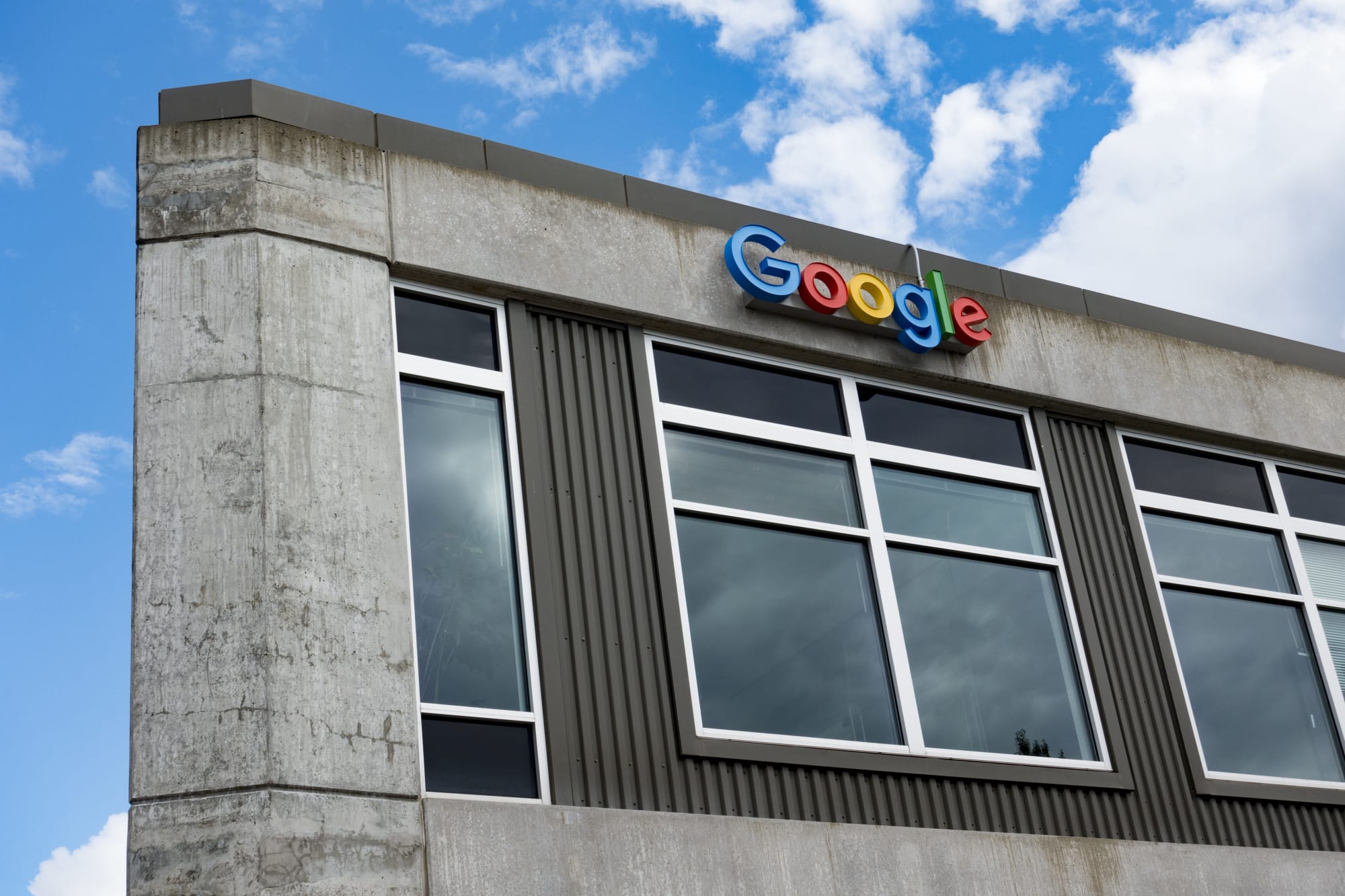
Take Google for example. Now that net neutrality rules have been dismantled, the internet monolith faces the possibility of paying higher fees to access high-speed (meaning, the same speeds they’ve enjoyed for the past two years) lanes. This is one reason Google, Apple, Facebook, Twitter and other major companies have been so loudly, fervently opposed to the destruction of net neutrality: They want to make money, and paying higher fees doesn’t compute with this goal. Meanwhile, small ISPs hoping to enter the market would face these same elevated prices for faster connections, potentially stifling innovation at the onset.
ISPs, on the other hand, want the ability to charge these higher fees. Not only does today’s FCC’s ruling open the path for ISPs to institute multiple internet speed lanes, but it also allows them to engage in previously banned practices like throttling, blocking and paid prioritization. Throttling, for instance, would allow a company like Comcast to slow speeds down on certain apps or sites, thereby nudging people toward alternative services. Comcast is the largest ISP in the US and it happens to own NBCUniversal, which has a controlling stake in Hulu. If Comcast wants to give Hulu an edge over Netflix, it’s now free to slow down speeds just for Netflix. Hell, it could even block the service entirely.
ISPs are now required to report when they engage in practices like throttling or paid prioritization, and the FCC and FTC have promised to investigate those reports as they roll in. However, there’s a loophole here: If ISPs can classify any of these moves as “reasonable network management,” they don’t have to report them at all, leaving customers in the dark as to why their Netflix shows suddenly look like shit. Major ISPs have attempted to legitimize throttling in the past, and they now have a green light from the US government to do so on a large scale, free from regulation.

Everyday internet users lose power — meaning, access to information — with the repeal of net neutrality. Today’s decision eliminates reporting requirements that were mandated under Title II of the Telecommunications Act. This means ISPs no longer have to report “packet loss, geographically-specific disclosures and performance at peak usage times, among other things,” as the FCC finds these requirements “burdensome.”
Internet users in the US already have few choices when it comes to ISPs, and now we’ll have less information about these companies and their practices.
What’s more, today’s move essentially legalizes zero-rating plans, a common practice among mobile carriers that the FCC has been overlooking since Ajit Pai took over as chairman in January. Zero-rating schemes exclude some apps or services from monthly data caps, meaning customers can access them free of charge even if they’ve hit their plan’s limit. Some carriers throttle service once a user hits their data cap, but any zero-rated apps will work as usual.
Advocacy groups argue this practice violates the spirit of net neutrality, treating some data differently than others. Zero-rating essentially allows carriers to charge customers more to access competitors’ apps, a practice that can now carry over into the ISP world.

But for consumers, the effects of today’s FCC vote transcend financial matters. This is about equality, giving every person the same foundation from which to launch their businesses, enjoy their hobbies and consume entertainment. Charging more for faster speeds or certain services undercuts the foundation of a free and open internet. This is why advocacy groups like the ACLU and EFF are so fervidly for Title II net neutrality regulations. In an age of #influencers, YouTube stars and Instagram divas, everyone deserves the same shot at going viral. It’s the American dream for the digital age, and the FCC just crushed it.
However, this isn’t the end of the net neutrality debate. Advocacy groups are set to sue the FCC over today’s vote and Congress actually has the power to reverse the ruling via the Congressional Review Act. Congress has 60 working days to review and overrule the FCC’s repeal via a simple majority vote; Democratic Sen. Ed Markey and Rep. Mike Doyle have already promised to raise the issue. They’re surely not alone: Before the vote, 39 Democratic senators sent a letter to Pai urging him to abandon his plans to repeal Title II protections. The digital American dream may be crushed, but it isn’t dead.
Satechi Launches USB-C ‘Clamp Hub Pro’ for 2017 iMac and iMac Pro
Satechi today announced the launch of a new USB Type-C Clamp Hub Pro, which is made from aluminum and designed to work with the latest iMac and iMac Pro machines.
Available in Silver or Space Gray, the Clamp Hub Pro plugs into one of the rear Thunderbolt 3 slots on the iMac or iMac Pro. It offers three USB 3.0 Type-A ports with 5Gb/s data transfer and a Micro/SD card reader.

Setting up the Clamp Hub takes just a few seconds using an adjustable knob, and its slim profile adds little additional visual bulk to the iMac. The Clamp Hub is compatible with the 2017 iMac Pro, the 2017 4K 21.5-inch iMac, and the 2017 5K 27-inch iMac.

The USB Type-C Clamp Hub Pro can be pre-ordered from the Satechi website for $49.99. It will start shipping out in the first week of January.
Note: MacRumors is an affiliate partner with Satechi. When you click a link in this post and make a purchase, we may receive a small payment, which helps us keep the site running.
Tag: Satechi
Discuss this article in our forums
Apple Pay Offers $5 iTunes Gift Card When You Shop Online at Select Retailers December 14-21
Apple today announced that if you shop at select online retailers using Apple Pay from December 14 through December 21, you’ll get a $5 App Store and iTunes Gift card. The offer is only valid for United States residents and while supplies last. Furthermore, Apple stated that there is a limit to one card per retail partner, suggesting you can get additional $5 cards if you shop at multiple online stores under the promotion.
Apple didn’t specify if there is a minimum amount of money you have to spend to get the $5 card, but the company advised shoppers to see applicable partner websites for more information as the fine print might change on a retailer-by-retailer basis.
Here is the full list of Apple Pay partners participating in the promotion:
If you don’t have Apple Pay set up yet, make sure to visit our guide on How to Set Up Apple Pay and Add Credit Cards. The latest addition to Apple Pay was the debut of Apple Pay Cash, which launched earlier in December and lets you directly pay friends and family members. If you have credit on your Apple Pay Cash Card, you can also use that to shop at the above retailers and get the $5 iTunes card.
For other deals and promotions, visit our full Deals Roundup.
Related Roundups: Apple Pay, Apple Deals
Discuss this article in our forums
LUX Launches $149 Smart Thermostat With HomeKit Support
LUX Products today announced the release of its new KONO Smart thermostat with support for HomeKit, Amazon Alexa, and Google Assistant.
HomeKit integration allows the Wi-Fi-enabled thermostat to be controlled with Siri voice commands using an iPhone or iPad. Likewise, the thermostat can be controlled with Alexa or Google Assistant voice commands.
KONO Smart also has a physical knob that can be turned to adjust the temperature and access other controls on the thermostat’s small digital screen.
Like the Nest and many other smart thermostats, the KONO Smart can automatically learn and adjust the temperature of your house whether you’re at home or away, which can potentially reduce your electricity bill over time.
The thermostat’s other features include smart scheduling, a utility cost estimator, a built-in indoor air quality mode, and energy usage reporting.
KONO Smart has a black stainless steel cover with interchangeable decor covers that can be purchased separately for $10 each in six colors: Midnight Black, True White, Paint It, Hibiscus Red, Sea Green, and Deep Blue.
KONO Smart is available starting today for $149 and can be purchased on the LUX Products website or at Home Depot stores in the United States.
At $149, the KONO Smart is cheaper than some other HomeKit-enabled thermostats at regular prices, including the ecobee4, Honeywell Lyric Round, and Sensi Touch all priced at $199. iDevices has a basic HomeKit thermostat for $98 on Amazon.
Tag: HomeKit
Discuss this article in our forums
Space Gray Magic Keyboard, Magic Mouse, and Magic Trackpad Are Currently Sold With iMac Pro Only
Apple has confirmed the Magic Keyboard, Magic Mouse 2, and Magic Trackpad 2 in Space Gray are “available only at the time of your iMac Pro purchase.”
The fine print on Apple’s iMac Pro order page spells bad news for customers who were hoping to be able to purchase the Space Gray accessories separately for use with other Macs and Apple devices.
Apple sells the Magic Keyboard, Magic Keyboard with Numeric Trackpad, Magic Mouse 2, and Magic Trackpad 2 in a traditional white color on its online store alongside a few other keyboard and mouse accessories for Macs.
It appears that the black Lightning to USB-A cable included in the box is also exclusive to the iMac Pro at this time, with no option to purchase it separately from Apple’s online store like traditional white versions.
Apple could easily choose to release the Space Gray accessories separately in the future, but for now, you may have to resort to eBay or Craigslist if you want a stealthier looking Magic Keyboard, Magic Mouse, or Magic Trackpad.
As far as a black Lightning cable, Apple sells a Belkin one for $29.95 on its website and there are others on Amazon for much cheaper.
Apple released the iMac Pro earlier today, with 8-core to 18-core models available for between $4,999 and $13,199 in the United States. 8-core and 10-core models ship in late December, and 14-core and 18-core models ship by February.
Related Roundup: iMac ProTags: Magic Keyboard, Magic Mouse 2, Magic Trackpad 2Buyer’s Guide: iMac Pro (Buy Now)
Discuss this article in our forums
Snapchat Launches Mac App to Let Creatives Build Customized Augmented Reality Effects
Snapchat today announced “Lens Studio,” an all-new application for Mac and Windows computers that lets creatives and developers create their own augmented reality effects. Although anyone can use Lens Studio, the company noted that it was built with tools aimed at those who “dabble” in 2D animation effects, as well as professional artists.
With the Mac app users can create a fully realized Snapchat AR effect, similar to the popular dancing hot dog from last summer. The app offers templates and guidelines to get started, and both 2D and 3D objects can be created. Snapchat also provides scripting API within Lens Studio so that developers can code their own fully interactive experiences.
All Snapchat users on Lens Studio can make World Lenses for Snapchat that use the rear-facing camera on a smartphone. The company also partnered with seven AR development agencies, who will be able to build both World Lenses as well as face effects on the front-facing camera.
Once a World Lens effect is complete, the app gives out a special Snapcode that can be shared anywhere and allows Snapchat users to scan and unlock the custom Lens. From there, they can interact with it, take photos and videos, and post the content to their Story or send it to a friend.
With the launch of Lens Studio, we’re excited to make Lenses more accessible to creators, and experiences within Snapchat more personal and diverse. We’ve seen how much more fun Geofilters have become since first inviting the community to create their own three years ago — and can’t wait to see what you build with Lens Studio!
Lens Studio is a free download on both Mac and Windows, which you can download from Snapchat’s website right here.
Tag: Snapchat
Discuss this article in our forums
Apple CEO Tim Cook Again Urges Congress to Take Action on DACA
Apple CEO Tim Cook and Koch Industries CEO Charles Koch today teamed up to write an opinion piece in The Washington Post urging Congress to create a legislative solution to protect those affected by the end of the Deferred Action for Childhood Arrivals (DACA) program.
DACA, for those unfamiliar, gives illegal immigrants who entered the United States at age 16 or younger work permits and protection from deportation by two-year deferral. Many of those protected by DACA have been in the United States for most of their lives.
Cook and Koch say they often disagree on political issues, but are “firmly aligned” on DACA. “This extraordinary set of circumstances has brought the two of us together as co-authors,” reads the letter.
In the missive, Cook and Koch point out that there are 690,000 “dreamers” aka children of immigrants who may not be able to enjoy another holiday season in the United States as a result of DACA. The two urge Congress to “show the courage to embrace diversity and to do what is right.”
We have no illusions about how difficult it can be to get things done in Washington, and we know that people of good faith disagree about aspects of immigration policy. If ever there were an occasion to come together to help people improve their lives, this is it. By acting now to ensure that dreamers can realize their potential by continuing to contribute to our country, Congress can reaffirm this essential American ideal.
Cook and Koch ask Congress to work quickly to come up with a solution before the end of the year to “bring certainty and security to the lives of dreamers.”
No society can truly flourish when a significant portion of its people feel threatened or unable to fulfill their potential. Nor can it prosper by excluding those who want to make positive contributions. This isn’t just a noble principle; it’s a basic fact, borne out through our national history.
Apple CEO Tim Cook has been advocating for new DACA legislation since United States President Donald Trump announced plans to phase out DACA back in September. At that time, he promised Apple would work with members of Congress to come up with a legislative solution that will continue to protect the children of immigrants.
Apple is also working with impacted Apple employees to provide support, including access to immigration experts. Apple employs 250 “dreamers” or children of illegal immigrants who came to the United States at a young age and have lived in the country since then.
Note: Due to the political nature of the discussion regarding this topic, the discussion thread is located in our Politics, Religion, Social Issues forum. All forum members and site visitors are welcome to read and follow the thread, but posting is limited to forum members with at least 100 posts.
Discuss this article in our forums
iMac Pro Features Apple’s Custom T2 Chip With Secure Boot Capabilities
Apple today confirmed the iMac Pro is equipped with its custom T2 chip for enhanced security and integration. The chip is second-generation silicon, building upon the T1 chip in the latest MacBook Pro with the Touch Bar that authenticates and secures Touch ID and Apple Pay respectively.
The T2 chip integrates several previously separate components, including the system management controller, image signal processor, audio controller, and SSD controller, for expanded capabilities on the iMac Pro.
For instance, Apple says the T2 chip’s image signal processor works with the FaceTime HD camera to enable enhanced tone mapping, improved exposure control, and face detection-based auto exposure and auto white balance.
The T2 chip also has a Secure Enclave coprocessor that makes the iMac Pro even more secure with new encrypted storage and secure boot capabilities.
The data on your SSD is encrypted using dedicated AES hardware with no effect on the SSD’s performance, while keeping the Intel Xeon processor free for your compute tasks. And secure boot ensures that the lowest levels of software aren’t tampered with and that only operating system software trusted by Apple loads at startup.
Cabel Sasser, co-founder of software company Panic, recently shared a few screenshots of the Startup Security Utility powered by the T2 chip.
⑤ Security. This new chip means storage encryption keys pass from the secure enclave to the hardware encryption engine in-chip — your key never leaves the chip. And, they it allows for hardware verification of OS, kernel, boot loader, firmware, etc. (This can be disabled…) pic.twitter.com/qKJ6bHdtr8
— Cabel Sasser (@cabel) December 12, 2017
The settings reveal that users can enable a firmware password to prevent the iMac Pro from starting up from a different hard disk, CD, or DVD without the password. There are also three secure boot options and options to allow or disallow booting from external media devices such as USB and Thunderbolt drives.
“Full security” ensures that only the latest and most secure software can be run. Apple says this mode requires a network connection at the time of software installation. “Medium security” requires verifiable software to boot, but not the latest software, and “no security” lets the operating system boot freely.
iMac Pro became available to order today with 8- to 18-core configurations ranging in price from $4,999 to $13,199 in the United States. 14-core and 18-core models don’t ship for an estimated 6-8 weeks.
Related Roundup: iMac ProTag: T2 chipBuyer’s Guide: iMac Pro (Buy Now)
Discuss this article in our forums
Apple Seeds First Beta of tvOS 11.2.5 to Public Beta Testers
Apple today seeded the first beta of an upcoming tvOS 11.2.5 update to its public beta testing group, one day after seeding the tvOS 11.2.5 update to developers. The first tvOS 11.2.5 public beta comes just a day after the release of tvOS 11.2.1, an update that fixed a HomeKit vulnerability.
The tvOS 11.2.5 public beta can be obtained by going to the Settings app on the Apple TV and navigating to the Software Updates section under “System.” “Get Public Beta Updates” will need to be toggled on, and once it is, the Apple TV will download the beta software.
It’s not yet clear what features and changes might be included in the tvOS 11.2.5 update as no outward-facing changes were discovered in the developer beta.
It’s likely the update features security improvements and fixes for bugs that have been discovered since the release of tvOS 11.2 and tvOS 11.2.1.
Related Roundup: Apple TVBuyer’s Guide: Apple TV (Buy Now)
Discuss this article in our forums
Apple Releases First Beta of iOS 11.2.5 for Public Beta Testers
Apple today released the first public beta of iOS 11.2.5 to its public beta testing group, one day after seeding the first beta to developers and also one day after releasing iOS 11.2.1, an update that addressed a HomeKit vulnerability.
Beta testers who are members of Apple’s beta testing program will receive the iOS 11.2.5 beta update over-the-air after installing the proper certificate on an iOS device.
Those who want to join the beta testing program can sign up on Apple’s beta testing website, which gives users access to iOS, macOS, and tvOS betas. iOS betas are not always stable and should not be installed on a primary device.
No new features were discovered in the first developer beta of iOS 11.2.5, so it’s not entirely clear what new features this beta introduces.
It’s possible it focuses primarily on security improvements and bug fixes, and if that’s the case, we may not know the extent of what’s in the update until it sees a public release complete with detailed release notes.
Related Roundup: iOS 11
Discuss this article in our forums
 AIVAnet