


LG announces ThinQ brand for its AI-powered tech
A new brand for AI in 2018.
If there’s one trend that smartphones, refrigerators, washing machines, and other appliances and tech have in common, it’s artificial intelligence. More and more companies have been pushing forward with AI over the past couple of years, and LG’s been one of the driving forces of it.

Starting in 2018, all of LG’s home appliances, consumer tech, and services that utilize AI in some way will be placed under the company’s new ThinQ brand.
ThinQ products will feature deep learning technology and be able to communicate with one another, and this is possible thanks to LG’s DeepThinQ AI system, as well as AI tech from LG’s many partners.
Per Head of LG’s Global Marketing Center, Han Chang-hee –
The purpose of the ThinQ brand is to highlight that LG intelligent products are always thinking of you in order to make your life better. AI is the next frontier in technology and as a leader in home appliances and consumer electronics, we have a responsibility to make AI more approachable and less intimidating.

LG’s ThinQ logo.
LG launched DeepThinQ at CES 2017, and this was followed up with the launch of the company’s Artificial Intelligence Lab in Seoul and an initiative to include Wi-Fi connectivity in all premium home appliances launched throughout 2017 and beyond.
CES 2018 is right around the corner, and LG says it’ll use the convention as a showcase for a lot of its AI-powered gadgets for the upcoming year.
How’s your LG G6 doing?
Best ebook reading apps for Android

Get your book fix with an ebook reading app!
Books can be heavy, expensive, and take up valuable space in a cramped apartment. If you’ve been considering the jump from physical books to ebooks, you’ll need to figure out the best e-reader for the job. Thankfully you’ve got a few options, depending on where you want to get your books, and how you want them to look on the screen.
Take a peek at our picks for the best ebook reading apps on Android!
Amazon Kindle

Amazon Kindle pulls ahead of the pack of ebook readers with its access to a huge library of content, which includes free books and content from indie publishers. Many classic books like The Count of Monte Cristo are absolutely free, and you can read them on your mobile device, or desktop with the Kindle app. There is a book out there for you no matter what genre you are looking for, and even includes independently published content.
Kindle Select Publishing even publishes content of varying lengths from self-published authors, or are otherwise unable to find a brick and mortar publisher. You can find titles ranging from Stephen King or Joe Hill to Chimamanda Ngozi Adichie and Bell Hooks. Kindle Unlimited offers an endless selection of ebooks for a monthly fee.
In the app, you’re able to customize fonts, margins, line spacing, and organize the books you’ve downloaded into collections so that it’s easier to find the book you want to read. Kindle will also remember the page that you left on when you switch devices. This means that you can switch between your phone, Fire Tablet, and PC without ever losing your page in the process.
Download: Amazon Kindle (Free)
Google Play Books

Google Play Books gives you access to a vast bookstore, some of which are free. You’ll also find some textbooks, although we’d like to see the textbook selection improve in the future. You can read books offline, use a dictionary to look up unfamiliar words, and have your notes and place in the book saved across multiple devices through your Google account.
If you have a family account set up, then you can share books between everybody without having to purchase them multiple times. As you purchase more books, Google will also show you books that are similar to ones you have already purchased, in order to find new authors you may not have heard of before.
Google Play Books has a great selection for the bibliophile in your family, and will likely be loaded onto your Android phone when you purchase it. Staying within the Google ecosystem also makes it easy to share your purchases with family members, and keep all of your media in one place.
Download: Google Play Books (Free)
Kobo

Kobo is a great way to read your favorite books whether it’s on your phone or tablet. They have a gigantic selection filled with both new and established authors, including magazines and children’s books. The most popular and trending ebooks are even updated hourly so that you don’t miss an amazing story, even when it’s coming from an author you’ve never heard of.
Kobo also includes a reading list, which lets you add items you are currently reading, as well as the books you intend to tackle. This makes it easy to keep track of your reading list, even when you’re on the go.
As you begin to buy books and Kobo learns your likes, it will also build a recommendations list. This is made up of suggestions for new books or magazines, based on what you’ve already purchased. There is also a really awesome reading activity feature. It will show you how much time you’ve spent reading in the app, what books you are currently reading, a running tally of how many books you’ve read and how many pages you’ve turned in the process.
Kobo delivers an awesome reading experience with plenty of books to read through, as well as features that make finding a good book easier than ever. You can customize your reading experience, and since Kobo will learn your preferences over time, you’ll find new authors with just a tap. As a final perk when you sign up you’ll get a $5 credit to be used towards your first book purchase.
Download: Kobo Reader (Free)
Nook

If you want to continue shopping at Barnes and Noble, the Nook app is what you’re looking for. It’s the company’s branded app, which gives you access to a huge library of books, magazines, and periodicals.
Since this is the official app from Barnes and Noble, if you buy into their yearly membership you can apply those discounts through the app. You also get access to tons of features to customize your reading experience, like spacing, sizing, and font selection. You can also share your library with family members, organize the way you like, and bookmark upcoming books that are available for pre-order.
Download: Nook (Free)
Moon+Reader
While being able to purchase books from a major retailer and download them to your phone is awesome, sometimes the books you want to read are ones that you already have the files for. Whether you’ve picked up ebooks from an independent publisher, or you’ve gotten the files from a now-defunct program, being able to open and read them is key. That’s where Moon+Reader comes in.
It has support for 12 different file formats, from .rar files all the way to .epub files. On top of that you still are able to customize the way words look on the screen, lets you back up your library online, and gives you access to 5 auto-scroll options on top of plenty more fantastic features.
Download: Moon+Reader(Free)
Are you reading?
While you might miss the feel of a book in your hands, or the smell of aged paper, there’s a reason ebooks are so popular: they can save you space and money. If you’ve made the choice to move solely to ebooks, you have a variety of different e-readers to choose from. Do you use an e-reading app? Let us know about it in the comments below!
December 2017: We’ve added Nook and Moon+Reader to our list, and updated the info on all the best ebook apps!
Google hired Amazon and Apple employees for hardware team in Shanghai
In case you didn’t know, Google’s kinda serious about this whole hardware thing.
Google first started getting serious about being a hardware company in 2016, and it continued this push even more in 2017. Products like the Pixel 2, Pixelbook, and Google Home Mini/Max show that Google really does have a knack for the hardware business, and a new report suggests that the company is getting ready to make an even bigger push in this direction.

According to The Information, Google is building up a new hardware team that’ll be stationed in Shanghai and focused on developing smartphone and Home hardware. Google had around 20 engineers in Shanghai this time last year, but it’s since increased that number to 150.
Employees in Shanghai have been hired from Jide Technology, as well as former workers from Amazon and Apple that have “experience in hardware and supply chain management.”
Google doesn’t plan on selling hardware in China right away.
Although Google’s clearly putting a lot of work into its Shanghai operation, it doesn’t actually have any plans to sell hardware in the country for the time being. Instead, Google will initially be focused on creating deals with other manufacturing companies in the area to help expand its products on a more global scale. Google’s supposedly already “struck some deals” with certain brands, so whatever its plans are, they seem to be headed in the right direction.
In addition to Pixel phones and Google Home, the Shanghai team will also be working on the Pixelbook, Daydream VR headsets, and even wearable tech. Google’s shown that it can make serious progress in the hardware department looking at its releases from 2016 compared to 2017, so it’ll be vastly interesting to see how this new team in Shanghai contributes to this area.
Google Pixel 2 and Pixel 2 XL
- Pixel 2 FAQ: Everything you need to know!
- Google Pixel 2 and 2 XL review: The new standard
- Google Pixel 2 specs
- Google Pixel 2 vs. Pixel 2 XL: What’s the difference?
- Join our Pixel 2 forums
Best Buy
Verizon
Google Store
Project Fi
This $7 screwdriver kit comes with 45 pieces to help you complete electronics repairs at home
Complete your own repairs at home!
It happens to the best of us. We try so hard to care for our devices, but it’s inevitable that something will go wrong and they’ll need to be fixed, but that doesn’t mean you need to take it somewhere and pay a ton to get the job done. Thanks to the internet and YouTube, you can find information on how to repair just about anything these days, so why not try the job at home?
You’ll need some tools to do it, which is where this $6.92 45-piece toolset comes in handy. You’ll need to select the listing sold by Jacyled Direct and use the coupon code VRYCK688 to get it for the discounted price, which saves you $4 on the purchase.

- NEW VERSION JACKYLED 45-IN-1 TOOL KIT: Differences from the old version? More professional and lives longer at the same price! Listen! The updated version has 48 things in total now, including a tweezer, a handle, an extension bar, a suction cup and 44 screwdriver bits. The new material S2 Alloy Steel with 58-60 level hardness is harder and lives longer than the previous CR-V Alloy Steel with only 52-54 level hardness. No doubt, better than other 45 in 1 screwdriver sets in the market!
- MORE PROFESSIONAL & MORE PRECISE: 3 ADDED ITEMS give you a more professional phone repair! Now it comes with 44 pcs multi size bits to fit almost all phones in the market including some screws of iPhone. Also perfect for repairing laptops, computers, cameras, game machines, toys, wristwatches, eyeglasses and other electronics and home appliances.
- EASY TO USE: Rotatable and non-slip tough handle ensures greater comfort and convenience; The total length can be 9.65 inches when you put a bit and the extension bar into the handle; The end of the handle and extension bar have magnetic, effectively absorbing the screws without falling; The tweezer helps you a lot in picking up screwdrivers or screws.
- POCKET-SIZED CARRYING CASE: Light weight and compact design. All the kits are organized in a pocket-sized plastic carrying case, so you can take it anywhere you go.
There is also a 38-piece set for $10.99 that comes with a slightly different selection of tools that are geared more towards replacing displays instead of general device repairs.
See at Amazon
Deal: BlackBerry KEYone Black Edition gets $150 discount in Canada
Available from December 21 through the 24th.
We certainly hope you’ve gotten most of your Christmas shopping done at this point, but if you’re still running around trying to get some last minute gifts, BlackBerry has a pretty solid deal to check out for our Canadia readers.
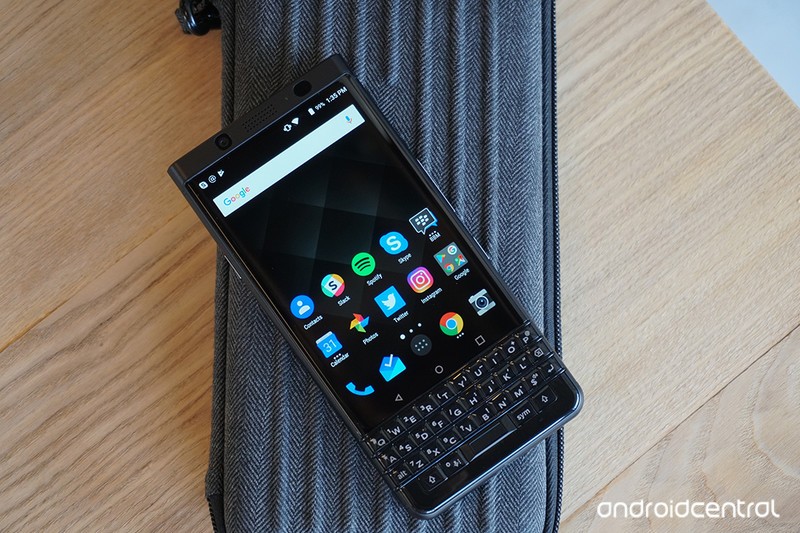
Starting on December 21 and running until December 24 at 11:59PM EST, Canadian shoppers will be able to purchase the BlackBerry KEYone Black Edition for just $650. That’s a saving of $150 off the retail price of $800, and while that’s still not technically cheap, it is a pretty good deal if you want to get the BlackBerry fan in your life something truly special.
The Black Edition KEYone is mostly the same as its sliver-clad cousin, but it bumps up the RAM from 3GB to 4GB and offers double the storage at 64GB compared to 32GB. If that’s still not enough space for all of your local files, you can always add a microSD card and expand your storage up to 2TB.
BlackBerry will be running this sale at Amazon, Best Buy, Blueshop, Staples, Visions, and Walmart.
See at Amazon
BlackBerry KEYone
- BlackBerry KEYone review
- KEYone vs. Priv: Battle of the BlackBerry keyboards
- BlackBerry KEYone specs
- The latest KEYone news
- Join the discussion in the forums
Amazon
Best Buy
BlackBerry Mobile
Samsung’s faster, smaller DRAM chips are coming to your next PC
Samsung has built the smallest 8-gigabit DDR4 RAM chip ever using its second-generation 10-nanometer manufacturing tech, it said in a news release. The chips are 15 percent more energy efficient and run 10 percent faster than the last generation, launched just 20 months ago. Productivity for the chips is also up 30 percent, meaning that wafer throughput and yields will let it build more of the chips in the same time. That should make RAM for your computer cheaper and easier to find in the near future.
The chip division didn’t use a new fab process to make the RAM smaller, but rather just added some new tech. Specifically, it’s using more efficient error checking and “a unique air spacer” around bit lines that decreases parasitic capacitance caused by the close proximity of modern chip traces.
Samsung Electronics is a wildly successful division of the company that generates a big chunk of its profits. It builds the processors for companies like Qualcomm, and also manufacturer DRAM, GDDR5 RAM for graphics cards and non-volatile flash storage. It is currently manufacturing 10-nanometer parts, but will soon move to an 8-nanometer process using roughly the same tech. Manufacturing 7-nanometer parts using ultraviolet lithography will be a trickier step, however.
With second-gen 10-nanometer tech apparently nailed down, Samsung is “accelerating its plans for much faster introductions of next-generation DRAM chips and systems, including DDR5, HBM3, LPDDR5 and GDDR6, for use in enterprise servers, mobile devices, supercomputers, HPC systems and high-speed graphics cards,” it says. It will also build more of the first-generation chips to better fill jammed up supply channels — none of which is good news for rivals like Intel and Toshiba.
Source: Samsung
Apple may let the same app work on across iOS and Macs
The app situation between iPhones and Macs is a bit of a mess. While mobile apps are updated regularly, the Mac App Store can often leave something to be desired. Now, Apple is finally tackling this chaos. According to Bloomberg, Apple may give developers the option to create a single app that will work across Macs, iPads and iPhones as early as next year.
According to insider sources, the same app will be able to respond to a mouse, a touch pad or a touch screen, depending on the device it’s being run on. Right now, apps must be designed separately for the iPhone and iPad versus for a computer, which explains why you can occasionally find tumbleweeds rolling across the screen when you pull up the Mac App Store. If developers must choose to devote resources to one or the other, the computer apps often get shortchanged.
The change won’t come immediately, though. It’s planned as part of next fall’s iOS and Mac OS updates, according to Bloomberg’s sources. Because this is all so tentative, it’s also possible that the decision makers at Apple could change their minds and cancel this endeavor entirely. Here’s hoping they don’t, though. This streamlining would likely be a popular move for Mac users.
Source: Bloomberg
The Apple TV 4K has already sold out on Amazon
Well, that happened faster than expected: Amazon has begun selling the Apple TV 4K. And just as quick, both the 32GB and 64GB versions are already out of stock. Hopefully you got one overnight if you had some extra Prime reward points to burn. Two years ago, Amazon stopped selling Apple TVs in addition to Google Chromecasts. Its reasoning? Neither device offered easy access to Amazon Prime Video. For now, that’s only reversed for Apple hardware; early this month the Prime Video Apple TV app finally launched. Chromecasts are expected to reappear in short order, especially since Mountain View has started blocking YouTube on Amazon’s Echo Show and Fire TV.
Via: AppleInsider
Source: Amazon
California is set to hit its green-energy goals a decade early
California is both the nation’s leading renewable-energy proponent and one of the few states to actually put its power where its mouth is. In November, the California Energy Commission released its annual Renewable Portfolio Standard (RPS) report which found that the state’s three investor-owned utilities — Pacific Gas & Electric, Southern California Edison and San Diego Gas & Electric — are on track to collectively offer 50 percent of their electricity from renewable resources by 2020. That’s a full decade faster than anyone had anticipated.
Reports like these have been used to promote clean-energy production throughout the US and the rest of the world since the 1970s. However, it wasn’t until 2002 that California codified the practice. But despite being in effect for only 15 years, California’s mandatory reporting has become a potent tool in fighting greenhouse-gas emissions throughout the state.

Arnold Schwarzenegger and CA Governor Jerry Brown at the One Planet Summit, Dec ’17
“We’ve got to realize that we are here today because of oil — oil and gas, to a lesser extent, coal,” California Gov. Jerry Brown told the press at a 2015 signing ceremony, where he increased the state’s renewable goal to 50 percent. There, he pointed out that California is still the third-most-oil-producing state in the union, behind Texas and North Dakota. “What has been the source of our prosperity has become the source of our ultimate destruction, if we don’t get off of it,” he added.
And get off it we have. As of last year, 32.9 percent of PG&E’s power came from renewable resources, as did 28.2 percent from SoCal Edison and a whopping 43.2 percent from San Diego Gas — granted, SDG&E is by far the state’s smallest investor-owned utility.
And, despite critics’ complaints that moving to renewables would stymie economic growth and increase the electric bills of customers throughout the state, it’s actually been quite the opposite. In the last seven years, California has seen a massive construction boom in the solar- and wind-energy sectors. The price of solar power has dropped to under $30 in 2016 from around $136 per megawatt-hour in 2008, while wind power prices have fallen to $51 in 2015 from $97 per megawatt-hour in 2007, per the report. Over the same period, the state has seen greenhouse-gas emissions from electricity generation decrease nearly every year.

Jerry Brown speaks at the launch event at the US climate action center
And despite the Trump administration’s quixotic quest to make coal happen, California has ratcheted up its own climate-change-response efforts. Of course, California isn’t the only state to do so. Hawaii recently passed legislation dictating that a full 100 percent of its electricity generation come from renewables by 2045, while Vermont is aiming to hit 75 percent by 2032.
Granted, both of those states are home to far fewer people than California and therefore require far less energy, so the Golden State is uniquely situated to lead the renewable energy revolution. “California in a lot of ways is a blessed state,” said Dr. Austin Brown, executive director of the UC Davis Policy Institute for Energy, Environment and Economy. “We have a wealth of both wind and solar, a lot of historically built hydro that we can use.”
That said, California is not — and cannot be — in this effort alone. While the state does often produce an excess of solar power in the mornings and early afternoons, utilities often have to resort to gas-powered plants during the evening hours and during times of peak demand. As such, Brown explained, “hydropower is great because it can be used to fill in the peaks and valleys.”

The Ivanpah Solar Electric Generating System
“We have an interconnected grid so I think it would have been foolish to say, ‘It all has to be done in California,’” Brown continued. “One of the benefits of the grid is that we’re able to trade power — bring hydro down from the Northwest, bring wind in from Wyoming. These are all really good things.”
California’s aggressive policies toward renewables also deserve credit. “People want to cast it as a choice between policy or technology as a solution but those should exist hand-in-hand,” Brown said. “We would have never gotten renewable energy prices where they are today without really ambitious public policy.”
Since 2002, both Gov. Brown and his Republican predecessor, Arnold Schwarzenegger, have continually sought to push the clean-energy standards forward. “It shows the importance of bold goals,” Brown declared. “When you put a marker way out there and say, ‘We’re going to go achieve that, we’re going to write this down as a matter of policy and then go do it,’ you can accomplish an enormous amount.” And now that California is on pace to hit 50 percent renewable by 2020, the state could soon set an even loftier goal: 80 percent by 2050, according to Brown.
“When you get it right, it’s this virtuous cycle where policy improves technology and that allows us to go for greater ambition without increasing prices and continuing to reduce unintended consequences,” Brown said.
Of course, setting goals and actually achieving them are two very different things. Indeed, the path to 80 percent renewables will pose its own unique challenges. The effects of diminishing returns will soon come into play, Brown explained. “Once we get to about 50 percent, we’re going to start to run into new challenges — the second 50 percent will be trickier than the first 50 percent.” Should we continually produce renewable energy at times when there is already excess generation, the value of that energy will decrease, Brown notes.

Tesla Powerpack Units at the SoCal Edison Mira Loma Substation
Yes, we could incorporate battery technology such as Tesla’s Power Cells or the 50 MW hybrid peaker plant system that installed this past April, but Brown thinks there might be an easier, less expensive alternative. “Storage is probably not the first option you want to talk about when you discuss grid integration just because batteries are still pretty expensive compared to other technologies,” he said. Instead, Brown suggested methods such as pre-cooling buildings during times of low demand so as to not place additional strain on the grid during peak hours, or increasing grid flexibility — that is, increasing the ability to pass power around without congesting transmission lines.
“When you look at it, storage works, but it’s probably the last thing in the stack that we want to go to,” Brown concluded.
The effects of global warming will pose their own unique set of challenges. With California’s temperate climate, residents don’t typically need to run their A/C or heaters for months on end as they do in other parts of the country, though that could change as the planet continues to warm.
Daytime energy demands will likely increase throughout California and the Southwest due to the higher temperatures, thereby increasing air-conditioning usage, Brown explained. To a lesser degree, the colder winters should similarly increase heating demands. Brown also fears that we’ll see a “significant increase in heat-related injuries and death” as well as other dangerous trends such as the prolonged drought the state recently emerged from and the massive wildfires it currently faces.

Burbank, California, residents fleeing the La Tuna Canyon Fire
Energy production will also feel the impacts of climate change. “Solar is dependent on the amount of cloud cover,” Brown said. “Wind power obviously depends on wind, and we might see shifting wind patterns in a changing climate,” though he’s not entirely certain what those changing patterns will look like. Conventional power plants will also feel the effects. As Brown points out, a number of nuclear- and fossil-fuel plants have been temporarily knocked offline in the past few years because the of the heat that knocks their water-cooling systems offline. “It’s a threat multiplier,” he said. “It takes all the things that are problematic now and makes them much more common.”
And while achieving 100 percent renewable energy production is a noble goal, it may not be the most important one for California to focus on. “I think of 100 percent [renewable production] as a bit of a red herring,” Brown explained. “If you want 100 percent it should be 100 percent zero-carbon electricity. Climate change is the existential threat, and I don’t want to waste time arguing about what’s renewable or not. You have to get the carbon out of the energy system as quickly as possible.”
Images: Getty (All)
Facebook lists all the security emails it sends to fight phishing
Your Facebook account might not have your credit card or bank details, but it could have everything a crook needs to get them. To protect you from phishing schemes designed to steal Facebook log-ins, the platform is arming you with information that can be easily accessed in the settings page. The social network now lists the latest security emails it sends out. Every time you get message in your inbox asking you to change your password or email — and it smells fishy for some reason — you can check the list first and verify that it’s really from the company.
Facebook typically uses addresses ending in “@facebookmail.com” for its security emails, but as you know, phishers can spoof accounts and make their messages look legit. If you miss the flaws and irregularities that usually give phishing schemes away, such as spelling and grammar mistakes, then you really might fall victim to them. Of course, you’d have to make sure you’re visiting the real Facebook website whenever you want to access the list, so you’ll still have to make it a habit to open a fresh tab and type the URL yourself.

Found an email not in the list? Facebook is encouraging you to report it to phish@fb.com.
 AIVAnet