


The best movies and music to give as gifts
Not everything in our holiday gift guide is a gadget, per se. We know that media, including physical media, make good gifts, so made sure to include a few DVDs, plus some manga and a vinyl record, to boot. Depending on your loved one’s taste, you’ll want to buy them Blade Runner: The Final Cut in 4K, Spider-Man: Homecoming (also in 4K) or Planet Earth II — another great way to make the most out of a UHD TV. For the binge-watcher in your life, you might consider scooping up the soundtrack to Netflix’s Stranger Things, available in several volumes. And, for that person in your life who loves graphic novels, we recommend the hardcover version of Ghost in the Shell, volumes 1, 2 and 3.
Source: Engadget Holiday Gift Guide 2017
Soundcloud’s redesigned app puts the focus on music discovery
Today, Soundcloud launched a redesigned app that puts an emphasis on discoverability. It takes a page from Spotify, with a new home screen that has curated recommendations and personalized playlists to help listeners find their new favorite Soundcloud artists and albums. You can download the updated app today.
Soundcloud is focusing on personalizing playlists and spotlighting tracks and artists it thinks you will like, as well as highlighting both the latest album releases on the service and what’s popular right now. You can also find Top 50 charts based on where you are in the world, plus dedicating more space to promoting emerging artists.
The move came after SoundCloud laid off 40 percent of its staff in July because it couldn’t generate enough revenue to cover costs. But the service was determined to stay afloat, and was able to do so thanks to a new round of fundraising. This redesigned app is the first step to staying relevant in a competitive streaming music market.
Via: The Verge
Source: Soundcloud, Mashable
FCC net neutrality vote halted due to security concerns (updated)
As FCC Chairman Ajit Pai was in the middle of giving his comment on the net neutrality proposal, someone handed him a note. He quickly said that on advice of security, the Commission needed to take a break. The feed was then cut off. Politico kept its feed of the evacuated room up and it showed law enforcement and bomb-sniffing dogs searching the room.
Update: After just a few minutes, the Commissioners and audience members returned to the room, the security concern seemingly resolved.
WATCH: FCC takes abrupt recess during #NetNeutrality debate “on advice of security” pic.twitter.com/cZUWBeet3K
— NBC News (@NBCNews) December 14, 2017
The FCC has repealed net neutrality
During today’s open meeting, the FCC’s proposal to repeal net neutrality protections put in place in 2015 was put to a vote and it passed, three votes to two. As was widely expected, the three Republican members — Chairman Ajit Pai and Commissioners Michael O’Rielly and Brendan Carr — voted in favor of the proposal while Commissioners Mignon Clyburn and Jessica Rosenworcel, both Democrats, voted against it.
Under the new order, broadband internet will no longer be classified as a Title II service and the added regulations that go along with that classification will be removed. Internet service providers will be free to practice blocking, throttling and paid prioritization as long as they disclose those practices as per a new transparency requirement. You can read more about Title I vs. Title II classifications here.
Additionally, the FCC and FTC will now share jurisdiction over internet service providers and will work together to enforce transparency requirements and to investigate practices deemed anticompetitive, deceptive or unlawful. Further, states will not be able to override the stipulations of the new order with their own legislation. Any state laws that contradict the FCC’s newly enacted plan will be considered moot.
A number of groups have spoken out against the proposal and many sent letters to the FCC over the last couple of weeks asking it to delay or abandon the vote. Yesterday, Politico reported that FCC Chief Technology Officer Eric Burger raised concern just yesterday over some of the language included in the proposal. In an email to each of the FCC commissioners’ offices, he said that service providers’ ability to block or throttle specific websites is a concern. “Unfortunately, I realize we do not address that at all,” he wrote. “If the ISP is transparent about blocking legal content, there is nothing the [Federal Trade Commission] can do about it unless the FTC determines it was done for anti-competitive reasons. Allowing such blocking is not in the public interest.” A source told Politico that those concerns were addressed with added language, though that new addition to the proposal wasn’t released for review prior to today’s vote.
Following reports released yesterday that as many as 2 million identities might have been stolen to leave fake comments on the FCC’s proposal during the public comment period, Commissioner Rosenworcel said in a statement, “This is crazy. Two million people have had their identities stolen in an effort to corrupt our public record. Nineteen State Attorneys General from across the country have asked us to delay this vote so they can investigate. And yet, in less than 24 hours we are scheduled to vote on wiping out our net neutrality protections. We should not vote on any item that is based on this corrupt record. I call on my colleagues to delay this vote so we can get to the bottom of this mess.”
In her dissent of the vote today, Commissioner Rosenworcel wrote, “Net neutrality is internet freedom. I support that freedom. I dissent from this rash decision to roll back net neutrality rules. I dissent from the corrupt process that has brought us to this point. And I dissent from the contempt this agency has shown our citizens in pursuing this path today. This decision puts the Federal Communications Commission on the wrong side of history, the wrong side of the law, and the wrong side of the American public.”
Commissioner Clyburn opened her response to the proposal by saying, “I dissent. I dissent from this fiercely-spun, legally-lightweight, consumer-harming, corporate-enabling Destroying Internet Freedom Order.” And she concluded by quoting Chairman Ajit Pai himself. She said, “As I close my eulogy of our 2015 net neutrality rules, carefully crafted rules that struck an appropriate balance in providing consumer protections and enabling opportunities and investment, I take ironic comfort in the words of then Commissioner Pai from 2015, because I believe this will ring true about this Destroying Internet Freedom Order, ‘I am optimistic, that we will look back on today’s vote as an aberration, a temporary deviation from the bipartisan path, that has served us so well. I don’t know whether this plan will be vacated by a court, reversed by Congress, or overturned by a future Commission. But I do believe that its days are numbered.’ Amen to that, Mr. Chairman. Amen to that.”
Net neutrality is dead: What happens now?
The FCC repealed Title II net neutrality regulations this morning, making it legal for internet service providers to fracture the internet and charge more for the leftover pieces. We’ve covered the technical details of Title II and Title I, discussed how net neutrality has enabled creatives and entrepreneurs to thrive, and broken down the new transparency rules — but what does today’s vote actually mean for the future of the internet? Let’s dive in.
There are three major players caught in net neutrality’s web: Tech companies, ISPs and consumers. The first two groups have the same goal: make money. The final group, consumers, has a rival goal: save money. And even though tech companies and ISPs both dream of the same conclusion, they’re on opposite sides of the financial food chain here, with disparate views on net neutrality.
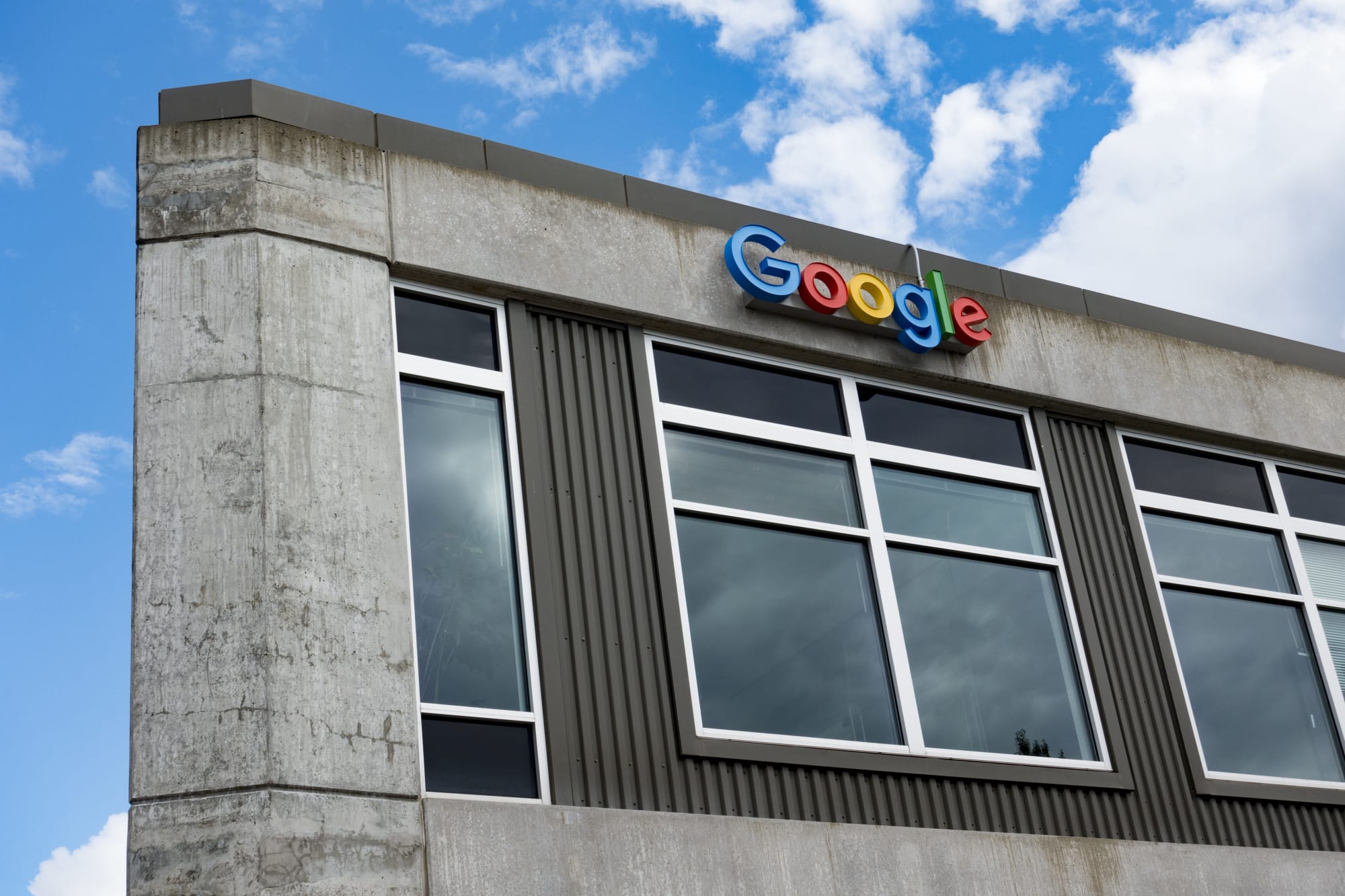
Take Google for example. Now that net neutrality rules have been dismantled, the internet monolith faces the possibility of paying higher fees to access high-speed (meaning, the same speeds they’ve enjoyed for the past two years) lanes. This is one reason Google, Apple, Facebook, Twitter and other major companies have been so loudly, fervently opposed to the destruction of net neutrality: They want to make money, and paying higher fees doesn’t compute with this goal. Meanwhile, small ISPs hoping to enter the market would face these same elevated prices for faster connections, potentially stifling innovation at the onset.
ISPs, on the other hand, want the ability to charge these higher fees. Not only does today’s FCC’s ruling open the path for ISPs to institute multiple internet speed lanes, but it also allows them to engage in previously banned practices like throttling, blocking and paid prioritization. Throttling, for instance, would allow a company like Comcast to slow speeds down on certain apps or sites, thereby nudging people toward alternative services. Comcast is the largest ISP in the US and it happens to own NBCUniversal, which has a controlling stake in Hulu. If Comcast wants to give Hulu an edge over Netflix, it’s now free to slow down speeds just for Netflix. Hell, it could even block the service entirely.
ISPs are now required to report when they engage in practices like throttling or paid prioritization, and the FCC and FTC have promised to investigate those reports as they roll in. However, there’s a loophole here: If ISPs can classify any of these moves as “reasonable network management,” they don’t have to report them at all, leaving customers in the dark as to why their Netflix shows suddenly look like shit. Major ISPs have attempted to legitimize throttling in the past, and they now have a green light from the US government to do so on a large scale, free from regulation.

Everyday internet users lose power — meaning, access to information — with the repeal of net neutrality. Today’s decision eliminates reporting requirements that were mandated under Title II of the Telecommunications Act. This means ISPs no longer have to report “packet loss, geographically-specific disclosures and performance at peak usage times, among other things,” as the FCC finds these requirements “burdensome.”
Internet users in the US already have few choices when it comes to ISPs, and now we’ll have less information about these companies and their practices.
What’s more, today’s move essentially legalizes zero-rating plans, a common practice among mobile carriers that the FCC has been overlooking since Ajit Pai took over as chairman in January. Zero-rating schemes exclude some apps or services from monthly data caps, meaning customers can access them free of charge even if they’ve hit their plan’s limit. Some carriers throttle service once a user hits their data cap, but any zero-rated apps will work as usual.
Advocacy groups argue this practice violates the spirit of net neutrality, treating some data differently than others. Zero-rating essentially allows carriers to charge customers more to access competitors’ apps, a practice that can now carry over into the ISP world.

But for consumers, the effects of today’s FCC vote transcend financial matters. This is about equality, giving every person the same foundation from which to launch their businesses, enjoy their hobbies and consume entertainment. Charging more for faster speeds or certain services undercuts the foundation of a free and open internet. This is why advocacy groups like the ACLU and EFF are so fervidly for Title II net neutrality regulations. In an age of #influencers, YouTube stars and Instagram divas, everyone deserves the same shot at going viral. It’s the American dream for the digital age, and the FCC just crushed it.
However, this isn’t the end of the net neutrality debate. Advocacy groups are set to sue the FCC over today’s vote and Congress actually has the power to reverse the ruling via the Congressional Review Act. Congress has 60 working days to review and overrule the FCC’s repeal via a simple majority vote; Democratic Sen. Ed Markey and Rep. Mike Doyle have already promised to raise the issue. They’re surely not alone: Before the vote, 39 Democratic senators sent a letter to Pai urging him to abandon his plans to repeal Title II protections. The digital American dream may be crushed, but it isn’t dead.
Satechi Launches USB-C ‘Clamp Hub Pro’ for 2017 iMac and iMac Pro
Satechi today announced the launch of a new USB Type-C Clamp Hub Pro, which is made from aluminum and designed to work with the latest iMac and iMac Pro machines.
Available in Silver or Space Gray, the Clamp Hub Pro plugs into one of the rear Thunderbolt 3 slots on the iMac or iMac Pro. It offers three USB 3.0 Type-A ports with 5Gb/s data transfer and a Micro/SD card reader.

Setting up the Clamp Hub takes just a few seconds using an adjustable knob, and its slim profile adds little additional visual bulk to the iMac. The Clamp Hub is compatible with the 2017 iMac Pro, the 2017 4K 21.5-inch iMac, and the 2017 5K 27-inch iMac.

The USB Type-C Clamp Hub Pro can be pre-ordered from the Satechi website for $49.99. It will start shipping out in the first week of January.
Note: MacRumors is an affiliate partner with Satechi. When you click a link in this post and make a purchase, we may receive a small payment, which helps us keep the site running.
Tag: Satechi
Discuss this article in our forums
Apple Pay Offers $5 iTunes Gift Card When You Shop Online at Select Retailers December 14-21
Apple today announced that if you shop at select online retailers using Apple Pay from December 14 through December 21, you’ll get a $5 App Store and iTunes Gift card. The offer is only valid for United States residents and while supplies last. Furthermore, Apple stated that there is a limit to one card per retail partner, suggesting you can get additional $5 cards if you shop at multiple online stores under the promotion.
Apple didn’t specify if there is a minimum amount of money you have to spend to get the $5 card, but the company advised shoppers to see applicable partner websites for more information as the fine print might change on a retailer-by-retailer basis.
Here is the full list of Apple Pay partners participating in the promotion:
If you don’t have Apple Pay set up yet, make sure to visit our guide on How to Set Up Apple Pay and Add Credit Cards. The latest addition to Apple Pay was the debut of Apple Pay Cash, which launched earlier in December and lets you directly pay friends and family members. If you have credit on your Apple Pay Cash Card, you can also use that to shop at the above retailers and get the $5 iTunes card.
For other deals and promotions, visit our full Deals Roundup.
Related Roundups: Apple Pay, Apple Deals
Discuss this article in our forums
LUX Launches $149 Smart Thermostat With HomeKit Support
LUX Products today announced the release of its new KONO Smart thermostat with support for HomeKit, Amazon Alexa, and Google Assistant.
HomeKit integration allows the Wi-Fi-enabled thermostat to be controlled with Siri voice commands using an iPhone or iPad. Likewise, the thermostat can be controlled with Alexa or Google Assistant voice commands.
KONO Smart also has a physical knob that can be turned to adjust the temperature and access other controls on the thermostat’s small digital screen.
Like the Nest and many other smart thermostats, the KONO Smart can automatically learn and adjust the temperature of your house whether you’re at home or away, which can potentially reduce your electricity bill over time.
The thermostat’s other features include smart scheduling, a utility cost estimator, a built-in indoor air quality mode, and energy usage reporting.
KONO Smart has a black stainless steel cover with interchangeable decor covers that can be purchased separately for $10 each in six colors: Midnight Black, True White, Paint It, Hibiscus Red, Sea Green, and Deep Blue.
KONO Smart is available starting today for $149 and can be purchased on the LUX Products website or at Home Depot stores in the United States.
At $149, the KONO Smart is cheaper than some other HomeKit-enabled thermostats at regular prices, including the ecobee4, Honeywell Lyric Round, and Sensi Touch all priced at $199. iDevices has a basic HomeKit thermostat for $98 on Amazon.
Tag: HomeKit
Discuss this article in our forums
Space Gray Magic Keyboard, Magic Mouse, and Magic Trackpad Are Currently Sold With iMac Pro Only
Apple has confirmed the Magic Keyboard, Magic Mouse 2, and Magic Trackpad 2 in Space Gray are “available only at the time of your iMac Pro purchase.”
The fine print on Apple’s iMac Pro order page spells bad news for customers who were hoping to be able to purchase the Space Gray accessories separately for use with other Macs and Apple devices.
Apple sells the Magic Keyboard, Magic Keyboard with Numeric Trackpad, Magic Mouse 2, and Magic Trackpad 2 in a traditional white color on its online store alongside a few other keyboard and mouse accessories for Macs.
It appears that the black Lightning to USB-A cable included in the box is also exclusive to the iMac Pro at this time, with no option to purchase it separately from Apple’s online store like traditional white versions.
Apple could easily choose to release the Space Gray accessories separately in the future, but for now, you may have to resort to eBay or Craigslist if you want a stealthier looking Magic Keyboard, Magic Mouse, or Magic Trackpad.
As far as a black Lightning cable, Apple sells a Belkin one for $29.95 on its website and there are others on Amazon for much cheaper.
Apple released the iMac Pro earlier today, with 8-core to 18-core models available for between $4,999 and $13,199 in the United States. 8-core and 10-core models ship in late December, and 14-core and 18-core models ship by February.
Related Roundup: iMac ProTags: Magic Keyboard, Magic Mouse 2, Magic Trackpad 2Buyer’s Guide: iMac Pro (Buy Now)
Discuss this article in our forums
Snapchat Launches Mac App to Let Creatives Build Customized Augmented Reality Effects
Snapchat today announced “Lens Studio,” an all-new application for Mac and Windows computers that lets creatives and developers create their own augmented reality effects. Although anyone can use Lens Studio, the company noted that it was built with tools aimed at those who “dabble” in 2D animation effects, as well as professional artists.
With the Mac app users can create a fully realized Snapchat AR effect, similar to the popular dancing hot dog from last summer. The app offers templates and guidelines to get started, and both 2D and 3D objects can be created. Snapchat also provides scripting API within Lens Studio so that developers can code their own fully interactive experiences.
All Snapchat users on Lens Studio can make World Lenses for Snapchat that use the rear-facing camera on a smartphone. The company also partnered with seven AR development agencies, who will be able to build both World Lenses as well as face effects on the front-facing camera.
Once a World Lens effect is complete, the app gives out a special Snapcode that can be shared anywhere and allows Snapchat users to scan and unlock the custom Lens. From there, they can interact with it, take photos and videos, and post the content to their Story or send it to a friend.
With the launch of Lens Studio, we’re excited to make Lenses more accessible to creators, and experiences within Snapchat more personal and diverse. We’ve seen how much more fun Geofilters have become since first inviting the community to create their own three years ago — and can’t wait to see what you build with Lens Studio!
Lens Studio is a free download on both Mac and Windows, which you can download from Snapchat’s website right here.
Tag: Snapchat
Discuss this article in our forums
 AIVAnet