


Xiaomi’s $120 Redmi 5 and $150 Redmi 5 Plus are now official with 18:9 displays
The Redmi 5 and Redmi 5 Plus are the cheapest smartphones with 18:9 displays.
After offering up an early preview of the Redmi 5 and Redmi 5 Plus a few days ago, Xiaomi has unveiled the budget devices in China. The Redmi 5 starts off at just ¥799 ($120), with the Redmi 5 Plus set to go on sale for ¥999 ($150).

Both phones have 18:9 displays with minimal bezels, and Xiaomi is focusing on the camera experience by bundling an imaging sensor with 1.25-micron pixels and a front-facing flash module for taking selfies in low-light conditions.
Xiaomi Redmi 5

The Redmi 5 is the more affordable option, with the phone featuring a 5.7-inch HD+ panel with a resolution of 1440 x 720. There’s a Snapdragon 450 under the hood, along with a 3300mAh battery. Xiaomi says that the device will be able to deliver a two-day battery life, and standby time of 12 days.
The phone will be available in two configurations: a base model with 2GB of RAM and 16GB of storage for ¥799 ($120), and a variant with 3GB of RAM and 32GB of storage for ¥899 ($135).
Xiaomi Redmi 5 Plus

The Redmi 5 Plus, meanwhile, features a 5.99-inch FHD+ panel with a resolution of 2160 x 1080. The phone is powered by an octa-core Snapdragon 625, the same chipset behind the Redmi Note 4, Mi A1, and the Mi Max 2. The Redmi 5 Plus comes with a 4000mAh battery that Xiaomi claims will provide 17 days of standby time and over two days of usage.
The phone will be sold with 3GB of RAM and 32GB of internal storage, which will retail for ¥999 ($150), and a model with 4GB of RAM and 64GB of storage for ¥1,299 ($195).

The budget category is vital for Xiaomi’s ambitions as it looks to scale up the global smartphone charts, and a lot of the burden rests on the Redmi 5 as we head into 2018.
Developing…
Android Wear’s Oreo upgrade is ready
Google has been doling out Oreo treats to a bunch of devices of late. The HTC U11 got the bump last week, followed by Android 8.1 landing on Nexus and Pixel devices. Now, it’s Android Wear’s turn. After all, there’s nothing like a software upgrade to assure skeptics that you’re still serious about wearables. (You can blame the scare on Google’s abrupt removal of Android Wear hardware from its online store). A developer advocate in the big G’s Android Wear community on Google+ announced Oreo’s roll out, “starting today.” But, as with handsets, “timing is determined by each watch’s manufacturer.” The update has been spotted on the LG Watch Sport, notes Android Police.
Unlike Android Wear 2.0., Oreo doesn’t mark any big shifts on the design or functionality fronts. There are tweaks galore, though, including vibration strength settings for notifications, touch lock, and battery-saving enhancements.
Google adds that Android Wear is now available in seven additional regions and several new languages, including Belgium (Dutch), Czech Republic (Czech), El Salvador (Spanish), Honduras (Spanish), Nigeria (English), Paraguay (Spanish), and Portugal (Portuguese).
Via: Android Police
Source: Hoi Lam (Google+)
Volkswagen exec gets seven years in prison over emissions scandal
Volkswagen official Oliver Schmidt has been sentenced to seven years in prison and handed down a $400,000 fine. In August, the former Volkswagen manager in Michigan pleaded guilty for his role in the automaker’s emission-cheating scheme. If you’ll recall, the company admitted back in 2015 that it installed software designed to cheat emissions tests in millions of its vehicles. In truth, those cars emitted up to 35 times the legal level of nitrogen oxide, a pollutant that could cause respiratory problems in people and could make vegetation more prone to disease.
According to The New York Times, he’s the highest-ranking Volkswagen employee to be convicted, thus far. The other execs involved in the scheme live in the automaker’s native country, Germany, which doesn’t typically extradite its citizens outside the European Union. In fact, Schmidt already moved back to Germany, and authorities only got the chance to arrest him when he came back to the US with his wife for a vacation.
As the general manager of Volkswagen’s engineering and environmental office in Michigan, Schmidt was responsible for the company’s relationship with California’s regulatory agency and reportedly fed federal regulators false information. Schmidt tried to downplay his involvement, but admitted that he concealed the existence of the software in at least one meeting with a California Air Resources Board senior official back in 2015.
“A script, or talking points, I was directed to follow for that meeting was approved by management level supervisors at VW, including a high-ranking in-house lawyer,” he wrote in a letter addressed to Judge Sean F. Cox from the Federal District Court of Detroit. “Regrettably, I agreed to follow it.” Judge Cox told Schmidt during the sentencing hearing that he “viewed the cover-up as an opportunity to shine and climb up the corporate ladder.”
From the time Volkswagen’s scheme was exposed, the automaker has agreed to pay billions to settle criminal and civil charges in the US. Most of the people responsible for the fiasco, however, will likely get away with what they did, so long as they stay in their native country.
Source: The New York Times
Apple’s Best of the App Store in 2017: Calm, Splitter Critters, Affinity Photo and The Witness
Apple today published its annual Best of 2017 charts for the App Store, iTunes Store, and iBooks Store, highlighting the top media content and trends across 2017.
Apple’s App Store editors chose two standout games and two standout apps for the iPhone and the iPad as their best of 2017 picks. On the iPhone, meditation app Calm and popular game Splitter Critters won top honors, while photo editing app Affinity Photo and puzzle game The Witness took the top spots on iPad.
– iPhone App of the Year: Calm
– iPhone Game of the Year: Splitter Critters
– iPad App of the Year: Affinity Photo
– iPad Game of the Year: The Witness
Apple shared apps that are part of the top Trends of the Year, which included augmented reality apps like IKEA Place and Very Hungry Caterpillar, meditation-style apps like Calm and Joyable, multiplayer games like Art of War: Red Tides and The Elder Scrolls: Legends, and modern storytelling apps like Hooked and Serial Box Publishing.
Apple has also published the top apps for 2017 across multiple App Store charts. Top free iPhone apps included Bitmoji, Snapchat, YouTube, Facebook Messenger, and Instagram, while top paid iPhone apps included Facetune, HotSchedules, Tabs & Chords, Enlight, and the 7 Minute Workout Challenge.
On iPhone, the top games included Super Mario Run, 8 Ball Pool, Ballz, Snake vs. Block, and Word Cookies. Top paid iPhone games included Heads Up!, Minecraft, Plague Inc., Bloons TD 5, and Monopoly.
YouTube, Netflix, Facebook, Facebook Messenger, and Chrome were the top free iPad apps, while Procreate, Notability, Toca Life: Hospital, Toca Life: Salon 3, and GoodNotes 4 were the top paid iPad apps.
Super Mario Run, ROBLOX, Rolling Sky, Word Cookies, and Bowmasters were the top free iPad games, and Minecraft, Geometry Dash, Five Nights at Freddy’s: Sister Location, Bloons TD 5 HD, and the Escapists were the top paid iPad games.
The full list of top iPad and iPhone apps and games, along with additional details on the top App Store content in 2017, is available through the App Store on an iOS device.
Tag: App Store
Discuss this article in our forums
Apple Shares Top Movies, TV Shows, Music, Podcasts and Books of 2017
Apple today published its annual lists featuring the most popular media content in the iTunes Store and iBooks Store in 2017, highlighting the best music, movies, TV shows, podcasts, and books.
“The Shape of You” by Ed Sheeran was the top song of the year, while the top album was Drake’s “More Life.” Other hit albums included Kendrick Lamar’s “DAMN,” Taylor Swift’s “Reputation,” Ed Sheeran’s “Divide,” and “Starboy” from The Weeknd.
Top movies in 2017 included “Moana,” “Rogue One: A Star Wars Story,” “Wonder Woman,” “Guardians of the Galaxy: Vol. 2,” and “Sing.”
The Top TV shows were “Game of Thrones,” “The Walking Dead,” “The Big Bang Theory,” “The Americans,” and “Rick and Morty.”
NPR’s “Fresh Air” was the most downloaded podcast, followed by “The Joe Rogan EXperience” and “Stuff You Should Know.”
The best selling fiction book of the year was “Camino Island: by John Grisham, followed by “The Handmade’s Tale” by Margaret Atwood and “Origin” by Dan Brown. “Hillbilly Elegy” was the number one nonfiction book, followed by “The Subtle Art of Not Giving a F*ck” by Mark Manson and “Astrophysics for People in a Hurry” by Neil de Grasse Tyson.
Full top lists for movies, TV shows, books, music, and podcasts can be found in Apple Music, the iTunes Store and the iBooks Store.
Discuss this article in our forums
Yoink for iOS 1.1 Update Brings Better Clipboard Support, Download Option, and Improved iOS Integration
Eternal Storms today released version 1.1 of Yoink for iPhone and iPad, the mobile version of the popular drag-and-drop Mac app. On iOS 11, Yoink acts like a convenient shelf for users to drag in files and other content, do something else (switch apps, tabs, and so on) and then easily access those items again by dragging them out of Yoink.
A handful of new iOS integrations are particularly notable in the latest update. For example, Yoink now offers enhanced clipboard awareness, so that when users copy something to the clipboard, Yoink will automatically offer to store it for them.
Elsewhere, when sharing a URL with Yoink through its new action extension in a share sheet, the app offers to either store the URL itself in Yoink or to download the file the URL points to in the background.
There’s also a new Today Widget, offering quick access to the most recent items stored in Yoink as well as another avenue to storing clipboard contents, while additional 3D Touch Quick Actions make it easier to add clipboard contents from the home screen.
Meanwhile, the app’s UI design has been tweaked for iPhone X support, and each item and stack in Yoink now has a button that can be tapped to quickly copy, share, select, delete, and more. After the update has been applied, items stored in Yoink can be accessed from any app that supports iOS 11’s Files browser.
Other improvements to the app in this version include a smaller memory footprint, easier stacking of items via drag and drop, a new “never-delete” auto-empty trash option, Spotlight indexing for text items, and a number of bug fixes.
Yoink is available on the App Store for $2.99 in a limited time deal (regular price $4.99). The app is localized in English, German, Japanese, Korean, and Simplified Chinese, with
more languages will follow. The Mac version of Yoink is available for $6.99.
Tag: Yoink
Discuss this article in our forums
Top 5 reasons to be excited for the Qualcomm Snapdragon 845

With the Snapdragon 845, Qualcomm turns many small steps into one giant leap.
When you’re hanging out with other people as obsessed with the intricacies of technology as oneself, competitors and friends alike become sounding boards for whether you’re on the right track with an idea.
One of the ideas I’ve been noodling with recently is the subtle way Qualcomm’s Snapdragon 835 — its flagship platform that debuted in late 2016 and came to devices in the spring of this year — upended the battery conversation in smartphones. Every year before this one I’d read about how, unless a phone had a massive battery, uptime was disappointing. No one really needs a phone to last a weekend, but there should be no anxiety about having to top up during the day. For the most part, barring a few outliers, phones running Snapdragon 835 delivered on that promise.
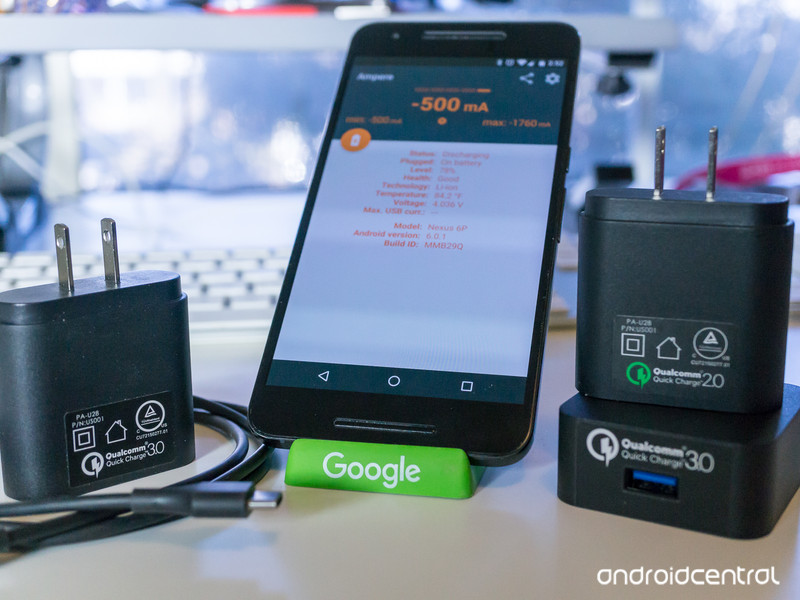
Like gas in a car, you only start to notice battery life when it begins to run out; as long as you stay within a certain (self-imposed) comfort level — and as long as you don’t approach zero — your phone continues to work, and life goes on. I have a Pixel 2 sitting next to me at 55%; it’s been off the charger since 6 a.m. and now it’s closing in on 3:30 p.m. I won’t have to charge it until I go to sleep, of that I am sure. It’s a comfort thing.
Similarly, much ado (and rightfully so) has been made about improvements to camera quality in 2017, from devices like the Galaxy S8 and LG V30 to the champion, the Pixel 2. (Of course a Snapdragon 835 doesn’t guarantee a great camera — see Essential Phone.) Then there’s the gigabit movement, which pushed carriers and manufacturers to take more care about freeing up much-needed spectrum to make all LTE networks more efficient. I could go on.
This brings me to the Snapdragon 845. On the surface, it doesn’t appear to move the needle much in terms of whiz-bang, marketable upgrades. It’s faster and more efficient, sure, but the same line is trotted out year after year. What makes the Snapdragon 845 really interesting is how the minor individual improvements add up to something substantial.
It really is faster
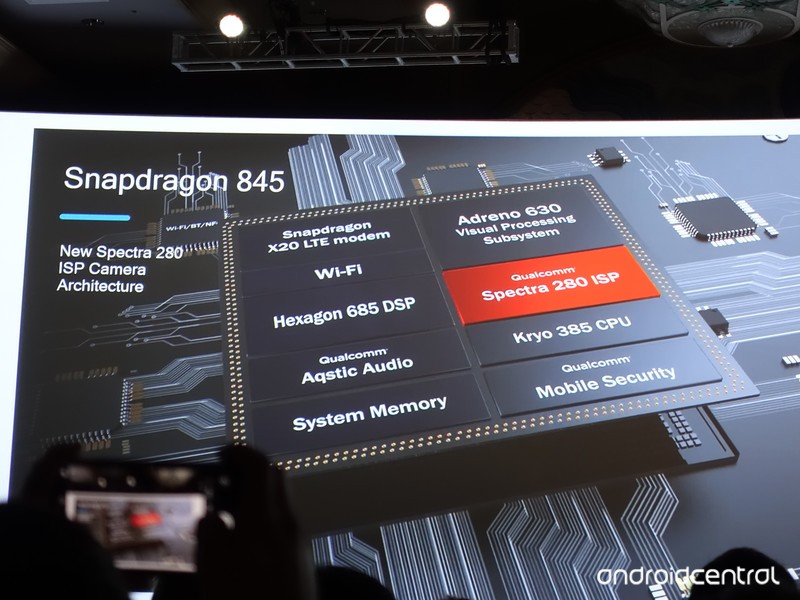
Just because the chip is built on the same 10nm Samsung FinFET manufacturing process as the Snapdragon 835 doesn’t mean the sequel can’t be significantly faster. Back when the Snapdragon 835 was in development, Samsung Foundry’s 10nm process was fairly young, so companies like Qualcomm couldn’t necessarily push them to their full potential. A year later, that’s changed with the Snapdragon 845.
‘Seems faster’ is an annual game we play with our flagships, but the Snapdragon 845 gives us reason to hope.
Not only is the new Kryo 385 CPU built on the newer Cortex-A75 and Cortex-A55 cores (for power and efficiency, respectively), but the designs are brand new, allowing Qualcomm to push clock speeds to 2.8GHz and 1.8GHz. That should turn into meaningful improvements in single-core and multi-core benchmarks, sure, but real-world applications will also feel the upgrades. Qualcomm also sought to minimize power usage by adding two megabytes of L3 cache, which should prevent the chip from having to dig into RAM as often to recall oft-repeated processes, reducing battery usage significantly.
Similarly, the Adreno 630 GPU is promising a 30% improvement in both performance and efficiency. Given that almost every app loaded onto a phone these days is graphically-accelerated, that should bode well for battery junkies and game enthusiasts alike.
The takeaway: The Snapdragon 845 isn’t reinventing the performance wheel, and it’s certainly not going to compete with Apple’s A11 in single-core performance, but Android users will have nothing to complain about come 2018.
There are meaningful improvements to the camera
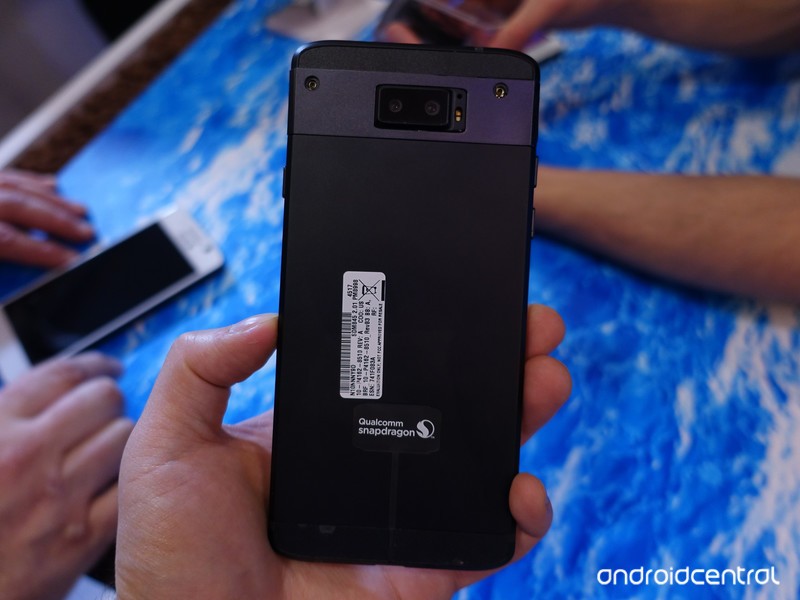
These days, it’s not enough for a phone to have the best sensor or sharpest lens. They’re physically limited by their size, so software — and the silicon pipes that software passes through — have to pick up the slack. A phone like the Pixel 2 has decent hardware credentials, but Google performs a bunch of its own magic behind the scenes.
Qualcomm has a part to play in that process, too: every photo captured on a Snapdragon-powered phone runs through the Hexagon DSP and Spectra ISP. And while running a Snapdragon chip doesn’t guarantee great photos (see the Essential Phone, for instance) it does offer a turnkey solution to manufacturers that are willing to put in the effort to build on an already-strong base.
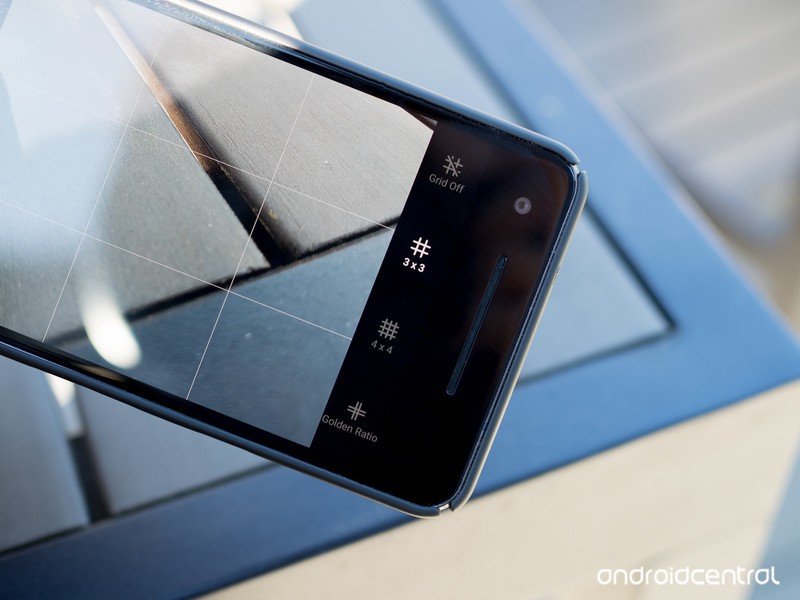
The Snapdragon 845 provides an even stronger base for manufacturers. Yes, being able to capture photos in 10-bit color with a Rec. 2020 gamut is impressive, but there’s no real-world advantage to that just yet. What’s more impressive to me is how the new Spectra 280 ISP facilitates 60fps photo capture at up to 16MP, and uses on-device programming to interpret the photos and bring out their best qualities. The only reason phone cameras are able to get photos as good as they do on such tiny sensors and stubby lenses is through intelligent pipelines that provide APIs the right tools to work. Google has the best APIs (with Samsung, Huawei and LG not far behind) but I’m excited to see how 2018 flagships will use with war chest of tools.
For instance, Apple continues to own Android phones when it comes to slow motion — 1080p at 240fps is still unreachable anywhere in the Android ecosystem — but the Snapdragon 845 gets phone makers closer. They’ll be able to get 480fps slow motion at 720p with HDR detail, which is pretty great (though 1080p slo-mo is still capped at 120fps for some reason). Better yet, Android flagships will be able to draw in 4K video at 60fps next year, which gives videomakers so much more to work with. Imagine an LG V40 with all of the V30’s video capabilities with the option to get 60fps 4K video. Amazing.
The takeaway: Cameras will only get better in 2018, and videographers are in for more than one treat.
Cellular speed and flexibility
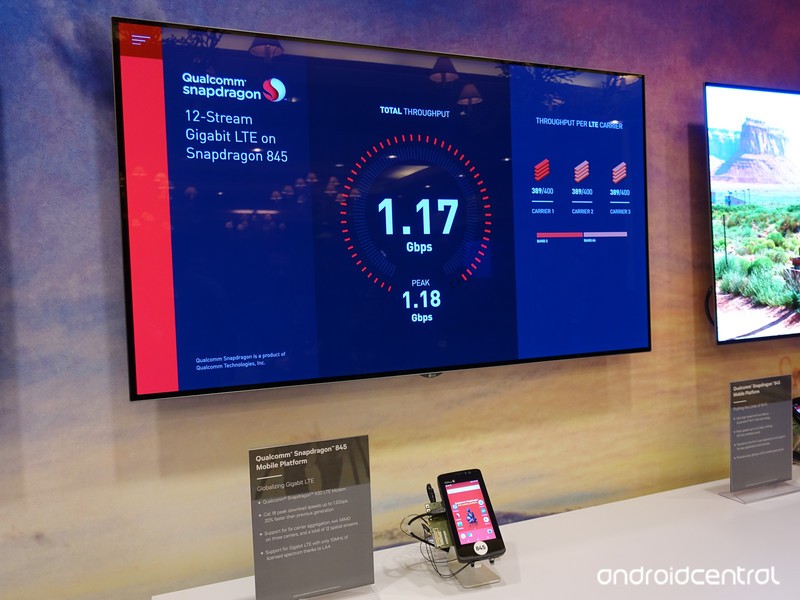
This year, 2017, has all been about gigabit speeds. Next year, that’s not going to change much with the Snapdragon 845. Yes, theoretical maximum speeds will increase to 1.2Gbps, a 20% increase over the 835, but what’s more important, and impressive, is the availability of gigabit to additional carriers.
You’ll probably never reach gigabit speeds outside of a lab, but the Snapdragon 845 makes it more likely you’ll get closer more often.
This comes in the form of alternative combinations of bands to achieve those speeds; with the Snapdragon 835, carriers were limited to just two combinations; on the Snapdragon 845, that numbers swells to eight. Why does this matter? Because in the real world, carriers can’t just switch up or acquire new spectrum to cater to the limitations of a modem; they have made investments in spectrum and equipment and will wait until the phones support the technology combinations in which they’ve invested.
According to Qualcomm, over 90% of the world’s carriers now have the capability to offer gigabit speeds with just 10Mhz of licensed spectrum thanks to the growing support of unlicensed spectrum. Qualcomm’s LAA (License Assisted Access) solution lets carriers glob onto existing 5GHz airwaves — the same spectrum used by Wi-Fi routers — to offer additional capacity in areas that need it, like dense urban environments. The beauty of LAA is that these small cell sites — boxes deployed in large cities to add much-needed relief to low- and mid-range spectrum — can be reused in 2019 and beyond for 5G.
The takeaway: Chances are, your carrier is going to be able to offer gigabit LTE sooner than later.
Making biometrics suck less
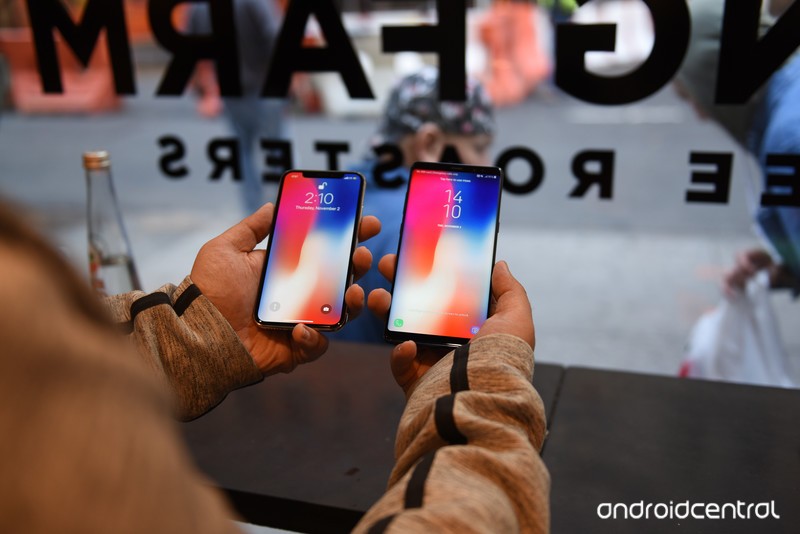
Android phones have a mishmash of unlocking methods, from front and rear (and side) fingerprint sensors to iris scanning, face unlock, and more. Companies, including Qualcomm, have been promising alternatives for years, including under-the-glass finger identification that has eluded even the Apples and Samsungs of the world, but the Snapdragon 845 is more realistic than that: it merely wants to make biometrics suck less.
Get ready for iris scanning that’s fast and reliable in 2018.
Specifically, it’s making the data less vulnerable to attacks, putting it in what’s called the Secure Processing Unit. This is a separate core from the rest of the SoC, with its own power and runtime components, and will store both biometric data and key data components like payment credentials, passwords and personal identification cards.
But the Snapdragon 845 goes well beyond that: Qualcomm recognizes that, despite Samsung being the only big name in the Android space to currently use iris scanning, the technology is poised to expand big-time. And with it, the speed and reliability of what is arguably the best alternative to fingerprint biometrics is going to increase many times over. We’ve already seen speed improve considerably on devices like the OnePlus 5T, but that particular solution makes no claims to security itself, just convenience. With the Snapdragon 845, companies can build unlocking solutions that cater to both.
The takeaway: More secure, faster biometrics? That’s good for everyone.
Totally wireless headphones that last
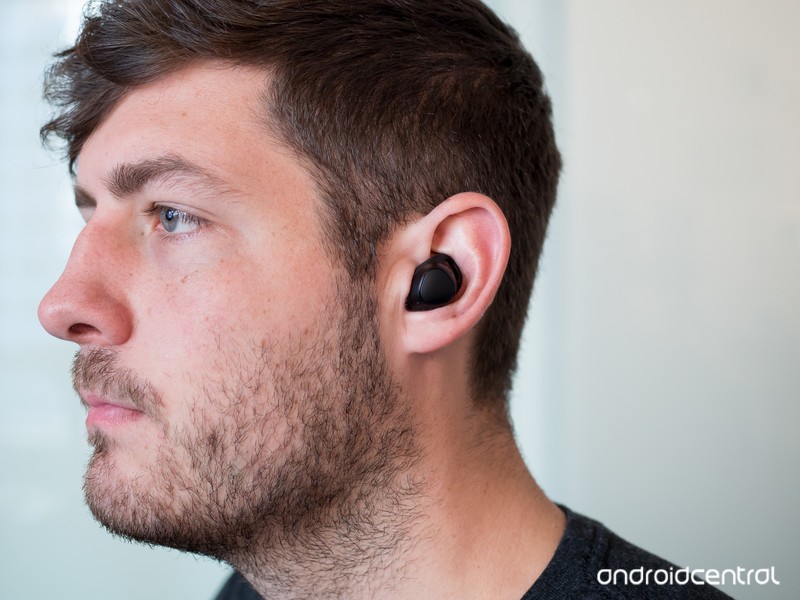
This one hits close to home. With the Snapdragon 845, Qualcomm is adding a piece to the Bluetooth 5 stack that allows certain music apps to communicate with totally wireless headphones independently, as opposed to relying on a “master” to communicate in real-time with its counterpart. This promises to not only cut down on battery usage but potentially eliminate the common issue where one earbud loses sync with its twin.
Qualcomm says that users can expect up to 50% improved battery life from these kinds of increasingly-popular headphones — without having to actually buy new ones. Pretty great if you ask me.
The takeaway: 🎧🔋🎉
Your turn
What are you most excited about with the Snapdragon 845? Let us know in the comments!
Qualcomm Snapdragon 845: Everything you need to know!
Xiaomi is looking for Android 8.0 Oreo beta testers for the Mi A1
Applications are now open for Android 8.0 Oreo beta for the Mi A1.
Xiaomi has committed to delivering the Oreo update to the Mi A1 before the end of the year, and the company is now looking for beta testers to test out the Oreo build before it rolls out to the general public. The requirements are fairly straightforward: you’ll need to submit the IMEI number of your Mi A1, fill out your region, and the duration you’ve used the device.

Xiaomi needs the IMEI numbers as this is how the OTA update will be delivered, and the company states that this information will not be publicly revealed. Interested? You’ll need to download the MIUI Global Forum app from the Play Store, head to the Recruitment tab, fill out the requisite information, and hit Submit. If you already have the app downloaded on your phone, you can directly apply with this link.
If you’re selected, you’ll receive a PM from the moderators. The deadline for the application is 11:59 p.m. (UTC+08:00) December 11, and those selected for the beta test will have to join the Mi A1 discussion group to provide feedback. Hit up the link below for all the details on how to register for the Oreo beta test for the Mi A1.
Register to beta test Oreo for the Mi A1
Grab the Xiaomi Mi A1 for just ₹12,999 in India
A ₹2,000 discount makes the best budget phone in India even better.
The Mi A1 is the best budget phone you can currently buy in India. Retailing for ₹14,999, the phone features robust hardware and uncluttered software thanks to Xiaomi’s collaboration with Google over the Android One initiative. For the next two days, the phone is available for just ₹12,999, a discount of ₹2,000 from its retail price.

The promotion is valid on Flipkart as well as Xiaomi’s own Mi.com portal, and is valid on all three color variants of the phone — Black, Gold, and Rose Gold.
As a refresher, the Mi A1 comes with a 5.5-inch Full HD display, Snapdragon 625 chipset, 4GB of RAM, 64GB of storage, microSd slot, dual 12MP cameras at the back with a wide-angle primary lens augmented by a telephoto shooter, 5MP front shooter, and a 3080mAh battery. The phone has no issues delivering a day’s worth of usage on a full charge, and the camera is one of the best in this category.
Then there’s the software experience, which makes using the Mi A1 a delight. The phone offers a pure Android interface, with a few additions from Xiaomi in the form of the Mi Camera app (to take full advantage of the dual cameras), Mi Feedback to submit feedback about the device, and the Mi Remote app to control devices in your house through the IR blaster.
Xiaomi is set to kick off the Oreo beta test soon, with a stable Oreo update slaeted to arrive before the end of the year. Overall, there isn’t a phone in this segment that offers as much value as the Mi A1, and the ₹2,000 discount makes it an even more enticing option. The deal is valid through December 9, so if you’re in the market for a budget phone, now’s the time to act.
See at Flipkart
Ryan Reynolds is ‘Detective Pikachu’
The Hollywood Reporter reveals that the upcoming live-action Pokémon movie has found an actor for its title role: Ryan Reynolds. In a performance that its sources say is “motion-capture in nature” (think Jar Jar Binks or Gollum) Reynolds will embody Detective Pikachu alongside Justice Smith (The Get Down, Jurassic Park: The Lost Kingdom) as the teen searches for his missing father.
Other details are scarce, but now the movie (which got its greenlight just as Pokémon Go fever exploded last year) is said to start shooting in January, and will include Kathryn Newton (Big Little Lies) in the cast. Just something to think about while you’re watching Deadpool 2 in June.
Source: The Hollywood Reporter
 AIVAnet