


Don’t worry — the FCC doesn’t want a mobile broadband speed cap, just standards
Why it matters to you
The FCC is seeking to oversee the pace of America’s mobile broadband rollout, but it needs a set of standard speeds as a foundation.
The latest “state of the internet” inquiry by the Federal Communications Commission (FCC) is now seeking comment regarding the default speed for mobile “broadband” connectivity. The document lists 10 megabits per second (10Mbps) as the standard download speed, and 1Mbps for uploads. It’s part of the FCC’s yearly investigation into the rate at which internet connectivity is being deployed to the general American population.
At one time, the term “broadband” was used to classify always-on internet access that’s faster than a dial-up modem. In 2010, the FCC determined that basic broadband access had a standard download speed of 4Mbps, and an upload speed of 1Mbps. Those numbers increased in 2015 to 25Mbps for downloads, and 3Mbps for uploads, which still remain effective.
Meanwhile, mobile internet connection speeds are throttled by a device’s proximity to the closest cellular tower. The method is similar to moving a wireless device away from a home network’s router: both have theoretical maximum speeds, but real-world data transfers are significantly lower when traveling through the air. Transfer speeds continue to diminish as you move away from the router.
Given that theoretical speeds and actual real-world speeds are two different animals, the FCC is looking for a solid benchmark to determine if mobile broadband is rolling out to Americans on a timely schedule. This is especially important for determining if internet hardware is being deployed into rural areas in a timely fashion.
“Would a download speed benchmark higher or lower than 10Mbps be appropriate for the purpose of assessing American consumers’ access to advanced telecommunications capability?” the FCC asks. “How should we appropriately consider edge speed in setting a mobile speed benchmark? How should we take into account the important issues of reliability/consistency of service and latency in the mobile broadband environment?”
The FCC determined that in early 2016, 80 percent of the Americans subscribing to a mobile internet service relied on a smartphone, up from 50 percent in the same timeframe in 2012. Actual smartphone sales rose as well, with 90 percent of the new mobile devices sold in the first quarter of 2016 consisting of smartphones. By comparison, smartphones comprised 67 percent of the mobile device sales in 2012.
According to the FCC, mobile internet subscribers saw download speeds ranging from 8Mbps to 15Mbps during the second half of 2015. Now mobile service providers like AT&T and Verizon are beefing up their unlimited data plans to accommodate the growing use of mobile internet services. Americans are supposedly feeding most of their YouTube, Twitter, and Facebook addictions using a mobile device rather than relying on a desktop or laptop.
Ultimately, the FCC believes that we need both land-based and mobile internet connections. Mobile will likely never be faster than wired, and both serve as solutions for different workloads that either work best on a smartphone, or on a desktop or laptop. To that extent, the FCC wants to make sure internet connectivity is rolled out to all Americans as quickly as possible, especially mobile broadband.
Comments regarding the FCC’s proposal for mobile broadband can be made here.
Don’t worry — the FCC doesn’t want a mobile broadband speed cap, just standards
Why it matters to you
The FCC is seeking to oversee the pace of America’s mobile broadband rollout, but it needs a set of standard speeds as a foundation.
The latest “state of the internet” inquiry by the Federal Communications Commission (FCC) is now seeking comment regarding the default speed for mobile “broadband” connectivity. The document lists 10 megabits per second (10Mbps) as the standard download speed, and 1Mbps for uploads. It’s part of the FCC’s yearly investigation into the rate at which internet connectivity is being deployed to the general American population.
At one time, the term “broadband” was used to classify always-on internet access that’s faster than a dial-up modem. In 2010, the FCC determined that basic broadband access had a standard download speed of 4Mbps, and an upload speed of 1Mbps. Those numbers increased in 2015 to 25Mbps for downloads, and 3Mbps for uploads, which still remain effective.
Meanwhile, mobile internet connection speeds are throttled by a device’s proximity to the closest cellular tower. The method is similar to moving a wireless device away from a home network’s router: both have theoretical maximum speeds, but real-world data transfers are significantly lower when traveling through the air. Transfer speeds continue to diminish as you move away from the router.
Given that theoretical speeds and actual real-world speeds are two different animals, the FCC is looking for a solid benchmark to determine if mobile broadband is rolling out to Americans on a timely schedule. This is especially important for determining if internet hardware is being deployed into rural areas in a timely fashion.
“Would a download speed benchmark higher or lower than 10Mbps be appropriate for the purpose of assessing American consumers’ access to advanced telecommunications capability?” the FCC asks. “How should we appropriately consider edge speed in setting a mobile speed benchmark? How should we take into account the important issues of reliability/consistency of service and latency in the mobile broadband environment?”
The FCC determined that in early 2016, 80 percent of the Americans subscribing to a mobile internet service relied on a smartphone, up from 50 percent in the same timeframe in 2012. Actual smartphone sales rose as well, with 90 percent of the new mobile devices sold in the first quarter of 2016 consisting of smartphones. By comparison, smartphones comprised 67 percent of the mobile device sales in 2012.
According to the FCC, mobile internet subscribers saw download speeds ranging from 8Mbps to 15Mbps during the second half of 2015. Now mobile service providers like AT&T and Verizon are beefing up their unlimited data plans to accommodate the growing use of mobile internet services. Americans are supposedly feeding most of their YouTube, Twitter, and Facebook addictions using a mobile device rather than relying on a desktop or laptop.
Ultimately, the FCC believes that we need both land-based and mobile internet connections. Mobile will likely never be faster than wired, and both serve as solutions for different workloads that either work best on a smartphone, or on a desktop or laptop. To that extent, the FCC wants to make sure internet connectivity is rolled out to all Americans as quickly as possible, especially mobile broadband.
Comments regarding the FCC’s proposal for mobile broadband can be made here.
Facebook is going after YouTube with its new ‘Watch’ video streaming service
There will soon be one more streaming option for consumers.
Facebook is already on a lot of folks’ daily internet stops to get their fill of memes and cat photos for the day. Soon, there will be one more reason to stop in. The company announced its Watch platform, and is hopeful that a staple of original programming will entice viewers.
The programming will be available to view on mobile devices, desktop and laptops and smart TVs — though Facebook didn’t specify platforms at launch. Like YouTube, users can subscribe to their favorite channels on what’s called a Watchlist (see what they did there?).

Facebook says:
We’re introducing Watch, a new platform for shows on Facebook. Watch will be available on mobile, on desktop and laptop, and in our TV apps. Shows are made up of episodes — live or recorded — and follow a theme or storyline. To help you keep up with the shows you follow, Watch has a Watchlist so you never miss out on the latest episodes.
Watch is personalized to help you discover new shows, organized around what your friends and communities are watching. For example, you’ll find sections like “Most Talked About,” which highlights shows that spark conversation, “What’s Making People Laugh,” which includes shows where many people have used the “Haha” reaction, and “What Friends Are Watching,” which helps you connect with friends about shows they too are following.
We’ve learned from Facebook Live that people’s comments and reactions to a video are often as much a part of the experience as the video itself. So when you watch a show, you can see comments and connect with friends and other viewers while watching, or participate in a dedicated Facebook Group for the show.
It seems like Watch shows will blur the line between a live stream and a recorded program, which could make for interesting results. Having seen a few too many YouTube comment sections get out of hand, I’m curious to see Facebook will handle the inevitable moderation issues that come with hosting content.
Watch is set to launch with 40 original shows on August 28th. Are you going to tune in? Let us know in the comments below!
LG V30 may include pressure-sensitive haptics like the Galaxy S8
LG V30 to be announced at the end of August, and it may have some unique pressure sensitivity features.
LG’s next flagship, the V30, is set to be announced at this year’s IFA on August 31. LG has a tendency to slowly drip out details in the weeks prior to a big announcement, and the V30 is no exception.

LG has announced it would use technology from Immersion Corporation, a company focusing on haptic technology. The partnership is said to produce an innovative touch experience on LG’s upcoming device.
TouchSense, the technology in question, is said to enable device makers to provide “high-quality, power-efficient tactile effects that enhance the user experience for mobile apps and device UI.” It’ll be interesting what user interface decisions LG incorporates into its version of Android to accommodate and highlight this feature. This could end up being similar to the 3D Touch-like feature expected in the Galaxy Note 8, which in turn may be a more advanced take on the pressure-sensitive home button found in the Galaxy S8.
Looking forward to the LG V30? Let us know down below!
LG V30
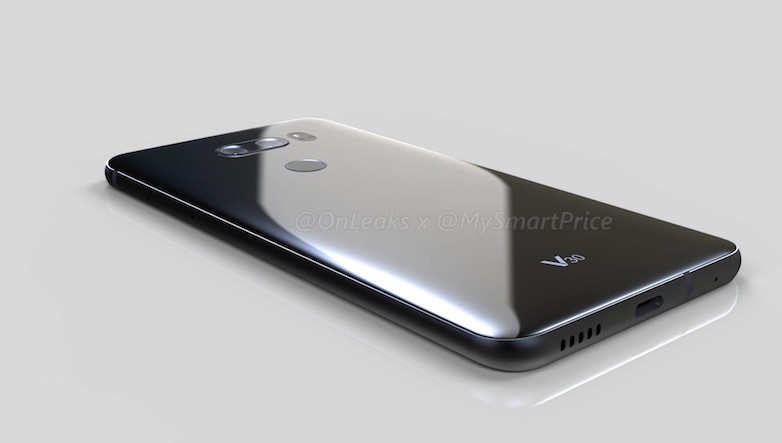
- LG V30: Our wish list for LG’s latest big phone
- Latest render shows LG V30 alongside Galaxy Note 8
- LG V30 will have curved OLED display
- LG V30 will launch on August 31
- Join our LG V30 forums
LG says the V30 will have its best low-light camera ever
LG V30 to incorporate large dual camera system.
LG tends to announce the components for its next flagship in the weeks leading up to announcing the phone itself, and the V30 is no exception. In addition to fancy haptics, LG has also detailed part of the camera setup in the V30.
Like the G6, the V30 will feature a dual camera setup. LG notes that the V30’s main camera will include an f/1.6 lens, allowing 25% more light than cameras with an f/1.8 lens. This will especially help the V30 stand out in low light conditions, an area where a lot of phones traditionally struggle. LG also confirmed the second sensor will be used for wide-angle shots, continuing LG’s tradition of using this feature going back to last year’s G5. LG notes that this sensor will improve edge distortion by 20% compared to last year’s LG V20 despite a smaller camera module overall.

Finally, LG also confirmed the camera array will feature laser detection auto focus and both optical and electronic image stabilization, though it did not say which lenses would feature the stabilization methods. The LG V30 is set to be announced at IFA on August 31, so we won’t have to wait long to find out.
Are you planning on picking up the LG V30? Let us know down below!
LG V30

- LG V30: Our wish list for LG’s latest big phone
- Latest render shows LG V30 alongside Galaxy Note 8
- LG V30 will have curved OLED display
- LG V30 will launch on August 31
- Join our LG V30 forums
PS4 Pro owners get 60FPS Twitch streaming in next update
Sony has been hinting at a big version 5.0 firmware update for the PlayStation 4, but… what does it entail, exactly? Eurogamer has an idea. The site has obtained release notes that hint at at least a few tangible upgrades. To start, PS4 Pro owners will have the option to broadcast their gaming on Twitch at a brisk 60 frames per second. That’s nothing new for the PC crowd, of course, but it’s a big deal if you want to showcase a fighting game or shooter at the same frame rate you see on your TV.
There’s more whether or not you have a Pro. Families now have the option of multiple adult accounts, and you can set parental controls on a per-account basis (teens can have more freedom than their younger siblings, for instance). You can also follow anyone’s account, not just well-known developers and video personalities. And if you’re tired of having to go back to the home screen to see your system notifications, they’ll be available in the Quick Menu.
It’s still not certain when 5.0 will show up, but Sony started taking sign-ups for beta testing in mid-July. There could still be weeks to go before there’s a publicly available version. When it does arrive, though, it could launch alongside a revamped PlayStation mobile app with an upgraded design.
Source: Eurogamer
Facebook Announces ‘Watch’ Platform for Facebook-Exclusive TV Shows
Facebook today announced the launch of an upcoming platform called “Watch,” which is designed to Facebook-exclusive TV shows.
Watch is Facebook’s official platform for shows on Facebook, and it will be available on mobile, desktop, and in Facebook’s TV apps. According to Facebook, its shows are “made up of episodes — live or recorded — and follow a theme or storyline.”
Watch includes a Watchlist so Facebook users can keep up with their favorite shows, and it includes personalization to people find new shows to watch. Show discovery categories will include things like “Most Talked About,” “What’s Making People Laugh,” and “What Friends Are Watching.”
Along with serving as a platform for end users to watch shows, Watch is also a platform that’s meant to help creators and publishers find an audience for their content, build a community, and earn money. In today’s announcement, Facebook outlines what kinds of shows it thinks can be successful:
– Shows that engage fans and community. Nas Daily publishes a daily show where he makes videos together with his fans from around the world. The Watchlist makes it easy for fans to catch every day’s new episode.
– Live shows that connect directly with fans. Gabby Bernstein, a New York Times bestselling author, motivational speaker, and life coach, uses a combination of recorded and live episodes to connect with her fans and answer questions in real time.
– Shows that follow a narrative arc or have a consistent theme. Tastemade’s Kitchen Little is a funny show about kids who watch a how-to video of a recipe, then instruct professional chefs on how to make it. Each episode features a new child, a new chef, and a new recipe. Unsurprisingly, the food doesn’t always turn out as expected.
– Live events that bring communities together. Major League Baseball is broadcasting a game a week on Facebook, enabling people to watch live baseball while connecting with friends and fellow fans on the platform.
Facebook expects Watch to become “home to a wide range of shows” in all categories, from reality to comedy to live sports. Facebook has also already funded some shows, such as “Returning the Favor,” a show that stars Mike Rowe finding people who do extraordinary things for their community.
Facebook says Watch will be available to a limited group of people in the United States on mobile, desktop, and its TV apps. The company is aiming to make it available to additional U.S. viewers “in the coming weeks.”
Tag: Facebook
Discuss this article in our forums
Want to teach an AI to Zerg Rush? Blizzard and DeepMind have the tool for you
Why it matters to you
Training artificial intelligence just got a little easier for developers through a new toolset that uses StarCraft II as a learning environment.
On Wednesday, DeepMind released a set of tools for researching and building artificial intelligence (AI) using StarCraft II as a learning environment. Blizzard first revealed DeepMind’s plans to use the popular sci-fi strategy game at the end of 2016, and said it was currently creating a rich application programming interface (API) just for training AI “agents” within the game.
The new StarCraft II-based toolset includes Blizzard’s Machine Learning API, a data set containing game replays performed by up to 500,000 anonymous users, and an open-source version of DeepMind’s PySC2 toolset. The kit also includes mini-games for developers to test their AI for specific tasks, and a joint paper listing baseline results along with an outline of the environment.
The lure of StarCraft II is that the game makes players really think. It’s all about strategy and defeating a single opponent by managing troops, resources, building equipment and bases, and conquering territories. It’s a war between two minds, starting from selecting a race to dominating the map and defeating the opponent.
AI “agents” (or bots) will approach StarCraft II just like any human. The Ai won’t have access to the back-end, it won’t be able to view the entire playing field from the start, and it won’t have any kind of software-based advantage that in the human world would be considered as cheating. AI agents will be required to make the same decisions in race selection, resource gathering, defense management, and in exploring unseen areas.
“The game also has other qualities that appeal to researchers, such as the large pool of avid players that compete online every day,” DeepMind said. “This ensures that there is a large quantity of replay data to learn from – as well as a large quantity of extremely talented opponents for AI agents.”
Another StarCraft II lure is the number of actions an AI agent can take. For instance, old Atari games only have around 10 different actions, such as up, down. left, right, and so on. In StarCraft II, the game provides more than 300 basic actions an AI agent can take. But according to DeepMind, there are around 100 million possible actions available on a screen measuring just 84 x 84.
As for the mini-games, these can be used by trained and untrained agents. They are essentially “assignments” inside StarCraft II used to see how an agent performs a specific task using a specific technique, such as selecting units, collecting minerals, and managing the camera.
Right now, there’s still progress to be made in terms of agents beating the game. DeepMind said that the strongest of baseline agents, A3C, can’t seem to beat the game’s built-in artificial opponent. According to DeepMind, in order for agents to be competitive, there needs to be a breakthrough in deep trial-and-error learning, and “other areas.”
“Our hope is that the release of these new tools will build on the work that the AI community has already done in StarCraft,” DeepMind said, “encouraging more DeepRL research and making it easier for researchers to focus on the frontiers of our field.”
Don’t get stuck in traffic — get a Serpent Series electric skateboard instead
Why it matters to you
Sick of getting stuck in traffic? With the Serpent Series from Kuickwheel, you can avoid those delays on your electric skateboard.
Getting stuck in traffic could soon be a thing of the past — that is, if you have Serpent electric skateboard. The newest line of boards from San Francisco-based Kuickwheel, the Serpent Series, promises urban commuters the smallest, lightest, and safest electric skateboards around.
First up in the Serpent line is the Serpent-C, a board that the Kuickwheel team says can go just about anywhere you want it to go. Weighing in at less than 3 kilograms (just over 6.5 pounds), this compact board is comprised of Canadian maple wood and bamboo composite, riding on a heated carbon steel trunk. And because the board is IP54 waterproof, you don’t have to worry about treating this vehicle delicately as you make your way through puddles or brave the rain. Plus, the Serpent-C comes with replaceable polyurethane (PU) wheels and a variety pack of stickers, so you can truly have the board reflect your personality.
Then there’s the Serpent-W, heralded as one of the safest electric longboards on the market. With deck lights on the front, back, and sides of the board, you’ll remain visible to other commuters in effectively all situations. “We utilized the best materials – 91A Rebound PU wheels and extreme quiet bearings, aluminum alloy hanger and baseplate, and reinforced rubber riser, to ensure the least shock and best skating experience,” the Kuickwheel team noted on its website.
This slightly larger board can support up to 120 kg (265 pounds) and features an 1800W dual brush-less motor that can hit speeds of up to 25 miles per hour. But don’t worry — if you’re not comfortable enough on a normal skateboard to reach those top speeds, the board also has a beginner mode to gently ease you into the art of skateboarding. For the more advanced, on the other hand, the Serpent-W features an adrenaline-pumping sport mode, too.
The force-sensitive remote control of both boards in the Serpent Series means you can easily control the electrical component of your boards, and allows you to easily power your device on or off, as well as accelerate or slow down. You can pre-order a Serpent-C from Kickstarter now for $200, with an estimated delivery date of October 2017. The Serpent-W can be ordered for $500, and will also be delivered in October.
AI app compares pieces of writing to see if they’re penned by the same author
Why it matters to you
An AI app that identifies the writer of a particular text based on the person’s writing style could be used to fight plagiarism in schools, or help historians identify the true author of texts.
A few years back, Harry Potter author J.K. Rowling penned a detective novel titled The Cuckoo’s Calling under the pen name Robert Galbraith, choosing to conceal her own identity. When people started to notice a couple of stylistic similarities between the “two” authors, experts were called in to investigate — in the form of some smart AI software. Its conclusion? That Rowling was indeed Galbraith, and the author of the book in question. She subsequently revealed her ploy online.
Jump forward to 2017, and a publicly available AI application called Emma Identity promises to do the same thing for whoever needs it. It’s the world’s first web application capable of determining the authorship of a particular text based on a person’s writing style.
“To run the check, one needs to upload a text of at least 5,000 words by one author,” CEO Aleksandr Marchenko told Digital Trends. “Then Emma analyzes and learns the author’s writing style, and can determine whether all the subsequent texts you upload belong to the same author. The technology will render its verdict in the form of a percentage.”
Marchenko explained that the technology combines natural language processing (NLP) and machine learning with the techniques of stylometry, a study of linguistic style rooted in the 15th century. He claims that the result is an AI that’s capable of exhibiting 85 percent accuracy in correctly determining an author.
“More than 50 mathematical parameters stand behind every author’s writing identity,” he continued. “So the issue is of a striking complexity: it’s extremely difficult to define and assess style features of a vexing number of authors, and to implement the extracted knowledge into an NLP technology. Our team of researchers, scientists and engineers have set out to create an algorithm that could surmount that challenge and develop such a technology that could operate on minimal sets of texts and reach an accuracy level worthy of a successful commercial product.”
While you may simply want to upload some sample texts for fun, Marchenko thinks that the real benefit of Emma Identity will be as an anti-plagiarism tool for use in schools, colleges, and universities. It could also be useful in fields like publishing and as a tool for law enforcement. Historians and literature researchers could also benefit from it.
Well, we guess “plagiarist” is yet another job to suffer in the face of the AI takeover! Is nothing sacred?

