


Essential’s startup advantage might come back to haunt it
“Most companies would get a stage, and we’d have lights and music and everything else,” joked Andy Rubin as he addressed a group of reporters. “But that really isn’t our style.” He was casually dressed in jeans and a blue T-shirt with a coffee mug in one hand as he stood in a lobby-like room. The setup was located just a few feet from an adult-size slide and overlooked a farm of cubicles on one side and a cafeteria on the other. It wasn’t the typical setting for a major product launch.
But a product launch it was. We were gathered at Playground Global — a startup incubator that Rubin founded after he left Google — for the unveiling of what is perhaps his most important creation since Android. It is the PH-1, the first smartphone from his new company, Essential, which itself was hatched out of Playground. This is the phone (and company) that Rubin thinks is innovative enough to take on big players like Apple and Samsung. But as big a name as Rubin is — you don’t get much bigger than the founder of Android — the question remains whether the plucky startup can really take on the smartphone Goliaths (It wouldn’t be the first to try.)
Essential was created 18 months ago, and it was born out of frustration. Playground Global invests mostly in hardware companies, and over time, Rubin and his team started to notice that certain companies just didn’t seem to exist. “What are the deals that aren’t coming in through the front door?” Rubin wondered. “What are the companies that we think should exist based on our experience and our expertise, but that we’re not seeing?” And because they didn’t see a phone company, they went ahead and created one themselves.

“Fundamentally, people [on the team] were unhappy with a lot of the products they were using in their daily lives,” Rubin said. “Smartphones were just kind of incremental. It’s a saturated market.” What especially concerned Rubin was that there were only really two players in the industry: Apple and Samsung. “Everybody else kind of rolls off into the long tail.”
In a blog post published in May, Rubin wrote about a late-night conversation he had with a friend, wherein they commiserated about the current state of technology, including the lack of choice and the abundance of unnecessary features.
“I am partly responsible for all of this,” he wrote. “For all the good Android has done to help bring technology to nearly everyone, it has also helped create this weird new world where people are forced to fight with the very technology that was supposed to simplify their lives. Was this what we intended? Was this the best we could do?”
“That’s not how the auto industry works,” Rubin said at the recent media event. It’s rare that you would have the same car as everyone else, he continued. With phones, however, it seems that for most people, the choice boils down to one of two companies. “What went wrong, where we only have two choices?”

Essential, in contrast, is about choice, Rubin says. And he believes that because Essential is a small and nimble startup, it can achieve customer satisfaction in a way that the big companies can’t. “It’s a company for its customers, and we’ll never lose track of that.”
One example of this is that Rubin wants customers to feel like the devices are their own to use as they please. “They should feel a great ownership of it,” he said. “We’re not going to force anything down the consumer’s throat.” For example, he says, a company shouldn’t force a specific music service on you when you buy a phone. “I don’t need someone else’s music service shoved on my phone because it’s some business opportunity.”
Rubin also believes that Essential should have an open-source philosophy, which is why the phone runs on pure, unadulterated Android. The company is also preparing to launch Essential Home — an Echo-like device that runs on Ambient OS and is also open source. Indeed, this Home device is compatible with existing voice assistants like Siri, Google Assistant and Alexa — so long as their respective makers are willing to play nice with Essential’s hardware. That’s not to say the company won’t eventually develop its own voice assistant — there are hints that it probably will — but even then, Rubin and team want you to use the assistant you’re most comfortable with.
Another underlying tenet of Essential is that premium materials should not be unaffordable. This was made evident to us as we toured Playground’s Hardware Lab, which is where companies are invited to make prototypes of their hardware ideas. We were shown first-hand how the PH-1 was built, and why the PH-1 is made out of titanium and ceramic, some of the most luxurious and durable materials ever used in a mass-market phone.

This, Essential is proud to say, is not the kind of thing that an Apple or Samsung could possibly do. The reason is because machining titanium is often expensive and the process of crafting the perfect ceramic shell is hugely time-consuming. Essential’s trick is to find ways around it. The company found a small German shop that could make titanium shells out of injection molds instead of milling. As for ceramic, the company is able to make the phones at a much smaller scale, and so, therefore, doesn’t require as many resources. Of course, big companies like Apple could certainly try to make products at a small scale too — perhaps as a limited edition release — but sometimes a material is so difficult to work with, it often isn’t economically wise to do so.
“The challenge with ceramic is that it’s like pottery,” wrote head of industrial design Linda Jiang in a blog post published in May. “You have to fire it, and when you do, the material shrinks 25 percent.” What’s more, she told reporters that the color-matching in ceramic is not like that of paint — a red and blue won’t necessarily give you purple. With ceramics, that mix could result in an entirely different color altogether. Plus, each color has to be baked in its own oven, which is basically its own building. “We spent months and months, but we eventually homed in on a process that allowed us to get costs down to the point where it’s both feasible and flawless,” she wrote.
Scott Croyle, the chief design and product officer of Nextbit, had positive things to say about Essential (Nextbit is the startup company behind Robin, an Android phone with cloud integration). Croyle also used to work for HTC as a senior vice president of design and is therefore familiar with the intricacies of both big corporations and small upstarts, especially when it comes to making phones.

“As a new brand with smaller volumes, you can move much quicker and afford to make bolder decisions,” he says. The manufacturing processes with titanium and ceramic, for example, have been on the cusp of being ready for high volume for awhile, but larger companies can’t take the risk. Sometimes it’s because there’s only one vendor, he says, or sometimes the supplier just doesn’t have the resources for mass production. “A smaller company can be nimble and can often drive these innovations,” he says.
One particularly intriguing aspect of the Essential phone design is the accessory pins on the back, which can be used to attach all manner of different compatible accessories. It’s similar to how MotoMods work with the Moto Z, except the difference here is that instead of taking up the entire back plate, it’s just a little magnetic dock area at the top of the phone. Essential’s first phone accessory, a tiny 360-degree camera that can record 4K videos, easily snaps onto the back with hardly any effort at all. The accessory pins also provide power, so you could conceivably attach a charging dock or an extra battery to it in the future.
The addition of this dock sounds relatively simple, but the decision to do this actually influenced the entire design of the phone. At first, the engineering team wanted the phone to have a more curved hourglass shape. But, after realizing that they would have to have all the accessories accommodate that shape, they decided against it. After all, they wanted these add-ons to outlast the phone. For example, the Home device’s accessory docking pins are identical to the PH-1’s.

There are other Essential perks, too. You’re guaranteed Android OS updates for two years, with monthly security updates for three years. There will be new wireless accessories every few months, and the device comes standard with 128GB of storage. This, Rubin says, is the phone he’s always wanted.
Looking forward, Rubin wants to delve into artificial intelligence. Playground Global has mostly invested in companies that have some role in machine learning and robotics, and Rubin has said in the past that he thinks the next big platform after internet and mobile is AI. But as the Essential PH-1 is simply using stock Google, it doesn’t have a whole lot of that yet. So it won’t be surprising if Essential comes out with a kind of AI assistant akin to Siri or Alexa in the near future.
With a premium phone, a smart assistant in the works and over $300 million in funding, Essential might not sound like a traditional startup. But Rubin says it’s not so unusual. “Starting a consumer electronics company today is easier than it’s ever been,” Rubin says. “It’s getting easier and easier to make hardware.”
“At Essential, we are up against industry giants that employ tens of thousands of workers to develop and deploy smartphones around the world,” Rubin wrote in a blog post this week. “There is a significant advantage to that kind of scale, but we also know that when a company gets to a certain size, the desire to create a customer-first experience sometimes takes a back seat to other considerations, like profits and corporate agendas.”

But what Rubin is also saying is that as a startup, Essential can’t make as many products as an Apple or a Samsung could. In other words, don’t expect millions of unit sales in the first quarter. Besides, that’s not the point. In an interview with Wired Magazine, Essential’s head of product architecture, Jason Keats, said that Essential is not for everybody. “You know it’s going to be a little exclusive,” he said to the publication.
It’s an audacious move, but Rubin seems confident. Other smartphone companies have tried to do the same, of course, and he acknowledges their success — he has special respect for Chinese companies like Xiaomi — but he says that’s no reason someone else shouldn’t also give it a shot.
“I applaud what [Essential is] doing,” added Croyle from Nextbit. “Mobile has gotten boring — there’s one US-based company (Apple) and one Asian company (Samsung) that are relevant at the moment and most of the phones don’t stand out.”
Croyle said that it’s often extremely difficult to make significant advances in design. “I’m super familiar with this,” he said. “When I was at HTC, we did the first all-metal unibody. At Nextbit, we worked hard to create a phone that not only felt original but had a beautiful design.” Based on these experiences, he said he likes how Essential was pushing boundaries with the titanium and ceramic materials as well as the near borderless display.

“I’m just trying to figure out why Tesla became successful,” Rubin said. “If you look at Tesla, when it was formed, there was Ford, GM, and everyone else […] They brought a different take on what a car is; a more modernized approach. They weren’t in the seven-year design cycle that everyone else was stuck in.” This, he says, shows how established companies can stagnate without innovation.
“It’s a big, bold effort to do what we’re doing,” he said. “It’s a highly competitive market, and a thousand things could go wrong.” And Rubin is willing to take the risk.
However, all of this is still conjecture. We still don’t quite know how good the phone is, and if it’ll meet up to everyone’s lofty expectations. Plus, startups like these are a gamble. Sure, small companies have the flexibility of trying out new technologies and innovative designs, but it also means they probably don’t have enough resources to absorb potential mishaps like the Note 7 fiasco.
Other companies like OnePlus and Nextbit have tried to take on the smartphone giants before, with mixed results. OnePlus is doing fine, but it still has a pretty niche fanbase. Nextbit, on the other hand, had to be saved by Razer to meet rising costs. It’s unclear if Essential will be any different. Will it be the Tesla of mobile, as it hopes, or will it be just another phone company? It’s a little too early to tell.
Images: Chris Velazco / Engadget
LinkedIn’s app can record and share video, not that you would
Picture the scene: Your boss calls a snap meeting. You, being the diligent worker, whip out your phone and start recording. Your colleagues look on in bewilderment. “What are you playing at?” your boss asks sternly. “I’m recording our sesh for LinkedIn. It has video now. Trust me, it’s the next big thing.” How do you think that’s going to go down? Unless you work for a YouTube vlogger, probably not well.
As you might have gleaned from that preamble, LinkedIn is adding a video creation tool to its app. Give it an update, and you might see it within the status box. Tap the little movie icon and you’ll be able to record and share a clip, up to 10 minutes in length (according to Inc.).
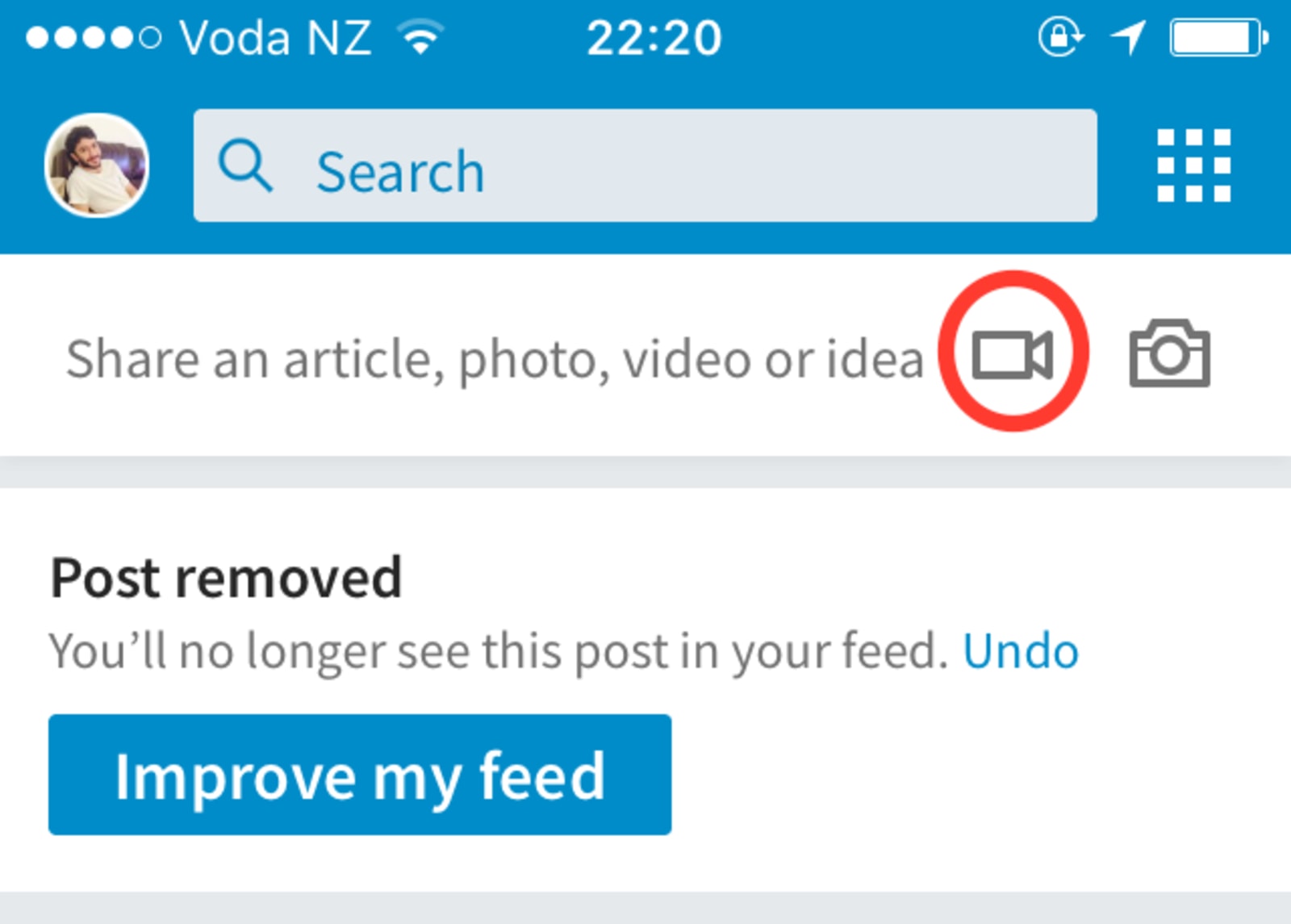
Everyone’s integrating video, so why not LinkedIn? Well, the problem is LinkedIn isn’t everyone (by that, we mean it isn’t Facebook or Twitter). You don’t go on LinkedIn to procrastinate, or to check images or clips from your friends. You go there to update your resume, accept connections, and maybe stalk your ex-colleagues (anonymously, of course). Then you log off, and forget about it, until it nudges you via email to check your notifications…again.
Okay, so there are some scenarios where this could work. LinkedIn thinks you should use video to share “hacks that will increase your productivity, front row seats at a conference, [or] an insider’s perspective on the day’s news.” Jesus, no, not those scenarios. Let’s face it, unless your a big-shot at a Fortune 500 company, no one cares about your opinions. Especially on LinkedIn, which is all about mentorship and amassing contacts (it’s called networking — only, you don’t speak to the majority of those people). Also, LinkedIn already handed video to the bigwigs, and we’ve heard little about it since, so maybe that didn’t work out either.
Instead, video may end up being used in regards to recruitment. Companies could use it to give you a first-hand glimpse inside their headquarters. That’s the kind of stuff people are actually interested in, especially when it involves a big firm. For example, if Apple used it for short tours around Apple Park. Or, if [insert tech behemoth] used it for similar purposes.
The same goes for candidates. Perhaps, people will use it creatively when seeking a job opportunity. But, that’s a tricky prospect. Ultimately, that’s the dilemma LinkedIn faces. Privacy concerns are one thing, but it’s mainly just not a playful enough medium. That’s okay, though. We don’t want it to change. Please LinkedIn, don’t go all silly on us and start introducing lenses and 3D emoji.
Source: Jonathan (Jasper) Sherman-Presser (LinkedIn)
How to watch the eclipse, regardless of where you live
You’ve been hearing a lot about the eclipse, but now that it’s finally almost here, do you know how you’re going to view it? If you live in the contiguous US, whether you’re in the area that will see a full solar eclipse or not, you have multiple options on how to watch this event.
If you’re planning on being in the path of totality, the area from Oregon to South Carolina where the moon will fully obscure the sun and you’ll experience a full solar eclipse, it’s pretty straightforward. If you’re driving to a spot along the path of totality, find one with a good, wide viewing angle in advance and get on the road as early as possible on Monday. Traffic is going to be an utter mess, so plan on a lot of extra time to reach your destination. (You should also expect a traffic jam on the way home. Bring snacks, basically.)
How early you should plan on arriving depends on what you want to see. It takes about an hour and a half between when the moon first begins to cover the sun and the actual total eclipse. My recommendation is to just arrive as early as possible to make sure you grab a good spot. If you’re trying to time it precisely (say, if you can literally see the event from your backyard), make sure you’re basing your plans on the time that totality will occur and not when the eclipse first starts. If you’re not sure when that is, make sure to look it up based on your location.
Bad weather could also interfere with your view of the eclipse. If the forecast doesn’t look promising, allow yourself enough time to drive to an alternate viewing location. If you’re going to all this trouble to watch this event, you’ll want to make sure that it doesn’t literally rain on your eclipse.

For those who aren’t in the path of totality, there are still ways to watch and enjoy the eclipse. While seeing a partial eclipse isn’t nearly the experience of a total solar eclipse, it’s still worth stepping away from whatever you’re doing to watch. The really cool thing is that everyone in the continental United States will be able to see something, even if it’s not a view of the fully obscured sun.
But before you run outside, make sure you have eclipse glasses, even if you’re only viewing a partial eclipse of the sun. We all know not to stare at the sun, but sometimes excitement can get the better of us. If you’re just seeing a partial eclipse, you might think that the sun is partially obscured and not as bright, and therefore it’s safe to look at. That is not how it works. If you stare at a partially eclipsed sun without proper eyewear (and sunglasses don’t count as proper eyewear), you will damage your eyes. The only time during an eclipse that it’s safe to take off your eclipse glasses is during those couple of minutes of totality. If you aren’t seeing a total eclipse, it’s never safe.
If you don’t have eclipse glasses, there are still places you can run out to buy them, but supplies are very low. Don’t buy eclipse glasses off the back of a truck, though. They could be counterfeit and thus provide no protection. The American Astronomical Society has a list of reputable vendors, including chain stores such as Toys R Us, that sell quality eclipse glasses. Schools, museums and other educational institutions also may have them in stock. Many of these vendors are selling out as the eclipse approaches; if you can’t find a pair of glasses or solar viewers, try making a DIY solar viewer or a solar viewing projector.

You may be more interested in a virtual stream of the total eclipse than seeing a partial one in real life. While it’s no substitute for the real thing, I can’t blame you for that. Luckily, there are countless ways to stream the eclipse to your computer or mobile device, depending on what exactly you’re looking for.
NASA will have a whole livestreaming bonanza happening from 12 noon to 4 PM ET that includes live coverage from 12 locations, even the International Space Station. You can see it on NASA TV, as well as on Facebook Live, Periscope, Twitch or Ustream, through NASA apps or on the web.
If you’re interested in VR, then CNN is probably your best best. They’re streaming the eclipse from multiple locations in 360-degree 4K video. If you have an Oculus Rift or a Samsung Gear VR, watching this feed should be a no-brainer. They’ll also have astronaut Mark Kelly as co-host of their programming, which starts at 1 PM ET. If you don’t have a compatible VR device, you can also see it on Facebook Live, CNN.com and through CNN’s mobile apps.
But wait, there’s more! Twitter and the Weather Channel are joining forces to track the solar eclipse across the country. This is more of a virtual Twitter party than straightforward viewing, but it will incorporate all kinds of footage, from drone video to tweets. You can follow along with that endeavor starting at noon ET.
Regardless of where you’ll be or how you watch it, it’s worth taking a few minutes out of your day to take part in this historic event. And if you’re lamenting the fact that you aren’t in the zone of totality, you’ll have another shot when a full solar eclipse passes over the United States again in 2024.
Images: Getty Images (Eclipse); Heinz-Peter Bader / Reuters (Crescent moon)
Apple mulls pricey early movie rentals right after theater debut
Apple and Comcast are the latest names in the seemingly never-ending struggle to bring movies home faster. Bloomberg reports that the tech behemoth and telco, independently, are in talks with movie studios to offer $50 rentals roughly 17 days after their theatrical debut. Waiting four to six weeks would save you money, as the price would drop to $30 according to Bloomberg’s sources. This the same structure we’d heard earlier this year when Warner Bros. and Fox stepped into the fray. The deals could be finalized by early next year, apparently.
Movie theaters have a vested interest in maintaining that exclusivity window and keeping it as wide as possible. Concession sales, not tickets, do the lion’s share of keeping the lights on. If a family can make their own popcorn and watch a movie a few weeks after its premiere for less than the price of four tickets, that’s going to cut into a theater’s profits pretty dramatically.
The deals with Apple and Comcast would give movie studios leverage to push forward with movie downloads. “Those pacts would give studios a way to issue an ultimatum to the theater chains: Agree to a deal, or we’ll start selling movie downloads anyway,” Bloomberg writes. Theaters could potentially boycott any movies that’d be available for download as retaliation.
Just this week AMC said it would fight tooth and nail against MoviePass, the subscription service offering a $10 monthly subscription for “unlimited” theatrical movies.
“We are actively working now to determine whether it may be feasible to opt out and not participate in this shaky and unsustainable program,” the chain said.
If this all sounds familiar, it’s because the fight for premium video-on-demand movies has been going on since at least 2011. But Apple and Comcast have a little more clout than Napster cofounder Sean Parker, so maybe this will actually happen.
Source: Bloomberg
Remember software’s dearly departed with Product Graveyard
Vine. Sunrise. Google Reader. Over the years, we’ve seen many pieces of software thrown on the virtual garbage pile. The reasons behind their demise are numerous: Sometimes a startup is acquired, only to be have its indie darling absorbed by another, larger and more strategically important service. Other times, it’s because the product isn’t financially viable. Regardless, we miss them. To celebrate their digital lives, designer Duong Nguyen has created the Product Graveyard. As the name implies, it’s a simple site filled with pithy “obituaries,” explaining each product’s lifespan, “cause of death” and the reason why it should be remembered.

So if you’re feeling nostalgic, take a look and rediscover some relics that have probably started slipping from memory. Windows Live Messenger, LimeWire, Club Penguin — there’s something that will pull on the heartstrings, no matter what age you were when you first adopted the internet. Notably, each entry has a few “featured alternatives” if you still haven’t found something to replace Yik Yak or your trusty Zune. The list is large, but far from perfect, so you can also submit an “Autopsy Report” for any notable omissions. Personally, I think there should be an entry for Sparrow. What about you? Share your best suggestions down below…
Via: Design Taxi
Source: Product Graveyard
Chipotle’s Order-Ahead App Will Accept Apple Pay Later This Year
Deloitte this week announced it has been selected to redesign Chipotle Mexican Grill’s mobile ordering app for iOS and Android.
Chipotle plans to launch the new apps in the fall of 2017, and one of the key new features will include in-app support for Apple Pay and Android Pay.
The burrito chain launched its mobile ordering app way back in 2009, allowing customers to order ahead of time and skip the line upon arrival.
Existing payment options include credit cards and Chipotle gift cards.
Chipotle’s app is free on the App Store [Direct Link] for iPhone, iPad, and Apple Watch in the United States, Canada, Germany, France, and UK.
Related Roundup: Apple Pay
Discuss this article in our forums
Self-driving truck that’s built to crash comes to Colorado
Tech and automotive companies have quietly been trialing autonomous trucks since 2015. Thus far, these tests (from the likes of Daimler and Uber) have been inconspicuous enough to go unnoticed by other drivers. But, a new kind of driverless truck is designed to stick out like a sore thumb. And, if by chance it ends up serving its purpose, it could make an almighty racket. While you read this, an autonomous impact protection vehicle is making its way around Colorado. You know the type: They’re big, yellow, and tend to be deployed behind road workers to prevent you from crashing into them. One more thing we should mention: They’re designed to take the full brunt of a collision. They do this via a massive metal bumper on the back.
Like other self-driving trucks, this modern safety vehicle takes a traditional body (with subtle mods) and adds autonomous tech to the mix. The software comes from Kratos Defense and Security, a company that specializes in military drones and missile targeting systems. On the road, the truck crawls behind a regular car hooked up to precise GPS. This vehicle emits a signal that the robotruck uses to maintain its speed, position, and heading. On top of that, it uses its own radar to avoid obstacles.
Its goal is to save lives and — by going driverless — it also ends up being even safer. How so? Well, by removing its own driver from the equation. Driving a car that’s designed to crash sounds like an insanely dangerous occupation. Yet, to this day, humans are the ones carrying out this task around the country. That’s something the Colorado Department of Transportation (DOT) is intent on changing. With this trial, the state is now the first to test a connected impact protection vehicle without a support driver at the wheel.
“People often talk about the coming job displacement of automated vehicles…well this is actually one job I want to get people out of,” Shailen Bhatt, Colorado DOT’s executive director, told Wired. “The idea that we have a truck thats job is to get hit, with someone sitting in it, well that doesn’t make a lot of sense.”
Next up, the aim is to get the vehicle performing other tasks. One day, similar robotrucks could lay down road stripes. If Kratos has its way, they’ll also be utilized as tugs in shipping docks, as garbage trucks, and road sweepers. Not quite as fancy as the concept cars showcased at conventions, but a (quiet) revolution in their own lane.
Source: Wired
BT Sport to stream its Saturday footy results show on Twitter
Twitter has recently been the forum of choice for many weird, wannabe-viral transfer announcements, but BT will soon be taking to the social network for more serious football coverage. Just as we start digging our teeth into the new Premier League season, BT Sport will begin livestreaming its news, analysis and footy results show “Score” on Twitter for any Brit to watch for free.
The Twitter tie-in kicks off this Saturday on @btsportscore, where pundits will begin reacting to results and news from around 2:45PM. It’s more or less an informative, weekly advert meant to tempt you into paying for the full BT Sport package, of course; or, as BT puts it, “an opportunity to sample a slice of BT Sport’s premium schedule.”
Both BT and Sky have engaged in similar tactics before. Last year, BT broadcast both the Champions and Europa League finals on YouTube, while Sky tweeted goals and other highlights as they happened, as well as streaming its own footy results show on Facebook and YouTube. For BT, though, it’s especially important to show non-subscribers what they’re missing, having earlier this year made the previously free BT Sports channels a paid extra for BT TV customers.
Source: BT
EFF warns blocking neo-Nazi sites may threaten free speech
The EFF has criticized internet providers for blocking the neo-Nazi website The Daily Stormer, saying it violates the principals of free speech and could backfire. “We strongly believe that what GoDaddy, Google and Cloudflare did here was dangerous,” it said in a blog post. “We would be making a mistake if we assumed that these sorts of censorship decisions would never turn against causes we love.”
The Daily Stormer has long espoused racist, anti-feminist and antisemitic views, including Holocaust denial. GoDaddy only elected to drop its name registry recently, however, after it published an offensive article about Heather Heyer, who was killed during violent protests at Charlottesville. The site then shifted to Google’s hosting service, which also quickly banned it. Both companies said the site violated their terms of service by inciting violence.
In its criticism of those companies, the EFF said a “telling quote” about the situation came when Cloudfare — a service used by Stormer not for hosting, but to protect it against DDoS attacks — also dropped it. “Literally, I woke up in a bad mood and decided that someone shouldn’t be allowed on the internet,” Cloudflare’s CEO said.
The EFF acknowledged that the “situation is deeply fraught” legally and otherwise. “All fair-minded people must stand against the hateful violence and aggression that seems to be growing across our country,” the EFF wrote. “But we must also recognize that on the Internet, any tactic used now to silence neo-Nazis will soon be used against others, including people whose opinions we agree with.”
We must also recognize that on the Internet, any tactic used now to silence neo-Nazis will soon be used against others, including people whose opinions we agree with
Like the EFF, the ACLU often stands up for hate groups that no one else will defend, but its own members have criticized its defense of Charlottesville protesters. “I am deeply disturbed by the ACLU’s decision to oppose local officials in Virginia who sought not to prevent the recent Charlottesville rally but to locate it in a place that would make it easier to keep all in attendance safe,” wrote one anonymous ACLU member.
Despite the EFF’s first amendment critiques, the list of businesses that have shut out The Daily Stormer and other fascist, white supremacist and neo-Nazi sites from funding and promotion is getting large. Mastercard, Visa, American Express and PayPal have cut off payments, and music services including Spotify, Google and Deezer have vowed to remove music from hate-espousing bands.
All of those businesses operate internationally, but the EFF’s argument is based on the US First Amendment rules. Those allow just about any speech, as long as it doesn’t present a “clear and present danger.” However hate speech laws are much tougher in countries like France, Austria, Germany and Canada — Holocaust denial, for instance, is illegal in 14 nations.
Via: CNET
Source: EFF
Essential’s PH-1 strives to be more than just another Android phone
Andy Rubin rose to fame for his role in creating Android, and even after leaving Google, he couldn’t quit phones completely. Now he’s back with his new company, Essential, to show the world’s best phone makers how it’s done. I’ve spent a few days playing with Essential’s first device, the PH-1, but that wasn’t enough time to fully understand the extent of the startup’s impressive work. For now, let’s take a closer look at what Essential has delivered, and how it performed over the first few days.
The first thing anyone will notice about the PH-1 is its 5.7-inch screen, or, more accurately, how it stretches almost completely over the phone’s face. Other phones, like Xiaomi’s Mi Mix “concept,” might technically have smaller bezels, but I doubt most people would care; there’s something sumptuous and even a little thrilling about a phone that’s basically all screen. It sometimes looks as if someone cut an actual photo down to these weirdo dimensions and plopped it onto a titanium slab where the screen would go. Still, it’s not perfect: There are brighter displays out there, and colors look slightly washed out compared with AMOLED panels.
The notch cut out of the top for the 8-megapixel camera is a little peculiar too. The important thing to note is that it never really gets in the way, thanks to how Android fills up the notification bar from the sides in. Not every app takes full advantage of this unique screen, though. The phone dialer and Chrome, not to mention popular services like Twitter and Spotify, look like typical, boxy apps that don’t spill across to the phone’s top edge. It’s definitely a bummer to get the full-screen effect only sometimes, and it’s not clear what kind of work, if any, developers will have to do to ensure compatibility. Given how young Essential is (just 18 months old), I wonder how many app developers would even take the time.

Beyond the screen, the PH-1 is a dense slab of a smartphone. And I mean it when I say “slab” — not only is it reassuringly weighty, but it lies totally flat on a table no matter which side is facing up. This was a very deliberate design choice, and after years of using phones that curve at least somewhat to fit my hand, it took a little getting used to. The company also assured me that the phone’s boxy ceramic-and-titanium build can take a lot of punishment, and it feels almost impeccably sturdy, but who could blame me for being concerned? Xiaomi’s Mi Mix was also made of ceramic, but that didn’t mean its screen was impervious to damage.
Oh, I should also point out that the glossy black model I received picked up fingerprints faster than almost any other phone I’ve tested recently. If I didn’t know better, I’d think the PH-1 was sucking my greasy fingerprints off from across the room.

Chris Velazco/Engadget
While we’re talking about the phone’s back, you’ll notice two tiny pins on the top right. Think of it as Essential’s answer to Motorola’s Moto Mod connector … just much smaller. That’s a good thing too: The placement of the Moto Mod connector on the bottom of the Moto Z series means Motorola is stuck building similar-looking phones for a while to ensure compatibility. Essential wanted to avoid designing themselves into a corner, and it seems to be working so far; any of the magnetic accessories that stick to the phone will also be able to attach to the forthcoming Essential Home assistant. Unfortunately, while the company has said it’s preparing a hardware development kit for would-be accessory makers, the company reps we spoke to wouldn’t speculate on what future magnetic attachments would be able to do.
Essential also jumped on the dual-camera bandwagon for its first smartphone, and this is where things start to get a little dicey. We’ve got one 13-megapixel color and one 13-megapixel monochrome sensor working together here, and photo quality has been mostly decent so far; by default, the phone combines color information from one sensor and detail data from the other. It’s not exactly a novel trick — Huawei’s recent P-series phones do the same thing — and there’s a noticeable delay when you try switching between the color and monochrome modes. Performance is fine in good light, but my first batch of low-light shots were a little behind the curve compared with other premium smartphones.

Chris Velazco/Engadget
For better or worse, shooting with the Essential is dead-simple. I say that because there are a grand total of four shooting modes in the custom camera app, including Auto, monochrome and the option to shoot a slow-motion video clip. (Don’t worry, you can also shoot normal video at up to 4K.) Meanwhile, a trip to the settings reveals only two options: one to toggle the shutter sound and one to store location data in a photo. I appreciate the simplicity, but a little extra control would have been nice. Coincidentally, the night before we published this story, Essential pushed out a new software update, which mostly impacts the camera, so I’ll see how the shooting experience changes.
Simplicity, as it happens, was Essential’s goal for the software experience too. If you were wondering what the father of Android would do with software when given the chance to build his own phone, the answer is essentially “nothing.” Rubin said he was pleased to be a customer of the product he’d spent years of his life working on, so we’re left with a stock build of Android 7.1.1. Aside from the stripped-down camera app, the only real difference I’ve noticed so far is that the notification bar is thicker than normal to fit the 8-megapixel camera that sticks into the screen. There’s also a little extra space at the top of the screen in certain apps, like Spotify. I’m not really sure why. (Essential hasn’t yet responded to my request for comment.)

Chris Velazco/Engadget
The software situation changes slightly when you activate the PH-1 with Sprint. Once you pop in the SIM and complete the process, two extra apps appear: My Sprint and Tidal. Considering how clean Rubin wanted his phone to stay and just how bad other carriers are with bloatware, I’d say the Sprint deal actually worked out pretty well. On a related note, Sprint is taking marketing the phone pretty seriously: They’re building impeccably-designed stands to go in Sprint stores, though they’ve remained mum about the extent of their advertising push.
This is all well and good, but what about performance? Suffice to say it’s fast — really fast. What else would you expect from a smartphone packing a Qualcomm Snapdragon 835 chipset, 4GB of RAM and no bloatware to bog it down? The touchscreen’s latency (also known as the delay between touching the screen and it reacting) seems a little more pronounced than on other phones, but that might just be in my head. Meanwhile, there’s a 3,040mAh battery inside — a little smaller than I was hoping for, though it makes sense considering how compact the device feels. In general, it’s been able to get me through a day of work, but stick around for more conclusive results in our full review, coming next week.
All told, Essential has put together a remarkably impressive phone — no small feat for a startup, no matter who’s at the helm. It’s definitely not perfect, though, so I’m going to spend the next few days trying to separate the value from the hype.
 AIVAnet