


Plastics breakthrough could improve your car’s mileage
A new thermal engineering process could finally make it viable to use plastic product components in things such as vehicles, LEDs and computers. Until now, the material has been overlooked for such applications because of its limitations in dissipating heat, but scientists from the University of Michigan have found a way to change plastic’s molecular structure, making it as thermally conductive as glass. This advanced plastic could make products lighter, cheaper and more energy-efficient, and would be particularly useful in electric vehicle manufacturing since weight has a direct bearing on range.
Previous attempts to improve plastic’s conductive properties have seen it packed with metallic or ceramic fillers, which has been largely unsuccessful, not to mention expensive. This new approach uses a chemical process to expand and straighten plastic’s tightly coiled molecular chains, giving heat energy a more direct route through the material. The plastic polymer is dissolved in water, then electrolytes are added to raise its pH. The individual links in the polymer chain take on a negative charge, causing them to repel each other, spread apart and uncoil. The solution is then reformed into a solid plastic film using an industrial process called spin casting.
“Researchers have long studied ways to modify the molecular structure of polymers to engineer their mechanical, optical or electronic properties, but very few studies have examined molecular design approaches to engineer their thermal properties,” said associate professor of mechanical engineering Kevin Pipe. “While heat flow in materials is often a complex process, even small improvements in the thermal conductivities of polymers can have a large technological impact.”
Source: University of Michigan
Four years on, ‘GTA Online’ is still a money-spinner
Almost four years down the line, GTA V is still drawing big crowds. And players are dropping a lot of dollar on the game’s ballistic online mode. That cash is filling up the safes at Take-Two Interactive. The distributor announced on Wednesday that the latest instalment in the GTA franchise was key to it banking $418.2 million in net revenue over the past three months — a 34 percent spike compared to last year.
It seems players are constantly swiping their Shark cash cards to buy pretty toys online, which amounts to more real money for Take-Two. Purchases made via the Xbox Game Store, PlayStation Store, and GTA Social Club helped deliver $268.2 million in digital net revenue for the quarter (up 56 percent over the previous year). Of course, the likes of NBA 2K17, Mafia III, WWE 2K17, and Sid Meier’s Civilization VI also did their bit to help out. But, seeing as GTA V vastly outsold those titles, it seems the open-world crime epic is still the kingpin at the Take-Two stable. It’s also ensuring the money keeps rolling in as the world awaits its next big release, Red Dead Redemption 2 (now expected in 2019).
The distributor also used its latest results to drop some info about future game launches. The first big surprise is the initial digital-only Nintendo Switch release of NBA 2K18. The next instalment in Take-Two’s biggest sports franchise is heading to PS4, Xbox One, PS3, Xbox 360, Switch, and Windows PC on September 19. A physical release for the Switch is tentatively due in the fall, but there’s no word on an exact date. Also on the agenda is a Kerbal Space Program expansion. Take Two nabbed the rights to the build-your-own spaceship sim in May, and plans to drop the update before the year’s end.
Source: Take-Two Interactive (Business Wire)
Moto Z2 Force review: One step forward, another step back
Last year, Motorola pulled off a stunning feat: It built the first modular smartphones worth using. The Moto Z and Z Force played nice with the company’s burgeoning line of Moto Mod accessories, but they otherwise served very different purposes. The Z, with its shockingly slim profile, was a testament to Motorola’s talented engineering team. As for the Z Force, its shatterproof screen and big battery made it ideal for people who valued functionality over form.
This time, things are different. Motorola’s new flagship, the Z2 Force ($720), replaces both of those devices, and it’s obvious that the company tried to blend the best bits of the old Z and Z Force into a single body. All told, it’s sleek, sturdy and powerful, but the compromises Motorola made won’t work for everyone.
Hardware and design
Chris Velazco/Engadget
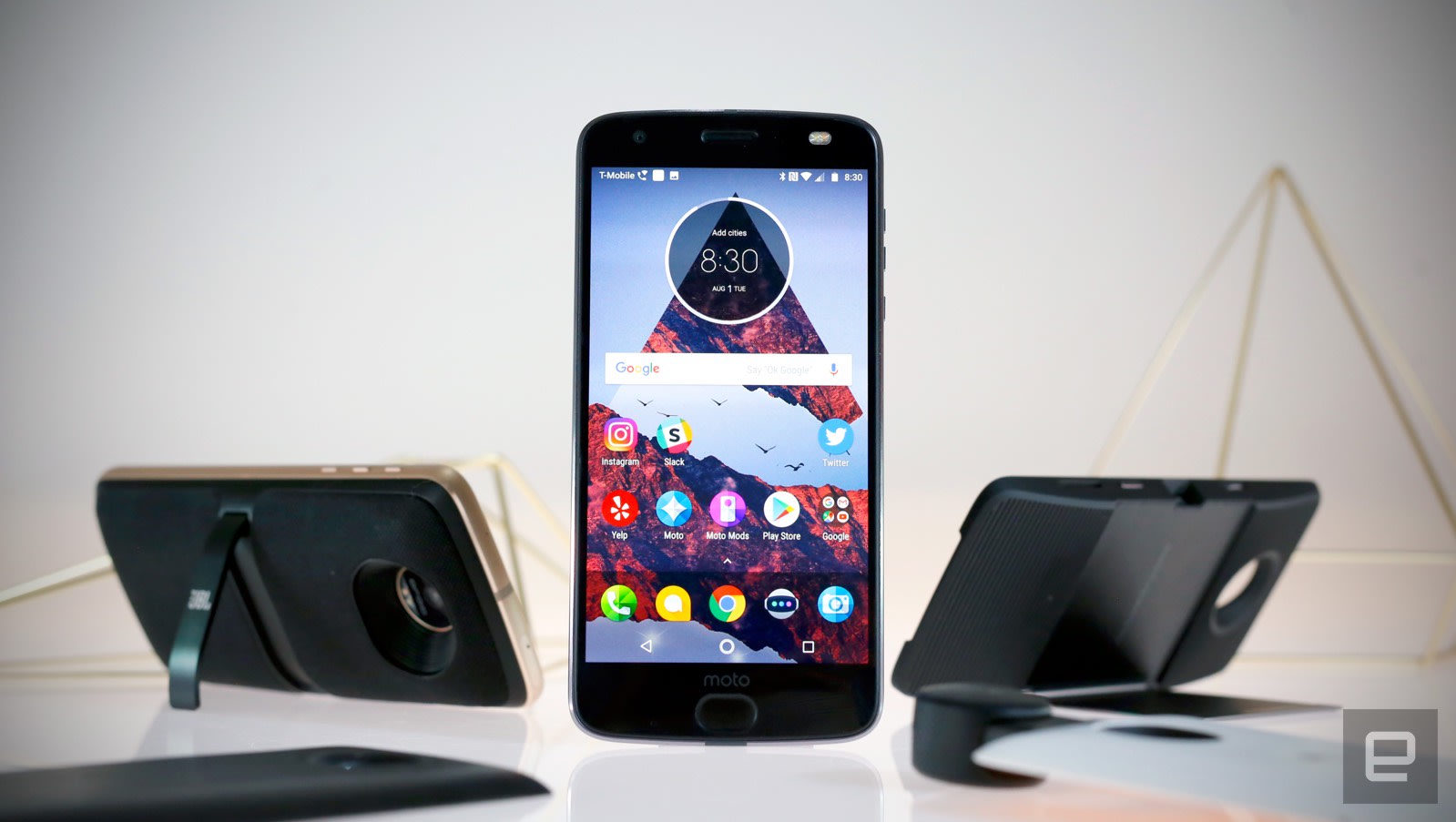
I hope you weren’t hoping for a drastic redesign or anything. The Z2 Force looks a lot like this spring’s Z2 Play, which means it’s a flat monolith of a handset with gently curved corners and a circular camera hump around back. This year’s design language is just a mild refinement of the original Z aesthetic, but the lack of dramatic changes was deliberate. Motorola had to make sure older Moto Mods still worked with the new smartphones. They all do, fortunately, so your collection of magnetic accessories hasn’t yet been made obsolete.
That’s not to say the Z2 Force’s design has been completely recycled. The phone’s 7000-series aluminum back has been brushed instead of blasted with beads, giving the Z2 Force a slightly more rugged look. Then again, a phone this thin can only ever appear so “rugged.” The company designed it to more closely match the original, super-sleek Moto Z than the rough-and-tumble Z Force, and that choice has its drawbacks. Motorola clearly tried to combine the best parts of its 2016 flagship phones, and though the compromise certainly made for a thin and light device (6.1mm), it means the Z2 Force is stuck with a relatively small 2,730mAh battery. We’ll dig into this more later, but this phone’s battery life is nowhere near as good as what we got out of the first-gen Force.
The Z2 Force’s slimness has another side effect: Some people are going to have trouble holding it. Since the phone’s back is flat you’ll mostly just be gripping it by its rounded edges. This was never a problem for me — I never dropped the phone on accident — but it’s something to be aware of.
Beneath the screen is a lozenge-shaped fingerprint reader that can double as a home button. It seems to be a hair faster than the sensor on the original Z, but the edge that runs around it is sharper than on either of the G5s or the Z2 Play. Here’s hoping this was just a lemon. Oh, and the headphone jack is still gone. Never mind the fact that the phone’s slim body is still physically large enough to fit the jack, or that Motorola embraced it with the first Moto Z Play, which came out late last year. It’s all USB-C all the time now. Thankfully, Motorola at least included a dongle (but not a pair of earbuds) for your trouble.
One less hole in a phone should theoretically make it easier to waterproof, but that’s not something Motorola is concerned about. As with last year’s Moto Zs, the Z2 Force has been treated with a water-repellant nano-coating to help protect it from spills and exposure to rain. Although any kind of water protection is helpful, it’s disappointing that Motorola couldn’t figure out a way to achieve full, IP-rated waterproofing on a pricey flagship device. If it’s any consolation, the Z2 Force has a spot for a microSD card on its nano-SIM tray. The phone will accept up to 2TB of additional storage, which is all too handy since 17 out of the total 64 gigabytes of storage are eaten up by Android and pre-installed apps.
Display and sound

Chris Velazco/Engadget
Just like last year’s model, the Moto Z2 Force packs a 5.5-inch Super AMOLED screen running at Quad HD (2,560 x 1,440) resolution. Colors are bright and sumptuous without getting totally lurid, and image quality stays crisp no matter the viewing angle. Alas, this AMOLED panel isn’t quite as bright as the screens found on the HTC U11 or iPhone 7 Plus, and it exhibits a slightly yellow cast, too. You might not notice it unless you’re doing a head-to-head comparison with other phones, but it’s there nonetheless. You do have another option, though: a quick trip into Settings reveals a “standard” color mode that, while more accurate, looks drab by comparison.
Normally, you’d expect a screen like this to be covered in Gorilla Glass, but this a Z Force we’re talking about. That means we’re working with one of Motorola’s ShatterShield displays… which basically just means there’s a lot of plastic covering the flexible OLED screen. Motorola’s approach to protecting screens worked well in last year’s Z Force, but it seems to have been the victim of compromise this time. See, the original Force had a hard, removable plastic lens while this year’s model has a softer, more pliable covering that seems more scratch prone than before. The screen protector is so soft, in fact, that you can etch some gnarly grooves into it with a fingernail. Sure, the actual display panel remains unharmed — you’ll just have to deal with a bunch of indelible blemishes.

Other than that, though, the ShatterShield has worked as promised. I’m normally pretty careful with my phones, but I spent the past week hurling it into pillars and trying to sink three-pointers from across the office. (Suffice to say, I’m a lousy shot.) The Z Force’s screen took all that punishment and more; I even drove over the thing in my car and the screen works as well as ever. Just remember that only the screen is impervious to damage. The plastic-coated display was decently nicked after a few test drops, but it still worked fine. The same cannot be said for the phone’s vibration motor, which crapped out after two drops from about five feet high.
The Z2 Force’s single speaker still worked after all that abuse, pumping out surprisingly loud, clear audio without too much distortion at high volumes. This is normally where I’d lament the lack of stereo speakers, but that’s a moot point here — Motorola clearly wants you to buy one of JBL’s speaker Moto Mods instead. While that might be a smart investment for folks who actually give a damn about blasting music from their phones, don’t feel the need to rush out for one — the built-in speaker was great for podcasts and the occasional (non-bass-heavy) Spotify playlist.
Software
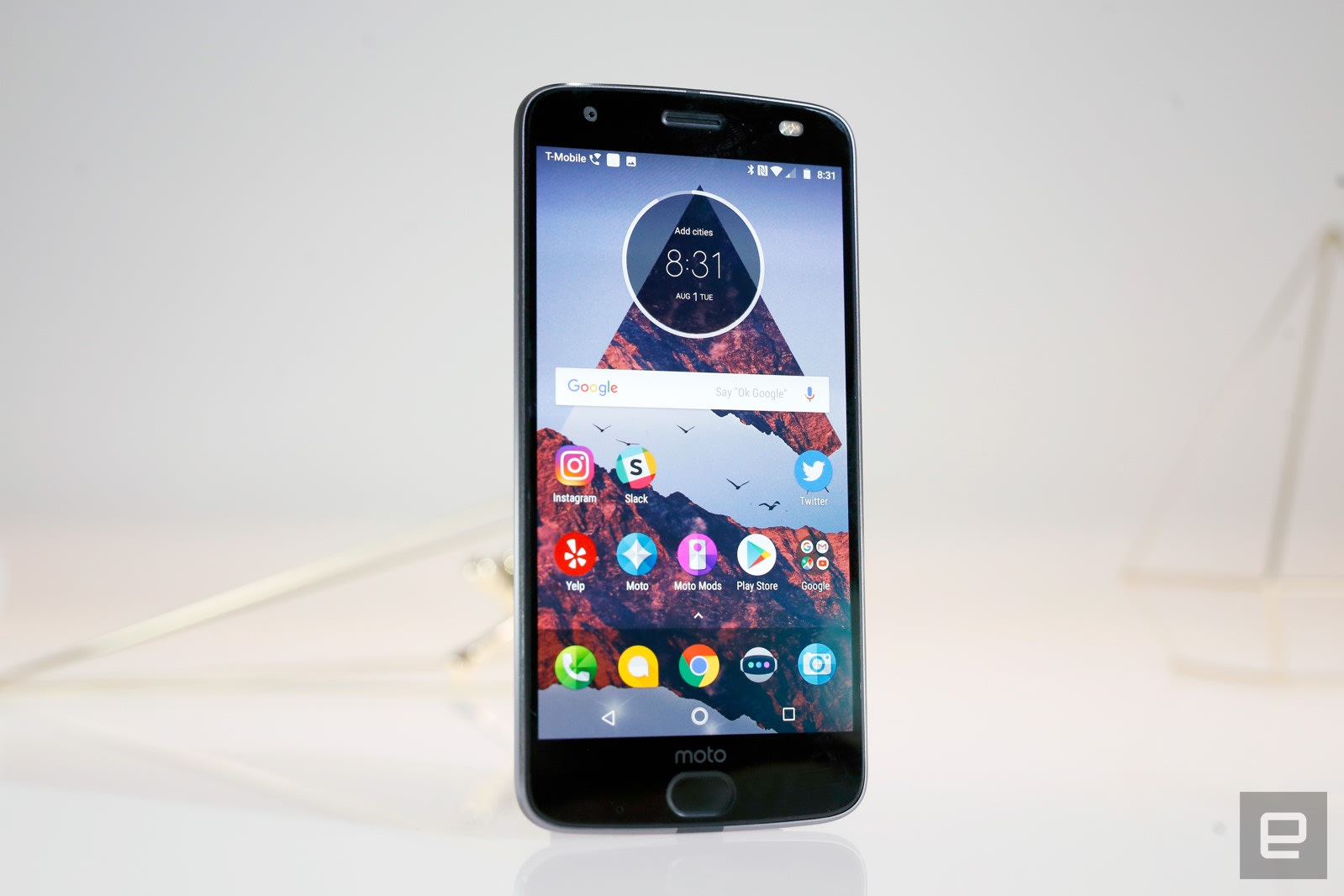
As usual, Motorola mostly just left Android alone. The interface here is as close to Google’s Pixel launcher as you’ll find on a non-Pixel phone, and that’s a good thing. Motorola’s rivals have dramatically improved their interfaces and first-party services, but the cleanliness and flexibility of near-stock Android is a strong argument for software purity. Our review unit is carrier-locked to T-Mobile and comes with a handful of easily disabled apps as a result. Other than that, this is a characteristically clean version of Android 7.1.1 with a handful of tried-and-true Moto “experiences.”
Some of you have been honing your wrist-twists and karate chops for years now, and those gestures still fire up the camera and the flashlight, respectively. As with the recent G5 and G5 Plus, you can also start to use that home-button-looking fingerprint sensor as, well, a home button. This so-called one button navigation works well enough and is helpful for freeing up the minuscule amount of real estate taken up by the on-screen nav keys. Repeatedly swiping to back all the out of some nested menus gets old, though, so most people are better off sticking with the classic interface.

Google’s Assistant is here too and it works as well as it always does, but it’s not alone. I wouldn’t exactly call it a “virtual assistant,” but Motorola’s updated Moto Voice lets you ask the Z2 Force to show you things — say, the weather or your next appointment. Doing so brings up a widget that takes over your screen showing you exactly what you asked for five seconds before fading away. Motorola’s voice recognition works well, to the point where it recognized me even when I was sick and raspy. Also, the “show me” wake-word makes for the most natural-sounding conversations you’ll have with your phone. Being able to launch apps by saying “show me Chrome” or whatever is handy too, if not exactly novel.
Here’s the rub, though: Unless you really want to see your weather or your calendar, this upgraded form of Moto Voice is pointless. Want to fire up Spotify? It often takes just as much time to tap the icon as it does to enunciate your request. And since Moto’s approach is fairly basic, you can’t ask the Z2 Force to perform more complex, useful commands like “show me Spotify and play the playlist ‘Chill Vibes.’” In fairness, Google Assistant can’t always handle those multi-part queries either; if you want an assistant that does, Samsung’s Bixby might be your best option. That said, Google Assistant does everything Moto Voice can but better, and I don’t understand why Motorola devoted any effort to this.
Cameras

Chris Velazco/Engadget
Motorola is the latest smartphone maker to embrace the dual-camera concept, and it’s a little different than what you might’ve expected. Unlike recent phones from Apple, LG and OnePlus, each of which uses multiple cameras for optical zoom or wide-angle shooting, the Z2 Force pairs a 12-megapixel color sensor with a 12-megapixel black and white sensor. As with most of Motorola’s cameras, though, this one falls squarely into “good but not great” territory.
Most of my test shots exhibited respectable detail and nice colors, and the inclusion of both laser and phase detection autofocus made the Z Force’s camera cluster lock onto subjects quickly. Things get hairy when lighting conditions become suboptimal — the f/2.0 aperture helps the sensors suck up more light, but the lack of optical image stabilization means you’re going to see a lot of blur.
The inclusion of a second camera means Motorola was able to build a “depth effect” mode that simulates the sort of background-blurring bokeh you’d see on an SLR, but this, too, suffers in low light. Under the right circumstances, the phone does an adequate job of figuring out the edges of an object sitting in the foreground, but even then the results mostly fail to impress. Really, the best part about the Z2 Force’s camera is being able to shoot in true black and white; it’s more fun than you’d think, and the resulting shots actually look pretty great.
Meanwhile, the 5-megapixel front-facing camera gets the job done without fanfare. We’ve seen selfie cameras shoot at higher resolutions, but the results here are acceptable and the wide-angle lens means it’s easy to squeeze more friends into the frame.
Performance and battery

Chris Velazco/Engadget
With an octa-core Snapdragon 835 chipset, 4GB of RAM and an Adreno 540 GPU, the Moto Z2 Force flies… just like most other flagship phones we’ve tested this year. This particular configuration is so common as to be inescapable, but for good reason: It’s an excellent performer, regardless of whether you’re skimming through open apps or playing resource-intensive games like Afterpulse and Guardians of the Galaxy at high quality. This abundance of horsepower, combined with Motorola’s deft touch with software, means the Z2 Force has felt effortlessly quick throughout my week of testing. That said, people outside the US can look forward to even snappier performance. For whatever reason, every version of the Z2 Force except the American model comes with 6GB of RAM, while the Chinese model packs 128GB of internal storage. Good for them, but I can’t help but feel a little shafted.
| AndEBench Pro | 21,425 | 16,064 | 10,322 | 17,456 | 16,455 |
| 3DMark IS Unlimited | 33,285 | 35,626 | 30,346 | 40,081 | 28,964 |
| GFXBench 1080p Manhattan Offscreen (fps) | 59 | 55 | 42 | 60 | 49 |
| CF-Bench | 67,193 | 64,441 | 29,748 | 78,935 | 45,803 |
The Moto Z2 Force packs a 2,730mAh battery — that’s a touch bigger than the original Z’s battery but much, much smaller than the 3,500mAh cell found in last year’s Z Force. If you’re anything like me, this probably sounds like a recipe for disappointment. Imagine my surprise, then, when the Z2 Force performed just a little better than expected in my battery tests. In Engadget’s standard rundown test, wherein we loop an HD video with screen brightness set to 50 percent, the Z2 Force lasted for 12 hours and 11 minutes. That’s well short of the 14 hours we got with the original Z Force, not to mention the 15 hours we squeezed out of the Galaxy S8 Plus. Despite having a smaller battery, though, the Z2 Force didn’t do that much worse than the standard S8 (13:27) and the new HTC U11 (13:09).
Meanwhile, in day-to-day use, I could count on the Z2 Force to power through 14 to 15 hours of mixed use before needing a recharge. That’s enough for Motorola to call this an “all-day battery,” but if you’re the type to fiddle with your phone non-stop for hours, expect that figure to take a hit.
Now, 14 hours of usage isn’t that bad, but it’s still a disappointment for people who appreciated the original Z Force’s longevity. Motorola has said that users concerned by the Z2 Force’s battery life could easily invest in one of many available battery mods, but that feels like a cop-out. Being able to strap on a second battery in mere moments is a valuable option and one that I’ve taken advantage of many times. Still, for Motorola to essentially ignore the best thing about the first Z Force when building its successor is puzzling at best and disrespectful to loyalists at worst. Then again, it’s not hard to see the logic behind the decision. A smaller battery means a thinner phone, which means more hype and the potential for more Moto Mod sales.
The competition

Since LG shifted its attention away from modular phones, Moto’s Z series is the only option if you want a flagship device to which you can add new features. Since continued Moto Mod compatibility has informed the way Motorola built the Z2 Force, there’s little reason to buy one of these things unless you’re open to the idea of augmenting with accessories later. If you’re on a tighter budget but still crave that modularity, there’s always the Moto Z2 Play ($499 unlocked). It doesn’t offer the same sheer speed as the Z2 Force, and its screen isn’t nearly hardy. Still, for those who don’t play regularly play high-end games and mostly just want to get things done, it’s a fine choice.
Then again, not everyone needs a phone you can magnetically lash things onto. The Galaxy S8 and S8 Plus remain excellent flagship options with their gorgeous, bezel-less “Infinity” displays and great cameras. Both also have better battery life, though you’ll have to make do with a highly customized version of Android. Fans of cleaner software might want to check out the OnePlus 5, which pairs similarly excellent performance with a lightly tweaked Android build. Oh, and did I mention it’s much cheaper than the Z Force? The base model with a Snapdragon 835, 6GB of RAM and 64GB of storage costs $479, while $539 nets you an upgraded version with 8GB of RAM and 128GB of storage. Sure, you’ll lose out on a screen you can’t break, but you’ll still end up with an incredibly capable device.
Wrap-up

Motorola made some questionable trade-offs here, but the Moto Z2 Force is still a solid, impressive smartphone. I’ll give it props for being the most powerful modular phone out there (unless you count RED’s forthcoming monstrosity) and so far, the shatter-proof screen is a pro at dealing with abuse. Still, the Force’s middling battery life and a lackluster camera are tough shortcomings to deal with when you consider the strength of this year’s competition. If you’re still in love with the idea of a phone that gets better with time, or if your clumsiness knows no equal, the Z2 Force is definitely worth a look. Android purists will appreciate Moto’s work here, too. Otherwise, consider the rest of this year’s incredible smartphones before deciding if you can live with Motorola’s compromises.
Amazon reminds cloud customers in China to avoid VPNs
Apple isn’t the only company that’s feeling the pressure from the Chinese government in its quest to limit internet access even further. According to The Wall Street Journal, Amazon also had to tell its cloud-computing customers in China to delete their VPNs and other tools that can be used to bypass the country’s infamous firewall. Beijing Sinnet Technology, the tech giant’s local partner responsible for sending out the message to customers, cited requests from China’s public security ministry and the Ministry of Industry and Information Technology for the demands it made.
An Amazon spokesperson told WSJ that Sinnet had to do it, because it’s “responsible for ensuring that its customers in China comply with local laws.” The notice it sent was “intended to remind customers of their obligations.” When Apple pulled VPN apps from iTunes, it also said that it was required to drop them from the store, since the government’s new rules now require VPNs to obtain a license.
WSJ says authorities have been getting even stricter than usual leading up to the 19th National Congress of the Communist Party of China this fall, wherein the party’s top leadership could be replaced. They’ve apparently been cracking down not just on VPN providers, but also on social networks and livestreaming platforms. VyprVPN’s president told the publication that this feels different from the other times the government tried to implement new censorship measures “due to the events occurring and their rapid succession.” If that’s true, then Apple and Amazon won’t be the only tech corporations affected by authorities’ efforts.
Source: The Wall Street Journal
Apple Watch Has Now Surpassed Estimated 30 Million Shipments Since Launching in 2015
Apple shipped an estimated 2.8 million Apple Watch units in the June quarter, an increase of 56 percent from an estimated 1.8 million shipments in the year-ago quarter, according to a new report by research firm Strategy Analytics.
Strategy Analytics previously estimated Apple Watch shipments totaled 13.6 million in 2015, and 11.6 million last year, suggesting Apple shipped its 30 millionth Apple Watch at some point in the past three to four months.
Specifically, Apple Watch shipments have now reached an estimated 31.5 million units over the product’s lifetime.
Despite the milestone, Strategy Analytics claims Apple trails Fitbit and Chinese company Xiaomi, estimated to be the world’s largest wearables vendor, both of which sell many less expensive fitness trackers.
Xiaomi shipped an estimated 3.7 million wearables in the June quarter, according to Strategy Analytics, while Fitbit on Wednesday reported sales of 3.4 million devices in the same period, down from 5.7 million a year ago.

“Apple has for now lost its wearables leadership to Xiaomi, due to a lack of presence in the sizeable fitness band subcategory,” said Cliff Raskind, Director at Strategy Analytics. “However, the rumored upcoming Watch Series 3 launch with enhanced health tracking could prove to be a popular smartwatch model and enable Apple to reclaim the top wearables spot later this year.”
It’s important to acknowledge these are estimated figures, and that shipments do not necessarily reflect sales.
Apple doesn’t break out Apple Watch sales like it does with iPhones, iPads, and Macs. Instead, it groups the wearable under its “Other Products” category, alongside Apple TV, AirPods, Beats, iPods, and other accessories.
Apple reported “Other Products” revenue of $2.7 billion in the June quarter, up 23 percent on year.
In its post-earnings conference call, Apple CEO Tim Cook once again talked up how well Apple Watch is supposedly selling.
“Sales of Apple Watch were up over 50 percent in the June quarter,” said Cook. “It’s the number one selling smartwatch in the world by a very wide margin.”
“Apple Watch is having a positive impact on peoples’ health and daily lives, and motivating them to sit less and move more,” he added. “With features like built-in GPS and waterproofing, Apple Watch Series 2 is the perfect companion for hiking, running, and swimming.”
Cook has made similar statements in the past. In the March quarter, he noted that sales of Apple Watch nearly doubled year over year. In the December quarter, he announced that Apple Watch had its best quarter ever.
Strategy Analytics doesn’t disclose its exact methodology of calculating Apple Watch shipments for competitive reasons, but executive director Neil Mawston has told MacRumors the research firm uses “a blend of channel checks, financial analysis, and other sources” when asked in the past.
“It is the same methodology we have used for phones since the 1990s and for wearables since the modern market first emerged circa 2013,” he added.
The focus now turns to the fall, when Apple is rumored to debut Apple Watch Series 3 models, potentially alongside its new lineup of iPhones.
Related Roundups: Apple Watch Series 2, watchOS 3, watchOS 4
Tag: Strategy Analytics
Buyer’s Guide: Apple Watch (Neutral)
Discuss this article in our forums
LG’s going to put an OLED screen on the V30, and we couldn’t be more excited
Why it matters to you
LG makes some of the best OLED screens available, and now the same tech is coming back to its smartphones for the ultimate mobile viewing experience.
LG is bringing OLED screens back to its smartphones, a first for the company since the G Flex 2 launched in 2015, and it’s likely to be on the highly anticipated LG V30. Yes, you should be very excited about it indeed. Why? First, OLED screen technology is a huge benefit on your device, providing a high contrast viewing experience with deep blacks and rich, vibrant colors, plus a fast response time. Second, LG really knows what it’s doing with OLED, due to its experience in the world of televisions, where its screens are among the best you can buy.
It gets better. The screen will be an LG FullVision display, which is the name given to the almost bezel-less screen used on the LG G6. It will also be a plastic OLED panel, ensuring it’s strong, thin, and lightweight. It was an earlier version of this technology used on the G Flex 2, enabling the trademark screen curve at the time. There won’t be any curve this time — except at the corners, just like the G6 — but the panel will be larger than the 5.5-inch G Flex 2, reaching 6-inches.
LG says it will be the largest smartphone screen it has made in four years, so which phone will it debut on? There’s noting explicitly mentioned, but repeated talk of the LG V20 in the press release, and corresponding rumors about an OLED equipped sequel to it, tell us LG’s 6-inch FullVision plastic OLED screen will be a major part of the forthcoming LG V30. It’ll likely have an 18:9 aspect ratio and the quoted resolution is 2880 x 1440. A Gorilla Glass 5 panel over it will help keep it safe from harm. LG’s even provided a hint about what the base of the phone will look like in the teaser image above.
We like the V20, but there’s no doubt it’s a large phone. With a 6-inch screen, just how large will its sequel be? Here’s more good news. The V30 — if our assumption is right — will have a smaller body than the V20, with a bezel size reduction of 20 percent at the top and 50 percent at the bottom. Those are significant numbers. Just look at the phone currently in your hand (if it’s not the LG G6), and imagine the difference it would make if the bezel at the base was half the size?
There’s something else LG’s hinting at when it talks about the new OLED screen. Virtual reality. It mentions how well suited the tech is to VR several times, and OLED screens are a prerequisite for Google Daydream, meaning the V30 maybe Daydream compatible straight away. It’s also going to have HDR10 compatibility, but there’s no mention of Dolby Vision, which is a feature on the LG G6.
The LG V30 is almost certainly going to be revealed at the IFA technology show in Berlin on August 31. We can’t wait.
32GB Moto G5 Plus is once again down to $199, 64GB variant going for $249
Grab the Moto G5 Plus for up to $50 off at B&H Photo.
The Moto G5 Plus is one of the best budget phones available today, with the device offering an uncluttered software experience, a great camera, and all-day battery life. The version with 3GB of RAM and 32GB storage usually retails for $229, but B&H Photo is selling the phone for $199, a $30 discount that’s applicable for one day only. There’s an even better deal on the variant with 4GB of RAM and 64GB storage, which is available for $249, or $50 off of its retail price.

The discount is valid on both the Fine Gold and Lunay Grey color options. I’m partial to the grey option as it has a black front plate — the gold model has a matching color scheme throughout. Both models are unlocked, and are compatible with all four major carriers in the U.S. — T-Mobile, Verizon, AT&T, and Sprint.
The Moto G5 Plus features a 5.2-inch Full HD display, Snapdragon 625, a 12MP f/1.7 camera that’s one of the best in this segment, and a 3000mAh battery. On the software front, it’s running Android 7.0 Nougat. As a reminder, the deal is applicable until 2:59 a.m. ET on August 4, so if you’re interested in picking up the Moto G5 Plus, best act fast.
See at B&H Photo
Samsung’s latest flip phone is powered by the Snapdragon 821
Samsung’s high-end flip phone won’t be available outside of China, and that’s a shame.
There’s a thriving market for flip phones — particularly in Asian markets — and companies like Samsung and LG continue to roll out new models to meet the demand. Samsung’s latest offering is the Leader 8, a high-end flip phone that will be sold exclusively in China.

The Leader 8 certainly has a lot going for it: the phone is crafted out of aviation-grade aluminum alloy, and it has two 4.2-inch Full HD panels — one on the outside, and one on the inside. There’s a Snapdragon 821 under the hood, and the phone also offers 4GB of RAM, 64GB storage, a microSD card slot, a 12MP f/1.7 camera, 5MP front shooter, a fingerprint sensor at the back, and a 2300mAh battery with wireless charging.

That’s not all, as the phone also supports Samsung Pay and the company’s Secure Folder. There’s no Bixby, but you do get S Voice. The Leader 8 will be available in a black color option, with the phone exclusively sold on China Mobile.

There’s no mention of pricing or when it’ll go up for sale, but it’s unlikely the phone will make its way to Western markets.
How to access your Bixby History
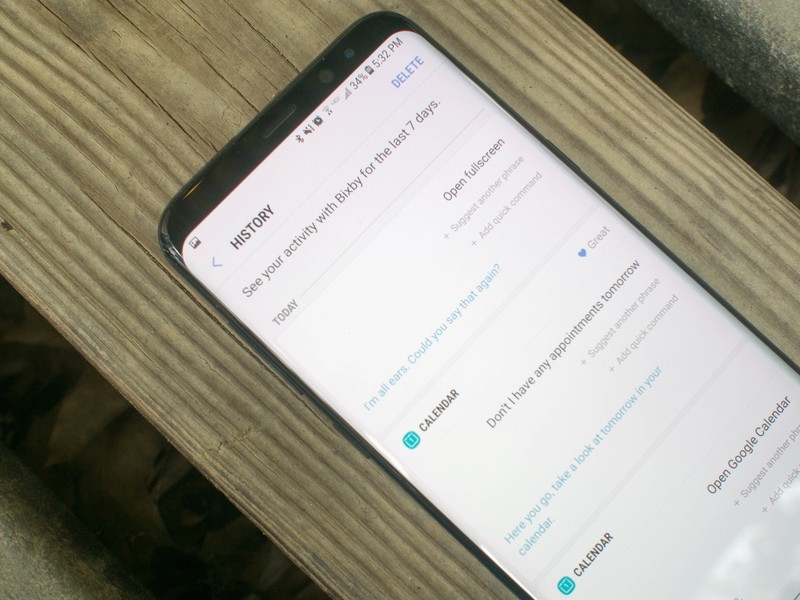
Bixby History shows you everything from the past 7 days.
Bixby Voice delivers a virtual assistant for your Samsung Galaxy S8. It also records all of the questions you ask and the answers that Bixby delivers to you. If you’ve been wanting to take a look at everything you’ve asked, you can access the History feature from within the Bixby app. It only shows you the last 7 days’ worth of questions and answers, but it can be worth it.
We’ve got the details for you here!
- How to access your Bixby History
- How to delete items from your Bixby History
- How to suggest a phrase from Bixby History
- How to add a quick command from Bixby History
How to access your Bixby History
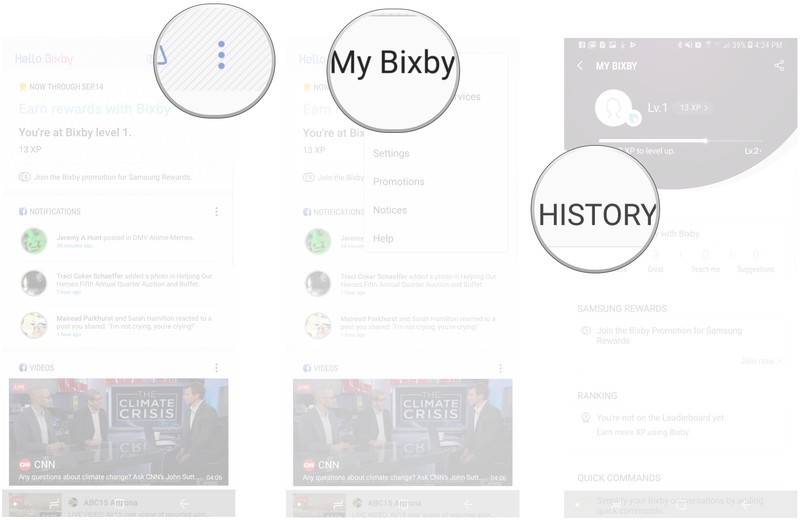
Launch the Bixby app on your phone.
Tap the menu button. (It looks like three vertical dots in the upper right corner of your screen.)
Tap My Bixby.
Tap History
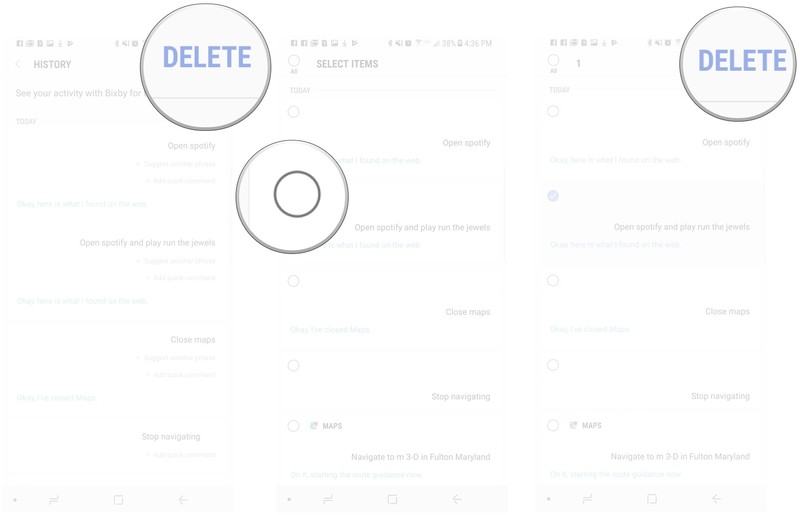
How to delete items from your Bixby History
Launch the Bixby app on your phone.
Tap the menu button. (It looks like three vertical dots in the upper right-hand corner of your screen.)
Tap My Bixby.
Tap History.
Tap Delete.
Tap the items you want to delete.
Tap Delete.
How to suggest a phrase from Bixby History
Launch the Bixby app on your phone.
Tap the menu button. (It looks like three vertical dots in the upper right-hand corner of your screen)
Tap My Bixby.
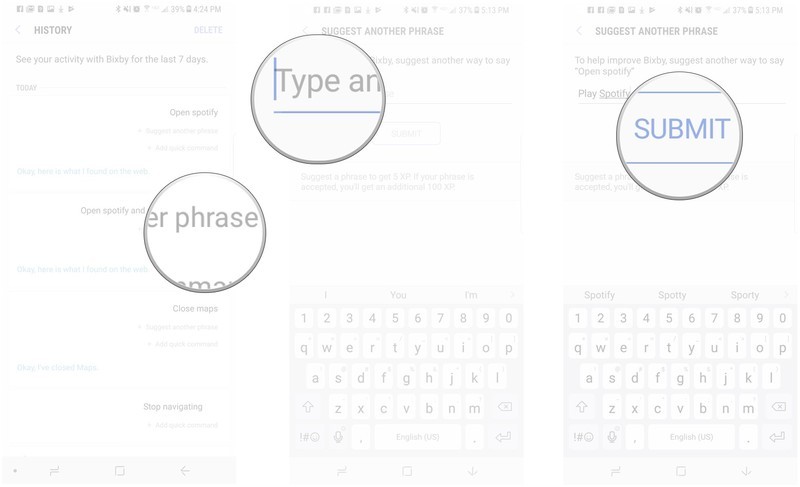
Tap History.
Tap Suggest another phrase under an item in your history.
Type in your suggested phrase.
Tap Submit.
How to add a quick command from Bixby History
Launch the Bixby app on your phone.
Tap the menu button. (It looks like three vertical dots in the upper right-hand corner of your screen)
Tap My Bixby.
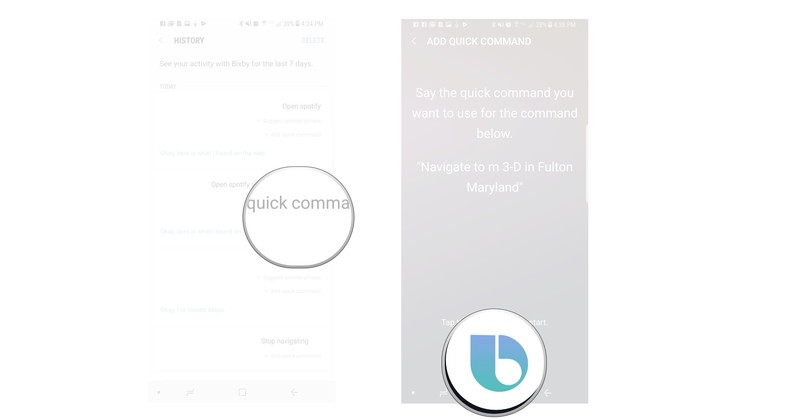
Tap History.
Tap Add quick command under the item you want a quick command for.
Tap the Bixby button at the bottom of your screen.
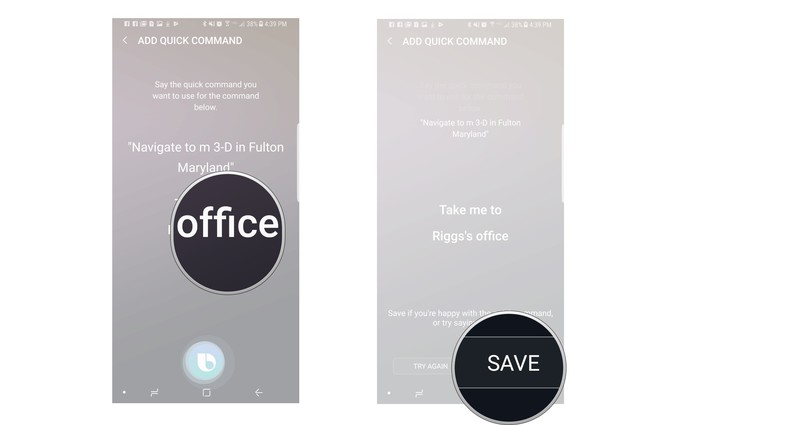
Say the new quick command you want to use.
Tap save.
Questions?
Do you still have questions about Bixby’s History feature? Have you been checking the History feature, or using it to add new quick commands? Let us know about it in the comments below!
Samsung Galaxy S8 and S8+
- Galaxy S8 and S8+ review!
- Galaxy S8 and S8+ specs
- Everything you need to know about the Galaxy S8’s cameras
- Get to know Samsung Bixby
- Join our Galaxy S8 forums
Verizon
AT&T
T-Mobile
Sprint
Unlocked
Sky is rewarding loyal customers with a special TV channel
Every major TV provider is worried about subscriber churn, or the number of people cancelling their package to save money or switch to a rival service. For the longest time, Sky has countered this trend with content, snapping up the rights to “unmissable” sports, movies and TV shows. Now, however, it’s launching a loyalty programme too. Sky VIP offers different rewards depending on how long TV and broadband customers have kept their package. New subscribers, for instance, start on silver, unlocking a free Sky Store Buy & Keep movie and access to VIP ticket prize draws.
Gold, which is unlocked after three years, comes with free Sky Go Extra access — so you can download and watch TV shows anywhere — and Sky Atlantic VIP, a new TV channel that will airs HBO, Showtime and Sky Original Productions 24 hours before their regular broadcast on Sky Atlantic. It will be available on channel 995 and include shows such as the Dwayne Johnson comedy-drama Ballers, Tin Star and Ray Donovan.
Customers with more than eight years under their belt will jump to the Platinum tier, which comes with free Sky Fibre set up and, from September, a boost to a Sky Mobile “data piggy bank.” Sky VIP Black, meanwhile, is the top tier with free Sky Q set up and “priority” customer service through a dedicated phone number and special Sky VIP advisor.
Subscribers will be able to check their level and available perks through the My Sky app. Most of the benefits sound a little weak, though some, like the new Sky Atlantic VIP channel, could be enough to keep customers from switching. Regardless, the scheme is a clear indication that Sky is taking its UK competition seriously. A couple of months back, the company restructured Sky Sports so that every sport had its own channel and customers could fine-tune their packages. Clearly, this is a response to BT, as well as the growing number of people who are cutting the cord entirely.
Source: Sky
 AIVAnet