


The Morning After: Wednesday, May 24th 2017
Hey, good morning! You look fabulous.
Microsoft stripped the numbers from its new Surface Pro hybrid, and we talk the future of fashion, as well as why the perfect prosthetic hand is still many years way. Meanwhile, Google’s AI-powered Go player beat the world’s best human Go master. There are, however, still two matches left.
The refreshed Surface Pen also adds tilt sensitivity.Microsoft made the Surface Pro both lighter and quieter

Microsoft has left the Surface Pro line untouched since late 2015, but the company finally gave it a subtle refresh today. Announced at an event in Shanghai yesterday, the new Surface Pro has updated 7th-gen Intel Core processors and enhanced 12.3-inch PixelSense display, plus an LTE option due later this year. Microsoft calls this “the lightest, the best sounding, the fastest and the quietest Surface Pro ever,” and the company was keen to stress that its machine is 1.7 times faster than the iPad Pro. But is it more a laptop, or a tablet?
Smart fabrics and power laces are just the beginning.Fashion and technology will inevitably become one

There’s no denying that the technology world is obsessed with fashion. Amazon, Apple and Google, three of the biggest names in tech, are all trying to carve their path into the fashion space. And the interest is mutual, with mainstream and high-end labels testing out 3D-printed, embedded sensors and more. Now more than ever, it feels like high-tech fashion is on the verge of being more than just a gimmick. In the not-too-distant future, you could even be 3D printing your own shoes or clothes at home. Instead of going to a store, you’ll buy designs straight from the designer. And we’re quickly heading toward a world in which “wearable” will be more than a fancy word for a smartphone accessory.
A lightsaber might have better odds.We’re not getting Luke Skywalker’s prosthetics anytime soon

As robots and machines get increasingly more efficient, smarter and faster, they still can’t hold a candle (literally) to the dexterity, sensitivity and graspability of the human hand. What if we could design a robotic hand that’s just as good as a biological one? It turns out there’s a lot of hurdles when it comes to replicating their dexterity, sensitivity and reactionary strength.
It was close.Google’s AlphaGo AI defeats the world’s best human Go player

Google’s AI star, AlphaGo, wins again. It bested Ke Jie, the world’s best Go player, by just half a point — the closest margin possible. After the match, Google’s DeepMind CEO Demis Hassabis explained that this was how AlphaGo was programmed: to maximize its winning chances, rather than the winning margin. This latest iteration of the AI player, nicknamed Master, apparently uses ten times less computational power than its predecessor that beat Lee Sedol, working from a single PC connected to Google’s cloud server. The next match kicks off tomorrow, and AlphaGo will also go up against five Go pros (not the cameras) at once in a special match later this week.
For $1,299, the Galaxy Book needs to be just about perfect.Samsung’s pricey Galaxy Book is a flawed powerhouse

Samsung’s Galaxy Book isn’t the company’s first attempt at taking the Surface Pro head-on: Last year’s TabPro S clearly drew inspiration from Microsoft’s convertible. But sluggish performance and a cramped keyboard made the whole experience a bit painful. This time around, the Galaxy Book features a Core i5 processor rather than the weaker Core M in the TabPro S. The keyboard is larger, too. But the things that we liked about the TabPro S, including its stunning, pressure-sensitive display, are also still intact. That said, after a couple of days with the Galaxy Book, Nathan Ingraham is at once impressed and infuriated with the experience.
And a free play weekend‘Overwatch’ celebrates its first year with new maps, skins and an Anniversary event

The Anniversary Overwatch event has begun, with three new Arena maps available for 3v3 play in the game’s Arcade mode. Blizzard has also released a new GOTY version with some special skins and loot boxes (existing owners can upgrade to it for $10). Players who want the new items will have to move fast to get all those new rewards — the Anniversary loot boxes disappear after June 12th.
But wait, there’s more…
- Uber admits New York drivers were underpaid for years
- Hackers fooled the Galaxy S8’s iris scanner with a printout
- Google’s $5,000 4K digital whiteboard goes on sale
- Huawei’s MateBook X looks a lot like the 12-inch MacBook
The Morning After is a new daily newsletter from Engadget designed to help you fight off FOMO. Who knows what you’ll miss if you don’t subscribe.
Polar’s new fitness tracker constantly monitors your heart rate
Polar’s latest fitness band called the A370 is a multi-tasker like the company’s older wearables, and at $20 less than its predecessor, it’s definitely the better choice. It monitors your heart rate every five minutes, whether you’re resting or exercising, unlike the A360 that only does so during workouts. The device can even tell when you’re active, so it can give you tips to be able to reach your activity goals. If you run for exercise, A370’s accelerometer can estimate your running speed and distance. It also tracks the calories you lose, as well as connects to Polar’s weighing scale if you want to use it primarily for losing weight.
A370 doesn’t only monitor your body while you’re awake — it’s also loaded with Polar’s proprietary sleep technology in order to track your sleep time, interruptions, sleep continuity and patterns. It then combines all the info it gathers to assess your overall health. The company says “Polar A370’s continuous HR monitoring, coupled with Polar Sleep Plus insights, provides a 24/7 approach to fitness with actionable steps, whether you’re running, lifting weights or home relaxing.”
If you’d rather get Polar’s new wearable than a smartwatch, you can pre-order the A370 from the company’s website. It’ll set you back $179 — plus $25 if you decide to get an extra interchangeable band — and will start shipping in early June.

Source: Polar
Garmin crams 5K and AR into its latest 360-degree camera
Thanks to the steady growth of VR, 360-degree cameras are now the latest object of lust for videographers. Yet with many of the more mainstream options outputting low res videos, Garmin’s taking aim at videophiles with its newly announced 360-degree camera. The Virb 360 will be able to capture video at up to 5.7K at 30 frames per second. As well as the impressive resolution, Garmin promises budding videographers smooth, rapids-enduring footage thanks to its 4K Spherical Stabilization tech.
In a bid to make your videos’ audio feel equally high end, the Virb also features four built-in microphones. In a nice touch, the camera also uses GPS tech to allow users to create their own 360-degree augmented reality overlays. Unsurprisingly, all this tech doesn’t exactly come cheap, with the Virb 360 setting consumers back a wallet-damaging $800 –$300 more than Nikon’s KeyMission 360. Still, at least it’s far more affordable than its 8K competitors.
In a bid to help you forget the hefty price tag, Garmin claims that the device will be incredibly easy to use, featuring simple one-touch button controls, with more complex editing options available via a mobile and desktop app. As you’d expect, the camera will also support YouTube and Facebook Live sharing, so you can Livestream that totally sick walk you’re having with hundreds of uninterested social media ‘friends’.

For those looking to go on a lengthy adventure, you may be left a little disappointed by the battery life. Offering just one hour’s worth of recording time, the Virb’s pricey tech seems to come at yet another cost. Thankfully though, Garmin promises that the upcoming camera is water resistant and can handle being in hot places. Memory-wise, the Virb can support up to 128gb MicroSD cards, and as you’d expect, the Virb also supports WiFi, Bluetooth and even NFC.
While we haven’t got our hands on it yet, the device certainly seems to offer a decent amount of features for the cash. The Virb 360 launches next month, so if you’re in the market for a high-end 360-degree camera, it might be time to start saving.
Travelex’s fee-free travel Supercard is shutting down
Travellers looking to eliminate exchange fees on purchases abroad will soon have to find another provider after Travelex confirmed its Supercard program is to shut down. The company has written to customers explaining that the service, which allows customers to link up to five credit or debit cards to a standalone Mastercard to avoid currency charges, will close on July 24th.
On its website, Travelex explains that the costs of running the service were “much higher than anticipated.” The company doesn’t elaborate but the statement might suggest that customers weren’t making enough international payments to make the service viable. Customers will be able to access the Supercard app up until October 24th, after which past transactions will no longer be viewable.
Supercard customers have taken to Twitter to lament the closure of the service. During the beta, travellers spent over £1 million in foreign climates before it was suspended on 14 months after its March 2015 launch. After a brief period of downtime, the card returned and the company opened the doors to everyone.
Travelex says that once the cut-off date passes, card holders will need to destroy their Supercard. There are three options: de-magnetise the magnetic strip by running a magnet along it, cut through the electronic chip or simply cut the card so that the details are hard decipher.
Source: Travelex Supercard
Apple Launches App Development Curriculum for U.S. High School and College Students
Apple today announced a new app development curriculum designed for students who want to pursue careers in the fast-growing app economy. The curriculum comes as a free download from the iBooks Store.
Called “App Development with Swift”, the full-year course aims to teach students the elements of app design using Swift, Apple’s increasingly popular programming languages. Apple said students who undertake the course will learn to code and design fully functioning apps, gaining critical job skills in software development and information technology in the process.
Beginning in the fall, six community college systems serving nearly 500,000 students across the United States will be among the first to offer the curriculum, according to Apple. Participating colleges include the Alabama Community College System, Columbus State Community College, Harrisburg Area Community College, Houston Community College, Mesa Community College, and San Mateo Community College District.
“We’ve seen firsthand the impact that coding has on individuals and the US economy as a whole. The app economy and software development are among the fastest-growing job sectors in America and we’re thrilled to be providing educators and students with the tools to learn coding,” said Tim Cook, Apple’s CEO. “Community colleges play a critical role in helping students achieve their dreams, and we hope these courses will open doors for people of all ages and backgrounds to pursue what they love.”
Since its launch in 2014, Swift has been consistently promoted by Apple as ideal for kids who are keen to code, with its gentle learning curve demonstrated in Swift Playgrounds, an app that teaches children how to use the language. The new curriculum includes a comprehensive student guide with playground exercises, mini projects and quizzes, as well as a teachers guide with grading rubrics, solutions code and Keynote presentations.
Swift has become one of the most sought-after skills for freelance developers, experiencing more than 200 percent year-on-year growth, according to one study.
Earlier this month, Apple announced the creation of a $1 billion Advanced Manufacturing Fund focused on creating jobs in the US throughout its supply chain. Apple said the new Swift coding curriculum is another example of its commitment to economic development and will help create even more career opportunities for students across the country.
Tags: education, Swift
Discuss this article in our forums
Google Adds New Family Sharing Features to Calendar, Keep, and Photos
Google expanded the range of family sharing features across a handful of its digital services on Tuesday. The new additions rolled out to Google Calendar, Google Keep, and Google Photos.
Setting up a family group in Google Calendar now automatically generates a “Family Calendar” for users to keep track of group activities like picnics, movie nights, and reunions, all in one place.
The new feature in Google Keep works similarly. Users add a family group as a collaborator for any note, which allows everyone to edit and make changes to shopping lists, to-dos, and the like. A family group icon (a house with a heart at its center) appears next to any note that is shared in this way.
Lastly, in Google Photos, a new “Family Group” option in the Share menu lets users share selected photos with family members.
To use the new family sharing features, a Google Play Family Library needs to be set up. This can be done in the Play Store app: tap the top-left menu icon and select Account -> Family -> Sign up for Family Library.
Users can share apps, games, movies, TV shows, and books purchased from Google Play with up to 5 family members using Google Play Family Library. Each member of the family has to follow the same steps to activate their membership in the group.
Tag: Google Play
Discuss this article in our forums
Nokia 3310 (2017) review: Beyond the hype, what’s this phone like?
For the most part we stick to reviewing smartphones here at Pocket-lint, but when the new 3310 was released, we couldn’t turn down the opportunity to sink our teeth into a phone which plays on the old nostalgia bone. For many of us, the original 3310 was the one phone to get us excited about mobile phones. In its day, it was unmatched for its portability, build quality, battery life and fun. It was irresistible.
Now, 17 years after the first one was released, the phone landscape is very different. Everyone looks to expensive smartphones now, which are essentially portable computers. This begs the question – nostalgia aside – is there any real reason for the new 3310 to exist?
Nokia 3310 (2017) review: Design
- 115.6 x 51 x 12.88mm
- 3310-esque frame around display
- Red, blue, yellow and grey options
From the front, the new 3310 does look something like the old model. Its individual light grey oval buttons are similar, and the colour-matched frame around the screen is the same shape as the original. It even comes in some of the same popular colours: red, navy and yellow. But that’s pretty much where the aesthetic similarities end.
- Nokia 3310 vs Nokia 3310: What’s the difference 17 years on?
A new operating system has meant a new button layout on the front. Below the screen there’s a central square select button surrounded by thin frame which acts as the four-directional pad. That’s flanked by two dual purpose buttons. The right is the power off/hang up button on the bottom, and a button to select which ever option is displayed on the right side of the display. The left is the calling button, and the button to select whatever option is on the left of the display.
Pocket-lint
Compare that to the original, which had one central button, a “C” (back/cancel) button on the left, and the up/down navigation button on the right.
With 17 years of development in the industry, components have become much smaller than they were in 2000 when the first 3310 was launched. That means Nokia has been able to slim down the phone. A lot. The new 3310 is about half the thickness of the original, meaning, it’s about the same thickness as the detachable back cover of the first model.
Perhaps disappointingly, the back cover is nowhere near as easy to remove as the old one. While you’re supposed to be able to just pull it off from the bottom, we couldn’t, and had to resort to sticking a plectrum in where you’re supposed to pull from, and levering it up, away from the back that way. It’s a far cry from being able to just push up from the bottom with a single thumb.
That’s not the biggest change on the back, however. There’s a camera there now, complete with LED flash, right above the Nokia logo in the top third. It’s worth noting, it’s only a 2-megapixel camera and it’s fixed focus, so image quality is poor and it can’t focus on anything close up. Not that it’s a major down point – after all, it’s not likely you’ll be uploading it anywhere. The only way to share the photos is using Bluetooth or MMS.
Perhaps more disappointing however is the lack of internal storage in the phone. We took six photos with the camera and then the phone was completely full. That means, on top of paying £50 for a basic phone, you’ll need to go out and buy a memory card too to save your photos and music to.
Nokia 3310 (2017) review: T9 texting
- Traditional phone number pad
- Predictive T9 texting
- Backlit keys
One thing we’ve all become accustomed to in the era of smartphones is typing on software QWERTY keyboard. The fact is, software keys are more versatile, and predictive text is actually helpful. Swapping back to a T9 keyboard is something of a learning curve.
Pocket-lint
Just like old Nokias, you switch between typing modes using the hash key (yes, it had a function before Twitter – it also had a function before mobile phones, but that’s unimportant). Press it to switch between predictive and non-predictive, upper and lower case typing.
For those who never had to endure the T9 keyboard, the buttons are laid out like a regular phone keyboard, with three letters assigned to nearly all of them. Only 7 and 9 have more; they have four each. In predictive mode, you only need to press each key once for each letter of the word. For instance, type “Pocket” by tapping 7, 6, 2, 5, 3, 8. Providing that “Pocket” is the most used combination of letters from those keys, tapped in that order, it would come up.
If your desired word isn’t the first up, you can cycle through the available options by repeatedly tapping the asterisk key until the one you want appears.
Pocket-lint
We were surprised how quickly we picked up the typing again, although, we were just as frustrated by trying to figure out punctuation as we were back at the turn of the millennium when predictive T9 typing took off. We didn’t quite get back to our early 2000s touch-typing skills, but it wasn’t really much slower than typing away on an iPhone keyboard.
Nokia 3310 (2017) review: Display, software and performance
- 2.4-inch colour display
- 240 x 320 resolution
Those hoping for a monochrome, list-based menu system with basic animations for each section will disappointed by the operating system on the new Nokia 3310. There’s a basic menu of options and apps, and it’s grid based, and colour. It’s shown off on 2.4-inch screen with a 240 x 320 resolution, 167 pixel per inch density panel. That means it has fewer pixels than most modern smartwatches, that’s to say, it’s quite pixellated.
The list of apps includes the usual basic collection. There’s Messaging, Contacts, Photos, Call Log, Camera and – of course – Snake (among others). As a side note: don’t get your hopes up that this version of Snake is the same as the old version. In fact, it’s not really like Snake or Snake II (which was on the original 3310).
There’s also an Opera-based mobile browser, which loads very basic versions of web pages over GPRS. That’s right, no 3G and definitely no 4G LTE here. Still, the chances are that if you wanted to browse the web, you’d probably be looking for a smartphone.
There’s a radio which, like the olden days, requires you to plug in the headset to use as the FM antenna. There’s also music, and the ability to download and install basic apps and games, but those require you to make use of the microSD card slot.
Pocket-lint
Using the phone over a weekend, it soon dawned on us that so many friends and family use either iMessage, Facebook Messenger or WhatsApp for communication, that even a basic phone for basic communication is limited, because, in the modern day, finding people who still use SMS is getting harder.
Still, whatever you use the phone for, you never have to worry that you’ll push it hard enough to drain the battery in a day. There’s no Wi-Fi or high speed mobile internet of any kind, and there’s no large, pixel dense display or powerful processor to drain the battery. That means the 1,200mAh is good for up to 22 hours of solid talktime, and a standby up to 744 hours. That’s one month of pure standby time.
Verdict
For most people, the 3310 isn’t going to be a phone you buy as a primary mobile device. Its functions are way too limited, and considering how cheap smartphones are getting these days, the £50 price point won’t feel cheap enough to make the cost savings tempting either. Even as basic, no-frills device, it feels limited and expensive. You could buy a Nokia 150 – as an example – and save yourself £30.
However, there are those for whom a smartphone does too much. Or perhaps those who like the idea that they can unplug from social media, get away from time-consuming apps and just stick to plain old text and phone calls, even if just for the weekend.
For those people, presuming they have a fond memory of the old model, the new 3310 might be ideal. But those people are few and far between we suspect, and those who do end up buying one will likely do it as a completely impulsive purchase, and the phone will end up disused in a sock drawer for months at a time, or just passed off to a less tech savvy friend or relative.
It’s hard to see the 3310 as anything other than marketing for Nokia, who would love you to know it’s making phones again. People who want a simple, basic phone, can get one much cheaper than this rebooted classic. People who like the nostalgia feels won’t really get those from this phone, and those who really want a 3310 can buy a refurbished original one off eBay for at least half the price of the 2017 model.
We enjoyed unplugging for a few days and only being able to call and text a select few people, but it’s not a perfect phone.
We have opted not to give the Nokia 3310 a score, because in the context of smartphones, allocating a score makes no sense at all. You’ll have to read the words instead.
Meet Stan, a robot that can pick up your car and park it for you
Why it matters to you
If you hate wasting time looking for a place to park — especially at airports — then here’s a potential solution.
Stan is a robot that makes the process of parking your car a whole lot easier. Because it does it for you.
Built by French firm Stanley Robotics, the clever wheel-based contraption takes your vehicle off you at the parking lot entrance before transporting it to an available space.
You can hold on to your car keys, too, because electric-powered Stan carefully lifts your vehicle a short distance off the ground before tootling off to set it down again in the appropriate spot.
A smartphone app lets you book ahead and also notify Stan of when you’ll be coming to collect your car, so when you return you’ll be able to drive off straight from the entrance. To maximize efficiency and ensure no one is ever kept waiting, multiple Stans could operate at a single parking lot.
Stanley Robotics was founded in 2015 and recently received a multi-million-dollar cash injection to further refine its autonomous parking valet, though the system is already up and running at Charles de Gaulle airport in Paris.
Indeed, airport parking is perfect for Stan, and can help to reduce stress for drivers not only when they’re rushing to catch a flight, but also when they return from their trip and want to get home as quickly as possible.
Apart from taking away the hassle of trying to find somewhere to park, another of the system’s notable advantages is that it can save huge amounts of space by double-parking vehicles because it knows exactly when the owner is going to return.
Check out the video above to see how Stan could utterly transform existing airport parking lots, using the available space much more efficiently while offering a quick and easy service for arriving and departing drivers. We just hope airports don’t use Stan as an excuse to start charging the same as they do for regular valet parking.
You can now use Google Opinion Rewards to score Play Store credit in India, Singapore, and Turkey
Get Play Store credit by taking part in surveys.
Google Opinion Rewards is now live in India, Singapore, and Turkey, allowing customers from these markets to participate in surveys to get Play Store credit.
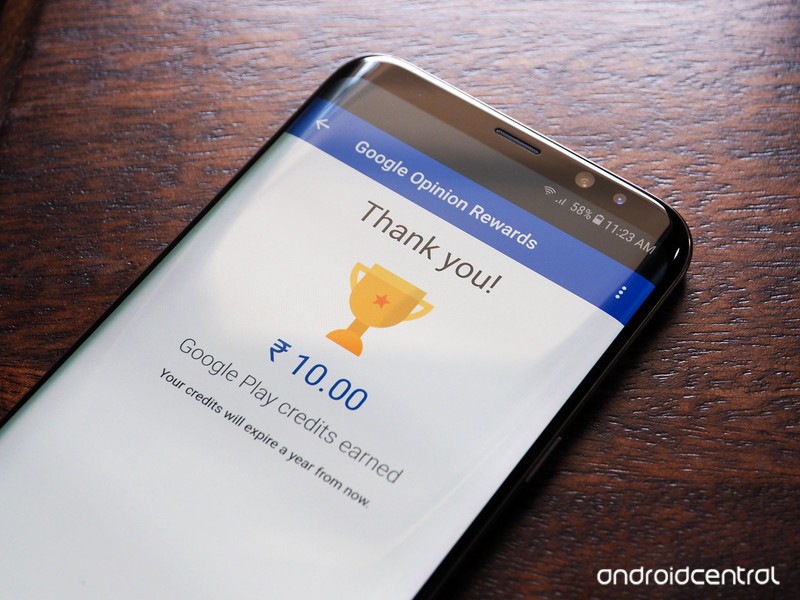
In the U.S., customers get up to $1 in credit for a survey, and in India the payout starts from ₹10. That’s what I received for the survey I completed, but the figure should change based on the survey.
The launch is a win-win as it gives customers the ability to pay for digital content they normally wouldn’t (piracy is rampant in India). The platform is cost-effective for advertisers as well, and gives them valuable feedback from millions of users from various socioeconomic backgrounds.
Eager to get started? Download the app from the Play Store, select your Google account, and answer a few basic questions about yourself.
Let us know how you’re liking Google Opinion Rewards in the comments.
Xiaomi Mi Max 2 may land in India on July 23
Xiaomi’s supersized Mi Max 2 could make its debut in India on July 23.
The Mi Max turned out to be one of Xiaomi’s best phones of 2016, and the company is launching its successor in China tomorrow. According to a tweet sent out by Xiaomi India head Manu Kumar Jain, the Mi Max 2 is coming to India on July 23:
23 Jan: 250K+ #RedmiNote4. 23 Mar: 250K+ #Redmi4A. 23 May: 250K+ #Redmi4 🤘Any suggestions on what we should do on 23rd July? 🤔😎@XiaomiIndia
— Manu Kumar Jain (@manukumarjain) May 24, 2017
Jain doesn’t reference the Mi Max 2 by name, but the launch window lines up with what we’ve seen in the past. The latest rumors suggest the Mi Max 2 will retain a 6.44-inch Full HD display, with the phone powered by a Snapdragon 626 SoC paired with 4GB of RAM, 64GB storage, 12MP camera, 5MP front camera, and a 5000mAh battery. Xiaomi is also rumored to launch a variant powered by the Snapdragon 660.
We’ll have all the details on the Mi Max 2 tomorrow. As for the Mi 6, there’s no word on when the device will be making its debut in India, but we’ll let you know once we hear more.
 AIVAnet