


Netflix adds HDR support on Android, but only for the LG G6
Why it matters to you
High Dynamic Range (HDR) offers a significant improvement in color depth, ideal when watching video on any screen.
Included within version 5.0 of the Netflix app for Android, the streaming video company has enabled the ability to watch HDR-enabled video on a specific Android smartphone. Currently, the only smartphone that supports HDR playback is the Dolby Vision compatible LG G6. Support on additional phones will be announced at a later date.
Interestingly, this is the first smartphone that will have access to HDR content. Samsung announced HDR Premium certification by the UHD alliance for the Galaxy S8, but Netflix hasn’t enabled HDR content for that smartphone yet. Of course, it’s likely that Netflix will move quickly to expand access within the upcoming months depending on compatibility.
Detailed on Netflix’s FAQ page, one hefty requirement for streaming Netflix with HDR enabled is an internet connection speed of 25 megabits per second or faster. It’s likely that attempting to stream HDR content via a mobile LTE connection on a commute will fail due to a download speed less than 25 megabits per second.
In addition, customers will need a subscription to the 4-screen-at-a-time plan for $11.99 a month. That plan includes access to Ultra HD content while the 2-screen, $9.99 plan is limited to standard HD video. Finally, playback settings should be set at “high” within the app in order to stream HDR quality by default.
Finding HDR content on Netflix isn’t difficult, but it’s not at simple as locating a pre-created category within the user interface. Using the Netflix app, perform a search for “HDR” and multiple options will appear in the listings. The majority of the search returns include Netflix-created content like all the live-action Marvel shows, Marco Polo, Santa Clarita Diet and House of Cards as well as the Adam Sandler original movies Sandy Wexler, The Do-Over and The Ridiculous 6.
Linksys debuts a blazing-fast router and its very first modem/router combo
Why it matters to you
Linksys continues to raise the bar in networking by providing its very own modem/router hybrid device, and a new Wireless AC router promising blazing-fast speeds.
Linksys on Wednesday introduced two new networking products: the EA9300 Wireless AC router and its very first cable modem/router combo, the CG7500. The former EA9300 stand-alone router is a tri-band solution, meaning it broadcasts two 5GHz connections and one 2.4GHz connection. The CG7500 combo unit only offers two connections and serves as a replacement for your ISP’s supplied modem.
According to Linksys, the stand-alone router is capable of speeds of up to 750Mbps on the 2.4GHz band and up to 1,625Mbps on each 5GHz band. However, to see those maximum speeds, the connecting wireless devices must include three internal antennas to capture the three streams broadcast by the router.
While those numbers sound uncommonly high, consider that the router broadcasts three streams per 2.4GHz/5GHz/5GHz connection (3x3x3). In turn, each stream has a maximum channel width and waveform (modulation). On the 2.4GHz front, a stream with a channel width of 40MHz and a 256-QAM modulation can achieve 200Mbps per second. However, the new router uses a 1024-QAM modulation, increasing the speed to 250Mbps. The 5GHz bands also use a 1024-QAM modulation to hit 541.67Mbps per stream.
Typically, we see devices packing only two internal antennas getting a maximum 2.4GHz speed of 400Mbps and a maximum 5GHz speed of 867Mbps. However, all of these speeds are theoretical anyway, and devices won’t hit those maximum numbers unless the user is in a sterile, interference-free environment. Here’s a more detailed diagram:
2.4GHz @ 750Mbps = 250Mbps + 250Mbps + 250Mbps
Modulation
Channel Width
Max Speed
64-QAM (5/6)
40MHz
150Mbps
256-QAM (5/6)
40MHz
200Mbps
1024-QAM (5/6)
40MHz
250Mbps
5GHz @ 1,625Mbps = 541.67Mbps + 541.67Mbps + 541.67Mbps
Modulation
Channel Width
Max Speed
64-QAM (5/6)
80MHz
325Mbps
256-QAM (5/6)
80MHz
433.3Mbps
1024-QAM (5/6)
80MHz
541.67Mbps
As for other features, the new router features a quad-core processor clocked at 1.8GHz, 512MB of system memory, 256MB of internal storage, four gigabit Ethernet ports for wired devices, one gigabit Ethernet port for the modem connection, two USB 3.1 Gen1 Type-A ports, and six external antennas.

The CG7500 modem/router hybrid is compatible with Comcast Xfinity and Charter Spectrum broadband services up to 300Mbps. On the wireless front, it’s also a three-stream device, although its speeds aren’t quite as robust. On the 2.4GHz end, the CG7500 reaches up to 600Mbps (3 x 200Mbps), while the 5GHz band reaches up to 1,300Mbps (3 x 433.3Mbps).
The new modem/router combo is based on Intel’s Puma 6 processor built specifically for version 3.0 of the Data Over Cable Service Interface Specification, which is what enables cable TV and broadband data transfers. The chip is “flexible and high-performing,” enabling download speeds of up to 960Mbps even though the modem/router hybrid is locked to 300Mbps broadband plans.
The CG7500 includes four gigabit Ethernet ports, one F-Type female cable connection, and one USB 2.0 port. The device is available now for a one-time purchase price of $200, which eliminates the rental fees associated with using a broadband provider’s modem. The stand-alone EA9300 router is also available for a heftier $300.
Linksys debuts a blazing-fast router and its very first modem/router combo
Why it matters to you
Linksys continues to raise the bar in networking by providing its very own modem/router hybrid device, and a new Wireless AC router promising blazing-fast speeds.
Linksys on Wednesday introduced two new networking products: the EA9300 Wireless AC router and its very first cable modem/router combo, the CG7500. The former EA9300 stand-alone router is a tri-band solution, meaning it broadcasts two 5GHz connections and one 2.4GHz connection. The CG7500 combo unit only offers two connections and serves as a replacement for your ISP’s supplied modem.
According to Linksys, the stand-alone router is capable of speeds of up to 750Mbps on the 2.4GHz band and up to 1,625Mbps on each 5GHz band. However, to see those maximum speeds, the connecting wireless devices must include three internal antennas to capture the three streams broadcast by the router.
While those numbers sound uncommonly high, consider that the router broadcasts three streams per 2.4GHz/5GHz/5GHz connection (3x3x3). In turn, each stream has a maximum channel width and waveform (modulation). On the 2.4GHz front, a stream with a channel width of 40MHz and a 256-QAM modulation can achieve 200Mbps per second. However, the new router uses a 1024-QAM modulation, increasing the speed to 250Mbps. The 5GHz bands also use a 1024-QAM modulation to hit 541.67Mbps per stream.
Typically, we see devices packing only two internal antennas getting a maximum 2.4GHz speed of 400Mbps and a maximum 5GHz speed of 867Mbps. However, all of these speeds are theoretical anyway, and devices won’t hit those maximum numbers unless the user is in a sterile, interference-free environment. Here’s a more detailed diagram:
2.4GHz @ 750Mbps = 250Mbps + 250Mbps + 250Mbps
Modulation
Channel Width
Max Speed
64-QAM (5/6)
40MHz
150Mbps
256-QAM (5/6)
40MHz
200Mbps
1024-QAM (5/6)
40MHz
250Mbps
5GHz @ 1,625Mbps = 541.67Mbps + 541.67Mbps + 541.67Mbps
Modulation
Channel Width
Max Speed
64-QAM (5/6)
80MHz
325Mbps
256-QAM (5/6)
80MHz
433.3Mbps
1024-QAM (5/6)
80MHz
541.67Mbps
As for other features, the new router features a quad-core processor clocked at 1.8GHz, 512MB of system memory, 256MB of internal storage, four gigabit Ethernet ports for wired devices, one gigabit Ethernet port for the modem connection, two USB 3.1 Gen1 Type-A ports, and six external antennas.

The CG7500 modem/router hybrid is compatible with Comcast Xfinity and Charter Spectrum broadband services up to 300Mbps. On the wireless front, it’s also a three-stream device, although its speeds aren’t quite as robust. On the 2.4GHz end, the CG7500 reaches up to 600Mbps (3 x 200Mbps), while the 5GHz band reaches up to 1,300Mbps (3 x 433.3Mbps).
The new modem/router combo is based on Intel’s Puma 6 processor built specifically for version 3.0 of the Data Over Cable Service Interface Specification, which is what enables cable TV and broadband data transfers. The chip is “flexible and high-performing,” enabling download speeds of up to 960Mbps even though the modem/router hybrid is locked to 300Mbps broadband plans.
The CG7500 includes four gigabit Ethernet ports, one F-Type female cable connection, and one USB 2.0 port. The device is available now for a one-time purchase price of $200, which eliminates the rental fees associated with using a broadband provider’s modem. The stand-alone EA9300 router is also available for a heftier $300.
Luxury fashion brands slowly embrace internet shopping
Luxury fashion brands have been notoriously reluctant to embrace the internet. While you can find their wares on third-party stores, you typically have to visit an old-fashioned retail store if you want to buy straight from the source. However, that’s all set to change. LVMH, the owner of many of the world’s biggest luxury brands (including Bulgari, Givenchy and Louis Vuitton), is launching its own online store in June. The upcoming 24 Sèvres will initially carry only women’s apparel, but it’ll be a decidedly modern affair: you can expect a mobile app, chatbots, fast checkouts and international shipping.
The store will “only” carry 20 to 30 of LVMH’s own 70-plus brands at first (there will be 150 in total). When you shop one of the in-house labels, though, 24 Sèvres can source goods from physical stores.
This is relatively uncharted territory for the high-end fashion world. It’s not certain if the new store will squeeze out third-party rivals or merely serve as yet another portal for buying expensive coats and handbags. However, it was unlikely that big luxury vendors could resist forever — there are only so many people willing to make the pilgrimage to an upscale boutique or department store just to get the official experience. As it is, LVMH has already signaled an intent to court online shoppers through the launch of the TAG Heuer Connected Modular 45 — you don’t have to track down a watch store to get one. In that sense, an internet shop like 24 Sèvres was more of an inevitability.
Source: New York Times
Switch players won’t have to pay more for ‘Rime’ after all
Back in March, fans of Nintendo’s latest console and open-world puzzle adventure games got some tough news: Tequila Works’ highly anticipated indie title Rime would cost extra and arrive later on the Switch. Luckily for cash-strapped players who want to explore Rime’s island environments on the go, a digital copy of the Switch port will now carry the same $29.99 price tag as the PS4 and Xbox One editions.
According to a blog post from publisher Grey Box, “additional development, manufacturing, and publishing costs” drove up the price on the Switch version, but they’re hoping to make a bargain to keep prices in line across all platforms. Physical copies of the Nintendo version will still cost a cool $10 more due to the realities of putting out a packaged product, but Grey Box will also include a free code for David García’s complete original soundtrack — something that will also be sold separately online as a $10 download.
Now for the bad news: although Rime will arrive on PS4, Xbox One and PC later this month on May 26th, there’s still no official release date for either the physical or digital Switch versions. For that, Grey Box says they hope to make another Switch-related announcement “shortly.”
Source: Grey Box
Verizon reportedly outbids AT&T for key 5G wireless spectrum
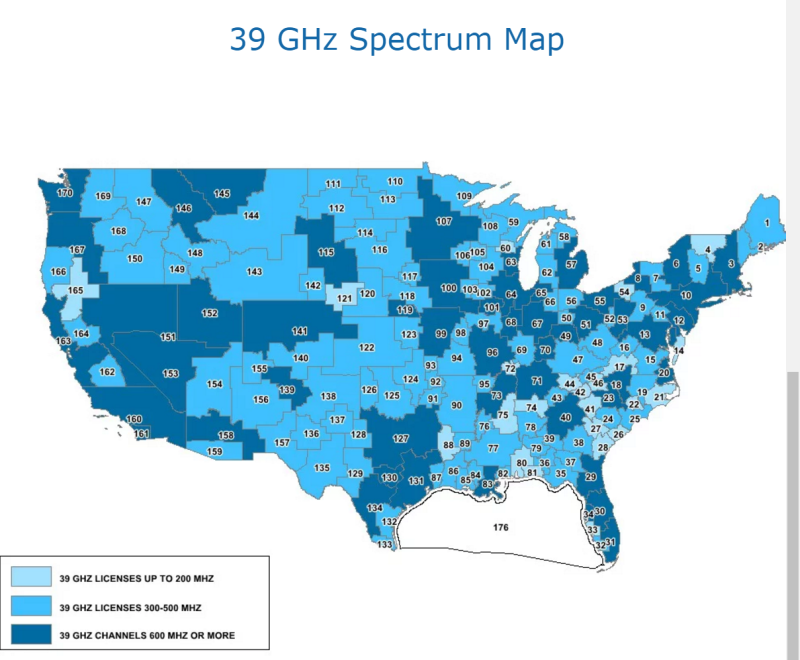
A month ago, AT&T announced it would acquire Straight Path Communications for $1.6 billion, specifically because Straight Path owns licenses to use high-frequency radio waves that will be crucial for the next generation of wireless technology. However, after that agreement, an unnamed Multi-National Telecommunications Company (that is reportedly Verizon, the owner of this website) stepped up with a bid of $3.1 billion in stock, and tonight the Wall Street Journal reports that AT&T has declined to match it.
Verizon and Straight Path have not commented yet, however, last month AT&T said it was planning to use the company’s millimeter-wave (mmWave) spectrum to “accelerate the delivery of new experiences for consumers and businesses like virtual and augmented reality, telemedicine, autonomous cars, smart cities and more.” At the time it said “AT&T will acquire 735 mmWave licenses in the 39 GHz band and 133 licenses in the 28 GHz band. These licenses cover the entire United States, including all of the top 40 markets.”
Source: Wall Street Journal
Nvidia achieves massive increase in AI computing power with Volta and Tesla V100
Why it matters to you
Artificial intelligence and machine learning promise to make your life easier and more productive, but only if there’s enough computing power.
Artificial intelligence (AI) and machine learning are incredibly important technological developments that require massive amounts of computing power. Microsoft is currently holding its Build 2017 developers conference, and there isn’t a product or service being highlighted that doesn’t integrate AI or machine learning in one way or another.
One of the best ways to architect the right kind of high-speed computing infrastructure is by using GPUs, which can be more efficient than general-purpose CPUs. Nvidia has been at the forefront of using GPUs for AI and machine learning applications, and it has just announced the Volta GPU computing architecture and the Tesla V100 data center GPU.
Nvidia calls Volta the “world’s most powerful,” and it is built with 21 billion transistors providing deep learning performance equivalent to 100 CPUs. That equates to five times the performance of its Pascal architecture in terms of peak teraflops, and 15 times the performance of its previous Maxwell architecture. According to Nvidia, Volta performance quadruples the improvement that Moore’s law would have predicted.
According to Jensen Huang, Nvidia founder and CEO, “Deep learning, a groundbreaking AI approach that creates computer software that learns, has insatiable demand for processing power. Thousands of Nvidia engineers spent over three years crafting Volta to help meet this need, enabling the industry to realize AI’s life-changing potential.”

Nvidia
In addition to the Volta architecture, Nvidia also unveiled the Tesla V100 data center GPU, which incorporates a number of new technologies. They include the following, taken from Nvidia’s announcement:
- Tensor Cores designed to speed AI workloads. Equipped with 640 Tensor Cores, V100 delivers 120 teraflops of deep learning performance, equivalent to the performance of 100 CPUs.
- New GPU architecture with over 21 billion transistors. It pairs CUDA cores and Tensor Cores within a unified architecture, providing the performance of an AI supercomputer in a single GPU.
- NVLink provides the next generation of high-speed interconnect linking GPUs, and GPUs to CPUs, with up to 2x the throughput of the prior generation NVLink.
- 900 GB/sec HBM2 DRAM, developed in collaboration with Samsung, achieves 50 percent more memory bandwidth than previous generation GPUs, essential to support the extraordinary computing throughput of Volta.
- Volta-optimized software, including CUDA, cuDNN and TensorRT software, which leading frameworks and applications can easily tap into to accelerate AI and research.
A number of organizations are planning to utilize Volta in their applications, including Amazon Web Services, Baidu, Facebook, Google, and Microsoft. As AI and machine learning are integrated more closely into the technology we use every day, it’s likely to be solutions like Volta and Tesla V100 GPUs that are powering them.
Amazon’s Great Indian Sale is back — here are the best deals!

Amazon is back once again with its four-day sales extravaganza.
Amazon’s Great Indian Sale is back, offering enticing discounts on hundreds of products. You’ll be able to shave ₹1,000 off of the price of a Moto G4 Plus and finally be able to get your hands on the Redmi 4A, but the sale really shines when it comes to audio products, TVs, storage devices, and accessories. Here’s a roundup of the best deals from the first day of the Great Indian Sale:
Mobiles
- Moto G4 Plus (2GB RAM, 16GB storage) – ₹11,499 – down from ₹12,499
- Samsung Galaxy C7 Pro – ₹25,990 – down from ₹27,990
- Coolpad Note 5 (4GB RAM, 32GB storage) – ₹9,999 – down from ₹10,999
- Xiaomi Redmi 4A (2GB RAM, 16GB storage) – ₹5,999 – you can actually buy it now
Headphones and home audio
- Logitech Z-623 2.1 THX-Certified Multimedia Speaker – ₹7,999 – down from ₹8,832
- Logitech Z506 Surround Sound 5.1 Multimedia Speakers – ₹3,999 – down from ₹6,017
- Philips SPA7000B 5.1 Multimedia Speaker System – ₹5,549 – down from ₹6,000
- Philips SPA8000B/94 5.1 Multimedia Speaker System – ₹7,999 – down from ₹8,430
- Philips HTL2163B/12 Bluetooth Soundbar – ₹9,999 – down from ₹10,449
- F&D F-203G 2.1 Speaker System – ₹1,149 – down from ₹1,270
- Logitech X50 Wireless Bluetooth Speaker – ₹1,149 – down from ₹1,524
- JBL GO Portable Wireless Bluetooth Speaker – ₹1,799 – down from ₹1,999
- AmazonBasics In-Ear Headphones with universal mic – ₹329 – down from ₹499
- Sennheiser CX 275 S In-Ear Headphone with mic – ₹1,599 – down from ₹1,669
- Sony MDR-XB250 On-Ear Headphones (Extra Bass) – ₹899 – down from ₹1,099
- boAt Stone 600 Water Proof and Shock Proof Wireless Speaker – ₹1,699 – down from ₹1,899
- boAt BassHeads 225 Special Edition In-Ear Headphones with mic – ₹449 – down from ₹499
- Beats by Dr. Dre Powerbeats3 Wireless Earphones – ₹12,999 – down from ₹14,533
TVs
- Sanyo 43-inch XT-43S7100F Full HD LED IPS TV – ₹24,490 – down from ₹27,990
- Sanyo 49-inch XT-49S7100F Full HD LED IPS TV – ₹30,990 – down from ₹34,990
- TCL 55-inch L55P1US 4K Ultra HD Smart LED TV – ₹45,990 – down from ₹48,990
- LG 43-inch 43LH576T Full HD Smart LED IPS TV – ₹36,990 – down from ₹38,999
- Sony 40-inch BRAVIA KLV-40R352D Full HD LED TV – ₹41,990 – down from ₹44,990
Everything else
- Canon EOS 1300D 18MP DSLR with 18-55 and 55-250mm IS II Lens and 16GB SD card – ₹26,495 – down from ₹29,199
- Seagate Backup Plus Slim 1TB External Hard Drive – ₹4,099 – down from ₹4,299
- Logitech K480 Bluetooth Multi-Device Keyboard – ₹1,799 – down from ₹1,999
- AmazonBasics High-Speed HDMI Cable, 6 Feet – ₹325 – down from ₹399
- Blue Microphones Yeti USB Microphone – ₹9,599 – down from ₹11,514
- Blue Microphones Snowball iCE Condenser Microphone – ₹4,299 – down from ₹4,417
To take a look at all the products on sale, head to Amazon from the link below. What’s everyone buying?
See at Amazon India
Google buys the VR studio behind ‘Job Simulator’
A month after Owlchemy Studios gifted the world with its Rick and Morty VR mini-experience, the developer revealed its own good news: It’s been acquired by Google. Neither party hinted at what lies in store for Owlchemy going forward, but it’s good news for a studio that’s been releasing VR games for years.
Owlchemy is best known for Job Simulator, a delightful “recreation” of modern-day work life by clueless futuristic robots. The title garnered acclaim and has come out for every VR platform as a sort of proof-of-concept that developers can pull off humorous, entertaining gameplay while the medium works out its nausea-inducing kinks.
Amusingly, the studio’s first foray into VR was adapting Dejobaan Games’ skydiving simulator for the Oculus Rift, releasing AaaaaAAaaaAAAaaAAAAaAAAAA!!! for the Awesome (full title) in 2013. Owlchemy had cut its teeth on iOS games like Super Ramen Bros. and Smuggle Truck as well as its Kickstarter-funded desert island survival game Dyscourse. It was while testing Valve’s then-secret VR headset project with HTC, the Vive, that the Owlchemy team developed the idea for their hit Job Simulator. The studio is keeping mum about its next project under the Google umbrella, but let’s hope they keep their signature bizarre humor.
Source: Owlchemy Labs
‘The Sims’ find a new home on iOS and Android
It’s been 17 years since The Sims was first released on PC but finally (finally) the venerable social simulator is going mobile. EA announced on Wednesday that it is bringing its truest port of the game to date to Android and iOS.
Players will be able to create their Sim, customize their looks, build them homes, cajole them into interacting with other players and ultimately achieve their digital dreams. What’s more, you’ll be able to follow you Sim’s family through generations, unlocking valuable heirlooms and other stat boosters as you go. But to do that, your Sim is going to have to kill it at their job — those heirlooms only become available after your Sim reaches their career goals and retires.
This isn’t the first time that EA has taken the Sims off the desktop. The company previously released The Sims Freeplay on mobile and The Sims Social on Facebook, though neither of those offered nearly the same depth of gameplay that this one is advertising. There’s no word yet on when The Sims will be released or how much it will cost when it is.
Via: CNet
Source: EA

