


Streaming services will pay writers more following a new deal
Amazon, Hulu and Netflix are going to have to open their wallets a little bit wider if they want to keep producing original shows. The Writers Guild of America has outlined a tentative 3-year contract that will increase the residuals paid to writers for every episode in a high-budget series. The exact payouts vary depending on the size of the service and the length of the show, but the companies are looking at anywhere between $3,448 more per episode for the life of the contract (for a half-hour Hulu show) to $34,637 (for an hour-long Netflix production). That may not sound like much given the money these companies can throw around, but it could add up for a series cranking out several new episodes every year.
It’s not immediately clear what prompted the WGA’s residual hike. However, the move is a sign of how valuable streaming video has become. You’re not writing for online services because you couldn’t find work at a conventional TV studio — there’s a real chance that you could win an award and otherwise earn the same kind of respect that you’d have if you were writing for cable. While this probably won’t lead to an increase in your subscription fee (not in the near-term, at least), it might attract writers who’d otherwise be tempted to skip internet video.
Source: Deadline
Amazon Echo gets its own ‘Saturday Night Live’ skit
How do you know when a gadget has become part of the American cultural zeitgeist? When it gets its own Saturday Night Live routine, apparently. The comedy show ran a skit (US-only) on May 13th pitching the “Amazon Echo Silver,” an imaginary smart speaker aimed at the “greatest generation.” Not surprisingly, that means lots of stereotypical jokes about seniors: the Silver is extremely loud, repeats itself and will answer back if you say any name that sounds even vaguely like Alexa. Naturally, you can only order it with a check or money order.
The funniest part: while the Silver is clearly a spoof on Amazon’s ever-growing Echo lineup, it’s not that much of a stretch. Amazon is clearly capitalizing on the Echo’s success by filling every possible niche, so it’s easy to imagine the internet giant building a voice-controlled speaker for the retired crowd. And let’s be honest… SNL’s concept doesn’t look that bad. Wouldn’t you want to give your grandparents a speaker that blends into their decor?
As seen on SNL: An Echo designed for the greatest generation that will answer to any name close to Alexa 😂 pic.twitter.com/uqN1FRT7uP
— Amazon (@amazon) May 14, 2017
Source: SNL (YouTube), Amazon (Twitter)
You can now bank with your voice thanks to American Express’ new Alexa skill
Why it matters to you
Who has the time to log onto an account just to check their credit card balance? Alexa and American Express understand, and together, are here to help.
Keeping tabs on your spending habits is onerous in and of itself (because who wants to know how much they spent on that outfit they just had to have or that extra dessert they just couldn’t pass up). But now that you can check yourself using just your voice, basic financial responsibility is more feasible than ever. Last week, American Express launched its new Amex skill for Amazon Alexa, bringing “select experiences of AmericanExpress.com and the Amex mobile app to Alexa.”
If you’re an OPEN Card Member with an American Express ID and password, you can now link your online Amex account to the skill, allowing you to check your account balance, review recent charges, make a payment, and more through voice commands.
“We first introduced a partnership with Amazon in 2010 that enabled our Card Members to use Membership Rewards for purchases on Amazon.com,” said Luke Gebb, senior vice president, Enterprise Digital, American Express. “Today, we’re bringing another element of the Card Member experience to Amazon with the introduction of the Amex skill for Alexa. Our Card Members are redefining how they engage with our brand across the digital platforms of their choice, and we want them to have great experiences wherever they are.”
The new skill also syncs with the Amex Offers ecosystem, which allows card holders to browse exclusive offers and deals and add them to eligible cards. Amex notes that this makes it the first financial services skill to include a benefit like Amex Offers in its Alexa offerings.
“We’re excited that the American Express skill is coming to Alexa,” said Rob Pulciani, Director, Amazon Alexa. “American Express is known for innovating on behalf of customers and providing top-notch service, values we share at Amazon. With the Amex skill for Alexa, Card Members are just a question away from getting account information, offers, and more.”
To set up the new Amex skill, head over to “Skills” in the Alexa app, and search “Amex.” Enable the skill and log into your American Express online account using your User ID and password, then create a 4-digit PIN (which you’ll need to say every time in order to open up the Amex skill). From there, treat Amex as you would any other skill, saying things like “Alexa, open Amex,” and then asking your virtual assistant to make a payment or check your current balance.
Is that phone stolen? Check and see with the CTIA’s new tool, the Stolen Phone Checker
Why it matters to you
Think that phone deal is too good to be true? Check to see if it is with the CTIA’s Stolen Phone Checker.
You may never even think to steal a phone, but who’s to say that you wouldn’t purchase a stolen phone by accident? Here to help you ensure that you don’t break the law, inadvertently or not, is a new tool from the CTIA (the nonprofit representing the U.S. wireless communications industry) that lets you check if the phone you’re interested in purchasing came from an illegitimate source. Aptly named the Stolen Phone Checker, this tool quite simply allows users to look up if a device has been reported as lost or stolen.
The straightforward site is free and easy to use — simply input your device’s IMEI, MEID, or ESN. Each of these codes are unique to a mobile device, and every mobile device must have one of these ID umbers. Finding them might be a bit tricky, though. For example, if you have an iPhone, the number may be printed on the back or your device, but some other phones may require you to dig through the settings menu to find the code.
In any case, once you’ve located the specified string, just head over to the Stolen Phone Checker, input those digits, check the “I’m not a robot” CAPTCHA, and hit submit. You’ll then be told if your phone is safe to use, or has been reported stolen.
One caveat, however: if a stolen or lost phone’s original owner has not reported the device missing, the tool won’t know about it. That said, Stolen Phone Checker will still likely be useful the rest of the time.
So why is it so important to know whether or not your device comes from a legitimate source? Quite simply, if you try to activate a stolen phone, it just won’t work. In fact, American phone carriers have a collective database of stolen phone IDs, and if your device happens to match one of these numbers, it won’t be able to join a wireless service provider’s network. That means it’s key to check the authenticity of that phone on eBay before you buy it, and you can do that for free (up to five times a day) with Stolen Phone Checker.
Project Treble is super exciting, but custom Android interfaces are here to stay

The future of Android updates is upon us … sort of.
For the Android enthusiasts among us, Google’s announcement of Project Treble felt like a message straight from the heavens. The new system, coming in Android O, lays the groundwork for Android devices to have proper separation between the core of Android and the necessary (and unnecessary) customizations device manufacturers need to apply before sending out software updates. Functionally, it means Google can update its own parts of Android without disturbing the OEM interface on top or the low-level device-specific firmware underneath. Reaction on Twitter and in the comments of our articles took this announcement as a sign that the utopian future of Android updates is finally here.

Looking at the details a bit closer and thinking about how this will actually play out in the real world with real companies, though, you start to bring yourself back down to earth a bit. The first issue is that because of the massive change in overall architecture, this isn’t something that is likely to come to any devices released before 2017 — it requires a complete partition change, and that’s not something you want to mess with by just sending out an OTA. Some of the big flagships of the year may be able to have Project Treble with their Android O update, but that’s not a guarantee — and we may see devices released throughout the year that don’t ever get it.
Perhaps the biggest thing that will bring people back down to earth with Project Treble is realizing exactly what Google can and can’t change without the device maker’s intervention. Project Treble being integrated into a phone does not mean that the device maker’s “skin” is somehow easily removable or no longer part of the device — it’s still there, looking as it always did, even if Google pushes out an under-the-hood platform update. Project Treble simply creates an abstraction layer to separate the parts Google can change from everything else — it doesn’t get rid of the manufacturer’s customizations entirely.
Project Treble is super important, but primarily in the long run.
And that brings into play what is likely the most substantial hurdle here: the manufacturers themselves are still involved. They’re just simply not critical to the process of Google updating the parts of the software it will now have control over. That’s a good thing! It means that Samsung or Qualcomm doesn’t necessarily have to be involved with Google pushing out a new feature or a security patch. But at the same time, you’re still going to be waiting on Samsung, Moto, HTC, LG or Huawei (and hey, probably your carrier) to push out new user-facing interface changes — that in no way changes with Project Treble.
With all that being said, Project Treble is an extremely important change to the way Android works and will have huge influence on the Android experience. The ability for Google to push out software updates unilaterally that improve security or standardize phones on a single implementation of a feature is a big deal going forward. Just because this change doesn’t signal the death of manufacturer interface customizations doesn’t mean it can’t have a big impact on how we use our Androids in the future.
And with that, a few random thoughts:
- HTC is about to drop its new flagship, expectedly called the U 11, on Tuesday — the launch event is at an … inconvenient time of 2 a.m. ET, as it’s happening in Taipei.
- After a frustratingly weak showing with the U Ultra and U Play, here’s hoping HTC can get a few things right and make a dent of some size with the U 11.
- I’m still using the Galaxy S8, and I’ve actually found a nice super-thin case that works for me — bonus being how much better it makes the fingerprint sensor.
- Also actually bringing the Galaxy Tab S3 and its keyboard case on my current trip. Much easier to use on a plane than a laptop, and more compact than a Pixel C.
- Google I/O kicks off on Wednesday, and if this big Project Treble announcement is any indication we should be in for some really interesting news out of the conference.
- That being said, a lot of the magic of I/O happens behind the scenes rather than in the headlines — developers and device makers learn so much from the conference, and the fruits of those discussions come later on.
That’s it for now — have a great week, everyone.
-Andrew
After Math: Keep the change
It was a big week of whole numbers for the tech industry. Fossil now offers 300 different smartwatch models for sale, Windows 10 hit 500 million active installs and Apple just invested $200 million in Corning’s Gorilla Glass operation. Numbers, because how else are you going to eliminate rounding error?
‘WannaCry’ ransomware evolves despite attempts to kill it
There were predictions that the fast-spreading “WannaCry ” (aka “WannaCrypt”) ransomware would quickly evolve to get around its domain-based kill switch, and, well… the predictions were right. Security researchers have discovered variants of the Windows malware that either have different kill switches (easy to stop by purchasing the web domain) or don’t have a kill switch at all. MalwareTech’s initial findings might have stopped the original WannaCry in its tracks, but that was really just a speed bump for malicious coders.
In the meantime, the NSA-derived attack has affected companies and infrastructure well beyond the UK’s National Health Service. French car manufacturer Renault has confirmed to Reuters that it stopped production at multiple sites on May 13th to limit the reach of WannaCry. It plans to resume business as usual on Monday, but that’s a significant setback for a company that counts on continuous manufacturing. FedEx, Telefonica, Germany’s railway system and other big names have also been hit, although not always so dramatically. Europol’s Rob Wainright reports that the ransomware has hit about 200,000 computers in over 150 countries, and believes that the problem is getting worse, not better. It could be particularly bad on Monday, when many businesses switch on their computers and might expose unpatched systems to attack.
There will be solutions to this particular attack: more organizations will patch their PCs, and updated antivirus software will catch the malware. The big question is whether or not this will prompt a broader change in security policy. Many of the victims fell prey simply because their systems were running Windows XP or Server 2003, both of which have lost official support outside of special contracts. While it would be unrealistic to expect everyone to always run the latest operating system (software compatibility and cost are major concerns), you may well see repeat incidents unless these large-scale customers get in the habit of staying reasonably up to date.
Source: Matthieu Suiche (Twitter), Motherboard
How to maximize electric vehicle range (and minimize anxiety)
Forget road rage, there’s a new psychosis in town. The rise in popularity of electric vehicles has led to a new phenomenon — range anxiety. EVs tend to have shorter ranges than gasoline or diesel vehicles, and charging takes a lot longer than filling up with traditional dinosaur juice. As you can imagine, this fact hasn’t exactly been well-received.
In an all-electric car, getting to your destination can require a bit more planning than it would with an internal-combustion equivalent, but it is possible to live with an EV conveniently. Here’s everything you need to avoid range anxiety (besides Prozac).
Know your car
First, you need to know how much range you’re working with. The EPA-rated range is a good indicator of what your car can achieve, but as with gasoline cars and fuel economy, the range will vary in real-world use depending on a variety of factors, such as driving style and road conditions.
All EVs include some form of range meter, but these can be optimistic; you’ll get a better idea of that after driving the car for a while. These projections typically change in real time, giving you an idea of how driving behavior or conditions are impacting range. Don’t be surprised if the meter plummets when you floor the throttle.

Consequently, it’s important to leave yourself a little wiggle room when planning trips. If you can’t fully charge the car at a given stop, charge it to the point where you’ll have enough juice to reach your destination, and then some. On trips that push your car’s limits, make sure you’ll be able to reach charging stations along the way, but keep in mind that it will still take you longer to get from point A to point B because charging takes more time than filling up with gas.
Your car can also help you plan a trip. Certain models, like the Nissan Leaf, can display nearby charging stations directly within their navigation systems. The Tesla Model S and Model X can even let drivers check how crowded Tesla’s Supercharger stations are.
For extra-long trips, consider using a different vehicle or mode of transportation altogether. See if it makes sense to fly or take the train, or even rent a gasoline car. BMW offers complimentary loans of internal-combustion cars to its i3 owners, for example. Or maybe keep a gas-powered car or plug-in hybrid around as a second vehicle for times when your all-electric car’s range won’t cut it.
Get a home charging station
While road trips can be more complicated, quelling range anxiety for daily commuting is simple. A home charging station is essential for every electric-car owner, and should take care of most charging needs for short, local trips.
Several companies make 240-volt, Level 2 AC charging stations that allow you to replenish your car at home in a reasonable amount of time. The large battery packs in all-electric cars make simply plugging into a Level 1 conventional household outlet impractical, as it will take much longer to get a full charge. (You might be able to get away with it with a plug-in hybrid, though.) A 240V charging station will allow you to charge your electric overnight.
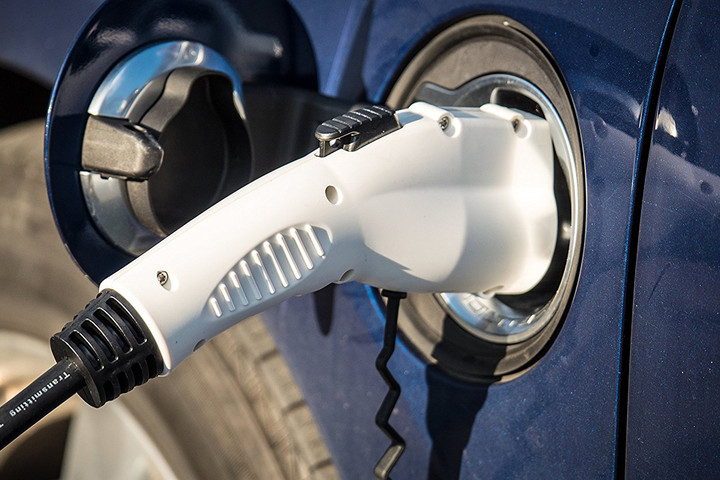
Home charging stations are available through chain hardware stores such as Lowes and Home Depot, as well as online retailers like Amazon, and many automakers offer them as accessories to electric-car buyers. Installing one requires wiring a dedicated 240V line, the kind used by clothes dryers and other large appliances — and a job for an electrician. Charging stations can be installed inside or outside, so find the location that works best for you.
This is a straightforward process for homeowners, but a more complicated for renters. When approaching the property owner about installing a charging station, make it clear that you will pay for the installation work, the station itself, and any electricity you use. California explicitly requires property owners to let renters install charging stations; in other states, it’s a process that may take some negotiation.
Know the ins and outs of charging networks
Public charging stations are operated by a series of private companies, just like gas stations. But unlike gas stations, many companies require EV drivers to carry network-specific cards to use their stations — you won’t be able to access every charging station by simply swiping a credit card.
Many drivers address this problem by getting accounts with multiple networks, just to ensure they are covered wherever they go. Operators have discussed some form of inter-network payment scheme that would allow one-card access, but little has come of that so far. Nissan Leaf owners can get the automaker’s EZ-Charge card, which is good at AeroVironment, Blink, CarCharging, ChargePoint, Greenlots, and EVgo stations.
Mitigating that issue is the fact that many public charging stations are free to use. At this early stage in the development of electric cars, governments, automakers, and other groups are still looking to promote them. Subsidizing public charging stations is a pretty good way to do that, both because it helps assuage consumer concerns about the availability of charging infrastructure, and because everyone loves free stuff. Businesses also view charging as a way to draw in customers — you have to do something while your car charges, after all — and some are happy to offer free charging just for the traffic it brings.
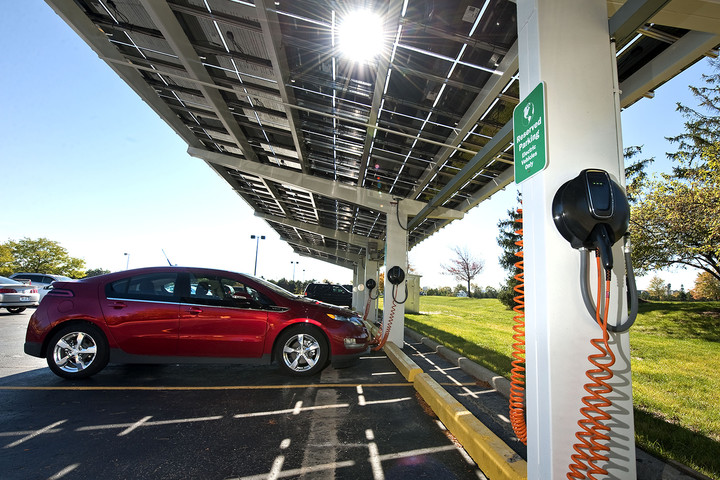
Once you know where the charging stations are, and know you can use them, it’s time to familiarize yourself with the different types. Most public charging stations are Level 2 AC, charging at 240 volts — about twice the rate of normal household current. These typically take several hours to fully charge an electric car. Level 1 is basically plugging a car into a standard household outlet, although some dedicated Level 1 charging stations do exist. Charging at Level 1 takes too long to be practical for everyday use, however, so it’s more of a last resort.
DC fast-charging stations are, as the name implies, faster. They can charge many electric cars to 80-percent capacity in around 30 minutes, though charging rate slows down significantly after that to avoid damaging the battery pack. DC fast-charging stations are more expensive to install and operate, so they’re harder to find and are generally not used at residences.
Not every electric car has a DC fast-charging port, and there are three different types that correspond to different manufacturer-backed standards. The CHAdeMO standard is used primarily by Japanese and Korean automakers, while the Combined Charging Standard (CCS) is used by the majority of U.S. and German automakers. Tesla’s Supercharger stations can only interface with the company’s cars.
Put it in perspective
Owning an electric car can definitely be more challenging than owning an internal-combustion car. Shorter ranges and longer charging times shrink the margin of error for reaching a destination considerably. But that doesn’t mean every trip has to be nerve wracking.
A 2016 MIT study found that current electric cars could replace 87 percent of U.S. personal cars. Researchers looked at travel patterns and, rather than an expensive Tesla, they used the Nissan Leaf as a baseline. Assuming battery technology improves in line with government estimates, electric cars could replace 98 percent of gasoline and diesel cars by 2020, the study found.
Why? Most of the time, people drive relatively short distances. The average commute simply isn’t that long, and if you have a home charging station, you can charge at night and be ready to go in the morning. Range anxiety really only becomes an issue for longer trips, or other unusual circumstances. Put simply, if you can make a plan for those situations, you can conquer it.
Swedish solution to public unrest? Build a gold sauna where people can talk
Why it matters to you
If you have a disagreement with others, try meeting in a sauna to hash it out.
Here’s a unique way to settle public unrest or discord: discuss it in a sauna. No sauna? No problem, build a really cool one and people will come. That’s what happened in the far northern Swedish town of Kiruna when damage threatened from iron ore mining meant the whole town had to relocate a few miles away, according to Dezeen.
Iron ore is a major income source for Sweden, and is Kiruna’s economic lifeblood. A rich seam of ore runs downward diagonally through the town, and the only way to continue mining is to move the whole town and its 18,000-plus residents. Therefore, the town is moving east, and a new masterplan created by architectural firm White Arkitetker is being developed.
Kiruna’s residents were afraid relocating the entire town would devastate their community spirit. That’s when Swedish developer Riksbyggen commissioned artists Bigert and Bergstrom to build a space for townspeople to unite and talk.
The result from the commission is Solar Egg, a golden, egg-shaped sauna. The striking edifice is a place where residents can meet to debate and discuss climate, sustainable community development, and any other concerns.
“Saunas are sacrosanct places where you can discuss all manner of things — from the big to the small,” according to Artist Mats Bigert.
Solar Egg stands approximately 16 feet high and has a 13-foot diameter. The exterior is covered with 69 pieces of gold-plated stainless steel sheets. Inside, pine floor and walls and aspen benches surround the sauna’s human heart-shaped wood stove made of iron and stone. According to the artists, the stove keeps the interior heated between 167 to 185 degrees Fahrenheit.
Residents enter the Solar Egg via stairs on a doorway that lowers like a drawbridge. The sauna’s two-tiered seating has room for as many as eight people at a time to discuss matters of interest large and small with other people from Kiruna.
Big, beautiful, but breakable: Check out the best Galaxy S8 Plus cases
With a 6.2-inch screen and glass curves to die for, the S8 Plus proves big can be beautiful, but it’s also worryingly breakable. If it slips from your hand, you can expect cracks and scratches in that gorgeous glass exterior, not to mention chips and dents in the metal frame. It’s not cheap to fix, so it makes sense to take precautions. Shop for the best S8 Plus cases and covers, and find the right style and level of protection for you. It may be smart to pair some of these cases with one of the best S8 Plus screen protectors, for complete coverage.
Skech Matrix Glitter Case ($19)

If you’d like to add a little sparkle to Samsung’s stunning design, then this Skech case is for you. It features a clear, hard, polycarbonate back with a flexible TPU bumper. It’s a transparent case with glitter embedded in it, though you can get a crystal-clear version. It has a special coating that adds grip, reduces scratches, and resists any yellowing than the sun’s rays might cause. Drop protection is good from up to 8 feet, there’s a raised rim to safeguard your screen, and the slim button covers do their job well. You’ll also find accurate openings for easy access to everything.
Buy one now from:
Amazon
Patchworks ITG Level Case ($15)

This classic combination of shock absorbing TPU with a tough polycarbonate shell should keep your S8 Plus safe from drop damage caused by minor falls from up to 4 feet. It features a smart design with textured sides for enhanced grip, button covers that are easy to find and press without looking, and a sloping cut-out on the back that offers easy access to the fingerprint sensor and ensures there’s no flash splashback. It’s good that you can still enjoy your curved screen with this case on, but we have doubts about how protective it will be if your S8 Plus lands face down. It comes in red or black.
Buy one now from:
Amazon
Nomad Folio Wallet Case ($50)

Here’s a classy S8 Plus case for anyone who wants to leave the wallet at home. The exterior comes in brown or grey leather, and it’s neatly stitched. Open it up and you’ll find three card slots and a larger pocket for cash. There’s also a plastic shell to hold your S8 Plus in place, and it has large cut-outs for easy access to buttons and ports. There’s a good-sized opening on the back for the camera and fingerprint sensor, too.
Buy one now from:
Best Buy
Silk Innovation Base Grip Case ($12)

This is a slim, flexible case that’s easy to fit and offers basic protection for your S8 Plus. It does have a raised lip around the screen and cushioned corners, so it should protect your phone from bumps, scratches, and minor falls, but don’t expect rugged drop protection. The highlight is the textured bumper portion which aids grip. The button covers are very thin and the cut-outs are accurate. This affordable S8 Plus case comes in a teal blue, or in black.
Buy one now from:
Amazon
RhinoShield CrashGuard Bumper ($25)

What we love about this bumper is that it doesn’t cover the screen or back of the S8 Plus and yet it offers solid drop protection from up to 11 feet. It won’t interfere with the camera, NFC, or wireless charging like some S8 Plus cases can. It also features generous openings for the ports and it can be used in partnership with most screen protectors. The downside is that it’s a chunky, hard polycarbonate frame and the button covers are stiff at first.
Buy one now from:
Amazon
Caseology Fairmont Case ($20)

The Galaxy S8 Plus is many things, but one thing that it is not is cheap. The Fairmont case combines sturdy polycarbonate and faux-leather in a stylish package that gives the impression of premium luxury, but without the premium price tag. This case fits the smartphone nicely and is relatively slim. It will provide some measure of protection against bumps and scratches, while looking very smart in a two-tone cherry color combination. If you’re not into big, black, bulky cases, then this may be the way to go.
Buy one now from:
Caseology
Noreve Horizontal Wallet Case ($55)

When it comes to premium, supple leather cases, Noreve should be at the top of everyone’s shortlist. This horizontal wallet case protects your Galaxy S8 Plus from all sides, unlike some other wallet cases that leave the corners exposed. The camera, flash, and ports are easily accessible, so you can take pictures without any hassle. It has pockets for two cards and, as is typical with Noreve cases, you can order it in a variety of leather finishes, textures, and colors.
Buy one now from:
Noreve
UAG Pathfinder Case ($39)

The UAG Pathfinder case combines a very lightweight build with impact shock resistance that meets military drop-test standards. There is a heavily textured pattern on the back and sides of the case for extra grip. Samsung stuck with a headphone jack on the Galaxy S8, but charging and data transfer come via the USB Type-C port. Thankfully, the case features oversized ports so that you can use this case with most headphones, earbuds, or charging cables.
Buy one now from:
Amazon
Otterbox Defender Case ($60)

The Otterbox Defender is one of those cases that offers no apologies. It is big, bulky, and boasts some of the best drop protection of any case. Like other Otterbox cases, it comes certified by Otterbox’s Drop+ protection. One important thing to note is that the Defender case for the Galaxy S8 Plus is a screenless design, so keep that in mind if you were looking for a rugged case with a built-in screen protector. Just because the case is big and rugged doesn’t mean that you have to get it in black; Otterbox does offer some very nice two-tone color combinations including the bizarrely-named marathoner (blue and gray), vinyasa (purple and pink), and the more straightforward aqua mint gray.
Buy one now from:
Otterbox
Lifeproof Case ($90)

If you were looking for a case that doubles down on waterproof protection and has a built-in screen protector, then you’ve just found it. We’re sure you know by now that the Galaxy S8 Plus has IP68 dust and water resistance, but you may want a case that is not only waterproof, but dirt-proof, snow-proof, and drop-proof as well. Lifeproof’s waterproofing also offers slightly more protection than the native IP68 water resistance of the Galaxy S8. This case is submersible to a depth of two meters for up to one hour. It’s a pretty bulky case, but the features and ports are easily accessible. The case is available in a few colors with silly names, including asphalt black, second wind gray (pictured), and twilight’s edge purple (which is actually pink, purple, and turquoise).
Buy one now from:
Lifeproof
 AIVAnet