


Prepaid carrier US Mobile looks to add Verizon coverage this summer
Why it matters to you
US Mobile was a solid and inexpensive prepaid mobile provider before, but with Verizon’s network it will become even better.
Mobile virtual network operators, or MVNOs, are popular choices for wireless customers looking to get service on a budget, without tying themselves down with any long-term contracts or device payment plans. They’re separate companies that operate on major networks, which means they offer the same coverage of some of America’s largest wireless providers for a reduced cost.
US Mobile, an up-and-coming prepaid MVNO that has made news for its à la carte plans that allow you to pick and choose the precise amount of data, texting, and talk time you need, seems to be on the brink of a major partnership with Verizon.
Although the carrier’s website doesn’t specifically name its infrastructure partners, it is widely believed US Mobile uses T-Mobile’s towers — their coverage maps are identical. An update to the site says a launch on “America’s biggest and most dependable 4G LTE network” is coming in the summer, which points to Verizon. We have reached out to US Mobile for clarification.
Many MVNOs that consolidate multiple networks allow devices to switch between them on the fly — so if Verizon has better coverage in a given area than T-Mobile, the phone will default to Verizon’s network. And, in this case, US Mobile’s rates aren’t changing. So coverage improves ten-fold, while prices stay the same. In that sense, it’s a win-win.
US Mobile’s plans aren’t necessarily complicated, but they do offer a lot of choices. Customers have the option of anywhere from a paltry 100 MB of data for $2 a month, to 10GB for $30. On top of that, there’s talk and text. For calling, options range from 100 minutes for $3 to 1,500 minutes for $15. When it comes to texting, plans start at 100 messages for $2, and progress up to unlimited for $7.
Add in the $2 monthly service charge, and the highest allotment plan US Mobile offers comes in at $54. Not bad at all — though, as always with third-party prepaid carriers, there are some caveats to be mindful of.
Although MVNOs benefit from major network coverage, they don’t always offer major network speed. For example, some Verizon MVNOs, like StraightTalk and Tracfone, reportedly only deliver a max of 5Mbps download and 2Mbps upload. That’s significantly slower than the more than 30Mbps download some Verizon post-paid customers are now getting in certain parts of the country.
Furthermore, these customers also tend to miss out on some features, like voice over LTE, visual voicemail, and international roaming, depending on the company. US Mobile confirms on its website that it does not currently support the latter two features, though it does offer “competitive” international calling rates.
It is no surprise that you get what you pay for — but if you can live without the fastest speeds and certain features, companies like US Mobile offer reasonable service for rock-bottom prices. Check out our list of the best prepaid carriers you’ve never heard of to learn more.
Motorola Moto 360 (2015) review

Research Center:
Motorola Moto 360 (2015)
Update: We’ve updated our review of the Moto 360 in the wake of Android Wear 2.0 coming out and new competition, including (but not limited to) the ZTE Quartz watch. We’ve also added a section about the fitness-oriented version of the Moto 360, the Moto 360 Sport. By Kyle Wiggers.
When Google introduced Android Wear, it wasn’t the LG G Watch or the Samsung Gear Live that caught everyone’s attention: It was the Moto 360. Its round screen was revolutionary in 2014, and it was gorgeous. Motorola took that same iconic design and improved it with the 2015 Moto 360. It still doesn’t have a perfectly round screen, but it does deliver more fully on the potential of the first-generation Moto 360.
The Moto 360 2015 was one of the best Android Wear watches around two years ago, and one of the first to cater to both men and women with gender-specific design features. But a lot has changed, and competition is fiercer than ever. There’s the Huawei Watch 2, for example, which boasts incredible battery life, and the ZTE Quartz — one of the most affordable Android Wear watches yet.
The Moto 360 2015 isn’t as obvious a pick as it once was. Still, its gorgeous design keeps it competitive — albeit only barely.
Ladies, look no further than the 42mm Moto 360
As a woman and someone with a smaller wrist, I’ve been strapping on Android Wear smartwatches since they first came out, and each and every time I’ve been let down by such-and-such’s concept of “unisex” and “female friendly.” While the 42mm Moto 360 is still the size of a large Apple Watch, the way the lugs are angled allows it to fit on smaller wrists like mine. The circular shape of the watch face somewhat disguises the size, so even though it is the same measurement as the larger Apple Watch, it doesn’t look as massive. And when you compare it to the 46mm men’s version, it looks downright delicate.
Read more: 10 Moto 360 tips to help you make the most of your smartwatch
Although you may not be able to tell from the photos, the 42mm design actually does fit my ridiculously small wrists and it looks gorgeous. It’s the first Android Wear smartwatch that I’ve ever enjoyed wearing and the only one I’ve ever been complemented on. You see, from a distance when you just glance at it, the Moto 360 looks like a normal watch. Both male and female friends said they liked the way it looked on me better than the 38mm Apple Watch.
 Jessica Lee Star/Digital Trends
 Jessica Lee Star/Digital Trends
 Jessica Lee Star/Digital Trends
 Jessica Lee Star/Digital Trends
The Moto 360 is the first Android Wear smartwatch we can safely recommend to women, and it’s the first smartwatch that’s made me consider dumping the Apple Watch. Is the 42mm Moto 360 the perfect size? No. But its classic, thoughtful design makes it one of the best Android Wear watch options for women yet.
Motorola Moto 360 (2015) Compared To

LG Watch Sport

Huawei Fit

Apple Watch Series 2

Martian Passport MP100WSB

Garmin fenix 2

Meta M1 Watch

LG G Watch R

Netatmo June

Neptune Pine

Motorola Moto 360

Martian Notifier Watch

Samsung Gear 2

Phosphor Touch Time

Samsung Gear Fit

Basis B1
The Moto 360’s 42mm casing fits much more naturally on the wrist than the Huawei Watch 2 Classic, it’s closest cousin in terms of size. It’s also a lot more compact than competitors like the ZTE Quartz and LG Watch Sport, which both exceed 44mm in diameter.
The edges around the Moto 360’s screen are thinner, too, and the profile’s more slender. We also appreciate the angling of the lugs, which don’t wing over slim wrists like the ZTE Quartz. That’s not to say the Moto 360 isn’t thick — up close, you won’t mistake it for a mechanical watch anytime soon. But that’s a problem smartwatches in general have yet to conquer.
The Moto 360 is the first Android Wear watch we can safely recommend to women.
One of the best things about the new Moto 360 at launch was Moto Maker, a design tool that let you tailor the smartwatch to your specifications. You could choose the metal finish on the casing and the bezel, and texture of the watches edges, and the kind of band you wanted. Unfortunately, Motorola’s done away with the Moto Maker option for the Moto 360 — if you want a new watch, you’re restricted to pre-configured models.
Still, the Moto 360 is somewhat customizeable. The bands for the 42mm Moto 360 fit the 16mm standard, so you can buy your own online and they’ll fit.
You get a choice between a couple of different textures around the screen edges, so the metal isn’t too flashy. The textures are really subtle and classic, as are the color options of silver, gold, and rose gold.

Jessica Lee Star/Digital Trends
The watch faces are just as changeable as the watchbands. Many of the designs that ship with the Moto 360 allow you to alter the color palette if you don’t like the default combination, or tweak design elements. One of the coolest is a flower that was hand-painted by a member of the Women’s Collection design team. You can choose between a variety of different flower species, including roses, irises, poppies, lilies, and more.
Typical smartwatch specs
The first Moto 360 suffered from lag and poor battery life, but the new one doesn’t have those problems. It’s powered by a 1.2GHz Qualcomm Snapdragon 400 processor, 512MB of RAM, and 4GB of internal storage, which is was pretty much par for the course for Android Wear smartwatches back in 2015.
The Moto 360’s internals have since been surpassed by smartwatches like the Huawei Watch 2 and LG Watch Sport, which have Qualcomm’s newer Wear 2100 chip and 768MB of RAM. But beyond slightly more responsive menus and reduced loading times, the differences between them are tough to spot.
The 42mm women’s Moto 360 has a 1.37-inch screen with a 360 x 325 pixel resolution, while the men’s 46mm version has a 1.56-inch screen with a 360 x 330 pixel resolution. The two models also differ in terms of battery size, with a 300mAh battery inside the 42mm model, which really only lasts through one day. Just like the Apple Watch, by 11 p.m., you’ll need to pop it on the charger. The 400mAh battery inside the 46mm model is rated for two days of use, but we can’t say whether that’s accurate, because we only tested the 42mm version. Both charge with a wireless charger and connect to your phone via Bluetooth.
Smartwatch battery life hasn’t drastically improved since the Moto 360’s launch. In fact, the Moto 360’s battery life is comparable to newer Android Wear smartwatches such as the Hauwei Watch 2, which packs a 420mAh battery and lasts about a day and a half, and the LG Watch Sport, which has a 430mAh battery that averages about a day. Beyond exceptions like the ZTE Quartz, which packs a whopping 500mAh battery that lasts a day and a half, the Moto 360 doesn’t perform any worse — or better — than the competition.
The Moto 360’s screen, on the other hand, isn’t as competitive as it used to be. The Huawei Watch 2’s 1.2-inch screen has a resolution of 390 x 390 pixels, and the LG Watch Sport’s 1.38-inch screen sport has 480 x 480 pixels. And both are OLED compared to the Moto 360’s LCD, which means they’re generally brighter, more vibrant, and more power-efficient.
Read more: 5 common Moto 360 problems, and how to solve them
It’s worth noting that Android Wear smartwatches like the Moto 360 now work with iOS device like the iPhone — you’ll get notifications just like you would on your phone (more on that later).
 Jessica Lee Star/Digital Trends
 Jessica Lee Star/Digital Trends
 Jessica Lee Star/Digital Trends
The new Moto 360 packs sensors including an accelerometer, ambient light sensor, gyroscope, and heart rate monitor. The heart rate monitor syncs up with the new Moto Body app, which gives words of encouragement and coaching throughout the day to help you reach your fitness goals. It’s similar to the Apple Watch’s little alerts, which we’ve always found motivating. We like it much better than the standard Android Wear fitness app.
Finally, thanks to a coating on the aircraft-grade 316L stainless steel casing of the Moto 360, the Moto 360 offers IP67 water resistance, so it’s be safe from small splashes. Motorola still cautions against swimming with it on, though.
Another option: The Moto 360 Sport


Moto 360 Sport
There’s another variant of the Moto 360, and it focuseson fitness: The Moto 360 Sport. Unlike the Moto 360 model, the 45mm Moto 360 Sport ships with a sweatproof silicon watchband and a 300mAh battery that lasts “a full day.
In terms of internals, the it’s pretty much identical to the other Moto 360 models. The Moto 360 Sport packs the same same 360 x 325-pixel screen as the women’s Moto 360, and the same 1.2GHz Qualcomm Snapdragon 400 processor, the same 512GB of RAM and 4GB of internal storage, and even the same accelerometer, ambient light, heart rate, and barometric pressure sensors.
Basically, the Moto 360 Sport’s meant for more “active” scenerios than the classic models. If you’re looking for a Moto 360 that’ll survive a jog or run relatively unscathed, it’s probably the one you want.
Android Wear on iOS and Android
Let’s get this out of the way: we’ve never been fond of Android Wear. All the swiping, the weird process for onboarding apps, the endlessly scrolling app menu, and the awkward appearance of notifications and “OK Google” marring my watch face – It all annoys us. We much prefer the app screen of the Apple Watch and its pull-down method of storing of notifications. Android Wear needs some serious help.
Android Wear 2.0 is an improvement, but the Moto 360, which launched with an older version of Android Wear, has yet to get it. That means it misses out on Android Wear 2.0’s streamlined interface, its widgets on the watch face, its stand-alone Google Play Store, and Google’s AI-powered Google Assistant. It also lacks Android Pay, Google’s tap-to-pay payments platform and an improved Google Fit app that automatically detects workouts.
Google and Motorola’s parent company, Lenovo, have both promised to update the Moto 360 to Android Wear 2.0 sometime this year. But so far, the update hasn’t come.
If you like Android Wear and you’re not into chunky watches, you’ll love the new Moto 360.
Having said that, the Moto 360’s older Android Wear isn’t all that bad. We went all in with Motorola for a few weeks using the new Moto X and Moto 360 together, and the experience was as good as it gets for first-generation Android Wear devices.
It’s OS is fantastic with Android phones, and works pretty much just as well with iPhones. A few iOS restrictions prevent Android Wear from integrating tightly with iPhones, so you won’t be able to do everything with your Android Wear watch that you can do if you’ve got an Android phone. And the list of apps that work with iOS and Android Wear is also still pretty limited. However, you can receive notifications from any app on your iPhone, which is great — you just can’t interact with most of them.
Android Wear 2.0 offers a much better experience with iOS — thanks mostly to the Google Play Store, which lets you search, download, and install apps independent of a smartphone.
Our Take
It’s not every day we see a smartwatch we actually like. In fact, there are only two smartwatches that really work for people with smaller wrists. The new 42mm women’s Moto 360 is one; the 38mm Apple Watch is the other. Of the two, the Moto 360 is prettier, but the Apple Watch is simpler and easier to use.
If you like Android Wear and you’re not into chunky watches, you’ll love the new Moto 360. It’s just the right size, and the new lugs are slimmer and more attractive than any you’ll find on the LG Watch Sport, Huawei Watch 2, or ZTE Quartz.
Is there a better alternative?
No. The Moto 360 was a great smartwatch in its time, but it’s since been outclassed by the competition. The processor is beginning to show its age, and the screen doesn’t compare very favorably with the LG Watch Sport and the Huawei Watch 2’s panels. The Moto 360 still has an attractive design, but it’s not enough to warrant a recommendation over newer Android Wear devices.
How long will it last?
It’s hard to believe the Moto 360 launched in 2015. It’s stood the test of time relatively well so far, and an update to the latest version of Android — Android 2.0 — should help. Unfortunately, despite repeated assurances from Google and Lenovo that the update is forthcoming, we’ve yet to see it.
Then there’s the fact that the Moto 360’s hardware isn’t as competitive as it once was — and that Motorola’s stopped selling it directly. Considering all that, we don’t expect the Moto 360 to last much more than a year from now.
Should you buy it?
No. In the end, smartwatch choices come down to looks, since most of them have the same insides and even the same OS onboard. In our eyes, the 2015 Moto 360 is still one of the best-looking Android Wear watch yet. However, the Moto 360 came out in 2015. It doesn’t have the newest, much improved version of Android Wear (yet), and its hardware is beginning to show age. That’s why we recommend considering one of the many, many alternatives. If you have a smaller wrist, you don’t have a lot of other options, unfortunately.
Highs
- First female-friendly Android Wear smartwatch
- Sublte, classic design
- Android Wear has come a long way
Lows
- No NFC or mobile payments
- Still stuck on Android Wear 1.0
- iOS support is limited
Review originally published Oct. 2, 2015.
Russian Android malware infects millions of phones, drains bank accounts
Why it matters to you
‘Cron’ malware used by Russian hackers to target bank accounts generated hundreds of thousands of dollars, according to reports.
Hackers used mobile malware to steal hundreds of thousands of dollars from bank customers. That’s according to Reuters, which reported on May 22 that cybercriminals tricked Russian users of Google’s Android operating system into downloading malicious apps.
The group of 16 Russian hackers, operating under the code name “Cron” after the malware they used, disguised the malware as fake banking applications and pornography web clients. When Android users in Russia searched online, the search engine results would suggest the fake apps.
The core members of the group were arrested on November 22 last year, before they could mount attacks outside Russia. But according to Group-IB, the cyber security firm investigating the attack with the Russian Interior Ministry, the Cron group infected more than a million smartphones in Russia at a rate of 3,500 devices a day.
“Cron’s success was due to two main factors,” Dmitry Volkov, head of investigations at Group-IB, said in a statement. “First, the large-scale use of partner programs to distribute the malware in different ways. Second, the automation of many (mobile) functions which allowed them to carry out the thefts without direct involvement.”
They targeted customers of Sberbank, Alfa Bank, and online payments company Qiwi, exploiting SMS text message transfer services. The group sent texts from infected devices instructing the banks to transfer money to the hackers’ accounts — up to $120 to one of the 6,000 fraudulent accounts. And they intercepted the transaction confirmation codes, preventing the victims from receiving a messages notifying them about the transaction.
They’d planned to go after large European banks including French lenders Credit Agricole, BNP Paribas, and Societe General, according to Group-IB.
Cron malware, which was first detected in mid-2015, had been in use for more than a year before the arrests. The Russian hackers rented a “Tiny.z,” a piece of malware designed to attack checking accounts systems, for $2,000 a month in June 2016, and adapted it to target European banks in Britain, Germany, France, the United States, and Turkey, among other countries.
Lukas Stefanko, a malware researcher at cyber security firm ESET in Slovakia, told Reuters that the exploit highlighted the dangers of SMS messages in mobile banking.
“It’s becoming popular among developing nations or in the countryside where access to conventional banking is difficult for people,” he said. “For them it is quick, easy, and they don’t need to visit a bank … But security always has to outweigh consumer convenience.”
Living cells line this workout shirt to let it breathe better and keep you cool
Why it matters to you
Biohybrid technology can turn everyday objects into dynamic and responsive devices — including having your workout shirts keep you cool.
In the future, your clothes will be lined with living cells. Researchers at the Massachusetts Institute of Technology developed Biologic, a biohybrid technology behind workout clothes that ventilate when a wearer sweats thanks to a lining of microbes.
“We found that microbial cells are sensitive to moisture change in the environment,” Wen Wang, a biotech researcher who led the study, told Digital Trends. “At dry condition, the cell shrinks to a smaller size, while at humid condition, it swells to a bigger size.”
Wang and his team used bioprinting to coat small flaps of latex with E. coli cells, creating a sandwich with microbes on the top and bottom, as they described in a recent paper published in the journal Science Advances. When exposed to heat or moisture, the cells shrink and cause the latex to bend. So when a wearer warms up and starts sweating, the flaps curl and create little vents, allowing air to flow and the fabric to breathe better.
“This fabric can respond to skin moisture through bending, and create the air flow to help remove the moisture on the skin,” Wang said.
To test their durability, the flaps were run through 100 dry/wet conditions with no significant degradation in their ability to bend, according to the researchers. Commercial workout clothes will need to last more than a few months, so more trials will be needed to ensure its ability to stand up to strenuous exercise.
Although the team’s main prototype is a workout suit, Wang said they’ve explored a number of applications for this technology.
“Since the shape transformation is instant, reversible and repeatable, we believe that there should be many moisture-related applications, especially in our home and around our body,” he said.
For one, they’ve created a “living tea bag” with cells that signal when your tea is ready. They have also experimented with a lampshade that adjusts to the heat of a lightbulb to display different patterns and a toy that responds that changes its shape.
Moving forward, the researchers plan to integrate their technology into commercial products and hope to have athletes sporting their ventilating apparel as early as the 2020 Olympics in Japan.
Your sweat won’t affect these $10 Bluetooth headphones
Our friends at Thrifter are back again, this time with some extremely affordable Bluetooth headphones you should try!
If you’ve been considering making the move to Bluetooth headphones but don’t want to spend a ton to try them out, this may be the perfect set for you. Right now you can pick up Mpow’s sweatproof Bluetooth headphones for just $9.99 with coupon code WQMZZ4LE, which is a savings of $23. Keep in mind that at this price you won’t be getting Bose quality headphones, but if you are looking to try something out, or need a new set of headphones for the gym, these may be perfect for the job.

The headphones are lightweight and comfortable, and the non-slip rubber ear hooks help keep them in place. Odds are you can find sillier ways to spend $10 today, so why not give these headphones a shot!
See at Amazon
For more great deals be sure to check out our friends at Thrifter now!
Google I/O 2017: Developers share their highlights
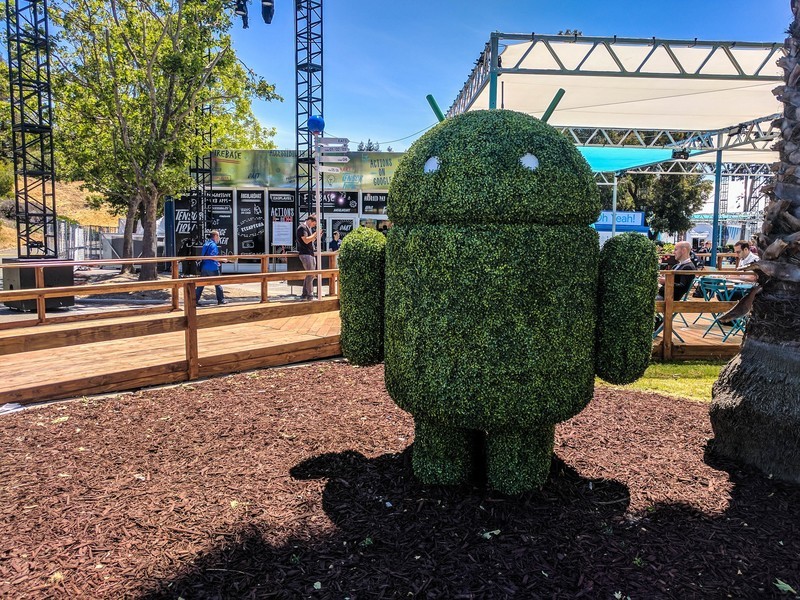
Google I/O is a developers conference, after all, so we asked developers to tell us about what excited them this year.
What would Google I/O be without the mass number of developers congregating together in honor of one of the world’s biggest mobile operating systems? Well, it wouldn’t be much. After all, this is a developer’s conference.
I went around and asked a few Android developers what they loved most about the Google I/O keynote and the conference this year. And interestingly, many of those who were queried had something to say about the addition of Kotlin for Android.
Voltrack Poltrack, Fat Russell
AC: What was your favorite part of the Google I/O keynote?
I’m excited to work on stuff for the Google Home. Something for world domination.
AC: What are you most looking forward to from the conference?
I’m excited about the Android Wear talks, but I’m biased. [Poltrack is a developer of Android Wear apps.]
Mike, Developer at Speedify
AC: What was your favorite part of the Google I/O keynote?
I’m really excited about the changes to Android Studio 3.0. So many awesome features — the new profiling features really look good. I’m also really excited for the Fabric and Firebase merger. We use Fabric all the time at work and I think it will be awesome to have a single console.
AC: Will that make developing easier for you?
It’ll make detecting bugs to deliver a good, stable product much easier.
Lucia, N26 – The Mobile Bank

AC: What was your favorite part of the Google I/O keynote?
Kotlin, obviously. Kotlin is a smarter, more advanced language. Now that Google is going to support it officially, it’s going to push the community to do much more with it. I’m very excited to see how this goes.
AC: Will that make developing easier for you?
Migrating Java to Kotlin is easy in a way because you can have both, but there is a learning curve…so I don’t know about that, but let’s see.
Jerrell Mardis, Ride Metra
AC: What was your favorite part of the Google I/O keynote?
Kotlin. It’s an awesome language and it’s an upgrade over Java.
Erik Hellman, Freelancer
AC: What do you develop?
Android, mostly. Sometimes I’m unfortunate enough to do stuff that is less interesting, but mostly Android.
AC: What was your favorite part of the Google I/O keynote?
The lady from YouTube with the Red Blazer. That was amazing.
AC: Did Google announce anything that would make development easier for you?
Tons of stuff. I’ll be out of work soon because they’re going to put Machine Learning in everything, so.
AC: What about Kotlin?
I’ve been doing Kotlin for a couple of months already, so it’s nice to see it get official support.
‘Uncharted’ movie will star Sony’s new ‘Spider-Man,’ Tom Holland
The fabled Uncharted film is getting closer to reality — for real, this time. After finding a new director in Shawn Levy (Night at the Museum, Stranger Things), Deadline reports that the movie will be a prequel to the popular PlayStation games. And, even more surprising, Sony is bringing on Tom Holland, its new Spider-Man lead, to play young Nathan Drake. Since this is a complete shift for the film, the studio will also have to bring in a new writer to pen an entirely new script. Basically, be prepared to wait even longer for the Uncharted film.
As Deadline reports, the film is partially inspired by a flashback sequence in Uncharted 3, where young Nathan Drake first meets his future thieving friend Sullivan. It’s not exactly the Uncharted movie most of us were imagining, but it puts Sony is a position to create a multi-film franchise as we watch Drake mature. Personally, I would have loved to see Joe Carnahan’s take on the franchise, but at least we won’t be completely retreading everything we’ve already seen in the Uncharted games. At least, not yet.
Source: Deadline
Samsung Galaxy S8 vs S8 Plus: Which should you choose?
Samsung’s Galaxy S8 and S8 Plus are finally available, bringing 5.8-inch and 6.2-inch smartphones to the flagship party.
The two devices have plenty of great specs and features on offer but how do they compare? Here is the difference between the Galaxy S8 and the S8+, to help you choose which to buy.
Samsung Galaxy S8 vs S8+: Design
- Same design and colour options
- S8+ is the larger, heavier device
- Slim bezels, no home button and rear-mounted fingerprint sensor
The Samsung Galaxy S8 and S8+ feature an identical design, though as you’d expect from the names, the Plus is the larger version. The S8 measures 148.9 x 68.1 x 8mm and weighs 155g, while the S8+ measures 159.5 x 73.4 x 8.1mm and hits the scales at 173g.
Both devices continue with the metal and glass sandwich design and both have a dual-edge “Infinity” display, rather than one being flat and one being curved as was the case with the Galaxy S7 and S7 edge.
There are very slim bezels at the top and bottom of the displays on both devices, no physical home button on the front of either and both have a rear-mounted fingerprint sensor to the right of the camera lens. They are also both IP68 waterproof and they both offer USB Type-C and a 3.5mm headphone jack.
The only real decision here is how big you want your phone to be.
- Samsung Galaxy S8 review
Samsung Galaxy S8 vs S8 Plus: Display
- S8 has 5.8-inch display, S8+ has 6.2-inch, both Quad HD+ resolutions
- Both 18.5:9 aspect ratio
- Both AMOLED Infinity Displays with Mobile HDR Premium
The Samsung Galaxy S8 features a 5.8-inch display, while the S8+ has a 6.2-inch screen, meaning a 0.4-inch difference between the two devices. This physical size variation is almost the only difference.
Both devices have an AMOLED Infinity Display meaning they are both curved and both have an aspect ratio of 18.5:9 compared to the standard 16:9, meaning they appear taller than a conventional phone. The only difference in the real world is that the increased size of the S8+ gives you a more engrossing experience when watching video or movies.
Resolution is the same for both at 2960 x 1440 pixels, resulting in a pixel density of 570ppi for the Galaxy S8 and 529ppi for the Galaxy S8+. It means both will offer super sharp detail but the Galaxy S8 has the slight edge in terms of numbers thanks to it being a little smaller allowing for a few more pixels to be packed in per inch.
Both the Galaxy S8 and Galaxy S8+ have Mobile HDR Premium and they are both certified by the Ultra HD Alliance for the technology. Essentially, it means both these devices are ready for HDR compatible content, which can be found on Netflix and Amazon Video.
- Samsung Galaxy S8+ review
Samsung Galaxy S8 vs S8+: Camera
- 12MP Duo Pixel rear camera on both S8 and S8+
- 8MP front-facing camera with autofocus on both
- Bixby Vision on both
The Samsung Galaxy S8 and S8+ both have the same 12-megapixel Duo Pixel rear snapper as their predecessors, featuring an f/1.7 aperture and OIS, while the front-facing camera resolution has been bumped up on both devices to 8-megapixels and autofocus has also been added.
Augmented reality, filters and stickers have all been added to the new devices too and both models integrate Bixby Vision, which is a visual search feature that uses the camera to scan and return information.
Samsung is also using multi-frame image processing on the two new devices, whereby the camera takes three pictures in order to create one better and more detailed image. Ultimately, the S8 and S8 Plus have the same camera capabilities as each other, unlike the Apple iPhone 7 and iPhone 7 Plus, and it’s a fantastic camera too.
- Samsung Galaxy S8 vs Galaxy S7: What’s the difference?
Samsung Galaxy S8 vs S8 Plus: Hardware
- Both have Exynos 8895 or Qualcomm SD835 chipsets
- 4GB of RAM, 64GB storage, microSD on both
- S8+ has larger battery capacity
Like their cameras, the Samsung Galaxy S8 and S8+ have the same hardware capabilities, except in terms of the battery capacity. The devices will likely feature either the Qualcomm Snapdragon 835 processor or the Exynos Series 8895 chip, depending on the region, and both will offer 4GB of RAM, 64GB internal store and microSD support.
Aside from the display size, battery capacity is the other differentiating factor between the S8 and S8+, with the smaller model coming with a 3000mAh capacity, and the larger with a 3500mAh cell. That means the bigger phone last longer, which isn’t surprising. If you’re a power user, the larger device will cope better.
As we mentioned previously however, both have USB Type-C and they both offer support for both fast charging and wireless charging.
There is iris scanning capabilities on both the Galaxy S8 and S8+ and both have a rear-mounted fingerprint sensor for unlocking the device. It’s also possible to use the pressure sensitive home button built into the bottom of both displays.
- Samsung Galaxy S8 vs LG G6: What’s the difference?
Samsung Galaxy S8 vs S8+: Software
- Android Nougat with TouchWiz on both S8 and S8+
- Bixby voice assistant on both
- Both compatible with Samsung DeX
The Samsung Galaxy S8 and S8+ both launch on Android Nougat with TouchWiz on top so the software experience is be identical. It’s similar to the Nougat experience on the Galaxy S7 but it adds a few extra features, including some from the Note 7.
One of the new features is Bixby, Samsung’s AI system that will be available on both the Galaxy S8 and S8+, naturally, but it won’t launch in all countries straight away. There is a dedicated button on the left side of both devices that will launch Bixby however and rather than just a rival to Google Assistant, Bixby hopes to take things that little bit further.
Both devices will also be compatible with Samsung DeX, which allows the handsets to connect to a monitor for a desktop view of the devices using a special docking station.
- What is Bixby? Everything you need to know about Samsung’s assistant
Samsung Galaxy S8 vs S8 Plus: Conclusion
The Samsung Galaxy S8 and S8+ are almost identical. They offer the same beautiful design, aside from the physical size, and they have the same camera capabilities and software experience.
The Galaxy S8 is the smaller and more manageable of the two for those with slightly smaller hands, but both can be operated one-handed. The Galaxy S8 has the slightly sharper display, though you aren’t likely to notice with the human eye, while the S8+ has the larger battery capacity and will last longer.
The S8+ is the more expensive of the two by £90 at £779 compared to £689, but you do get that slightly larger display and a bigger battery. The decision will ultimately come down to budget and whether you are after a slightly bigger device.
LG X Venture rivals Galaxy S8 Active for extreme smarts
There have been several rumours about a forthcoming rugged version of the Samsung Galaxy S8, the Galaxy S8 Active, but it seems that LG has beaten its Korean rival to the punch.
The LG X Venture is a ruggedised, water and dustproof handset designed specifically for those who lead a more active lifestyle.
It is IP68 rated, which means it can survive being submerged in water down to 1.5 metres for up to 30 minutes. It’s also dust tight, so can be taken off-roading or the like.
There are three physical buttons on the front so it can be used in cold climates, while wearing gloves, and there is even a Glove Mode that, once turned on, recognises gloved screen taps and swipes.
LG
It comes with a 5.2-inch Full HD (1920 x 1080) screen, is powered by a Qualcomm Snapdragon 435 processor and has a mighty 4,100mAh battery. This can be charged speedily, with Quick Charge 2.0 charging the phone from empty to 50 per cent in 48 minutes.
The front-facing camera is 5-megapixels, while the rear is 16-megapixels. There is 32GB of storage on-board, with the ability to expand that by a further 2TB through microSD card. The phone sports 2GB of RAM.
It runs Android 7.0 Nougat and weighs 166.5kg, measuring 154 x 75.8 x 9.29mm. There’s a fingerprint sensor too.
The LG X Venture launches in North America first, available from today. Some areas in Europe will follow, along with regions in Asia, Africa, the Middle East and Latin America. Price is yet to be revealed.
Far Cry 5 revealed, heading to Montana for some good ol’ hillbilly mayhem
Ubisoft will fully reveal Far Cry 5 on Friday 26 May, but in the meantime has released several vignettes showing that the new chapter will be set in the North West of America.
The series is heading to Montana and, from brief teases in the videos, looks to include some hillbilly action. What’s the betting that the main villains this time around exhibit traits made famous in Deliverance?
There’s also some really sinister things going on in the four teaser trailers released so far, if you look closely. Hint: check out the bell in the church bell tower and what’s making it ring.
The time period in which the new game is set isn’t clear, although it’s likely to be modern day. There will certainly be some scares, we reckon, although we hope that there’s also plenty of the dark humour of Far Cry 4. Pagan Min is one of the best gaming bad guys we’ve ever faced – one of the funniest too.
We have to wait until this Friday before finding out the release date for Far Cry 5, or the formats it will appear on. The worldwide reveal will happen at 2pm BST on that day though, so mark it in your diary.
Oh, and welcome to Hope County!
 AIVAnet