


Google Assistant voice control comes to GE connected appliances
You may want to practice saying “Ok Google” if you have GE WiFi-connected appliances in your home. Just as Bloomberg reported a few days ago, GE worked with the tech titan to integrate Google Assistant into its system. Now, you can use the voice-activated helper through Google Home, a Pixel or other select Android phones to operate various smart appliances. Take note that the big G’s Assistant can’t exactly control the devices directly. Your commands work by going through Geneva, the skill GE developed when it launched Amazon Alexa integration for its appliances in September last year.
That’s the reason why your commands will have to start with the phrase “Ok Google, ask Geneva Home…” For instance, you can control the fridge by saying “Ok Google, ask Geneva Home to make hot water” or “to set the freezer to -3 degrees.” You can ask Geneva “to set [the oven’s] cook timer for 20 minutes,” “to set the water heater to 110 degrees” or “to turn the air conditioner to 72.”
If you want to check on, say, your laundry’s status, you can also ask Google and Geneva if your laundry is already clean and dry. You can do something else while the dishwasher does its job and simply ask when the dishwasher will be finished, though you can also choose to get automatic notifications for each task. To be safe, however, you can’t control features that require constant supervision with voice commands, such as cooking on the stovetop. If you want a futuristic, voice-activated home, Assistant integration could help bring you closer to fulfilling that dream despite its limitations.
GE Appliances VP Liz VerSchure said in a statement:
“Everyone’s busy these days and our consumers are looking for simpler and more convenient ways to control their home, especially when busy in the kitchen or working around the house. Integrating our full suite of connected appliances with the Google Assistant makes it easier for owners to control their appliances and get on with their day.”
Source: GE
Amazon’s Fire tablets get a little thinner and a little faster
If you grabbed a person in the street and asked them when Amazon releases new tablets, you’d expect them to shout “September-ish!” before calling the calls. After all, the company has released a new Fire HD slate in late September or early October for pretty much the last five years. So it’s a little surprising to see Amazon pulling the dust sheets off its updated lineup of tablets in May.
There’s nothing too drastic or shocking with the update, and the Fire 7 gets a thinner and lighter chassis and an improved 7-inch IPS display. Battery life and chip performance have been tweaked, as well as the WiFi connectivity, not to mention the addition of voice assistant Alexa.
Amazon’s done a little less to the Fire HD 8, throwing in faster, more power-efficient internals but leaving everything else the same. Thankfully, the device’s biggest new feature will help your wallet: it’s $10 cheaper than the existing model, retailing for $79.99.
The company is also whipping out Kiddie versions of the tablets, with both the Fire 7 Kids and Fire HD 8 Kids getting “kid-proof cases.” Otherwise they’re pretty much the same as their adult relatives, albeit with a year of Amazon FreeTime Unlimited and a two-year, no questions asked guarantee.
Price-wise, the vanilla Fire 7 will set you back $49.99 (£44.99), while the Fire HD 8 is priced at $79.99 (£79.99), with the kids versions coming in at $99.99 (£99.99) and $129.99 (£129.99), respectively. All four members of the trio will begin shipping on June 7th, and Amazon will knock 20 percent from the price if you buy more than three in one go.
UK turns to Snapchat to boost young voter turnout
The Electoral Commission has partnered with Snapchat to launch a UK-wide geofilter encouraging selfie-swappers to register to vote in the upcoming general election. It’s live in the app right now and asks users to “Find your voice!” ahead of the May 22nd registration deadline and actual vote on June 8th. This nationwide geofilter follows a more localised campaign in Scotland last month, which was intended to get youngsters hyped for council elections — 16 and 17 years old particularly, given it was the first vote they were eligible to participate in.
Facebook and Twitter have become increasingly important political forums. Users share news and debate amongst themselves, and both platforms foster direct communication between politicians, parties and voters. Snapchat is a slightly different beast, but with 10 million daily users in the UK, it makes sense that the Electoral Commission would want to connect with young people on their terms. Some have dismissed the geofilter as gimmicky, but it’s not like there’s any great harm in trying to whip up a few more registrations — especially when no money changed hands to make it happen, according to an Electoral Commission spokesperson talking to Business Insider.
Snapchat geofilters were particularly popular with politicians and organisations in the run-up to last year’s US Presidential election. The Trump campaign even went to the trouble of launching a country-wide geofilter attacking “Crooked Hillary” on a day the two candidates were due to debate.
Via: Business Insider
Moog’s latest Sub 37 synth has even more grit than the original
Last year at Moogfest, the namesake synth maker set up a temporary instrument factory to crank our its Model D reissue. For the 2017 installment of the analog soiree, Moog is building another synthesizer on-site in Durham, North Carolina, but this time it’s a retooled version of the more compact Sub 37. Officially dubbed the Subsequent 37 CV, this new model carries a similar overall construction as its predecessor. However, the front panel is now silver and the side panels are solid aluminum with inset North American hardwood. I won’t be shy about it: This thing is a beaut.
“We were inspired to create the Subsequent 37 CV by, or due to, all the feedback we received from players who were in love with the deep modulation capabilities of the sub 37 and wanted to bring that expressivity out to the other gear in their studio,” explains Moog engineer Amos Gaynes.
The “CV” in the model name refers to the four assignable control voltage outputs on the side that sit next to two assignable gate outputs. Those connections allow you to connect the Subsequent 37 CV to much more robust modular systems. Moog also revamped the keybed for increased playability and upgraded headphone amp for live monitoring with high-quality sound. The company also modified the analog signal path on this new piece of gear.
“[Control Voltage] allows you to take an changing [electrical] signal from one place to and use it to control the properties of a different sound-making circuit,” Gaines notes. “It’s important because it allows you to interconnect one thing and another. It allows you to freely connect sources of expression with the musical properties of your studio equipment.”

He also explains a key advantage to analog: its responsiveness.”One really good thing about control voltage is that it’s direct and immediate,” he says. “It’s much higher resolution than digital equivalents. It’s alive–it’s infinitely responsive.”
In terms of changes to the sound profile, Moog retuned the Multidrive circuit for even more growl and a grittier sound than the original Sub 37. There’s also now more headroom in the mixer which improves the sound in Duo mode. In fact, Moog says there’s twice as much headroom on the Subsequent 37 CV than the Sub 37 Tribute Edition. And yes, that classic Mood Ladder Filter is still part of the tool box as are some familiar controls from that previous model — like 256 presets and 16 banks of 16 patches.
“We took the opportunity when redesigning the instrument not only to add expressive CV output control, but to realize some of our long-held ambitions for the sound engine,” Gaines says.
The first 125 synthesizers will be built at Moogfest and feature presets from artists like 808 State. Those units will be sold exclusively through Guitar Center at the event between May 18-21. Moogfest in Durham. If you can’t make the trip on short notice to take in the event in person, Moog plans to sell 2,000 of the instruments total, so you’ll have a shot at nabbing one after this weekend. If you’re able to find one, you’ll need to hand over $1,799 in order to take it home.
Encrypted Messaging App ‘Signal’ Approved for Use by U.S. Senate
The U.S. Senate has approved popular encrypted messaging app Signal for official use by staffers in the chamber, it was revealed yesterday (via ZDNet).
The news came in a letter sent on Tuesday by Senator Ron Wyden (D-OR), known to be a staunch privacy advocate, in which he underlined his belief that “backdoor-free” encryption should be embraced by the state at all levels rather than something the government should fear.
I have long argued that strong, backdoor-free encryption is an important cybersecurity technology that the government should be embracing, not seeking to regulate or outlaw. My own Senate website, which has used HTTPS by default since 2015, was the first Senate website to do so. With the transition to default HTTPS for all of the other Senate websites and the recent announcement by your office that the end-to-end encrypted messaging app Signal is approved for Senate staff use, I am happy to see that you too recognize the important defensive cybersecurity role that encryption can play.
Signal by Open Whisper Systems is widely considered by security experts to be the most secure mobile messaging platform on iOS and Android, due to features like end-to-end encryption of text, picture, and video messages, support for private calling, and a lack of separate logins.
Members of Congress are for the most part exempt from record-keeping laws, so long as encrypted communications are not “historically valuable”, or do not include committee documents. However, workers of the federal government and those who work directly with the president are governed by federal and presidential record-keeping laws. Indeed, communications over encrypted apps may fall foul of the Presidential Records Act, which requires staff to keep records of those conversations.
In January, The Wall Street Journal reported that political aides close to the president had been using Signal, but the White House declined to comment on whether the Trump administration has set up data retention policies for its encrypted messaging use.
Last year, Apple was embroiled in a public dispute with the FBI over a request to create a backdoor into iPhone software so that it could unlock the phone of the San Bernardino shooter. Apple refused to comply with the request, claiming that the code would lead to weaker smartphone encryption and inevitably get into the wrong hands.
Eventually the FBI backed down in its request and resorted to third-party hacking tools, but throughout the case, Apple CEO Tim Cook remained adamant on the company’s continuing stance for user privacy, calling the FBI’s request for entering an iPhone “the software equivalent of cancer”.
Note: Due to the political nature of the discussion regarding this topic, the discussion thread is located in our Politics, Religion, Social Issues forum. All forum members and site visitors are welcome to read and follow the thread, but posting is limited to forum members with at least 100 posts.
Tags: security, Encryption, Signal
Discuss this article in our forums
Qualcomm Files New Lawsuit in Ongoing Apple Feud, Now Targeting Four Major iPhone Suppliers
In the ongoing feud between Apple and Qualcomm, the latter company today has brought four of Apple’s main iPhone and iPad suppliers into the legal battle by filing a breach of contract complaint against Foxconn, Pegatron, Wistron, and Compal.
Qualcomm has sued the four manufacturers for “breaching their license agreements” by failing to pay royalties on the use of Qualcomm’s technology in the assembly of Apple’s devices. For its part in the production of iPhones, Qualcomm supplies the LTE modem in Apple’s smartphone.
The cessation of royalty payments by the iPhone manufacturers isn’t too surprising, as it follows a report from April in which Apple itself stopped paying its suppliers for royalties related to Qualcomm. According to Qualcomm, “the manufacturers say they must follow Apple’s instructions not to pay,” so in retaliation Qualcomm is suing the four companies, asking them to comply with long-standing contractual obligations as well as pay any withheld royalties.
Qualcomm said that Foxconn, Pegatron, Wistron, and Compal are still paying royalties for Qualcomm technology related to non-Apple products “under the very same agreements that apply to the Apple products.” Qualcomm further mentioned that its license agreements with the manufacturers began before Apple even sold its first iPhone, meaning that “Apple is not a party to the agreements” and shouldn’t be able to interfere so heavily in its business.
“It is unfortunate that we must take this action against these long-time licensees to enforce our agreements, but we cannot allow these manufacturers and Apple to use our valuable intellectual property without paying the fair and reasonable royalties to which they have agreed,” said Don Rosenberg, executive vice president and general counsel of Qualcomm.
“As Apple continues to collect billions of dollars from consumer sales of its Qualcomm-enabled products, it is using its market power as the wealthiest company in the world to try to coerce unfair and unreasonable license terms from Qualcomm in its global attack on the company. Our license agreements with Apple’s manufacturers remain valid and enforceable. The manufacturers must continue to live up to their obligations under these agreements and Apple should immediately cease its tortious interference.”
In the original report relating Apple’s suspension of royalty payments, the move was suggested to hurt Qualcomm to the tune of $500 million, causing the company to adjust its third quarter guidance from $5.3 billion – $6.1 billion in revenue down to $4.8 billion – $5.6 billion. The argument between the two companies originates back to an FTC complaint regarding Qualcomm’s anticompetitive patent licensing practices, for which Apple sued Qualcomm, accusing the company of charging unfair royalties for “technologies they have nothing to do with.”
The feud reached a boiling point in April due to Apple’s decision to stop royalty payments to its manufacturers in relation to Qualcomm technology, and would continue doing so until the conflict was resolved. The move particularly hurt Qualcomm because the company’s licensing deals are directly with iPhone suppliers, like the four it is now suing, and not Apple itself.
In a statement given last month, Apple said, “We’ve been trying to reach a licensing agreement with Qualcomm for more than five years but they have refused to negotiate fair terms.” The company called Qualcomm’s demands “unreasonable,” arguing that Qualcomm has been “charging higher rates” based on Apple’s own innovation in its devices, “not their own.”
Tags: lawsuit, Qualcomm
Discuss this article in our forums
Huawei Nova 2: News and rumors
Why it matters to you
The original Huawei Nova smartphone had a few problems, but the sequel is shaping up to cure several of them.
The Huawei Nova and Nova Plus were announced in September 2016, and while we appreciated the beautiful minimalist design and excellent camera, we weren’t quite so taken with the shaky software and high price. Rumors are spreading Huawei is preparing the Nova 2 range for release, and it may come sooner rather than later. Here’s everything we think we know about them so far.
Design
A series of promotional posters leaked on the Chinese social network Weibo may give us a clue about the Nova 2’s design. If the images are accurate portrayals of the Nova 2’s design, then it’s clear Huawei is taking plenty of inspiration from the P10 and P10 Plus, including the use of two camera lenses.

This leaked poster shows up to four different colors — a green, a pink, a blue, and possibly a black model. Huawei used blue and green to great effect on the P10, where it worked with color experts Pantone to come up with the looks. It’s not clear if the black Nova 2 in the image is the same color all over, as only the front is pictured.
A closer look at the phone shows the Nova 2 may use the same antenna band layout as the P10, where it curves around the top and bottom of the device. A fingerprint sensor is mounted on the rear panel, which shifts away from the P10’s design, and repeats the look of the original Nova.

Before the poster leak, a phone said to be the Nova 2 passed through the TENAA industry regulator in China, and the pictured device looks identical to the one shown in the promo posters.
Specs
The Nova series phones are midrange devices, so expect the sequels to feature similar specs. The Nova 2 is rumored to have a 5.2-inch screen, slightly larger than the original’s 5-inch display, with a 1920 x 1080 pixel resolution. It’s possible Huawei won’t use another Qualcomm Snapdragon processor — the Snapdragon 625 is inside the Nova — and instead swap it for one of its own Kirin 658 chips, also used in the P10 Lite.
Huawei has mastered the art of dual-camera lenses on its phones, and looks to continue the trend on the Nova 2. Rumors place the rear cameras at 12 megapixels each, bringing them more in line with the Honor 8 Pro, than the P10. Around the front, the Nova 2 may have a 20-megapixel selfie camera. A 3,000mAh battery may power the device.
Although nothing has been rumored, we’re hoping the Nova 2 phones will have Android 7.0 Nougat with the revitalized and vastly improved EMUI user interface on board.
Release date and price
In 2016, Huawei launched the Nova phones during the IFA technology trade show in Berlin. Despite the Nova phones being less than a year old, a teaser image has been spotted online indicating the Nova 2 series may arrive on May 26. While it’s possible, Huawei is holding an event on May 24, which will reveal the new MateBook, rather than new smartphones.
What may happen, is the new Nova phones will launch only in China, where all the teaser and rumors have focused on at this time. The Nova 2’s price may start at the local equivalent of around $360.
We’ll keep you updated on the Huawei Nova 2 here, so check back often.
Samsung sells over 5 million units of the Galaxy S8 in less than a month
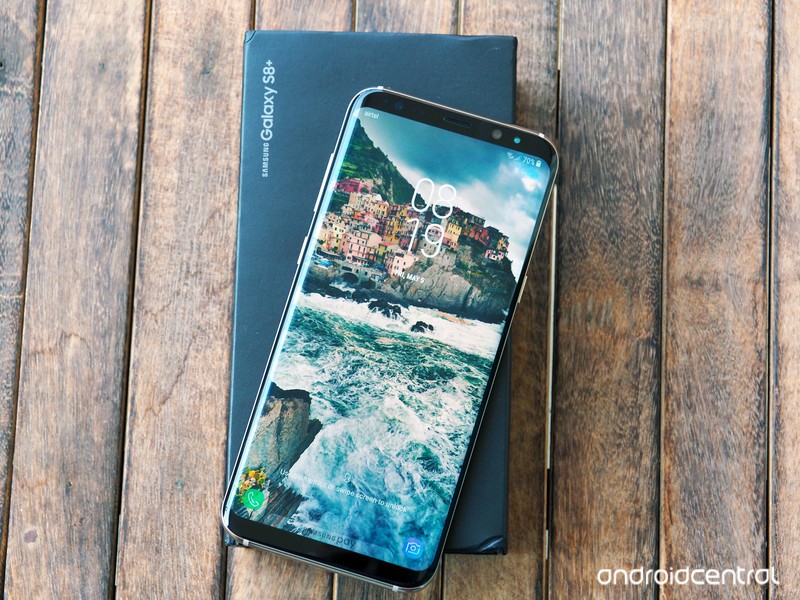
Galaxy S8 and S8+ hit the 5-million sales mark in their first month of availability.
The Galaxy S8 and S8+ made their debut in South Korea, Canada, and the U.S. on April 21, with availability in European markets and India kicking off a few weeks later. The company is now stating that it sold over 5 million units globally, with shipments exceeding 10 million units.
In a statement to The Investor, Samsung said:
Although we cannot provide detailed figures, the sales are going smoothly around the globe. The combined sales already are beyond 5 million units.
While the numbers are certainly impressive, they’re not as high as previous years. For instance, Samsung sold over 10 million units of the Galaxy S6 in its first month of availability, and over 11 million units of the Galaxy S5 in the first 30 days of availability.
That said, the Galaxy S8 and S8+ aren’t available in all markets yet, although Samsung has stated that it will bring the devices to 120 countries before the end of the month. A launch in China — one of Samsung’s largest global markets — is slated for May 25.
Healthy sales of the Galaxy S8 will undoubtedly lead to increased profits from Samsung’s mobile business unit in Q2 2017. The South Korean manufacturer posted record profits a quarter prior to the launch of the S8, and with sales set to receive a boost in the coming weeks following availability in more markets, Samsung is in line for its most profitable quarter.
Samsung Galaxy S8 and S8+
- Galaxy S8 and S8+ review!
- Galaxy S8 and S8+ specs
- Everything you need to know about the Galaxy S8’s cameras
- Get to know Samsung Bixby
- Join our Galaxy S8 forums
Verizon
AT&T
T-Mobile
Sprint
Moto E4, E4 Plus, and Z2 Play show up in leaked renders
Leaked renders give us an early look at Motorola’s upcoming phones.
A leaked slide from over the weekend revealed that Motorola was planning to launch nine new phones this year. The company already released two phones at the start of the week in the newly-minted Moto C series, which is now the entry-level tier for the brand.
We’re now getting a look at the Moto Z2 Play and the Moto E series courtesy of Roland Quandt of WinFuture. The Z2 Play will be a successor to last year’s Z Play, and will retain support for Moto Mods. Meanwhile, the Moto E series sits one step above the Moto C lineup, with the phones — the Moto E4 and E4 Plus — likely to retail for under $200.

The back of the Moto Z2 Play — shown next to last year’s Moto Z and Z Play — reveals a trim around the border that’s similar to what we’ve seen with the moto G5. The render ties up with previous leaks, and while there isn’t much to go on when it comes to specs, the latest rumors hint at a Snapdragon 626 chipset and a 3000mAh battery. We should be hearing more on the device in the coming weeks.

The Moto E4 leak is more promising as it also comes with a detailed list of specs, which include a 5.0-inch 720p display on the standard model and a 5.5-inch 720p panel on the Moto E4 Plus, a 1.3GHz quad-core MediaTek MT6737M SoC along with 2GB of RAM and 16GB storage. The Moto E4 is said to offer an 8MP camera, 5MP front shooter, and a 2800mAh battery, whereas the E4 Plus will feature a 13MP camera, 5MP front camera, and a monstrous 5000mAh battery.

The Moto E4 is rumored to retail for €150 ($165), with the E4 Plus estimated to cost €190 ($210). What do you guys think of the design and the specs on offer?
Common Moto G5 problems and how to fix them

If you’re having issues with your Moto G5 or G5 Plus, we’re here to help.
The Moto G5 and G5 Plus are great new additions to the Moto G lineup, but that doesn’t mean they’re not without their issues. Whether it’s erratic Wi-Fi connectivity, background noise in videos, or issues with the bundled TurboCharger, you can rely on a workaround to solve the problem.
Here are some of the common problems affecting the Moto G5 and G5 Plus, and potential fixes.
Wi-Fi issues

There’s a Wi-Fi issue on a few Moto G5 and G5 Plus units wherein the phones routinely disconnect from Wi-Fi networks and reconnect after a few minutes. The issue isn’t limited to one region, as customers in India, UK, and the U.S. seem to be affected by the bug. There isn’t a fix available for this particular problem yet, but you can try a few workarounds to see if it solves the issue:
- Forget your Wi-Fi network: Go to Settings > Wi-Fi and select your home Wi-Fi network. Hit the Forget button to remove your network from the phone. Manually add the network again.
- Reset network settings: If removing and adding your Wi-Fi network didn’t solve the issue, then try resetting the network settings.
Camera tint and video recording issues

Noticing a lot of background noise when shooting video on your Moto G5 or G5 Plus? You’re not alone. The issue plagued both devices, but Motorola has rolled out an update to address the problem. Make sure you’ve downloaded and installed the latest update.
The same update also fixed an issue with the camera where users would notice a pink tint around the edges of the viewfinder.
Running out of storage
Based on your region, your Moto G5 or G5 Plus may come with a paltry 16GB of storage. Thankfully, both phones offer a dedicated microSD card slot that can accommodate cards up to 128GB in size. You’ll be able to move your media files and photos — as well as a few apps — to the SD card, freeing up precious internal storage.
Looking for a microSD card? Here are our favorites!
All Motorola phones come with two years’ worth of free original-size uploads to Google Photos, and there’s no reason to not take up the offer. Offloading photos to a cloud storage service is one of the easiest ways to save space on your phone.
If you’re still routinely running low on storage, you should just uninstall apps you don’t use often. You can also try clearing the cache frequently to free up some space on your G5 or G5 Plus.
TurboCharging troubles

Several users in the Lenovo forums are having issues with lengthy charging times with the Moto G5 Plus even after using the bundled TurboPower charger. The Moto G5 Plus comes with an 18W wall unit that charges the phone in an hour and forty-five minutes. You’ll see a notification on the home screen that says TurboCharging when you plug in the charger.
One line in Motorola’s marketing materials in particular seems to be causing a lot of confusion: The included TurboPower charger provides up to 6 hours of battery life with just a quick 15-minute charge.
That line doesn’t mean you’ll be able to play games for six hours after charging your phone for 15 minutes. What Motorola is trying to say is that you can get up to six hours’ worth of usage — including a lot of standby time, a few calls, and some web browsing — with a quick 15-minute top up. That statement only holds up when your battery life is 15% or lower, and that’s because of the way fast charging works.
Fast charging delivers higher voltages initially and peters out as the battery starts filling up.
Fast charging delivers a higher voltage to your phone, and as a result you’ll see the battery charging up quickly initially — it takes just about an hour to charge the Moto G5 Plus from 5% to 80%. It takes another 45 minutes to get from 80% to the 100% mark, and that’s because as the battery charges up, the controller starts regulating the power to normal levels.
Think of it this way: initially, the charger delivers 18W of charge, but as the battery hits its saturation levels, the power management regulator cuts back on the charge delivered to avoid overcharging.
This is the way all phones charge. The 3500mAh battery on my Galaxy S8+ also takes two hours to charge, and the initial 80% gets finished in about an hour. This isn’t an issue isolated to the Moto G5 Plus — in fact, Motorola’s fast charging standard is one of the better solutions out there.
That said, if you’re unable to see the TurboCharging icon when you connect your Moto G5 to the wall unit, you should either get a new wall charger direct from Motorola or get another unit.
VoLTE woes

Amassing over 100 million customers in just over six months, Jio is one of the largest carriers in India right now. The carrier is also the only one that’s currently offering VoLTE. As a result, VoLTE support is now a key requirement for phones sold in the country.
The Moto G5 and G5 Plus offer VoLTE out of the box, but it looks like there was a software bug that prevented a few customers from being able to access the service. If you do not see VoLTE with your Jio SIM, you can try inserting a secondary SIM in your phone in the SIM 1 slot. If you’re using another SIM card along with your Jio number, try switching the positions of the SIM cards and restarting the device.
Other issues
What problems are you having with the Moto G5 or G5 Plus? Let us know in the comments below.
Moto G5

- Moto G5 Plus review
- Moto G5 Specs
- Top 10 things to know about the Moto G5 + G5 Plus
- Moto G5 Plus vs Moto G4 Plus
- Join our Moto G5 forums!
See at Amazon
 AIVAnet