


Google’s impersonal-but-handy Smart Replies come to the Gmail app
Google’s “instant reply” technology, that can already be found in Inbox and Allo, is coming to the Gmail app for iOS and Android. If you’ve never used instant reply before, Google uses its machine learning smarts to analyze the contents of your messages to suggest quick replies. You then just tap and insert your chosen reply into a new email, hit send and call it a day.
We’ve found that smart replies can often feel impersonal, or they just don’t quite fit the message you want to send. But Google says that 12 percent of all Inbox replies use smart replies, so clearly people like them. They are pretty effective for quick confirmation or “thank you” replies, so it’s definitely not without utility. And since Google uses machine learning to improve the suggestions over time, the more you use them the better they’ll fit your writing style.
Regardless of where you stand on the utility of smart replies, the fact that they’ll be showing up in the main Gmail app for Android and iOS means a lot more people are likely to try them out. You might as well get on board now: the update is rolling out today in English, with Spanish smart replies set to arrive in the coming weeks.

SaveSaveSaveSaveSaveSave
Google Lens brings AI understanding to Assistant and Photos
Google Lens is a set of vision-based computing capabilities that allows your smartphone to understand what’s going on in a photo, video or live feed. For instance, point your phone at a flower and Google Lens will tell you, on the screen, which type of flower it is; or, aim the camera at a restaurant sign to see reviews and other information pop up. The new AI system is heading to Google Photos and Assistant first.
With Google Lens, your smartphone camera won’t just see what you see, but will also understand what you see to help you take action. #io17 pic.twitter.com/viOmWFjqk1
— Google (@Google) May 17, 2017
Another cool tool available in Google Lens is the ability to point your phone at a router’s setting sticker and have it automatically connect to that network. In conjunction with Assistant, Google Lens also allows users to point their phone at a sign for a concert and automatically add that event to their calendars, or even purchase tickets right then and there.
Developing…
For all the latest news and updates from Google I/O 2017, follow along here
Comcast’s ‘Xfinity Home’ Security System Gains Philips Hue Integration
Comcast and Philips Lighting today announced a partnership that will introduce integration of Philips Hue directly into Comcast’s home security system, Xfinity Home. With the update, Xfinity Home users will be able to control Hue bulbs directly within Comcast’s Xfinity Home app [Direct Link], as well as create “rules” that synchronize Hue bulbs with the security system.
For example, users will be able to set Hue to turn off when they activate the security system and leave the house, or turn on when the alarm is deactivated. Additionally, subscribers to Xfinity’s X1 TV service who use Xfinity Home will soon be able to use the voice control-enabled remote to interact with their Philips Hue lights.
“Our partnership with Philips Lighting advances our commitment to bring our customers best-in-class devices they can trust and easily manage on one, integrated platform – the Xfinity Home platform,” said Daniel Herscovici, senior vice president and general manager of Xfinity Home.
“With the Philips Hue family of products, our customers can customize their lighting according to their own needs and daily routines. They can also set up simple automated commands, such as turning on the hallway lights when they enter the home and disarm the system.”
The Xfinity Home Security package comes with three door/window sensors, one motion sensor, one touchscreen controller, and one wireless keypad. Users can add on indoor and outdoor cameras, thermostats, outlet controllers, smoke detectors, and more, at additional costs. Plans and pricing for Xfinity Home vary due to local availability, professional installation, and the inclusion of TV and internet services, but the base plans start around $29/month for the first 12 months on a 2-year agreement.
Earlier this week, Philips Hue launched a new line of lighting fixtures and table lamps in its White Ambience category of bulbs. The new lighting accessories cost between $99 and $199, and the company’s full range of new products is expected to begin shipping in the middle of June.
Tags: Philips Hue, Comcast
Discuss this article in our forums
Former Starbucks Worker Says Attending Apple’s Developer Academy Was ‘Opportunity of My Life’
Apple’s first iOS Developer Academy opened in Naples, Italy last October, providing 200 students with practical skills and experience to help turn their app ideas into reality and bring them to market on the App Store.
One of those students is a young Neapolitan man named Luigi, who left Naples for the United Kingdom to find a technology job, but was enticed to return to the city upon hearing about Apple’s Developer Academy.
The Independent says after Luigi applied for the academy, he left his job at Starbucks so that he could study properly. He felt it was a risky move, but fortunately, he passed the test and joined the first year’s class of students.
Luigi described the academy as the “opportunity of my life” and, nearly eight months later, said he would “totally recommend” the experience to anyone looking to come from elsewhere in the world.
“I was taking a risk, but this was the opportunity of my life,” he says. He had tried university already, and found it lacking because it had so little focus on student’s enjoyment and the work of actually solving problems and working with other people.
The Independent explains how Apple’s Developer Academy has made Naples a more attractive city for young people to thrive in, after years of suffering from “brain drain” following an industrial decline.
“If you stay here you are part of an ecosystem that will continue to train developers,” says Giorgio Ventre, a professor at the University of Naples Federico II. “This is something that you do need if you want to open a company. You want to count on yourself – but you want to count on the skills you need to help your company grow. If you stay here you can find it.”
Apple is accepting applications for the Developer Academy’s second year until May 31. Scholarships are available, and each student inducted receives a free MacBook and iPhone to use during the one-year program. Courses are held at the University of Naples Federico II in Naples suburb San Giovanni a Teduccio.
The academy will accept up to 400 students for the new academic year, twice as many as the first year. The program is open to students from across Italy and around the world, with Apple encouraging developers from the United Kingdom and elsewhere to apply in an effort to have a more diverse group of people.
Last year, Apple said it expects to expand its Developer Academy program to other countries around the world in the future.
Tags: Italy, iOS Developer Academy
Discuss this article in our forums
Jimmy Iovine Says Apple Music Would Have ‘400 Million’ Listeners If It Had a Free Version Like Spotify
Apple Music executive and recording industry mogul Jimmy Iovine recently sat down for a wide-ranging interview with Music Business Worldwide, reflecting upon his desire for more people to start paying for music.
The spread of free music has proliferated since the earliest days of the internet, starting with shady peer-to-peer services like Napster and LimeWire and progressing to legal, ad-supported platforms like Spotify and YouTube. Iovine thinks it’s wrong, and insists artists should get paid for their work.
However, he admitted that free music is “so technically good” that many people simply aren’t willing to pay up. In fact, he said if Apple Music were to offer a free tier like Spotify, it “would have 400 million people on it” and make his job a lot easier. But that’s not what he nor Apple believe in.
I’ve put my money where my mouth is: Beats Music didn’t have a free tier. Apple Music doesn’t have a free tier.
I’m not just talking it; I’m walking it. That’s why I aligned with Eddy and Tim and Steve. They thought the same way.
I think what’s going on [with free music] is wrong. I just do.
To change that, he said “you’ve got to put everything into making the experience for people who are paying feel special.”
Iovine believes that “people who pay for subscriptions should be advantaged,” something Apple Music aims to accomplish with a lineup of original content in the works, including Carpool Karaoke: The Series, Vital Signs, Planet of the Apps, and an upcoming documentary with Harry Styles.
In the beginning of Apple Music, I was very frustrated; I tried to fight [Spotify] and all those things.
Now all we can do is make Apple Music such a special place that people want to come and that will encourage more people [to subscribe].
Apple Music has also had exclusives with major artists such as Chance the Rapper, Drake, Frank Ocean, and Taylor Swift, and Iovine said those deals will continue occasionally, but he admitted that record labels “don’t seem to like it.”
Iovine continues to believe that Apple Music will be “on the forefront of popular culture,” a sentiment he has echoed in many interviews.
Interview: “Musicians Taught Me Everything. Without Them, I’m Working On The Docks”
Tags: Jimmy Iovine, Apple Music, MusicBusinessWorldwide.com
Discuss this article in our forums
Apple Seeds First Beta of iOS 10.3.3 to Public Beta Testers
Apple today seeded the first beta of iOS 10.3.3 to its public beta testing group, one day after providing the beta to developers and two days after releasing iOS 10.3.2, a minor bug fix update.
Beta testers who have signed up for Apple’s beta testing program will receive the iOS 10.3.3 beta update over-the-air after installing the proper configuration profile on their iOS device.
iOS users who want to be a part of the beta testing program can sign up to participate through Apple’s beta testing website, which gives users access to both iOS and macOS Sierra betas. Because betas are not always stable and can introduce bugs, they should be installed on a secondary device.
No significant changes were found in the first developer beta, suggesting iOS 10.3.3 is another minor update that focuses primarily on bug fixes and security improvements.
Related Roundup: iOS 10
Discuss this article in our forums
Apple Seeds First Public Beta of macOS 10.12.6 to Public Beta Testers
Apple today seeded the first beta of macOS Sierra 10.12.6 to public beta testers, one day after releasing the beta to developers and two days after releasing macOS Sierra 10.12.5, a minor update with bug fixes and other improvements.
Beta testers who have signed up for the Apple beta testing program will receive the macOS Sierra 10.12.6 beta through the Software Update mechanism in the Mac App Store.
Those who want to be a part of Apple’s beta testing program can sign up to participate through the beta testing website, which gives users access to both iOS and macOS Sierra betas.
No notable features were discovered in macOS Sierra 10.12.6 developer beta, suggesting this update is minor in scale and focuses on internal improvements like bug fixes and security enhancements rather than outward-facing changes.
Related Roundup: macOS Sierra
Discuss this article in our forums
Quick impressions: Using Tizen on the Samsung Z4
Just before Google I/O 2017, Samsung held their Tizen Developer Conference in San Francisco, where a number of announcements were made around the launch of Tizen 4.0.
With an apparent surge in app development, Samsung has been able to provide Tizen in its own devices ranging from the Gear S3 smartwatch to TVs and a fridge. But mobile Tizen has been, thus far, relegated to budget phones. The latest of these is a sub-$100 device made initially for India and it is called the Samsung Z4.

There is no pretense to the Z4 – it looks and feels like a bona fide budget phone. A typical plastic build all around is broken up by the tactile home button (flanked by capacitive keys) and certain backings that may have some texture to them.


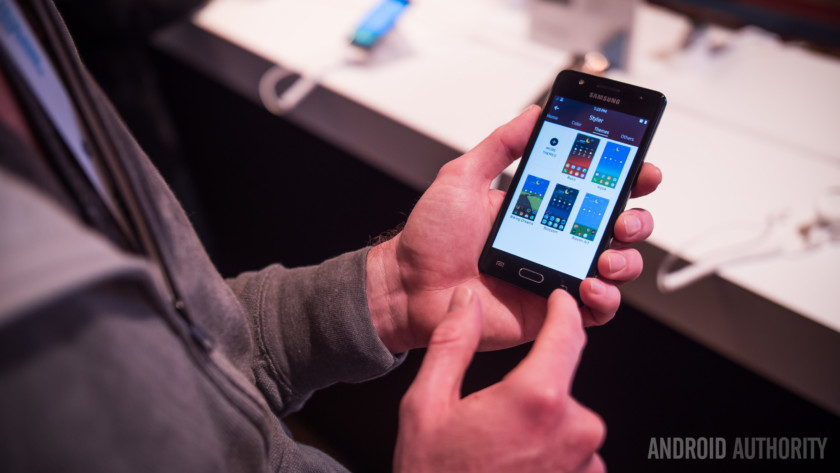
Its size also exudes frugality, as the display sports a 480 x 800 resolution in a 4.5-inch size. Though we had very few expectations going into the Z4, the display seemed to get the job done adequately for users that are really looking for a budget device. Basically, you get what you pay for, but you also get a decent experience.
The Samsung Z4 seems designed for fairly simple communication and productivity tasks. But the Spreadtrum processor that powers the device performed fairly smoothly through the different apps we opened up – even a port of Asphalt 8 was on the phone, and Kris played through a full round before saying it wasn’t all bad.
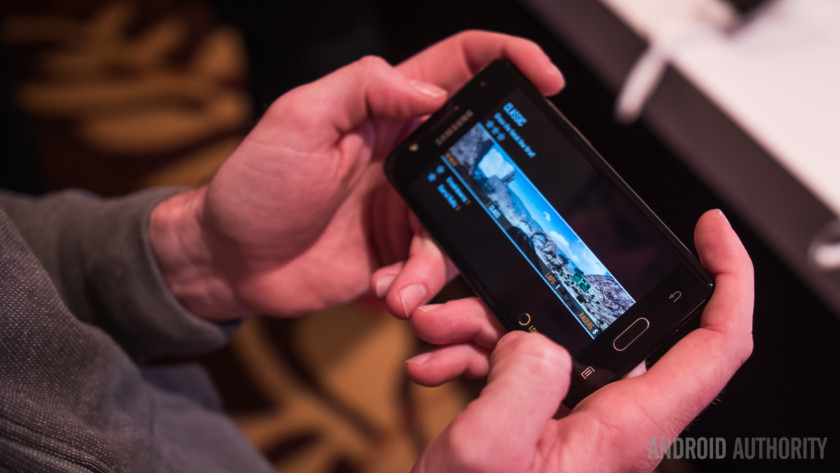
The rest of the specifications are on the level of early Android One devices that targeted some of the same emerging markets. Only 1 GB of RAM is included and the power specs are basically antiquated now, as the Z4 sports a micro-USB port and a 2050 mAh unit.
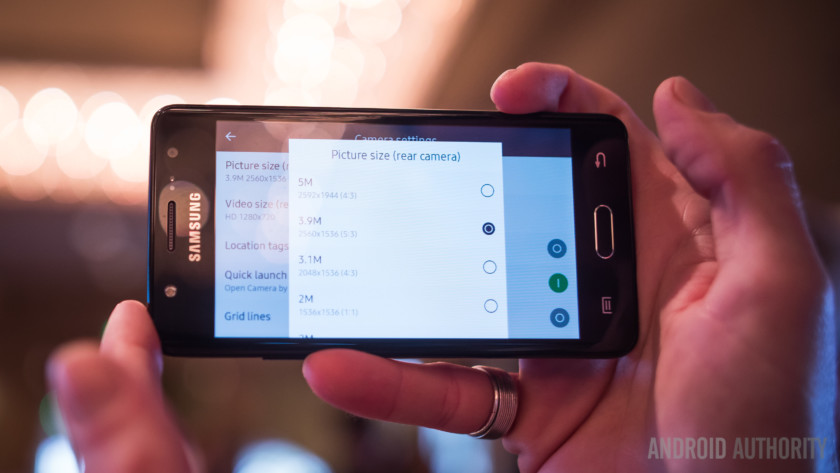
The cameras are both 5MP, and though we are certain that pictures will be just decent at best, we were impressed with the amount of modes that Samsung included. If nothing else, there can be some fun to be had when taking those rather low resolution photos or videos.

It is obvious that the Tizen ecosystem is still pretty young, so applications are pretty far and few between. Samsung claims that there are a ton of developers ready to bring version 4.0 to a whole new level, but recent reports about Tizen’s security holes could keep some bigger names from making the port leap.
Glympse, a popular GPS app, was one of the main speakers during their keynote and announced its new features made available for the television version of the operating system. A mobile site loaded, not an app, when we opened YouTube, and this shouldn’t be surprising considering the size of the Tizen ecosystem right now. But if Tizen were to get on more high-profile devices, the absence of major apps like YouTube would be a significant adjustment and significant drawback on the daily.

Though there are plans to bring the Samsung Z4 to other places, its current presence will be limited to India. The price in India roughly translates to about $100 in the United States, which makes this phone a sure competitor to entry-level Android phones that are geared for emerging areas of the world.
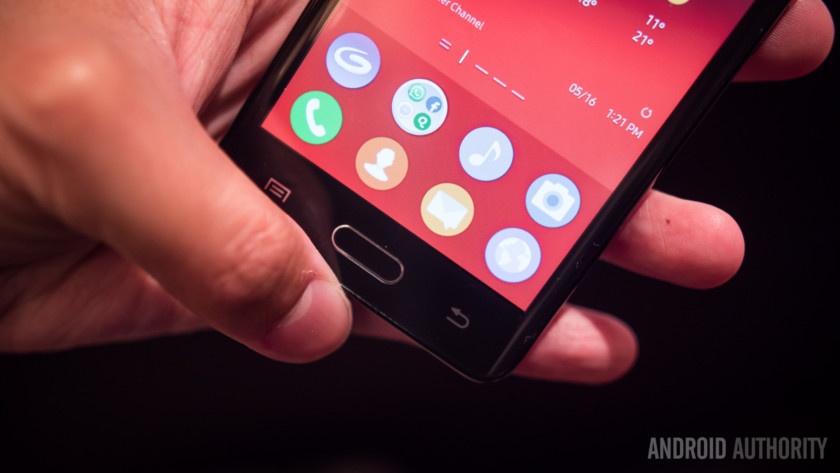
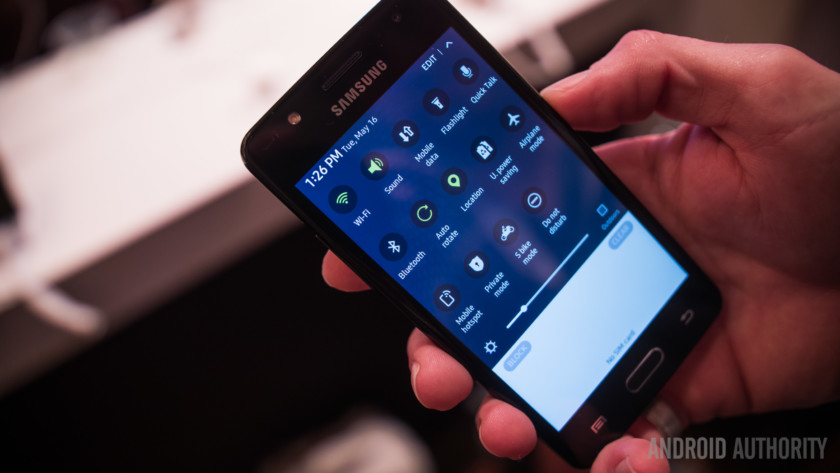
With very little by the way of processing requirements, Tizen has looked smooth and, at least, fairly consistent when it comes to the most basic of tasks, despite the lower-end nature of the Z4’s hardware. We’ll see where Samsung takes their slowly growing Android alternative in the future.
Meizu Pro 6 Plus review: great hardware augmented by excellent software
While blockbuster smartphone manufacturers like Samsung and LG continue to target ultra high-end markets, some Chinese makers are working hard to develop comparable options at significantly lower price points. The affordable flagship trend was first widely covered in the media after OnePlus released the OnePlus One, and options from giants Huawei and ZTE have kept the buzz going.
Other grassroots-esque companies like Meizu and Xiaomi have long focused on value, including in the mid-range price segment. Despite a smaller amount of media coverage, companies like Meizu have consistently delivered affordable flagships of their own.
Additional Meizu coverage
- Meizu Pro 6 Plus announcement
- Meizu Pro 6s announcement
- Meizu Pro 6 review
- Meizu M5, M5s, and M5 Note review
The Meizu Pro 6 Plus is Meizu’s latest flagship device. Its predecessor, the Meizu Pro 6, was a great smartphone but didn’t stand out much from competing options. But, is Meizu’s latest smartphone different? Let’s answer that question and more in our comprehensive Meizu Pro 6 Plus review!
Design
Meizu is sticking to its guns with the Pro 6 Plus’ design. The design here is really not much different from the Pro 6‘s. Aside from a bump in screen size from 5.2-inches to 5.7-inches, the Pro 6 Plus is, design-wise, just a slightly better, more refined version of the Pro 6.
Fortunately, this design is still very impressive. With an all-metal unibody, the Pro 6 Plus is both beautiful and ergonomic. Since the metal is also softer than most other metal smartphones, the phone has a very nice feel in the hand.
This means that it’s also quite slippery though, so you’ll have to be careful when handling it. You may want to consider picking up a case in order to avoid damaging the device.

Meizu states that the body assembly process alone takes thirty steps and 150 hours to complete, and that amount of effort definitely pays off. The craftsmanship is quite frankly incredible. The Pro 6 Plus’ edges are definite and easy to grip yet maintain a smooth transition with the rear. The side power and volume buttons are satisfyingly tactile, too.
Make no mistake, this is a high-end design at a mid-range price
Small details like the curved antenna lines, accented earpiece, and ring flash further indicate a keen attention to detail. Make no mistake, this is a high-end design at a mid-range price.
We also really enjoy Meizu’s single-key navigation setup. Instead of the three-key layout that you are likely used to, mTouch allows users to press the single button to go home and tap it to go back. Multitasking is done with a simple swipe up from either the left or right side of the bottom bezel.
More on this:
The pros and cons of fingerprint scanner gestures
March 1, 2017
The multitasking menu has been redesigned for Flyme 6, too. The new design replaces the horizontal “cards” view with a vertical “screens” view. This makes it easier to close apps since you no longer have to change the direction of your finger between swipes.

The single key not only serves useful for navigation, however. It also functions as a fast and accurate fingerprint reader. While not as fast as the readers on some other phones like the OnePlus 3T, it certainly feels fast in everyday use.

You can also assign certain fingerprints to a guest mode and a privacy mode
What’s really nice about the Pro 6 Plus’ fingerprint reader experience are the extra features that Meizu has added. Not only can you use the reader in third party apps and for unlocking the phone, but you can also assign certain fingerprints to a guest mode and a privacy mode.
For example, you could use your right thumb for normal mode and your left thumb to access private contacts, apps, photos, videos, and files that you wouldn’t be able to access in normal mode. The software also gives you the option to lock specific apps with fingerprints.
Display

The 5.7-inch Quad HD Super AMOLED display on the Meizu Pro 6 Plus is a considerable improvement from the Pro 6‘s display and is one of the best displays available at this price.
Colors are punchy yet not too oversaturated
Colors are punchy yet not too oversaturated, the contrast is excellent, and sunlight readability is decent. These attributes help make for a wonderful viewing experience in everyday use.
It’s a pleasure to use the Pro 6 Plus for everything from reading articles to watching television shows. The slightly larger size (most competing options have 5.5-inch displays), too, makes for a slightly more immersive visual experience. The minimum brightness level is also low enough to be able to use the phone comfortably in a dark room.

Interestingly, Meizu has included 3D Press technology with the Pro 6 Plus. Meizu’s 3D Press works much like Apple’s 3D Touch, where you can access contextual menus with firm presses on the display. Unfortunately, it only works with select Meizu apps, so it’s not very useful day-to-day. Still, some will certainly appreciate its inclusion.
The Meizu Pro 6 Plus also includes an Always On Display (AOD) feature, similar to many other devices with OLED displays. It works just as you’d expect, and Meizu claims that it drains less than 1% of battery life per hour, so you won’t have to worry about draining your battery too much.
Performance

The Meizu Pro 6 Plus is powered by a Samsung Exynos 8890 Octa Core processor. The Exynos 8890 was used in some variants of the Samsung Galaxy S7 and the high-end 8890 is similar in performance to the Qualcomm Snapdragon 821.
The base model of the Pro 6 Plus has this chip clocked at 2.0 GHz, whereas the higher cost variant’s chip is clocked at 2.3 GHz. We tested the base model for this review, and while it doesn’t do extremely well in benchmarks, the 4 GB of LPDDR4 RAM and UFS 2.0 storage help ensure a smooth day-to-day experience.
The Exynos 8890 vs the competition:
SoC showdown 2016: Snapdragon 821 vs Exynos 8890 vs MediaTek Helio X25 vs Kirin 960
December 13, 2016
In terms of processing power, the Pro 6 Plus is indeed shy of the OnePlus 3T and ZTE Axon 7. Although even further off from the very recently announced Xiaomi Mi 6, the overall performance difference is still marginal.


Meizu’s One Mind AI improves performance by learning user habits
Importantly, Meizu’s Flyme 6 software has a few features which help compensate for these marginal hardware differences. Meizu’s One Mind AI, for example, improves performance by learning user habits. Meizu states that Flyme uses that model to better manage memory and decrease predicted app load times. It’s nice to see some real software innovation in this category.
There’s also a ton of animations scattered throughout the OS, which makes the experience seem snappier and more intuitive. While animations are nothing new in the smartphone space, Meizu has polished these animations so well that they feel worth mentioning.
Hardware

As you may have expected, the Pro 6 Plus includes two nano-SIM card slots. Since the phone is also unlocked out of the box, this means that you can use up to two SIM cards from the same or different mobile carriers with this single phone.
Sadly, there is no support for United States 4G LTE bands. To be fair, this phone is not intended for the US market and does support LTE bands for where it is being sold. However, you should definitely keep this in mind if you live in or travel to the US, as being limited to 3G is a pretty big drawback.
The storage is non-expandable
The Pro 6 Plus is available with either 64 or 128 GB of UFS 2.0 internal storage. Keep in mind that the storage is non-expandable, so if you think you might need more than 64 GB, you’ll want to go for the 128 GB model.
We understand that some may be disappointed by this choice, but it’s likely in order to avoid mixing slow microSD card storage with the phone’s fast internal storage. Doing so would result in a slower overall experience, which is likely why Meizu omitted this option.

Although the Pro 6 Plus’ hardware includes NFC and a heart rate monitor, both of these features were disabled in the global firmware at the time of writing. The hardware is here, but the global software is currently unable to work with it. Hopefully Meizu will fix this for global users very soon.

The single internal speaker on the Pro 6 Plus is pretty good. It’s loud enough for general use albeit a bit distorted at higher volumes. Still, it will certainly fit the bill for most users.
The Pro 6 Plus includes Hi-Fi audio with the 32-bit ES9018K2M DAC and ADI AD45275 amp
Those with 3.5mm headphones can breathe a sigh of relief as Meizu has decided to retain the 3.5mm headphone jack for the Pro 6 Plus. In addition, the Pro 6 Plus includes Hi-Fi audio with the 32-bit ES9018K2M DAC and ADI AD45275 amp.
Meizu is stressing energy efficiency with this audio setup. One of the ways in which this is achieved is through the software. Flyme automatically determines the type of audio device and then adjusts the gain as appropriate. This ensures that the volume levels stay within reasonable ranges for the device connected.
Battery life

Thanks to its large 3400mAh non-removable battery, the Pro 6 Plus is able to provide great battery life. We noticed a significant improvement in standby usage after upgrading to a beta version of Flyme 6, which seems to be the primary reason behind the substantially boosted numbers.
With Flyme 5, we averaged around three and a half hours of screen on time with nineteen hours of use. However, after upgrading to Flyme 6 beta, we averaged around five and a half hours of screen on time with twenty-six hours of use. That’s a pretty big difference, so our assessment and rating more heavily considers the Flyme 6 experience.


Unlike many of the smartphone battery life tests completed here at Android Authority, these tests were conducted over AT&T’s HSPA+ network instead of an LTE network. This is because the Meizu Pro 6 Plus does not support 4G LTE in the United States, so we had no choice but to use the phone with 3G only. Please understand that actual battery life will thus be less when using the phone on an LTE number.

Thankfully, Meizu has adopted the new USB Type-C 3.1 standard for the Pro 6 Plus. This allows for super fast data transfers plus mCharge 60W fast charging. We were able to charge the phone from 0 to 50 percent in thirty minutes and to 100 percent in sixty minutes.
The Pro 6 Plus is one of the fastest charging phones we’ve ever used
If you consider the amount of charge taking place in that amount of time, the Pro 6 Plus is one of the fastest charging phones we’ve ever used. It’s just a shame that it’s not a more ubiquitous fast charging standard, as you’ll be severely limited in charger selection.
Camera

The Meizu Pro 6 Plus is equipped with a Sony IMX386 12 MP f/2.0 rear camera with laser autofocus, 4-axis optical image stabilization, and a dual-tone 10-LED ring flash. Interestingly, the same Sony IMX386 camera sensor has been used in the rival Xiaomi Mi 6.
Of course, we’ve seen time and time again that specs don’t always make or break image quality, so it’s important to analyze sample images to make a better judgement. Thankfully, we’ve captured a bunch of images in both good and poor lighting.

Images taken in good lighting turned out quite well. General color reproduction is excellent; images have just the right amount of contrast and saturation. Photos are also sharp and detailed despite the lower megapixel count.
We did notice some processing issues with bright reds
Dynamic range seems to be great too. The camera balanced the highlights and shadows of many shots very well, allowing for more realistic photos. We did notice some processing issues with bright reds, but this is far from unusual at this price. Otherwise, daytime photos look great.

Camera performance does fall apart in low-light scenarios, however. Images are softer, colors become muted, and digital noise is noticeable. This is pretty much always the case at this price though, so we’re far from surprised. Still, if you plan to take a lot of pictures in low-light, you’ll want to consider a more expensive option like the Google Pixel XL.
While this isn’t a camera shootout by any means, we can confidently say that the Pro 6 Plus’ rear camera produces slightly better stills than the OnePlus 3T‘s rear camera and considerably better stills than the ZTE Axon 7‘s. The Honor 8 still holds the crown at this price point though.


The front camera is an 5 MP f/2.0 shooter and performs about as well as we expected. The built-in Beauty mode doesn’t overdo it, too, which is great as many other beauty modes do.
The Pro 6 Plus’ rear camera can capture 4K video at 30fps. The video files are encoded using the new HEVC codec, which allows for smaller, more compressed files. Quality remains intact with this codec, but the files can prove challenging to play on some devices. You can always convert the files to a different codec if you have trouble, however.
Actual video quality is good but not great. We found the OIS to be a bit weak in our testing, but video otherwise looks pretty good.

The camera app has been slightly refined with Flyme 6, but offers the same great shooting experience as other Meizu devices. There’s a number of modes and filters available, yet the basic shooting experience remains easy to use.
You can access the camera by double pressing the home button
You can also access the camera by simply double pressing the home button. That gesture also works when the phone is locked, so you can pull up the camera app without having to unlock the phone when you want to quickly get a photo. This is a really nice feature to have so we’re glad that Meizu implemented it into the Pro 6 Plus.
Software

Unlike many Chinese smartphones, the key selling point of the Meizu Pro 6 Plus is the software. It runs Android 6.0.1 Marshmallow, but that’s not what makes the experience unique. It’s Meizu’s Flyme skin that adds a fresh layer of value to the Pro 6 Plus.
Although the Pro 6 Plus ships with Flyme 5, Meizu is nearly done with Flyme 6. At the time of writing, users can download and use a second beta version of Flyme 6, which is what we’ve decided to evaluate because of the significant changes that it brings to the table.
It’s sometimes difficult to convey why such a different but polished software experience is nice to use as many people gloss over the details once they hear “non-stock Android.” There are a bunch of Android skins out there. And, let’s face it: a lot of them are bad. That makes people dismissive, which is quite unfortunate as there are some really great non-stock experiences out there.

Flyme 6 may just be the best Android skin available
Flyme 6 is the best software that Meizu has developed to date, and may just be the best Android skin available to date. The clean design, performance enhancing AI, innovative features, and overall polish all help make Flyme 6 an absolute pleasure to use. It’s easily one of our favorite aspects of the Pro 6 Plus.

Meizu has redesigned Flyme 6 to be more colorful and bolder. The design philosophy is content driven and emotional, which makes for an intuitive and fun experience. It’s also very consistent; the design of the system apps reflects that of the system menus. Everything seems well thought out, which can most definitely not be said for many other Android skins.

We really like Meizu’s drive to innovate
We also really like Meizu’s drive to innovate. Flyme 6 includes a great number of features that we have never seen before, let alone in stock Android. For example, the software categorizes notifications sent by apps as either important or non-important. You’ll get important notifications as you usually would, but non-important notifications get sent to a separate shade. You can customize this feature on a per-app basis, or just turn it off, but we really found it helpful in cutting out distractions.
There’s also a number of security features that have been added throughout the software. Not only is there nonintrusive built-in anti-virus, but there’s also Wi-Fi network security scanning. This feature can detect simple issues like non-encrypted traffic and more complex issues like DNS tampering and ARP poisoning.
For security features, there’s also a secure payment mode, which makes a number of system changes to prevent other apps from hijacking the phone. So, for example, when opening PayPal, Flyme automatically disables screen overlays, temporarily prevents other apps from reading SMS verification codes, and disables non-touch-screen inputs. There’s a few other changes too, but the initiative here to prevent attacks is commendable.

What’s nice about Meizu’s execution here is that they aren’t overdoing it with useless features. The logical approach is noticeable in many areas, and we wish other Android manufacturers would take some notes.
There are still some areas that need improvement
There are still some areas that need improvement, however. One of the most glaring issues is Meizu’s lack of an official relationship with Google. This means that they can’t install Google apps and services on their smartphones like other Chinese manufacturers can.
Meizu instead relies on unauthorized methods. While these methods are effective, some Google apps like Android Pay won’t work because they cannot determine whether Meizu follows Google’s security standards. Thankfully, we haven’t had any notification issues with the Pro 6 Plus.

One other thing to note is that Meizu’s updates generally only include changes to Flyme and not new versions of Android. This isn’t a major issue since Meizu is pretty good about bringing newer Android features to old versions of Android.
Still, we estimate the probability of the Pro 6 Plus receiving an Android 7.0 Nougat update to be highly unlikely. Given that Android 6.0 Marshmallow is already one and a half years old at the time of writing, this could be a deal breaker for some.
Specifications
| Display | 5.7-inch Super AMOLED display 1440 x 2560 resolution 515 ppi 3D Touch |
| Processor | Exynos 8890 Octa Octa-core |
| GPU | Mali-T880 MP10 or Mali-T880 MP12 |
| RAM | 4 GB |
| Storage | 64 GB 128 GB |
| Cameras | Rear: 12 MP, f/2.0, OIS, phase detection & laser autofocus, ten-LED (dual tone) flash Front: 5 MP f/2.0, 1.4 µm pixel size |
| Battery | 3,400 mAh Non-removable |
| Ports | USB Type-C (USB 3.1) 3.5 mm headphone jack |
| Water resistance | No |
| Connectivity | Wi-Fi 802.11 b/g/n/ac dual band Bluetooth 4.1 A2DP, LE NFC |
| Software | Android 7.1.1 Nougat |
| Dimensions and weight | 155.6 x 77.3 x 7.3 mm 158 g |
Gallery

Price
The Meizu Pro 6 Plus is now available in China and can be purchased in gold, silver, or black. The base model is 2999 RMB (≈$435) and includes 64 GB of storage and a 2.0 GHz Exynos 8890 processor. The higher-end model is 3299 RMB (≈$478) and includes 128 GB of storage and a 2.3 GHz Exynos 8890 processor.
Conclusion

Despite the recent explosive growth in the affordable flagship market, Meizu has still managed to deliver an option that truly stands out. Like many of its competitors, the Meizu Pro 6 Plus offers great hardware. It’s in the software, however, where the Pro 6 Plus inches ahead of its competitors.
It’s in the software where the Pro 6 Plus inches ahead of its competitors
With the Pro 6 Plus, you’re getting a great camera, a wonderful display, excellent performance, and, of course, fresh and innovative software. While there are certainly some flaws — the NFC and heart rate monitor are disabled by global software, Google apps support is unofficial, and the phone lacks support for US 4G LTE — the Meizu Pro 6 Plus offers an exceptional experience for its target audience.
And, that will be all for our Meizu Pro 6 Plus review! We hope that you found this article informative. If you have any questions or comments, please leave them in the comment section below!
AMD Ryzen Mobile APUs making their way to notebooks later in 2017
Why it matters to you
Your next notebook could be powered by AMD’s new Ryzen Mobile APU, permitting significantly more power and battery life.
AMD held its annual Financial Analyst Day web conference on May 16, and the firm announced a number of new products that PC enthusiasts have been eagerly awaiting. While we did not get information on the full lineup and release dates for the highly anticipated Vega generation of AMD GPUs, we did learn about some interesting products that provide of glimpse of where the company is headed.
One such product involves new mobile solutions, namely those based on the new Zen architecture and Ryzen CPUs. AMD introduced the Ryzen Mobile APU line of chipsets that will mate Vega graphics with Ryzen CPUs to make for competitive new mobile options for notebook makers, according to Techreport.
The news came via AMD Jim Anderson, and the new chipsets appear to offer solid performance improvements over the company’s current A-Series APU. In terms of CPU performance, Ryzen Mobile APUs promise a 50-percent improvement in processor performance along with a 40-percent improvement in graphics performance.

In addition, AMD is projecting a 50-percent reduction in power usage even given those significant performance increases. That means that Ryzen Mobile APUs could make their way into the market’s thin and lightweight ultraportable notebooks and 2-in-1 machines. AMD should, therefore, pose some serious competition to both Intel’s mobile CPUs and integrated GPUs, and Nvidia mobile GPU options.

AMD did not provide too many details on the new Ryzen Mobile APUs. We don’t know the pricing yet, and the only availability information that we have at this point indicates that Ryzen Mobile APU-equipped notebooks should make their way to the market sometime during the second half of 2017, whereas commercial machines will not see the new chipsets until the first half of 2018.
AMD is holding its next major press event at Computex, where many are expecting more specifics on Vega. It is entirely possible that we will learn more about the Ryzen Mobile APUs during this event or otherwise during Computex, but if not, then we still will not have to wait too long to see notebooks with another solid performance option.
 AIVAnet