


‘WannaCry’ ransomware showed traces of North Korean code
For all the damage the “WannaCry” ransomware has done, there’s still one looming, unanswered question: who’s behind it? At last, there might be a clue. Google researcher Neel Mehta has noticed that an early version of WannaCry’s code shares similarities with a February 2015 sample from the Lazarus Group, a North Korea-linked outfit blamed for both the Sony Pictures hack as well as the Bangladesh Bank heist. The code changed between then and now, but it at least raises the possibility that North Korea was involved.
There is a chance that someone borrowed the code, whether out of convenience or as an attempt to throw investigators off the scent. However, experts at Kaspersky argue that a deliberate plant is “improbable” given that the similar code was removed later on. And besides, the presence of kill switches in both original and modified versions of WannaCry supports the notion that these are state-sponsored hackers. As FOX-IT’s Maarten van Danzig explains to Ars Technica, run-of-the-mill criminals rarely include failsafe measures like this — why would they want to stop the money from pouring in? Moreover, the malware doesn’t even bother to automatically check whether or not victims have paid up. If profit was really the motive, the code was exceptionally sloppy.
It’s going to take much more research before experts can pin down WannaCry’s origins, assuming that’s possible. You certainly won’t get a confession from North Korea even if there’s smoking gun evidence of its involvement. However, what’s here at least gives investigators a starting point.
Via: Ars Technica
Source: Securelist, Neel Mehta (Twitter)
What’s on TV: ‘Twin Peaks,’ ‘Kimmy Schmidt,’ ‘Injustice 2’
The NHL and NBA playoffs are finally reaching their championship rounds, but that’s not all we’re looking forward to. This weekend Twin Peaks makes its return to TV, while Netflix brings a third season of Unbreakable Kimmy Schmidt. PlayStation VR owners can look forward to Farpoint which will be the first game to make use of its special gun controller, while Call of Duty Black Ops 3 players can grab new zombies DLC. Also, Syfy will air a new mini-season of 12 Monkeys, while Phantom Dust will make a surprise appearance on Xbox One and PC for free. Look after the break to check out each day’s highlights, including trailers and let us know what you think (or what we missed).
Blu-ray & Games & Streaming
- Resident Evil: The Final Chapter (4K)
- xXx: Return of Xander Cage (4K)
- Unforgiven (4K)
- The Mummy: Complete Legacy Collection (4K)
- Willard
- Ben
- Game of Death
- Good Morning (Criterion)
- Space Between Us
- Don’t Starve Mega Pack (PS4, Xbox One)
- Don’t Starve Together (Xbox One)
- Farpoint (PSVR)
- Injustice 2 (PS4, Xbox One)
- Call of Duty: Black Ops 3: Zombie Chronicles DLC (PS4)
- The Surge (PS4, Xbox One, PC)
- ACA NeoGeo Over the Top (PS4)
- Watch_Dogs 2: No Compromise DLC (Xbox One, PS4, PC)
- Cities: Skylines Mass Transit (PC)
- Black & White Bushido (Xbox One, PS4)
- Thumper (Switch)
- Shadow Warrior 2 (Xbox One, PS4)
- Mayan Death Robots: Arena (Xbox One, PS4)
- Baila Latino (PS4, Xbox One)
- A Walk in the Dark (Xbox One, PC)
- Chroma Squad (PS4)
Monday
- The Voice, NBC, 8PM
- Dancing With The Stars, ABC, 8PM
- Gotham, Fox, 8PM
- WWE Raw, USA, 8PM
- Young & Hungry, Freeform, 8PM
- Man with a Plan (season finale), CBS, 8:30PM
- Baby Daddy, Freeform, 8:30PM
- Lucifer, Fox, 9PM
- The Twins, Freeform, 9PM
- Mommy Dead and Dearest, HBO, 10PM
- The Wall, NBC, 10PM
- Better Call Saul, AMC, 10PM
- American Dad, TBS, 10PM
- Scorpion (season finale), CBS, 10PM
- Quantico (season finale), ABC, 10PM
- The Therapist, Viceland, 11PM
- Angie Tribeca, TBS, 10:30PM
- Desus & Mero, Viceland, 11PM
Tuesday
- Tracy Morgan: Staying Alive, Netflix, 3AM
- Victorian Slum, PBS, 8PM
- The Voice, NBC, 8PM
- Pretty Little Liars, Freeform, 8PM
- The Flash, CW, 8PM
- The Manns, TV One, 8PM
- The Challenge: Reunion, MTV, 8PM
- Brooklyn Nine-nine, Fox, 8 & 8:30PM
- WWE Smackdown, USA, 8PM
- The Middle (season finale), ABC, 8PM
- NCIS (season finale), CBS, 8PM
- American Housewife (season finale), ABC, 8:30PM
- NBA WCF: Spurs/Warriors, ESPN, 9PM
- The Challenge: Champs vs. Pros (season premiere), MTV, 9PM
- Famous in Love, Freeform, 9PM
- Deadliest Catch, Discovery, 9PM
- iZombie, CW, 9PM
- Prison Break, Fox, 9PM
- Bull, CBS, 9PM
- Fresh off the Boat (season finale), ABC, 9PM
- Switched at Birth, Freeform, 9PM
- Face Off, Syfy, 9PM
- Outsiders, WGN, 9PM
- Imaginary Mary, ABC, 9:30PM
- Great News, NBC, 9 & 9:30PM
- Marvel’s Agents of S.H.I.E.L.D. (season finale), ABC, 10PM
- NCIS: NO (season finale), CBS, 10PM
- Fargo, FX, 10PM
- Problematic with Moshe Kasher, Comedy Central, 10PM
- Cooper’s Treasure, Discovery, 10PM
- Team Ninja Warrior, USA, 10PM
- The Americans, FX, 10PM
- Rebel, BET, 10PM
- Imposters, Bravo, 10PM
- Truth & Iliza, Freeform, 10PM
- Desus & Mero, Viceland, 11PM
Wednesday
- The Handmaid’s Tale, Hulu, 3AM
- Harlots (season finale), Hulu, 3AM
- Shots Fired, Fox, 8PM
- Blindspot (season finale), NBC, 8PM
- Catfish, MTV, 8PM
- Arrow, CW, 8PM
- The Goldbergs (season finale), ABC, 8PM
- Survivor, CBS, 8PM
- Speechless (season finale), ABC, 8:30PM
- Criminal Minds (season finale), CBS, 9PM
- Modern Family (season finale), ABC, 9PM
- Are You the One: All Star Challenge, MTV, 9PM
- Empire, Fox, 9PM
- Law & Order, NBC, 9PM
- The 100, CW, 9PM
- The Magicians, Syfy, 9PM
- Major Crimes, TNT, 9PM
- Downward Dog (series premiere), ABC, 9:30PM
- Archer, FXX, 10PM
- Designated Survivor (season finale), ABC, 10PM
- Chicago PD (season finale), NBC, 10PM
- Brockmire (season finale), IFC, 10PM
- I Am Heath Ledger, Spike TV, 10PM
- The Expanse, Syfy, 10PM
- Nobodies, TV Land, 10PM
- The Quad, BET, 10PM
- Suits, USA, 10PM
- Weediquette (season finale), Viceland, 10PM
- Desus & Mero, Viceland, 11PM
Thursday
- Supernatural, CW, 8PM
- Grey’s Anatomy (season finale), ABC, 8PM
- The Blacklist (season finale), NBC, 9PM
- Scandal (season finale), ABC, 9PM
- The Amazing Race, CBS, 9PM
- Beerland, Viceland, 10PM
- Inside the FBI, USA, 10PM
- Dark Net, Showtime, 10PM
- Desus & Mero, Viceland, 11PM
- Impractical Jokers, TruTV, 11PM
Friday
- The Keepers (S1), Netflix, 3AM
- Unbreakable Kimmy Schmidt (S3), Netflix, 3AM
- Blame!, Netflix, 3AM
- Laerte-se, Netflix, 3AM
- 12 Monkeys (season premiere), Netflix, 8PM
- The Toy Box (season finale), ABC, 8PM
- Undercover Boss (season finale), CBS, 8PM
- The Originals, CW, 8PM
- First Dates, NBC, 8PM
- The New I Love Lucy Superstar Special, CBS, 9PM
- Motherboard, Viceland, 9PM
- Toy Box, ABC, 8PM
- You the Jury, Fox, 9PM
- Tattoo Age, Viceland, 9PM
- Vice, HBO, 11PM
- Animals. (season finale), HBO, 11:30PM
Saturday
- Becoming Bond, Hulu, 3AM
- Secrets of my Stepdaughter, Lifetime, 8PM
- The Wizard of Lies, HBO, 8PM
- Doctor Who, BBC America, 9PM
- Training Day (season finale), CBS, 8PM
- The Son, AMC, 9PM
- Class, BBC America, 10PM
- Samurai Jack (season finale), Cartoon Network, 11PM
- Saturday Night Live: Dwayne Johnson/Katy Perry (season finale), NBC, 11:30PM
Sunday
- Promposal, MTV, 7:30PM
- Bob’s Burgers (season finale), Fox, 7:30PM
- Sunday Night Baseball, ESPN, 7:30PM
- 2017 Billboard Music Awards, ABC, 8PM
- The Simpsons (season finale), Fox, 8PM
- NCIS: Los Angeles, CBS, 8PM
- White Princess, Starz, 8PM
- Making History (season finale), Fox, 8:30PM
- American Gods, Starz, 9PM
- The Leftovers, HBO, 9PM
- Family Guy (season finale), Fox, 9PM
- The Last 100 Days of Diana, ABC 9PM
- Madam Secretary (season finale), CBS, 9PM
- Twin Peaks (series premiere), Showtime, 9PM
- 12 Monkeys (season finale), Syfy, 10PM
- Elementary (season finale), CBS, 10PM
- Silicon Valley, HBO, 10PM
- Into the Badlands (season finale), AMC, 10PM
- United Shades of America, CNN, 10PM
- Shades of Blue (season finale), NBC, 10PM
- Veep, HBO, 10:30PM
- Talking with Chris Hardwick, AMC, 11PM
- Last Week Tonight with John Oliver, HBO, 11PM
Dell XPS 27 all-in-one (2017): Our first take
Earlier this year, Dell launched the XPS 27, an all-in-one that checked pretty much all the boxes. It packed an Intel 6th generation Core i5/i7 processor, a dedicated AMD 400 series graphics card, and some of the most impressive on-board audio we’d heard.
It’s come time for an XPS 27 refresh, but this time around, Dell isn’t rocking the boat. Instead, it’s building on the groundwork it laid with January’s XPS 27, improving upon it in small — but appreciable — ways.
We had some hands-on time with the updated XPS 27 at a Dell preview event in New York City. Here’s what we thought.
Now with more VR
The new XPS 27 shares the old model’s design — right down to the machined aluminum and fully articulated, dual-hinge stand. It’s just as sturdy as the model we took for a spin in January, and no less modular. You can still pop off the cover and upgrade the components yourself, if you feel so inclined.
It’s come time for an XPS 27 refresh, but this time around, Dell improving upon it in small — but appreciable — ways.
“VR readiness” is the headline improvement. Dell has taken the liberty of upgrading the XPS 27’s processor to Intel’s 7th Generation Kaby Lake Processors and AMD’s Polaris graphics (Radeon RX 570), which a company representative told Digital Trends will “fully support” the most popular games for HTC’s Vive headset and Oculus’ Rift. Dell said it’s also designed with Microsoft’s Windows Mixed Reality VR/AR platform in mind, which will launch in earnest later this year.
While this upgrade is just a matter of switching out hardware, it has impact. Most all-in-one computers can’t handle VR headsets, shutting out a large swath of people from the technology. Adding the RX 570 will also make the Dell XPS 27 all-in-one a reasonably capable gaming machine. We think that’s great. All-in-one computers have long been marketed as machines that handle both productivity and entertainment, but most lack the latter half of the equation. Dell’s XPS 27, though, can play as hard as it works.
Get ready to rock out, again
What hasn’t changed with the refreshed XPS 27 is the front-facing speaker array, and that’s a good thing. The innovative soundbar, which consists of ten speakers — six forward-firing, two “radiating” speakers that bounce sound downward, outward, and around the room, and stereo drives — is no less clear or crisp than we remembered. It’ll still fill a home office with sound, yet somehow avoids butchering mid- and high-range frequencies in the process.

Kyle Wiggers/Digital Trends
That’s not to say there isn’t room for improvement. We still would’ve liked to see a subwoofer squeezed into the XPS 27’s frame, but Dell said that would’ve necessitated compromises on design.
The XPS 27’s display is the same, another smart move. It’s 4K (3,840 x 2,160 pixels) in resolution, up from 2016’s 2K (2,560 x 1,440) panel. And it’s tuned to Adobe’s RGB color spectrum, which Dell says delivers a wider color gamut, higher contrast, and up to 64 times the number of colors conventional monitors are capable of displaying. From what we could see, it’s vibrant, bright, and relatively glare-free. A touchscreen model will be available for a small upcharge.
Practical inputs
Dell opted not to mess with the XPS 27’s inputs. In practical terms, that means the new XPS has a USB 3.0 port, an SD-card reader, and a 3.5mm audio jack on the side. and four additional USB 3.0 ports and an HDMI-out port around back. Rounding out the connectivity options is a DisplayPort 1.2 connector, a gigabit Ethernet port, an analog audio out plug, and a USB Type-C connector with Thunderbolt 3.
And in terms of peripherals, the XPS 27 still ships with Dell’s comfortable, nondescript Premier wireless keyboard an mouse.
It still makes a strong case for the PC maker’s brand of all-in-one computer.
The XPS 27’s configurations are the same, too. It supports up to 32GB of DDR4 memory, and up to 2TB of hard drive space, including up to 1TB of PCIe SSD storage. Presumably, those upgrades will be independent of processor and graphics card choices.
On the software side of things, the refreshed XPS 27 supports most of Windows 10’s headlining features. An embedded infrared sensor and webcam supports Windows Hello facial recognition, and an array of far-field microphones that lets users trigger Cortana from across the room.
In the months since we saw the first iteration of Dell’s refreshed XPS 27, we haven’t changed our opinion — we still think it makes a strong case for the PC maker’s brand of all-in-one computer. It’s not as aesthetically pleasing as Apple’s iMac lineup or Microsoft’s Surface Studio, but it’s a compelling $1,500 package that’s far more affordable than the $1,800 27-inch iMac and $3,000 Surface Studio.
Highs
- Bright and vibrant display
- Powerful speakers
- AMD RX 570 graphics can handle VR
- Less expensive than high-end competitors
Lows
- Still thicker and heavier than competition
With 500,000 viewers per day, VR is the fastest-growing category on Pornhub
Why it matters to you
The popularity of VR in porn shows just how big virtual reality is getting and not merely a passing fad.
Think virtual reality porn is a gimmick that will never catch on? Don’t tell the folks over at Pornhub, because according to its latest user figures, VR is one of the fastest- growing categories of video on the website, in terms of both videos uploaded and users watching them.
Since being launched back in the more innocent days of spring 2016 — when the only thing immersive about adult videos was their in-depth plots, usually involving plumbers turning up to the fix the sink in a sorority — hundreds of new VR videos are now being added to Pornhub each month. That is nothing compared to the number of users watching, though. On a typical day, VR porn videos are viewed 500,000 times.
What is more, VR viewers hang around to watch more videos than the usual visitors who, for some unfathomable reason, lose interest in the website after just a few minutes. In the case of virtual reality fans, however, they tend to watch a total of 11 videos — compared to nine videos per sordid visit for regular viewers.
Men also tend to be bigger VR fans than women, being proportionately 160 percent more likely to view VR content than women, while the videos are most likely to be viewed by folks in the 25- to 34-year-old demographic.
Slightly unsettlingly, the most popular day for viewing VR porn is Christmas Day, possibly explained by the number of headsets given out as gifts that day.
Finally, despite the fact that both Silicon Valley and the adult entertainment industry are largely centered around the West Coast, VR porn is most popular among those in eastern states including New Hampshire, Vermont, Rhode Island and New Jersey. In terms of countries, the “genre” is proportionately most popular in Thailand, Hong Kong, the Philippines, and Taiwan, although the highest growth rate took place in Ireland and the United Kingdom.
Ultrasonic tech allows users to whisper in someone’s ear from 100 meters away
Why it matters to you
It’s not quite telepathy, but this smart voice-throwing tech could help soldiers communicate without shouting or giving their position away.
Researchers at the U.K.’s University of Bristol have been working on technology to allow people to communicate telepathically with one another — although it is perhaps better described as being able to whisper to someone 100 feet away.
“We wanted to put together the technologies that could realize the vision of being able to communicate a message to another person just by thinking about it; basically, some sort of verbal telepathy,” researcher Asier Marzo told Digital Trends. “There are two parts for such a system: Recognizing the message, and transmitting it to another person.”
For recognizing the words, the team attempted to first use sensors to capture the “subvocal electrical signals,” referring to the small electrical signals people send to their muscles and vocal cords when they pronounce words in their mind. Unfortunately, they concluded that this was not feasible. Instead, they based their electromyography (EMG) system around the electrical signals generated by the muscles when people silently mouth words. This proved to give a strong enough readout that it was possible to differentiate between 10 words with more than 80 percent accuracy.
For transmitting the message, they used a phenomenon called “sound through ultrasound,” which involved modulating ultrasound to create an audible sound, but with the high directivity of ultrasound.
“The sender silently mouths a command,” Marzo explained. “Surface electrodes placed over his or her face capture the electrical signals generated by the muscles and a machine learning algorithm identifies the word. Then, a directional speaker emits the command in a very directive manner towards the target. During this process, the beam is finely electronically steered at the target guided by an eye-tracking system or a laser pointer.”
There are various applications for the work, Marzo continued. One use could be for soldiers to have the tech integrated into their helmets. Instead of shouting to communicate, the sender could silently mouth a command such as “take cover” or the location of an enemy and have this message beamed to only the intended recipient. Another may be among divers, which could be especially effective since sound travels much better through water than through air.
Going forward, the goal is to develop the technology so it can detect a broader range of words, as well as shrinking the speaker system to allow it to be surreptitiously built into clothing. (At present, the giant speaker strapped to the wearer’s forehead, and electrodes attached to their mouth, would be a bit of a giveaway that the technology is being used.)
“There are commercial directional speakers available, but they are either too pricey or have bad sound quality and limited teach,” Marzo said. “My intention for the future is to release an Instructables [document] on how to put together a directional speaker using off-the-shelf and cheap components. Also, how to customize it depending on your needs of reach and sound quality.”
Here’s how you can protect your PC from the ‘WannaCry’ ransomware attack
We’ve all seen the headlines by now: Late last week, a ransomware attack started sweeping the globe, crippling tens of thousands of computers the world over. Hospitals were forced to delay critical and life-saving surgeries, as they were locked out of their own computers by the “WCRY” — or WannaCrypt — ransomware, and government agencies were shut out of critical computer systems.
Over the weekend, the spread of the malicious code was slowed by the accidental discovery of a killswitch within the malware itself — but it’s still out there, and could be replaced by an enhanced version at any time. Luckily, there are a few steps you can take to protect yourself from it, and most other versions of ransomware.
Download the patch
As is usually the case with these sorts of attacks, Windows users are most at risk, but Microsoft has put out a patch that should secure your system. Let’s not beat around the bush. If you’re running Windows, fire up your Windows Update and download the latest security patches from Microsoft.
On the off chance your Windows Update isn’t showing any new patches, you might have already installed it if your PC automatically updated itself, or you might be running an ancient version of Windows that no longer receives mainstream updates. That includes Windows XP, Vista, and Windows 8.
If you’re running Windows XP, Vista, Windows 8, or another elder Microsoft OS, head over to the Microsoft site and download the patch for your version of Windows. Like, right now. Stop reading this and go grab it! We’ll wait.
Upgrade to Windows 10
After installing the security update, the next best thing you can do to protect yourself against future attacks is pretty simple. Upgrade to the latest version of Windows! If you’re still using Windows XP or Windows 8, you’re more at risk for this kind of attack than users on the latest version of Windows.
We know, Windows 10 isn’t perfect, and it has a bunch of issues that — understandably — make some users nervous. Integrated advertising, for one, is not such a great feature. It’s easily disabled, but it’s still there, and it’s a huge pain. But so is getting locked out of your PC because your system is out of date.
Windows 10 is Microsoft’s flagship operating system and because of that, it gets a lot of attention. Security updates roll out on a regular basis, and it’s constantly improving. When it first debuted, there were more than a few reasons why you might not want to upgrade, but as time has gone on — and as the operating system has improved — that list has gotten smaller and smaller.
With this global ransomware attack, that list has dwindled even further. By now, the risks of sticking with an outdated version of Windows far outweigh the rewards. So do yourself a favor, and upgrade to the latest version of Windows as soon as you can. You can even check out our guide on getting setup with Windows 10 here.
And, of course, install an antivirus
Antivirus protection is not impenetrable. WannaCrypt, for instance, took advantage of exploits in unpatched versions of Windows. Those systems can be infected remotely from other network-attached computers that were already compromised. An antivirus may not be able to protect effectively against and attack, particularly when it’s new.
However, antivirus programs are still a good idea. Many can detect and isolate software that appears to behave suspiciously, which will sometimes halt undetected malware. Good antivirus programs are also updated frequently, so even if the initial wave of attacks slip through, later attempts should be detected and halted.
Check out our list of free antivirus programs and download one of our top picks.
Oculus developing ‘focal surface display’ for better VR image clarity
Why it matters to you
To keep people invested, virtual reality systems need to get better at displaying depth of field and Oculus is working on a solution.
Given all of the attention that it receives, it would be easy to forget that virtual reality technology is in many ways still in its infancy. Today’s VR experiences are better than they were a few years ago, but they remain limited in just how realistic they can be in a number of important areas.
One such area is in how well the technology mimics how our eyes focus on objects at various distances. This greatly impacts the overall visual clarity of the VR experience and Oculus is working on technology that should greatly improve its VR products and provide for sharper images and a more natural viewing experience.
Essentially, the issue revolves around the fact that our eyes are very good at focusing on objects no matter how close or far away. When we focus on one object, anything that is closer and farther away drops out of focus — creating the “bokeh” effect in photography.
VR systems project images on a magnified flat screen and do well in focusing on objects at the depth we are viewing. However, when we look at objects that are not at the same distance in the image, then the system cannot focus correctly. That creates an effect where objects that are not currently in focus are incorrectly blurry.
The solution the Oculus is developing and that will be presented at the upcoming Siggraph conference is called the “focal surface display,” and it is intended to more accurately model how our eyes work. As Oculus describes it:
“Focal surface displays mimic the way our eyes naturally focus on objects of varying depths. Rather than trying to add more and more focus areas to get the same degree of depth, this new approach changes the way light enters the display using spatial light modulators (SLMs) to bend the headset’s focus around 3D objects — increasing depth and maximizing the amount of space represented simultaneously.”
The technology is not going to appear in an Oculus Rift system anytime soon, but it nevertheless represents an important and valuable field of research for future VR systems. The net result will be a significant improvement in visual clarity and systems that work better for users with eyeglass prescriptions using today’s VR technology.
Microsoft’s Windows 10 update looks fantastic, but will anyone care?
Microsoft built an innovative, forward-looking, and by all accounts excellent mobile operating system in Windows Phone. It clicked all the right buttons, was available on excellent hardware, and was heavily marketed. Eventually, Windows Phone morphed into Windows 10 Mobile, and Microsoft’s messaging and support became even stronger.
Yet it failed miserably.
Microsoft’s mobile solution simply never attracted enough users. A dearth of users meant that developers didn’t write apps for the platform — the infamous “app gap” remained a significant problem throughout the platform’s lifespan — and because there weren’t enough apps, users stayed away. It was a circular problem. Without enough users, developers don’t make apps. And if there aren’t enough apps, users won’t flock to the platform.
145 million users isn’t enough
Fast forward to today, and Microsoft is facing the same kind of challenge with Windows 10. The company is building all kinds of exciting new features into the operating system with the next major Windows 10 version, Fall Creators Update. In fact, Windows 10 promises to become a user’s technology hub, pulling together apps and information across every conceivable device type and allowing for a seamless transition from one device to another.
Without enough users, developers don’t make apps. And if there aren’t enough apps, users won’t flock to the platform.
No other platform offers such wide support. The problem for Microsoft is that every one of these new features is built around technologies that so far haven’t taken the industry by storm. Even though Windows 10 continues to roll out to more devices, namely currently over 500 million Windows 10, many of the operating system’s core features remain poorly supported and utilized.
Consider that Cortana, one of the most important pieces of Microsoft’s cross-platform infrastructure, is used by 145 million people. That sounds like a big number, but in fact that means it’s used on just a fraction of compatible devices – including just a tiny percentage of the iOS and Android users that need to embrace Cortana to pull everything together.
Compared to the billions of users running iOS and Android, Windows 10 represents a small slice of the overall market, and those who use Cortana are fewer still. Will developers be willing to invest in building apps that take advantage of these great new features when relatively few people are using them? That’s Microsoft’s fundamental challenge, and it’s not at all clear that developers will jump on board.
Universal lessons from Universal Windows Platform
Consider the Universal Windows Platform (UWP), which is what developers use to make apps built specifically for Windows 10, and populate the Windows Store. Despite Microsoft’s best efforts, the number of UWP apps remains pitifully small. The Windows Store simply lacks the wide variety of apps that make iOS and Android so compelling.
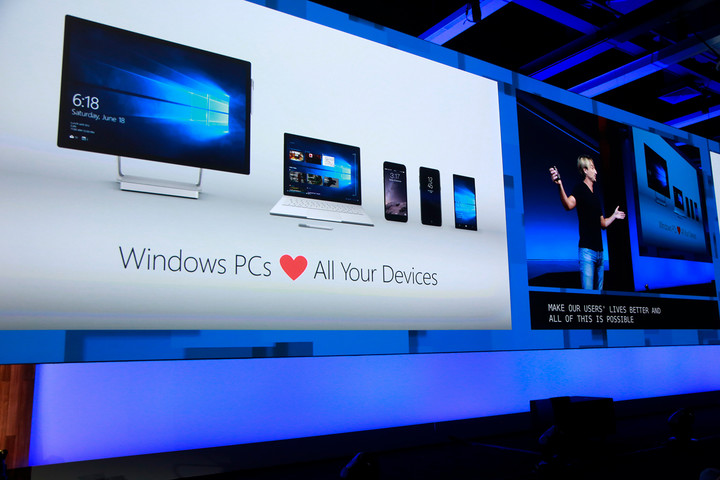
While Microsoft offers the Project Centennial tool to port old-school Windows apps to the Windows Store, the company would rather developers make shiny new UWP apps that take advantage of Windows 10’s touch, pen, and design capabilities. And so far, that’s just not happening.
The current state of the Windows Store demonstrates how even having hundreds of millions of users doesn’t guarantee that a platform will be embraced by enough users to compel developers to support it. Most developers see no incentive to port their traditional Windows desktop apps to the Windows Store. The applications run just fine the way they are, and customers continue to purchase them.
The definition of insanity
That’s where the Fall Creators Update comes in.
Microsoft hopes developers will see tremendous value in new features like Timeline, which lets users go back in time and pick up tasks where they left off on whatever device, or the new Fluent Design System, which optimizes apps for the device and function. The unparalleled cross-platform support that Microsoft is building into everything in its portfolio is another carrot that the company is holding out to developers.
Windows 10 promises to become a user’s technology hub, pulling information across every device type.
However, Microsoft needs to convince users of that value as well, particularly Windows users who carry iPhones and Android devices, and it needs those users to buy the Windows Store apps that developers create. So far, that just hasn’t happened.
It’s the chicken-and-egg problem all over again.
There are ways to solve it. Apple lured in users to iOS with its superior hardware, for instance. There’s evidence that Microsoft wants to take a page from that playbook. The company is planning to make Windows 10 S — which only allows users to install apps from the Windows Store – the default on the Surface Laptop. But the strategy also has risks – like the fact it might seriously piss off customer who are comfortable with a more traditional desktop environment.
In the end, Microsoft can build it, but users need to come. If they don’t, then Windows 10 will become increasingly isolated, and Microsoft’s strategy of using the OS to remain at the center of user’s lives will fail.
Lowe’s is building an exoskeleton that gives warehouse workers superhuman strength
Engineers have been tinkering with exoskeletons to amplify our physical abilities for years. While there are certainly boundless military applications for this technology, there are also many commercial uses. Lowe’s, for example, just unveiled a prototype exoskeleton it hopes to aid employees on the job.
As part of the program, Lowe’s plans to equip its employees with a basic non-motorized exoskeleton to maximize productivity and efficiency. The project is a joint collaboration between Lowe’s research facility, the Innovation Labs, and Virginia Tech’s Assistive Robotics Laboratory.
The suit itself fits like a rock-climbing harnesses, with a series of flexible carbon-fiber trusses along the backside. These rods sit along the spine and behind the thighs. Bending as the person squats, the rods transfer the energy of basic movements more evenly. This stored kinetic energy essentially springs back as the individual stands upright. Lowe’s employees spend much of their day moving heavy items and the company hopes these exoskeletons will reduce the overall strain on muscles and joints.
“As they bend and stand, carbon fiber in the suit’s legs and back act like a taut bow ready to launch an arrow, helping them spring back up with greater ease,” Lowe’s explained in a press release.

Lowe’s has been testing the exoskeletons on four employees at store in Christiansburg, Virginia for more than a month. After these tests, the company will decide whether or not to expand this initiative to other stores. However, Lowe’s isn’t the only company looking to use exoskeletons to aid in workforce productivity.
General Motors recently partnered with NASA to create a motorized glove that makes it easier to grip and lift heavy objects. Panasonic and Hyundai are also working on their own exoskeletons designs. As for now, the Lowe’s exoskeleton prototype is rather elementary, and designed to test the baseline functionality of the suit — but future iterations will likely be more sophisticated.
“We didn’t want to over-engineer it, make it too fancy, or give it too many bells and whistles,” explained Nel. “We’re putting it in the rough and rumble world of a real store and will iterate on top of that… we’ll add a jetpack in 2018.”
The exoskeleton is still in the early stages of development at this point, but keep your fingers crossed and you might find one at your local hardware store sometime next year.
Moto G5 Plus vs. Honor 6X: The ultimate budget battle
Just because the big-name phones get all the attention, that shouldn’t preclude excellent devices like the Moto G5 Plus and Honor 6X from getting their fair shake. At under $300 each, both phones certainly have trade-offs compared to their more expensive counterparts, but each manages to bring a certain something, from fantastic performance and software to superb battery life and great camera optics, to make them worth your time.
At least that’s what Jacklyn says in her latest video, finding it hard to choose a winner.
Which phone would get your money? Leave a comment below with your favorite, and while you’re at it, go subscribe to AC’s YouTube channel if you haven’t already!
- Moto G5 Plus review
- Honor 6X review
- Android Central on YouTube
- Jacklyn’s personal YouTube channel
 AIVAnet