


ABC affiliate deal makes it easier to livestream local channels
Disney has signed deals with more than 160 television stations that will finally enable them to stream their local content. Most of the affiliates will now use services like DirecTV Now, Sony PlayStation Vue and YouTube TV to broadcast their own shows within target markets. Ultimately, this means 90 percent of all TV-equipped households will soon be able to stream content from their local affiliates through cable, satellite and app services.
Previously, livestreaming ABC content was only available in certain cities and on certain services. This was in part because parent company Disney needed to make agreements with each and every affiliate before shows could be broadcast in their area, which has been an issue since 2013. This deal arranges for many of those stations to get digital distribution on Disney’s terms.
Via: Deadline
Source: Disney ABC
Ventev Dashmount Minipro Window phone mount review

Although most countries around the world have placed laws against texting while driving, many citizens around the world use their mobile phones in the car for far much more than texting. Our phones have become our GPS units, as well as our media centers.
I love to travel and don’t mind driving to my destination, so I may spend many hours inside my car, both using Google Maps, and streaming music, news, or a podcast. When skipping songs on a playlist or looking at those turn-by-turn directions, it is convenient to see the screen at a glance. We want to look at our phone now for our phone; rather than grabbing one’s phone from the passenger seat, or some random cubby (We all have done that, haven’t we?), we need something more helpful.

Design
The Dashmount Minipro Window by Ventev is a design with which many of us are familiar–if we haven’t used something like it before, we have definitely seen them being used in other people’s vehicles on the road. It has 360-degree rotation with adjustable brackets, so it will fit nearly any smartphone in place and supports both portrait and landscape.
The heavy-duty suction cup has a lever that sucks in the extra air, giving it a firm hold that won’t fall down. This is, of course, assuming that you have cleaned the window properly–don’t worry, though, they included an alcohol wipe in the box to clean the windscreen/windshield.
It also includes a dash mount with 3M adhesive backing, so you can mount it directly to the dash. Although I trust 3M, and we all know that it is strong, just note that you are essentially permanently choosing a location for your mount, and cannot move it from car-to-car like you can with the window mount.

Ease of Use
Once you take this out of the box, it is fairly self-explanatory. My phone, even in a case easily slides in and out of the adjustable holder. Incredibly simple to operate.
The suction cup allows for your phone to be mounted to either the window or the dash. Both the window/dash cup AND the separate 3M holder are included, giving yet another option to how to mount your device, and finally, the spring-loaded arms allow the mount to fit even large phones.
Value
The Dashmount Minipro Window will run you about $25.00, which is cheaper than many phone cases. Since this comes with two different options for mounting for the same price, I say it’s well worth the cost, plus, Ventev offers a limited LIFETIME warranty, as long as you keep your receipt.

Wrap-Up
Some people aren’t mount users–they prefer to just leave the phone in the pocket, auto-connect to Bluetooth, and use the steering wheel for controls. I used to be one of those people until I had to use my phone as a GPS; just hearing directions does not work for me. I was constantly looking at my phone, so then I became a mount-person.
The Ventev unit is affordable, practical, and more than a little bit convenient. To me, there’s not much more you can say about something without outright trying to sell it to someone.
Availability
You can purchase the Dashmount Minipro Window at Ventev’s website where it’s offered for $24.99.
Stephens College is the first all-women’s school with an eSports team
Last Thursday, Stephens College made history when it officially created the first varsity-level eSports team at an all-women’s school. The program’s 12-player squad will begin digitally competing in collegiate Overwatch leagues this fall.
Administrators started discussing adding eSports as the school’s ninth sport 16 months ago, according to ESPN. Its players will receive the same partial scholarships and resources given to the institution’s other athletic programs. The only difference: The eSports team will be housed in the information technology department.
Stephens became a member of the National Association of Collegiate Esports (NACE) — college-level competitive gaming’s version of the NCAA — joining 30 other scholarship-sponsored programs under the organization. In keeping with Stephens’ eSports team’s pioneering spirit, they chose Blizzard’s team shooter Overwatch for their initial competitive title for its diverse and strong female characters.
The squad will have a six-person main team and backup “bench” of six more athletes; Interested students may apply on the program’s website, with tryouts over the summer. This fall, the team will start competing in Overwatch leagues run by Tespa, the collegiate eSports organization that puts on the Heroes of the Dorm series and operates out of Blizzard’s headquarters.
Via: Gamasutra
Source: ESPN
Sennheiser partners with Samsung to bring 3D audio to Android phones
Why it matters to you
Binaural audio has to be experienced to be believed. Luckily, Sennheiser’s partnership with Samsung will give Android users that chance.
Samsung and Sennheiser want to bring 3D audio to tens of millions of smartphone users around the globe. On Monday, the two companies announced a partnership that will see Sennheiser’s Ambeo Smart Surround earbuds gain Android compatibility.
“We are working with Samsung on the Ambeo smart headset to make it available for Android devices,” Andreas Sennheiser, the company’s CEO, told reporters at the IFA Global Press Conference in Portugal. “[South Korea is] one of the most technology-savvy countries […] A dominant layer of the smartphone market is Android-based phones.”
Three-dimensional audio, otherwise known as binaural audio, is a reproduction of sound the way human ears hear it. Using a special microphone arrangement that simulates the shape and position of human ear canals, the arrival time, loudness, and timbre (e.g., character or quality), sound can be captured naturally — headphone listeners hear sounds from all directions.

Sennheiser’s Ambeo Smart Surround earbuds, which the firm showed at the 2017 Consumer Electronics Show in January, is one of the first binaural recording devices that does not require a big, bulky rig. The earbuds, which wrap around the ear, contain microphones that capture three-dimensional sound. “It places the listener in the exact original sound field, so whether you capture a rainforest or a buzzing city, listening to the binaural recording will make you feel you are there,” Sennhesier said in a press release.
It is not a perfect system. The Ambeo only works with specially encoded content, and recording requires a companion smartphone app. But there is obvious potential for virtual and augmented reality, where binaural recordings can potentially lead to more immersive experiences. It is not too difficult to imagine an Ambeo-compatible version of Samsung’s Gear VR headset.
And it is a smart move for Sennheiser, considering Samsung’s market share. In February, the Seoul, South Korea-based company ranked second among individual smartphone manufacturers with a 17.8 percent share of worldwide sales.

Kyle Wiggers/Digital Trends
The collaboration is all the more interesting in light of Samsung’s recent acquisition of Harman, which has several audio firms under its brand umbrella. Samsung bundles a pair of AKG in-ear headphones with its latest smartphones, including the Galaxy S8, but hasn’t announced intentions to enter the binaural space.
The partnership with Samsung would appear to accelerate Sennheiser’s Android development timeline. In a statement last week, the company said that it was planning to launch Ambeo with iOS compatibility in the near future and that Android device support would come “later this year.”
SK Hynix may work with Nvidia to produce GDDR6 memory chips in early 2018
Why it matters to you
This is a good sign that products based on Nvida’s Volta graphics chip design are on track for an early 2018 release using GDDR6 memory provided by SK Hynix.
SK Hynix is the latest to introduce a GDDR6 product, stating that it will begin mass producing an 8Gb memory chip by early 2018. Samsung said something similar during the recent Hot Chips convention, stating that the mass production of its GDDR6 chips wouldn’t begin until 2018. They would have an I/O rate of 14 gigabits per second per pin, and a lower power consumption than GDDR5X technology, which only has a data rate of 12 gigabits per second. Micron is also pushing to mass produce a GDDR6 product by the end of the year.
SK Hynix said that its upcoming 8Gb memory chips will be manufactured using 2Xnm process technology, meaning anywhere between 20nm and 29nm. Each chip will also have an I/O data rate of 16 gigabits per second per pin, making it the “world’s fastest” to date. Throw in a 384-bit memory interface, and the GDDR6 tech will have the ability to process up to 768GB of graphics data per second. As a reference, GDDR5X memory used on the GeForce GTX 1080 Ti has an I/O transfer rate (bandwidth) of under 500GB per second.
“GDDR6 is a next generation graphics solution under development of standards at JEDEC, which runs twice as fast as GDDR5 having 10 percent lower operation voltage,” the company said. “As a result, it is expected to speedily substitute for GDDR5 and GDDR5X. SK Hynix has been collaborating with a core graphics chipset client to timely mass produce the GDDR6 for the upcoming market demands.”
Current memory chips based on GDDR5 have 170 pins, 67 of which are specifically used for the I/O data exchange while the others are for grounding and power purposes. The more recent GDDR5X builds on that design by adding 20 pins to the form factor, providing an additional I/O boost. SK Hynix’s GDDR6 appears to have 180 pins.
The major difference between GDDR (Graphics Double Data Rate) and HBM (High Bandwidth Memory) is similar to what divides regular NAND and 3D NAND. On the GDDR5 front, chips are spread out horizontally in physical space, limiting the actual size of the graphics card and requiring “larger voltage circuity.” HBM tech takes the skyscraper approach by stacking memory chips vertically, which in turn provides better I/O bandwidth.
As for that “core graphics chipset client” comment, we’re betting it’s Nvidia. The company’s next-generation graphics chip architecture, code-named Volta, will supposedly use GDDR6 memory technology in 2018. The current crop of Pascal-based “GeForce” graphics cards for the gaming market use GDDR5 and GDDR5X while Nvidia’s “Tesla” solutions for the enterprise sector use HBM2 tech.
Meanwhile, AMD fully backs HBM technology, which was used on its Fuji-based graphics cards for the gaming market in 2015. AMD is also getting ready to unleash new graphics cards under its “Vega” chip design umbrella packing HBM2 on-board memory, and its sixth-generation “Navi” solutions could do the same. Yet AMD’s current Polaris-based value-priced RX 400 and RX 500 family of cards for the “mainstream” market relies on GDDR5, so we will have to play the wait-and-see game regarding the Navi-based lineup.
Startup wants to build ‘robot brothel’ in London, complete with lifelike AI escorts
Why it matters to you
Robot brothels could circumvent the laws banning human prostitution. Whether that matters to you is another thing entirely!
What did you do with your weekend? We enjoyed an extra hour in bed, spent the morning playing video games, and then took a brisk walk into town to visit the robot brothel. Or at least that’s what folks may be saying in a year or so, if the Spanish company Lumi Dolls has anything to say about it!
Describing itself as the “first sex dolls agency of Europe” (a description that’s a bit less E.U. than “ewww!”), the growing business is attempting to circumvent laws banning regular brothels by introducing lifelike androids to the mix. And while right now it’s still working with inanimate (if expensive) sex dolls, it’s in the process of expanding its operations to include cutting-edge robots, equipped with the latest artificial intelligence technology.
“All people have sexual fantasies that we cannot perform, either because they are embarrassed, or because they have some physical complex that does not allow them to perform these fantasies with a real woman,” a representative for Lumi Dolls told Digital Trends. “The doll does not judge, and says no to nothing.”
Lumi Dolls recently opened its first venue in Barcelona, but it was forced to shut down after complaints from the city’s human prostitutes. It’s now reopened elsewhere in the area, with prices set at $85 for a half hour, or $106 for the full 60-minute experience. Rooms come with the doll of your choice (there’s a wide variety of them, with an assortment of costumes and “personalities”) and an HD plasma screen, which we’re told let users choose from a, “series of films that will help you get into situation.”
The company now wants to expand its business operations outside of Spain, with plans to introduce robot lovemaking to the United Kingdom — before venturing even further afield.
“We believe that our brand would work really well in the U.K.,” Lumi Dolls’ spokesperson said. “Our ideal location would be London. We look for major capitals with a certain volume of population, so London would be ideal to create a Lumi Dolls franchise. We are looking for an investor who wants to expand our brand in the U.K., and [our] first city chosen is London.”
New controller lets DJI drone users configure custom flight settings
Why it matters to you
Pro-level pilots, take note — DJI is launching a number of new accessories geared towards the high-end Inspire 2 and Matrice 200 drones.
DJI users no longer need to use a separate touchscreen device to program their photo settings. On Sunday, April 23, DJI announced the Cendence remote control, a custom-configurable control that allows users to program flight controls as well as camera settings such as ISO and shutter speed. Along with the new controller, the company also announced several other pro-level accessories, including a new high-gain antenna with a range of over six miles, a new series of monitors, and an extended customer service plan ahead of the NAB Show being held from April 24 to April 27 in Las Vegas.
The Cendence is the company’s first multi-platform configurable controller, designed for the Inspire 2 but compatible with DJI’s other pro-level Matrice 2 drones as well. The configurable settings gives drone pilots access to joysticks and control dials to control the drone as well as camera settings, including focus, ISO, shutter speed, and sharpness. The dual dials can also control the pitch and yaw for the drone’s gimbal simultaneously.
With built-in SDI and HDMI ports, the remote controller is also compatible with live-streaming, is adaptable to DJI’s Lightbridge, and can transmit video through Wi-Fi.
The controller uses a modular design that allows the system to be paired with the new Tracktenna and CrystalSky monitors, though the controller can also be mounted on a smartphone or tablet. A secondary screen built into the controller displays telemetry data such as speed and altitude.
The new monitors are four times brighter than the typical smartphone, DJI says, offering pilots more visibility in daylight. The CyrstalSky screens, available in 5.5-inch and 7.85-inch models, are designed to run DJI’s apps and can also use dual MicroSD card slots to store 4K video.
To enhance the communication between the controller and the drone, DJI’s new Tracktenna uses a gimbal to keep the antenna continually pointed toward the drone, allowing for maximum reach within the boosted antenna’s 6.2-mile range. The pro-grade antenna’s maximum 10-Mbps transmission rate is supported within 1.24 miles of the aircraft. The enhanced antenna offers better responsiveness for applications such as search and rescue missions and inspections, DJI says.
Along with the new accessories, DJI is launching an extended customer care plan that gives drone pilots up to $15,000 in damage repairs a year, along with use of a replacement drone until the repair is completed. The membership also gives pilots a battery rental service and makes them among the first to receive the company’s latest products and several additional member perks. However, that insurance against drone crashes comes at a cost that lifts the service above the consumer altitude, as it involves a $4,699 annual fee.
The Cendence controller is expected to start shipping later this year for a $999 list price, while the CrystalSky monitors sell between $469 and $999 depending on screen size and resolution. The price and availability for the Tracktenna have not yet been announced.
Could eye drops be a potential cure for jet lag? Perhaps in the near future
Why it matters to you
A new link between the human eye and the body’s circadian rhythms could help treat various issues, including jet lag.
Researchers at the U.K.’s University of Edinburgh have discovered a new link between the eye and the human body clock.
This takes the form of a group of newfound cells in the retina which send information about light changes to the suprachiasmatic nucleus, the part of the brain responsible for circadian rhythms.
While links between the eyes and our natural body clocks have been known for a long time, the exact details of this relationship are unknown. The body’s biological clock is synchronized to changes in light and dark and plays an important role in maintaining everything from brain activity and regulation of body temperature to protecting against depression and gastrointestinal problems.
In a study by the researchers, lab rats were examined after the selective activation or destruction of these cells in the retina, which contain vasopressin, the neurohypophysial hormone that expresses changes after long haul travel or a person switching between day and night shifts. The results — which are described in The Journal of Physiology — showed the vasopressin-expressing cells in the retina play an active role in controlling circadian rhythms.
The scientists working on the project demonstrated that a bright flash of light seen by the rats caused them to release vasopressin and also activated neurons in the brain’s suprachiasmatic nucleus. However, when a vasopressin-blocking compound was injected into brain cells, the rats responded less significantly to light.
So does this lay the groundwork for the possibility that it might one day be possible to overcome jet lag by administering some eye drops? That is one of the goals of the project, but don’t expect it anytime soon.
“Nobody’s started to do anything like that yet,” Mike Ludwig, professor of neurophysiology at the University of Edinburgh, told Digital Trends. “It’s a way that this could go, but we’re not there yet. There’s a lot of work that still needs to be done on the basic research part. You won’t be able to go to the chemist in the next two or three weeks, and buy eye drops when you have a long flight. We’re talking about years, but the opportunity is possibly there.”
Picture perfect! How to get the best out of the Huawei P10’s amazing camera
The dual-lens, Leica co-developed cameras on the back of the Huawei P10 and P10 Plus are prime reasons to go out and buy one of these great phones. They take beautiful shots, whether in color, monochrome, a portrait or a photo with a cool, blurred background. Most enticingly, the P10 boosts your confidence as a photographer, and its ability to produce wonderful pictures pushes you to go out and experiment.
If the P10 is in your hand right now, but you’re a newcomer to Huawei’s phones and software, it can be difficult to know where to start. We’ve put together a guide on how to make the most out of the P10’s excellent camera, and its intuitive user interface, that’s applicable to both the P10 and P10 Plus.
Getting started
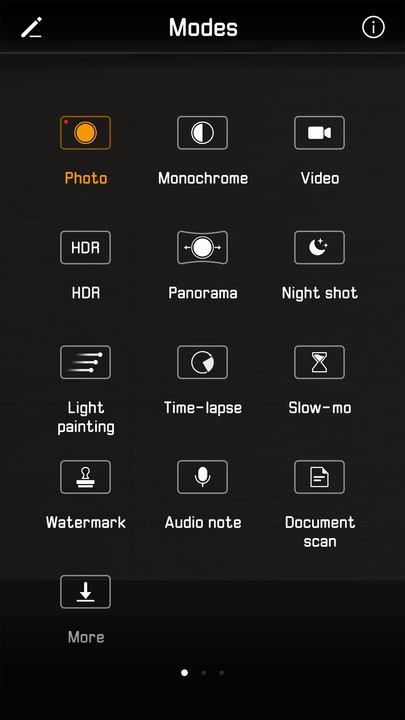
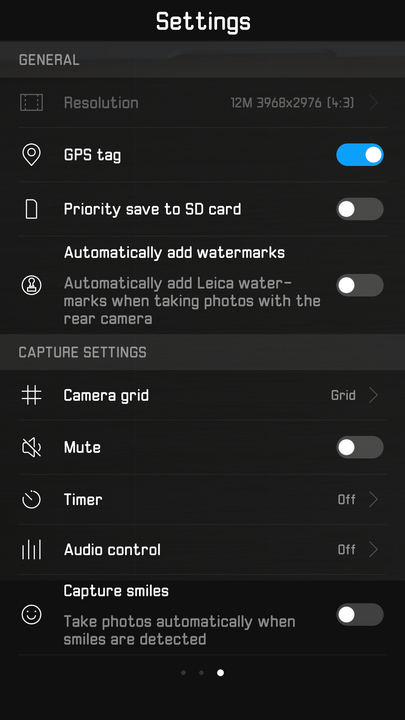
Huawei’s main camera app, like the lenses on the phone, has been co-developed by Leica; mimicking its own user interface. It’s intuitive and attractively laid out, and goes a long way to making the P10 so usable. Open the app and you’re presented with the viewfinder, along with the shutter release below, and a menu above it.
Return to the main viewfinder screen by swiping to the left, then swipe to the left again to reveal another screen, this time filled with settings for the camera. Among features like a watermark, smile capture, and a timer, we do recommend using one of the Grid options. These help frame and compose your photos, and although there are some complex options available, the simple Grid is fine for most people.
Back on the main screen, below the viewfinder is a button to change between stills and video to the right of the shutter release, and a shortcut to the gallery on the left. From here, you can start snapping away, but to get the best from the P10, you’ll want to play around with some of the other modes.
Portrait, wide aperture, and more
Turning our attention to the menu above the viewfinder window, there are two buttons that you’ll end up using most. The first is the Portrait button, which looks like a person’s head and shoulders in a circular window, and the second is Wide Aperture mode, which looks like a camera lens.
Tap Portrait mode, and the camera sets itself up to take pictures of people. The P10 cleverly looks for faces, and, using some complex and detailed face scanning algorithms, tracks 190 points in 3D space, then adjusts the scene to suit the person — including artificial light sources, blurring out the background to give the picture a bokeh-style pop, and enhancing the color in the foreground.
Don’t think this only works with the color lens either. Swap to the monochrome lens — swipe left, and tap Monochrome — to get the same effect, only in striking black and white. It’s not only for use on the rear camera, so tap the button on the top right of the upper menu to swap to the selfie camera, and get the same great features. Huawei enhanced Portrait mode with a beauty effect, which can be adjusted along with the bokeh style, using two buttons overlaid on the viewfinder. The button with the number value tweaks the beauty mode, while the button below it activates the bokeh shot. Play with both to get the right look for your photo.
Wide aperture mode is for activating the bokeh mode, giving the blurred background effect that’s such a trend in mobile photography at the moment. When activated, the mode brings up another button for adjusting the camera lens aperture, and a slider lets you strengthen or lessen the blur. Don’t feel restricted by getting the blur right at the time of taking the picture, as it can be adjusted after the photo has been taken, too.
To do this, open the Gallery app — or tap on the preview image in the camera app — and look for the same camera lens icon used to activate the wide aperture mode initially. Tap this, and then choose the area in the photo you want in focus, or blurred out. A slider at the bottom of the screen widens the aperture, emphasizing the blur. There’s also a filter button to add different effects. Don’t pass these by, as they add really unusual looks to the picture. Try the monochrome filter to see what we mean!
Together, these two modes make the Huawei P10 one of the most versatile, creative, and competent camera phones out there.
Keep your login information under lock and key with best password managers
If you use the same password for every site, anyone who figures out one of your passwords now has all of them. It’s a house of cards, but one way too many people live with. Although unique passwords serve as a convenient and (often) effective means of preventing your identity and data from being stolen, remembering them all can prove difficult without having to refer to a list of Post-It notes haphazardly placed around your monitor.
The right password manager should do more than just lock your passwords within an encrypted vault in order to minimize your vulnerability against attacks. Many modern password managers now allow you to sync your web-based passwords across devices and change them with a mere click, while giving you the option to automatically sign in to your favorite sites and granting you improved security in all facets of your data. Below are a few of our current favorites, along with an explanation of what they do, and how they do it.
What does a password manager do?
Basic password managers have just one function; they save your login information for different sites so you don’t have to. This is a feature available in any modern web browser. While such a feature may be handy, this type of password management isn’t going to do you any good — in fact, it could even make you more vulnerable, since browsers are often anything but secure. Firefox password manager solution is pretty much the only one that’s known as a quality, free option.
The type of password managers you should look into have a few far more helpful features. First, they encrypt all your login information and other types of data that you might often hand over to a website, such as your address or credit card information. This allows you to not only keep your personal data secure, but organize the dizzying array of passwords that many of us have to manage.
Second, many password managers generate unique, complicated passwords that are extremely difficult to crack. Through these two functions, password managers ensure that you have the strongest possible password, and do the hard task of “remembering” your passwords for you. Any password manager you use should, ideally, perform both of these security functions.
Many quality password managers also include password ranking, which tells you which of your passwords are weak and which are strong, and gives you the ability to easily change the puny ones out for something more robust.
 AIVAnet