


Future Moto Mods could offer sticky notes and improved audio
In its continuing bid to stay relevant in a competitive market, Motorola is trying to build up a community of hardware designers for the Moto Z’s modular add-ons. Yesterday, the company brought together several winners of regional hackathons to a pitch event in Chicago, hoping to find the best of these innovative, indie creations. The judging panel — which includes execs from Lenovo and Verizon — selected two teams for up to $1 million in investment funding from Lenovo Capital, as well as eventual distribution by Verizon.
The winning teams include Digiframe, a mod by Andrius Valentukonis and Ilja Laurs that gives you a little widget-based sticky note screen on the back of your phone that shows important info without having to launch specific apps on your Moto Z. You can stick it to your fridge when it’s not attached to your phone, too, so you can leave notes or to-do lists for roommates, family, or yourself.
The MACAY TrueSound HiFi, by Abigain Brown and Yousef Alsayid, puts an audio converter on your Moto Z. This winning hardware mod converts digital-to-analog as well as analog-to-digital signals and promises to give musicians and audiophiles a HiDef audio port for pro audio applications, like connecting to studio equipment or high-end speakers and headphones.
Runner-up projects include a wireless charging mod, a slider keyboard for those hardware-typist holdouts, an edge-notification mod, and a solar charger that attaches to your phone. The solar battery team won the top spot in the San Francisco hackathon last February.
All the Pitch Day participants will participate in the Moto Mods Accelerator Program, which provides engineering and design support. Remaining teams can continue to refine their projects through Motorola’s developer portal and partnership with Indiegogo. The program also offers engineering feedback, design support, and hands-on coaching to help teams get their mods ready for prime-time.
Source: Motorola
You can wake up Microsoft’s Surface Studio by talking to it
Waking up your PC from sleep is as easy as tapping the touchscreen, moving the mouse or pressing a button on the keyboard — but if you have a Microsoft Surface Studio, it just got even easier. Thanks to a new audio driver update, Studio owners can now wake their machine by simply calling out for Microsoft’s digital assistant. As long as you have the Windows 10 Creator Update and the latest patch, all you have to do is say the assistant’s keywords: “Hey Cortana.”
It’s a simple change, but pretty handy. Until now, the wake phrase would only turn the screen on while it was fullly powered up — but the new update allows the user to call the machine out of a lower power sleep mode, making it easier to use Cortana as an in-home voice assistant for casual searches. Well, at least when you’re in the same room as a Surface Studio. Microsoft’s Amazon Echo competitor isn’t due out until sometime later this year.
Via: Neowin
Source: Microsoft
Tesla recalls 53,000 vehicles for potential parking brake issue
Tesla is recalling 53,000 of its Model X and Model S vehicles built between February and October 2016. Some of these might have a manufacturing flaw that prevents the electronic parking brake from being switched off. While it hasn’t been linked to safety issues or accidents yet, the cautious automaker is voluntarily recalling a large number of vehicles just to be safe.
A small gear built by one of the company’s third-party suppliers is to blame, and Tesla figures less than five percent of the 53,000 recalled vehicles might have the part — but better safe than sorry. The replacement process takes only 45 minutes, and assuming every potentially affected vehicle is brought in to Tesla, the recall process will be over by October 2017.
The move is typical for Tesla: It issued an early recall of 90,000 Model S sedans in November 2015 for safety concerns (again, before a flaw caused any accidents) and pulled back its just-released Model X SUVs in April 2016. Heck, it even recalled and replaced almost 30,000 wall chargers back in 2014.
Via: TechCrunch
Source: Tesla
‘Up Next’ is an Apple Music series highlighting new artists
Apparently Apple’s Clive Davis documentary isn’t the only music-related news from the tech juggernaut today. Apple Music has a new monthly feature series called Up Next as well. As the name suggests, it focuses on up-and-coming artists. The first installment looks at Atlanta rapper 6LACK (pronounced “black”) with a mini-documentary, a spotlight on his latest album, a live performance and an interview with Beats 1 DJ Zane Lowe (above) in addition to a few playlists. Like 9to5Mac noticed, the performance being named “Up Next Sessions” suggests we might see more of the live videos.
When the streaming service launched, its “Connect” feature was supposed to be a one-to-millions social network for artists to share bits of music, photos and videos with their fans. But it never really took off so Apple more or less shelved the idea. Up Next looks like a sort of return to that, but instead of an artist sharing intimate moments from the studio with his or her audience, Apple is putting the spotlight on musicians that otherwise might fly under radar of the service’s 20 million paid subscribers.
Introducing #UpNext.
Music’s Next Generation.
A new artist every month.
Up first, @6LACK.https://t.co/mPtDdmNNLG pic.twitter.com/qq62ggEyCh— Apple Music (@AppleMusic) April 20, 2017
Via: 9to5Mac
Source: Apple (iTunes)
Lyft’s dashboard display helps drivers with hearing impairments
Accessibility isn’t just for those with a disability; inclusion benefits all of us. Adding a visual notification to an auditory one hurts nobody, and it allows people with a hearing impairment to participate in normal activities — like driving for a ride-sharing company. Luckily, Lyft has just added two little tweaks to its system to empower drivers with a hearing impairment.
Typically, Lyft drivers hear an audible “ping” when they get a new ride, which isn’t the best way to notify someone with a hearing impairment. Now, though, Lyft will visually notify its drivers of a new ride with large text on the company’s new in-car display, Amp. This device already lights up, changes color, and can send little happy messages to riders; why not add something to benefit the driver, too?
Lyft has also started letting riders know when their driver is deaf or hard of hearing. Before the car arrives, passengers will get a text message telling them to contact their driver via text instead of voice, and to let the driver lead the communication when in the car. It’s such a simple thing, it’s hard to believe it wasn’t already happening.
The ridesharing company has partnered with the National Association of the Deaf (NAD) to continue improving its app. It also hopes to promote awareness of opportunities for the deaf and hard of hearing and promote the importance of equal access to policymakers.
Uber has similar features to what Lyft announced today, though it’s all done via the Uber app instead of a hardware add-on in the car. When a new ride is available, Uber drivers will see a flash on their smartphone’s screen instead of just a sound, and passengers also get a notification about their driver’s status. Simple changes to existing hardware and software like this make everything much nicer for all of us, regardless of ability.
Source: Lyft
Concentrates are the future of cannabis
The cannabis industry is in the midst of an unprecedented renaissance. Strains are stronger, consumption methods more numerous and availability greater than ever before. Medical-grade marijuana now averages around 20 percent THC — a threefold increase from the “hippie weed” your parents toked back in the ’60s. Smoking has been usurped by vaping and edibles as the preferred dosing methods, making the concentrates and oils more valuable commodities than the flowers they’re derived from. The good times certainly are rolling, but how long can we keep up this relentless march toward pure THC distillate?
Nearly impossible to find a decade ago, cannabis concentrates are now a mainstay of the commercial cannabis industry. “Today we see concentrates are used in probably 95 percent of the branded products,” Michael Kay, co-founder and executive director at Bloom Farms, a San Francisco–based medical cannabis company, said during a recent interview. “The vape oils, the vape cartridges, the edibles — it’s the base, essentially, for all of these products.”
And like the flowers they’re made from, concentrates are becoming increasingly more potent as well. Lightly processed concentrates like kief and hash range from 20 to 60 percent THC, while extractions like BHO and CO2 oils range from 50 to 90 percent THC. What’s more, distillate (also known as “clear”), which exceeds 90 percent THC, is becoming commercially available, albeit still severely limited. “We’ve only recently started to see products over 90 percent THC, and they are usually high-demand and few and far between,” said Holli Bert, HR director and community liaison at San Francisco’s Green Cross dispensary.
Bert also points out that potency measurements can be misleading due to variances in how different labs conduct their tests and how retailers report those numbers to consumers. “A product reported with a THCA potency of 90 percent could test lower, at 85 percent THC potency, elsewhere. However, that laboratory may be including all THC compounds to make up the total,” Bert said, rather than counting only the THCA, one of 85 cannabinoids found in weed. “As technology improves and processes get streamlined, it is likely that more products testing above 90 percent will hit the market.”
But there’s only so far for the potency of concentrates to rise, and we’re approaching the 100 percent purity limit. “The highest [-potency oil] we’ve ever seen filled in our cartridges is about 94 percent,” Danny Davis, managing partner at Convectium, makers of the BlackOut X line of vape pens, said during a recent interview. “The timeline to get to 100 percent is still a ways away, but 98 percent is a year, maybe two years off.”
The increase in concentrate potency underscores the need for industry-wide quality control efforts. “I don’t see the industry regulating itself until there is some forced compliance,” Davis said. “I don’t think FDA rules are the solution, but there has to be something that says ‘It needs to be tested, and it can’t contain this.’” But this regulation is vital for consumer safety. Granted, yes, nobody has ever died from a cannabis overdose, but as potency rises, the ability to regulate the dosage becomes increasingly important. “If I give you a [time-release dermal patch] that says it’s 50 percent, but the potency is actually 80 percent because it didn’t test properly, you’re going to be a lot more affected than you thought you would,” Davis concluded.
Interestingly, the march toward ever stronger oils may not necessarily spell doom for flower products and lower-strength concentrates. Turns out, not everybody wants to get utterly twisted when they consume cannabis products. “While it’s true that the majority of our members tend to select the more potent offerings,” Bert wrote, “there is still a healthy segment of our clientele who prefer lower-potency products. Oftentimes, it is easier for members, especially newcomers, to dose themselves with lower-potency and micro-dosing options.”
Michael Kay likens it to wine and alcohol, wherein various-strength products find or create their own individual niches in the market. “Some people would like very strong THC products, some people like lower THC products, and you can do that with concentrates,” he said.
The evolution of concentrates is also changing how we consume cannabis. Every year, more kinds of products reach the market, and more methods of extraction and concentration are developed. “We’re certainly seeing an increase in dabbing and vape pens,” Bert explained. “Many patients are seeking higher-potency products, and it’s a natural step up for patients.” What’s more, Vape pens also offer a discreet and easy means of consumption that smoking does not.

But it’s not just vape pens. Davis envisions an entire new ecosystem of cannabis-delivery devices. Everything from Albuterol-like inhalers to oil diffusers for cooking to transdermal patches — like NicoDerm but with THC. “I think that there’s so much to come,” he said. “I think there are so many things that aren’t being done today.”
Of course, this fantastical, Willy Wonka–ish future may not come about at all — especially if US Attorney General Jeff Sessions has his way. In February, he voiced his opposition to cannabis legalization and warned that efforts at the state level would lead to “violence” and could instigate reprisals from the federal government.
“I don’t think America is going to be a better place when people of all ages, and particularly young people, are smoking pot,” Sessions told reporters at the Department of Justice. “I believe it’s an unhealthy practice, and current levels of THC in marijuana are very high compared to what they were a few years ago, and we’re seeing real violence around that.”
Given that Sessions is in charge of setting the DOJ’s agenda, we could see the return of widespread dispensary and club raids by the DEA, akin to those conducted throughout the Bay Area in 2005 and 2006. “It would be imprudent for us to be unconcerned” with the tenor of Session’s comments, Bert wrote. However, Davis remains unimpressed. “Are we really going to go attack something that 60-plus percent of Americans endorse?” he asked. “Especially in states which helped get him elected?”
But whether Sessions attempts to hijack the states’ push for legalization or not, there appears to be little that he can do to slow the momentum of the cannabis industry. Ultimately, it will be economic, cultural and technological factors that determine the industry’s fate; for now, the outlook is rosy. “It’s certainly going to continue as long as the demand continues to rise,” Kay concluded. “Which, you know, we’re seeing with the opening up of states that are allowing for adult use.”
Image: LEON NEAL via Getty Images (Vaping pens)
The Wirecutter’s best deals: Grenco Science’s G Pen Elite drops to $120
This post was done in partnership with The Wirecutter, a buyer’s guide to the best technology. When readers choose to buy The Wirecutter’s independently chosen editorial picks, they may earn affiliate commissions that support their work. Read their continuously updated list of deals here.
You may have already seen Engadget posting reviews from our friends at The Wirecutter. Now, from time to time, we’ll also be publishing their recommended deals on some of their top picks. Read on, and strike while the iron is hot — some of these sales could expire mighty soon.
Grenco Science G Pen Elite Vaporizer

Street price: $150; MSRP: $170; Deal price: $120
While we ran a similar deal last week, there’s an even better one-day sale price today. This matches the best price we’ve ever seen, a short sale around Black Friday that expired quickly.
The Grenco Science G Pen Elite is our pick for the best portable vaporizer. Mark Smirniotis said, “This pint-sized vaporizer produces vapor that will convert any smoker and is easy to use thanks to high-end features like precision controls, a clear display, and Micro-USB charging.”
Casper Sheets

Street price: $140; MSRP: $140; Deal price: $107 w/ code CLINK
If you’re in need of a new high quality sheet set, today presents a good opportunity to pick one up. When you use code CLINK during checkout, you’ll get $33 off, knocking the price of a queen percale sheet set down to $107 in a variety of colors. Casper often offers discount codes on their mattresses but finding a code on their well-regarded sheets is less common.
Casper sheets are our upgrade pick in our Best Sheets guide. Preethi Gopinath writes, “If you’re a fan of percale sheets and willing to pay a little more, Casper’s The Casper Sheets are even more crisp and dry-feeling against the skin. These wrinkled more than the L.L.Bean set, but not so much that the sheets looked messy. Some of our testers also thought these sheets felt a little lighter than those from L.L.Bean. We think this is a good choice if you tend to overheat while sleeping, as these will keep you even cooler than the L.L.Bean sheets will in warm weather.”
Mackie CR Series CR3 Speakers
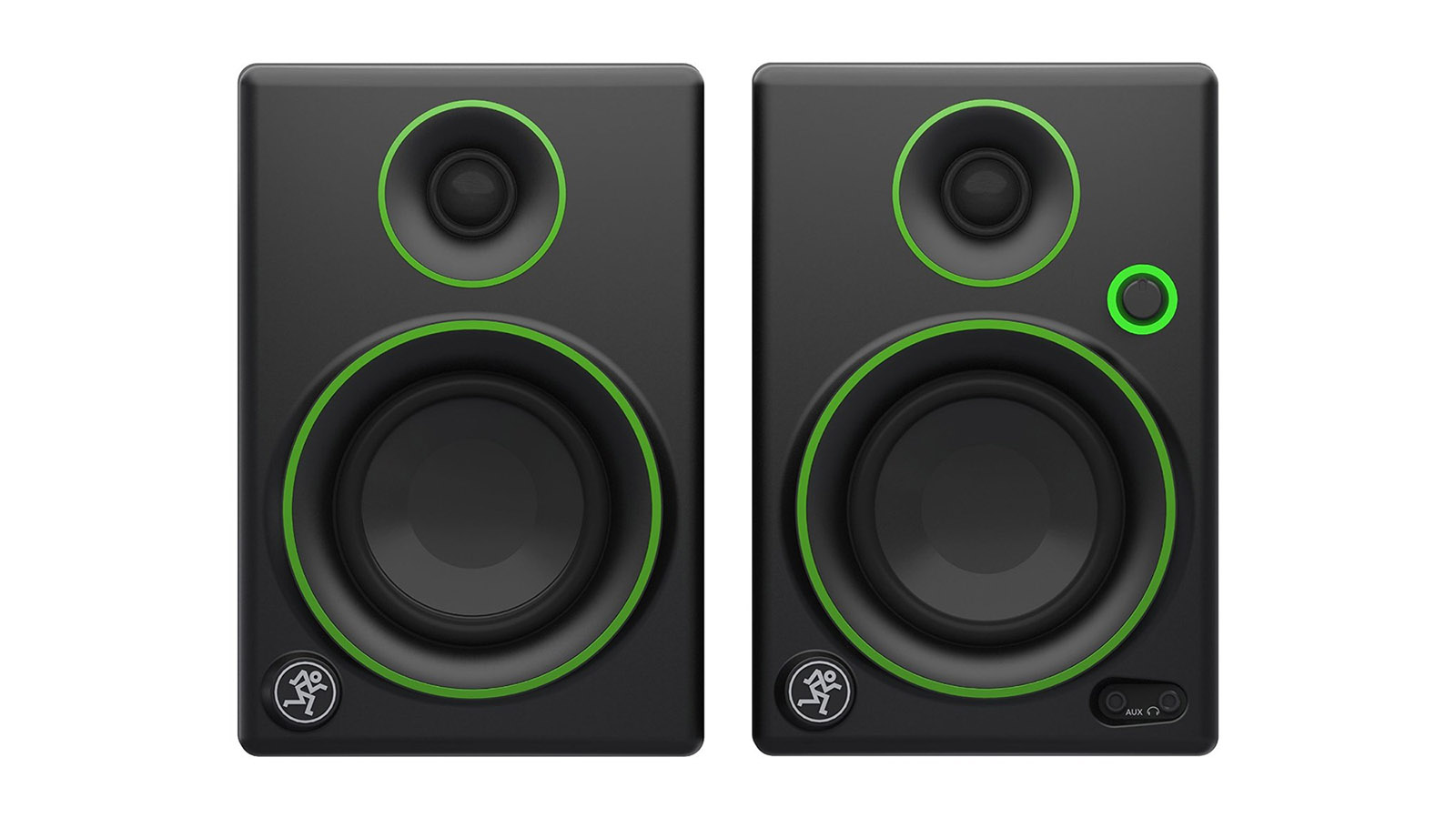
Street price: $100; MSRP: $100; Deal price: $80
Here’s a nice deal on our upcoming computer speaker pick, the Mackie CR3. This is the lowest price we’ve seen on these desktop speakers, coming in at $20 below it’s unwavering street price. Seeing as how this is the first big sale we’ve seen these speakers, it’s hard to say how long this deal will last. But this is a nice big drop in price and makes for a great deal, so get it while you can.
The Mackie CR Series CR3 is our upcoming pick in our guide to the best computer speakers. Brent Butterworth wrote, “Our new recommended computer speaker, the Mackie CR Series CR3 speakers feature aux inputs, a headphone jack, volume knob and Bluetooth, plus they come with speaker wire and isolation pads. The built-in 50 watt amps give them plenty of power. They’re a clear standout for a sub-$100 speaker pair.
LIFX Gen 3 Smart LED Light Bulb

Street price: $60; MSRP: $60; Deal price: $45
Here’s a nice 25-percent off promotion on our runner-up pick for best smart LED light bulb. Once you add the LIFX bulb to your cart and go to checkout, you’ll see a 25-percent off discount that drops the price down to $45. This matches the previous lowest price we’ve seen and makes it the best price to pick up these smart bulbs. These smart bulbs don’t require an additional hub, and they can be controlled via an Alexa device (Echo, Dot, Tap, etc.).
The LIFX Gen 3 bulbs are our runner-up pick in our guide to the best smart LED light bulbs. Grant Clauser wrote, “If you’re set on a color-changing bulb but insist on more light output, the LIFX Gen 3 beats any color-changing bulb we tried. An individual LIFX bulb is about $10 more expensive than a Hue, but each LIFX is brighter, so you might be able to get away with fewer bulbs to color-wash your room. They also produce richer colors than Hue, though the latest Hue bulbs have narrowed that gap. LIFX bulbs connect directly to your Wi-Fi network, so they don’t need an additional gateway or hub, which also means you can buy one bulb to get started—no need for a starter kit. LIFX bulbs work with several smart-home systems, though not as many as Hue bulbs. Because LIFX relies on Wi-Fi, how reliable they are depends a good deal on how reliable your network is. It also makes them less whole-house friendly than Hue, which uses a Zigbee mesh network.”
Because great deals don’t just happen on Thursdays, sign up for our daily deals email and we’ll send you the best deals we find every weekday. Also, deals change all the time, and some of these may have expired. To see an updated list of current deals, please go to The Wirecutter.com.
Apple CEO Tim Cook Says Didi Chuxing ‘May Help Traffic Jams Go the Way of the Flip Phone’
Didi Chuxing president Jean Liu has been named one of TIME’s 2017 most influential people, and Apple CEO Tim Cook wrote an excerpt about her for the magazine.
In it, Cook calls Liu a “disrupter” for building a transportation platform that offers “convenience and flexibility” to millions of commuters. He lauds Didi Chuxing’s work on algorithms that improve traffic, saying the technology could eliminate traffic jams in the future.
She and her team are succeeding with innovative, big-data algorithms that aim both to improve the efficiency of Didi’s service and to ease the congestion on roadways. By analyzing commuter patterns the way oceanographers track the tides, Didi may help traffic jams go the way of the flip phone.
In over 400 cities across China, Jean has also built a company that is dedicated to serving the community around it. Guiding Didi to this higher purpose, and giving back to the places where it does business, she shares my belief that companies can and should measure themselves by more than just the bottom line.
Apple CEO Tim Cook met Jean Liu in 2016 after Apple invested $1 billion in the ride-sharing company. Following its investment, Apple was given a Didi Chuxing board seat, held by Adrian Perica, Apple’s head of mergers and acquisitions.
Apple’s Didi Chuxing investment provides Apple with access to data and expertise on both electric and autonomous car technology, a useful resource as Apple works to develop a self-driving car software platform.
Tags: Tim Cook, Didi Chuxing
Discuss this article in our forums
Intel Rumored to Debut Basin Falls Platform in May, Launch Coffee Lake Chips in August
Intel plans to move up the launch of its 14-nanometer Coffee Lake processors, introducing them in August of 2017 instead of January 2018. According to DigiTimes, the launch is being moved up because of “increasing competition from AMD’s Ryzen 7 and Ryzen 5 processors.”
The site says Intel will release several K-series Core i3, i5, and i7 processors starting in August, along with its Z370 chipsets. Additional CPUs will come at the end of 2017 or early in 2018.
Intel also plans to unveil its Basin Falls platform, with Skylake-X and Kaby Lake-X processors at Computex 2017, which takes place from May 30 to June 3, which is two months earlier than originally scheduled.
Intel’s Skylake-X series features 140W processors with 6, 8, and 10-core architectures, while Kaby Lake X-series features a 112W quad-core processor. Intel also plans to release a 12-core Skylake-X processor in August. Intel’s Basin Falls platform could potentially be used in future Mac Pro machines and the rumored high-end server-grade iMac.
Coffee Lake chips appropriate for Apple machines were originally set to launch somewhere around the second quarter of 2018, so if rumors of Intel’s updated timeline are true, the launch could be moved forward to either late 2017 or early in 2018.
Coffee Lake chips are manufactured on Intel’s 14-nanometer process and will be the fourth processor family to use the architecture after Broadwell, Skylake, and Kaby Lake.
Apple is rumored to have new machines in the works for 2017, including new iMacs, which are likely to use Kaby Lake chips.
Related Roundup: iMac
Tags: Intel, digitimes.com
Buyer’s Guide: iMac (Don’t Buy)
Discuss this article in our forums
Cheetah-like prototype may make robots more energy efficient
Why it matters to you
Folkertsma’s work may lead to more energy-efficient robots that more easily integrate into our everyday lives.
Though best known for their speed, cheetahs are also remarkably efficient runners, making them animals of interest for roboticists who want to replicate that energy efficiency in their machines. Five years ago, engineers in Massachusetts Institute of Technology’s Biomimetic Robotics Lab created a 70-pound robot that rivaled the energy-efficiency of the real thing.
Now, an engineer from the University of Twente in the Netherlands has created a robot prototype that doesn’t quite look like a cheetah but exploits the animal’s running mechanics for increased efficiency.
“I noticed that [the MIT roboticists], like BostonDynamics, took inspiration from the cheetah by copying its shape and then trying to make it run,” Geert Folkertsma, the robot’s creator, told Digital Trends. “They made two awesome robots but still I thought, ‘We’re actually trying to copy the way it runs — the speed, the energy-efficiency — and not the way it looks.
To create his prototype, Folkertsma studied video footage and used software to pin down the nuances of cheetah movement.
“I think the efficient, graceful motion of the cheetah is very inspirational,” he said. “Robots cannot yet come close to matching it. My goal was to study the dynamics of the cheetah locomotion, to understand how it runs so fast and efficiently, and then to transfer those dynamic principles to a robot.”
Folkertsma confirmed that much of a cheetah’s efficiency comes from the flexibility of its spine, and he thinks he’s determined the properties that make its movement so seemingly effortless.
“The effect of the spine turned out to be very important,” he said. “It can be modeled like a spring, which was already known to some researchers, but I found out that the specific geometric properties of the spring — where is it located, what is its stiffness — can in fact lead to locomotion, without doing any sort of complicated control on the motors.

University of Twente / Geert Folkertsma
“The result is a robot that does not look like a cheetah very much, other than having four legs and a spine, but the way it runs, the dynamics, are in fact very similar,” he added.
Folkertsma’s five-and-a-half-pound cheetah is still very much a work in progress. It’s current stop speed is less than one mile per hour and it still uses about 15 percent more energy than its living counterpart. However, the engineer thinks that his research presents a path forward for more energy-efficient robots.
“There are more quadrupedal robots, some even with a spine, but it is usually placed quite arbitrarily somewhere between the front and rear part,” he said. “My study shows that, by placing it a bit more carefully, the control of the robot becomes much easier, and its efficiency and speed are likely increased as well.
“As for robots without a spine,” he added, “well, they stand to gain a lot by adding one.”
 AIVAnet