


Microsoft Surface Beats iPad in Design, Productivity, and Accessory Use in New J.D. Power Study
The Microsoft Surface has been ranked the highest in overall consumer satisfaction, and six points above Apple’s iPad in second place, according to J.D. Power’s 2017 U.S. Tablet Satisfaction Study. This marks the first top spot win for Microsoft in all six years that J.D. Power has published the Tablet Satisfaction Study, with the company earning a total 855 satisfaction score out of a potential 1,000 points.
The J.D. Power U.S. Tablet Satisfaction Study measures customer satisfaction in the tablet market by looking at five areas: performance (28 percent); ease of operation (22 percent); features (22 percent); styling and design (17 percent); and cost (11 percent). The study accounts for 2,238 tablet owners who have owned their current device for less than one year, with participants being questioned between October and December 2016.
With these rankings, Microsoft has received the designation as “among the best” on the market, while Apple at 849 points is “better than most.”
According to J.D. Power, Microsoft’s win this year “is largely due to its top rankings in the features and styling & design factors.” The company earned top marks in categories related to the variety of pre-loaded applications, internet connectivity, and availability of manufacturer-supported accessories. This last category highlights the Surface’s versatility, according to consumers, who reportedly “have the highest incidences of accessory use” with Microsoft Surface when compared to competitors.
Specifically, the Microsoft Surface’s stylus saw a 48 percent usage rate in comparison to 27 percent of the industry average, while the tablet’s add-on keyboard had a 51 percent usage rate in comparison to just a 14 percent industry average. Rounding out the Surface’s pros were its variety of input/output ports (like a microSD card slot, USB 3.0, and 3.5mm headphone jack) and amount of internal storage available.
“The Microsoft Surface platform has expanded what tablets can do, and it sets the bar for customer satisfaction,” said Jeff Conklin, vice president of service industries at J.D. Power. “These tablet devices are just as capable as many laptops, yet they can still function as standard tablets. This versatility is central to their appeal and success.”
Microsoft also beat Apple in areas like the size of the tablet, quality of materials used, and attractiveness of tablet design. Microsoft’s customers who are using the Surface Pro line of tablets are said to largely be early adopters (51 percent), younger than the customers of its competitors, and “more likely to consider productivity features as important.” Microsoft customers tend to list productivity-related tasks as “very important” in comparison to industry average, like emailing, word processing, and banking.

Overall, J.D. Power found that customer satisfaction with their tablets is rising, with the study average sitting at 841 and increasing 21 index points from the six-months-ago iteration of the study. Customers are also tending to choose large screens, with satisfaction at 869 points for customers with screens measuring 10 inches or more, 850 points for screens 8-10 inches or more, and 824 for screens less than 8 inches.
More key findings include:
Driving the selection process: Lower price and past experience are the most commonly cited reasons for tablet selection among customers (22% each). Reputation is next at 19%.
Data plans increase satisfaction: Nearly one-third (32%) of customers have a data plan with their tablet. Overall satisfaction among customers with a data plan is 863 vs. 834 among those without such a plan.
Apple has moved up and down J.D. Power’s Tablet Satisfaction Study throughout the years, earning the top spot on some iterations of the study, while falling back down a few months later in others. Previous first place holders include Amazon and its Fire Tablets, as well as Samsung. When it’s on top, Apple has used J.D. Power’s ratings in numerous web campaigns in the past.
Related Roundups: iPad, iPad Pro
Tags: Microsoft, Microsoft Surface
Buyer’s Guide: 9.7″ iPad Pro (Caution), 12.9″ iPad Pro (Caution)
Discuss this article in our forums
Nvidia Debuts New High-End Titan Xp Graphics Card With Mac Support
Nvidia today announced the launch of its latest super high-end graphics card, introducing the new Nvidia Titan Xp.
The Titan Xp, which Nvidia calls the world’s post powerful graphics card, features 12GB of GDDR5X memory running at 11.4 Gb/s, 3,840 CUDA cores running at 1.6GHz, and 12 FLOPS of processing power.
Priced at $1,200, this year’s Titan card is unique because for the first time, Nvidia is making it available to Mac users with new Pascal beta drivers (also available for the entire 10-series lineup) that are set to be released during the month of April.
Earlier this week, Apple announced plans for future high-end Mac Pro machines with better graphics capabilities, so that ultra high-end cards like the Titan Xp are already offering support is a good sign. The Titan Xp could also potentially be used with older Mac Pro machines and Hackintosh machines.
For the first time, this gives Mac users access to the immense horsepower delivered by our award-winning Pascal-powered GPUs.
Housed in a die-cast aluminum body, the Titan Xp uses vapor chamber cooling technology. According to Nvidia, the graphics card offers up to three times faster performance than previous generation graphics cards, and it includes support for “next-gen VR experiences.”
The Titan Xp can be purchased from the Nvidia website starting today.
Tag: Nvidia
Discuss this article in our forums
Showtime Launches Offline Viewing for Entire TV and Movie Catalogue on iPhone and iPad
Showtime today announced that users will now be able to download offline versions of the network’s shows on smartphones and tablets, thanks to a new download button that will enable users to stock up on episodes to watch even when they’re not connected to the internet (via Variety). Offline viewing will be available for both customers who subscribe to Showtime through a cable bundle and use Showtime Anytime [Direct Link], as well as cord-cutters who use the standalone Showtime app [Direct Link].
Following today’s update, users can find the new “download” button on the details page of any show, and from there they can choose standard definition (540p) or high definition (720p), while tablet users will have the highest definition option of 1080p available. Showtime said that its entire catalogue is available to download at launch, including shows like Homeland, Billions, and The Affair, along with movies, documentaries, and sports and comedy specials.
“With our new download feature, subscribers now have the freedom to watch their favorite Showtime programming anywhere they are, regardless of the available internet or wireless connection,” said Showtime Networks COO Tom Christie. “We have truly become a network you can watch on the go.”
Offline viewing has become a popular feature with users as companies like Netflix and Amazon have begun integrating the ability into their mobile apps, although it sometimes has limitations. Netflix, for example, only allows users to download from a certain collection of its large TV and movie library. Starz and Epix also provide offline downloads, leaving HBO as the last remaining premium cable company which doesn’t support the feature.
Offline viewing will be available on iOS, Android, and Amazon Fire tablets and should begin appearing as an update today.
Tag: Showtime
Discuss this article in our forums
New iMacs With Up to Xeon E3 Processors, 64GB RAM, AMD Graphics, and Thunderbolt 3 Rumored for Late October
Earlier this week, Apple made the rare move of pre-announcing that it is working on new pro-focused iMac models that will launch later this year.
Apple did not share any specific details about what the upgrades will entail, but if the blog Pike’s Universum is to be believed, the next-generation iMac lineup could feature several improvements that make Apple’s desktop computer a more powerful workstation for professionals and average consumers alike.
The blog, citing a “little bird” that is “usually pretty accurate,” claims the incoming iMac lineup will be available with up to the following tech specs:
• Intel Xeon E3 processors: The new iMac will supposedly have up to a pro-grade Intel Xeon E3-1285 v6 processor. Intel has not released that particular chip yet, but based on previous generations of the E3-1285, the processor could essentially be the E3-1280 v6 coupled with integrated Intel HD Graphics P630.
• 16GB to 64GB of ECC RAM: 16GB of ECC RAM, configurable to 32GB or 64GB, in line with the current Mac Pro. iMacs currently have 8GB of non-ECC RAM, configurable to 16GB or 32GB. ECC RAM can detect and repair errors that cause data corruption and system crashes. No word if it will be DDR3L or DDR4.
• Faster NVMe SSDs: The rumor claims the next iMacs will have faster NVM Express PCIe-based flash storage with capacities up to 2TB. The current 4K and 5K iMac models are also configurable with NVMe PCIe-based SSDs or Fusion Drives up to 2TB.
• AMD graphics: The new iMacs will supposedly have AMD graphics options to support virtual reality and professional apps. The inclusion of AMD graphics in the next iMac has been rumored previously by Bloomberg. The current 27-inch iMac uses AMD Radeon R9 GPUs.
• Thunderbolt 3: Thunderbolt 3 ports would be an unsurprising inclusion in the next iMacs given they already exist on the latest MacBook Pro. Thunderbolt 3 carries power, USB, DisplayPort, HDMI, and VGA over a single cable, creating one standard for connecting most accessories and peripherals.
The report claims the next iMac models will be unveiled in late October and be accompanied by a brand new keyboard. A previous report said Apple was exploring a standalone keyboard with a Touch Bar and Touch ID, but its release allegedly depends upon how well those features have been received on the latest MacBook Pro.
The blog also claims Apple is working on an 8K external display for Apple’s “completely rethought” Mac Pro. This isn’t a rumor we’ve heard before, but Apple did confirm it is working on a new Apple-branded pro display of an unspecified resolution. Dell recently launched a 32-inch 8K display for $5,000.
Another tidbit mentioned in the report is that macOS 10.13 supposedly will not use a mountain or park name anymore, with two alternative names in the running, including one that starts with the letter M. One of Apple’s trademarked names that could fit that description is Monterey.
Last, the report said the next high-end Mac mini “won’t be so mini anymore,” suggesting that the most expensive model might have a larger or taller design. Apple recently said the Mac mini is “important” within its product lineup, but it remained tight-lipped about the prospects of future updates.
Pike’s Universum is best known for spotting references to unreleased Macs or upcoming software versions hidden within Apple’s operating systems. The blog does not have an established track record of reporting on Apple’s plans based on its own inside sources, so this rumor should be treated with caution for now.
Apple last updated the iMac in October 2015, a span of 541 days, per the MacRumors Buyer’s Guide.
Related Roundup: iMac
Tags: Intel, Thunderbolt 3, AMD, Pike’s Universum
Buyer’s Guide: iMac (Don’t Buy)
Discuss this article in our forums
Best app deals of the day! 6 paid iPhone apps for free for a limited time
Everyone likes apps, but sometimes the best ones are a bit expensive. Now and then, developers make paid apps free for a limited time, but you have to snatch them up while you have the chance. Here are the latest and greatest apps on sale in the iOS App Store.
These apps normally cost money, and this sale lasts for a limited time only. If you go to the App Store and it says the app costs money, that means the deal has expired and you will be charged.
More: 200 Awesome iPhone Apps | The best Android apps for almost any occasion
iSchool
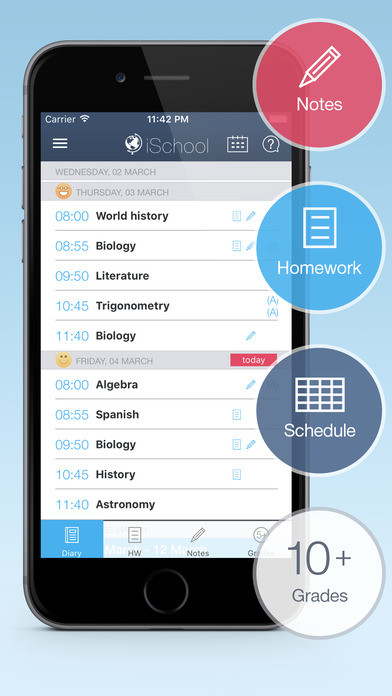
The i-School app is a study organizer and Timetable Schedule Planner, both for schools and universities. Convenient class schedule, study schedule, textbooks, homework, and notes are attached to classes.
Available on:
iOS
Word Jam

Need to a play a simple game that requires no internet? Word Jam is a fun scrambled word game — puzzles come in groups of four words and you just tap to move the letters around.
Available on:
iOS
This Is Not a Test

This Is Not a Test is an apocalyptic graphic novel gamebook that pits your survival skills against the mayhem of doomsday as a strange death gas threatens humanity.
Available on:
iOS
IQ Test

Prove to your friends once and for all that you’re smarter than they are with this 39-question app that will give you an IQ score.
Available on:
iOS
Caveman Dino Rush

Go out in search of the lost girls and run through jungles and canyons inhabited by deadly prehistoric primordial beings and scary dinosaurs like the terrible T-Rex, and face the gang of cavemen scoundrels.
Available on:
iOS
ICE Standard ER 911

The world’s number one emergency medical contact information app includes the ICE Standard 3 color-coded medical status to provide a baseline for triage and the ICE Standard ER 911 Screen Image for your lock screen wallpaper.
Available on:
iOS
Switching to AT&T? We break down the carrier’s new unlimited and prepaid plans
AT&T finally did it. The wireless carrier recently announced that it joined Sprint and T-Mobile in offering unlimited talk, text, and data. But even with the switch, the carrier’s plans remain the most expensive, and some of its plan options are odd. If you live in an area where Verizon, T-Mobile, and Sprint don’t work, AT&T is likely your only option. That said, it offers some solid options for subscribers.
There’s no contract, and you have to pay the full, unsubsidized price for each smartphone on your plan. You’ll pay for each device in installments, which typically range between $20 and $30 a month per phone. You can also add your own phone to your plan instead of buying a new one.
More: Which Verizon plan is best for you? We check out the family, individual, and prepaid plans
In the table below, we break down the costs for you for the company’s Unlimited Choice and Unlimited Plus plans. Which one you pick is up to you, but choose wisely: All lines are either one or the other, and you can’t mix and match.
AT&T Unlimited Plans
People
Unlimited Choice
Total
Unlimited Plus
Total
1
$60
$60
$90
$90
2
$60 + $55
$115
$90 + $55
$145
3
$60 + $55 + $20
$135
$90 + $55 + $20
$165
4
$60 + $55 + $20 + $20
$155
$90 + $55 + $20 + $20
$185
5
$60 + $55 + $20 + $20 + $20
$175
$90 + $55 + $20 + $20 + $20
$205
AT&T’s Unlimited Choice single line plan is actually fairly competitive, but any of the other unlimited options are higher than every other carrier. Which one you choose depends on your mobile data usage. The Unlimited Choice plan offers standard definition video (480p), a 3mbps max speed — a first that we’ve seen among post-paid plans, and a questionable decision — and roaming in/calling to Mexico and Canada.
Stepping up to the Plus plan removes the speed cap, upgrades your SD streaming to HD, 10GB of tethering, and a $25 credit to DirecTV or DirecTV now. You also must use autopay to get the above listed rates, as well as paperless billing. Without it, you’re paying $5 more per month on single line plans and $10 on multi-line accounts.
Recommendations:
- If you’re single and have DirecTV, go with AT&T. The Unlimited Plus option will give you a much better network than Sprint’s, although it is more expensive.
- Families are better served looking at other carriers, unless AT&T runs promotions to lower the costs.
The perks of AT&T plans:
- Strong coverage in both rural and urban areas.
- Big phone selection.
- Unlimited data is back.
The downsides of AT&T plans:
- All but one of its plan combinations are pricey.
- International coverage costs extra.
- AT&T’s strange decision to cap data speeds on Unlimited Choice. These days, 3mbps is slow, even in most rural areas.
Western Digital adds a meaty 10TB model to its WD Purple family of hard drives
Why it matters to you
Surveillance systems now have a larger storage option with the launch of a new WD Purple 10TB hard drive supporting up to 64 high-definition cameras.
Western Digital announced on April 5 the availability of a new 10TB model in its line of WD Purple hard drives for surveillance applications. It joins the eight other models currently on the market spanning storage capacities between 500GB and 8TB. They’re designed to be in use 24 hours a day, seven days a week, and support a workload rate of up to 180TB per year. Each WD Purple drive can support up to 64 high-definition cameras on a single surveillance system as well.
On the whole, the WD Purple hard family consists of 5,400RPM-class, 3.5-inch storage solutions that connect to a SATA 3 (6Gbps) or older interface. Their overall dimensions are 1.028 (H) x 5.787 (L) x 4  inches with a weight ranging from 0.99 to 1.65 pounds, depending on the model. Here are the individual specs and their pricing:
Capacity
Cache
Sustained
Speed
Read/Write
Power Use
Price
WD100PURZ:
10TB
256MB
210MB/s
6.2 watts
$400
WD80PUZX:
8TB
128MB
178MB/s
6.4 watts
$284
WD60PURX:
6TB
64MB
175MB/s
5.3 watts
$250
WD50PURX:
5TB
64MB
170MB/s
5.3 watts
$200
WD40PURX:
4TB
64MB
150MB/s
5.1 watts
$140
WD30PURX:
3TB
64MB
145MB/s
4.4 watts
$105
WD20PURX:
2TB
64MB
145MB/s
4.4 watts
$80
WD10PURX:
1TB
64MB
110MB/s
3.3 watts
$60
WD05PURX:
500GB
64MB
110MB/s
3.3 watts
$50
“Our new 10TB drive inherits the high performance, reliability, and endurance qualities of our WD Purple family, with maximum capacity to offer VARs, integrators, and consumers a 4K-ready solution for current and next-generation surveillance systems,” said Brendan Collins, vice president of product marketing.
The WD Purple drives rely on the company’s proprietary IntelliSeek technology for optimal performance. According to Western Digital, this tech reduces possible damage and early wear-and-tear by calculating optimal seek speeds, which in turn lowers power consumption, noise, and vibration. This helps sustain their promoted 24/7 constant-use capability.
More: The Western Digital My Passport gives you 4TB of compact storage ($110 for Prime members)
And that is essentially what makes WD Purple drives different than the standard desktop hard drive: their specific, optimized design for DVR and NVR security systems that are in constant use. WD Purple drives support three times the workload rating of desktop drives, Western Digital claims, and are backed by the company’s proprietary AllFrame 4K technology so that missed frames and lost footage aren’t issues.
“AllFrame 4K technology enhances ATA streaming support to help reduce video frame loss with proprietary cache policy management technology to improve overall data flow and playback, Western Digital said. “WD Purple 10TB HDDs include exclusive firmware enhancements that help protect against video pixilation and interruptions within a surveillance system.”
Finally, the new WD Purple 10TB model is based on Western Digital’s third-gen HelioSeal tech. This enables the company to cram more storage platters and read/write heads inside the hard drive package by using helium to reduce the amount of turbulence caused by storage platters spinning in close proximity to each other. The tech also reduces power consumption because the platters spin more easily in a helium-filled environment.
The new 10TB model is available now through Western Digital’s online shop.
Google may combine Home and Wi-Fi hub into a single product
Why it matters to you
In the future, Google Home products could have multiple abilities, cutting back on physical space and power plug requirements.
Google has big plans for its connected home hardware, but its strategy has been two-pronged as of late, involving both Google Home and its Wi-Fi router. That may not be the case in the future, however, as it is purportedly looking to combine both of these into a single connected smart hub.
Such a combination would make for a Wi-Fi router with a smart, connected speaker that understands vocal commands. It would not only make it easier for Google to market its smart-home devices to customers with a singular product, but could help lead to the future it envisions, where customers have more than one such device in their home.
While we don’t have any hard announcement from Google detailing such a product, The Information (via Ars) cites a report that Google will make such a move to help it compete directly with Amazon’s burgeoning Alexa home hardware like the Echo and Echo Dot.
More: OK, Google: What can Home do? The speaker’s most useful skills
Currently Google Home and Google Wi-Fi are priced at $130 each, so presumably, any combination of the two would cost a little more than either of them alone, but would be cheaper than the cost of buying both.
Although Google Home and Google Wi-Fi have proven to be popular products, despite increasing competition from other big name manufacturers, Google has had to contend with some adversity in recent months. With the launch of the Beauty and the Beast movie, a suspected ad appeared during one user’s daily update from their Google Home. While Google denied it, the user base was not happy with the idea.
Google will, however, need to find some way to monetize vocal assistants in the coming years if more and more people do their searching through platforms like Google Home, rather than through the traditional Google search engine.
Canonical is canceling its Unity8, phone, and convergence projects
Why it matters to you
If you’ve been hoping for Ubuntu Phone and Unity8 to take over the world, then Canonical just let you down.
There was a time when Ubuntu developer Canonical wanted the Linux distribution to make its way to tablets and smartphones. The idea was for Ubuntu on smartphones to work much like Windows 10 Mobile Continuum and Samsung’s new DeX, both of which run in a kind of desktop mode when attached to external monitors, keyboards, and mice.
Canonical has given up on that project, however, and the Unity8 user interface that was intended to pull everything together is a victim of that decision. Going forward, Unity8 development will end along with development on the convergence project, as Canonical founder Mark Shuttleworth announced in a blog post.
More: Ubuntu and Windows set to contest desktop/smartphone hybrid market
The hope was that Ubuntu Linux would thrive as a smartphone OS and that the ability to run in desktop mode using the Unity8 user interface as the common theme would elevate and increase its overall popularity. That never happened, however, and instead, Ubuntu is making more headway as a cloud OS and as the brains of a growing number of internet of things (IoT) devices.
As Shuttleworth put it:
“I took the view that, if convergence was the future and we could deliver it as free software, that would be widely appreciated both in the free software community and in the technology industry, where there is substantial frustration with the existing, closed alternatives available to manufacturers. I was wrong on both counts. In the community, our efforts were seen [as] fragmentation not innovation. And industry has not rallied to the possibility, instead taking a ‘better the devil you know’ approach to those form factors, or investing in home-grown platforms.”
Accordingly, Unity8 is going away, and Canonical is shifting the default Ubuntu desktop environment back to GNOME starting with Ubuntu 18.04 LTS. Going forward, Canonical will be putting its development efforts into continuing Ubuntu’s relevance for public and private clouds and IoT as applied to auto, robotics, networking, and machine learning.
Some Linux fans were likely hoping that Ubuntu would make an impact in smartphones and tablets and were tantalized by the possibility of a unified environment that would make switching between phone and A PC-like desktop a simple affair. Unfortunately, that’s not to be, but Ubuntu will nevertheless remain a strong presence on the desktop and in the cloud.
Canonical is canceling its Unity8, phone, and convergence projects
Why it matters to you
If you’ve been hoping for Ubuntu Phone and Unity8 to take over the world, then Canonical just let you down.
There was a time when Ubuntu developer Canonical wanted the Linux distribution to make its way to tablets and smartphones. The idea was for Ubuntu on smartphones to work much like Windows 10 Mobile Continuum and Samsung’s new DeX, both of which run in a kind of desktop mode when attached to external monitors, keyboards, and mice.
Canonical has given up on that project, however, and the Unity8 user interface that was intended to pull everything together is a victim of that decision. Going forward, Unity8 development will end along with development on the convergence project, as Canonical founder Mark Shuttleworth announced in a blog post.
More: Ubuntu and Windows set to contest desktop/smartphone hybrid market
The hope was that Ubuntu Linux would thrive as a smartphone OS and that the ability to run in desktop mode using the Unity8 user interface as the common theme would elevate and increase its overall popularity. That never happened, however, and instead, Ubuntu is making more headway as a cloud OS and as the brains of a growing number of internet of things (IoT) devices.
As Shuttleworth put it:
“I took the view that, if convergence was the future and we could deliver it as free software, that would be widely appreciated both in the free software community and in the technology industry, where there is substantial frustration with the existing, closed alternatives available to manufacturers. I was wrong on both counts. In the community, our efforts were seen [as] fragmentation not innovation. And industry has not rallied to the possibility, instead taking a ‘better the devil you know’ approach to those form factors, or investing in home-grown platforms.”
Accordingly, Unity8 is going away, and Canonical is shifting the default Ubuntu desktop environment back to GNOME starting with Ubuntu 18.04 LTS. Going forward, Canonical will be putting its development efforts into continuing Ubuntu’s relevance for public and private clouds and IoT as applied to auto, robotics, networking, and machine learning.
Some Linux fans were likely hoping that Ubuntu would make an impact in smartphones and tablets and were tantalized by the possibility of a unified environment that would make switching between phone and A PC-like desktop a simple affair. Unfortunately, that’s not to be, but Ubuntu will nevertheless remain a strong presence on the desktop and in the cloud.
 AIVAnet