


A whole new low in government trust
Our country changed so quickly in the past week that it feels like the pod doors have been sealed shut and an anti-gravity switch flipped inside our borders. From the outside, it probably looks like a snow globe scene of hell. The Doomsday Clock advanced ‘thanks to Trump,’ and it’s now only 2½ minutes to nuclear midnight, while The Economist Democracy Index downgraded the US from “full democracy” to “flawed”.
The Trump era has people afraid of malicious government tracking and spying in ways set to exceed the panic of the NSA-PRISM revelations. Infosec, hackers, and the general public have changed their attitudes about security and privacy practices in the short time since Trump took power. Use of encrypted apps has spiked among the general public. Email service Lavabit relaunched with a distinctly anti-Trump sales pitch. And now, a significant number of infosec professionals are saying they don’t want to engage with the new administration.
In a Twitter poll, 230 information security professionals were asked if they are more or less inclined to engage with US-government led cyber initiatives under a Trump presidency. 41 percent said that the Trump administration has a negative effect on their willingness to participate.
Some infosec professionals who run companies are taking a more public position.
Email service Lavabit relaunched last weekend on Inauguration Day in the United States to make a statement. Under pressure from a federal gag order in late 2013, Lavabit founder Ladar Levison shut down his email service to avoid complying with a US government request for his users’ emails. Lavabit returned with what they’re calling a Dark Internet Mail Environment (DIME), “a revolutionary end-to-end encrypted global standard.”

In “Lavabit Reloaded” Levison wrote:
“Former Lavabit users will be able to access their accounts in “Trustful” mode and update their credentials to the new DIME standard. Anyone who wants a future Lavabit account can pre-register for our next release available in all security modes… Today, the democratic power we transfer to keep identities safe is our own.”
Timing is everything. Right now the internet is currently seeing a burst in guides to keeping things private in Trump’s America as well as how to avoid Big Brother. Perhaps that’s why the reporting on Lavabit was more than a little too eager. Some reporters must’ve heard trumpets calling to arms against government surveillance; many praised Lavabit’s pros while forgetting to remind everyone of the cons.
For instance, Lavabit doesn’t yet have end-to-end encryption. And as ProtonMail detailed in a Reddit post:
“Lavabit claims to have solved their fatal SSL weakness using a hardware security module (HSM). However, this is disingenuous at best, deceptive at worst. Now instead of asking for the SSL key, the US govt will simply ask for the HSM. In other words, the original problem that killed Lavabit still exists.”
And Lavabit had a lot of problems to begin with. A big one, being that it’s located in the United States.
Which brings us back to the original issue.
Hackers and front line workers aren’t the only ones who don’t want to engage with a government they’re more afraid to turn their backs on than before. The general public has a newfound interest in anti-surveillance communications, jettisoning anything that might let the US government in on their privacy and security. We witnessed this before, but this time it’s distinctly different.
There’s no doubt that Trump winning the election helped launch Signal into the mainstream. The secure chat app’s downloads grew 70 percent globally near the end of 2016 (half a million were in the US alone). According to press “the app is getting more sustained daily downloads than Open Whisper’s encrypted products did after its second biggest boost: Edward Snowden’s revelations about the surveillance conducted by the NSA.”
It’s not unusual for a flood of new users and heightened activity on encrypted communication services when a government blocks a service or an app. When Brazil ordered cell phone carriers to block WhatsApp for 72 hours, interest in Telegram and iMessage spiked. These numbers usually calm back down — but this time they’re not.
According to its developer, the Android Tor browser Orbot has seen downloads in the United States go up 30 percent after the election — and they’re not declining. “We’ll see a time-bound spike for a day or a week and then things go back to normal. What’s different in this case,” Freitas told the press, “is things don’t go back to normal.”
And I doubt they will. We’re seeing a growing trend of people flocking to secure messaging and educating themselves about security and privacy. Which is really good.
Especially considering that the new administration has shown it’s both careless and ambivalent about security.
Presidential infosec, post-DNC hack
—@POTUS uses private email
—”old, unsecured” Android phone
—@POTUS has no 2FA
—Spicer tweets password 2x pic.twitter.com/sdOvLKrWLu— Thomas Rid (@RidT) January 26, 2017
We’ll probably also see infosec communities struggle and split. There will be painful moments where companies have to make heartbreaking decisions. They’ll be forced to face working toward a more secure world versus working for an administration that doesn’t care about security or tomorrow. One that loves to punish anything and anyone it perceives as a threat. The users will be caught in the crossfire, of course. And they’ll be awash in three times the number of snake oil security products hitting app stores as we saw after the revelations of NSA spying.
All of this signals a genuine crisis. It’s one where we feel shell-shocked, and ache for a time not all that long ago when we felt hopeful about the encryption argument. But if there’s anything to be gleaned from all these open expressions of government mistrust, it’s that we’re ready to fight for our privacy and security like never before.
Images: Andy Katz/Pacific Press/LightRocket via Getty Images (Man and phone, lead); Lavabit (Bird with email, from Lavabit DIME specificaitons document)
‘Pillars of Eternity II’ breaks crowdfunding goal in 24 hours
The sequel to Obsidian’s critically acclaimed isometric RPG Pillars of Eternity is officially a go. The studio announced Thursday that it’s campaign to crowdfund development on Pillars of Eternity II: Deadfire reached its $1.1 million goal in less than a day.
Like its predecessor, Deadfire draws heavily on classic turn-based PC RPG’s like Baldur’s Gate and Planescape: Torment. For the second outing, Obsidian hopes to translate the heaps of fan support into a “truly living” game world with new features and more freedom to explore or define your character’s role. The storyline will once again bring players to the world of Eora, as they hunt down a god in the uncharted Deadfire Archipelago, but certain narrative elements can react not only to the player’s decisions in the game, but also to choices they made back in the original Pillars of Eternity.
The game is slated for delivery in Q1 2018 on Steam, GOG, Windows, Mac and Linux systems. Eager backers who dropped upwards of $1,000 to become an NPC or have their portrait included in-game should take that estimate with a grain of salt, however — the original Pillars of Eternity was hit with development delays throughout its cycle.
Source: Pillars of Eternity II: Deadfire on Fig
Mark Zuckerberg lightly criticizes Trump order on immigration
Tonight President Donald Trump signed an executive order titled “Protecting the Nation from Foreign Terrorist Entry Into the United States” that suspends refugee admissions for 120 days and suspends admissions from Syria indefinitely — among many other things (PDF). One of the voices criticizing this move is Facebook CEO Mark Zuckerberg, who posted tonight that “We need to keep this country safe, but we should do that by focusing on people who actually pose a threat.”
He also praised Trump’s vague statement to “work something out” for undocumented immigrants brought to this country at a young age by their parents. Calling the US “a nation of immigrants” and ignoring those who did not immigrate here, the exec claimed “we all benefit when the best and brightest from around the world can live, work and contribute here.” As criticism goes it wasn’t particularly striking, however it is the most Zuckerberg has said since Trump took office, and it will be interesting to see if over tech execs (many who oversee workforces including a number of workers on visas) join in.
Yesterday, Facebook COO Sheryl Sandberg also spoke out for the first time concerning an order Trump signed reinstating the “global gag order,” restricting government funding from health organizations around the world that offer abortions. She had faced criticism for meeting with Trump, but not participating or commenting on the Women’s March on Washington that took place after his inauguration. Her post did not mention Trump by name, but highlighted the “terrible consequences for women and families around the world” that could occur as a result of his policies.
Source: Mark Zuckerberg (Facebook), Sheryl Sandberg
Apple CEO Tim Cook Talks Tech and Economy With Utah Senator Orrin Hatch
Apple CEO Tim Cook met with senator Orrin Hatch (R-Utah) on Friday afternoon to discuss topics like technology and economy, reports BuzzFeed.
Hatch, who is a member of the Judiciary Committee and leads the Senate Republican High-Tech Task Force, has met with Cook several times in the past and participated in Apple’s ongoing encryption debate with the U.S. government, calling for a private Senate briefing with Apple attorney Ted Olson following the dismissal of the San Bernardino case.
During Friday’s meeting, Hatch told BuzzFeed he and Cook talked about ways to grow the economy and the technology industry. They also spoke about Cook’s trip to Utah in October, where Cook took part in a privacy-related Q&A session hosted by Hatch.
“During today’s meeting with Apple CEO Tim Cook, we discussed ways to grow the economy and our tech industry, as well as his recent visit with me in Utah,” Sen. Hatch said in an statement to BuzzFeed News. “Given the issues I work on as chairman of the Senate Republican High-Tech Task Force, it’s especially useful to listen to innovators like Tim.”
Cook, along with Apple’s vice president of environment, policy, and social initiatives Lisa Jackson, also had dinner with Ivanka Trump and her husband, Jared Kushner, on Thursday evening. They dined at Italian restaurant Tosca, located near the White House, but it’s not clear what was discussed.
Cook’s meetings with Hatch, Trump, and Kushner follow a December tech summit that saw Cook and other leaders like Amazon CEO Jeff Bezos, Microsoft CEO Satya Nadella, IBM CEO Ginny Rometty, and Tesla CEO Elon Musk meet with U.S. President Donald Trump to discuss topics like trade, immigration, and vocational education.
At the time, Cook told Apple employees he attended the tech summit with Trump because Apple plans to continue to focus on key areas like privacy, security, education, human rights, and combating climate change. “Personally, I’ve never found being on the sideline a successful place to be,” he said. “The way that you influence these issues is to be in the arena.”
Note: Due to the political nature of the discussion regarding this topic, the discussion thread is located in our Politics, Religion, Social Issues forum. All forum members and site visitors are welcome to read and follow the thread, but posting is limited to forum members with at least 100 posts.
Tag: Tim Cook
Discuss this article in our forums
ZeniMax now wants $4 million from Oculus as case goes to jury
VR pioneer Oculus has been on trial for several weeks now, defending itself against claims it stole crucial code from ZeniMax. But the ultimate judgement is now in the hands of a jury. As reported by Polygon, closing arguments have concluded and the jury now has to decided if Oculus chief technology officer John Carmack stole ZeniMax IP and brought it to Oculus when he joined the company in 2013. At the same time as it wrapped up closing arguments, ZeniMax doubled the damages it is asking for. The company now wants a grand total of $4 billion — $2 billion in compensation and $2 billion in punitive damages.
However, the case again Oculus doesn’t seem terribly strong. ZeniMax argued that Oculus creator Palmer Luckey essentially didn’t have the technical know-how to build the Oculus Rift on his own without Carmack’s help. They said that Luckey and Carmack, who had been working at ZeniMax until he left to join Oculus, used ZeniMax’s technology Rage VR testbed and Doom 3 BFG Edition code to built out the Rift’s software (ZeniMax is the owner of id Software, creators of the Doom series).
In its defense, Oculus and its parent company Facebook had a forensics expert testify that there are no parts of the Rage VR or Doom 3 BFG Edition source code in the Oculus code. Furthermore, Oculus employees testified that they never saw any of Carmack’s source code or stated that they developed their code independently.
During the trial, Facebook CEO Mark Zuckerberg testified, as did Luckey, Carmack and former Oculus VR CEO Brendan Iribe. Throughout the suit, which was first filed way back in 2014, Facebook, Oculus and the key players involved have all been steadfast in maintaining their innocence. We should find out if the jury agrees sometime next week.
Source: Polygon
Huawei wants to leapfrog Apple, become the world’s largest phone manufacturer
Why it matters to you
Chinese smartphone maker Huawei is experiencing meteoric growth but it may need to boost U.S. sales to surpass Apple.
Huawei’s not doing too badly for itself. In the first half of 2016, the privately held Chinese smartphone maker saw sales jump a healthy 40 percent to about $39 billion and shipments climb 25 percent to 61 million. It dethroned Xiaomi as China’s largest smartphone maker. It also bucked an industry trend — in the third quarter of 2016, Huawei managed to move an estimated 33.6 million smartphones at a time when global smartphone sales climbed a measly three percent. But it aspires to do better.
Huawei’s set a goal of more than 140 million smartphone shipments in 2017, up from the 108 million it shipped in 2015. “We want to grow into top two market share, and, in the future, top one by 2021,” CEO Richard Yu told Fortune.
More: Everything you need to know about the Mate 9
That will be a challenge. Its investments in storefronts and brick-and-mortar placement increased the number of outlets selling its device to 35,000, up 116 percent. But the company’s operating margins took a hit as a result, diving six percentage points to 12 percent in the first half of 2015 compared to the same period a year ago.
Huawei’s had particular difficulty breaking into the U.S. In the third quarter of 2016, it sold just 153,000 handsets, and it has yet to crack the list of top 10 smartphone makers in the country, trailing behind budget phone rivals like Blu and OnePlus. And none of the “big four” — Verizon, AT&T, T-Mobile, and Sprint — has cut a deal with Huawei.
“The past five years, we were not taking the right strategy,” Yu said. “We didn’t have the right people.”
More: Huawei P10: News and rumors
But now, the company’s turning things around. Loans from China’s government helped it build a network business in Africa and Latin America, which helped it to win networking equipment deals with major European carriers like Vodafone. According to IDC, Huawei has doubled its regional market share in first nine months of 2016, to 12 percent, sold 10 times as many smartphones as Apple in Finland, and dominated the sales charts in Portugal and the Netherlands.
That is thanks, in large part, to the company’s strategy. Huawei, which makes the bulk of its revenue — $35 billion a year — selling networking equipment, provides carriers vouchers worth a percentage of their spending on network equipment. Most put those vouchers toward phones from Huawei, which get better marketing placement as a result.
The company hopes to translate that success to the U.S. market. It recently hired Michelle Xiong, a former Verizon wireless executive who has experience negotiating with device makers that will help sell Huawei’s smartphones. It also inked deals with retailers like Best Buy and Walmart that will see more of its unlocked phone portfolio in physical outlets.
More: Super-sleek, newly updated Huawei P8 Lite 2017 gets a U.K. release
Already, it is within striking distance of Apple. The Cupertino, California-based company shipped 45.5 million iPhones in the third quarter — just 10 million more than Huawei.
BlackBerry BBC-100-1 news and rumors
Why it matters to you
BlackBerry fans who don’t have deep pockets will dig these rumors about a budget ‘Berry.
Apparently, all of our predictions about BlackBerry finally exiting the smartphone business were wrong. BlackBerry is preparing to launch yet another smartphone at Mobile World Congress 2017, and while many expect the BlackBerry Mercury to make an appearance, it seems as though the Mercury won’t be the only BlackBerry phone to show up.
In fact, we’ve been hearing rumors of another device called the BlackBerry BBC-100-1, and we may finally have a look at what the specs of the device are. Here’s everything we know about the BlackBerry BBC-100-1 so far.
More: Best BlackBerry Phones
Specs
Twitter user Roland Quandt has leaked what appears to be the specs of the upcoming BlackBerry BBC-100-1, showing that it will most certainly be a more entry-level phone. According to Quandt, the phone will feature a Qualcomm Snapdragon 425 processor, a 5.5-inch 720p display, 4GB of RAM, 32GB of storage, a 13MP rear-facing camera, and an 8MP front-facing camera. The device will also offer a 3,000mAh battery.
As you can see, the phone is clearly an entry-level model, so it will come down to pricing when deciding whether or not it’s a good purchase. BlackBerry seems to be shooting to appeal to all users with its new wave of Android-powered phones.
A new manufacturer?
While BlackBerry has been working with TCL for most of its recent phones, it was recently revealed that the BBC-100-1 will be manufactured by a “local joint venture” in Indonesia — which is where the phone will go on sale, according to Roland Quandt.
Not much else is known about who will be making the new BlackBerry phone, but it will be interesting to see how the phone compares design-wise with other BlackBerry devices on the market because of the differences in manufacturers.
We’ll update this article as we hear more about the BlackBerry BBC-100-1, so stay tuned for more info.
The bigger they come, the harder they fall: Our 35 favorite iPhone 6 Plus cases
The bigger they come, the harder they fall. Apple’s iPhone 6 Plus sports a 5.5-inch display and that rounded body looks potentially slippery to us. It’s a slim device and even with the promise of “ion-strengthened” glass we can already hear the sound of cracking displays as they hit the sidewalk. Why take the chance? Peruse the iPhone 6 Plus cases that are flooding onto the market and get the style and protection you need.
More: Make the most of the iPhone 6 with these 30 essential tricks and tips
Nodus Access Case 2 ($70)
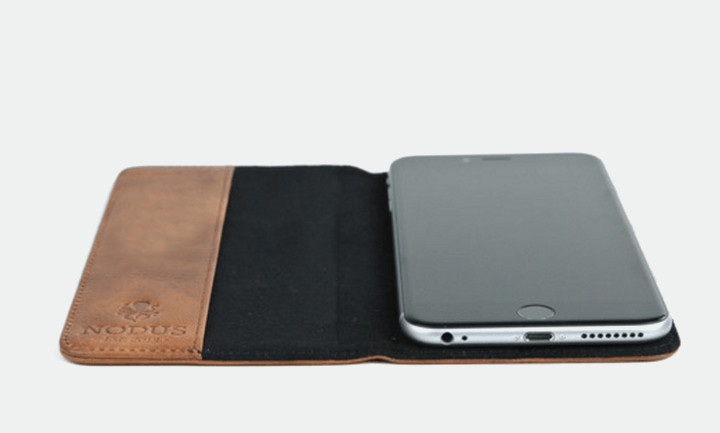
This successor to the Access Case maintains the same stylish appeal as the original, but now comes in more colors and with some small changes to the overall design. The Access Case 2 is made using elegant, vegetable-tanned, Italian leather that’s also water-resistant, and features a rubber pad on the inside that’s covered with suction cups so you’re iPhone will stay in place. Magnetic shielding protects the device from outside interference, while the soft microfiber lining keeps it safe and residue-free. An inner pocket also holds credits cards or your driver’s license. The Access Case 2 has two cover variants, too, for people who like cases that open horizontally or vertically.
Buy one now from:
Nodus
Verus Layered Dandy ($20+)
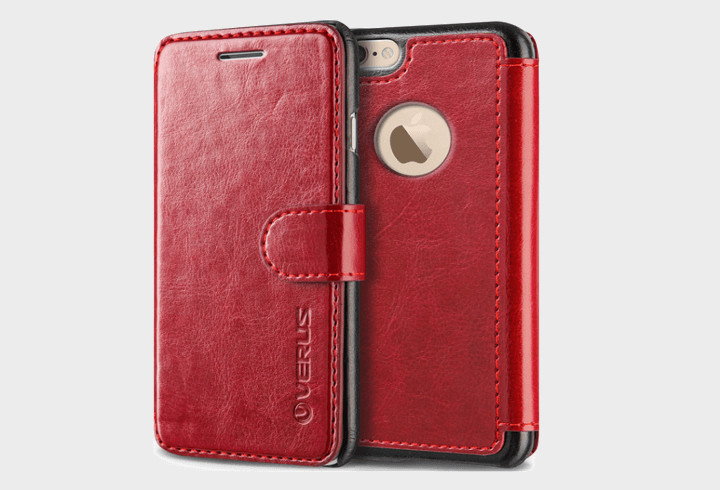
The Layered Dandy series of cases from Verus is meant to provide storage and protection. Each case is designed to fit snugly on the iPhone 6 Plus, which prevents your phone from shaking inside the case during use or when it’s dropped. Being a wallet case also means that it features a flip cover, as well as three card slots and a money sleeve that’s designed to hold your credit cards. And to keep the cover from opening unexpectedly, it even comes equipped with a magnetic fastener. The case also has a leather texture to it, making it soft to the touch and a pleasure to look at.
Buy one now from:
VRSDesign Amazon
Obliq Premium Skyline Advance ($13+)
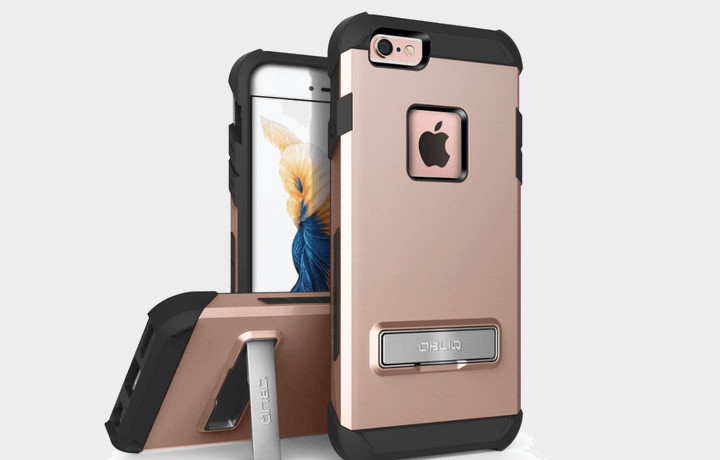
If you want style, protection, and a kickstand, Obliq has you covered on all three fronts. The metallic finish on the case gives it an elegant look, while the outer shell makes it look as rugged as ever. You can be confident in its ability to protect your device, too. Protection extends to the inside of the case, as well as the outer bumper, both of which provide shock-absorption. But if your iPhone does fall, the front edges of the case extend outward enough to keep your phone’s display from making contact with the ground. The hidden kickstand also makes it easy to watch videos, and saves you the trouble of having to hold your phone. This case also provides extra grip for added protection while holding your device.
Buy one now from:
OBLIQ Amazon
Cygnett Urbanwrap Case ($25)

This stylish, synthetic leather case looks and feels like the real thing. A lot of phone cases sport cut-outs so the buttons are still easy to press and get to, but the Urbanwrap opts for button covers, and does so without interfering with their functionality. Cygnett’s case is perfect for iPhone owners who want to wrap their device in a seamless, leather-esque design. It also provides a soft feel both inside and out. It’s not rugged, but you can expect it to provide basic protection from small bumps and falls.
Buy one now from:
Cygnett
Mophie Juice Pack H2PRO ($130)
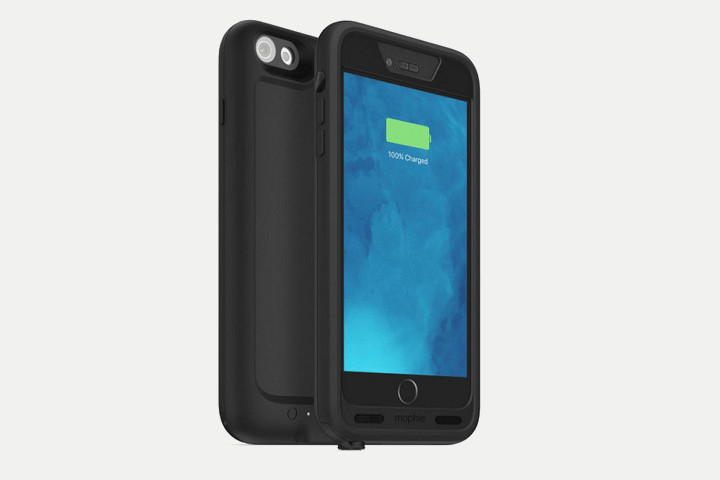
While the original Juice Pack provided great protection and supplied more than 14.5 hours of extra battery life, the Juice Pack H2Pro outdoes its predecessor by giving the iPhone 6 Plus up to 70 percent more battery life and better protection. The improvement comes courtesy of the case’s anti-scratch screen protector and, for the first time, waterproof protection. Mophie’s battery pack case now protects your iPhone from drops, dirt, and water, while still allowing you to utilize every feature on your device. The case includes an LED indicator and integrated power button, the latter of which lets you to choose when to charge your phone.
Buy one now from:
Mophie Amazon
PayPal could be on its way to Amazon; CEO says the two are “in conversations”
Why it matters to you
Adding PayPal would add another secure method of payment for Amazon customers.
PayPal is a pioneer of web payments and has made itself known all over the web. There is, however, one major website that has evaded its rise — Amazon. According to recent reports, that could soon change. PayPal confirmed in a report from Bloomberg that it has recently been in talks with Amazon to bring its payment services to the online shopping site.
“We have been in conversations with Amazon,” CEO Dan Schulman said in the interview with Bloomberg. “We’re closing in on 200 million users on our platform right now. At that scale, it’s hard for any retailer to think about not accepting PayPal.”
More: New digital holiday gift cards make sending money more personal
A deal with Amazon would be huge for PayPal. Its shares have been in a slow decline of late and Amazon is estimated to account for 74.1 percent of all online sales.
There is likely a reason it has taken this long for Amazon to adopt PayPal as a payment platform. The company was once owned by Amazon rival Ebay but separated from the company around 18 months ago to focus on expanding its business to other websites and services. Since that split, Schulman has been trying to create as many agreements as possible in an attempt to expand the number of people using PayPal.
Amazon, however, has its own ambitions in the online payments business, according to Bloomberg. In fact, the company recently hired former PayPal employee Patrick Gauthier to head Amazon’s online payments efforts. Not only that, but Amazon began allowing users to pay for things on other websites using their Amazon account.
Many would likely celebrate if the online payment platform finally came to Amazon. Hopefully, the talks between the two companies will end in an agreement.
Satechi’s Power Meter might help save your USB Type-C from short circuiting
Why it matters to you
The Satechi Power Meter is an attempt to address the incompatibility issues around the USB Type-C standard.
USB Type-C has a lot going for it. It’s a universal standard and it replaces bulky, outmoded plugs that hogged a disproportionate amount of space in phones and computers. But it has an obvious downside — a minefield of compatibility problems. Just because two devices have USB Type-C does not mean they will play nicely together. It is tempting to use a Google Pixel USB Type-C plug to charge a MacBook Pro, but doing so could short circuit the laptop’s motherboard.
That is where the Power Meter, a new voltage monitor from Satechi, comes in.
The Power Meter’s a bulbous, rounded USB dongle that looks a little like a memory stick. But there is an important difference: A green LED screen on the front. Plug it into a USB port and the screen displays the USB port’s current volt, amp, and milliamp hour output, while a pass-through port on the other end facilitates electron flow. In theory, it’s the perfect solution for folks who regularly swap between USB Type-C cables, chargers, and devices.
More: Not so fast: Google may slow down quick charge progress with new guidelines
There is some doubt whether it works as advertised, to be fair. Satechi has yet to provide third-party evidence that the device’s readings are accurate, much less consistent. But it’s better than the trial-and-error era of early 2016 when plugging your smartphone into an unfamiliar USB Type-C cable was like playing Russian roulette. Google engineer Benson Leung went so far as to order wall adapters and cables from Amazon to determine whether they met the proper standards for the USB-C spec, a series of reviews which led the online retailer to ban sellers from listing cables that were not up to snuff.

In April, the situation improved slightly with the introduction of a new authentication technology. Now, spec-compliant USB Type-C chargers work behind the scenes to ensure that, say, an incompatible phone isn’t charged with a heavy-duty cable.
But that doesn’t solve the problem of manufacturers who ignore the specification entirely. Global chipmaker Qualcomm was accused of implementing a workaround to get its fast-charging technology, Quick Charge 3.0, to work with USB Type-C connectors.
More: The 7 best USB Type-C cables to keep your gadgets powered
Ultimately, it’s best to check the specs yourself before plugging one thing into another — better to be safe than sorry.
The Satechi Type-C Power Meter is available from Satechi’s website and Amazon for $30. It’s capable of handling voltages between 4V and 20V, and wattage from 50mA to 10W.
Buy on Amazon
 AIVAnet