


Apple TV app changes pave the way for better gaming
Apple has drastically increased the size of apps that developers can submit to its Apple TV App Store, paving the way for more media-heavy apps, especially games. Up until now the limit was 200 MB, but apps can now be as large 4GB, the same as for iOS devices. The change should provide a “complete, rich user experience upon installation,” Apple says, noting that as before, apps can host up to 20GB of additional content from the App Store.
The change has led some to speculate that a new Apple TV might come along soon with more storage than the current 32 or 64GB offerings. As it stands, downloading a few large apps now would fill up the devices pretty fast, compared to, say, a 256GB iPhone 7.
As developer Steve Troughton-Smith points out, apps that large are generally games, so future Apple TV models might soon be more console-like. “Fun thought: If Apple TV gets a modern A-series CPU/GPU upgrade [like the A10 fusion chip used in the iPhone 7], it’ll be more powerful than one of the ‘real’ games consoles in the market,” he tweeted, referring to Nintendo’s new Switch.
Fun thought: if Apple TV gets a modern A-series CPU/GPU upgrade, it’ll be more powerful than one of the ‘real’ games consoles in the market https://t.co/QCss7MtqN5
— Steve T-S (@stroughtonsmith) January 13, 2017
Via: Steve Troughton-Smith (Twitter)
Source: Apple
Nothing immerses you in ‘Resident Evil 7’ like a 4D candle
4D experiences are typically only found in theme parks and fancy theaters, but soon you’ll be able to trick your senses at home with the launch of the “official Resident Evil 4D candle.” Yes, a candle. Created by Capcom and merchandise merchant Numskull, it’s intended to make playing Resident Evil 7: Biohazard on PlayStation VR even more immersive by filling your den with the scent of the game’s Baker House Mansion — which, given it’s an abandoned house, should probably smell like damp and old socks.
If you really want to commit to the role of evil hater Ethan Winters, the candle is now available to pre-order for $14/£10 and will be released parallel with the game’s launch on January 24th. The candle, complete with metallic case, is said to have a burn time of roughly 25 hours, which should be long enough to beat the game amidst old house aroma. And if there’s some smelly wax left over when you’re done, probably best not to use it to complement a relaxing bath or light a romantic dinner, yeah?
Source: Numskull
Smartwatches can tell you’re about to get sick days in advance
If you’re still on the fence about just how useful a smartwatch can be, a group of researchers at Stanford University have some news for you. The scientists discovered that a combination of vital signs gathered by the Basis B1 and Basis Peak used alongside algorithms can determine if you’re about to catch a cold days before you get sick. Using stats like heart rate and skin temperature, researchers say the smartwatches can indicate the first signs of an oncoming illness.
During the course of their research, the team at Stanford gathered details from 40 volunteers who wore the devices for two years. The information gathered shows that people exhibited an unusually pulse and warmer than average skin temperatures (at times) before any physical signs of a cold or infection. The tech could tell up to three days in advance before any symptoms started to present themselves.
In addition the the two Basis devices, the group used the Moves app, Scanadu health tracker and Masimo iSpO2 to double check pulse and skin temperature readings as well monitor as blood oxygen levels. Those readings were compared to those gathered with a WA 6000 series vital signs monitor in the Stanford lab. In their findings that were published this week, researchers say that if you’re heart rate and skim temperature are elevated for two hours, there’s a good chance you’re getting sick.
The Stanford researchers are hoping to develop algorithms that will allow your smartwatch to send you a notification when you might be coming down with something. They warn that just because you know in advance that you’re getting sick doesn’t necessarily mean you can avoid it entirely. When it comes to wearable tech, there’s also the issue of accuracy.
Unfortunately, it will be difficult to use the Basis Peak to test these findings. Intel discontinued and recalled the device following overheating issues back in August. It also shut down the accompanying services. Now that we know the wearable could have been used to alert users to potential illness, it’s a shame Intel decided to kill it off like so other many malfunctioning devices.
Via: New Scientist
Source: PLOS Biology
Nintendo’s Switch Pro controller is refined, but not perfect
Nintendo’s Joy-Con controllers for the Switch are wonderfully unique, but they might not be ideal for every situation. That’s why the $70 Switch Pro Controller exists — it’s meant for gamers who need a more traditional-feeling gamepad for titles like Ultra Street Fighter 2 and Super Bomberman R. It’s not exactly a surprising accessory, as Nintendo had a similar Pro accessories for the Wii and Wii U, but it’s still nice to see the company refining its concept of a classic game controller.

The most surprising thing about the Switch Pro Controller? Nintendo adopted a button layout that’s similar to Microsoft’s Xbox One controller, rather than its own previous entries. There’s an analog stick in the top left of the controller. along with a second stick in the lower right. I’ve always found this to be a more comfortable layout than Sony’s Dual Shock layout, which places both analog sticks at the bottom (something Nintendo copied with the Wii Pro controller). The revamped design is also a nice change from the Wii U Pro controller, which placed both analog sticks awkwardly at the top right and left (don’t ask why).
Thanks to its curved hand grips, the Switch Pro Controller gave me flashbacks to Nintendo’s (excellent) Wavebird for the Gamecube. It feels great in your hands, though I found the directional pad to be a bit stiffer than I’m use to (perhaps because it’s not worn down with hours of gaming yet). Pressing the face buttons also felt shallow compared to Xbox One and PlayStation 4’s controllers. For $70, I expected a much more premium-feeling layout.

It’s also worth noting that the Switch’s Joy-Con controllers actually feel good when attached to their Grip, which comes with the system. Sure, the buttons are smaller and there’s no directional pad, but the Joy-Con were perfectly fine while playing The Legend of Zelda: Breath of the Wild. Simply put, there might be less of a reason for gamers to invest in the Pro controller this time around.
Panasonic’s delivery robot will sling drinks and clear tables
Panasonic’s relationship with robots is pretty well established at this point. Now the company is taking it one step further with the HOSPI(R) Autonomous Delivery Robot. From January 14th to the 18th, it’ll inhabit the ANA Crowne Plaza Narita in Japan, delivering bottled drinks right from the fridge in its belly. Eww. It’ll also be giving out bus directions according to a press release. Sounds a little bit less creepy than a robotic velociraptor checking you into a hotel, at least.
The following week HOSPI(R) will be at the Narita International Airport’s “Narita Travel Lounge” to bus tables. Panasonic says that there aren’t any plans to install the ‘bot in either location permanently, however. Probably a good thing, right? After all, humans need those jobs too.
Panasonic describes the robot as a delivery machine that uses pre-programmed mapping info in concert with a collision-avoidance algorithm and an array of sensors to get around. About four hospitals in the world are using it for carrying medicine and other bits around campus. Now it just needs one of Panasonic’s cute projectors stuffed inside it to complete the whole R2D2 vibe.
Source: BusinessWire
Android creator Andy Rubin is building a high-end smartphone
It turns out the rumors were true: Android creator Andy Rubin is returning to phones with his latest company Essential Products Inc. According to a report from Bloomberg, Essential aims to bring together several mobile and smart home products under one platform and the company will release a flagship smartphone around the middle of this year.
In a filing with California regulators, Essential listed tablets, smartphones and mobile software among its products, but according to Bloomberg’s sources, the company’s first device will be the center of a whole suite of connected products. Essential’s 40-person team was largely poached from both Apple and Google, so the phone will compete directly with the iPhone and Pixel in terms of both specs and price point. Essential’s various prototypes reportedly sport features like a large, bezel-free screen that’s bigger than an iPhone 7 Plus and a ceramic back that requires some finesse to manufacture. The company is also working on a version of Apple’s 3D Touch and developing its own magnetic charging and accessories connector that will allow the device to add aftermarket hardware features. As for the software, Bloomberg says it’s currently “unclear” whether the devices will run on an Android-based operating system.
Essential Products at least partially grew out of Rubin’s Silicon Valley incubator Playground Global, which is focused on quantum computing and artificial intelligence. Foxconn, which is an investor in Playground Global, is reportedly in talks to build the new device.
Source: Bloomberg
FTC vs D-Link: All bark, no bite
Most routers are bad. Bad to their little router bones. But they were made that way. And when you get one of the bad ones in your home, they sit there like little privacy and security time bombs, just waiting to become conduits of evil in your house.
You think I’m joking. But if you look at the state of router security, then you will know this is a big problem. And it’s one that’s nearly impossible for normal people to fix.
It’s been like this for a long time. As you’d expect, hackers at infosec conferences yelling about abysmal router security have been ignored since well before connecting toasters and vibrators to the internet were someone’s reckless IoT fantasy. Some of those presenters have even been harassed because of what they’ve said about how unsafe routers are.
While consumers remained in the dark, things like botnets grew.
That was, until the Mirai botnet took out half the internet last year — through routers. Mirai loves routers. That was when most people found out what happens with internet appliances made by companies that give zero fucks about end-user security. That our routers were the gateway for lots of malicious activity. The big collective “we” learned that Mirai was in our homes, but router security was out of our hands.
That’s why the the US Federal Trade Commission went after Taiwan-based computer networking equipment manufacturer D-Link Corporation and its US subsidiary in a new lawsuit this past week.
You see, D-Link routers have been identified as being among the devices used for Mirai botnet attacks.

They’re also constantly being used as examples in hacking demonstrations. Hackers love D-Link. The company’s products have their own section on popular hardware hacking site Hack A day. In fact, D-Link has been running buggy firmware for so long that it’s a constant source of hacking fun and games. Two recent examples include posts by embedded device hacker collective /dev/ttyS, which wrote Hacking the D-Link DIR-890L and What the Ridiculous Fuck, D-Link?!
In a lawsuit filed in federal California court, the FTC accused D-Link of placing consumers in harm’s way with misrepresentations about its router and IP camera security. And the company’s general lax approach to ensuring its end users were safe in just about every aspect, despite its promises.
The FTC wasn’t nice about it. In its complaint, it stated that D-Link included “well-known and easily preventable software security flaws” in its products, and repeatedly failed to test and repair its software to prevent them from being abused. The complaint also says “security gaps could allow hackers to watch and record people on their D-Link cameras without their knowledge, target them for theft, or record private conversations.”
The agency said D-Link was failing to ensure people had the most basic security safeguards that infosec industry cornerstone OWASP has been warning about since 2007 (ouch). FTC also spanked the company for leaking its own private code-signing key in 2015 and leaving it in the open for months. That meant malicious hackers could make malware look like it was safe software coming straight from D-Link.
The government agency also raked D-Link over the coals for having hard-coded access credentials on its IP cameras. This would let anyone with the login to spy on the camera’s feed, and can’t be changed by the user.
The FTC was indeed making a statement about IoT security. Just one day earlier, the agency had announced its “Internet of Things Home Inspector Challenge” — a bug bounty.

D-Link clapped back. Mere hours later, the company lashed out with a salty Q&A for its customers, a press release and statements sent to journalists. Chief information security officer, William Brown, told the press the company “denies the allegations outlined in the complaint and intends to defend itself.”
D-Link noted that the FTC didn’t point out any specific cases of the company’s products being breached in the US. “The FTC speculates that consumers were placed ‘at risk’ to be hacked,” D-Link said, “but fails to allege, as it must, that actual consumers suffered or are likely to suffer actual substantial injuries.” The company said it “maintains a robust range of procedures to address potential security issues, which exist in all Internet of Things (IOT) devices.”
Considering that D-Link has retained the Cause of Action Institute, an American public interest law firm whose mission is government accountability, this is destined to turn into a power struggle long before consumers see the benefits.
Many believe the FTC’s complaint against D-Link is a warning shot at the IoT industry.
Personally, I’m not getting my hopes up. And it’s not just because the other two major router manufacturers on the planet are just as hackable (like Cisco) and known for committing the same security fails as D-Link (like Huawei).
It’s because the FTC hasn’t shown us the money — when it comes to actually punishing companies for screwing users, that is. I’m specifically referring to the Snapchat FTC settlement.
The FTC went after the app with the same argument it has against D-Link: Not that the app was proven to have harmed anyone, but that it lied to its users about practically everything, most especially security and its ‘disappearing’ photos.
In May 2014, the FTC announced its settlement agreement with Snapchat, formally acknowledging the app lied about privacy and security, and took user data without consent.
The settlement amounted to little more than a warning to stop lying, and submitting privacy reports to the FTC every six months for 20 years. No fines, restrictions or course-changing controls were imposed. Under the settlement, Snapchat would be free to keep doing what it’s good at (bullshitting users about privacy and security).
With that settlement, the FTC certainly sent a message.
One that is easily ignored.
Nintendo will have a Switch app to help with parental controls
Nintendo dropped all the official details on its new Switch console that’s set to arrive in March while most of us were sleeping. Along with a truckload of hardware and software info, the company also has an app for Android and iOS to help parents keep tabs on their child’s gaming habit. The appropriately named Nintendo Switch Parental Controls mobile software will allow you to set time limits for playing sessions and more.
When time is up, the system will show an alert in the top left corner of the screen, even if they’re mid-race in Mario Kart. Those alerts will continue to display how far over the limit a player has gone until the session ends. There is an option to have Switch automatically go into sleep mode when the time limit is reached, should the need arise. You can also set different time limits based on the day of the week, which means you can let your kids play longer on the weekends.
The Parental Controls app provides a monthly report of how long your kids spent playing specific games. Restrictions are available for games based on age rating and you can disable online play and social media features as you see fit. Parental controls on Switch apply to the entire system rather than individual players, so keep that in mind if you’re looking to establish some ground rules in your living room.
Source: Nintendo (YouTube)
MacRumors Giveaway: Win a Case or Sleeve for Your MacBook From WaterField Designs
For this week’s giveaway, we’ve teamed up with WaterField Designs to offer MacBook and MacBook Pro users a chance to win a Syde MacBook Case or a Maxwell Sleeve for their notebooks.
Available for the MacBook, the 2016 13-inch MacBook Pro and the 2016 15-inch MacBook Pro, the Syde MacBook Case is priced at $159 and is a simple, slim bag that can hold a MacBook and a few other accessories. Made from either black ballistic nylon or a brown waxed canvas, the bag has a simple magnetic closure so it’s easy to get a MacBook in and out.
A padded neoprene sleeve keeps the MacBook safe from bumps and scratches and a leather front pocket holds a charger and other odds and ends. A leather handle is included, as is a strap, and there’s also a rear pocket for holding documents.

The Maxwell Sleeve is also available for the 12-inch MacBook and the two new MacBook Pro models, plus there’s an iPad Pro version for Apple’s 12.9-inch tablet.
Priced at $99 to $119, the Maxwell Sleeve is available in a water-repellant Nanotex-coated material, waxed canvas, or ballistic nylon, and it comes in several different colors (kelly, crimson, slate, cobalt, black ballistic, and waxed canvas, a brown shade).
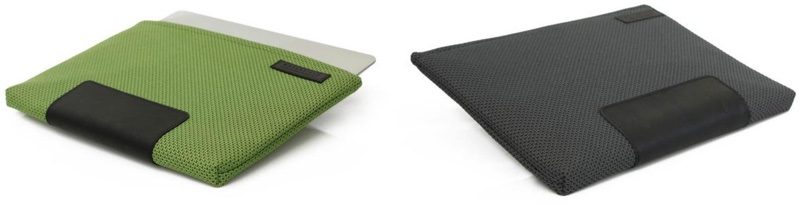
Like the Syde, the Maxwell uses a simple noiseless magnetic closure and offers padded protection for the MacBook, plus it can be ordered in vertical or horizontal orientation. It doesn’t have additional pockets or straps (but you can get one if you want), so it’s ideal for sticking into another bag or backpack.

We’re giving away one Syde and one Maxwell, with winners to choose size and color. To enter to win, use the Rafflecopter widget below and enter an email address. Email addresses will be used solely for contact purposes to reach the winner and send the prize. You can earn additional entries by subscribing to our weekly newsletter, subscribing to our YouTube channel, following us on Twitter, or visiting the MacRumors Facebook page.
Due to the complexities of international laws regarding giveaways, only U.S. residents who are 18 years of age or older are eligible to enter. To offer feedback or get more information on the giveaway restrictions, please refer to our Site Feedback section, as that is where discussion of the rules will be redirected.
a Rafflecopter giveawayThe contest will run from today (January 13) at 11:00 a.m. Pacific Time through 11:00 a.m. Pacific Time on January 20. The winners will be chosen randomly on January 20 and will be contacted by email. The winners will have 48 hours to respond and provide a shipping address before new winners are chosen.
Tags: giveaway, WaterField Designs
Discuss this article in our forums
 AIVAnet